
Can You Separate Art From Artist? Why the Debate Is So Complicated
I have heard separate art from artist at gallery openings, in comment sections, and once from a man at a wedding who wanted me to know he still watches Woody Allen films. He said it the way people say “no offense” right before offending you. “You can separate art from artist,” he told me. “It’s a skill.” He told me.
I don’t think it’s a skill. I think it’s a coping mechanism with very good PR.
So let me put my position up front. We cannot separate art from artist, and most people who say they can are doing something else entirely. They are giving themselves permission. That’s a different activity, and I would respect it more if we called it by its name.
What We Actually Mean When We Say Separate Art From Artist
The phrase sounds like a theory. It even has an academic ancestor. In 1967, Roland Barthes published “The Death of the Author,” which argued that meaning belongs to the reader rather than to the writer’s biography. Literature students have been citing it ever since, usually secondhand.
But Barthes was writing about how meaning gets made inside a text. Nothing in that essay says an author’s conduct stops mattering to the people buying his books. There is a wide gap between “you don’t need the poet’s diary to read the poem” and “the poet’s crimes are none of your business.” We collapsed that gap because it was convenient.
Read More: It Is Time to Retire the Myth of Tortured Artists
Here’s what I notice in the separate art from artist conversation. Nobody reaches for this phrase when an artist is merely boring, or a bad tipper, or politically annoying in a way that rubs us wrong. It shows up at exactly one moment, which is right after something serious comes out about someone we like. The phrase functions as a defense. It only comes out when the news is bad.
Art History Was Never Clean, and It Never Pretended To Be
Let me say the obvious thing first. If we removed every artist who did harm, the walls would empty out very, very fast.
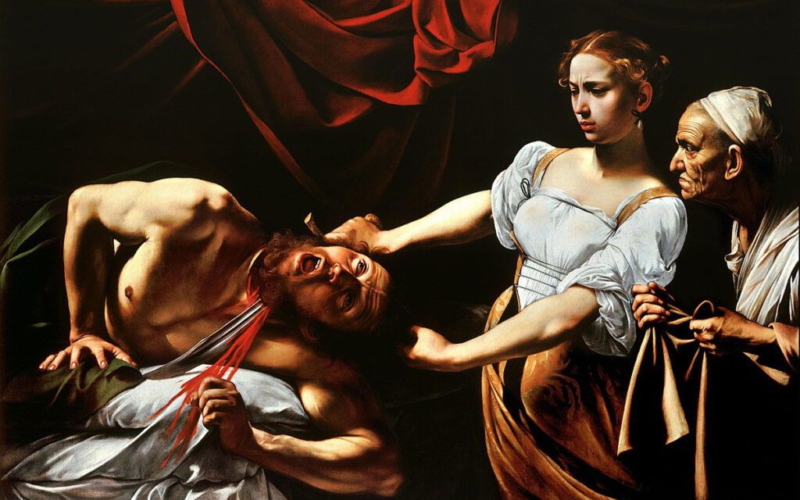
Caravaggio killed a man in 1606 and fled Rome with a price on his head. His paintings are still the reason people learn the word chiaroscuro.
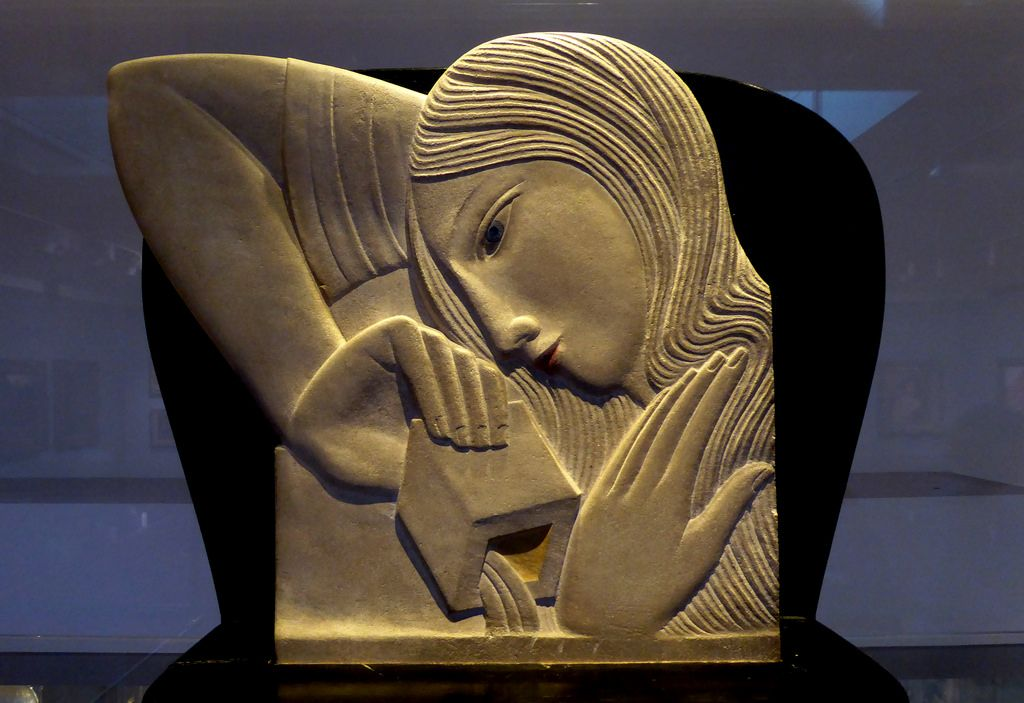
Eric Gill designed typefaces that half the English-speaking world reads daily without knowing his name. Then in 1989, Fiona MacCarthy’s biography revealed what his own diaries recorded in careful detail, including the sexual abuse of his teenage daughters. His sculpture of Prospero and Ariel still stands outside the BBC’s Broadcasting House in London, where a man took a hammer to it in 2022 while shouting the word paedophile.
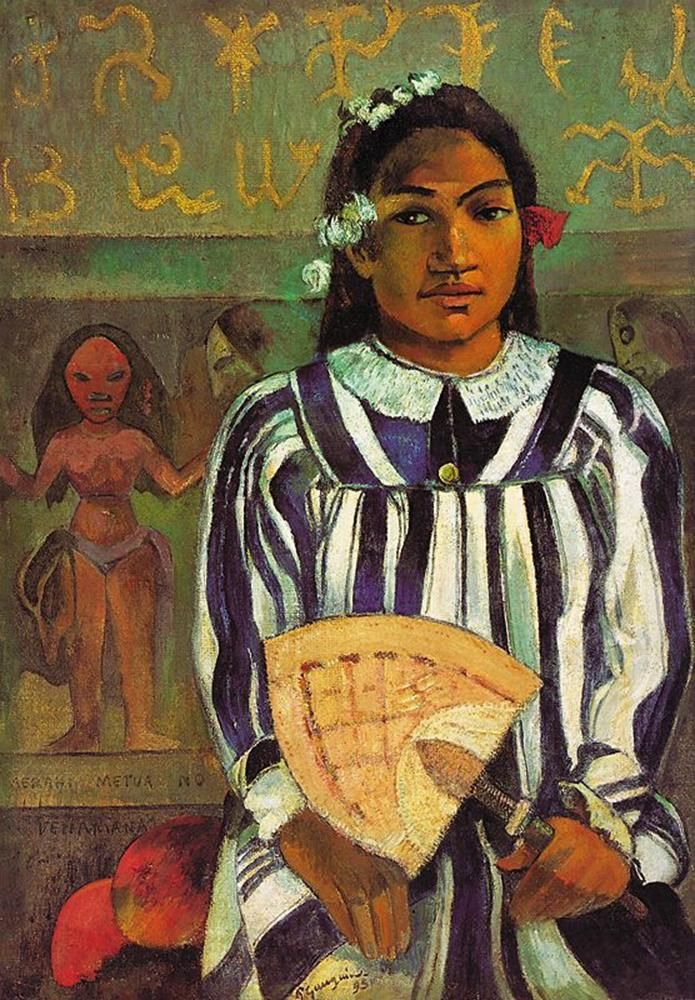
Gauguin sailed to Tahiti and took a thirteen-year-old named Teha’amana as his “wife.” He painted her. We hung the results in the best museums on earth and called them masterpieces for a hundred years.
Then there’s Ana Mendieta, who fell from the window of the apartment she shared with Carl Andre in 1985. Andre was tried and acquitted. Decades later, people still show up at his retrospectives asking where Ana Mendieta is. The audience refused the separation even when a court allowed it.
What I want is for us to stop pretending the biography sits outside the frame. It doesn’t. Gauguin’s colonial position isn’t trivia parked next to the painting. It explains why the painting exists, why the model is posed that way, and why her version of events was never written down.
The Work Remembers What the Wall Label Forgets
Museums have already picked a side in this argument.
When the National Gallery in London opened Gauguin Portraits in 2019, the wall text told visitors plainly that he had sexual relationships with young girls and used his standing as a privileged Westerner to do it. The audio guide went further and asked whether it was time to stop looking at Gauguin at all. That is a museum admitting, in public, that the artist walks into the room with you.
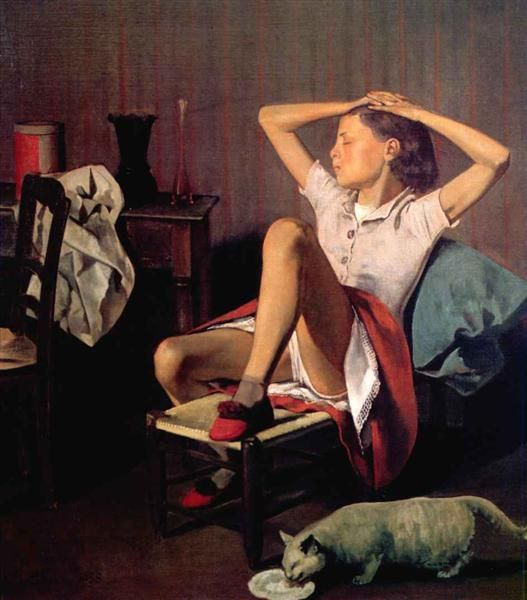
The Met went the other way in 2017. A petition asked it to remove or add context to Balthus’s Thérèse Dreaming, a painting of a girl around twelve or thirteen in a pose nobody describes innocently. The museum declined. Its spokesman said moments like this offer an opportunity for conversation.
I find that answer extremely tidy. A conversation with whom, exactly? The label said nothing about Balthus and his interest in pubescent girls. The Met kept the painting and skipped the conversation it claimed to want.
Read More: I Think We’ve Forgotten Looking at Art
Both institutions understood the same thing. You cannot separate art from artist by staying quiet about the artist. Staying quiet is itself a decision about what the viewer gets to know.
The Rules Change When the Artist Is Alive
Dead artists are cheap to defend. Caravaggio doesn’t collect royalties.
The argument sharpens the moment money starts moving. In 2024, after several men accused Kehinde Wiley of sexual assault, the Pérez Art Museum Miami suspended his traveling show, the Minneapolis Institute of Art declined it, and the Joslyn in Omaha shelved a commissioned exhibition.
Wiley denied the allegations. The National Coalition Against Censorship objected to the cancellations. His accusers responded that institutions carry a responsibility toward people who report abuse.
Publishing had its own version at the same time. Dark Horse cancelled the remaining books in Neil Gaiman’s Anansi Boys series after the allegations against him became public. Alice Munro’s books stayed in print after her daughter, Andrea Robin Skinner, wrote about being abused by Munro’s husband and about her mother’s decision to stay.
Same debate, opposite outcomes. What decided them was mostly contract timing and public appetite, which makes a poor substitute for a principle.
Why I Cannot Separate Art From Artist
Here’s the argument that closed the case for me.
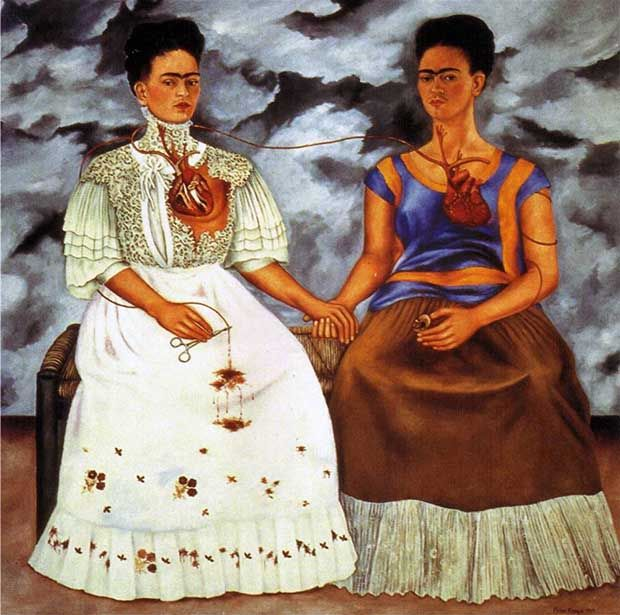
We already agree that biography makes art mean something. We say Frida Kahlo’s work can’t be read without her body, her politics, her marriage, or her Mexico. We say Nina Simone’s voice carries what America did to her. Nobody suggests we appreciate Mississippi Goddam as pure melody.
So biography counts when it deepens the work. Then an artist does something serious, and biography suddenly becomes irrelevant private business. We want context as a bonus feature, switchable, with the switch in our own hands.
That doesn’t hold together. Either the life is in the art, or it isn’t. If Kahlo’s pain shows up in her paintings, then Caravaggio’s violence shows up in his, and both deserve the same attention.
There’s also a smaller and more embarrassing point. We can’t actually forget. Once you know about Gaiman, certain scenes read strangely. The stain doesn’t wash out on request. The separation people describe is a wish, not what should happen.
What I Am Not Asking For
Nobody needs to burn a painting. I’m also not interested in moral purity tests, which would fail every artist you like and probably you.
There’s a real difference between a flawed person and a serious ethical breach. Being difficult, unfaithful, or unbearable at dinner doesn’t belong in the same category as abusing a child. Any framework that flattens those together deserves to be ignored.
What I want is simpler and harder. Keep the work. Tell the whole truth beside it. Let the label carry the full weight and let visitors decide what to do with it.
And with living artists, be honest about the receipt. Every ticket and every stream is a small transaction with a person, not only with an object.
The Debate Is Complicated Because It Should Be
I think what we really want is a rule. One clean policy that tells us what to admire and what to drop, applied evenly, so nobody has to feel anything difficult in a gallery.
We’re not getting one. Art is made by people, people are unreliable, and the best work does not always exclusively come from the decent artists. That tension is permanent.
What we can stop doing is lying about it. When someone says they separate art from artist, they usually mean they’ve decided to keep enjoying something and would rather not be asked about it. That’s a human choice. I’ve made versions of it myself.
Just look at the full picture before you choose art. Maybe the art will start having a separate meaning altogether.
Postscript: Dora Maar taught Picasso photography in her own darkroom and pulled him toward her politics. Both fed into Guernica. She is still known mostly as the woman crying in his painting. That pattern repeats through art history. The woman stays in the work and her name leaves the wall label.
Our open call, Art and Woman Edition 4, exists partly against that habit. It invites women and womxn artists at any career stage, in any medium, to submit work on their own terms with their own names attached. This edition is juried by gallerist Liz Lidgett. More than 300 women artists have been published across the series since 2024.
Submissions close August 30, 2026.