






The Hidden Art History Inside Your Favorite K-Pop MVs
For years, people dismissed K-pop music videos as nothing more than flashy visuals, expensive sets, and perfectly synchronized choreography. Yet the hidden art history inside your favorite K-pop MVs tells a very different story. Somewhere between the surreal dreamscapes of Red Velvet, the philosophical symbolism of BTS, and the emotionally devastating storytelling hidden inside seemingly cheerful songs, K-pop quietly evolved into something much more ambitious. Today, some of the industry’s most iconic music videos are packed with references to Renaissance paintings, Greek mythology, classic literature, contemporary performance art, and centuries-old fairy tales, often hidden in plain sight.
What makes these references so fascinating is that they are rarely accidental. A floating flower field may echo a famous Pre-Raphaelite painting. A dinner table arrangement may recreate The Last Supper. A single shot involving a bow and arrow may reference a legendary performance artwork about trust and danger. Even fairy tales once written in the 1800s are being reborn through glossy modern pop productions watched by millions around the world.
And audiences are noticing. Fans now pause music videos frame-by-frame, compare scenes with museum masterpieces online, and decode hidden symbolism with the intensity of film scholars. In the process, many younger viewers are discovering famous artworks and literary stories for the very first time, not in classrooms or museums, but through K-pop.
From Hieronymus Bosch’s chaotic visions of heaven and hell to Marina Abramović’s unsettling performance art, these music videos prove that K-pop is no longer just borrowing aesthetics from art history. In many ways, it is becoming one of the most unexpected gateways into it.
1. Red Velvet’s Feel My Rhythm Turned Classical Paintings Into Living Cinema
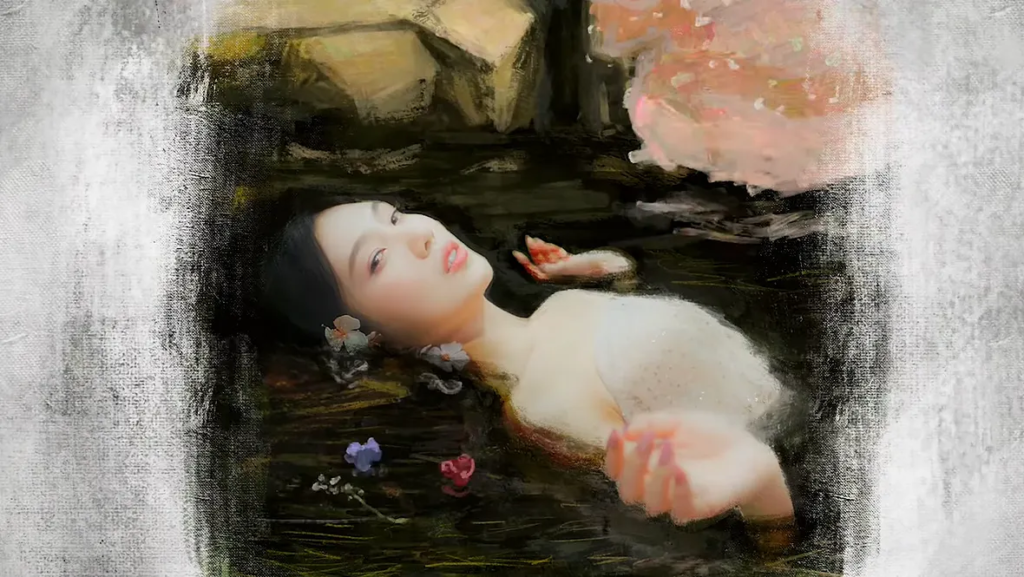
The moment Red Velvet released Feel My Rhythm in 2022, fans immediately realized this was not going to be an ordinary K-pop comeback. The music video looked less like a traditional pop production and more like a moving art exhibition, filled with floating flowers, surreal landscapes, delicate costumes, dreamlike lighting, and references to some of the most famous paintings in history. Every frame felt intentionally crafted, almost as if the members had stepped directly into the walls of a museum.
What made the MV especially fascinating was how openly it embraced classical art instead of merely borrowing aesthetics from it. One of the most recognizable inspirations appears near the end of the video: Hieronymus Bosch’s The Garden of Earthly Delights. Painted between 1490 and 1510, the artwork is one of the most mysterious triptychs in art history, depicting paradise, earthly temptation, and hell through bizarre dreamlike imagery. Red Velvet transforms this chaotic visual language into something softer yet equally surreal, filling the screen with oversized fruit, strange fantasy spaces, and symbolic visual excess.
But Bosch was only the beginning. Throughout the MV, the members subtly recreate several Impressionist and Romantic paintings. Viewers quickly identified references to Claude Monet’s Woman with a Parasol, Madame Monet and Her Son, and Wheatstacks (End of Summer). These recreations were not exact copies. Instead, the MV translated the atmosphere of the paintings into motion, the soft natural light, flowing fabrics, blooming gardens, and dreamy color palettes all mirrored Monet’s fascination with fleeting beauty and light.
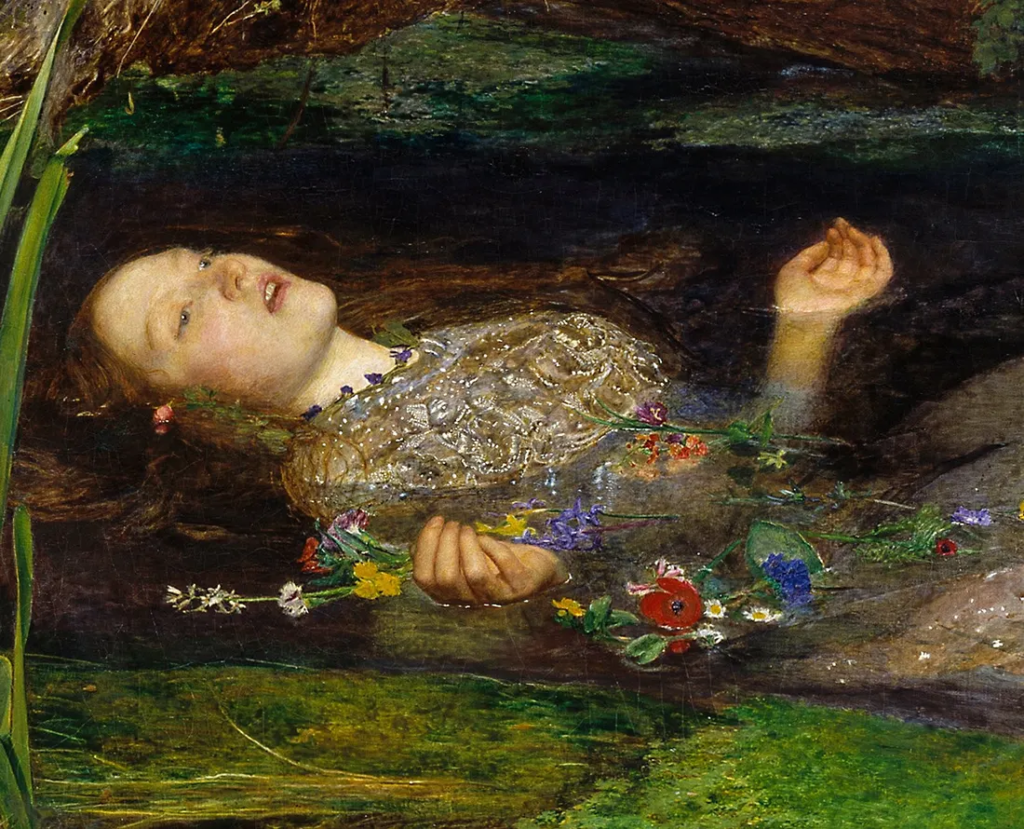
One particularly haunting visual references John Everett Millais’ famous painting Ophelia. In the original artwork, Shakespeare’s tragic heroine floats in water surrounded by flowers moments before her death. Red Velvet reimagines the image with a softer fantasy-like interpretation, maintaining the floral elegance while removing some of the darkness attached to the original story. Even viewers unfamiliar with the painting could sense that the imagery carried emotional and artistic weight.
Another striking inspiration came from Jean-Honoré Fragonard’s The Swing, one of the defining works of the Rococo period. Known for its playful elegance and hidden flirtation, the painting’s whimsical movement fits surprisingly well within Red Velvet’s theatrical visual universe. The MV transforms these centuries-old artistic references into something modern, feminine, and cinematic without making them feel forced or overly academic.
What truly made Feel My Rhythm stand out was not simply the number of artworks referenced, but how naturally they blended into the music video’s fantasy narrative. Many K-pop MVs include luxurious visuals, but this one invited audiences to actively search for meaning inside every frame. Fans began pausing scenes, creating side-by-side comparisons online, and discussing art history across social media platforms, something few mainstream pop releases manage to inspire.
In many ways, Feel My Rhythm became proof that K-pop could transform classical art into accessible pop culture without stripping away its beauty. Instead of making art history feel distant or intimidating, Red Velvet turned it into something immersive, emotional, and visually addictive. The MV did not simply reference famous paintings, it made audiences want to look them up afterward. And that may be the most powerful artistic achievement of all.
2. BTS’ Blood Sweat & Tears and the Dangerous Beauty of Demian
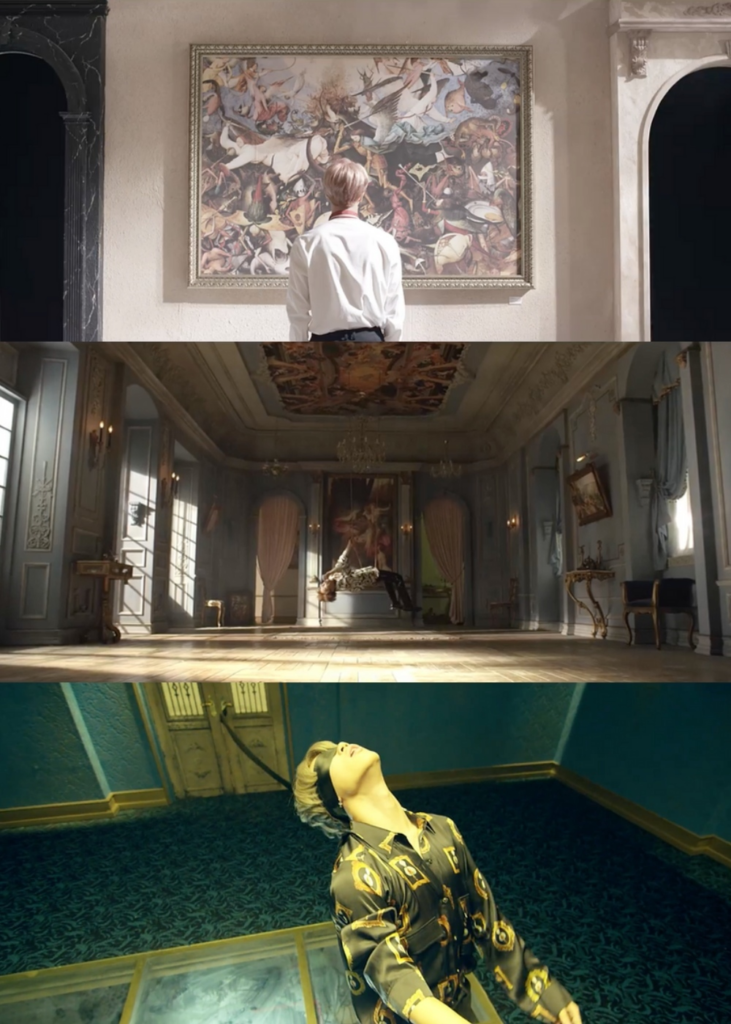
When BTS released Blood Sweat & Tears in 2016, the music video immediately felt different from anything else in K-pop at the time. It was elegant, unsettling, intellectual, and filled with symbolism that viewers could not fully decode on a first watch. Instead of focusing only on choreography or flashy visuals, the group created an atmosphere that felt closer to psychological cinema. Museums, marble sculptures, angel imagery, falling wings, temptation, and philosophical quotes all blended together into one of the most analyzed K-pop music videos ever made.
At the center of the MV’s concept was Hermann Hesse’s 1919 novel Demian, a coming-of-age story exploring identity, desire, innocence, rebellion, and the struggle between good and evil. Throughout the video, BTS references the novel’s darker themes of temptation and self-discovery, especially through scenes that blur the line between beauty and corruption. Even fans unfamiliar with the book quickly realized that every object in the MV seemed to carry hidden meaning.
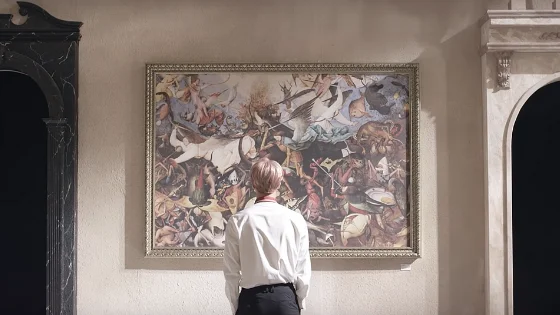
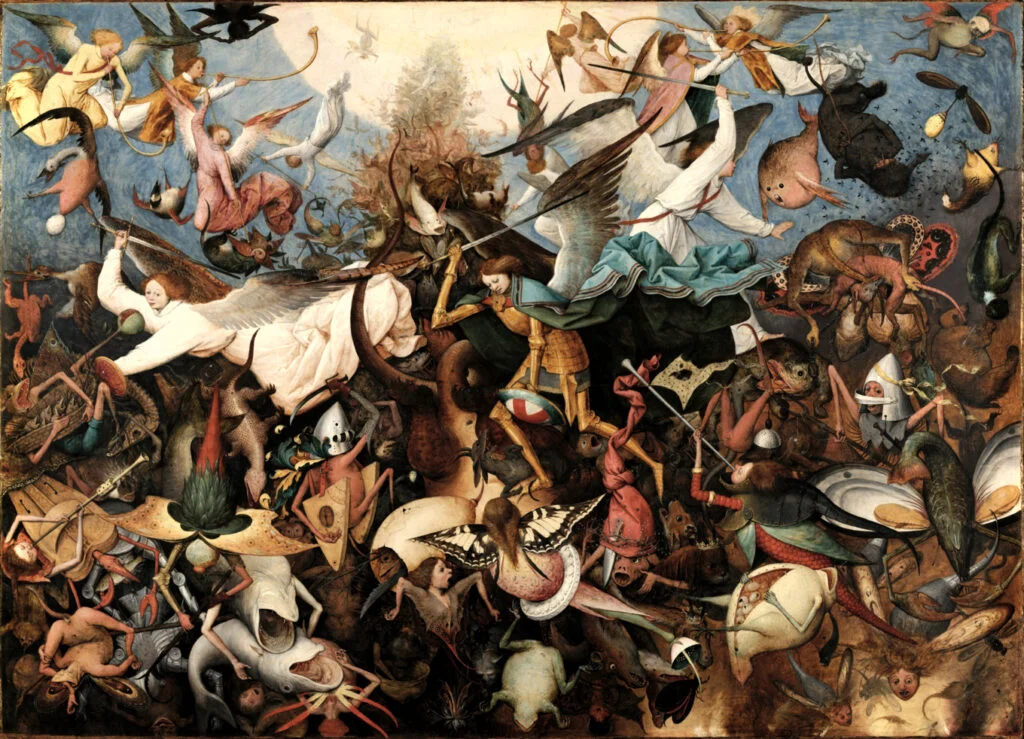
One of the most memorable elements of the MV is its museum-like setting. The members wander through vast halls filled with classical paintings and sculptures, creating the feeling that viewers are watching living art pieces instead of pop idols. This setting was not accidental. The museum imagery reinforced the idea that the members were trapped inside a world of temptation, observation, and transformation.
A particularly famous visual from the MV features RM reading a passage from Demian, directly connecting the storyline to Hesse’s novel. The quote references the idea that “the boy loved what was forbidden,” which perfectly mirrors the song’s themes of dangerous attraction and surrender. The lyrics themselves continue this tension, repeatedly embracing pain and temptation as irresistible forces.
The visual symbolism throughout the MV also sparked endless fan theories. One recurring image is Pieter Bruegel the Elder’s painting Landscape with the Fall of Icarus, which depicts the Greek mythological figure Icarus falling from the sky after flying too close to the sun. The myth has long symbolized ambition, pride, and self-destruction, themes that fit seamlessly into the emotional world of Blood Sweat & Tears. Fans connected the Icarus imagery to BTS’ portrayal of youthful recklessness and the seductive danger of chasing forbidden desires.
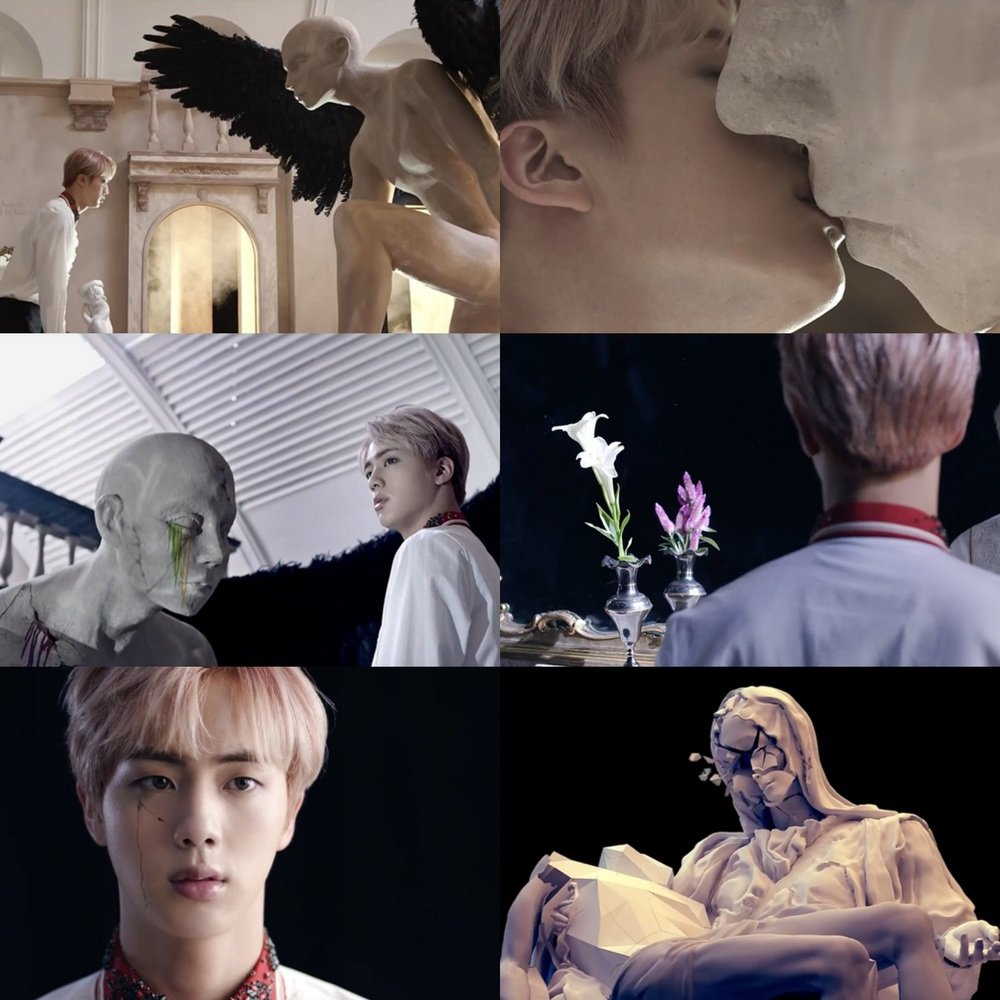
Another unforgettable scene shows V kissing a marble angel statue before the statue suddenly darkens and cracks. The moment became one of the MV’s most discussed images because it visually captured the corruption of innocence, a major theme in Demian. The angel, often associated with purity and divinity, transforms into something broken and unsettling after the kiss, suggesting temptation’s irreversible consequences.
Part of what made Blood Sweat & Tears so influential was how seriously it treated visual storytelling. The references were not included simply to look sophisticated. They actively shaped the emotional and philosophical atmosphere of the video. BTS trusted viewers to investigate the details themselves, and fans responded by creating detailed breakdowns, literary analyses, and symbolic interpretations online.
Years later, the MV is still considered one of the defining examples of K-pop blending music, literature, mythology, and fine art into one cohesive experience. Rather than simplifying these references for mainstream audiences, BTS made complexity part of the appeal. And in doing so, they helped transform K-pop music videos into something far more ambitious than entertainment alone.
3. BTS’ Dionysus and the Reinvention of Greek Mythology
Long before mythology became trendy across social media aesthetics, BTS was already transforming ancient symbols into massive stadium performances. Their 2019 track Dionysus was not simply a party anthem about fame and celebration, it was a full-scale reinterpretation of one of Greek mythology’s most chaotic gods. Loud, theatrical, and visually overwhelming, the performances surrounding Dionysus blurred the line between concert stage and mythological spectacle.
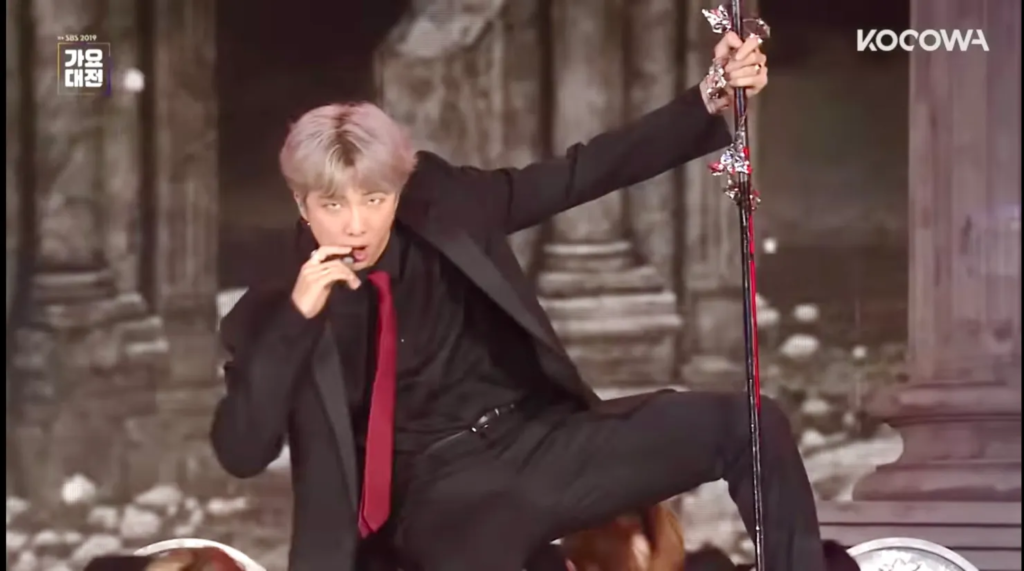
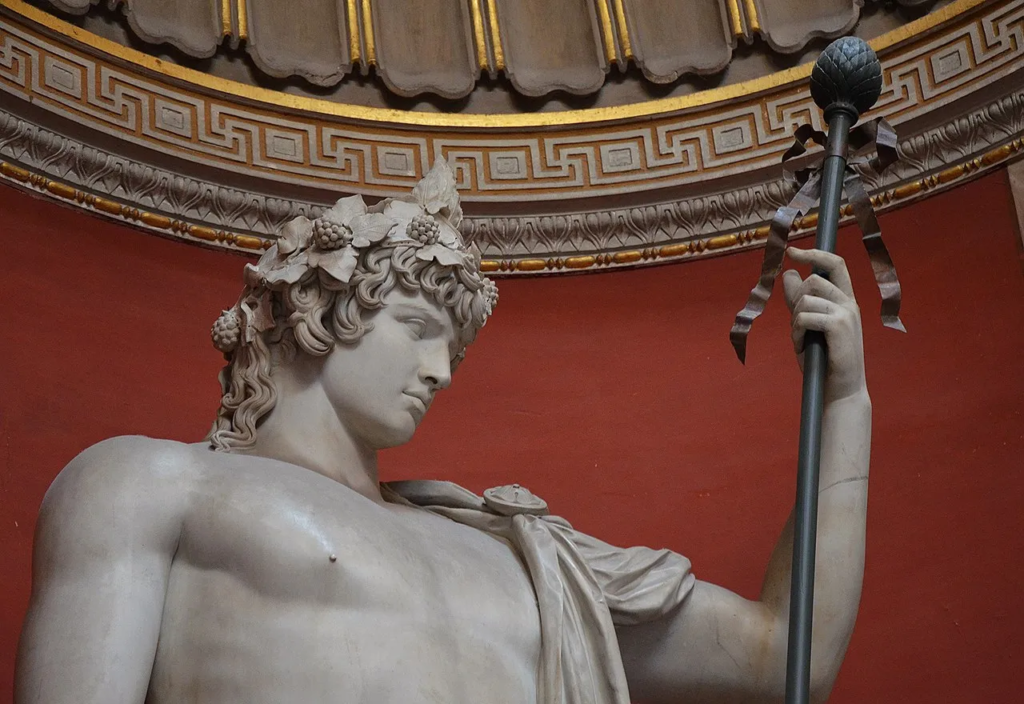
The title itself references Dionysus, the ancient Greek god of wine, ecstasy, celebration, theatre, and artistic madness. In mythology, Dionysus represented both freedom and chaos, a figure associated with intoxication, emotional release, and creative frenzy. BTS leaned heavily into this imagery through extravagant stage design, dramatic styling, and symbolic props that transformed the performances into something almost ritualistic.
One of the clearest visual references appears through the use of grapes, vines, overflowing goblets, and the thyrsus, the staff traditionally associated with Dionysus in Greek art and sculpture. In ancient depictions, the thyrsus symbolized pleasure, abundance, and divine power. BTS incorporated these motifs throughout performances, creating direct parallels to classical representations of the god.
The performances also borrowed heavily from Greco-Roman architecture. Massive columns, temple-inspired staging, flowing robes, and dramatic banquet settings gave the impression that viewers were witnessing a modern interpretation of an ancient feast. But BTS did not stop at mythology alone. Fans quickly noticed another major visual reference embedded within the choreography and staging: Leonardo da Vinci’s The Last Supper.
At several moments during live performances, the members sit side-by-side at an elongated dining table, visually echoing the composition of da Vinci’s famous Renaissance painting. The image of a ceremonial gathering instantly reminded viewers of The Last Supper, one of the most recognizable artworks in Western history. While the original painting depicts Jesus dining with his disciples before his betrayal, BTS recontextualized the imagery into a chaotic celebration of artistry, fame, and performance.
What made these references especially interesting was how naturally they fit the song’s themes. Dionysus constantly shifts between triumph and exhaustion, celebration and pressure. The lyrics discuss the intoxicating nature of artistry itself, the idea that creating music, performing on stage, and living under constant public attention can become both exhilarating and destructive. That duality mirrors the mythology of Dionysus perfectly. In ancient stories, the god represented liberation, but his presence could also lead to madness and loss of control.
This is one reason the performances felt so explosive. Rather than presenting mythology as something ancient or distant, BTS transformed it into a modern pop spectacle. Their version of Dionysus was not quietly symbolic, it was loud, sweaty, theatrical, and almost overwhelming by design.

The group’s use of art history and mythology also revealed something larger about K-pop’s evolving visual language. Instead of treating classical references as decorative details, BTS integrated them directly into performance storytelling. Fans who recognized the references were rewarded with deeper layers of meaning, while casual viewers could still enjoy the sheer scale and drama of the visuals.
In many ways, Dionysus proved that K-pop could take themes from ancient mythology and reinvent them for an entirely new generation. Millions of viewers who may never have studied Greek mythology suddenly found themselves discussing Dionysus, Renaissance art, and symbolic imagery online, all because of a K-pop performance.
4. Stray Kids’ VENOM and the Marina Abramović Reference Almost Nobody Caught
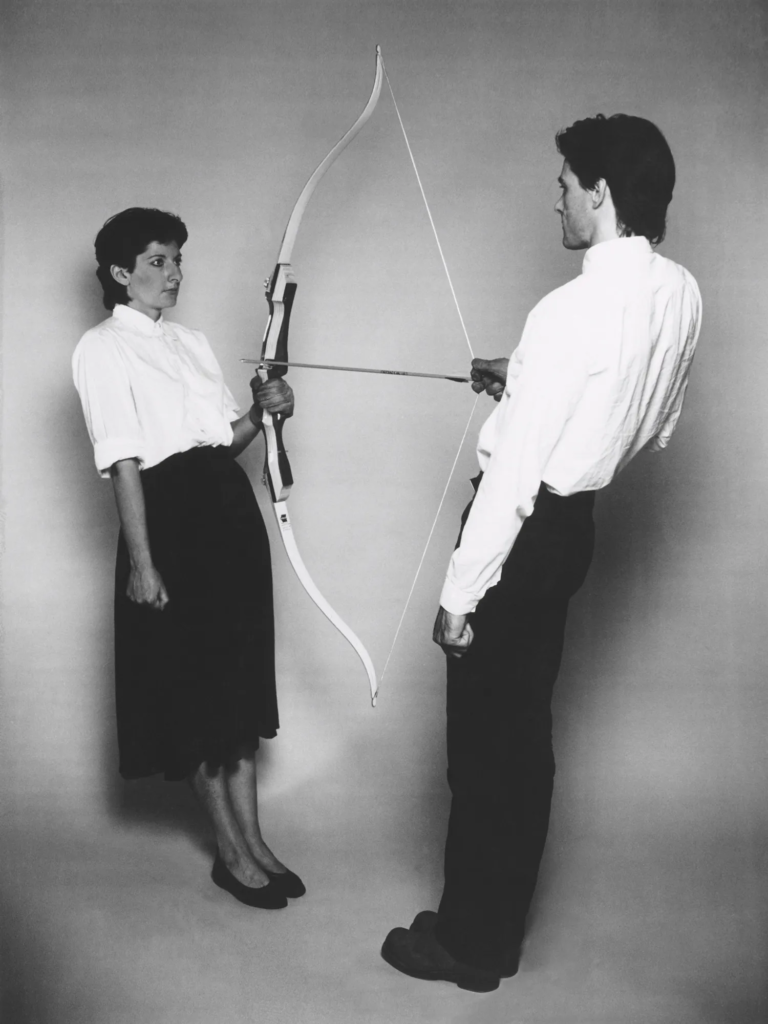
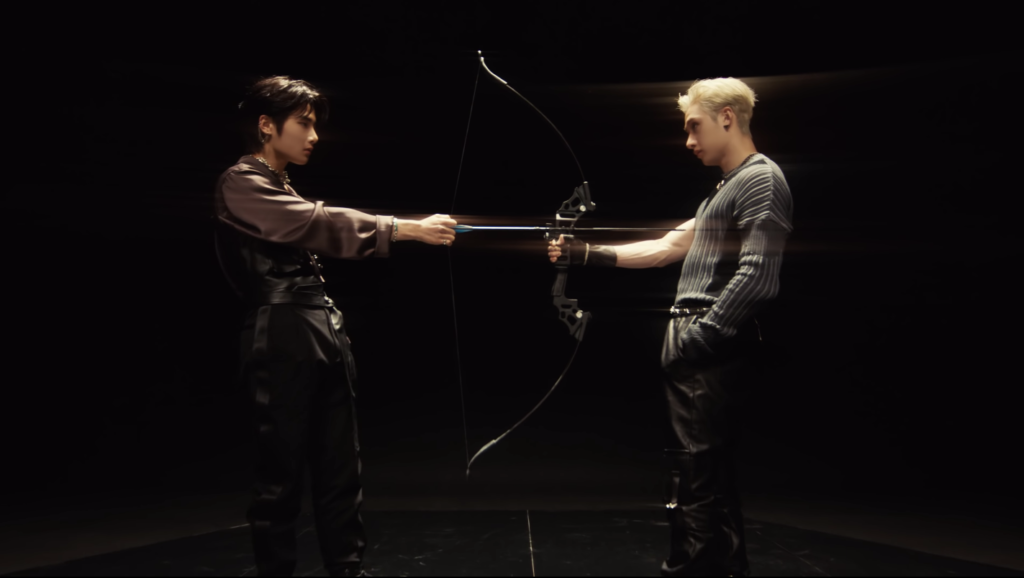
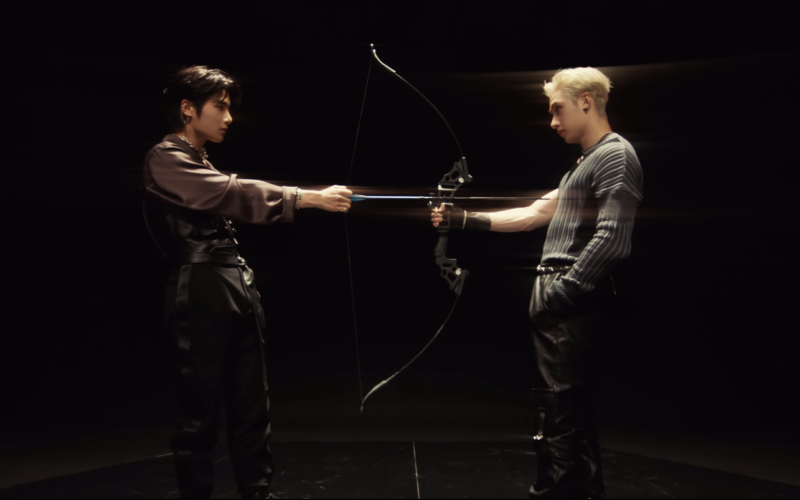
Most people watching Stray Kids’ VENOM for the first time were too distracted by the song’s intensity to notice one of the music video’s most unexpected details. Between the aggressive choreography, dark lighting, and spiderweb imagery, the MV briefly recreates a moment from one of contemporary art’s most famous performance pieces, Marina Abramović and Ulay’s Rest Energy (1980). For many viewers, the reference passed unnoticed. But for fans familiar with performance art history, it was one of the most surprising art references ever hidden inside a K-pop MV.
The scene appears during a tense sequence where member I.N pulls back the string of a bow while an arrow points directly toward Bang Chan, who stands opposite him holding the weapon in place. The visual closely mirrors Abramović and Ulay’s Rest Energy, a performance artwork in which the two artists stood facing one another while holding a fully drawn bow and arrow aimed directly at Abramović’s heart. The tension in the original performance came from trust: if either person lost control for even a second, the consequences could have been fatal.
When Marina Abramović later described the piece, she explained that it explored “complete and total trust” between two people. But Stray Kids’ reinterpretation adds a much darker emotional layer. In VENOM, the lyrics revolve around toxic attachment, obsession, and emotional entrapment. The song repeatedly compares love to being trapped inside a poisonous web, unable to escape even while fully aware of the damage being caused.
That changes the meaning of the original artwork entirely.
Instead of symbolizing trust and balance, the recreated scene in VENOM feels unstable and threatening. The tension between the two members no longer represents emotional safety, it represents dependence, danger, and the fear of emotional destruction. By borrowing imagery from Rest Energy, the MV transforms a legendary performance artwork into a metaphor for toxic relationships.
What makes the reference even more fascinating is how unexpected it is within mainstream pop culture. Marina Abramović’s work belongs to the world of conceptual and performance art, a space often considered inaccessible or unfamiliar to younger mainstream audiences. Yet through K-pop, millions of viewers unknowingly encountered one of contemporary art’s most iconic performances.
This reflects a larger pattern inside modern K-pop visual storytelling. Rather than referencing only famous paintings or mythology, newer music videos increasingly pull from contemporary art, conceptual installations, and experimental visual culture. Directors are no longer simply borrowing aesthetics; they are borrowing emotional frameworks and symbolic meaning.
In the case of VENOM, the reference works because viewers can feel the tension even if they do not recognize its source. The image of a weapon balanced between two people instantly creates discomfort. The emotional danger becomes visible before the audience even understands the symbolism behind it.
That ability to merge high-concept art with mainstream entertainment is part of what makes modern K-pop visuals so compelling. A viewer may arrive for the music and choreography, but hidden beneath the surface are references to performance art, philosophy, mythology, and psychology. And sometimes, as in VENOM, a four-second visual can quietly carry decades of artistic history behind it.
5. IU’s The Red Shoes and the Dark Fairy Tale Behind the Glamour
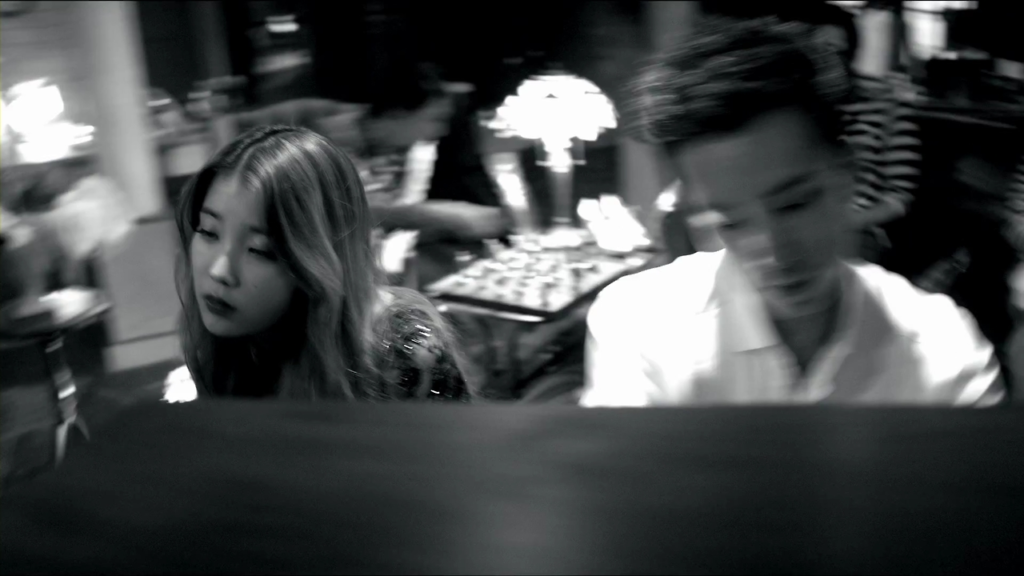
At first glance, IU’s The Red Shoes feels playful, theatrical, and whimsical. Released as part of her 2013 album Modern Times, the song bursts with jazz-inspired energy, vintage styling, and colorful cinematic visuals that resemble an old Broadway performance. But beneath the lively music and charming aesthetic lies a surprisingly dark literary inspiration: Hans Christian Andersen’s unsettling fairy tale The Red Shoes.
Unlike the softened fairy tales most audiences grew up with through animated adaptations, Andersen’s original stories were often tragic, moralistic, and deeply unsettling. The Red Shoes, first published in 1845, tells the story of Karen, a poor young girl who becomes obsessed with a beautiful pair of red shoes. Her vanity and desire eventually lead to punishment when the shoes force her to dance endlessly, trapping her in an exhausting cycle she cannot escape.
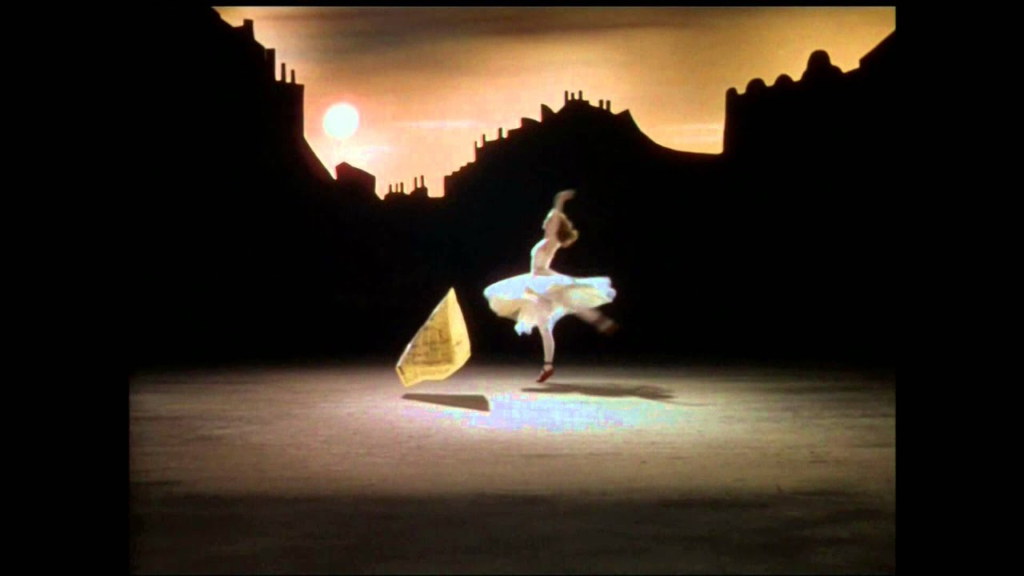
IU’s music video does not retell the story directly scene by scene, but it borrows heavily from its emotional atmosphere and symbolism. Throughout the MV, the red shoes themselves become central visual objects, representing temptation, obsession, desire, and the loss of control, exactly as they do in Andersen’s original tale.
The visual styling of The Red Shoes plays an important role in creating this strange contrast between joy and unease. The sets are colorful and theatrical, filled with retro stage lights, dancers, curtains, and exaggerated performance imagery. Yet beneath the glamorous presentation, there is a growing sense that something feels slightly off-balance. The choreography becomes increasingly frantic, the movement more uncontrollable, almost as if the performance itself refuses to stop.
That mirrors the original fairy tale perfectly. In Andersen’s story, the shoes symbolize uncontrollable desire, the danger of becoming consumed by vanity, temptation, or ambition. IU modernizes that symbolism by placing it inside the world of celebrity performance. The constant dancing, spotlight imagery, and overwhelming theatricality begin to feel less celebratory and more exhausting as the MV progresses.
Part of what makes the reference so effective is how subtly it is handled. Viewers unfamiliar with Andersen’s story can still enjoy the MV’s dramatic visuals and energetic tone, while those who recognize the inspiration immediately notice the darker undertones hidden beneath the surface. That layered storytelling is one reason IU’s concepts are often praised for their artistic depth.
The MV also reflects a larger trend within K-pop visual culture: the fascination with reinterpreting fairy tales in more mature and psychologically complex ways. Instead of presenting fantasy stories as innocent children’s narratives, artists frequently explore the loneliness, fear, obsession, and emotional darkness hidden inside the originals.
IU’s The Red Shoes captures that balance beautifully. It is bright without feeling simple, elegant without losing emotional tension. The music invites audiences to dance, while the story quietly warns about what happens when desire becomes impossible to control.
Years after its release, The Red Shoes remains one of the clearest examples of K-pop transforming classic literature into modern visual storytelling. By reimagining a 19th-century fairy tale through music, choreography, and cinematic imagery, IU proved that even the darkest stories can find new life inside pop culture, especially when they are wrapped in something as dazzling as a K-pop music video.
6. LOONA Chuu’s Heart Attack Reimagined The Little Match Girl
Bright colors, cheerful melodies, adorable expressions, on the surface, Chuu’s Heart Attack looks like one of the happiest K-pop releases imaginable. Released in 2017 as part of LOONA’s ambitious pre-debut project, the song quickly became known for its bubbly energy and playful visuals. But hidden beneath its sweetness is a surprisingly heartbreaking literary reference that many casual viewers completely missed: Hans Christian Andersen’s The Little Match Girl.
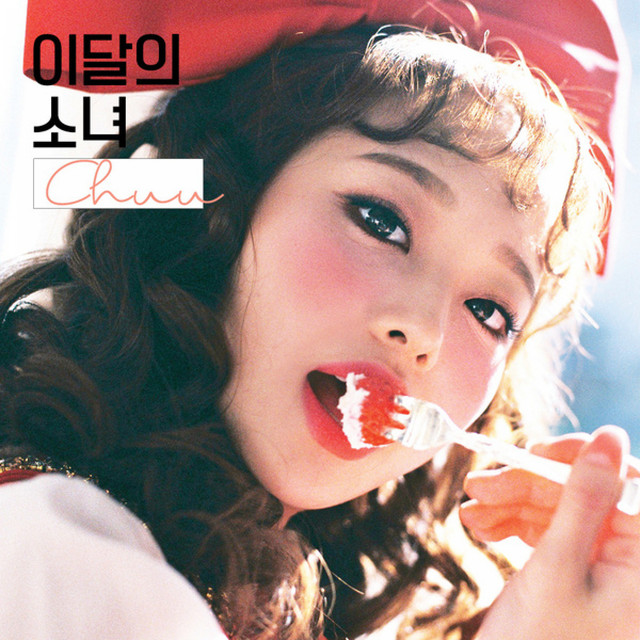
Unlike the romantic excitement suggested by the song’s title, the original fairy tale is one of Andersen’s saddest works. First published in 1845, The Little Match Girl tells the story of a poor young girl wandering through freezing streets on New Year’s Eve, trying unsuccessfully to sell matches. Alone and starving, she lights the matches one by one to keep warm, each flame briefly creating comforting visions before fading away. By the end of the story, the final match burns out, and so does her life.
Chuu’s Heart Attack does not directly retell the story, but the emotional parallels become clear once viewers recognize the inspiration. Throughout the MV, Chuu appears energetic, affectionate, and overflowing with emotion as she desperately tries to capture another girl’s attention. The colorful visuals initially make the story feel innocent and upbeat, yet there is an underlying sense of longing and emotional isolation beneath the surface.
The most significant connection to The Little Match Girl appears in the MV’s ending. As the final moments unfold, references to burning matches and fading hope quietly mirror Andersen’s tragic conclusion. Just like the original character, Chuu’s emotional world seems built around fragile moments of warmth that disappear almost immediately. The story becomes less about romance and more about yearning for connection that feels permanently out of reach.
What makes the MV especially powerful is this emotional contradiction. The song sounds joyful, the visuals are vibrant, and Chuu’s performance is full of energy, yet the narrative quietly leans toward loneliness and heartbreak. That contrast reflects a storytelling technique frequently used in K-pop, where bright aesthetics are used to disguise darker emotional themes underneath.
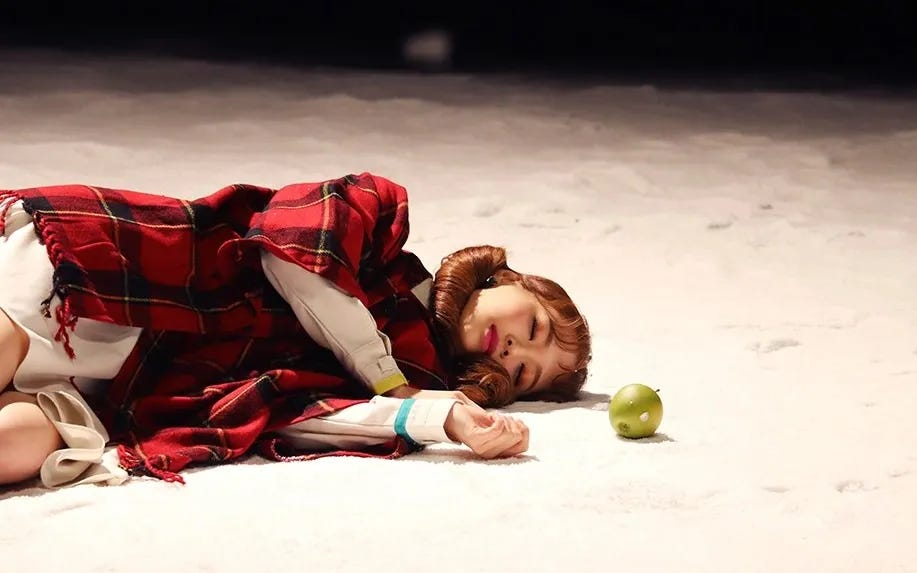
Fans who discovered the fairy tale reference began revisiting the MV with an entirely different perspective. Small visual details that once seemed random suddenly carried symbolic meaning. The emotional desperation in Chuu’s expressions became more noticeable, and the cheerful tone of the song started to feel bittersweet instead of purely cute.
This layered approach to storytelling is one reason LOONA’s pre-debut project gained such a dedicated following. Each member’s release felt carefully constructed, often containing hidden symbolism, recurring themes, and emotional subtext that rewarded repeat viewings. Heart Attack became one of the strongest examples of how K-pop could transform classic literature into modern emotional storytelling without explicitly announcing the inspiration.
What is especially fascinating about the Heart Attack reference is how naturally Andersen’s tragic fairy tale fits into contemporary pop culture. Even audiences unfamiliar with The Little Match Girl could still feel the sadness hidden underneath the MV’s sweetness. That emotional instinct is what makes the reference so effective. The story’s core themes, loneliness, longing, and the search for warmth, remain universally recognizable, even when retold through the colorful world of K-pop.
What makes these references so powerful is not just their visual beauty, but the way they completely reshape how audiences experience pop music. A K-pop music video is no longer just a promotional tool for a song, it can become a surreal art gallery, a literary adaptation, a mythological retelling, or even a reinterpretation of contemporary performance art. And often, viewers do not even realize they are engaging with centuries of artistic history while watching.
That may be why these references continue to resonate so strongly online. Fans are not simply streaming songs anymore; they are decoding symbolism, researching paintings, reading classic novels, and revisiting old myths after spotting them hidden inside a three-minute music video. In a strange and fascinating way, K-pop has succeeded where many traditional art institutions struggle, it has made art history feel immersive, emotional, and impossible to ignore for a younger global audience.
Whether it is BTS referencing Greek mythology and Demian, Red Velvet transforming classical paintings into moving cinema, or Stray Kids unexpectedly recreating Marina Abramović’s Rest Energy, these artists prove that pop culture and fine art no longer exist in completely separate worlds. They are constantly influencing one another, colliding in ways that feel bigger, stranger, and more creative than ever before.
And once you start noticing these references, watching K-pop music videos will never feel the same again.
So now the real question is: which K-pop music video hid the most surprising art reference you’ve ever seen?
If exploring the connections between art and contemporary culture fascinates you, you might also enjoy our roundup of recent developments shaping the global art scene in The Latest in the Art World, where we look at the exhibitions, fairs, collaborations, and conversations influencing the art world today.