

7 Artists Who Believed Spirits Guided Their Creative Process

Where does creativity come from? For most artists, the answer lies in years of observation, practice, and imagination. But throughout history, a remarkable group of artists believed their greatest works were inspired by something beyond the visible world. Through spiritual visions, séances, automatic drawing, and deeply personal mystical experiences, they sought to create art that reached beyond ordinary perception.
Throughout history, artists have searched for inspiration in countless places, from nature and memory to dreams and religion. The artists featured here looked somewhere even further, believing their creativity was shaped by spiritual beings, mystical visions, or unseen forces. While these experiences cannot be verified as historical fact, they are well documented through personal journals, letters, exhibition catalogues, interviews, notebooks, and the artists’ own writings. Rather than asking whether their beliefs were objectively true, this article explores how those convictions profoundly influenced the art they created and why those works continue to fascinate audiences today.These stories also offer a fascinating look at why some artists believed Spirits Guided Their Creative Process and how those beliefs became inseparable from the masterpieces they created.
During the nineteenth and early twentieth centuries, movements such as Spiritualism and Theosophy captured the imagination of artists, writers, scientists, and intellectuals alike. For some, these ideas offered comfort during times of grief. For others, they became a way of exploring questions about consciousness, creativity, and humanity’s place in the universe. Artists increasingly turned toward invisible worlds not simply as subjects to paint, but as sources of inspiration they believed could guide their work.
From Hilma af Klint’s revolutionary abstract paintings to Madge Gill’s intricate ink drawings and Augustin Lesage’s astonishingly detailed compositions, these artists expanded the boundaries of what art could express. Whether viewed as acts of faith, psychological exploration, symbolic storytelling, or remarkable creative intuition, their works continue to spark curiosity because they exist at the intersection of art, belief, and mystery. Some questions they raise may never have definitive answers, but perhaps that is precisely why they remain so fascinating.
1. Hilma af Klint: The Artist Who Believed Her Paintings Came From Beyond the Visible World
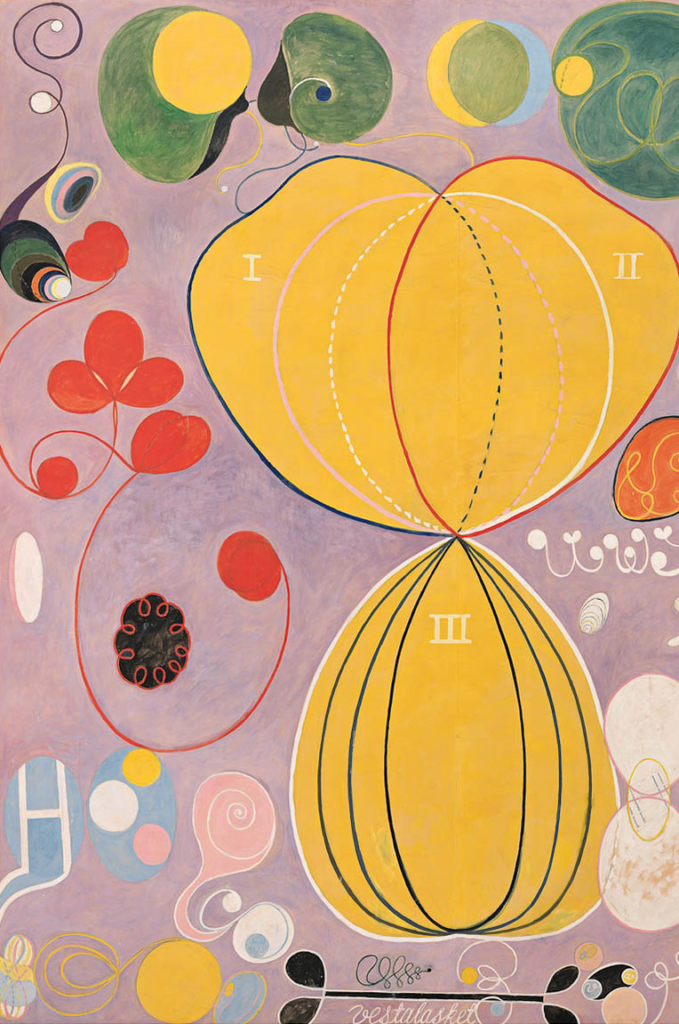
If someone showed you one of Hilma af Klint’s luminous abstract paintings without revealing the date, you might assume it belonged to the mid-twentieth century. Yet she painted these remarkable works years before abstraction became associated with artists like Wassily Kandinsky or Piet Mondrian. Even more extraordinary than their appearance, however, was her explanation for where they came from. Af Klint believed that many of her most important paintings were created under the guidance of what she called “High Masters” spiritual entities she encountered through her deeply held spiritual practice.
That belief was shaped by De Fem (The Five), a circle of five women who met regularly in Stockholm at the end of the nineteenth century. Their gatherings combined prayer, meditation, séances, and automatic drawing, practices through which they believed they could receive messages from spiritual beings. According to the group’s journals, these messages were carefully recorded before being translated into drawings and paintings. It was during this period that af Klint felt she had been entrusted with an ambitious artistic mission: to create a body of work that could express realities beyond the physical world.
The result was the monumental series Paintings for the Temple, a collection of nearly 200 paintings created between 1906 and 1915. Among its most celebrated works is The Ten Largest, where enormous canvases bloom with spirals, flowers, floating letters, vivid color fields, and geometric forms. Rather than depicting landscapes or portraits, these paintings explore birth, growth, adulthood, and old age through a symbolic visual language. Every curve, color, and motif was intended to express ideas about spiritual evolution, duality, and the interconnectedness of life. Standing before them today, it is easy to forget they were painted more than a century ago; their bold forms still feel astonishingly contemporary.
Perhaps the greatest mystery surrounding these works is that af Klint never expected them to be understood during her lifetime. Convinced that audiences were not yet ready for their spiritual meaning, she instructed that much of her work remain unseen for years after her death. Today, her journals and thousands of pages of notebooks have become essential to understanding her artistic practice, revealing that her spiritual convictions were not a curious side note but the very foundation of her creative vision. Whether one sees her paintings as acts of faith, profound symbolic experiments, or groundbreaking abstract art, they continue to challenge one enduring question: can creativity sometimes begin where explanation ends?
2. Georgiana Houghton: The Painter Who Believed Spirits Moved Her Hand
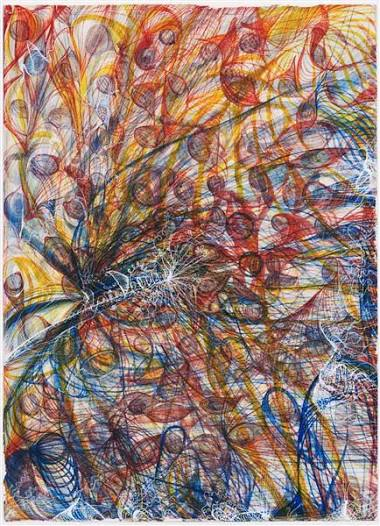
Decades before abstract art entered museums, a Victorian artist was already creating dazzling compositions of swirling colors, intricate lines, and luminous forms that seemed to belong to another dimension. Many viewers dismissed them as incomprehensible. Georgiana Houghton, however, insisted they were never meant to imitate the visible world. She believed they were the result of spiritual guidance.
Unlike many artists whose mystical interests have been reconstructed through later scholarship, Houghton spoke openly about her beliefs during her lifetime. A devoted Spiritualist, she attended séances and practiced what was known as automatic drawing, a method in which the artist believed their hand could be guided by unseen intelligences rather than conscious intention. In the catalogue for her groundbreaking 1871 exhibition in London, Houghton went so far as to identify the spiritual beings she believed had influenced individual works, including deceased relatives and historical figures. Her audience may have questioned those claims, but she never hid them. For Houghton, the paintings were visual records of spiritual experiences rather than demonstrations of artistic invention.
One of her most remarkable works, The Eye of the Lord, abandons conventional perspective in favor of floating ribbons of color, delicate webs of line, and radiant forms that seem suspended between the material and immaterial worlds. Rather than depicting recognizable people or places, the composition invites viewers to experience emotion, movement, and light as symbols of spiritual presence. Today, the painting feels astonishingly modern, anticipating the visual language of abstraction by several decades. Other works, including The Portrait of the Lord Jesus Christ, similarly combine intricate symbolism with her conviction that art could reveal realities beyond ordinary sight.
For generations, Houghton’s paintings remained largely overlooked, overshadowed by the rise of modernism and dismissed because of their association with Spiritualism. Yet contemporary scholars have begun to recognize her as one of abstraction’s earliest innovators, not because her beliefs can be proven, but because they profoundly shaped the way she imagined art itself. Her paintings challenge us to reconsider the origins of abstraction, reminding us that, for some artists, the journey away from realism was not driven by aesthetics alone. It was also an attempt to picture what they believed could never be fully seen.
3. Madge Gill: The Woman Who Believed an Invisible Presence Drew Through Her
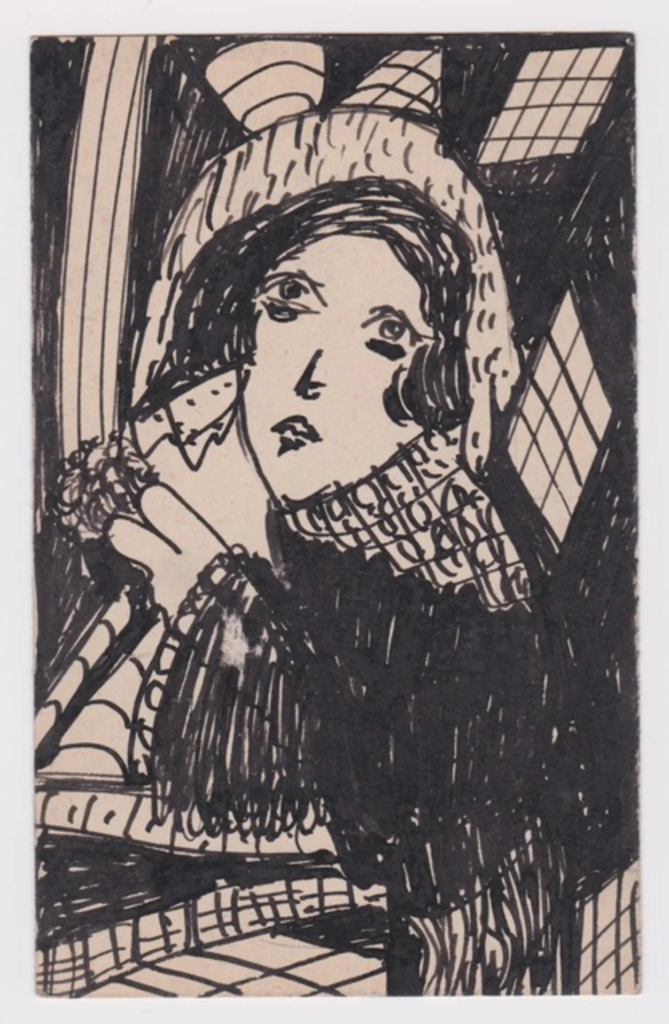
Imagine sitting down with a blank sheet of paper, only to feel that the intricate image unfolding beneath your pen wasn’t entirely your own. That was how Madge Gill understood much of her creative practice. She believed that an unseen entity she called “Myrninerest” guided her hand, transforming ordinary moments of drawing into acts of spiritual communication.
Gill’s life was marked by profound personal loss. Born in London in 1882, she endured a difficult childhood, spent years in an orphanage, and later experienced the devastating deaths of her infant daughter and a stillborn child. Following periods of illness and emotional hardship, she became deeply involved in Spiritualism, a movement that offered many people in the early twentieth century a way to seek comfort, meaning, and connection with those beyond the physical world. It was during this period that Gill began producing art with extraordinary intensity, believing her drawings emerged under the influence of Myrninerest rather than from conscious planning. Contemporary accounts and later museum research consistently describe this belief as central to her artistic identity.
Her drawings are immediately recognizable. Dense networks of hypnotic lines spread across the page, forming elaborate architectural patterns, swirling ornamentation, and the haunting faces of solemn women whose eyes seem fixed on the viewer. Many of these works are untitled, giving them an even greater sense of mystery. Rather than creating preparatory sketches, Gill often allowed the compositions to develop organically, filling every available space with astonishing precision. The result is a body of work that feels both deeply personal and strangely otherworldly, blurring the line between deliberate craftsmanship and automatic creation.
Unlike many artists who carefully exhibited and sold their work, Gill had little interest in the commercial art world. She frequently gave drawings away, stored them in trunks, or simply kept creating without concern for recognition. Thousands of works survive today, each echoing the intricate visual language she believed was shaped through her spiritual connection. Whether Myrninerest was understood as a literal spirit, a symbolic presence, or a way of expressing subconscious creativity, Gill’s drawings continue to captivate audiences because they resist easy explanation. They invite us to consider whether the act of making art can sometimes feel less like invention, and more like listening.
4. Emma Kunz: The Artist Who Used a Pendulum to Create Her Drawings
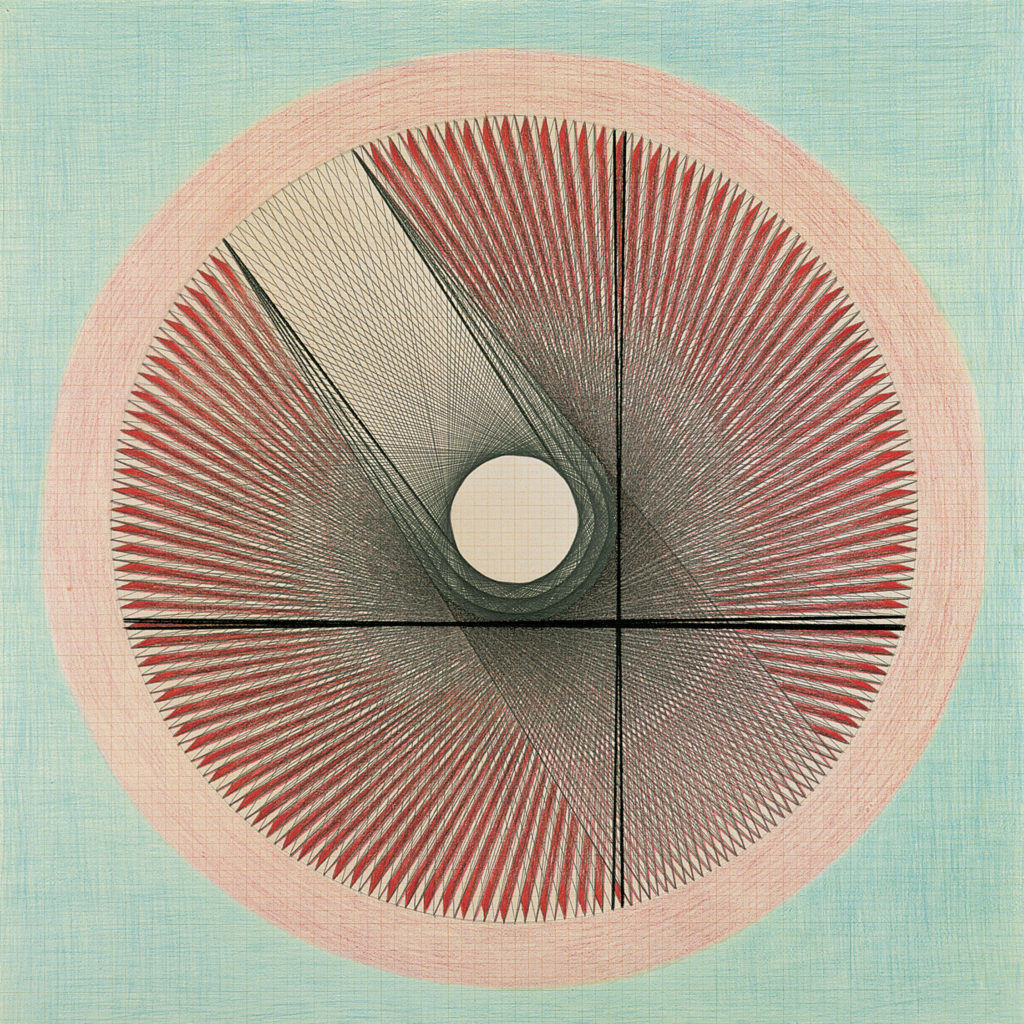
Some artists begin with a sketch. Others start with a memory, a landscape, or an emotion. For Emma Kunz, the creative process began with a pendulum.
Born in Switzerland in 1892, Kunz never considered herself an artist in the conventional sense. She was known primarily as a healer and researcher who believed that nature, energy, and the human body were connected through invisible patterns. Her intricate geometric drawings were not created for galleries or collectors but as part of her spiritual investigations. To Kunz, they were tools for understanding the unseen forces she believed shaped both the physical and metaphysical worlds.
Before beginning a drawing, Kunz would suspend a pendulum over graph paper and carefully observe its movements. She believed the pendulum responded to questions she asked, revealing energetic structures that she translated into elaborate networks of lines, circles, grids, and symmetrical forms. According to accounts of her practice, she often worked for hours, sometimes through the night, in a deeply focused, almost trance-like state. Rather than describing these works as products of artistic imagination, Kunz viewed them as visual records of knowledge received through spiritual inquiry and intuitive perception.
The resulting drawings are astonishing in their precision. Built entirely with colored pencils on graph paper, works such as Work No. 020 radiate outward in perfectly balanced layers of geometry, forming mandala-like compositions that appear both mathematical and deeply meditative. At first glance, they resemble architectural blueprints or scientific diagrams, yet the longer one looks, the more they seem to pulse with rhythm and movement. Their symmetry reflects Kunz’s belief that geometry could express universal laws governing energy, healing, and consciousness, ideas that remain central to how her work is interpreted today.
Remarkably, Kunz exhibited almost none of these drawings during her lifetime. She never sought recognition as an artist, believing instead that her works functioned as instruments for reflection, diagnosis, and healing. It was only decades after her death that museums and scholars began recognizing the extraordinary originality of her vision. Today, her drawings occupy a unique place between art, spirituality, and science, reminding us that creativity can emerge from unexpected ways of seeing the world. Whether viewed as mystical diagrams, philosophical inquiries, or remarkable works of abstraction, Kunz’s creations continue to invite viewers into a quiet conversation with the invisible.
5. Augustin Lesage: The Coal Miner Who Said Voices Told Him to Paint

One afternoon in 1911, while working deep underground in a coal mine in northern France, Augustin Lesage heard something that would alter the course of his life forever. According to his own account, an unseen voice declared, “One day, you will become a painter.” The message seemed impossible. Lesage had never studied art, had no formal training, and had little reason to believe he possessed any artistic ability. Yet that mysterious experience became the beginning of one of the most remarkable careers in twentieth-century art.
Curious and deeply affected by what he believed he had heard, Lesage soon became involved with the growing Spiritualist movement in France. He attended séances and came to believe that benevolent spirits were guiding not only his life but also his artistic practice. Rather than approaching a blank canvas with a carefully planned composition, Lesage said he allowed spiritual entities to direct his hand, trusting them to determine the structure, imagery, and symbolism of each painting. While historians do not present these experiences as objective fact, they are well documented through Lesage’s own writings and remain central to understanding how he interpreted his work.
His paintings are unlike anything created by his academic contemporaries. Works such as Composition unfold with extraordinary symmetry, filled with elaborate architectural forms, ornamental details, sacred-looking symbols, and intricate geometric patterns that seem to extend infinitely across the canvas. Every surface is meticulously balanced, creating an almost hypnotic rhythm that rewards prolonged viewing. Some scholars have compared these compositions to cathedrals, mandalas, or imagined civilizations, while others see echoes of ancient Egyptian, Mesopotamian, and Byzantine visual traditions. Despite these associations, Lesage insisted that he was not consciously borrowing from history. He believed the imagery emerged through spiritual guidance rather than personal invention.
What makes Lesage’s work especially compelling is the contrast between his background and the complexity of his paintings. A miner with no formal artistic education somehow developed an unmistakable visual language that has fascinated historians, collectors, and psychologists alike. Whether his paintings are understood as products of profound faith, intuitive creativity, or extraordinary discipline, they resist simple explanation. More than a century after that reported voice echoed through a dark coal mine, his canvases continue to raise the same irresistible question: how does an artist create something they believe was never entirely their own?
6. Fleury Joseph Crépin: The Plumber Who Believed Painting Was a Divine Mission
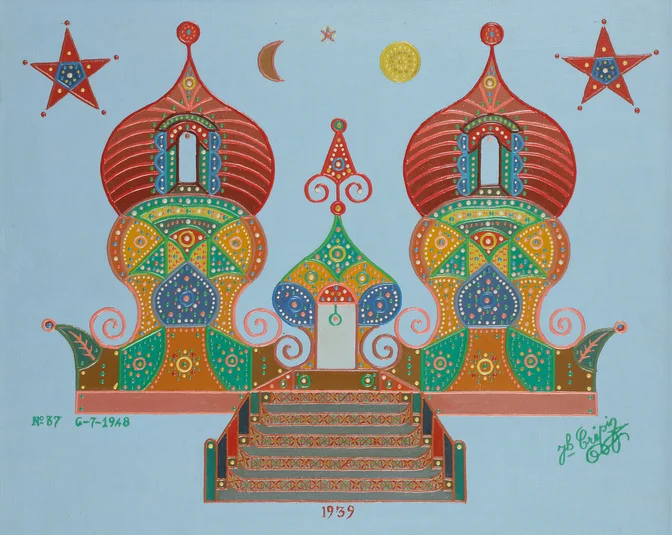
What if you believed every painting you created brought the world one step closer to peace?
For Fleury Joseph Crépin, painting was never simply a creative pursuit, it was a spiritual responsibility. Before becoming known for his visionary artworks, Crépin worked as a plumber, metalworker, and roofer in northern France. Like many others in the early twentieth century, he became deeply involved with Spiritualism, convinced that unseen forces could communicate with the living. Over time, he came to believe that his paintings were part of a divine mission entrusted to him through spiritual revelation rather than personal ambition.
Crépin’s spiritual convictions shaped every aspect of his artistic practice. He believed he had been instructed by higher powers to create a specific number of paintings, convinced that completing this sacred task would help usher in an era of universal peace. Rather than approaching each canvas as an opportunity for self-expression, he saw himself as carrying out instructions that originated beyond the material world. This belief was not something later writers projected onto his work, it was fundamental to how Crépin understood his role as an artist and remains central to discussions of his legacy. His work has frequently been exhibited alongside other spiritually inspired artists, including Augustin Lesage and Madge Gill, as part of the rich history of Spiritualist art.
His paintings immediately distinguish themselves through their extraordinary sense of order. In works such as No. 37, ornate towers, domes, floral motifs, and perfectly mirrored architectural forms unfold across the canvas with meticulous precision. Every decorative element appears intentionally balanced, creating compositions that feel almost like sacred temples imagined rather than observed. Unlike many modernists who embraced spontaneity or expressive brushwork, Crépin pursued harmony through repetition, symmetry, and intricate detail. His paintings invite viewers into carefully constructed spiritual landscapes where every ornament seems to carry symbolic weight.
Although Crépin never achieved widespread recognition during his lifetime, his work has since become an important part of conversations about outsider art and Spiritualism’s influence on modern creativity. His paintings challenge conventional ideas about artistic genius by suggesting that inspiration can be experienced as service rather than authorship. Whether one interprets his visions as expressions of profound religious faith, personal conviction, or extraordinary imagination, they reveal an artist who believed creativity carried responsibilities far greater than fame. For Crépin, every completed canvas was more than a finished artwork, it was another step toward fulfilling what he believed was a sacred promise.
7. William Blake: The Visionary Who Painted What He Believed He Had Seen

Long before Spiritualism swept through Europe, long before séances became fashionable and artists spoke of automatic drawing, William Blake was already insisting that the visible world was only one part of reality. To many of his contemporaries, his claims sounded impossible. Blake, however, never regarded his visions as imagination alone. He believed they were genuine spiritual experiences that shaped both his poetry and his art.
From childhood onward, Blake described encounters with angels, prophets, and biblical figures. In letters and later accounts by friends and family, he spoke of seeing celestial beings in trees, conversing with historical figures, and receiving inspiration through visions rather than ordinary observation. Whether these experiences are understood today as religious revelation, extraordinary imagination, or deeply personal mystical experiences, they were entirely real to Blake and formed the foundation of his creative life.
That spiritual worldview shines through masterpieces such as The Ancient of Days, one of the most iconic images in British art. Depicting a divine figure stretching a golden compass across the universe, the work blends biblical symbolism with Blake’s own mythology, presenting creation as both an act of cosmic order and spiritual mystery. Equally compelling is The Great Red Dragon and the Woman Clothed with the Sun, where luminous color, dramatic movement, and visionary imagery transform the Book of Revelation into something intensely personal. Blake did not paint the supernatural as fantasy; he painted it as something he believed could be encountered.
Unlike many artists in this article, Blake never participated in Spiritualist circles or claimed that spirits physically guided his hand while he worked. His influence lies elsewhere. He expanded the very idea of what artistic inspiration could be, arguing that imagination itself was a pathway to higher truth. That conviction would echo through generations of artists searching for meaning beyond the material world, from Symbolists and Theosophists to Spiritualists such as Hilma af Klint. As curator James Brett observed, Blake became “the spiritual godfather” for many artists exploring unseen realities in the centuries that followed.
More than two hundred years after his death, Blake’s art still occupies a fascinating space between literature, religion, philosophy, and painting. His works do not ask viewers to believe in his visions. Instead, they invite us to imagine that creativity itself may sometimes begin with seeing a world others cannot.
Whether these artists were inspired by spiritual beings, profound mystical experiences, or the limitless depths of their own imagination is a question that history cannot definitively answer, and perhaps it was never meant to. What we do know is that these beliefs were deeply real to the artists themselves. Preserved through journals, letters, exhibition catalogues, interviews, notebooks, and their own writings, these convictions became an inseparable part of their creative process, shaping not only what they painted but also how they understood the purpose of art.
Today, these remarkable works can be appreciated from many perspectives. Some viewers see them as powerful expressions of faith, others as explorations of psychology, symbolism, or consciousness, while many admire them simply for their originality and lasting influence on the history of art. Regardless of interpretation, they remind us that creativity has never been confined to what can be easily explained. Throughout history, artists have often ventured into places where certainty gives way to curiosity and where imagination meets the unknown.
Perhaps that is the enduring legacy of these artists. Their paintings do not ask us to accept the existence of spirits or unseen worlds as fact. Instead, they invite us to understand how deeply held beliefs, whether spiritual, philosophical, or intensely personal, can shape extraordinary works of art. More than a century later, their paintings continue to inspire wonder not because they solve life’s greatest mysteries, but because they preserve them, reminding us that some of the most compelling stories in art history are not about having all the answers, they’re about daring to explore the questions.
Which artist fascinated you the most? Do you think creativity can come from beyond ourselves?
If stories where art meets mystery intrigue you, you might also enjoy exploring how one Japanese printmaker transformed something as ordinary as rainfall into breathtaking works of art in our article, Kawase Hasui Is Still the Master of Rain.