
Marlene Suter uses photography, colour, & playful styling to turn dogs into pop icons
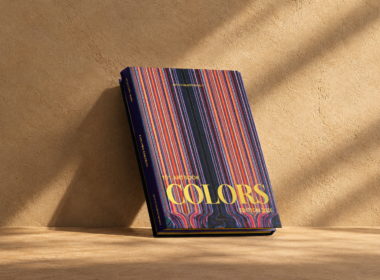
At Arts to Hearts Project, our 101 Artbook: Dog Edition is one of the most joyful publications we have ever put together. And Marlene’s Pop Dogs Project is a big part of why.
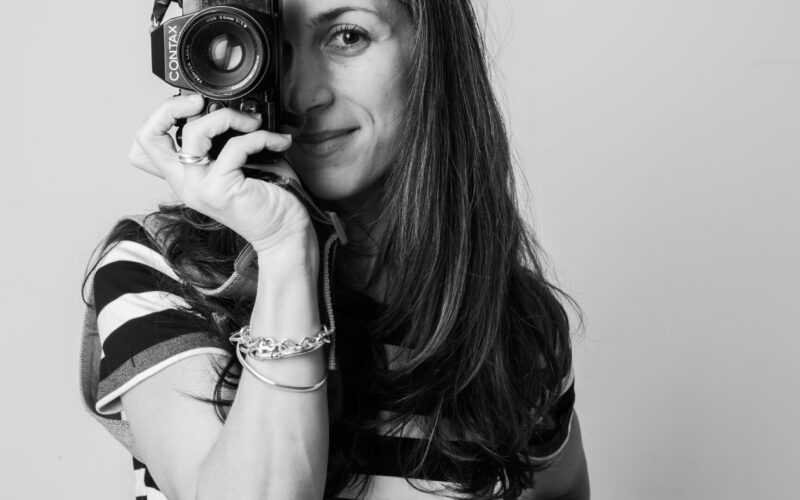
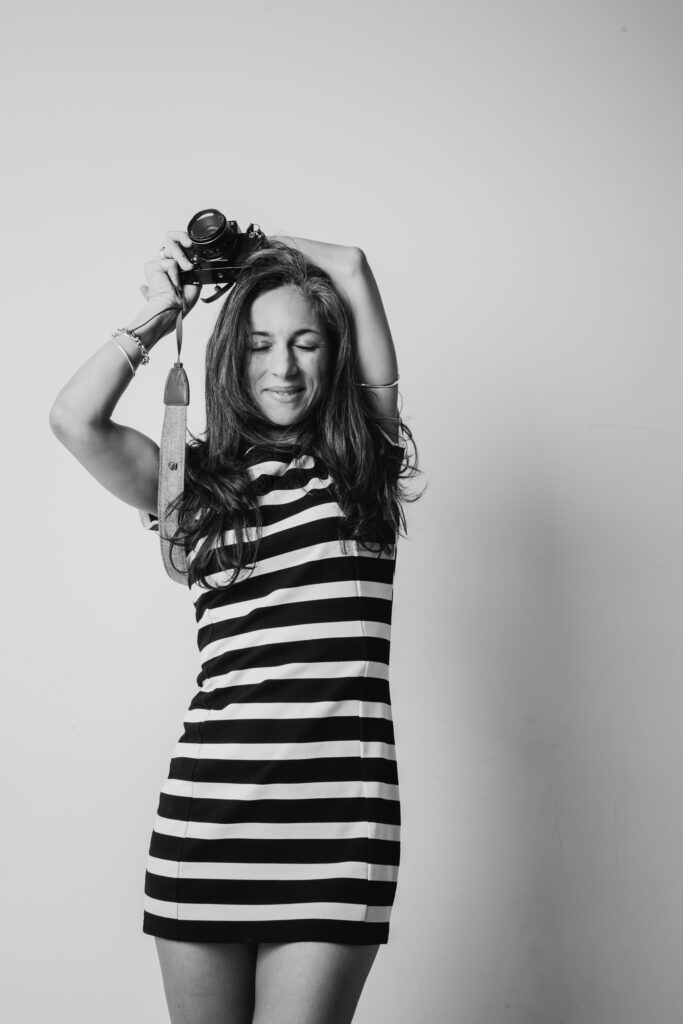
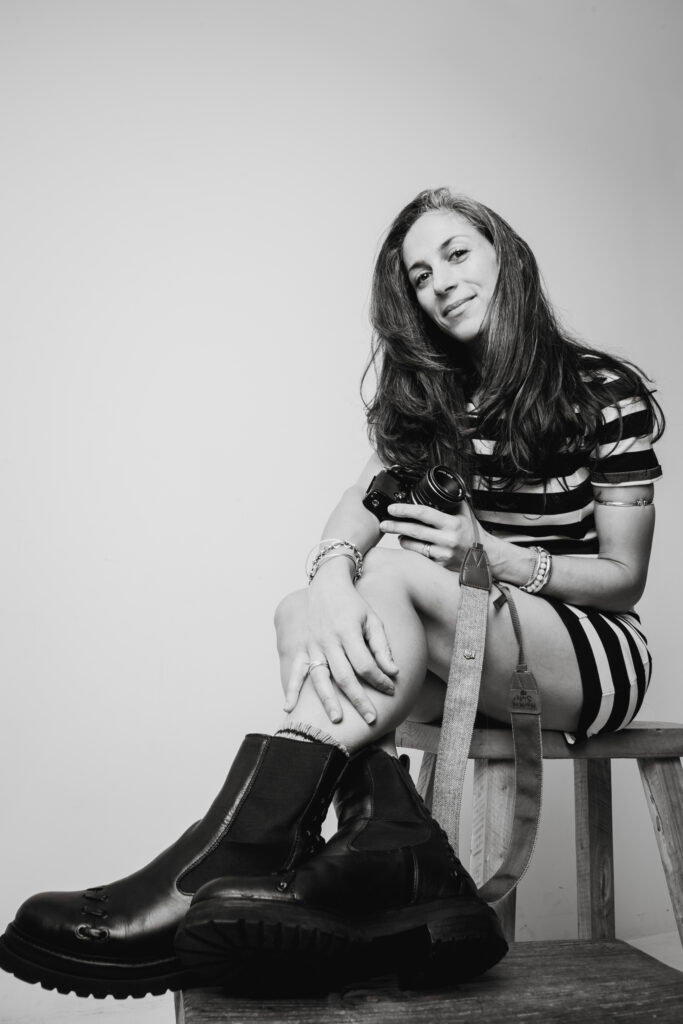
Marlene is one of the selected artists featured in this edition. A UK-born photographer now based in Australia, her work sits somewhere between photography, pop art, and portraiture, with dogs taking centre stage. More specifically, her dog Marlo, who may be one of the most patient and quietly unimpressed muses we have ever come across.
He wears wigs, oversized glasses, and elaborate hats, all while looking at the camera with the calm dignity of someone who has accepted that this is simply part of life now. It is that contrast between the bold, playful styling and Marlo’s wonderfully composed expression that makes the images work so well.
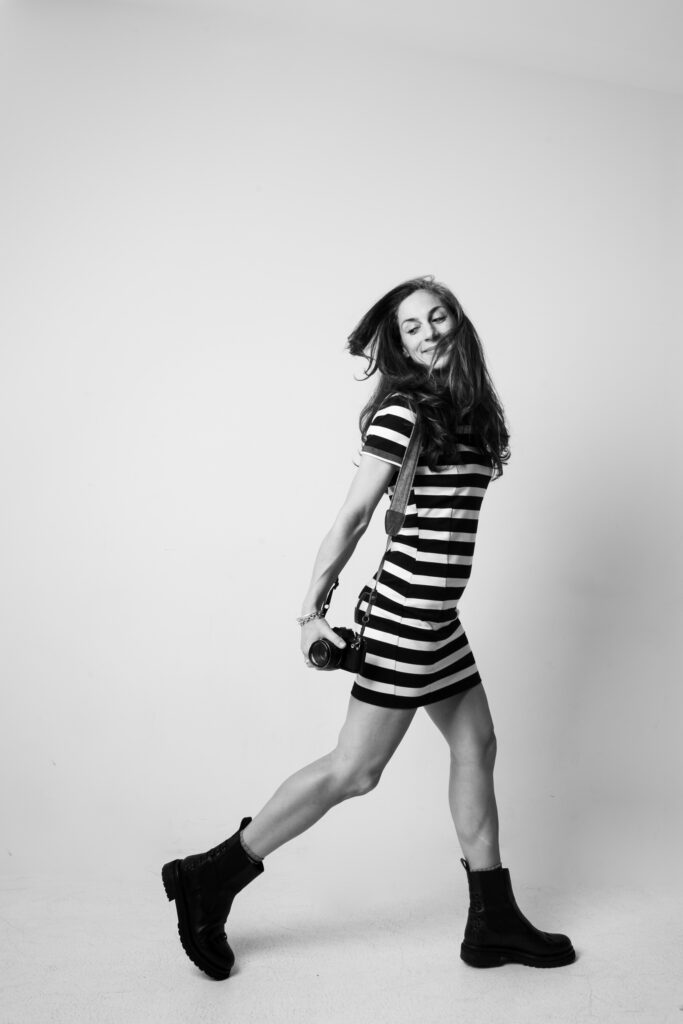
But Pop Dogs is more than novelty photography or simply cute dogs in costumes. There is a clear visual intelligence behind what Marlene is creating. She studied Art and Design, spent years working in the film industry surrounded by visual storytelling, and later built a photography practice in Australia before Pop Dogs arrived almost by accident.
The photographs have the energy of pop art portraits, with the dog positioned as the celebrity, the star, the central figure commanding the frame. Giving dogs the kind of visual treatment usually reserved for cultural icons is part of what makes the project so distinctive. Marlene approaches the idea seriously without ever losing the humour that makes it so enjoyable.
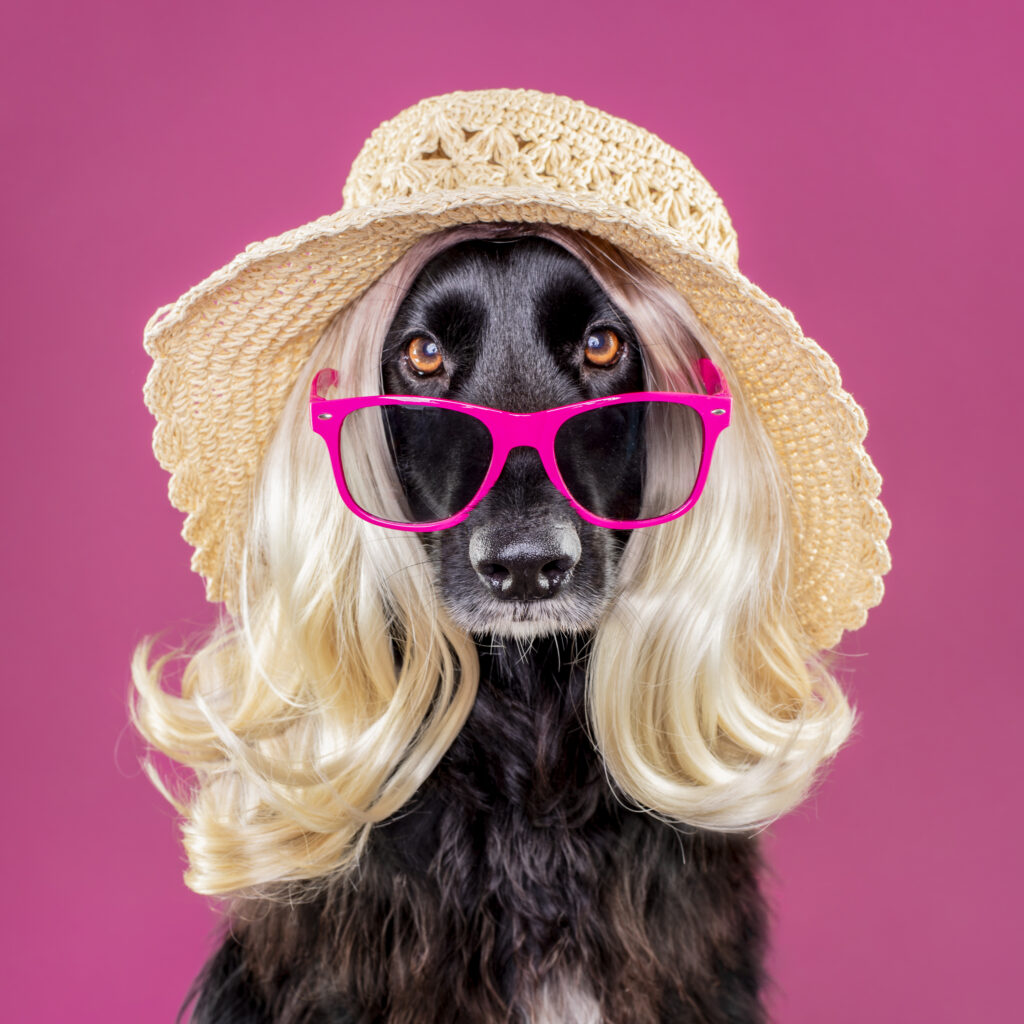
2024 24″x 24″Archival photographic print
Her colour palettes are bold and uplifting. The styling is carefully considered. Each image has its own mood and personality. Yet underneath all the colour and theatricality, there is something much more personal at work: the relationship between Marlene and Marlo.
She has a way of finding the moment between the styling and Marlo’s natural response when something shifts. Suddenly, the image is no longer simply a photograph of a dog wearing a wig. It becomes a portrait of a character you feel you somehow know.
What Marlene looks for in those moments, and how she knows when she has found the right photograph, is something she reflects on during our conversation. Her answers reveal the thoughtfulness behind work that, at first glance, appears effortlessly fun.
Let’s get to know Marlene as she shares how Pop Dogs began, her creative partnership with Marlo, and how joy became central to her creative practice.
Q1. Marlene, could you share a little about your background and journey as an artist?
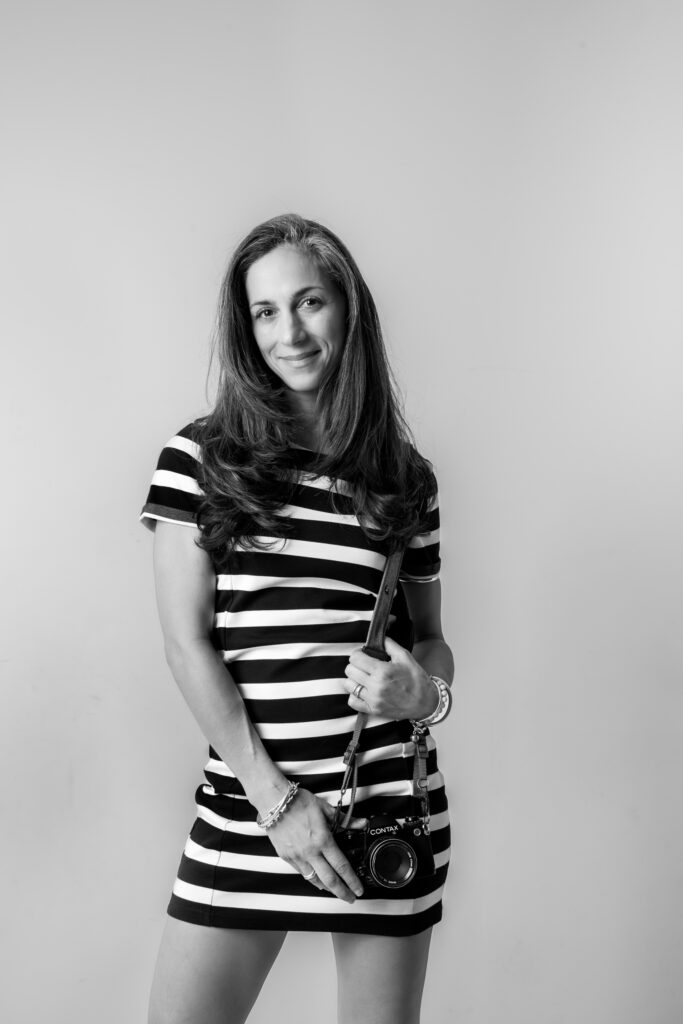
I grew up in the UK and studied Art and Design, completing a BA (Hons), so creativity has always been a big part of who I am. After university, I moved into the film industry, where I spent many years surrounded by visual storytelling and creative people. Life later brought me to Australia, where I continued my creative journey through photography.
I don’t think there was one single moment when I realised creativity would be important in my life. It has always felt like something I needed. Whether through art, film or photography, I’ve always been drawn to creating, observing and telling stories visually.
Q2. How did the idea for the Pop Dogs Project first come about, and what inspired you to pursue it?
PopDogs began with Marlo Merle, my ever-patient dog and original muse, a couple of playful props and a simple creative instinct to make something joyful, bold and full of character. At the time, I wasn’t setting out to create a full project. I was simply experimenting with colour, styling and portraiture, and allowing myself to play. What struck me first was the joy and humour the images created.
Marlo’s quiet, slightly unimpressed expression brought a wonderful contrast to the bold styling, and very quickly the work began to feel like its own visual world. People connected with the warmth, colour and character immediately, and that response made me realise PopDogs had its own energy, something worth developing into a larger artistic project.
Q3. What goes into turning a photograph of a dog into a character with its own story?
The visual language evolved very naturally. PopDogs began with a playful photograph of Marlo, but there was something in that first image that immediately felt stronger than a simple portrait. It had humour, colour, character and a boldness that I wanted to explore further, naturally drawing on my love of photography and the spirit of pop art. Over time, that natural sense of fun became more considered and refined.
The styling, props, colour palettes and descriptions all became part of a carefully curated series, helping each image feel distinctive and full of personality. As PopDogs continues to grow, I still want to protect the joy and spontaneity that made the work feel special in the beginning, while developing it into a stronger artistic project and brand.
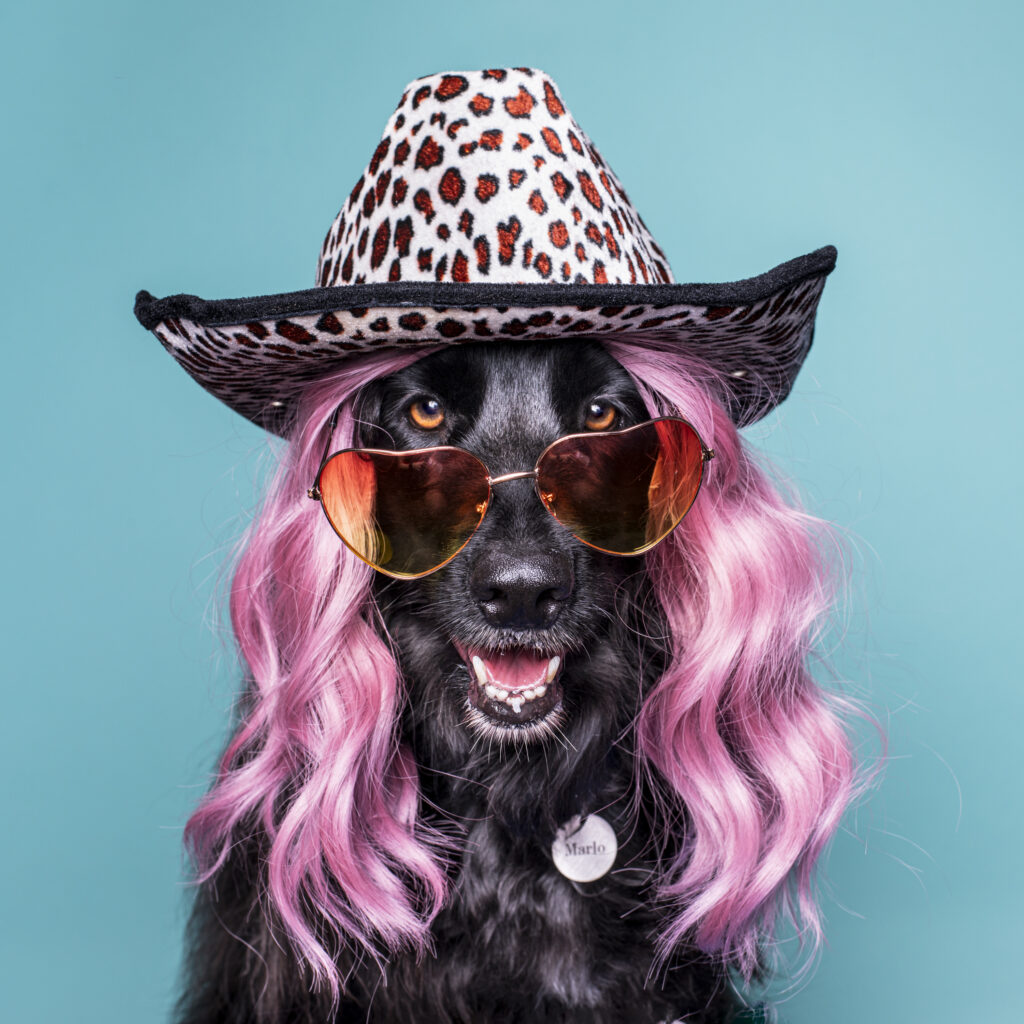
2024 24″x24″ Archival photographic print
Q4. Looking through Pop Dogs, each dog feels like a character rather than simply a portrait. What helps you bring that sense of individuality into the work?
For me, the character often appears in the moment between the styling and Marlo’s response. A wig, hat or pair of glasses can suggest a mood, but it is his expression. The way he looks, reacts or simply sits with it, that brings the image to life. I never want PopDogs to feel like a dog just wearing something. I’m looking for that little spark where humour, attitude and affection come together, and the portrait becomes a character.
Q5. What makes you look at a finished piece and feel that it is truly complete?
For me, I know I’ve captured it when the image carries a feeling, not just a likeness. The statement props — glamorous wigs, oversized glasses and playful hats, bring colour and personality, but there is always a sense of slightly unruly glamour in the way Marlo wears them. When the styling, expression and mood all come together, the photograph becomes more than a portrait. It has presence, humour and heart.
Q6. Your work balances humour, affection, and storytelling. Where do the stories behind each piece usually begin?
Often, the narrative begins with a mood rather than a fixed story. I might start with a colour, a piece of styling or a simple visual idea, but once Marlo is in front of the camera, he brings something I could never fully plan. His patience, stillness, curiosity or quiet resistance can change the whole feeling of an image. That is when something simple becomes humorous, affectionate and full of character.
Q7. Has working closely with dogs changed the way you think about companionship and connection?
Yes, definitely. Working with Marlo has made me even more aware of the quiet understanding that exists between dogs and the people who love them. I keep the studio moments gentle and never too long, so I’ve become very tuned in to his little signals, when he is curious, comfortable, patient, or ready to finish. That has deepened the way I see companionship.
Dogs become part of the rhythm of your life. They are family, with their own moods, humour and ways of communicating. I think people connect with PopDogs because beneath the colour and styling, there is something very familiar, affection, personality and the bond every dog lover understands.
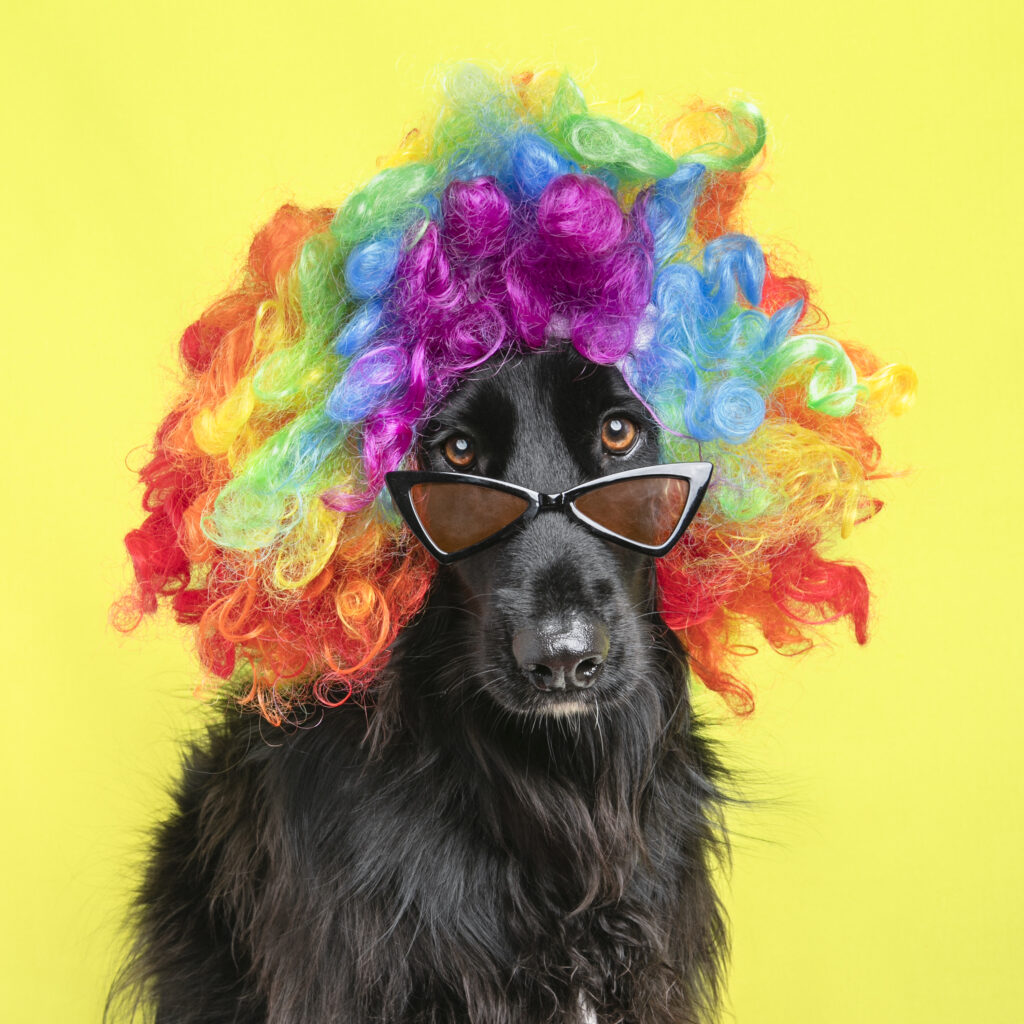
Marlo on banana, with a curly pride wig and orange-tinted angular shades. 2022 12″x 12″ Archival photographic print
Q8. Animals communicate without words. Does that emotional honesty influence your work?
Yes, I think so. Animals may not communicate in the same way we do, but they are very honest in how they respond to a moment. With Marlo, I notice the small things — whether he is curious, comfortable, patient, or ready to finish. Creatively, I find myself responding to that honesty. I don’t want to force an emotion onto him. I want the image to hold something real, even if it is quiet, funny or very subtle.
Q9. Have your own dogs influenced the direction of your life or creative journey?
Yes, in a way I didn’t expect. Photography has always been part of me. I have always loved capturing moments and documenting what is around me. But Marlo opened up a completely different creative space. Through PopDogs, I began using photography in a more constructed, colourful and imaginative way. It allowed me to bring together my love of bold imagery, styling and pop art, and to create a visual world that felt fresh, joyful and full of possibility.
Q10. By placing dogs at the centre of your pop art, do you see them as cultural icons in their own right?
Yes, that idea is really at the heart of PopDogs. I loved the thought of bringing a dog into the bold visual world usually reserved for icons, celebrities and cultural figures. With Marlo, it felt both playful and powerful. He is not treated as just a pet in the image, but as the central figure, full of presence, character and charm. PopDogs gives dogs that stage.
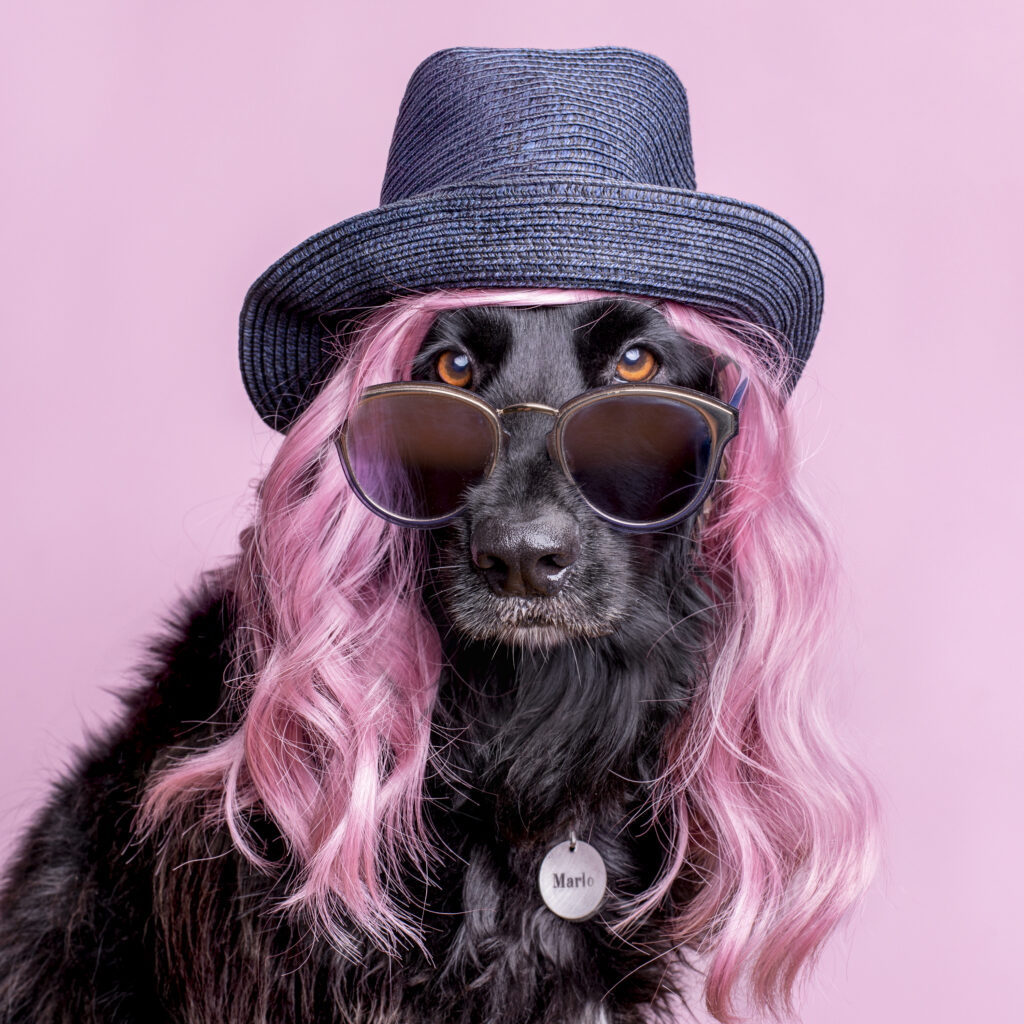
2024 30″ x 30 ” Archival photographic print
Q11. What influences your colour choices most, the dog’s personality, its story, or your own instinct?
The colour choices come from my love of bold, vibrant photography and the spirit of pop art. PopDogs gave me a joyful way to explore that visually through Marlo, colour and character. I’m drawn to palettes that feel uplifting and full of energy. The colours help create the immediate sense of joy in the work, while giving each image its own mood and personality.
Q12. Has your definition of success changed since you first started sharing your work?
Success, for me, is seeing the emotional response the work brings to people. Whether it is a client, a collector or someone simply viewing the images, that connection brings me great joy.
If the work makes someone smile, feel something or connect with the image in their own way, then that feels like a very meaningful kind of success.
Q13. How do you protect the joy of creating as your practice continues to grow?
I protect the joy by keeping Marlo at the heart of it. He is still the reason PopDogs began, and every time I introduce a new prop or idea, he brings something different to the image a new feeling, character or little moment that reminds me why I started. As the project begins to grow and other dogs become part of the series, I think that joy will continue in a new way. Each dog brings their own personality and energy, which keeps the work fresh while staying connected to the playful spirit of PopDogs.
Q14. What has your journey taught you about finding an authentic creative voice?
My journey has taught me that your authentic voice often appears when you keep creating and stay open to new ideas. For me, PopDogs began because I was willing to try something in the moment. Marlo was there, I had a wig and glasses from my prop box, and I followed the spark of an idea. That openness led me somewhere I didn’t expect. Whatever creative medium you work in, I think the message is the same: keep practising, stay curious, and follow the work that brings you joy and excitement.
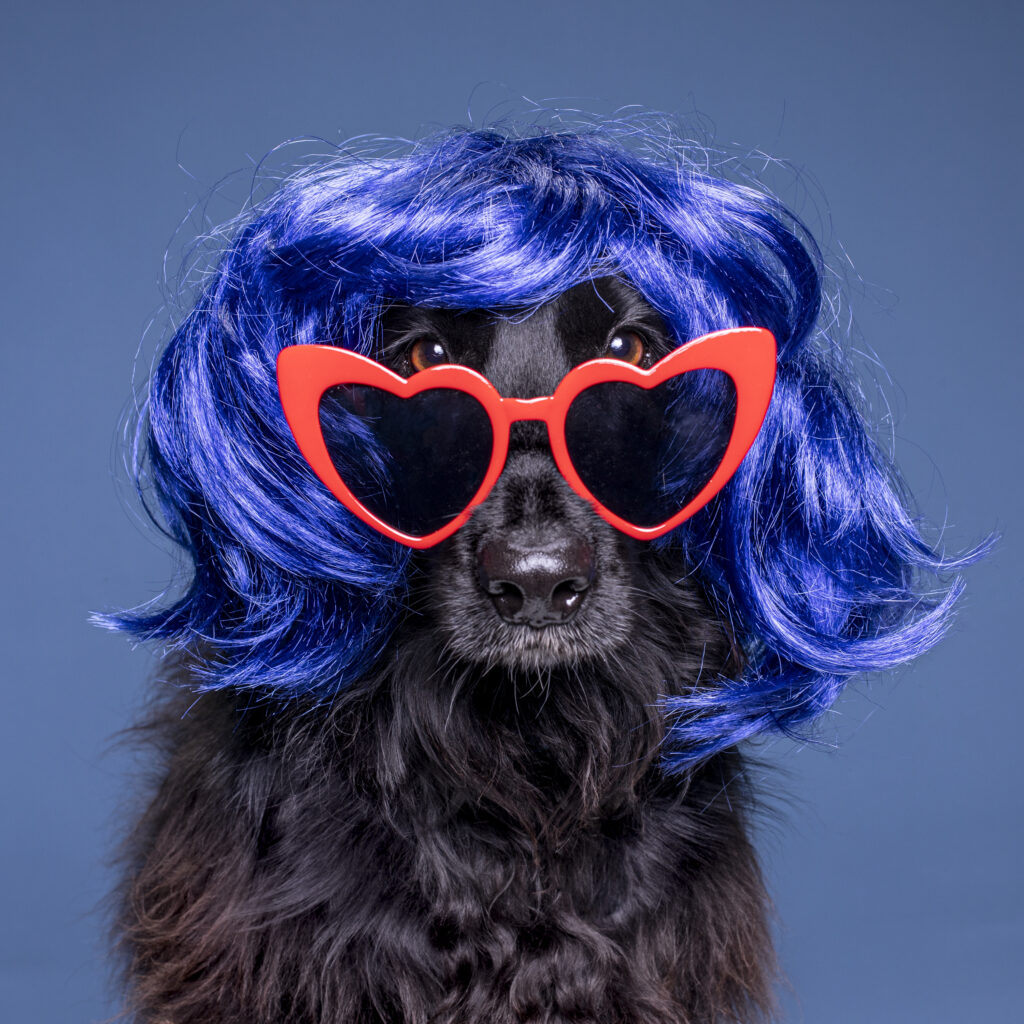
2023 24 ” x 24 ” Archival photographic print
As we wrapped up our conversation with Marlene, we kept thinking about something that the art world does not value nearly enough. Joy.
Because joy gets dismissed a lot in creative circles. It gets treated as lightweight. As not serious enough. As something that belongs on greeting cards and Instagram reels but not in a real artistic conversation. And we think that is completely wrong. Making work that genuinely makes people happy is not easy.
Making work that is colourful and playful and fun while still being thoughtful and considered and artistically legitimate is actually one of the hardest balances to strike. Plenty of work is serious and respected and does not make a single person smile. Making someone smile while also making something genuinely good is a skill that deserves more credit than it gets.
Marlene found that balance. Pop Dogs is joyful and bold and colourful and funny and also carefully curated and visually smart and grounded in a real understanding of photography and pop art and visual storytelling.
None of the playfulness is accidental. None of the joy is naive. It is the result of an artist who studied her craft, worked in film, built a photography practice, and then allowed herself to follow the thing that brought her the most creative excitement even though it did not look like what serious art is supposed to look like.
We also love what Pop Dogs says about the animals in our lives. That they are not just pets sitting in the corner of our daily routine. They are characters. Personalities. Companions with their own moods and their own humour and their own ways of communicating that are more honest than most human conversation.
Marlo does not perform for the camera. He just sits there being exactly who he is and Marlene captures that with enough love and enough skill that you feel like you know him by the time you have looked at three images. That kind of connection between artist and subject cannot be faked and it is what gives Pop Dogs its heart underneath all the colour.
For art lovers and collectors, Marlene’s Pop Dogs images bring something into a space that is genuinely hard to find elsewhere. Pure uncomplicated happiness. The colours are bold, the compositions are strong, the character in every image is undeniable, and the whole thing makes you smile every single time you look at it.
That does not wear off. Joy does not get old the way provocation does. A painting that made you uncomfortable might stop making you uncomfortable after six months. An image that makes you happy will still make you happy in ten years. That is the kind of art worth having on your wall.
Follow Marlene and the Pop Dogs Project through the links below and see Marlo in all his patient, slightly unimpressed, gloriously wigged glory.