At Arts to Hearts, we believe that the most powerful art is the kind that shows people what is possible — that makes someone look at a painting and think, for the first time, that the life they have been dreaming of is something that can actually exist.
Our Best of the Art World editorial was built to find exactly those artists. And today we are so genuinely moved to introduce you to one whose entire practice is built on exactly that belief.
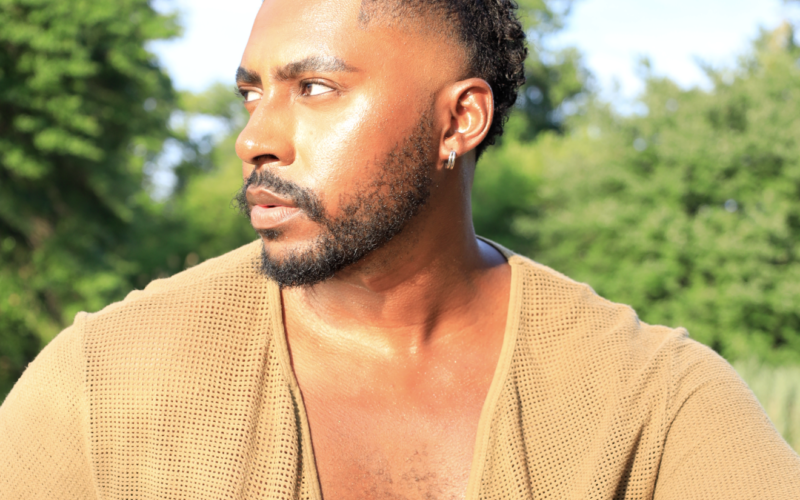
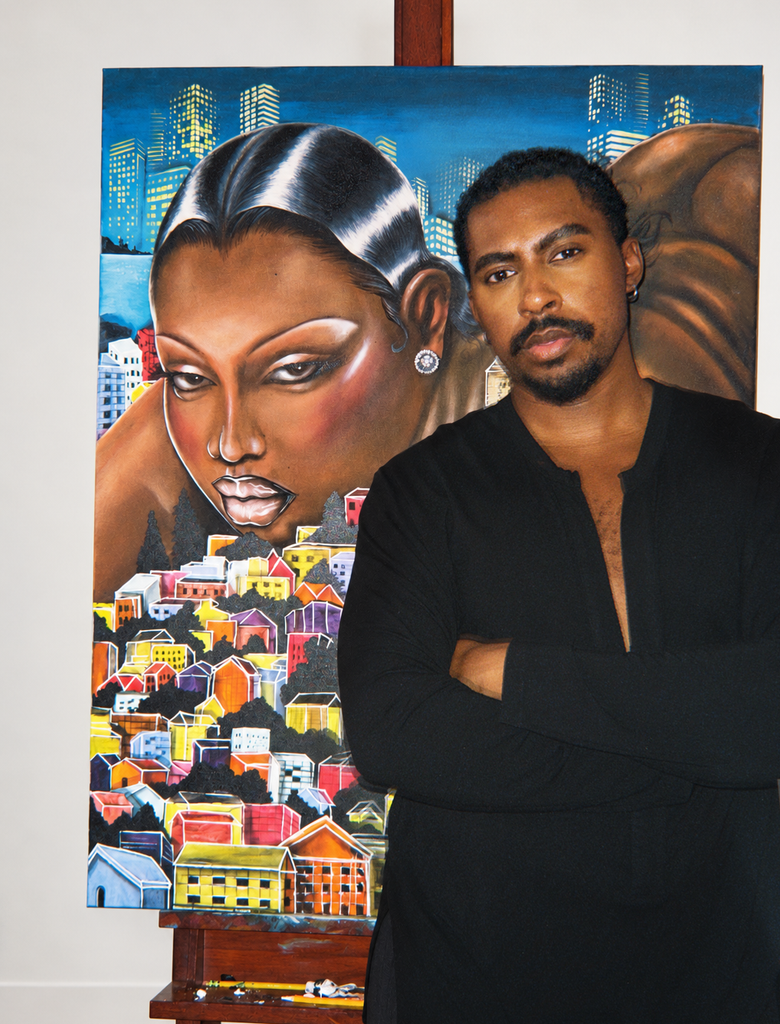
Osaze Akil Stigler is a Chicago born, Atlanta based multidisciplinary artist whose paintings do something that feels both simple and profound they place Black figures in positions of comfort, beauty, power, and exaltation. Not as a political statement. Not as a correction of a historical wrong. But as a reminder of something that should never have needed reminding.
That every human being deserves to feel empowered, comfortable, and seen. That the visual of a life fully lived and fully felt matters. That sometimes all it takes is seeing something to begin believing it is possible.
He began painting at six or seven years old, watching his mother paint and recognising in her something he immediately understood that this was a space where nothing else mattered except how you saw the world and how you wanted to express it.
Growing up on the west side of Chicago, in a city he describes as intentionally and terribly segregated, that space of creative freedom was not just pleasurable. It was necessary. And when his family moved to Atlanta at eleven a city known for its visible, thriving Black success something shifted in what he believed was possible for his own life. That shift became the engine of everything he makes.
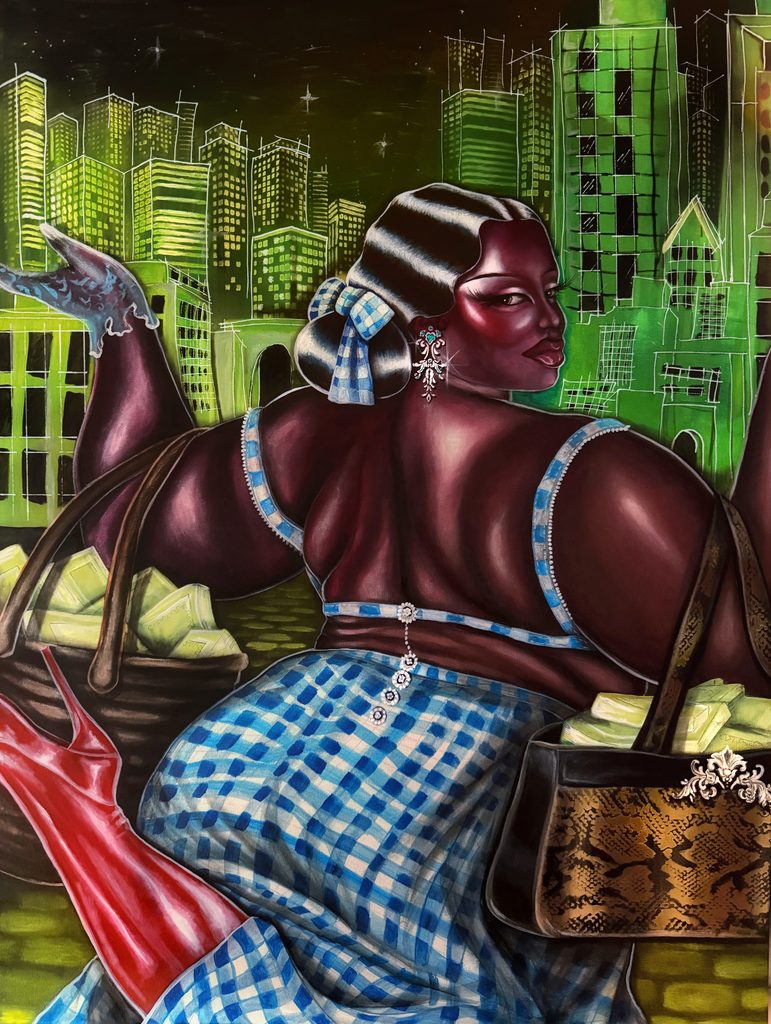
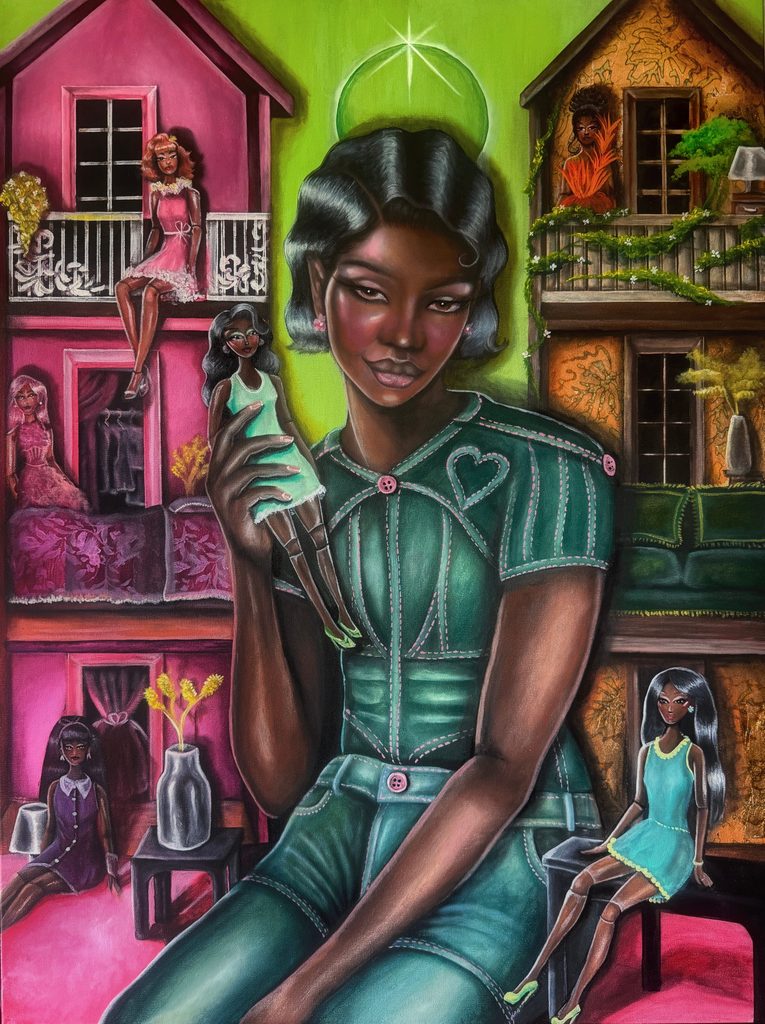
His paintings are elegant, considered, and visually rich. Fashion plays a central role in his visual language clothing as a form of autonomy, as a declaration of how you want the world to encounter you, as an act of defiance and beauty simultaneously.
“All That Glitters is Owed” 2026, 36″ x 48″. Acrylic & Ink on Canvas
His figures are sketched several times before they reach the canvas, a process through which Osaze describes himself as a collaborator rather than a creator listening to what the figure wants the world to know through them before he solidifies it in paint. And then, even in the painting itself, things evolve and emerge that were never in the sketch. The work is always becoming something more than he initially imagined.
Beyond painting, his practice extends into experiential design, fashion, and spatial storytelling a multiplicity of disciplines that come together into something he describes as a more holistic story that is uniquely his own.
He is building a world. And the world he is building is one where the people who have been made to feel invisible are placed at the centre of something extraordinary.
Let’s get to know Osaze through our conversation with him, where he talks about Chicago, Atlanta, fashion as defiance, and the deeply held belief that the visual of a life fully lived can change what someone believes is possible for their own.
Q1. Osaze, you began painting at six or seven, inspired by watching your mother. What do you remember most about those early creative moments?
I remember the freedom. I got to escape into my paintings. Growing up, I was always recognized for being “different”. So, being able to create a space and a world where I felt completely safe was so good for me.
Especially when it came to watching my mom. I could tell it was the same for her. It was a moment where nothing else mattered besides how she saw the world and how she wanted to express it in that moment, and I Loved that.
Q2. You describe painting as a form of release. How has that relationship with art changed as your practice has grown?
Now that art has also become work, I have to balance the responsibility of “doing the work”, and creating for the sake of creating, and getting a release. The weight of it all has changed as I’ve progressed as an artist. However, it’s still something that I wouldn’t change for the world.
For me, being an artist isn’t really a choice. It’s simply how I exist in the world.
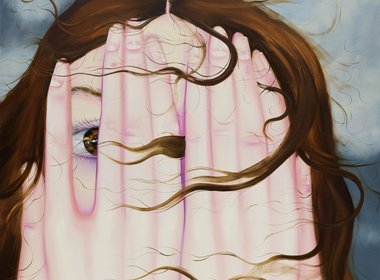
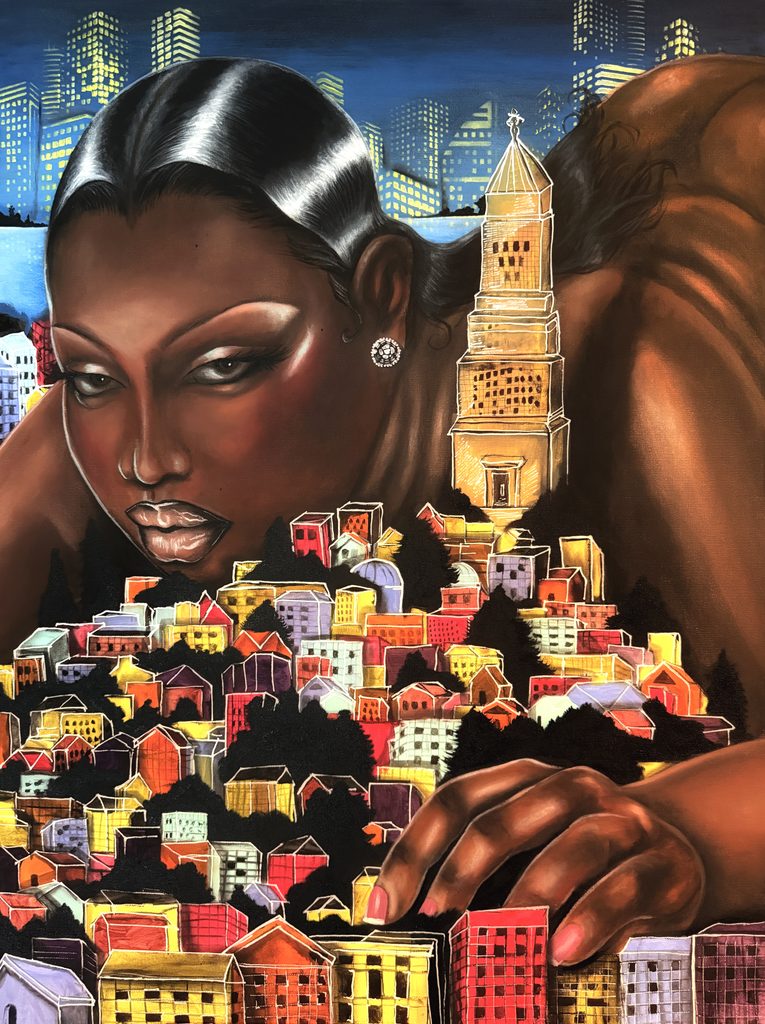
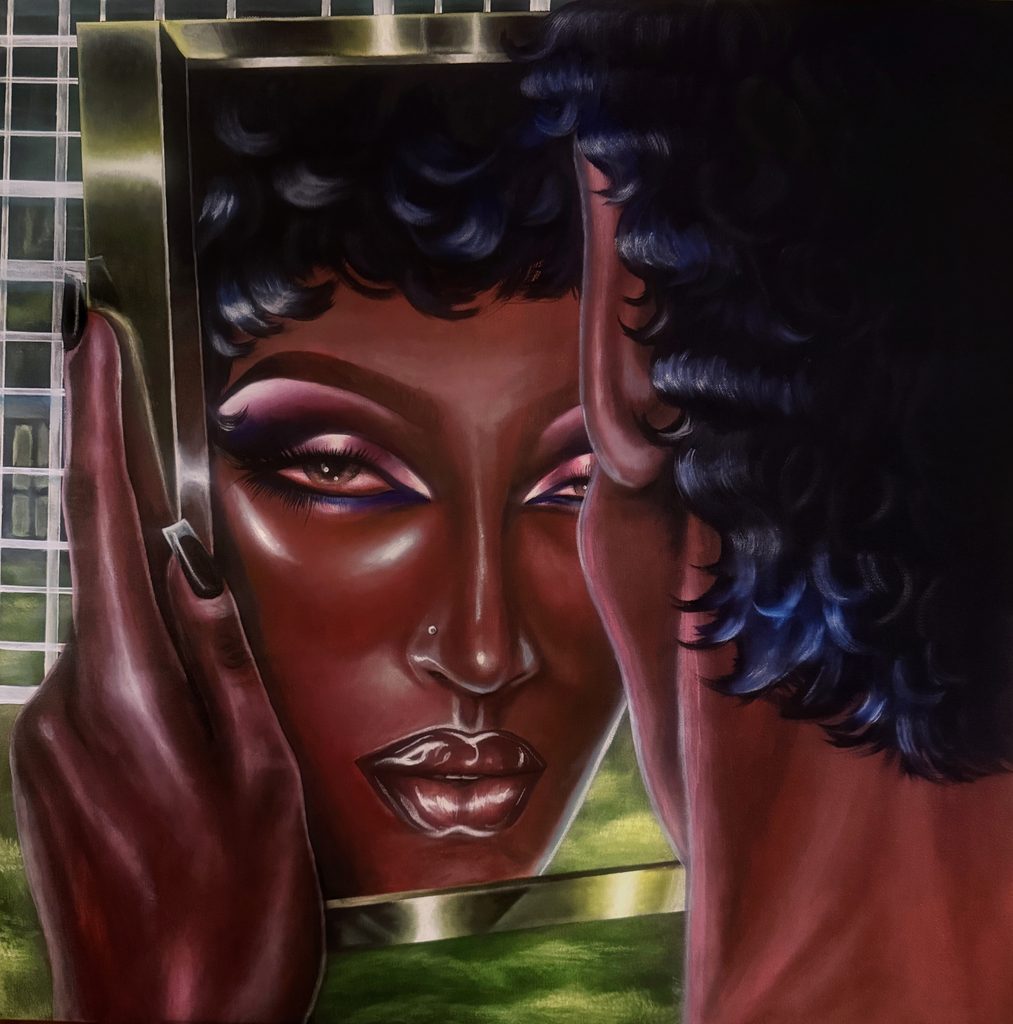
“Resisting Eminent Domain” 2026, 30″ x 40″. Acrylic & Ink on Canvas
Q3. Your work presents Black subjects through images of comfort, beauty, and power. What inspired you to explore this kind of representation?
I was born in Chicago and moved to Atlanta when I was 11. Growing up on the west side of Chicago was difficult. Firstly, Chicago is a terribly segregated city, and it’s been intentionally designed to be that way. Because of that, I felt cut off from a lot (resources, opportunities, and even hope.) When I moved to Atlanta, that all changed for me. Atlanta is known for being the land of successful black people.
As far as metropolitan American cities go, that hold up tremendously by comparison. That move shaped what I believed to be possible for me and my life. Simply because I saw things that made be believe bigger. It made me realize that sometimes we just need to see that the vision of our lives that we dream of can be made possible. The visual of it is important. That’s when I started making the work that I do.
Q4. Your figures often appear powerful, comfortable, and elegant. What do you hope these images communicate to viewers?
I’m not sure that I view it as a reclamation at all. I believe that every human should feel those things. Everyone deserves to live a life where they feel empowered, comfortable, etc. My work simply reminds people of that, in a world that forces us as lack and marginalized folks to forget.
Q5. Fashion plays an important role in your visual language. What does clothing allow you to express about identity and personal choice?
Autonomy. It all goes back to the ability to choose how you show up in the world, and how you want the world to encounter you. I think back to the Tignon laws of Louisiana where black women were forced to wear head coverings to cover their natural hair, and in defiance of the law, they made beautifully extravagant headdresses. There’s so much power in that to me.
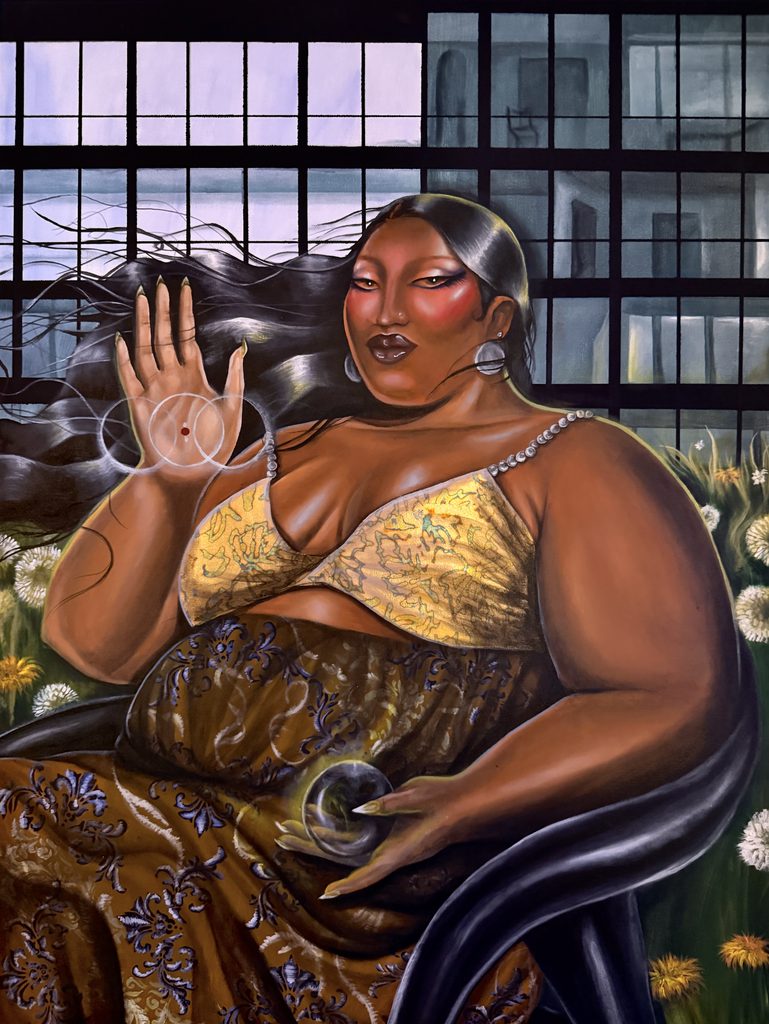
“Backyard Alchemy” 2026, 30″ x 40″. Acrylic & Gold Leaf on Canvas
Q6. You sketch your figures several times before painting them. What are you looking to understand during this early stage?
I’m understanding who the figure is and what they want the world to know through them. Their poses, gaze, clothing, etc. I feel more like a collaborator than a creator in that sense.
I let the idea of the figure speak to me first, and I solidify it through those sketches. It doesn’t end with the sketches though. I end up painting things that weren’t included in the sketch at all. It’s an evolving journey until the painting is finished.
Q7. Your practice spans fine art, experiential design, fashion, and spatial storytelling. How have these different disciplines shaped your creative identity?
It’s made me identify more as a multidisciplinary artist versus just a painter. I continue to dabble into different mediums and materials as I hone and shape this world that I’m building in my work.
There’s this inherent multiplicity about the disciplines that I’ve worked in that makes a more holistic story that is uniquely me, and I’m grateful for that.
Q8. You believe being an artist is about continuing to create rather than seeking recognition. Has that perspective changed as your career has developed?
As my career has grown, it has changed slightly. The work will always be at the center of what I do, not the external validation that comes out of creating it. However, I recognize that there are certain career thresholds that help amplify one’s vision.
And for me, I think that the amplification of the work and who it may help, is equally as important. Institutional recognition and support have become increasingly more important for me as I grow. Not because of what it means for only me, but because of who then has access to it.
“The Worldbuilder” 2026, 30″ x 40″. Acrylic & Gold Leaf on Canvas
As our conversation with Osaze drew to a close, one thing stayed with us more than anything else. He said that being an artist is not really a choice. It is simply how he exists in the world.
That is such a complete and quiet statement. And sitting with it, you realise it explains everything about why the work feels the way it does. There is no distance between Osaze and what he makes. No separation between the person and the practice. The paintings about Black figures in positions of power and comfort and beauty they did not emerge from an artistic strategy or a market position or even a political philosophy.
They emerged from a child who moved to a new city and for the first time saw what was possible. From a person who understood, viscerally and personally, what it means to finally see something that makes you believe your own life can look different.
That kind of origin produces work with a particular quality. Not the quality of something that was designed or calculated, but the quality of something that was genuinely needed. Work that carries the weight of real experience and the warmth of real conviction.
“I Found What I Was Looking For” 2026, 30″ x 30″. Acrylic & on Canvas
Work that does not just represent it reminds. It reminds the person looking at it that they deserve to exist in the fullness of their own life, that comfort and elegance and power are not aspirational extras but fundamental human experiences that belong to everyone.
In an art world that often talks about representation in theoretical terms, Osaze is doing something more personal and more immediate than that. He is painting the visual of a life that people can look at and think yes. That is possible. That can be mine.
For those who collect work that carries that kind of conviction work made from a place that is genuinely true and genuinely necessary his paintings offer exactly that. The kind of work that changes something in the room it enters. The kind that stays with you long after you have looked away.
Follow Osaze Akil through the links below and see for yourself what it looks like when an artist paints from a place of complete conviction.