

Camilla Frare’s oil-painted crystal figures tell a story of loss & healing

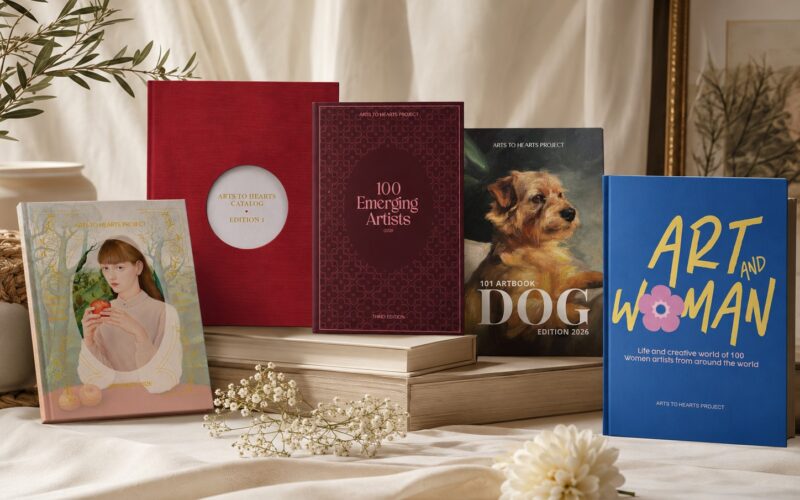
At Arts to Hearts Project, Art and Woman Edition 3 brought us a lot of powerful work from women all over the world. But Camilla Frare’ s paintings did something to us that we were not expecting. They made us feel fragile and strong at the same time. Which when you think about it is exactly what her work is about.
Camilla is one of our selected artists for this edition. She is Argentinian, based in Miami, and she paints full time in oil on large canvases with a colour palette that hits you before you have had time to think about what you are looking at.
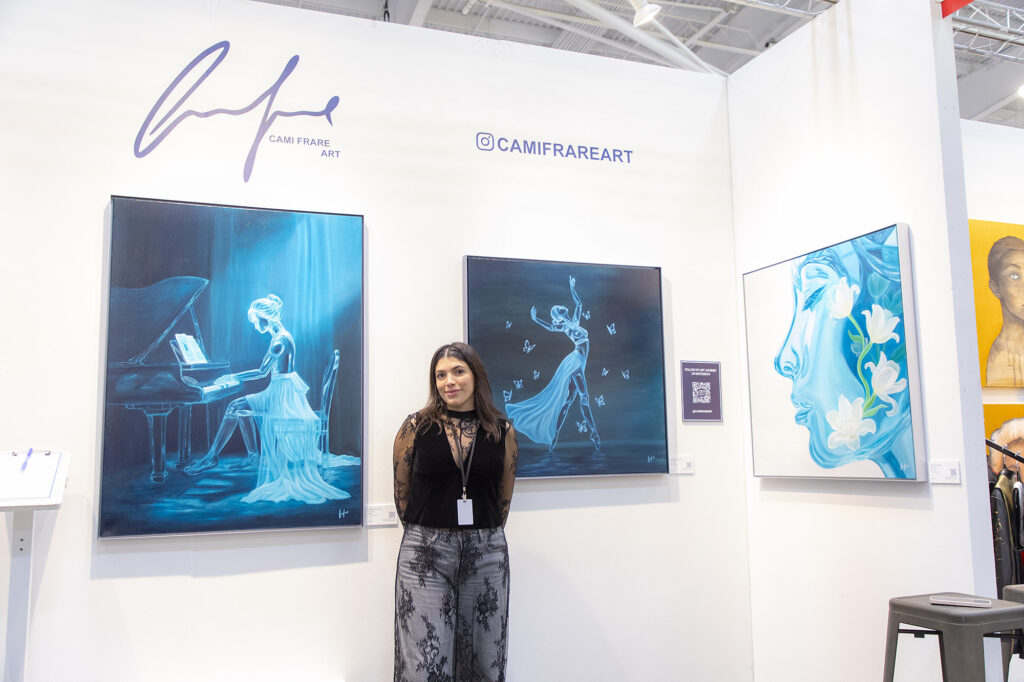
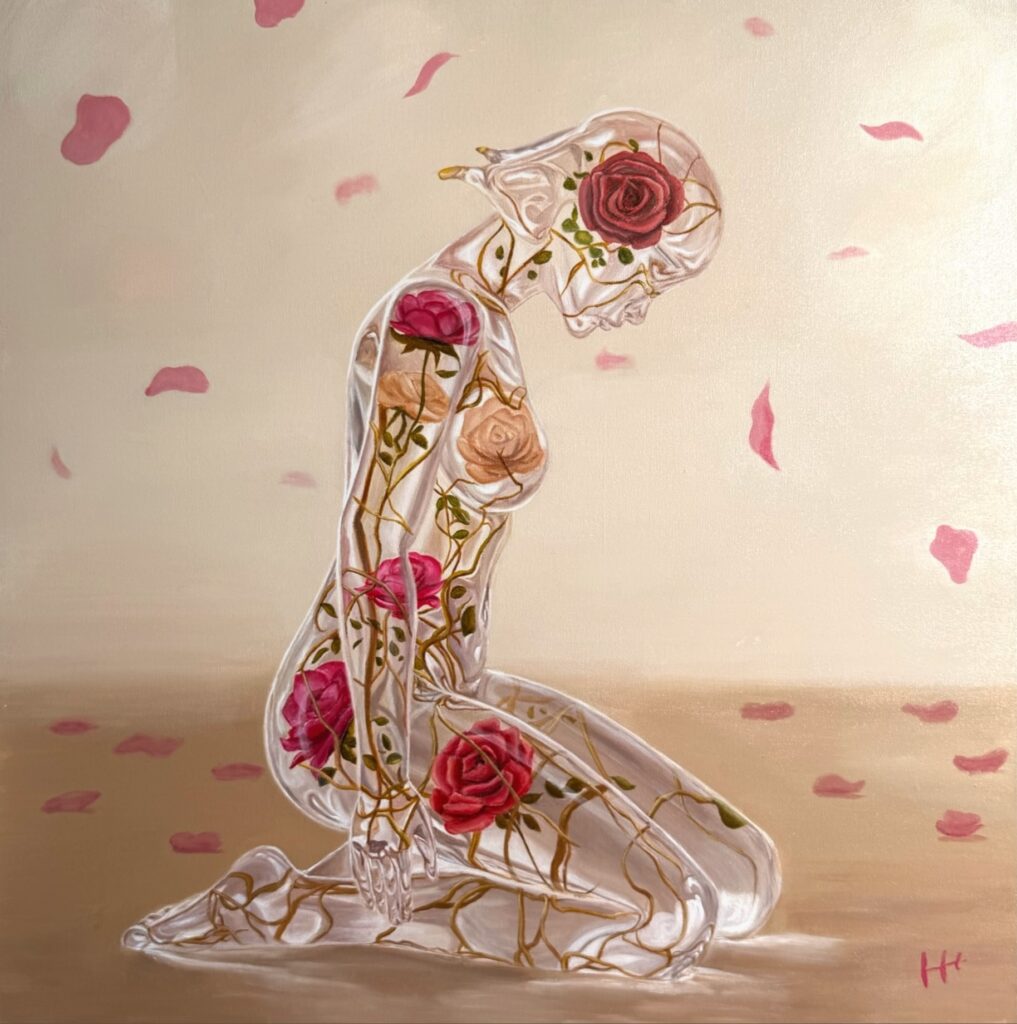
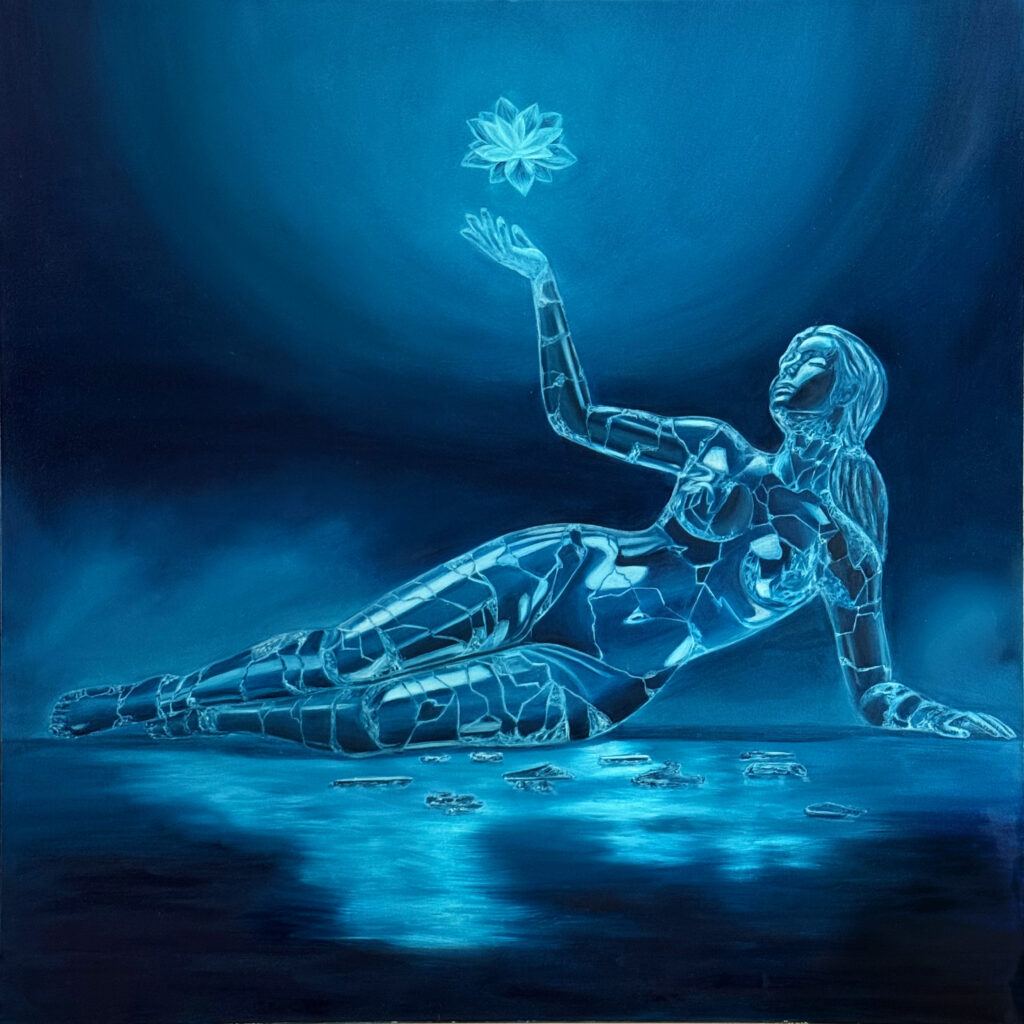
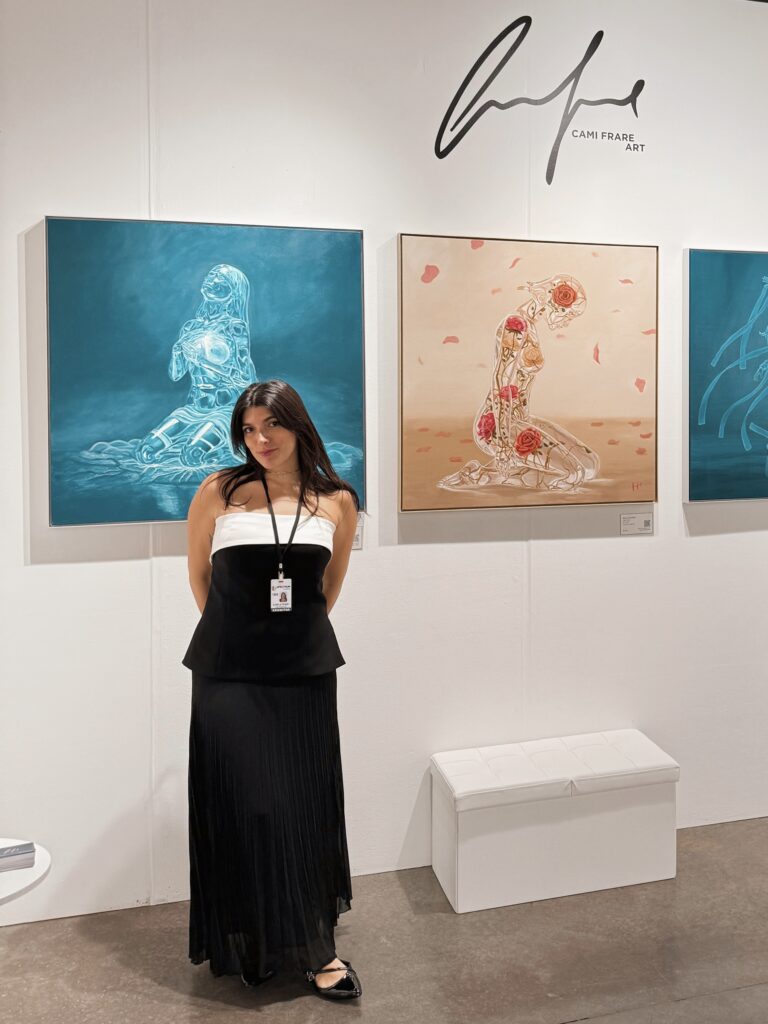
Her figures are made of crystal. Glass bodies that are transparent and breakable and somehow still standing. Still whole even where they are cracked. And that combination of beauty and vulnerability in the same form is what makes her work impossible to walk past without feeling something.
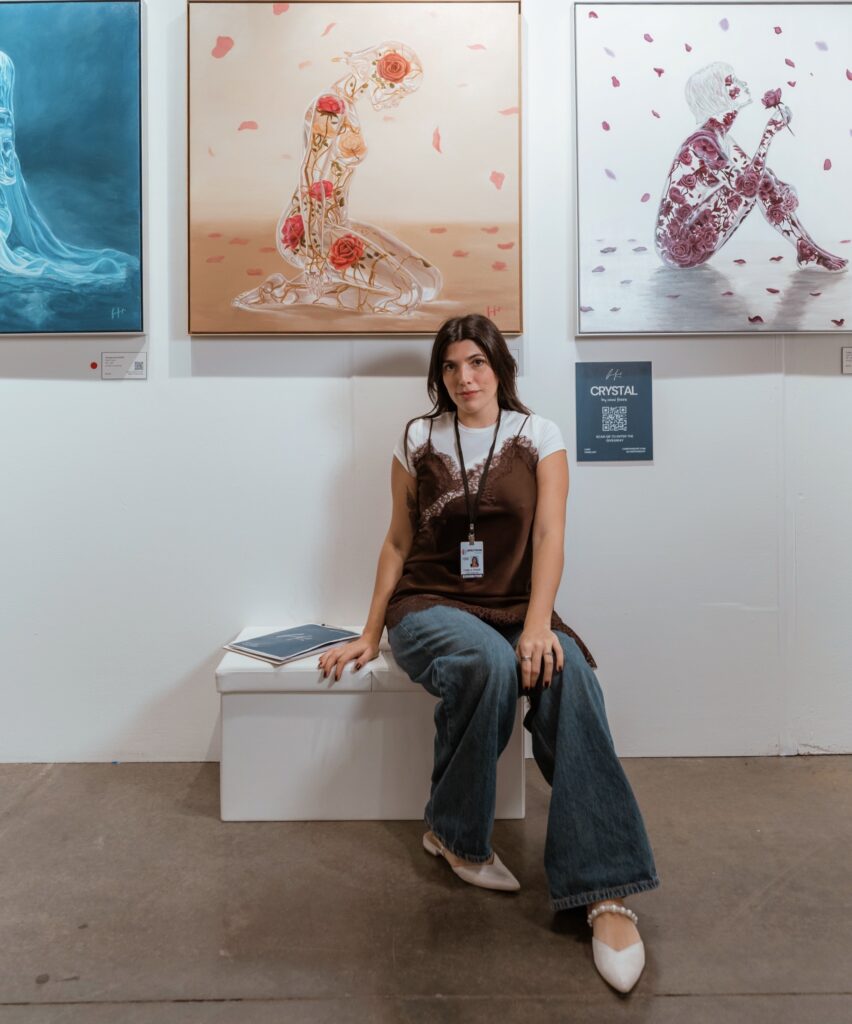
She spent years building her craft through different subjects and styles before she found the visual language that was truly hers. That search was not wasted time. Everything she learned along the way is visible in the technical control and the emotional depth of the paintings she makes now. The crystal figures carry all of those years inside them even though they look like they arrived fully formed.
She works in oil because the medium gives her the patience and the depth she needs. The paintings are built through careful layers and structured planning with a moment of pure instinct at the very end where she follows the light and lets the surface finish itself.
That tension between discipline and freedom lives in every piece she makes and it mirrors the bigger tension her work keeps exploring.
Let’s get to know Anna through our conversation with her about why colour has a life of its own in her paintings, how a landscape becomes a mirror for what is happening inside you, why poetry and painting cannot be separated in her practice, and what it means to paint with a barefoot soul.
Q1. Could you share a bit about your background and the journey that shaped you as an artist?
I’m a full-time Argentinian visual artist based in Miami. My work explores the contrast between fragility and strength through crystal feminine figures — bodies and faces rendered in glass, fragile enough to break, yet strong enough to survive. My practice is deeply personal.
Each collection is born from a real experience in my own life a chapter I’ve lived through, processed and transformed into art. Every piece within that collection represents a specific moment, an emotion, or something I’ve overcome. I paint in oil on canvas, in large formats, with an intense color palette. Every piece is a single original.
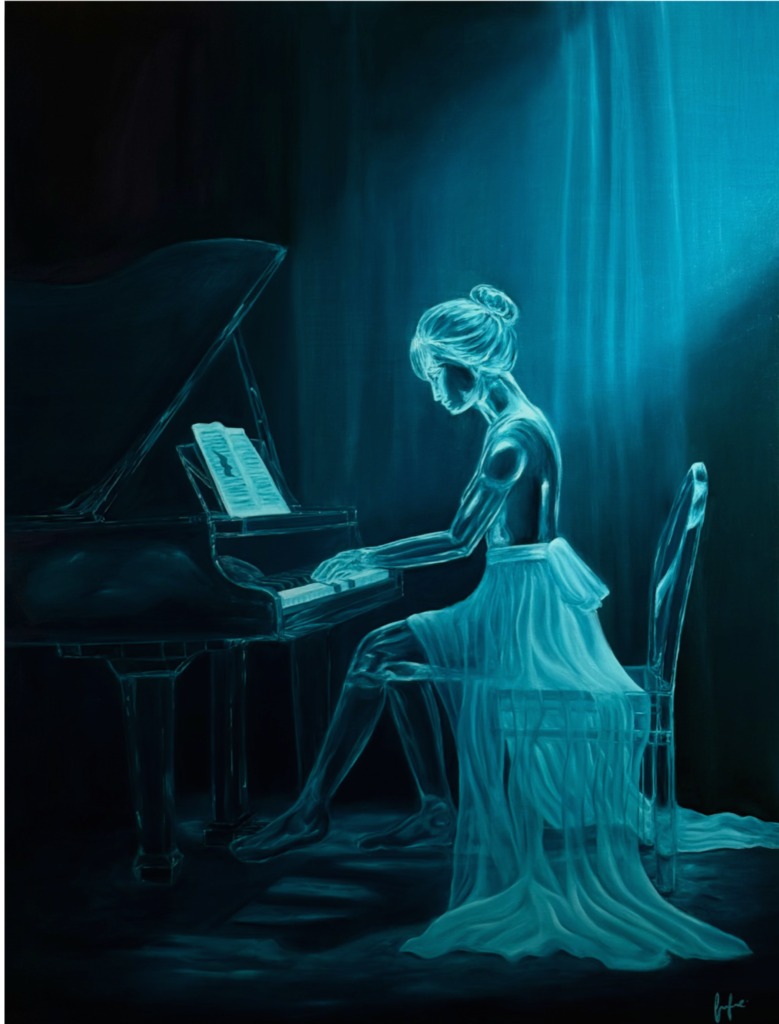
Q2. Your work has evolved from animal realism to figurative painting, what does that shift reflect about your growth as an artist?
My evolution as an artist reflects my evolution as a person — I can’t separate the two. I started with animal realism. Precision, patience, layers. Then I moved to female faces and bodies, searching for something I couldn’t name yet. For years I tried different styles and approaches and learn a lot on the path. There was a lot to say, but I hadn’t found my language.
Then everything shifted. I painted my first crystal figure: Fragile enough to break, yet strong enough to keep going. It was the perfect metaphor for something I was living at the time. My evolution says that I stopped painting what I could see and started painting what I feel.
Every collection since then has been born from a real experience — something I’ve lived, processed and transformed. If I don’t feel it, I can’t paint it. That’s what growth looks like for me.
Q3. When did you become interested in painting emotions rather than simply depicting subjects?
Honestly, it happened through loss. I went through a miscarriage. And I wanted to heal through my art — but not in a sad way. I didn’t want to paint grief. I wanted to paint what it actually felt in each moment: fragile, broken in some ways, standing with hope, resilient and finally transformed. That’s when I stopped thinking about subjects and started thinking about emotions. The crystal figure wasn’t a person; it was a feeling. I don’t think I chose to paint emotions. I think emotions chose me.
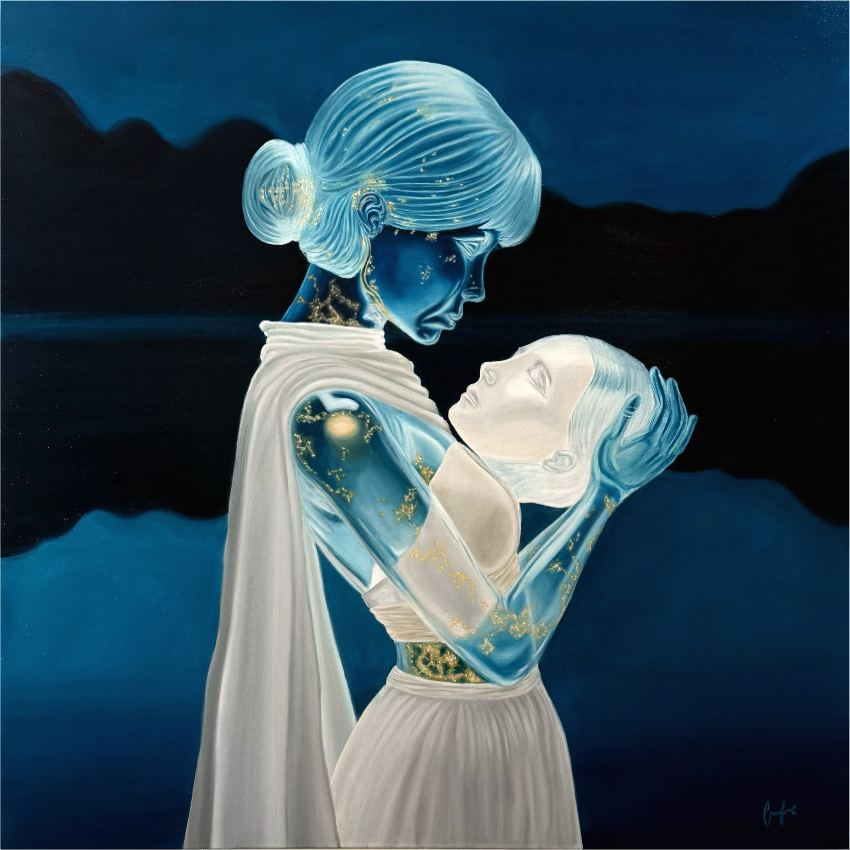
Q4. In My Shadows, vulnerability becomes a form of strength, has creating this work changed how you understand vulnerability?
I used to think vulnerability was something to hide, weakness. My Shadows changed that. I believe everything we go through makes us stronger… Even when we feel broken, even when we’re in the dark. That painting is about the moment you stop running from your shadows and just… look at them. Accept them. And somehow, in that stillness, you find the light. This piece was my way of exploring acceptance.
Q5. Your work is deeply personal, yet viewers often see their own stories in it, how do you leave space for those interpretations?
We all go through things in our lives. The experiences are different, but the feelings underneath — transformation, grief, solitude, the feeling of being broken and still moving forward — those are universal.
When I paint from a personal place, I’m not just documenting my story. I’m trying to name something that many people feel but can’t always express. My goal has always been for my work to accompany others — whatever they’re going through — so they don’t feel alone in it. That’s where the personal becomes universal… By making it real enough that someone else can find themselves in it.
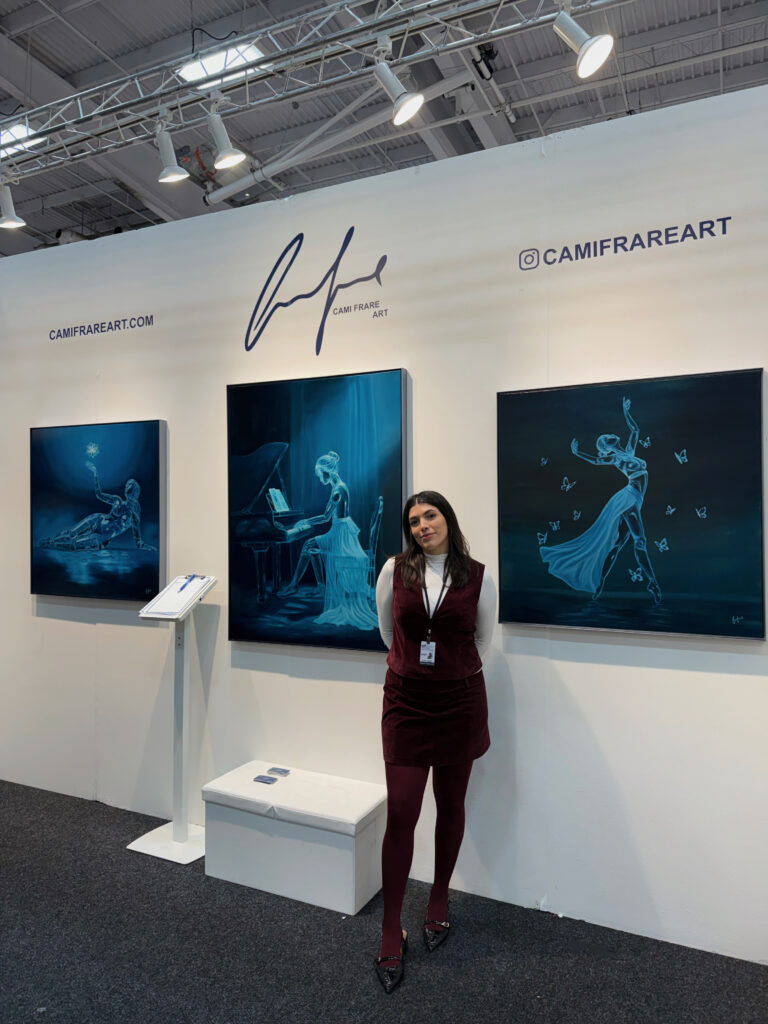
Q6. What made the question of whether solitude is good or bad important enough to inspire an entire series?
It came from a conversation with my mom. I’m from Argentina and I live in Miami. One day she said to me: “You’re so alone over there.” And I stayed with that question: is that good or bad? Because I love being alone. My art, my creativity, my self-discovery — it all happens in solitude. I chose this. But there were also nights when that same solitude felt heavy, when the distance hurt. I found myself living two realities at once: the solitude I choose and the solitude that finds you. That tension felt important enough to build a body of work around.
Q7. What first drew you to the fractured, gem-like textures that have become part of your visual language?
It started as an accident. I was painting female bodies with flowers — it felt like body painting, like tattoos. And I asked myself: what if the flowers were inside the body instead? That question led me to transparency, to glass, to the idea of something visible beneath the surface. The crystalline texture came from trying to paint that — the transparency, the reflections, the hard edges. It became its own language.
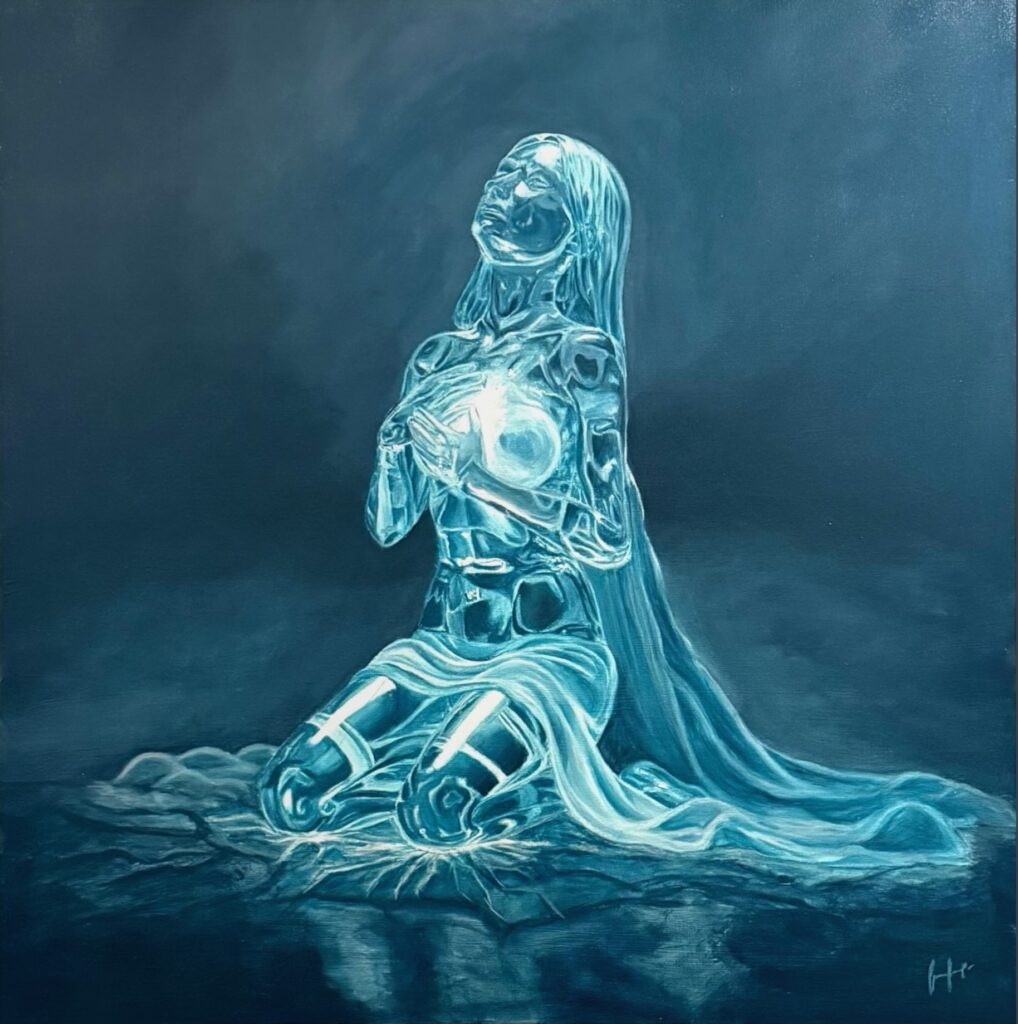
Q8. What keeps you connected to oil paint as your primary medium?
I’ve always painted in oil — it’s how I learned. But when I started exploring crystal figures, I tried acrylic for a while. I did three pieces with it. It felt different — harder to work with, less fluid. Oil is more malleable and when you’re building layer after layer to create transparency and depth, it’s simply the best tool for it. It requires more patience. But it’s the most faithful to what I’m trying to create.
Q9. Do the transitions between flesh, crystal, and atmosphere emerge intuitively, or are they carefully planned?
It’s carefully planned but… With one moment of freedom at the end. I work in layers, building the transparency and depth gradually. The structure, the transitions between flesh and crystal, the atmosphere — all of that is thought through beforehand. I know where I’m going. But the final layer is different. That’s where I let go.
The highlights, the reflections, the light catching the surface — I follow what I feel in that moment. That’s what I love about glass: it gives you permission to play with light, to be a little free within something precise or perfect.
Q10. In a world of constant connection, why do you think so many people still struggle with being alone?
Its funny because when I first announced Solitude on Instagram, some of my followers got worried. As if solitude meant something was wrong. That reaction told me everything. I think solitude has a bad reputation. We live in a world that fills every quiet moment with noise — and I think part of that is fear.
Because when you’re truly alone with yourself, you find things you’ve been avoiding. Your shadows, your doubts, the parts of yourself you cover up with distraction. But I also think that’s exactly where growth happens.
When you stop running and just sit with yourself — that’s where you really get to know who you are. And if you know yourself, you can grow, improve, become a better version of yourself.
Being alone isn’t the problem. It’s the discomfort of what we find there that we’re afraid of. Learning to live with that, without covering it up that’s the work.
Q11. Do you think art can help people become more comfortable with uncertainty and difficult emotions?
I do. Art invites us to stop. To look. To sit with whatever is there, without trying to fix it or explain it away. And what we find there is ourselves: what we carry, what we feel, what we’ve been avoiding. That’s what I want my work to do.
Not to give answers, but to accompany. So that whatever you’re going through whatever you’re carrying you can see it, accept it, and know you’re not alone in it. Uncertainty doesn’t need to be solved. Sometimes it just needs to be witnessed.
Q12. Has your definition of success changed as your work has become increasingly personal and emotionally vulnerable?
Yes, completely. Before I committed to this full time, my idea of success was more material, more external. Numbers, recognition, results. Today success is the process itself. My work has to come from somewhere real… I have to be connected to what I’m creating, truly connected.
If I’m not, it shows. And if I am, everything else follows. I used to be more anxious about outcomes. But I’ve grown into understanding that the most important thing is the connection — my connection with my work and the connection my work has with others. That’s what lasts.
Q13. Looking back, did figurative painting always feel like your language, or did that connection develop over time?
Looking back, I think part of me always knew… even if I couldn’t see it clearly at the time. As I grew, something shifted in the way I saw images. I would look at a reference and start imagining it differently — adding elements, breaking it apart, transforming it into something more. Figurative painting wasn’t a decision I made. It was something that developed slowly, naturally, as I started to trust what I was actually seeing in my mind.
Q14. What is one realization about themselves you hope viewers take away from your work?
If my work can make one person feel seen, feel accompanied, feel like their experience is valid and shared, that’s everything. That’s the whole point.
Q15. What advice would you give artists who feel pressured to find their style too quickly?
I’ve been there. And I still feel it sometimes. My advice would be: be patient and don’t give up. Your style will come — but it can’t be forced. We live in a world that moves so fast, where everything feels rush and it creates this pressure to arrive somewhere quickly. But the best part is the journey.
The small steps, the experiments, the mistakes — that’s where the real ideas are born. Connect with yourself. Listen to what’s inside. Because your style isn’t something you find outside — it’s something that slowly reveals itself when you stop rushing and start paying attention to what you actually feel.
As our conversation with Camilla came to a close, we kept thinking about searching. And how uncomfortable it is when you are in the middle of it.
Because Camilla searched for years. Made work that was good but not yet hers. Tried different subjects and different styles and kept feeling like the thing she was actually supposed to be making was just out of reach.
And anyone who has been through that knows how exhausting it is. The self-doubt. The comparison. The fear that maybe there is no signature thing waiting for you and maybe you are just someone who paints well but will never paint something that is unmistakably yours.
Most artists are in that phase right now. Reading this. Making work they are proud of but not yet certain about. Wondering if the searching ever ends or if this is just what being an artist feels like forever.
Camilla’s story is proof that the searching does end. But not when you force it. When you live enough. When you feel enough. When something happens in your life that is real enough to demand a new language and suddenly the language appears because it had to. Not because you planned it. Because your life gave you no other option.
That is the part we want every artist to sit with. That your visual identity is not a branding exercise. It is not something you design on a weekend or reverse-engineer from what is trending on social media. It is something that grows out of what you have actually been through. And the artists who try to skip the living and jump straight to the style always end up with something that looks good but feels hollow.
Camilla did not skip anything. She went through it. All of it. And the crystal figures that came out the other side carry the weight of every year she spent searching because those years are inside them.
For anyone bringing Camilla’s work into their home, her paintings carry both visual impact and emotional warmth in equal measure. The colour is bold and the scale is commanding but underneath all of that is something quieter. A sense that whoever made this was thinking about you when they made it. On your strongest days they feel like celebration. On your hardest days they feel like company.
Follow Camilla through the links below and see her work for yourself.