

The Art Business – Part 01: Raising Your Prices Without Losing Buyers

Every artist who sells their work eventually reaches a strange moment. You open your old price list and realize that the painting you now spend weeks making is still listed for almost the same amount you charged two years ago. Your materials cost more. Your studio costs more. You have exhibited more, learned more, sold more, and perhaps built a small group of collectors who keep coming back. Yet the number beside your work has barely moved.
Then comes the uncomfortable question: is it finally time to raise your prices?
For many artists, the fear is not really about the number itself. It is about what might happen after it changes. What if people stop buying? What if your regular customers think you have become too expensive? What if you suddenly price yourself out of the market?
These are reasonable concerns. Raising prices does carry some risk. But keeping your prices frozen forever carries a risk too: eventually, you may find yourself producing work that simply isn’t financially sustainable.
The good news is that a price increase does not have to be dramatic. In fact, artists who build sustainable careers usually treat pricing as something that develops alongside their practice. They watch what sells, keep their prices consistent, make gradual adjustments and give their buyers time to move with them.
The goal is not to suddenly become an expensive artist. The goal is to build a price structure that makes sense for the artist you are becoming.
First, Know Whether You Actually Need to Raise Your Prices
Before changing anything, look at your sales rather than your feelings.
Are your works consistently selling? Are collectors returning? Are new people buying without needing a huge discount? Are certain sizes or series selling much faster than others? Have you had a significant exhibition, award, gallery representation or other career development since you last set your prices?
These are much better indicators than simply deciding that you “deserve” to charge more.
Recent sales are particularly useful because they tell you what buyers have actually accepted, rather than what you hope they will accept. Art pricing has no universal formula, and market context, previous sales, experience, materials and demand all play a role.
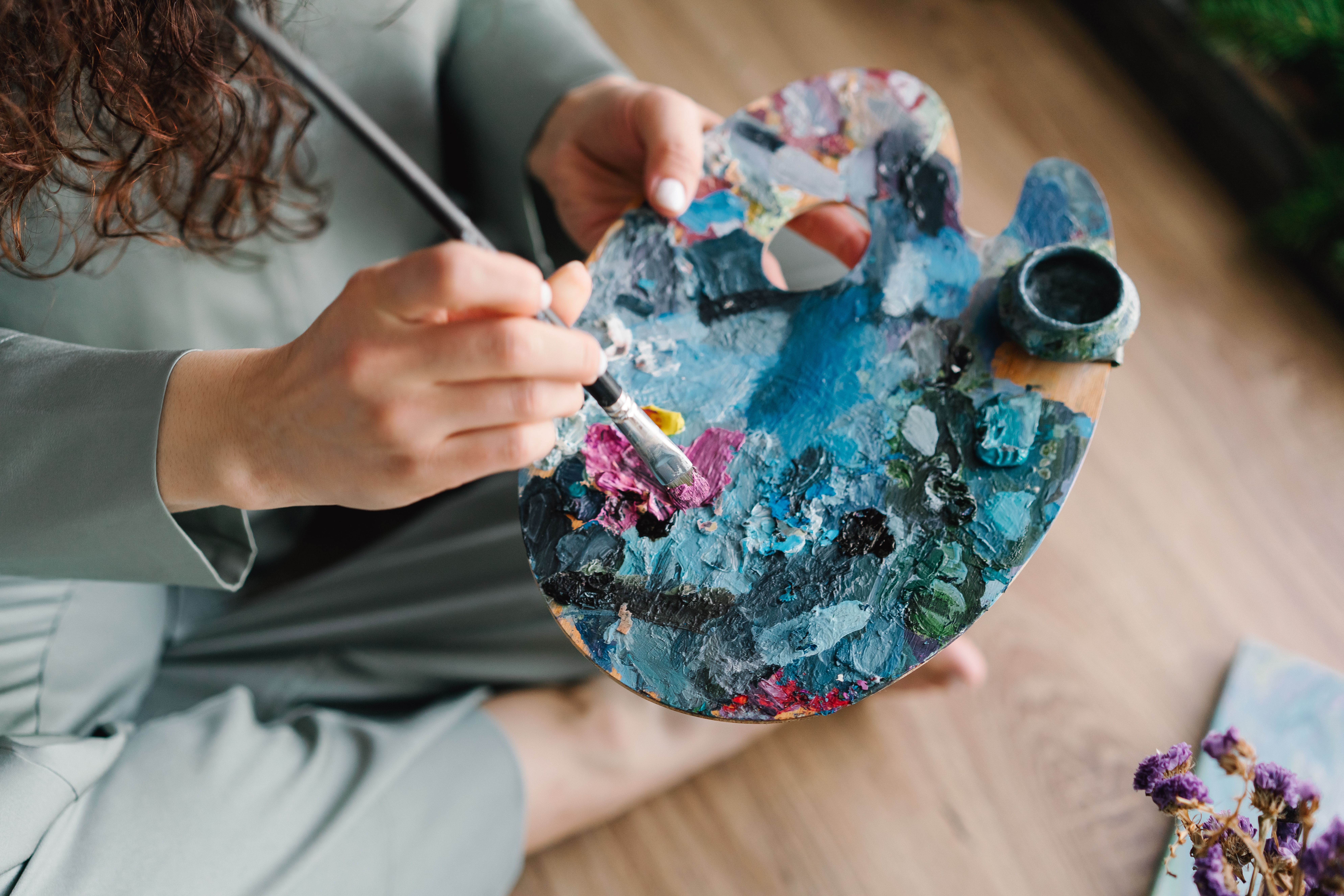
You should also look at your costs. If canvas, paint, framing, shipping, studio rent or other essentials have gone up significantly, keeping the same price means your actual income from every sale has gone down.
And there is a very practical test: calculate what you actually take home from a sale. If you sell a painting for $500, but materials cost $100, shipping costs $40 and a gallery takes 50 percent, you are not earning $500. You are receiving far less than that for the hours of work that went into the piece.
A price increase may not be about becoming more successful. It may simply be about making the business viable.
Don’t Double Your Prices Overnight
One of the easiest ways to frighten your existing buyers is to make a huge jump without a corresponding reason.
If your paintings have been selling at $400, moving immediately to $1,200 is a very different proposition from moving to $475 or $500. Small, deliberate increases are easier for both you and your collectors to absorb. A 10 percent increase may not look dramatic on paper, but repeated over time it can make a meaningful difference.
There is no rule saying that every artist should increase prices by exactly 10 percent. The point is to make the change proportionate to your actual growth.
If your work has been selling consistently for a year and you have developed a stronger exhibition record, a modest increase can make sense. If you have just had your first sale, raising the price five times because another artist with a similar style charges that much probably does not.
Think progression, not reinvention.
A Very Practical Trick: Raise the Prices of New Work First
You do not necessarily have to go through your entire catalogue and change every number on the same day.
One of the simplest approaches is to introduce your new work at a higher price while allowing existing pieces to remain at their current prices for a while.
Say your 18-by-24-inch paintings are currently $600. You have been selling steadily and feel ready to move up. Instead of changing every listing immediately, you might price the next series at $675 or $700.
Now you have real information. If those paintings sell, you have evidence that buyers are accepting the new level. If they sit for considerably longer, you have something to examine before making another increase. This also creates a natural transition in your catalogue. Over time, older work sells and the new price becomes your normal price.
Artists and pricing advisers commonly recommend this kind of gradual approach because it lets the market catch up rather than forcing it to catch up overnight.
Keep Your Prices Consistent
This is one of the least glamorous parts of pricing and one of the most important.
If three paintings are roughly the same size, medium and level of complexity, they should not have wildly different prices simply because you felt differently on the day you listed them.
Create a system. You might price paintings according to size, with adjustments for particularly complex works. A 12-by-16-inch painting could have one standard range, a 16-by-20 another, and a 24-by-36 another. You can also factor in medium, framing, edition size or other meaningful differences. The exact formula matters less than having one.
Consistency makes your prices easier for galleries, collectors and even you to understand. It also prevents the awkward situation where a collector discovers that they paid considerably more for a comparable piece simply because you priced it differently six months earlier.
If you work with galleries, remember that your direct prices and gallery prices need to be coordinated. Do not undercut a gallery by offering the same work privately for substantially less. Your buyers should not have to figure out which version of your business gives them the “real” price.
Give Buyers Different Ways to Enter Your Practice
Raising the price of your originals does not mean every piece you make has to become inaccessible.
This is where having different price points can be extremely useful.
An artist might have small studies at $150–$300, medium originals at $600–$1,200, larger works at $2,000+, and prints or editions at a lower price point. Another artist might use drawings, sketches or smaller works as their entry-level pieces.
This does not mean making cheap versions of your art just to get sales. It means recognizing that collectors have different budgets. A person who cannot afford your $2,500 painting may still be able to buy a $250 drawing. That first purchase can become the beginning of a collecting relationship rather than the end of the conversation.
Saatchi Art similarly recommends maintaining a range of prices because different price points can widen the group of potential buyers.
Reward Existing Collectors Without Undercutting Yourself
You do not want to tell loyal collectors, “Everything is getting more expensive, good luck.” But you also do not want to permanently discount your work for them. Instead, give them an opportunity before the increase.
For example, if you know prices will increase on October 1, you can privately let your existing collectors know that they can purchase currently available work at the existing price until September 30.
It gives loyal buyers something tangible while keeping your future pricing intact. Some artists also use a private preview of new work for existing collectors, giving them first access before a public release. The important thing is that the privilege is about access or timing, not endlessly reducing the price.
What If Sales Slow Down?
This is where artists can panic and undo all their work. You raise your prices, sales become quieter for a month, and suddenly you are tempted to announce a 30 percent sale. Don’t do that immediately.
A slower month does not automatically mean the new price is wrong. Sales are affected by season, visibility, exhibitions, economic conditions, the particular work you are releasing and the audience you are reaching. Art is not a product people buy on a predictable weekly schedule.
Instead, watch the numbers over a reasonable period.
Are people still enquiring? Are they saving the work? Are smaller pieces selling? Are people telling you they love the work but cannot afford it? Or has engagement across everything dropped?
Those answers point to very different problems. If the work is getting no attention, your problem may be visibility rather than price. If people are consistently buying smaller works but ignoring the larger ones, your price ladder may need adjusting. If everything is selling immediately, your prices may actually still be too low.
Pricing should respond to evidence, not one quiet weekend.
What Not to Do
There are a few mistakes worth avoiding.
- Do not copy another artist’s prices. Their career, audience, gallery relationships, location, exhibition history and sales record may be completely different from yours.
- Do not price purely according to hours worked. Time and materials matter, especially when establishing a baseline, but a painting that took you 40 hours is not automatically worth twice as much as one that took 20. Your skill, experience, demand and market position matter too.
- Do not keep changing your prices based on your mood. A buyer should not encounter three different prices for similar paintings across three platforms.
- Do not slash prices because something has not sold quickly. Try better photography, stronger presentation, a different audience, more visibility or a new context before assuming the number itself is the problem.
And perhaps most importantly, do not raise prices simply because you are embarrassed by your old ones. A higher number does not automatically make the work more valuable.
Price is part of the story around the work. It is not the whole story.
Build the Increase Into Your Practice
The easiest price increase is the one you do not have to agonize over every few years.
Review your prices regularly, perhaps once or twice a year. Keep a simple record of what sold, when it sold, for how much, through which channel and what commission or expenses were involved.
Keep your old price lists and sales records too. They give you a picture of how your practice has actually developed. Then, when the time comes, make a measured adjustment. There is no single correct path. What matters is that the decision is based on your real circumstances rather than guilt, comparison or wishful thinking.
Your Prices Should Grow With Your Practice
Raising your prices is not about suddenly deciding that you are a “high-priced artist.” It is much quieter than that.
You sell consistently. You learn what your buyers respond to. Your work develops. Your exhibition history grows. Your costs change. Your audience changes. You become more confident in your practice. Eventually, the price needs to change too. And some buyers may leave. That is the uncomfortable truth.
Not everyone who likes your work at $300 will be able to follow you to $900. That does not necessarily mean you made a mistake. Your job is not to keep every possible buyer forever at your old price. Your job is to build a sustainable practice that allows you to keep making the work in the first place.
Raise gradually. Keep your structure consistent. Give loyal collectors a little consideration. Create different entry points when you can. Watch actual sales rather than obsessing over hypothetical ones. Most of all, remember that a price increase should be a reflection of an evolving practice, not a performance of confidence.
Your collectors do not need you to become someone else. They simply need to see that the artist they believed in is continuing to grow.
Editor’s Note:
Art and Woman – Edition 4 Open Call’s submissions are closing in 2 days. The deadline is August 30th, 2026. If you have been thinking of submitting to the open call, this is your last chance. The Open Theme gives you the perfect chance to put your best work forward without worrying about fitting into a theme. We can’t wait to look at your submissions!