
How Jenn Royster Explores Human & Animal Connection Through Figurative Painting
At Arts to Hearts Project, the Nature Edition of our 101 Art Book series brought us countless ways of looking at the natural world, some loud and alive, some soft and still, every artist seeing it through their own eyes. From all of those interpretations, 101 artists were selected to be part of the book.
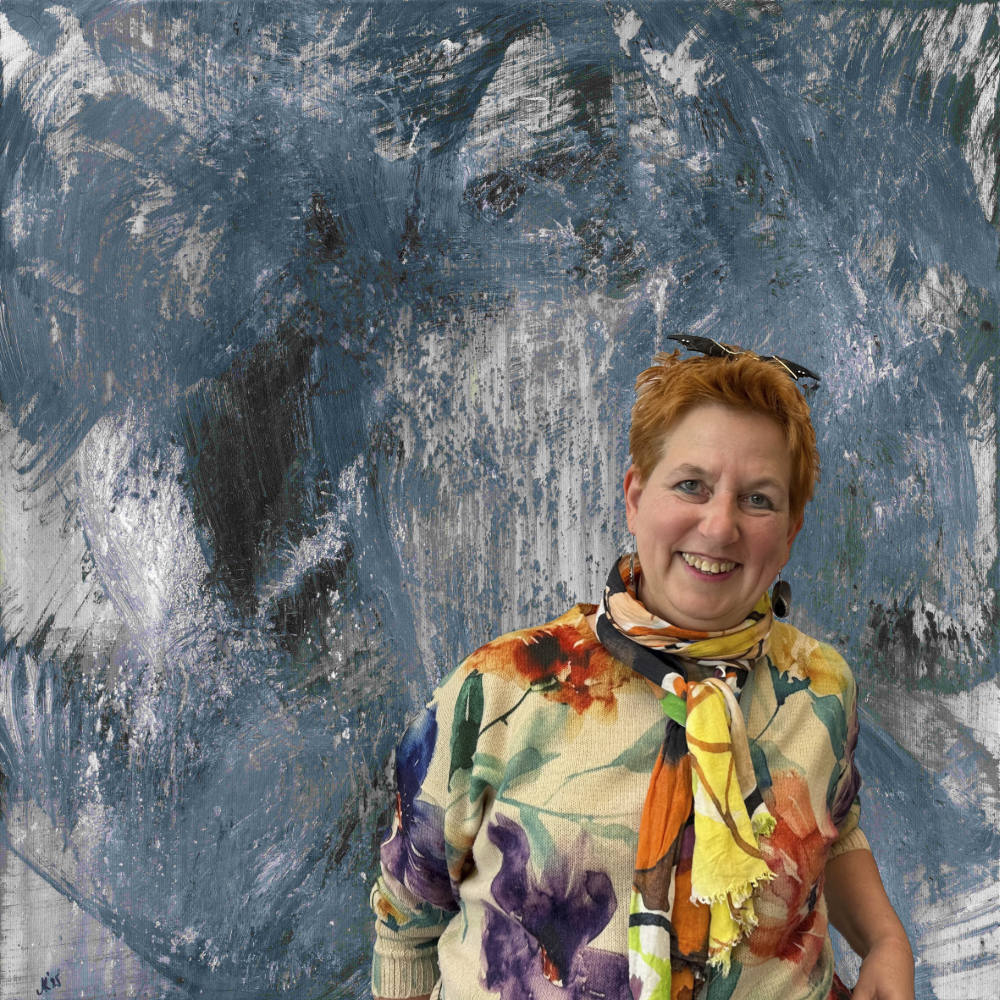
Today, we are introducing one of them: Jenn Royster, a painter who gives form to what you can feel but cannot quite see. Jenn is a contemporary artist based in Florida who paints wildlife, horses, and figures in oil, and she has a name for what she is really trying to capture: “animating the unseen.”
It is the quiet energy she senses running beneath the surface of every living thing, a person, a plant, an animal, the feeling you notice before you can explain it. She first discovered it as a child, following her father around his vegetable garden, learning to handle a plant so gently it would not go into shock. That early lesson, that there is always more going on beneath the surface, has shaped everything she makes.
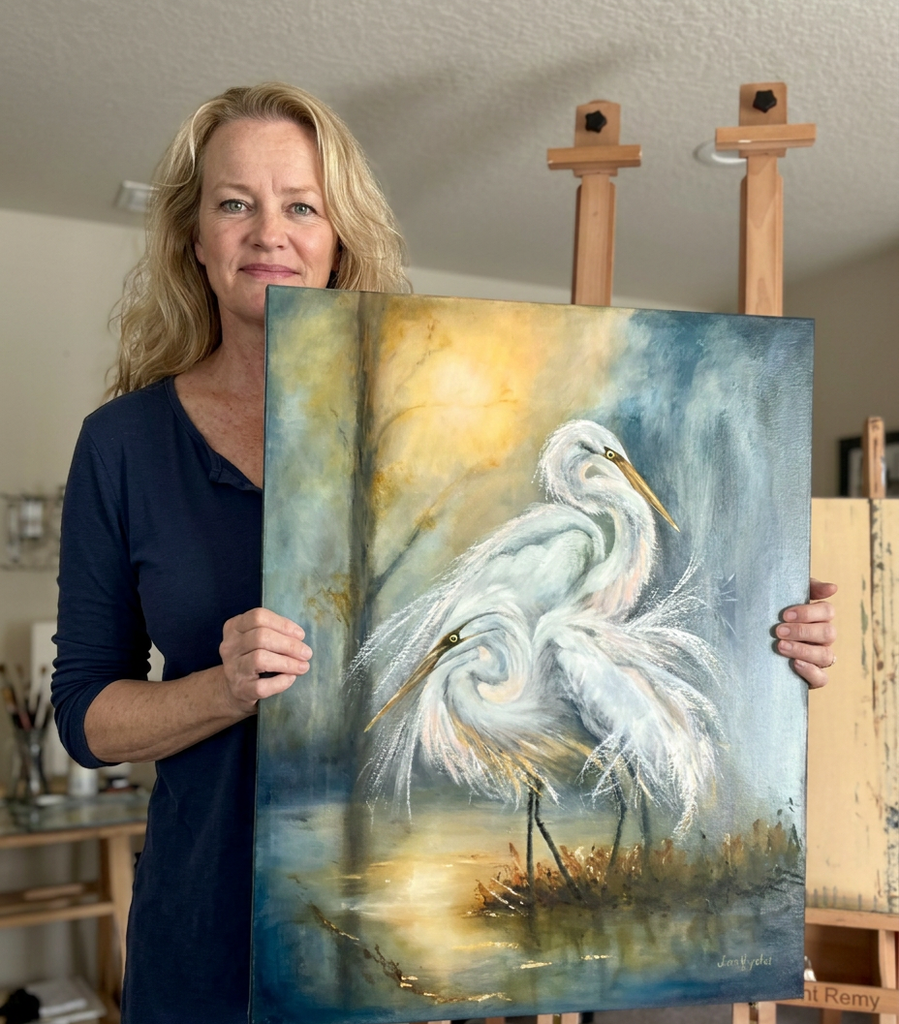
Her path to this point was not a straight line. For years, Jenn built a career in neuromuscular therapy, working closely with the human body, and even then painting never left her. She kept a studio full of supplies, waiting. When she finally returned to art full time, it did not feel like starting over, but like bringing everything together. Her years as a therapist had quietly trained her for exactly this, teaching her to sense what lies beneath the surface and to feel what the eye cannot see at first glance.
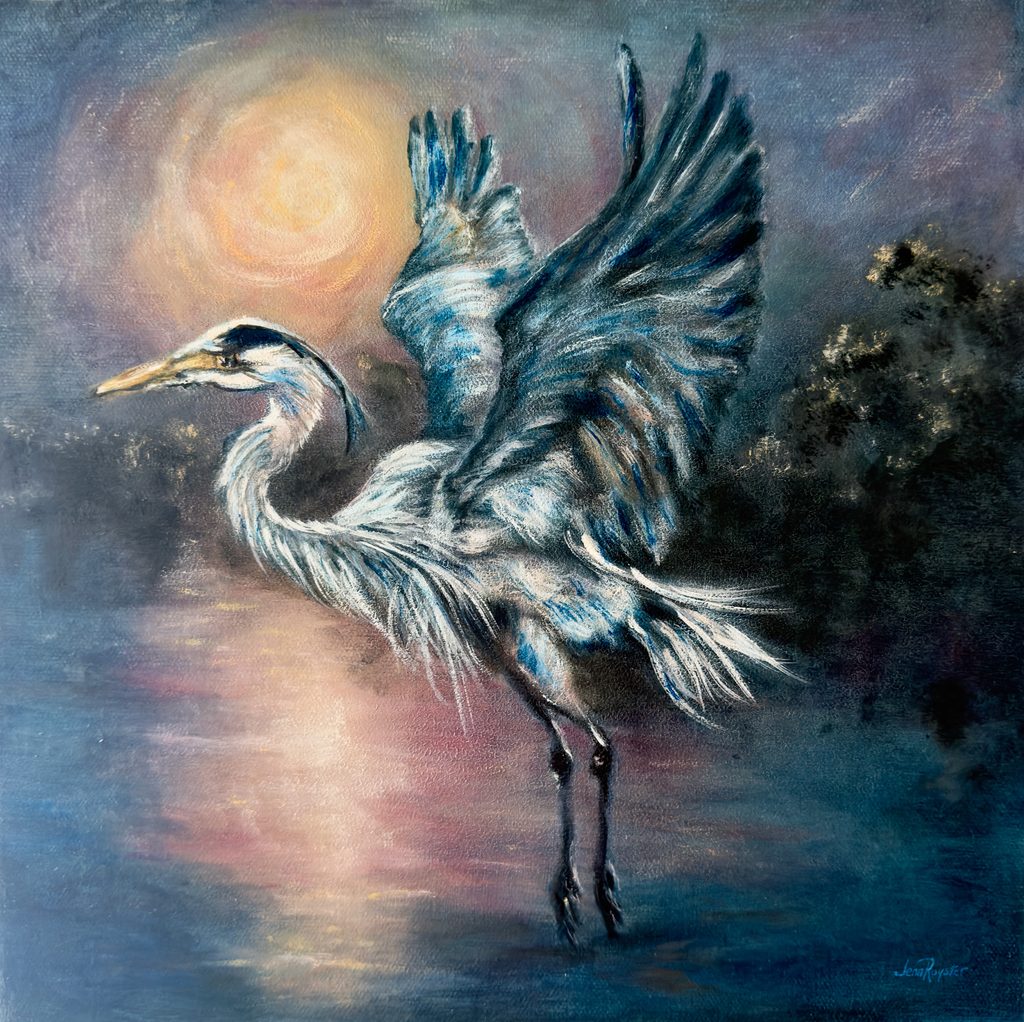
Jenn paints animals more than anything, and she sees a kind of love in them that’s easy to miss. The mockingbirds in her yard that band together to scare off a hawk. An egret gliding low over the water after a patient day of fishing. A white horse resting its head against a woman who trusts it completely.
To her, moments like these are more than beautiful. They’re reminders of community, protection, and connection, of how the strongest bonds come from paying attention and showing up for each other. Often what she’s really painting isn’t the animal or the person, but the quiet trust that passes between them.
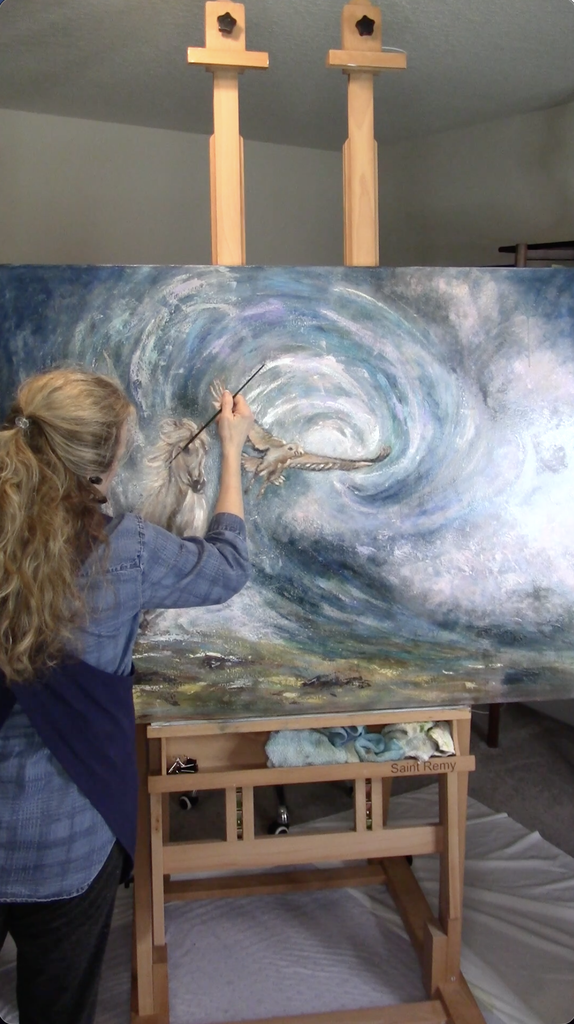
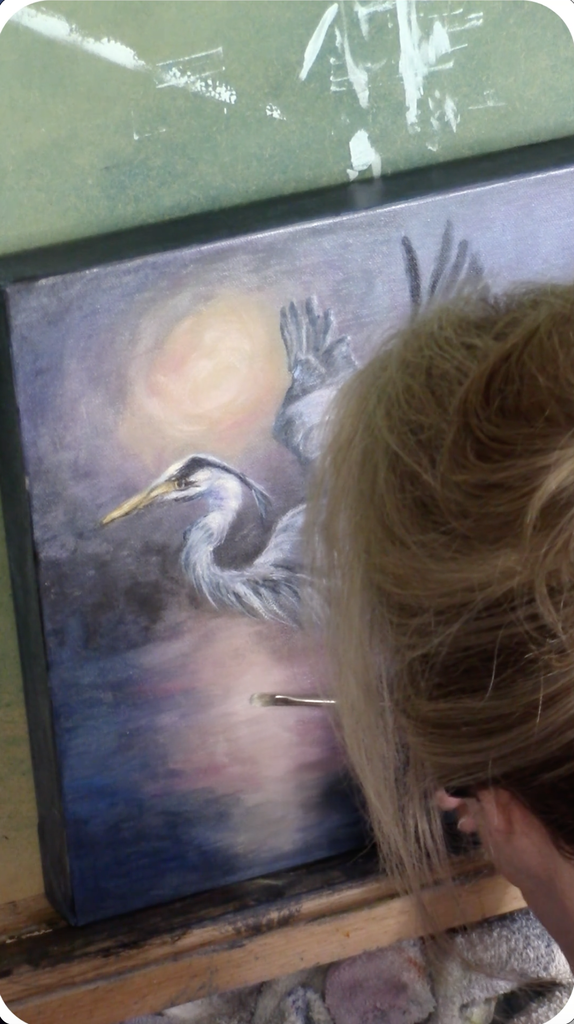
She builds that feeling slowly, and with great care. Oil is where the magic happens for her, though she often begins with acrylics, inks, or pastels to map out where the energy will move. Then she layers transparent glazes over opaque passages, moving back and forth until the colours glow through one another and the painting gains real depth and atmosphere.
Colour is one of her most powerful tools, and she chooses it by feeling rather than fact, often reaching for a shade that isn’t literally there because it carries the right emotion. As she puts it, the scene shows you what is there, and the colour tells you how it feels.
Along the way, painting has become more than a practice for Jenn. It has become a place of healing, a space where she no longer feels she has anything to prove, only something true to express and offer to others. She calls herself a lifelong student, still growing with every canvas, and she is living proof of something she loves to pass on: that it is never too late to return to the thing you love.
Now let’s hear from Jenn about the garden that taught her to look, what animals know about love and community, why oil is where her paintings come alive, and why she believes it is never too late to begin again.
Q1. Could you take us back to your childhood and share what first made art feel like a natural part of your life?
Art grew out of paying attention. As a child, I would watch my dad plant a vegetable garden, asking him why about everything, and he always answered. That’s how I learned to listen to a plant and to transplant it gently so it wouldn’t go into shock.
I remember caring deeply that I not cause it any stress. It was the first time I understood that there is always more going on beneath the surface, a quiet energy driving everything alive. That awareness has stayed with me ever since, in nature, with animals, and with people. It is the heart of my work today, which I call “animating the unseen”.
Painting is how I make that energy visible, and it has felt like a natural part of my life from the moment I learned to slow down and really look.
Q2. You spent years working in neuromuscular therapy before returning to painting. What brought you back to art?
What brought me back was that painting never left. Even in the years I was building my career in neuromuscular therapy, I never stopped thinking about it, dreaming about it, or wanting to paint. I kept a studio full of supplies, ready for whenever I could get to it, because I could never imagine my life without it. As soon as I was able to return fully, I immersed myself in painting full time again.
My years as a therapist also shaped the artist I am now. Working with the body taught me to sense what lies beneath the surface, to feel what isn’t visible at first glance. That is the same instinct behind my work today, which I call “animating the unseen”. Coming back felt less like starting over and more like bringing everything together.
Q3. You often describe wildlife as a source of lessons about connection and community. What have animals taught you about human relationships?
Animals have taught me that community is a form of love. I see pets and wildlife tend to their families in the most amazing ways, always looking out for one another. Nothing impresses me more than the mockingbirds in my backyard. One acts as the watchman, and when it sounds the alert, the others hear the call and respond. Suddenly they team up and chase a large hawk away from their babies.
That moment shows me what people are capable of too. When we pay attention to one another, trust each other, and work together, the results are nothing short of amazing. Animals remind me that the strongest relationships are built on watching out for each other and showing up when it counts.
Q4. Your phrase “Animating the Unseen” is central to your practice. What do you hope to make visible through your paintings?
The unseen force I’m trying to make visible is the energy that drives all life. It’s what you feel before you can explain it: the quiet presence beneath the surface of a person, a plant, or an animal. I first understood it as a child in my dad’s garden, learning to listen to a plant. Since then I’ve felt it everywhere, in nature, in animals, and in people.
In my paintings, I’m drawn to the stillness just before a gesture, the moment beneath the moment, when everything is held and about to move.
I build that feeling intentionally, layering transparent glazes and opaque passages in oil and switching back and forth to create depth. I compose each work to tell the story of the unseen energy behind what we see. Together, these choices create the atmosphere and the feeling of that energy coming through. Whether I’m painting a figure, a portrait, a plant, or an animal, I’m after the same thing. I want the viewer to feel a slight stir inside, the sense that there is more here than meets the eye. That feeling is what I mean by animating the unseen.
Q5. Blues and greens often connect your work to nature, while warmer colours bring energy and light. How do you choose your palette?
Very instinctively. I choose my colors by how they feel, and I trust that first intuitive response. But the instinct isn’t random. Value, hue, and color all matter to the story I’m telling, so each choice is made in service of the feeling I want the painting to carry.
Cool blues and greens naturally pull a piece toward water and nature, while warmer notes bring in moments of energy and light. Because I build my paintings in layers, moving between transparent glazes and opaque passages, those colors can glow through one another and deepen over time. In the end, the palette is how the unseen energy in a painting becomes something you can feel.
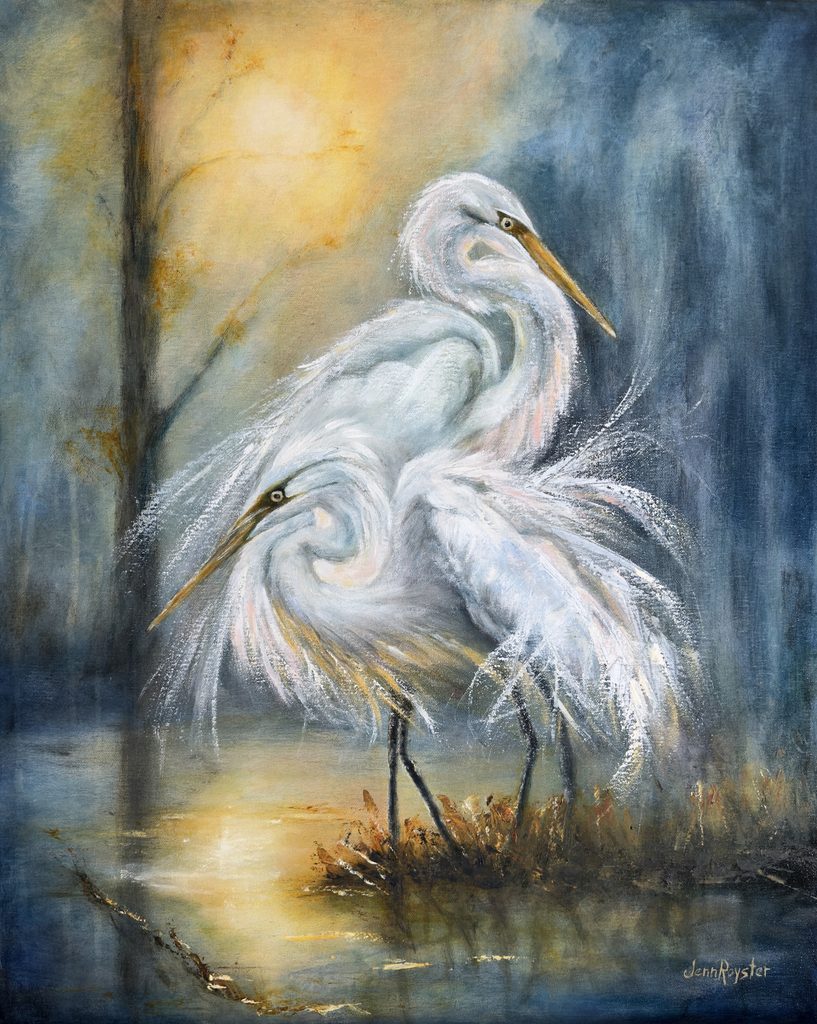
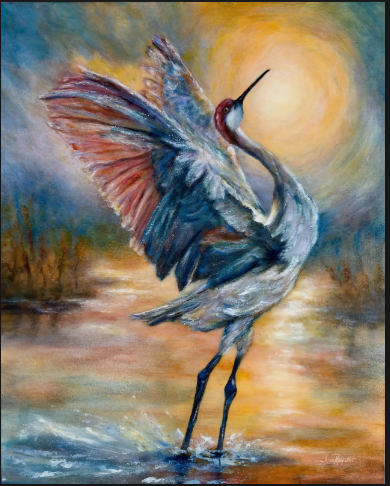
Q6. Wings of Quiet Resolve grew from observing a great white egret. What did watching the bird teach you?
Watching a great white egret near my home, again and again over time, taught me about focus and the quiet satisfaction that follows it. I noticed the egret’s confidence after a patient, focused day on the water fishing. It seemed proud of a job well done.
That stayed with me. It reminded me to focus on the present task at hand and do it well before moving on. That calm, earned confidence became the heart of Wings of Quiet Resolve. I painted the egret gliding just above the water, wings fully open, because that is where its quiet power lives. It showed me that strength doesn’t have to announce itself, and that patient, focused effort carries its own peace.
Q7. You sometimes begin with acrylics, inks, or pastels before moving to oil. How does each layer shape the final painting?
My preference is always oil, but I sometimes begin with acrylic, pastels, or inks to establish the underlying composition.
Those first layers act as the foundation. They map out where the energy will move and give the painting its structure before the real work begins. Honestly, all the magic happens in the oils. That’s where I layer transparent glazes and opaque passages to build depth, atmosphere, and feeling. The underpainting sets the stage, and the oil is where the unseen energy comes alive.
Q8. Do you ever choose colours for their emotional impact rather than their accuracy to the scene?
Absolutely. I often choose a color because it feels emotionally right, even when it isn’t literally in the scene. Color is one of the most powerful ways I have to shape how a painting feels. Depending on its hue and value, blue can be peaceful or sad. A soft, light blue settles a painting into calm, while a deeper, darker blue carries a heavier mood.
When a painting needs vibrant vitality, I turn to red-orange sunset colors, because they deliver a rush of life and energy.
The scene shows the viewer what is there, and the color tells them what it feels like.
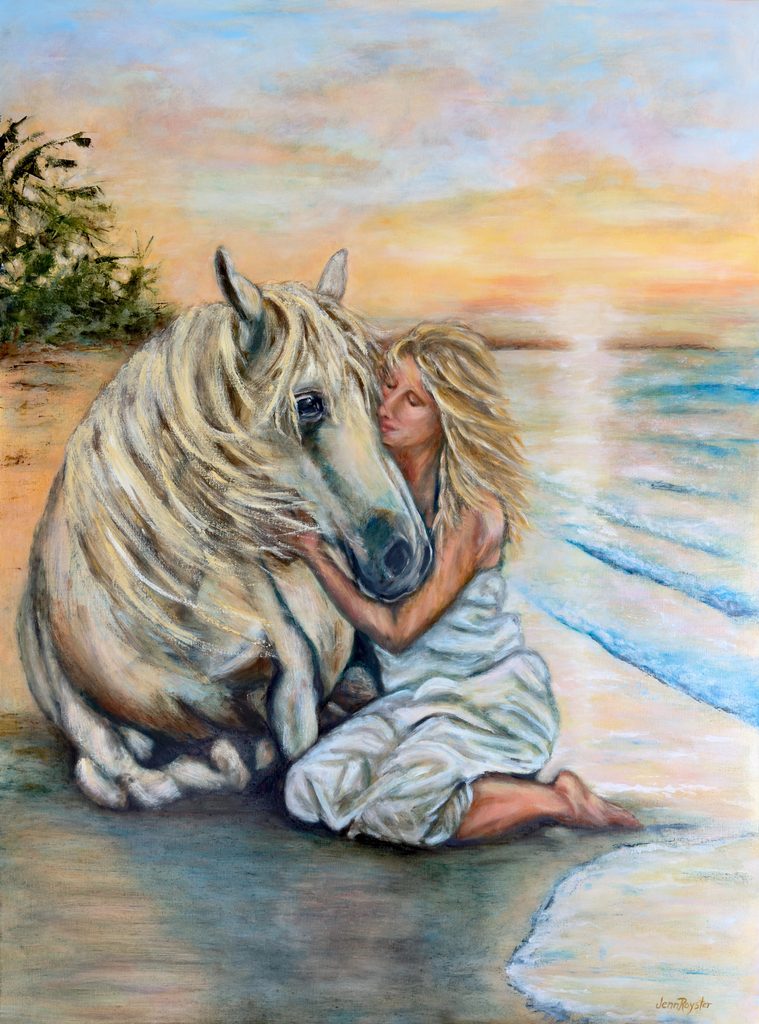
Q9. In In the Stillness of Sunlit Bonds, the connection between a woman and a horse takes centre stage. What makes their bond so important to the painting?
Because the most powerful part of this moment can’t be painted directly. A woman kneeling in the sand with her arms around a white horse’s neck, her head resting close to its face, is what you see. The trust between them is what you feel. That unspoken bond, the quiet strength that can exist between human and animal, is the unseen force I’m always reaching for, so the relationship became the true subject of the painting.
The painting grew from my deep and ongoing relationship with horses, particularly white horses, which have long symbolized transformation in my life. Each time I paint one, it feels like returning to a powerful source of grounding and change.
With In the Stillness of Sunlit Bonds, I wanted to share not just an image, but the emotional resonance of that bond. I didn’t want viewers to see a portrait of a woman or a portrait of a horse. It is an invitation to reflect on the steady connections that sustain us through change. To pause in the stillness, to feel the gentle support present in true companionship, and to recognize the quiet power found in vulnerability shared.
Q10. What do you understand about yourself as an artist now that you couldn’t have understood when you began?
Today I understand that art has been the place where I find both challenge and healing. I recognize an opportunity for healing and inner growth in every challenge.
I no longer see failure, and I no longer feel I have something to prove. I see a chance to express my soul and to share what has given me hope and the motivation to never give up. I couldn’t have understood that when I first began. It took time, and a lot of paintings, to see that the work was never about proving anything. It was about expressing what is true and offering it to others.
Q11. What does success mean to you now that you’ve returned to painting professionally?
Success, to me, is felt in many ways. I love growing and learning, and I have always called myself a lifetime student, so part of success is simply continuing to grow. I feel success when a painting comes together and expresses the unseen I was trying to paint. I feel it when someone tells me what they felt in front of a piece and it is exactly what I was trying to express. And of course,
I absolutely love when someone wants to hang one of my paintings in their home. That tells me the painting spoke to them and they felt that connection.
Q12. What advice would you give artists who have stepped away from art and are wondering if it’s too late to begin again?
It’s never too late. I was inspired by artists who began their careers in their sixties and seventies, and I’m happy to pay that forward here. If it excites you to learn about it, paint it, sculpt it, or explore any other creative form, then do it. Life opens up new horizons when we do what we love.
Sometimes creating becomes a full-time job, and sometimes we simply want to, no matter the outcome. Speaking from my own experience, I am happiest when painting is in my life, regardless of the outcome.
I only paint what I am excited about and love, and those paintings hang in my home and in collectors’ homes with the same energy that inspired them from day one.
Q13. Has your definition of success changed since art was a quieter part of your life?
Not really. Even in the years when art was a quieter part of my life, it was always the joy of painting what I love, and the expressive outlet it gives me, that mattered most. That is still where I keep my focus today.
As our conversation with Jenn came to an end, we found ourselves thinking about all the things people quietly set aside, the passions they shelve for practical reasons, and how often they wonder whether it is too late to go back to them.
Jenn is living proof that it almost never is. She spent years in another career before returning fully to painting, and rather than feeling like lost time, those years turned out to be part of the path, quietly preparing her for the work she makes now. She is honest that art became something far deeper than a profession for her. It became a place of healing, and a space where she finally stopped feeling she had to prove anything and simply made what was true.
We find that genuinely hopeful. In a culture obsessed with doing everything early and fast, Jenn’s story is a gentle reminder that the things we love will wait for us, and that beginning again, at any age, can be its own kind of homecoming.
There is something else her work quietly asks of us, too. In a world that rushes past almost everything, Jenn pays attention, to a bird, a horse, a plant, to the quiet energy and connection running beneath it all. And what she notices, again and again, is love.
The way animals look out for one another, the trust that can pass between a person and a creature, the strength in simply showing up for each other. Her paintings hold all of that up and ask us to slow down long enough to feel it, and to remember that the most important things are often the ones we cannot quite see.
For art lovers and collectors, Jenn’s work brings warmth, calm, and a quiet sense of connection into a space. Vibrant, tender oil paintings, full of light and feeling, that catch the stillness just before a moment and invite you to rest there. People often feel something stir in front of them, a sense that there is more here than meets the eye. To live with one of her pieces is to keep that quiet energy close, and a daily reminder to slow down, look closer, and notice the love woven through the world around us.
Follow Jenn Royster through the links below and see her work for yourself.
Only 3 days left. Submissions for our 101 Art Book: Texture Edition are closing fast, and we would hate for you to miss it. We are looking for artists who understand that texture is never just a surface. It is something you can almost feel with your eyes, the roughness, the softness, the layers, the marks of the maker’s hand, everything that makes a piece ask to be touched.
If you build up your surfaces, carve into them, layer, weave, scratch, or work texture in ways nobody else would think to, and if the way your work feels matters as much as the way it looks, we want to see it, before the window closes. The medium does not matter. Geography does not matter. Career stage does not matter. What matters is that your work has a surface worth reaching out to touch.
Do not let this be the edition you meant to enter. Every artist we feature once took a breath and submitted before the deadline passed. This could be your edition, but only if you do not wait.