
This artist creates abstract paintings from torn images ┃ Almut Knebel

At Arts to Hearts Project, our Magazine Issue 12 with the theme This Is Me brought us artists at every stage of their creative journey. Some are just finding their voice. Others have been painting for decades and are still discovering new things inside their own practice.
Almut Knebel is one of the second kind. She has been painting since the late 1980s and her work is still changing and still surprising her and still teaching her things about herself that she did not know when she started.
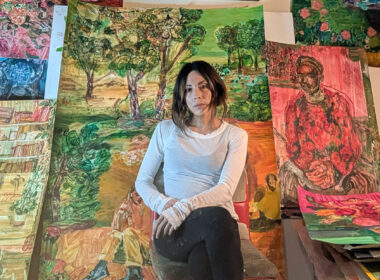
Almut is one of our selected artists for this issue. She is a German artist based in Hanau and her practice spans painting, collage, decollage, cyanotype, and experimental printmaking.
That range of processes is not about being restless or unfocused. It is about having spent decades building a toolkit that lets her approach the same questions from different angles depending on what the work needs.
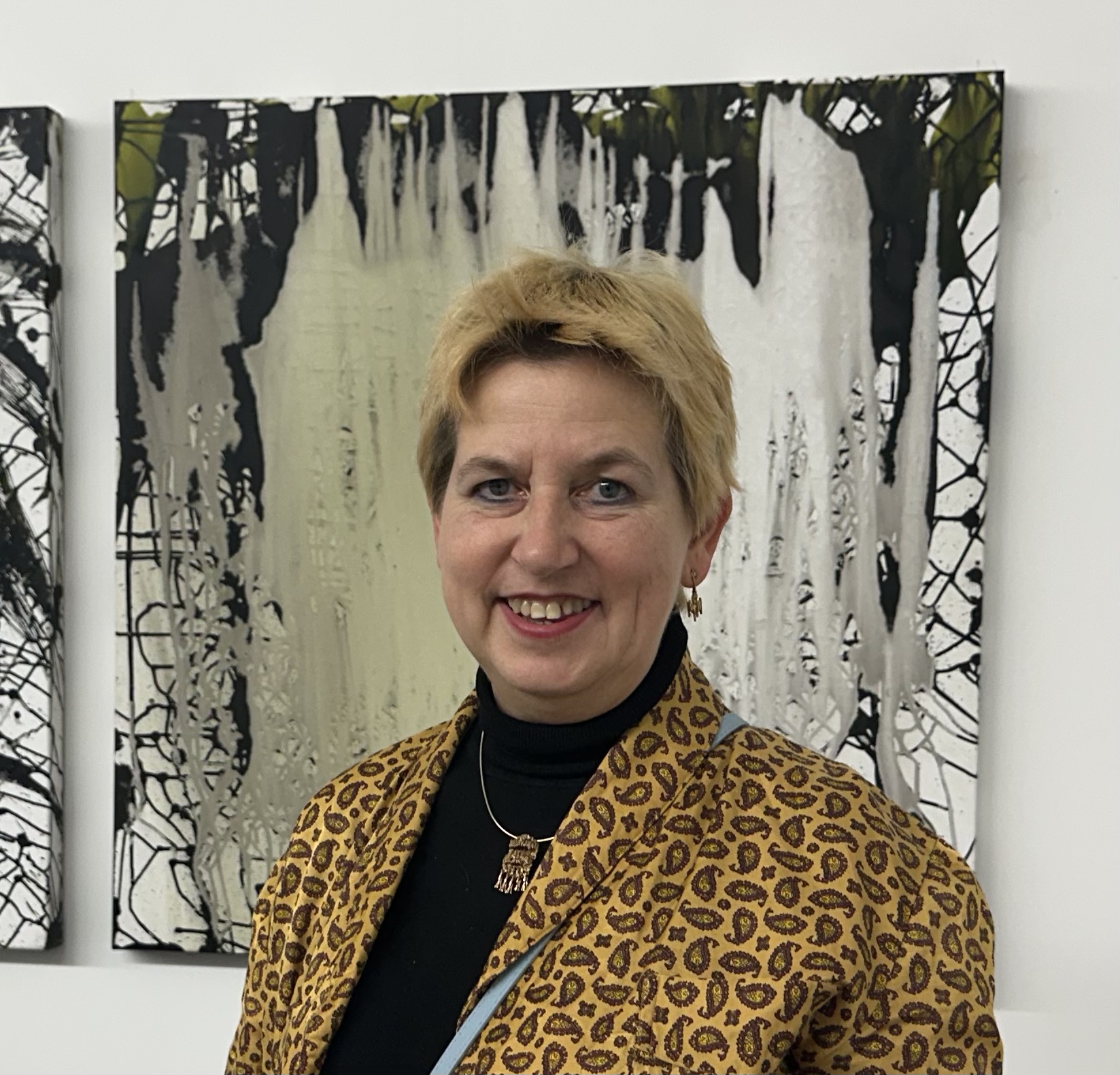
And those questions started with a very personal one. After her mother passed away in 2010, Almut found herself looking at old photographs, including some from her mother’s youth, that meant absolutely nothing to her. And a question formed that she has been working through ever since.
What remains? What is left when someone is gone and all you have are images you cannot connect to? That question sent her into collage and decollage, gluing photographic prints together in layers, tearing them apart, scratching at them, searching for the unifying message hidden between all those fragments.
How that process evolved into the abstract layered painting she makes now is a journey she describes during the interview and it is one of those creative origin stories where grief and curiosity and stubbornness combine into something that could not have been planned.
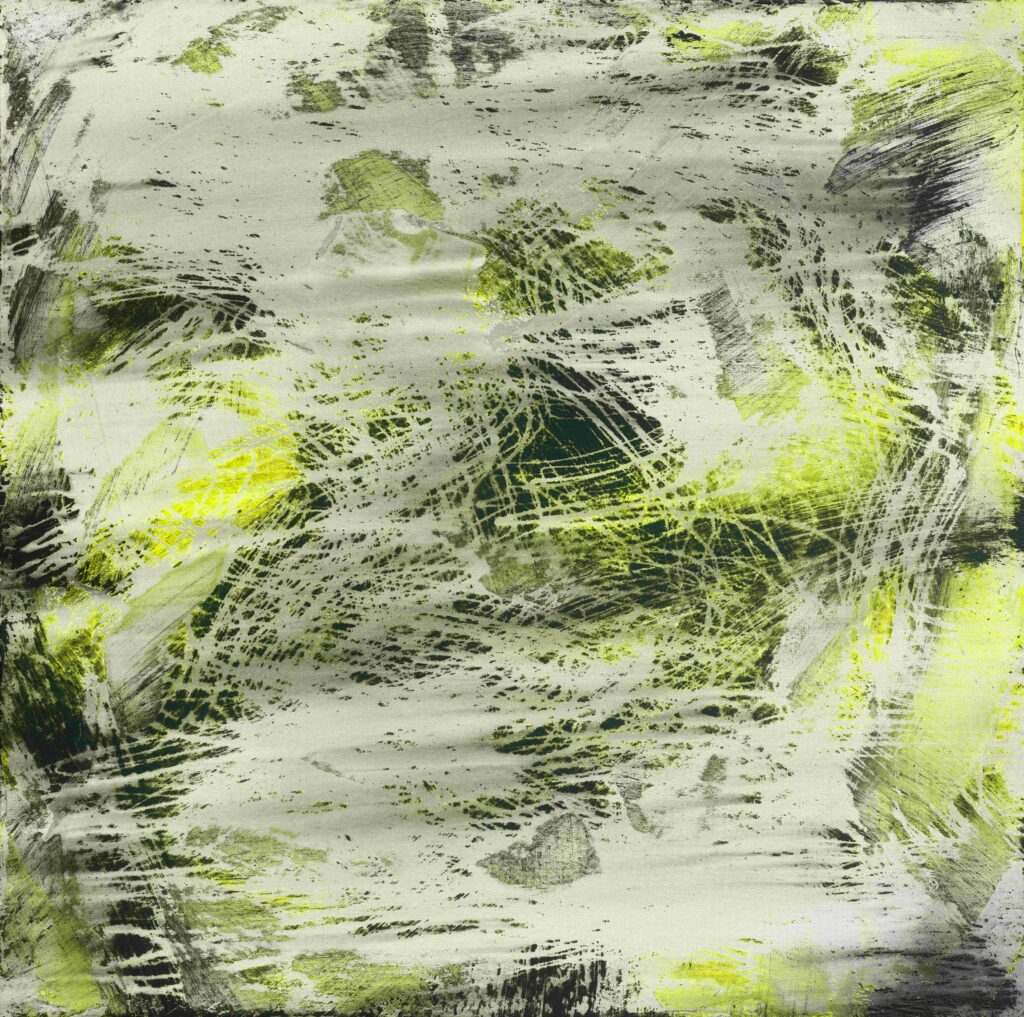
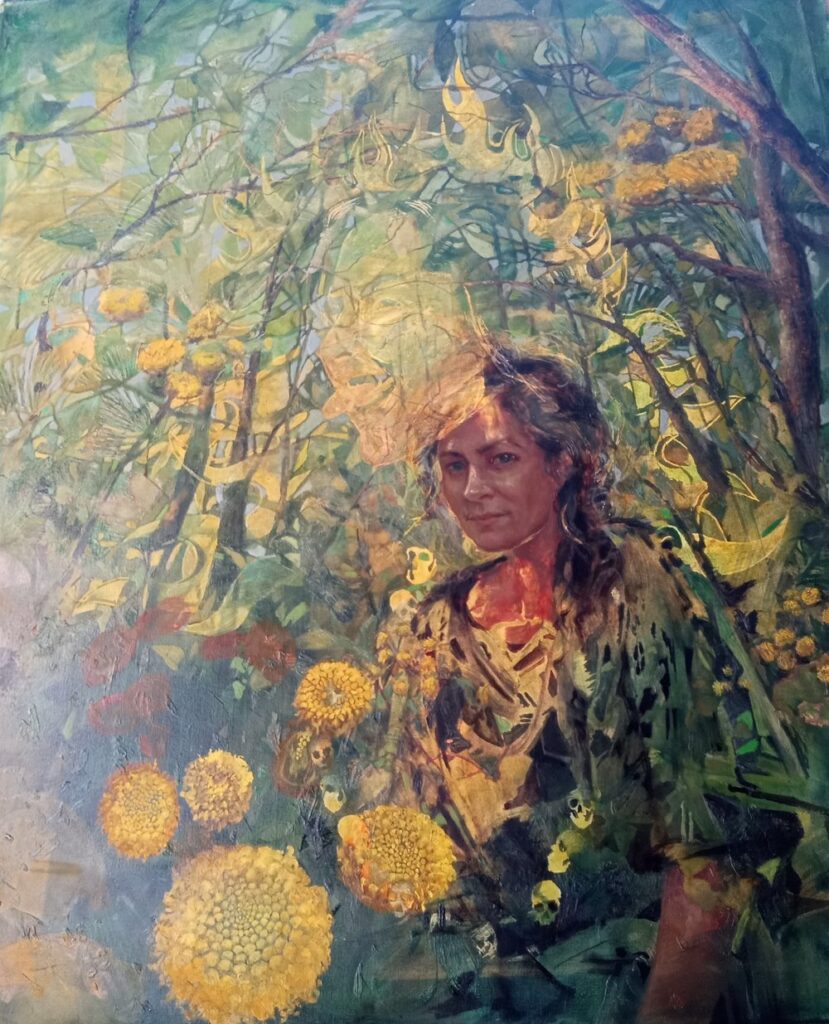
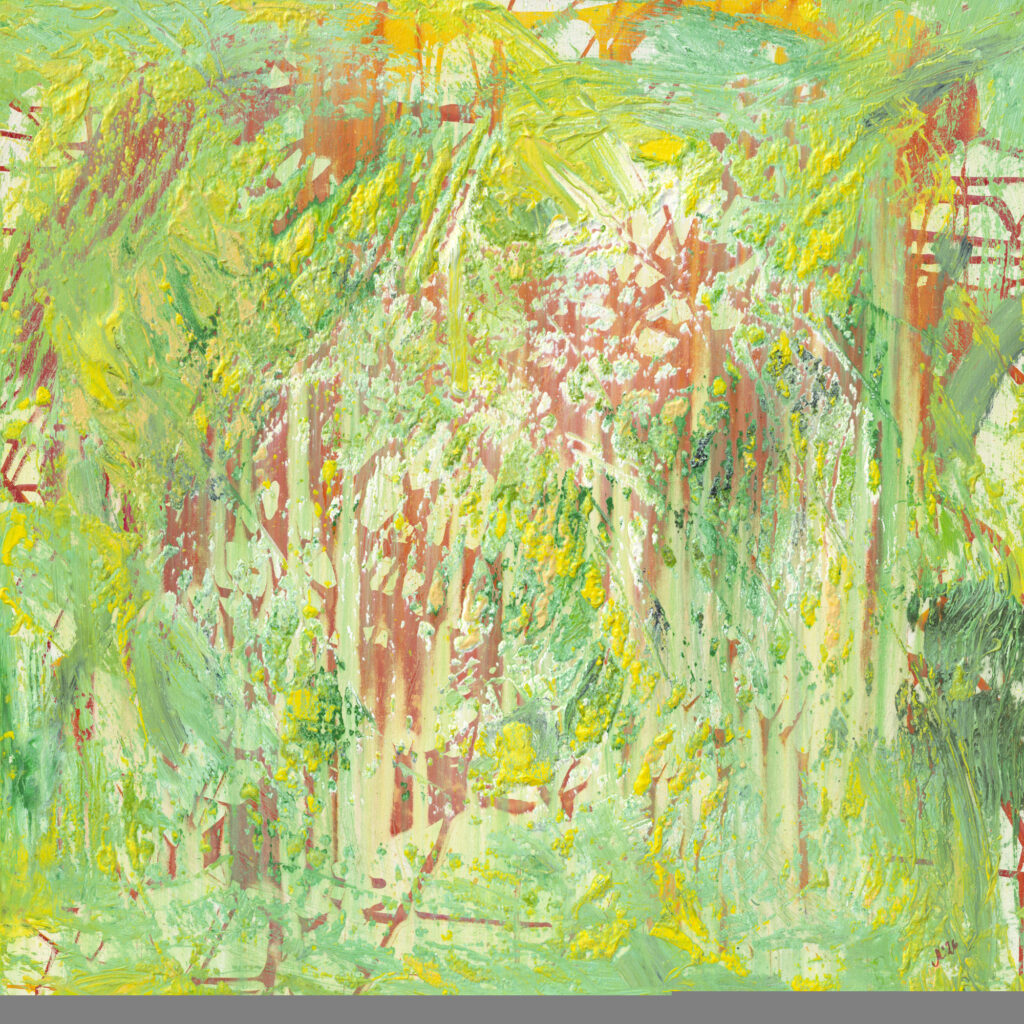
She works intuitively. There is no sketch beforehand and no predetermined outcome. She enters the painting with all her senses and follows where the colour takes her. Sometimes she recognises figures or shadows emerging while she works.
Sometimes the meaning only catches up with her after the painting is done. That willingness to not know what she is making while she is making it and to trust the process anyway is something that clearly took years to develop and you can feel it in the freedom of her surfaces.
Let’s get to know Almut through our conversation with her about the question that started everything, why tearing photographs apart led her to painting, how decades of practice changed what she can do with colour, and why she believes any artist who follows the mainstream too soon pays the price with their freedom.
Q1. Could you share a bit about your journey and how you found your way to abstraction?
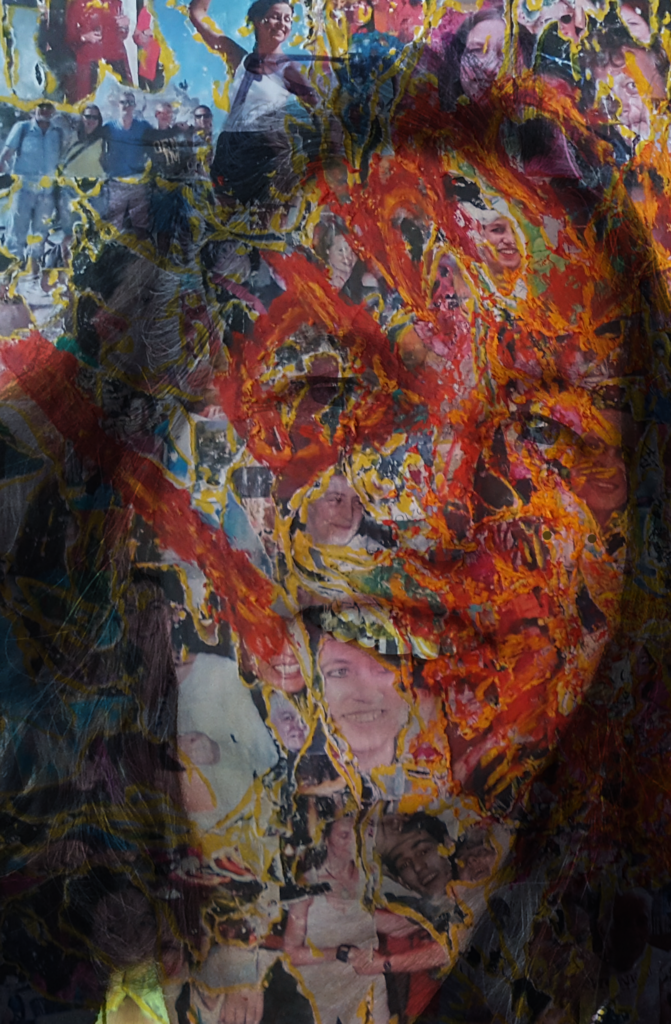
My more professional artistic direction began after my mother’s death (2010), when I came across numerous photographs, including some from her youth, which meant nothing to me. I asked myself, “WHAT REMAINS?” and, in my search for a connection between painting and photography, I initially became fascinated by collage and, in particular, decollage.
I glued photographic prints together by colour, theme or in a wild jumble in 5–10 layers, tore them apart again, scratched at them, left marks and sought the unifying message of the various layers until a new image emerged. I see my current layering of colours on the canvas as a continuation of this search, albeit one that is oriented towards the emotional realm.
Q2. You feature a Picasso quote on your website, what does it mean to your creative process?
In my view, painting is a process. The picture takes shape whilst I am completely immersed in it with all my senses; I think and feel nothing but colour. My approach is a combination of the practical knowledge I have acquired through various techniques and the entirely intuitive dialogue I have with myself and the emerging picture.
My works can neither be described in advance nor copied. Sometimes, whilst painting, I recognise an idea or a direction, often the outlines of figures and shadows; just as often, the analysis only catches up with me after the painting is finished.
Q3. You describe art as a way of seeing and understanding, how does that shape your practice?
I take my cue from *The Little Prince* (a story by Antoine de Saint-Exupéry): “One sees clearly only with the heart; what is essential is invisible to the eye.” It is important to trust oneself and one’s own feelings, and not what anyone else dictates I must feel, think or say. When looking at a picture, only I, as the viewer, and the image I am looking at matter. No smartphone, no newspaper, no interpretation of the image by anyone else.
Q4. You work across painting, collage, cyanotype, and printmaking, what draws you to exploring different processes?
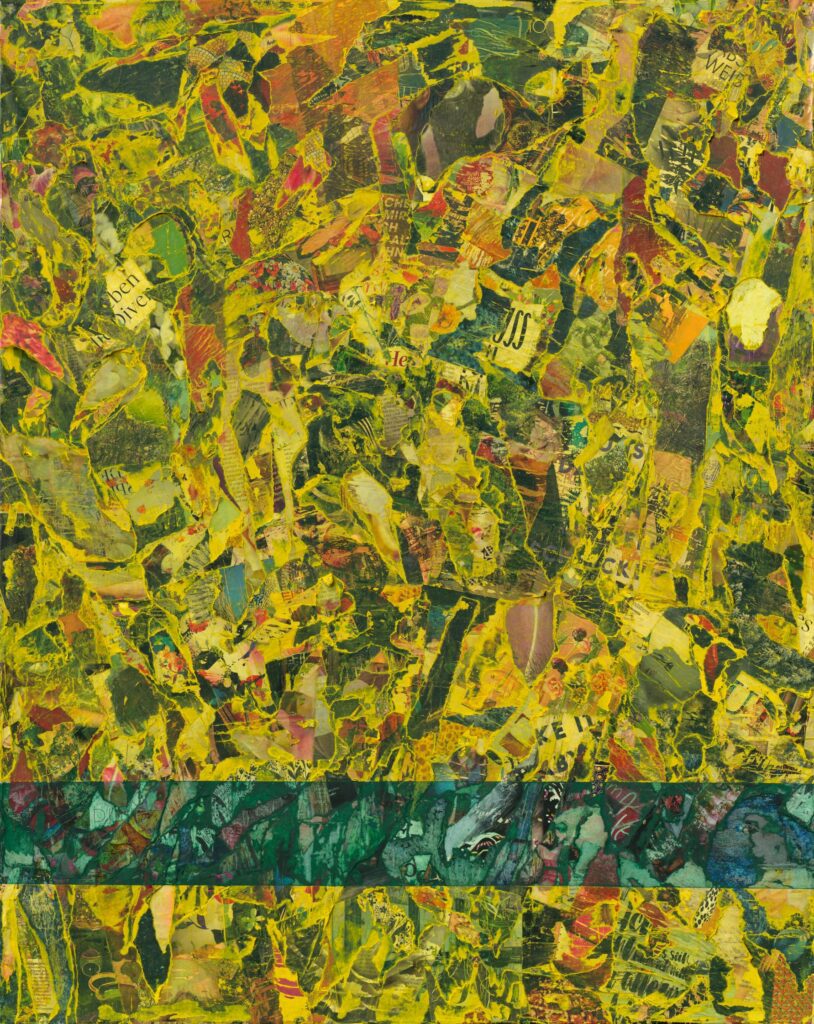
These techniques always have a photographic basis. They therefore allow me to depict or process objects, people and even personal memories in a way that is either recognisable, unrecognisable or abstract. At the moment, for example, I am also combining them as backgrounds, using screen printing for this purpose. Ultimately, only fragments of these may remain visible, but they contribute to the overall effect of the finished image.
Q5. What kinds of materials find their way into your collages, and how do you collect them?
I used newspapers, magazines and copies of photographs, documents and drawings. Thanks to digitalisation, nowadays everything can be turned into a photocopy or a printout. Depending on the situation, I collect and sort everything by theme or colour.
Q6. How has being part of the Hanauer Kulturverein influenced your practice?
The Hanau Cultural Association (HKV) is not an arts association, even though many artists are members. The HKV is an association that has been committed to promoting CULTURE in Hanau for over 40 years, at a time when the cultural programme we now take for granted did not yet exist.
Excerpt from the manifesto: “One of the most important objectives is to have a direct impact on the cultural environment, which is only possible within manageable areas. Commitment arises when people find opportunities for self-fulfilment in the places where they live, work and spend their leisure time. People today, who are largely lonely and isolated, might even use the much-maligned word ‘home’ in an environment that deserves the label ‘culture’ – a home in which they can flourish and with which they can identify.
In line with this concept of culture, the Hanau Cultural Association has engaged with the history of the freedom and labour movements, as well as fascism, democratic resistance and the peace movements. Through many events, the Hanau Cultural Association also continually seeks to explore a wide variety of understandings of art and culture.” Furthermore, there is a respectful exchange with members about art and artists, which is very important to me.
Q7. Works like People are People and Faun feel connected was that dialogue between the human and the mythical intentional?
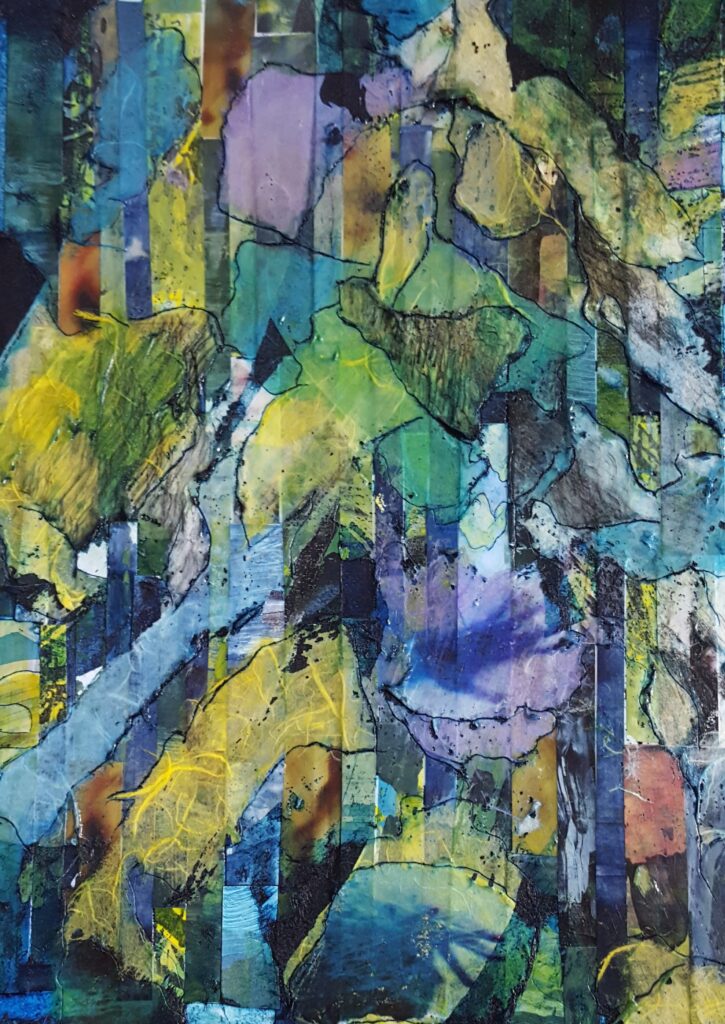
No, I think they stand side by side, as they share the same format, yet there is this dialogue you mention: With ‘people are people’, I had the Depeche Mode song of the same name in mind, which is about the inability to simply let other people be human. The individual in the crowd, who not only loses their individuality but also quickly becomes an unthinking herd animal. In ‘Faun’, two people lose themselves in one another, with the self-evident natural attraction and the ancient, ever-valid wisdom of the ancient trees and plants, of the earth.
Q8. Has a viewer ever interpreted your work in a way that changed how you saw it?
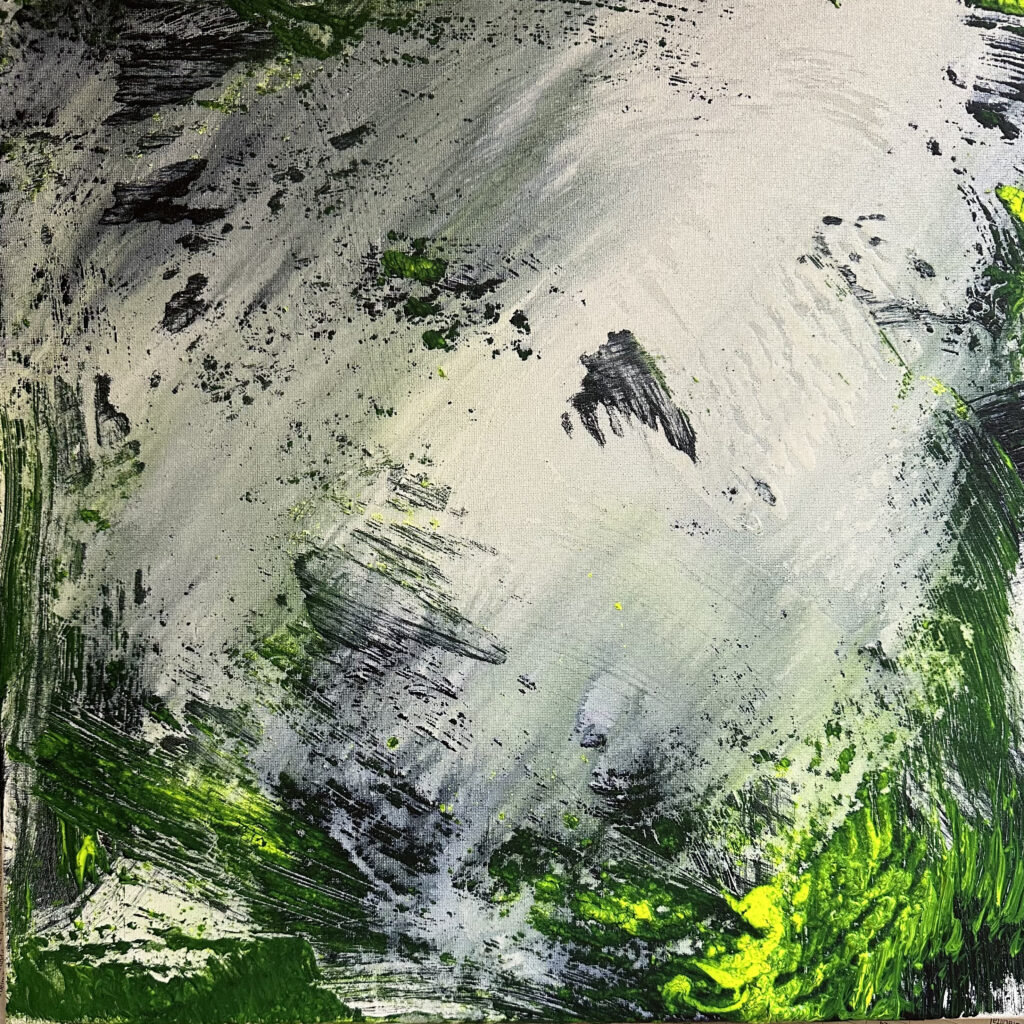
Yes, quite often. For example, in the ‘Earth’ series, the first image, ‘It’s Over’, was spotted by a very good friend of mine, who recognised the broken heart and thus the personal touch in the image.
Q9. You’ve been painting since the late 1980s. How has your relationship with abstraction changed over the years?
Anyone familiar with my earlier paintings will be able to confirm this: although I have always painted with emotion, my works have gained much greater depth and expressiveness.
Perhaps this is due to the combination of a wider range of techniques I have learnt, coupled with an undeniably greater wealth of life experience, which is naturally reflected in my works as well.
Q10. What advice would you give to artists who are exploring experimental processes and trying to trust their own way of working?
Try, try and keep trying new things, and don’t let yourself be swayed by the mainstream. Any artist who succumbs to it too soon – or indeed at all – pays the price with the freedom of their artistic development, and it offers only short-term success.
As our conversation with Almut came to a close, we kept thinking about the question she asked herself after her mother died.
What remains? She has been living with that question for fifteen years. Not because she found an answer and kept painting it, but because the answer keeps changing. And we think there is something important in that for anyone who makes art.
You do not always need to know exactly what your work means. You do not need to resolve the question that started it. Sometimes you just need a question honest enough to keep returning to.
Most of us want answers. We want to finish a painting and understand what we made. We want to make sense of grief, put difficult experiences somewhere, and eventually move on from them. But Almut’s practice shows us that meaningful work can come from doing the opposite. From staying with what you do not understand. From allowing the same question to lead you somewhere different each time you return to the studio.
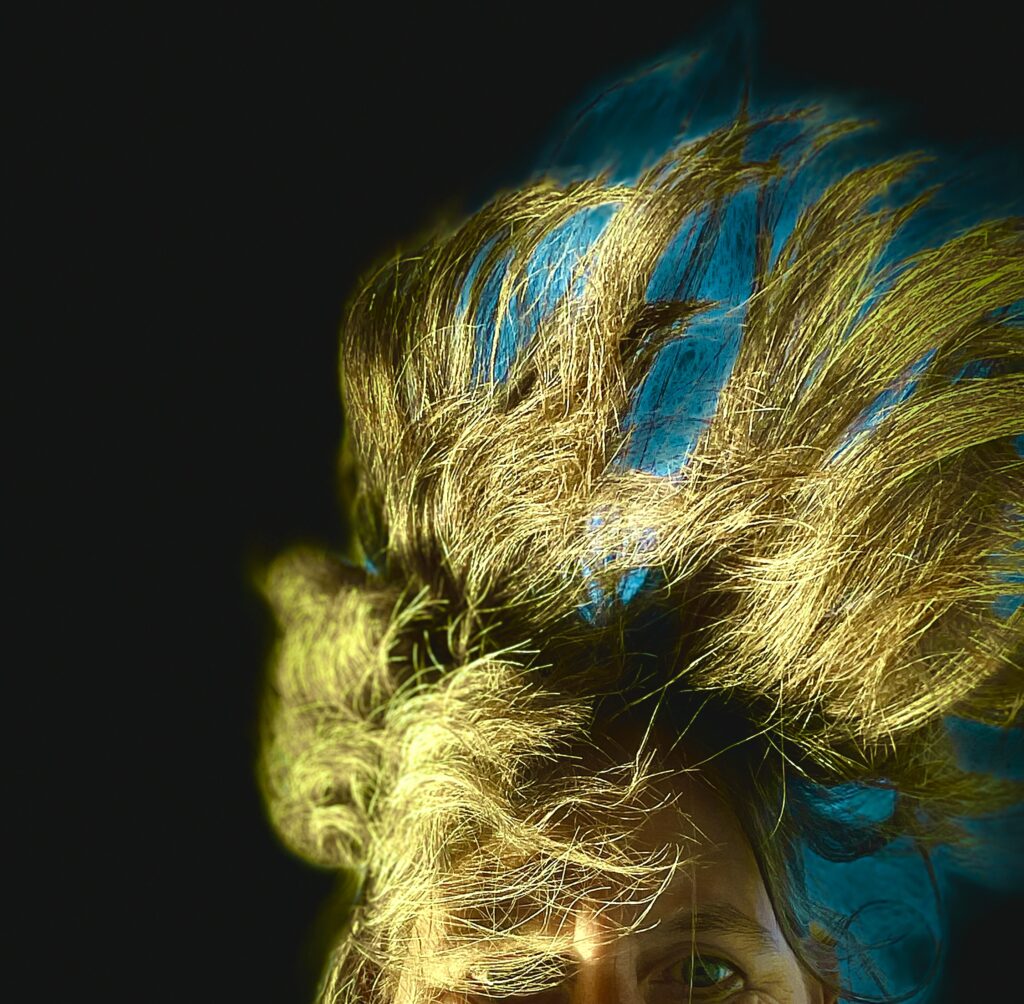
And then there is the time it has taken. Almut has been painting since the late 1980s. More than thirty-five years. She told us that her work has become deeper and more expressive as she has grown older, simply because she has lived more.
We think that is worth hearing, especially if you are making art and wondering why your work does not yet feel as deep or resolved as you want it to.
Maybe it needs time. Maybe you need time.
More years of living. More things to lose and love. More joy, disappointment, confusion, and experience finding their way into the work. Some things cannot be rushed into a painting because you have not lived them yet.
We also kept thinking about the relationship between grief and creativity. Almut did not decide that loss would become part of her practice. It happened to her, and painting became the place where she could keep returning to what she could not fully understand. Fifteen years later, she is still working from that place.
That does not mean difficult experiences automatically make meaningful art. But the things we struggle to understand can become part of what we make. Sometimes the work begins because we do not have the words for something yet.
And for collectors and art lovers, that is part of what makes Almut’s paintings so rewarding to spend time with. They do not explain themselves immediately. They hold layers that become visible slowly, and what you find in them may change depending on what is happening in your own life.
You might return to the same painting months later and notice something you missed before. Not because the painting changed, but because you did.
Follow Almut Knebel through the links below and see her work for yourself.