

Five Museums to Visit in Lisbon
Lisbon is easy to fall for from the outside: tiled façades, steep streets, and the Tagus catching the afternoon light. But to understand the city beyond the postcard, you have to go inside.
Its museums show a Lisbon that’s harder to see from the street: a city shaped by collectors and monarchs, music and migration, industrial ambition, contemporary art, and centuries of exchange with the wider world. Some hold objects that have survived for hundreds of years. Others are still working out what art might become next.
So instead of just listing Lisbon’s most famous museums, here are five that each offer a different way of seeing the city, a newly reopened collector’s world, Portuguese and international contemporary art in conversation, a museum tracing Portugal’s musical memory, a former power station turned home for contemporary art and architecture, and royal ceremony literally on wheels.
Together, they add up to something more useful than a checklist: a way into the city itself.
A quick note before you go: admission prices shift often enough that we’ve left them out below, hours are current as of publication, but check each museum’s official site for the current entry fee before you visit.
1. Calouste Gulbenkian Museum: A Collector’s World, Newly Reopened
What can a museum tell you about the person who built it? Quite a lot, in the Gulbenkian’s case.
Its Founder’s Collection brings together thousands of works amassed by Calouste Sarkis Gulbenkian, spanning from Ancient Egypt to early 20th-century Europe, Islamic and Far Eastern art, European decorative arts, and paintings by Rembrandt, Monet, Renoir, and Manet among them. One of its most distinctive holdings is a collection of jewelry and glass by René Lalique, a close friend of Gulbenkian’s whose work he admired deeply.
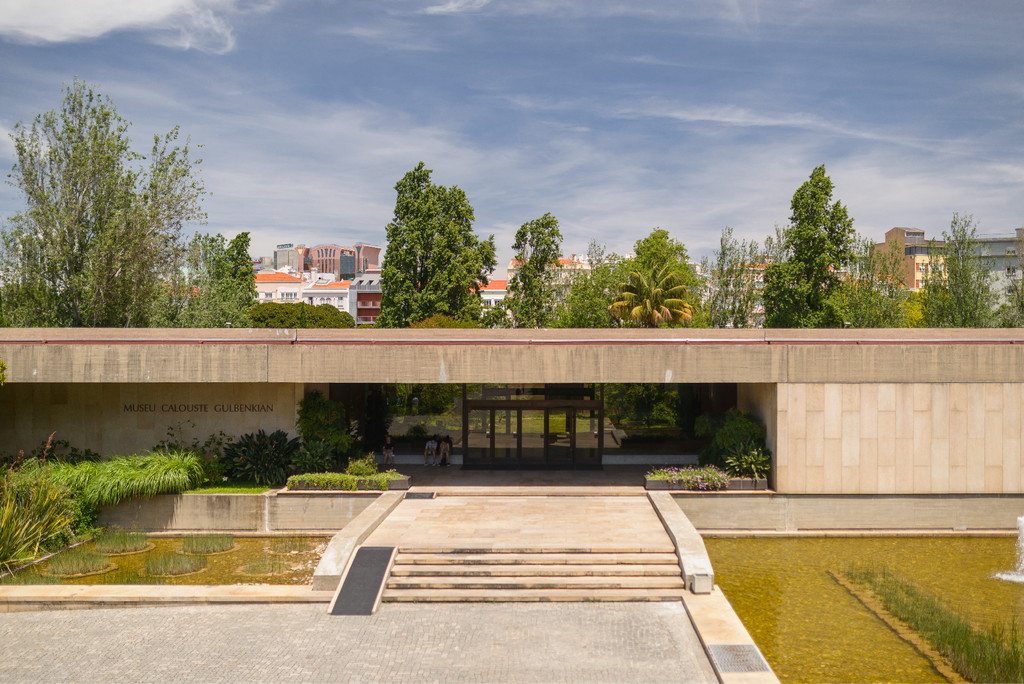
The timing makes a visit worth planning around: the museum reopened in July 2026 after a year and a half of renovation, work aimed at improving how the collection is preserved and displayed while staying faithful to the original 1969 building.
Rather than rushing past the famous names, look at how unexpectedly different cultures and centuries sit side by side. That’s the real pleasure here, not a tidy history of art, but the record of one extraordinarily wide-ranging eye. It’s open Wednesday to Monday, 10am to 6pm, closed Tuesdays.
2. MAC/CCB: Where Lisbon Looks at Modernity
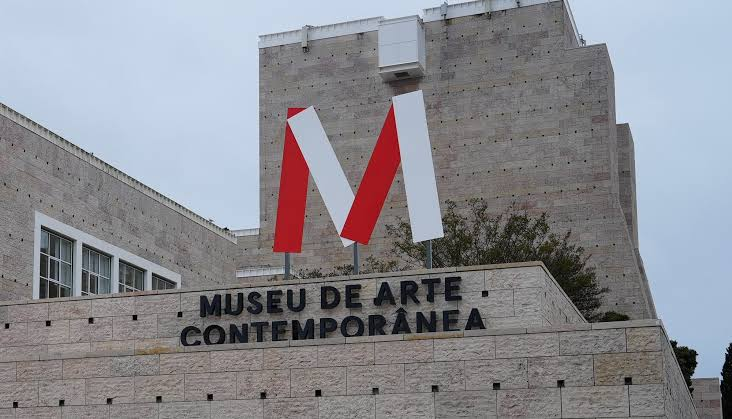
If the Gulbenkian shows what one collector found beautiful, MAC/CCB asks a different question: what happens once art starts pushing back against the world around it?
The museum, formally the Museum of Contemporary Art and Architecture Centre, opened under its current name in October 2023, after years operating as the Museu Coleção Berardo. Its holdings now combine the Berardo Collection with works from the Ellipse, Teixeira de Freitas, and Portuguese State Contemporary Art collections.
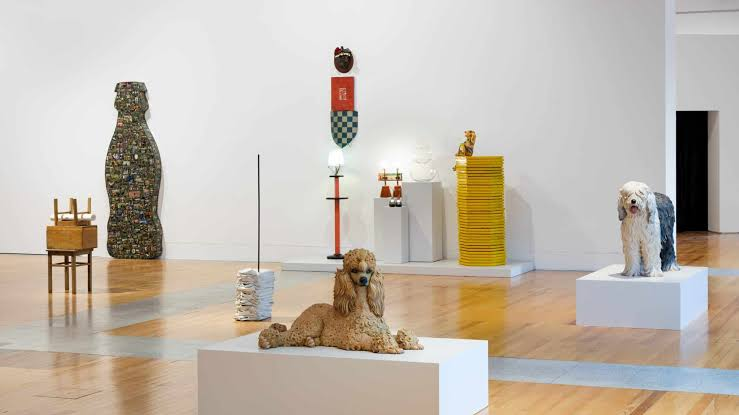
Its permanent exhibition, An Atlantic Drift, is worth the visit on its own: rather than marching through 20th-century art as a tidy parade of movements and famous names, it traces the period from 1909 to 1977 through the lens of the Atlantic as a space of movement, exile, and exchange, bringing Portuguese and international artists into the same rooms.
That’s a genuinely different way into modern art, even for visitors who’ve already seen plenty of it elsewhere, here, the story isn’t really about Picasso, Warhol, or Duchamp. It’s about the connections between artistic worlds that don’t usually get placed side by side.
And then there’s the building itself. Set inside the Centro Cultural de Belém, the museum puts contemporary art in direct conversation with the architecture, the river, and one of Lisbon’s most historically loaded districts. It’s open Tuesday to Sunday, 10am to 6:30pm, last entry 6pm, closed Mondays, free for Portugal residents on Sunday mornings until 2pm.
3. Museu do Fado: Where Lisbon’s Music Becomes Memory
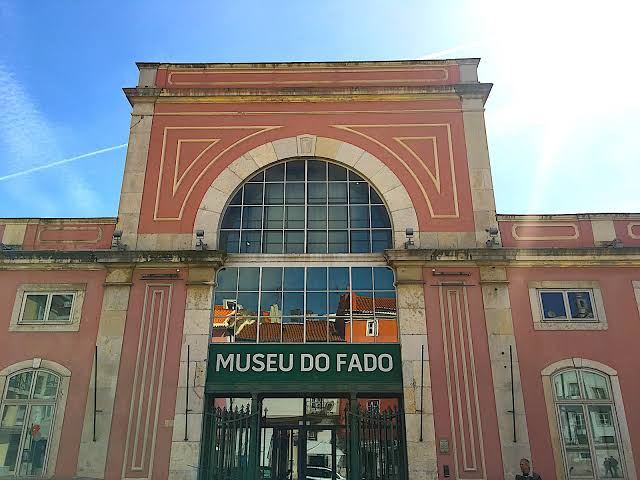
To understand Lisbon, you eventually have to hear it.
The Museu do Fado, tucked into Alfama, is devoted to fado, the musical tradition so tied to this city that UNESCO has recognized it as Intangible Cultural Heritage of Humanity. This isn’t just a museum of singers and songs, though; its collection brings together photographs, posters, instruments, recordings, scores, and costumes that trace fado’s history and the people who carried it forward.
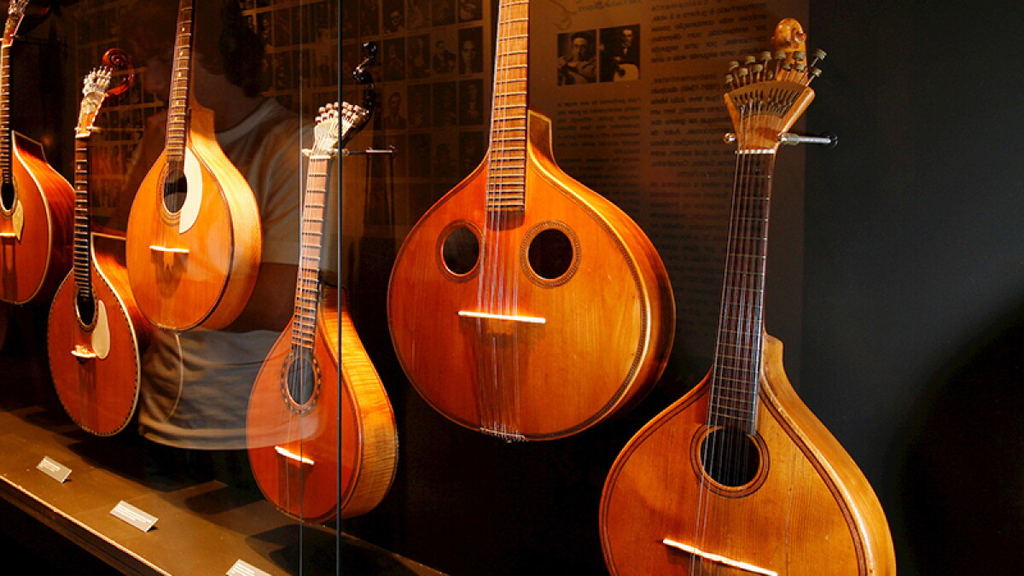
What makes it worth a stop has less to do with a checklist of famous names and more to do with a genuinely hard question: how do you preserve a living musical tradition? A photograph holds a face. A guitar holds an instrument. An old recording holds a voice. Together, they start to rebuild the world fado came from, and the generations of musicians who kept it going.
It’s also worth visiting before you hear fado performed live rather than after, the museum gives you the history and context first, so the music means more once you’re sitting in a tasca in Alfama or Bairro Alto listening to it in person. It’s open Tuesday to Sunday, 10am to 6pm, last admission 5:30pm, closed Mondays.
Read more : The Strange Beauty of Cats in Art
4. MAAT: Where Art Meets the River
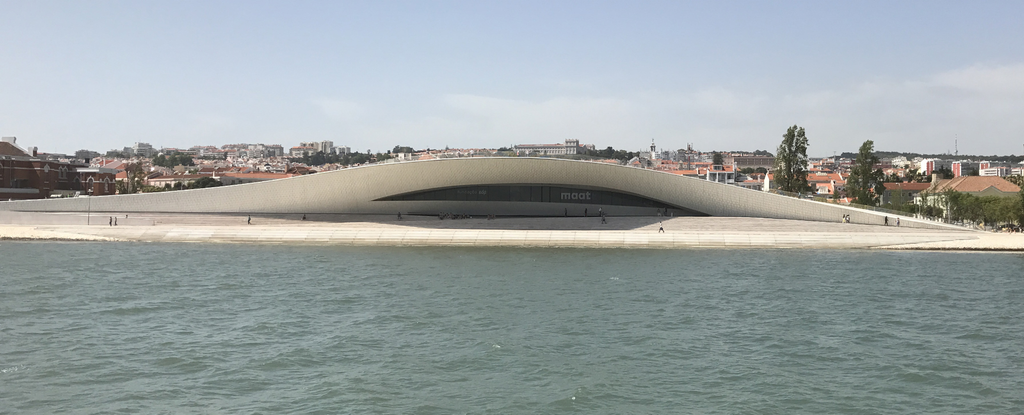
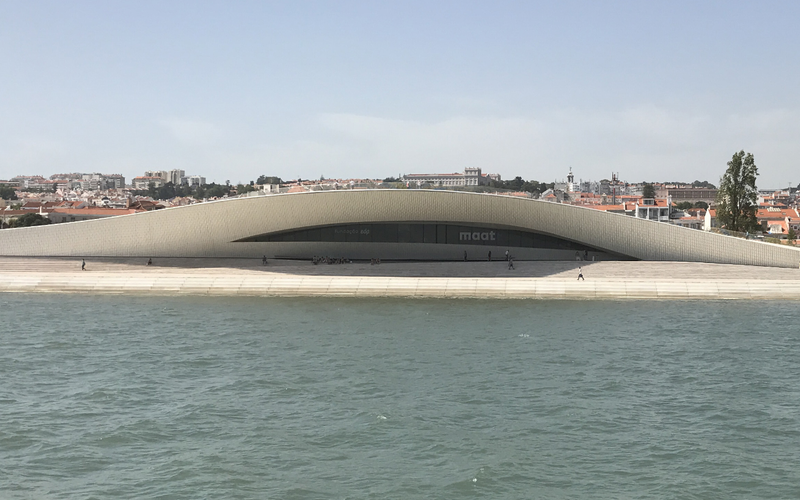
You can see MAAT before you even walk in. Its white, curving gallery building rises beside the Tagus like something between architecture and sculpture, while its other half occupies a former power station built in 1908. Together, the two make MAAT one of the most distinctive cultural spaces in the city.
The Museum of Art, Architecture and Technology opened in 2016, built around the relationship between those three things and the world we live in. Its exhibitions rotate regularly, so there’s no single fixed collection defining a visit, instead, the experience moves between contemporary art, industrial history, and the architecture of the buildings themselves.
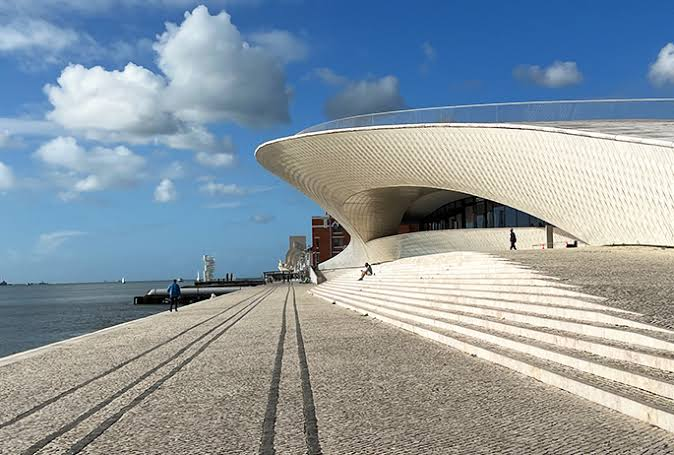
That rotation is part of the appeal if you like a little uncertainty with your art. One visit might take you through a contemporary installation; another might lead into The Electricity Factory, the permanent exhibition inside the old Central Tejo power station, where Lisbon’s industrial past becomes part of the museum experience.
And don’t skip looking back at the city from the riverfront before you leave, at MAAT, the building isn’t just holding the art. It’s part of the experience. It’s open daily except Tuesdays, 10am to 7pm.
5. National Coach Museum: Where Power Was Put on Wheels
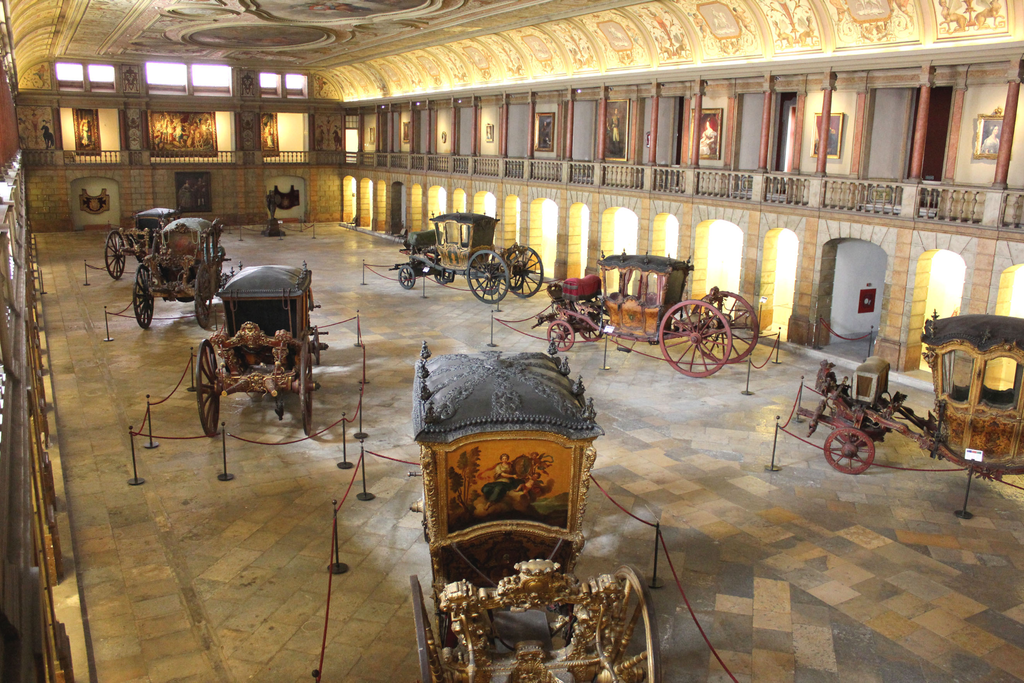
Not every museum needs paintings to tell a story about art. At Lisbon’s National Coach Museum, the masterpieces have wheels.
Founded in 1905 on the initiative of Queen Amélia, the museum holds an extraordinary collection of ceremonial and royal vehicles dating from the 16th to the 19th centuries, most connected to the Portuguese royal household. It’s also a record of pure craftsmanship, carving, painting, upholstery, and decorative detail turn these vehicles into elaborate statements of status and ceremony.
The single most striking piece is the Coach of the Oceans, built for the embassy King João V sent to Pope Clement XI in 1716. Its gilded, over-the-top decoration is a reminder these were never just ways of getting somewhere. They were built to make power visible.
The museum’s contemporary pavilion, designed by Pritzker Prize–winning architect Paulo Mendes da Rocha with Ricardo Bak Gordon, creates a genuinely interesting contrast, centuries-old royal vehicles sitting inside a distinctly modern structure. It’s open Tuesday to Sunday, 10am to 6pm, last entry 5:30pm, closed Mondays; the historic Picadeiro Real building is currently closed for renovation, so it’s worth checking the museum’s visitor information to confirm what’s open before you go.
Read more : Elsa Schiaparelli, the Designer Who Put Surrealism on a Dress
Lisbon’s Museum Story Is Still Being Written
These five museums don’t tell the same story, and that’s exactly why they belong together.
The Gulbenkian shows what one collector’s eye can build. MAC/CCB puts Portuguese and international contemporary art in conversation. The Fado museum preserves a musical tradition that still belongs to the streets outside it. MAAT looks toward art, architecture, and technology at once, while the Coach Museum shows how craftsmanship and ceremony once made power visible.
But Lisbon’s art story didn’t end when these objects went into museum collections. A new generation of Portuguese artists is still working through questions of identity, place, memory, and belonging, in ways these five buildings only hint at. If these museums show you where Portugal has been, the artists working right now are the better guide to where it’s headed.
That’s really where a museum visit should leave you, not with a finished history, but with more questions about the art being made today.
Explore the current open calls and submit your work: apply.artstoheartsproject.com