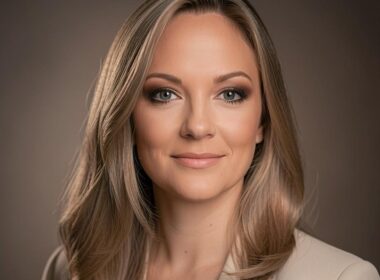

This Artist Learned To Love The Days When No Ideas Come I Angelina Linnenschmidt

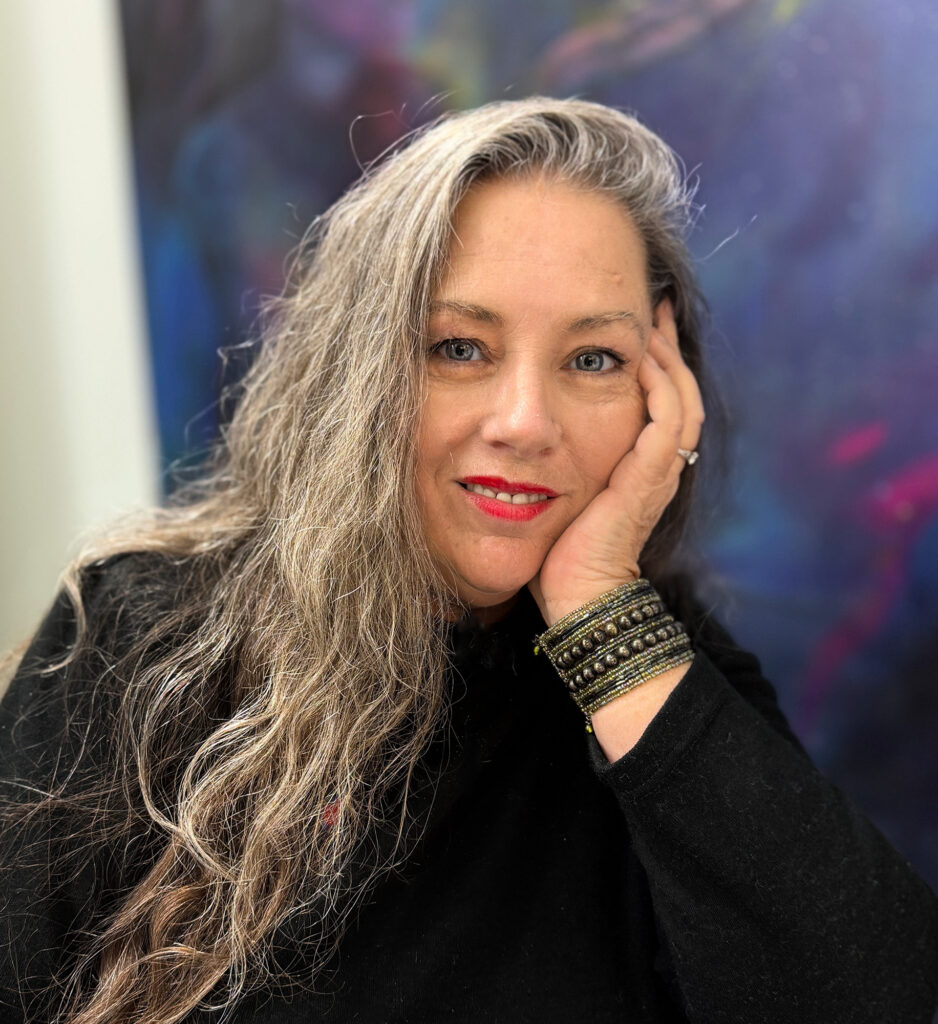
Art is never just a pastime for Angelina Linnenschmidt, it’s a pulse, a journey, a way of turning curiosity into feeling, motion, and meaning. From the chalked walls and floors of her childhood birthdays to canvases that capture fluid movement, abstraction, and the quiet weight of lived experience, her work is at once deeply personal and profoundly relatable. Every stroke, every layered texture, carries the wonder of a teenager discovering acrylics for the first time, the patient persistence of a young artist wrestling with doubt, and the courage to transform fear, hesitation, and uncertainty into creation.
This week, for our Best of Art World series, we’re honoured to share Angelina’s journey—a story that begins with playful sketches from an uncle, early encouragement from a generous neighbour, and months spent painting in solitude during adolescence. Those early sparks of discovery grew into a practice that balances private reflection with the joy of giving art a life beyond the studio. From the sleek futurism of chrome effects to intimate, emotion-rich portraits and abstract explorations of energy and mood, her works invite viewers into spaces that feel at once familiar, mysterious, and alive.

Exhibiting across digital platforms and through her growing portfolio, Angelina’s art embodies the delicate balance between self-exploration and shared experience. It moves, evolves, and breathes, it refuses to be constrained by expectation, yet always remains tethered to authenticity and heart.
Let’s step into Angelina Linnenschmidt’s evolving world a place where curiosity sparks courage, where painting becomes both a mirror of the soul and a map for exploration, and where every canvas gently invites you to feel, reflect, and journey alongside her.
Can you share how your uncle and neighbour influenced your earliest art experiences, what you created, and when you realized art was more than a hobby?
It really started with my uncle. Every year on my birthday he drew cartoon figures for me – sometimes on the wall or floor with chalk, sometimes on paper. I always looked forward to it, and it sparked my first fascination with art. I even tried to copy his sketches, which made me curious to explore more on my own. When I was about 15 and got sick, I was stuck at home for a few months, and that’s when my family brought me acrylic paints and brushes. My neighbour even gave me my first little easel and more paints. That was the first time I painted on canvas. The result wasn’t great, but it was so much fun that I immediately wanted to keep going. I think I realized art was more than just a hobby when I noticed I always came back to it, no matter what. I had always known I wanted to do something creative, but when I started sharing my work on social media and got such a strong response in a short time, it gave me the confidence to take it more seriously. It felt like an opportunity to turn something deeply personal into something I could also share with others.
You mention that your motivation is to inspire and make homes more interesting. How do you see the balance between creating art for yourself and creating it as a gift or experience for others?
For me, the two are deeply connected, but first and foremost, I create art for myself. It’s about curiosity and exploring what I need to express internally. Only after that does a work leave my studio and enter someone’s home, becoming part of their daily life and atmosphere. That awareness motivates me – I want my art not only to carry my own story, but also to invite new stories, moods, and even playfulness for others.
So, the balance isn’t about separating these intentions but about seeing them as layers of the same process: I create from an authentic place, fully for myself first, while always keeping in mind that the piece may live beyond me and enrich someone else’s environment.

There are always features like chrome effects, portraits, and abstraction in your work. How do you feel these different styles express different parts of your inner world or vision?
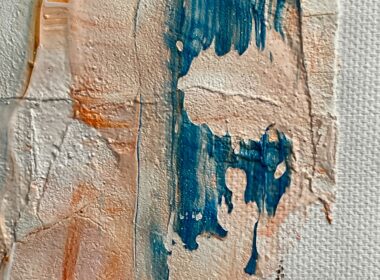
These different styles give me the opportunity to express different sides of myself. Chrome has this clean, almost clear vision that feels bold and futuristic. Portraits allow me to explore something more personal and intimate, focusing on emotion and connection. Abstraction, on the other hand, gives me the freedom to express moods or energy in a looser, more intuitive way. I enjoy having that range because it keeps my work alive and allows me to follow whatever feels true in the moment, without limiting myself to one form of expression. And in the future, this might change again – I want to stay open and not tie myself to a single direction.
What draws you to acrylics as your primary medium, and in what moments or works have you experimented with mixed media or unexpected materials?
I first started working with acrylics when I was about 15, simply because it was the medium I was gifted – and over time, I became very skilled with it. I like to think of it as my strength to handle acrylics almost like oil paint. The fast drying time, which many see as a limitation, is actually a blessing for me. I’m quite impatient when inspiration strikes – I want to bring an idea to the canvas immediately, without having to wait days for layers to dry. Acrylics give me that freedom: I can move across the canvas, left to right or right to left, without worrying about smudging or long drying times.
I have experimented with oil paints and enjoy them as well, but acrylics feel more natural to my way of working – they allow me to capture momentum and energy in the moment.

You’re still quite young yet already have a breadth of works and styles. What have been your biggest creative struggles, self-doubt, time, external criticism and how have you moved past them?
My biggest creative struggles have been those phases where no ideas seem to come, or when I’m simply not happy with the work I create. External criticism and comparisons to other artists have also been challenging. Over time, I’ve figured out ways to navigate these creative blockages and even prevent them, by keeping routines that inspire me and giving myself space to experiment without pressure. Staying curious, focusing on the process instead of external validation, and finding inspiration through daily walks in nature, moving my body, dancing, listening to music, or engaging in conversations with others about art, spirituality, and life, all really helps. Accepting that these phases are natural and temporary is key. Support from my family, especially my sister who encouraged me to share my work on social media, has also been incredibly important for building confidence. Now I can see these struggles as part of the journey – they push me to grow, try new approaches, and deepen my artistic voice.
In your ‘Atlantis’ series, you explore themes of daily life through oceanic imagery. Can you share the inspiration behind this collection?
After graduating high school, I went on solo travels and spent most of the time in Hawaii, where I felt a deep connection to the ocean. When I returned, I carried feelings of being overwhelmed and uncertain, but also the urge to find strength. I transformed these states into the three paintings of my “Atlantis“ series – Drowning, Diving from the Dark, and Fight the Dark – with the ocean as a metaphor for both my own journey and a universal experience.

How does feedback from strangers, collectors, peers, or social media, influence your confidence or direction? Do you ever feel pressure to conform or “produce” in a certain way?
I do notice that different art styles perform differently, and I get it! But for me, the most important thing is just expressing yourself. I try not to let how a painting performs stop me from experimenting, trying new styles, and evolving. You can’t please everyone, and that’s okay – if you stop following your own path, you lose what makes your art authentic and fulfilling.
When a painting changes direction while you’re working starting with one idea but evolving differently how do you decide whether to follow the new direction or stick to your original plan?”
Most of the time, I follow the new direction. I try to trust my intuition and just experiment, even if it feels a bit scary at first. I think the magic really happens when you step into the unknown and stay open to a different approach – it’s also what makes the process fun, never knowing exactly how the painting will turn out. Letting a painting take its own path is a big part of how I create.

You belong to a generation of artists who grew up with social media as a tool and stage. How do you see your work in conversation with the broader digital art world and the challenges/opportunities of that landscape?
I’m really grateful for social media as a platform, because it allows me to share my work and entire creative process with a global audience, making my art more accessible and relatable. It also gives me opportunities to connect with other creators, discover inspiration I might not have found otherwise, and have a meaningful impact by raising awareness for themes I care about.
At the same time, there are clear challenges – negativity, hate, and the pressure to compare yourself to others, which can be intense when people are anonymous. But I try to approach the platform thoughtfully, focusing on sharing inspiration, inviting others into my process, and staying true to my own voice. For me, social media offers both challenges and opportunities, and the key is using it in a way that keeps my work authentic, meaningful, and empowering while still engaging with the broader digital art world.
How do you envision your art evolving in the next five years? Are there specific themes or projects you’re passionate about pursuing?
I’m curious to see how my art will develop and want to let it take its natural course rather than forcing a direction. I’m drawn to the intersection of personal experiences and universal emotions, and I’m excited to explore larger-scale projects and series around themes like the human connection to nature, transformation, and self-discovery. Ultimately, I want my work to keep challenging me while staying authentic to my own voice, while also having an impact and raising awareness for important topics through my art.
I would also like to collaborate with more brands in addition to creating my own artworks. These collaborations allow me to bring my artistic vision into new contexts, reach different audiences, and create meaningful impact, all while remaining true to my style.

What’s one piece of advice you would give to emerging creators especially those struggling with fear, comparison, or perfectionism about finding their own voice and staying true to it?
The number one piece of advice I would give emerging creators is to focus on expressing yourself, rather than seeking validation from others. There will always be amazing artists around you, but no one can be you – and that is your greatest strength.
I have to be honest, I still sometimes compare myself to others, or my inner perfectionist surfaces. But these feelings shouldn’t stop you from creating or sharing your art. I also try to see fear as a guide – often, the things that feel most intimidating are exactly the directions worth exploring. It’s important to stay open, experiment, and try new styles or techniques – that’s how you discover what truly resonates with you. Most importantly, focus on creating in a way that makes you fulfilled and happy. Over time, you realize that the more authentically you express yourself and focus on being genuinely satisfied with your own work and process, the less the opinions of others matter – and the more your art resonates, not because it’s perfect, but because it’s truly yours.

As we close our conversation with Angelina Linnenschmidt, it becomes clear that her art is nothing short of rebellion against fear, against doubt, against the idea that creation must be neat or safe. Her paintings, whether intimate, abstract, or reflective, carry the courage to be imperfect, the freedom to experiment, and the honesty to show vulnerability without apology.

Her work reminds us that creation is not about perfection, it is about honesty, presence, and daring to follow where the process leads. To witness Angelina’s journey is to witness a world where art breathes, lives, and feels deeply human.
Follow Angelina Linnenschmidt to experience how emotional honesty, fearless experimentation, and an evolving vision continue to shape not just her art, but the spaces and hearts it touches.