
How Does Motherhood Change the Way We Make Art?

Growing up in the Catskill Mountains and now living in New York’s Hudson Valley, Michelle Silver has carved out a creative life that moves fluidly between painting, design, and community building. As the Gallery Director of Distortion Society in Beacon, a gallery and tattoo studio she co-founded with her husband, tattoo artist Bradley Silver, she’s found a way to merge two very different creative worlds into one shared space. Her paintings, which have been shown across the U.S. and in London, often live in the in-between: between abstraction and figuration, control and spontaneity, order and chaos.
In this conversation, Silver talks about the evolution of her work and how motherhood, time, and responsibility have reshaped her approach to painting. She explains how her process—layering paint, scraping it away, rebuilding mirrors the push and pull of life itself. What began as a shift from realism to what she calls “emotional landscapes” has grown into a practice centred on movement, texture, and instinct.
She also shares how her dual life as a painter and designer keeps her grounded. Her client work brings structure and strategy, while her studio practice gives her a space to let go. Running a gallery adds another dimension, one that connects her directly with other artists and audiences. For Silver, community isn’t a side note; it’s the pulse of her practice. Whether through exhibitions, collaborations, or conversations with visitors, she sees sharing her work as a way to understand herself and the world around her a little better.
Through this interview, we get to know an artist who is constantly navigating the space between control and surrender, building a creative life that’s as much about connection and curiosity as it is about paint and canvas.
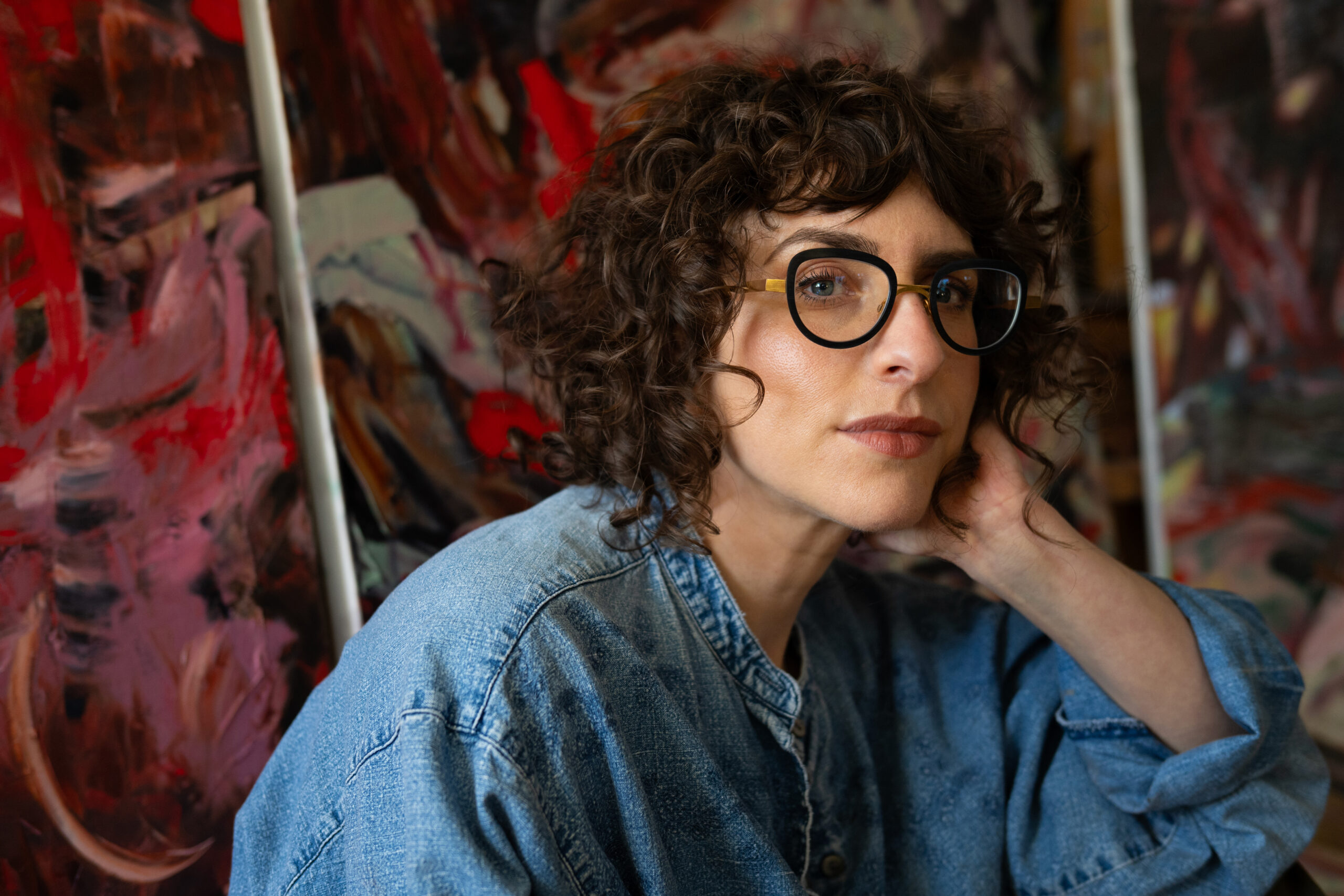
Raised in the Catskill Mountains of New York, Michelle Silver (b. 1987) is a painter, curator and graphic designer living and working in the Hudson Valley, NY. She is the Gallery Director of Distortion Society, a combined art gallery and tattoo studio in Beacon, NY, that she founded in 2023 with her tattoo artist husband, Bradley Silver. Silver has participated in group exhibitions throughout the United States and in London. She has also had four solo exhibitions, most recently at 1155 Avenue of the Americas, hosted by ChaShaMa, NYC. Chase Contemporary, NYC, has commissioned her work in silver, which is featured in the Visionary Projects Directory, and her work is part of the Fidelity Investments Corporate Art Collection.
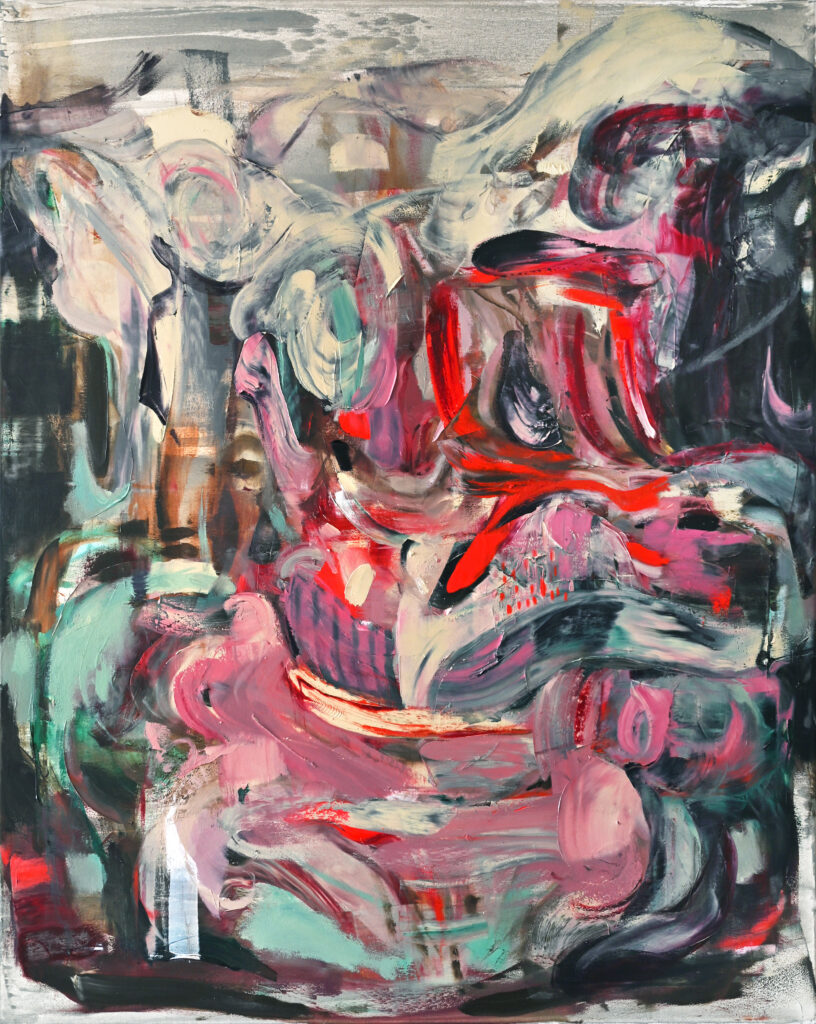
Silver is a Finalist in the Spring 2025 Homiens Art Prize. Her painting and curation have been included in publications such as The New York Times, Hyperallergic, Cool Hunting, Arts to Hearts Project, Times Union, Two Coats of Paint, Art Business News, The Highlands Current, and Chronogram. Silver paints emotional landscapes that combine steadied intention with bursts of full-throttle frenetic motion. Sometimes figurative, sometimes abstract, her painted worlds exist in the space between the conscious and subconscious, guided by intuition.
She uses the intimacy and vulnerability of her experiences—often portraying a dream or memory—as a platform to connect larger themes of motherhood, trauma, mental health, desire, and fear. Silver’s practice explores the connection of physicality, paint and surface. She works in alternating sessions of strategy and surrender, applying thick paint with a silicone tool in exaggerated strokes before it is smeared, slashed, and scraped away. Her layered work vibrates with the mode of its creation: rage, despair, ecstasy, power – a complex and sometimes convoluted display of the female and motherhood experience.
1. Your paintings often move between abstraction and figuration, balancing control and instinct. How do you know when a work has reached that point where both states coexist?
This can be tricky! Sometimes I want the figurative elements to be at the forefront of the composition, and sometimes I want them to be very obscured. Still, in both instances, I layer paint over time, making decisions as I go. I decide at the beginning of a work if I want the figurative elements to dominate or if I want it to lean purely into abstraction; however, I allow my instinct to guide me as I progress through the work.
I think it’s about finding balance within the work, not necessarily in equal parts figuration and abstraction, but more so in mood, message and composition, and that each part of the painting is dancing in harmony with the rest. In terms of balancing control and instinct, I work in alternating sessions of uninhibited release followed by thoughtful and strategic mark making and editing, which allows me to invite the unexpected without it devolving into chaos and losing direction.
The combination of creation and destruction is so essential to my process. The methodologies I apply in the studio are also those I am working through in life: embracing change and accepting that sometimes you must undo to move forward.
Michelle Silver
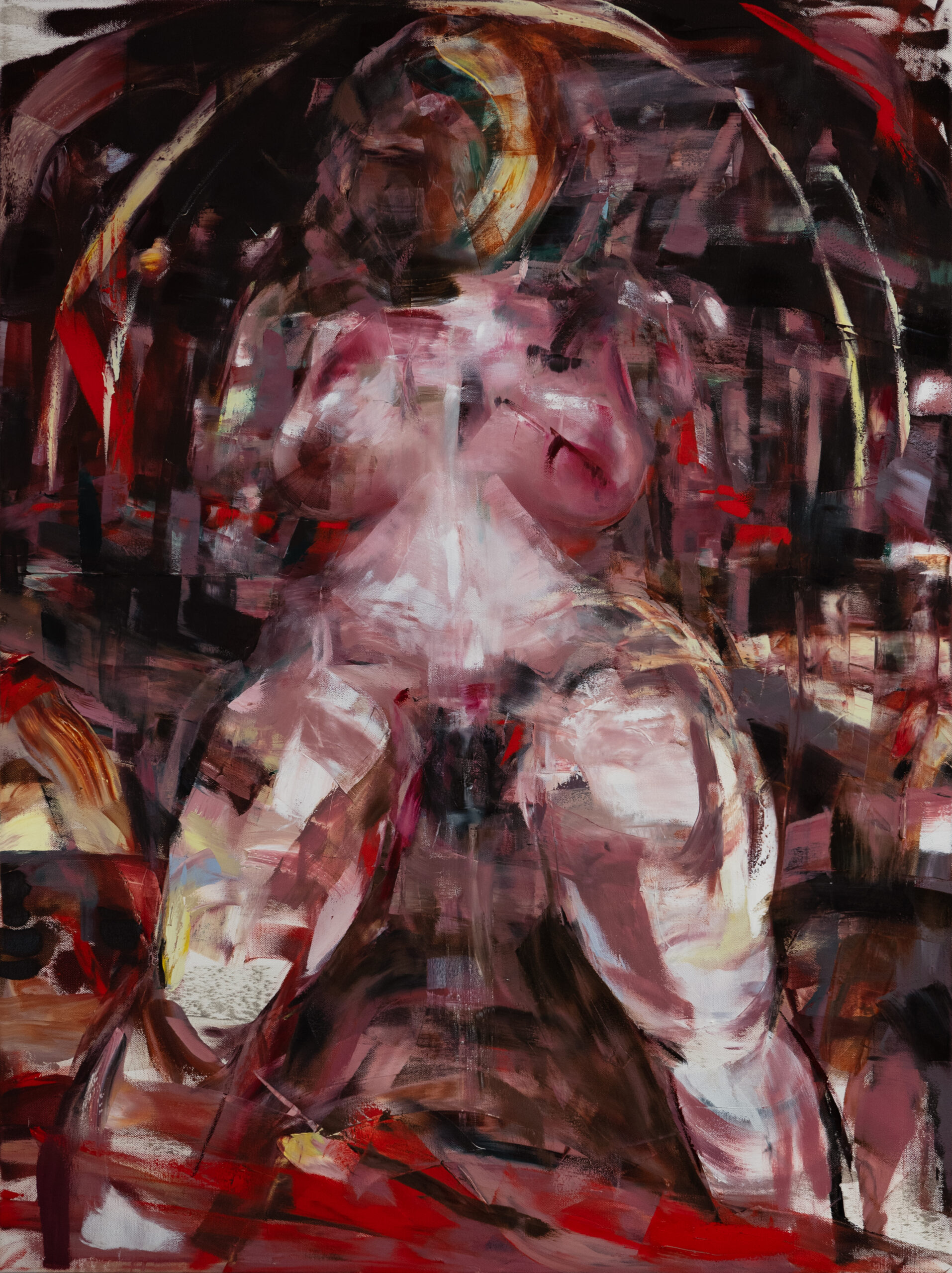
2. The rhythm of applying, scraping, and rebuilding paint seems central to your process. What draws you to that cycle of creating and undoing?
The combination of creation and destruction is so essential to my process! The methodologies I apply in the studio are also those I am working through in life: embracing change and accepting that sometimes you must undo to move forward – it’s a lot about wrestling with control. The application/scraping/rebuilding process allows me to play with textures and movement, and I can really lean into spurts of inhibition knowing that there will be a counterbalance of editing and strategic input. I think the word “rhythm” perfectly articulates this method as the work is always in motion, both in the way I create it and how the marks interact with one another.
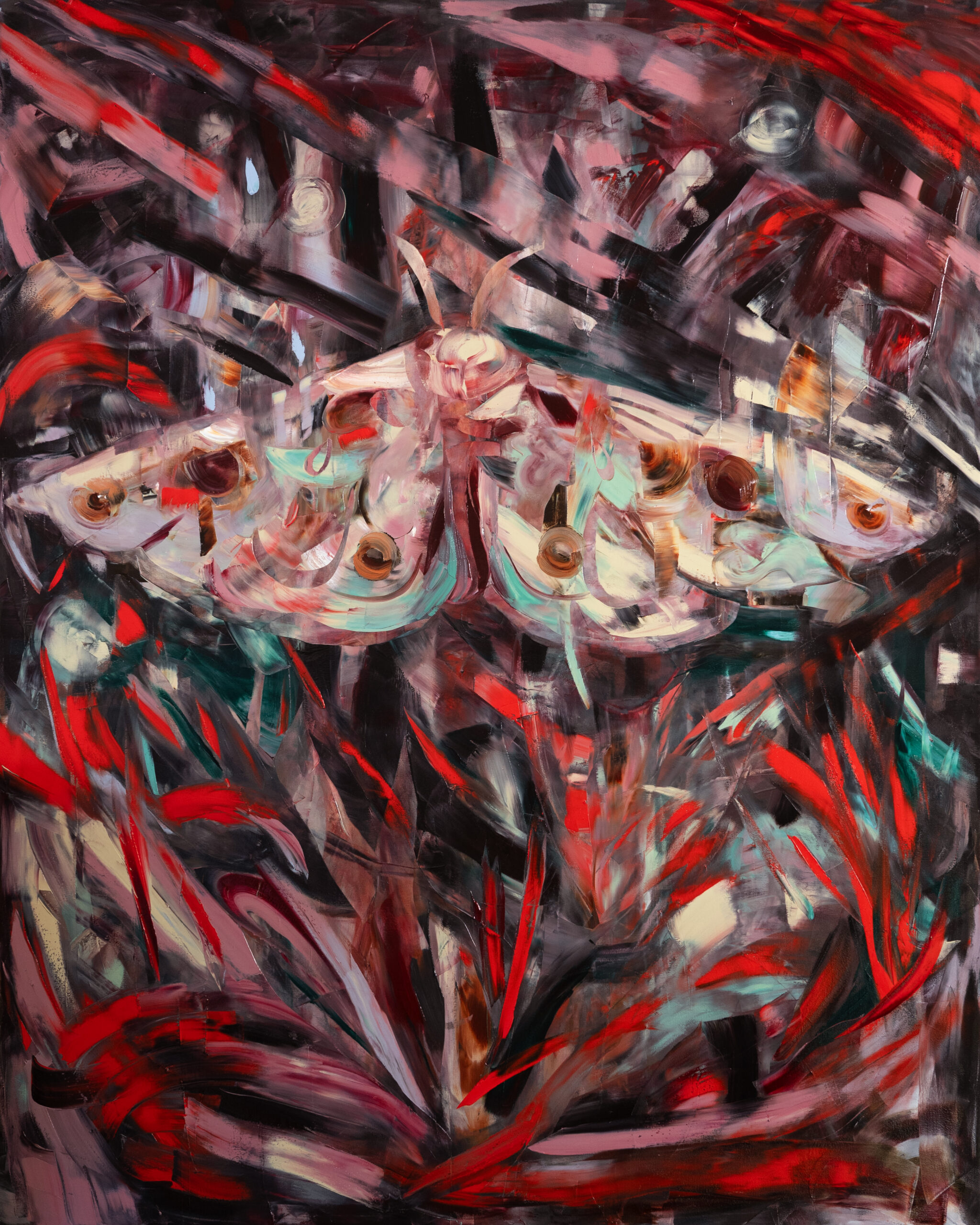
3. Much of your work touches on motherhood, memory, and the physical act of painting. How have these themes shifted for you since becoming a mother and running your own gallery?
Before having kids, I was working primarily in realism and figurative painting, spending a lot of time photographing subjects, creating digital mockups, sketching, and planning. After having my first child, I didn’t have the mental capacity or time to spend drawing and finalising a composition before painting, so I started leaning into painting as a pure expression of emotion. Over time, these “emotional landscapes” as I call them became much more based in physicality and movement, dealing with themes of motherhood, postpartum depression, birth trauma, power, permission, breaking stereotypes and connecting to more primal instincts.
I allow myself to get wild – dancing, singing and slashing paint across the canvas, all things I never get to do in the other facets of my life. My studio time became sacred and necessary for my mental health. When my second child was a year old and I opened the gallery, my time became even more sparse, so I had to be very intentional in the studio. This new way of creating forces me to spend less time questionin,g so I’ve been able to grow in ways I didn’t expect.
4. Distortion Society merges a gallery with a tattoo studio—two worlds with very different audiences. What conversations or connections have you seen emerge from that crossover?
It’s been so cool to see all the connections and cross-pollination between these two traditionally disparate industries. My husband, Bradley Silver, is a tattoo artist, so it made a ton of sense for us to merge our careers and passions into a combined business. We aim to break the stigmas associated with a traditional contemporary art gallery and a tattoo studio. Still, we weren’t sure if we’d be successful in doing so or how the tattoo and art communities would feel about the joint space. We’re 2.5 years in, and it’s such a fulfilling (albeit challenging) journey.
For tattoo clients, there’s more of a natural connection – they often already have an interest in art and are excited that they can hang out in an art gallery while they wait for their tattoo appointment – and sometimes tattoo clients become our art collectors! The way that folks who come into the gallery approach the tattoo portion of the business has been the most surprising. Often, they have no knowledge or experience with tattooing.
They approach it with an open mind, asking questions about the process, inspiration, and technique, and they digest the tattoo portfolio book with the same critical lens they use to explore the work in the gallery. We’ve also been included in some great press and reviews, which feels super validating that the larger art world “accepts” us, even if we’re breaking the mould a little.
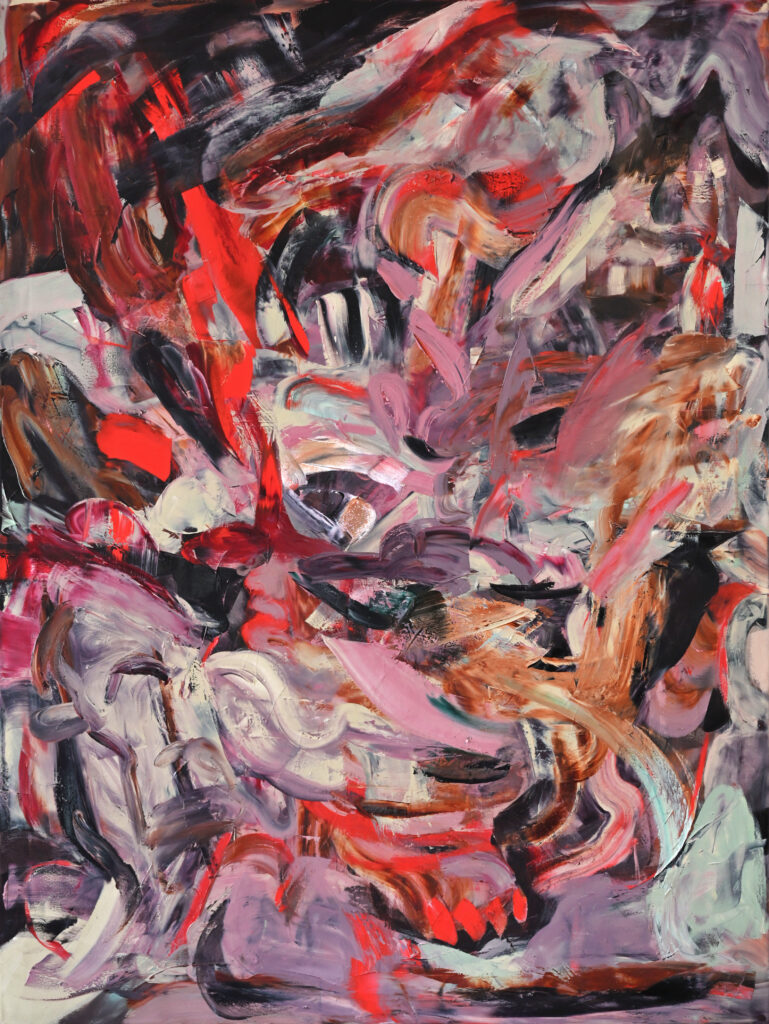
I think it’s about finding balance within the work not necessarily in equal parts figuration and abstraction but more so in mood, message and composition, and that each part of the painting is dancing in harmony with the rest.
Michelle Silver
5. You balance two creative paths: painting and design. How do those disciplines inform each other when you’re moving between client work and the studio?
There are different skill sets associated with both my design work and my painting work, but I think they inform each other in some ways. Although my design work is creative, it is client-facing, and my job is to articulate my client’s voice, not my own, visually. My painting is the exact opposite – it is me in every way, which is both incredibly freeing and sometimes overwhelming. I think having a client-focused creative job helps me approach painting from a more business and entrepreneurial perspective, and it allows me to accept criticism more easily.
It has also been beneficial for the gallery in terms of branding, website, marketing, press outreach, and collector relations. And having both avenues allows me to bounce my psychic energy back and forth: I can focus on design when I need a break from the sometimes-intense personal work in the studio, and painting is my favourite release from the stress of client-based work. So, although balancing all the facets of my life is a ton of work, they keep things interesting and provide a sense of not only financial but also emotional stability.
6. Having exhibited in both intimate local settings and larger institutions, what does community mean to you in the context of showing and sharing your work?
Community and sharing work are everything! Making work in the studio is only half of the equation – sharing it with others helps me solidify what I’m trying to say and have a better understanding of how my work fits into the larger context of humanity. This, of course, can be done in many ways – a studio visit, work up in a café, sharing on social media, or showing in a more conventional gallery or institution – but whatever way it’s revealed, that’s when the work becomes part of the larger conversation and when connection can genuinely be made. And that goes both ways ,as showing up for fellow artists and the art community is essential for inspiration, support and solidarity!
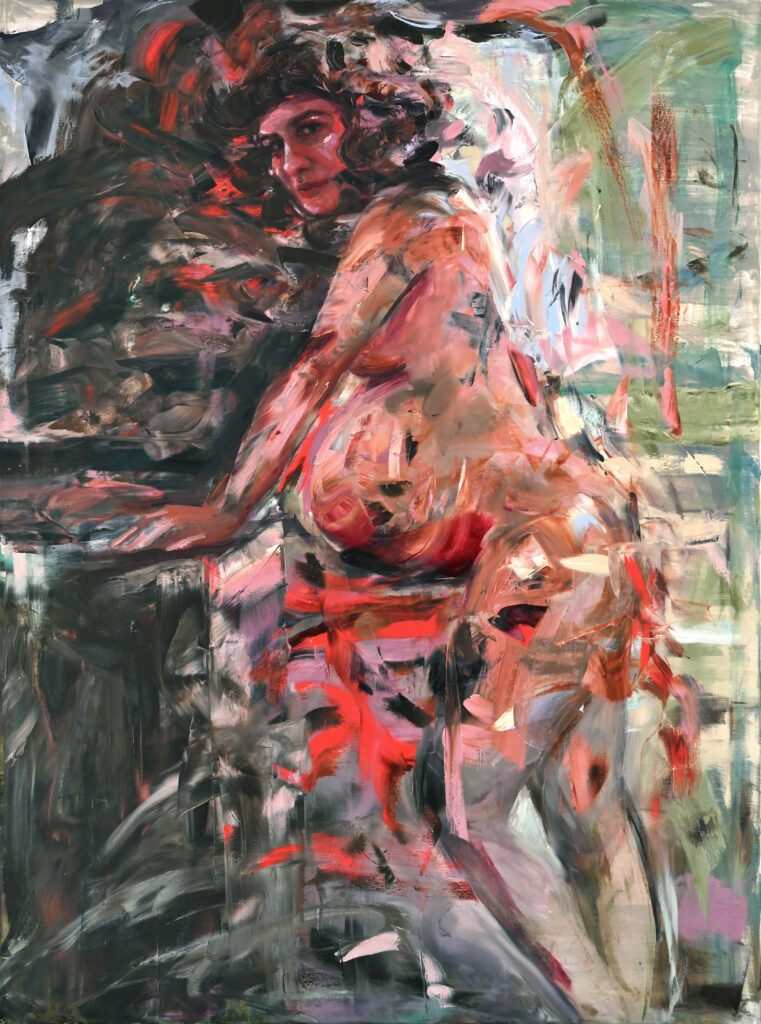
Michelle Silver’s work feels like an ongoing conversation between control and instinct. Her paintings hold emotion, movement, and the kind of honesty that comes from letting things take shape naturally. Through her process of layering paint, scraping it back, and starting again, she explores the cycles we all move through: change, struggle, growth, and renewal.
Her path from realism to expressive abstraction mirrors her life’s transitions, from becoming a mother to running a gallery and building a community around her. What stands out from her journey is the way she turns uncertainty into creativity, showing that making art is as much about finding yourself as it is about what ends up on the canvas.
To learn more about Michelle, click the following links to visit her profile.
Arts to Hearts Project is a global media, publishing, and education company for
Artists & Creatives, where an international audience will see your work of art, patrons, collectors, gallerists, and fellow artists. Access exclusive publishing opportunities and over 1,000 resources to grow your career and connect with like-minded creatives worldwide. Click here to learn about our open calls.