

Watch & Listen to this podcast Episode.
There is a strange feeling that follows a lot of artists around, and it doesn’t really matter how far into their career they are when it shows up.
It does not matter whether they have just started making work or have been doing it for fifteen years. It does not matter whether they have had exhibitions, sold pieces, grown an audience, or built something that to anyone watching from the outside looks like a real, functioning practice. At some point, every artist seems to find themselves circling the same uncomfortable question.
Am I behind? Not am I improving. Not am I making good work. Not even am I happy with what I am creating. Just the quietly devastating question of whether everyone else is somehow further along than you are.

And honestly, the fact that this is the question that follows most artists around says more about what it feels like to be a creative person in 2026 than any career advice ever could.
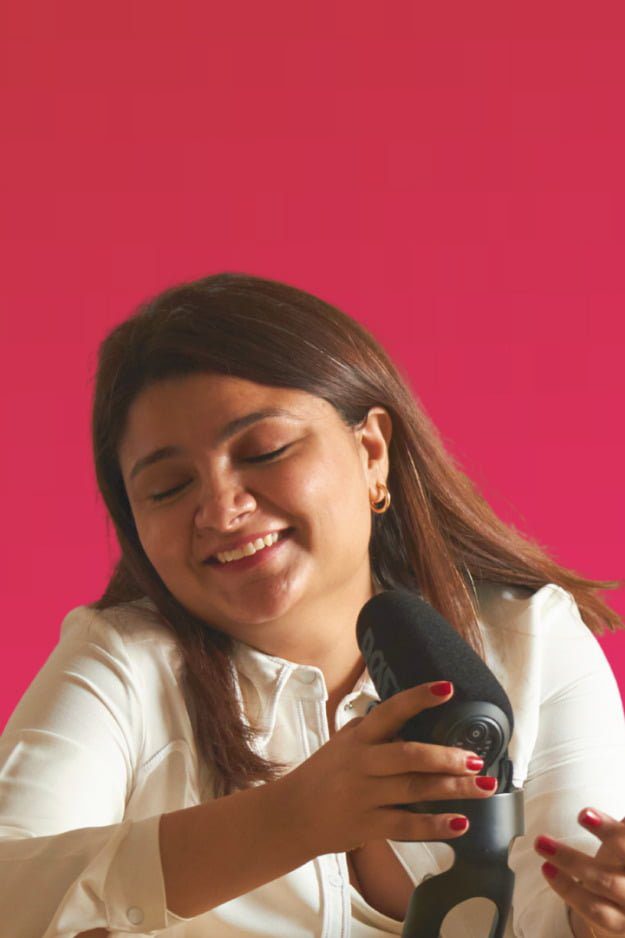
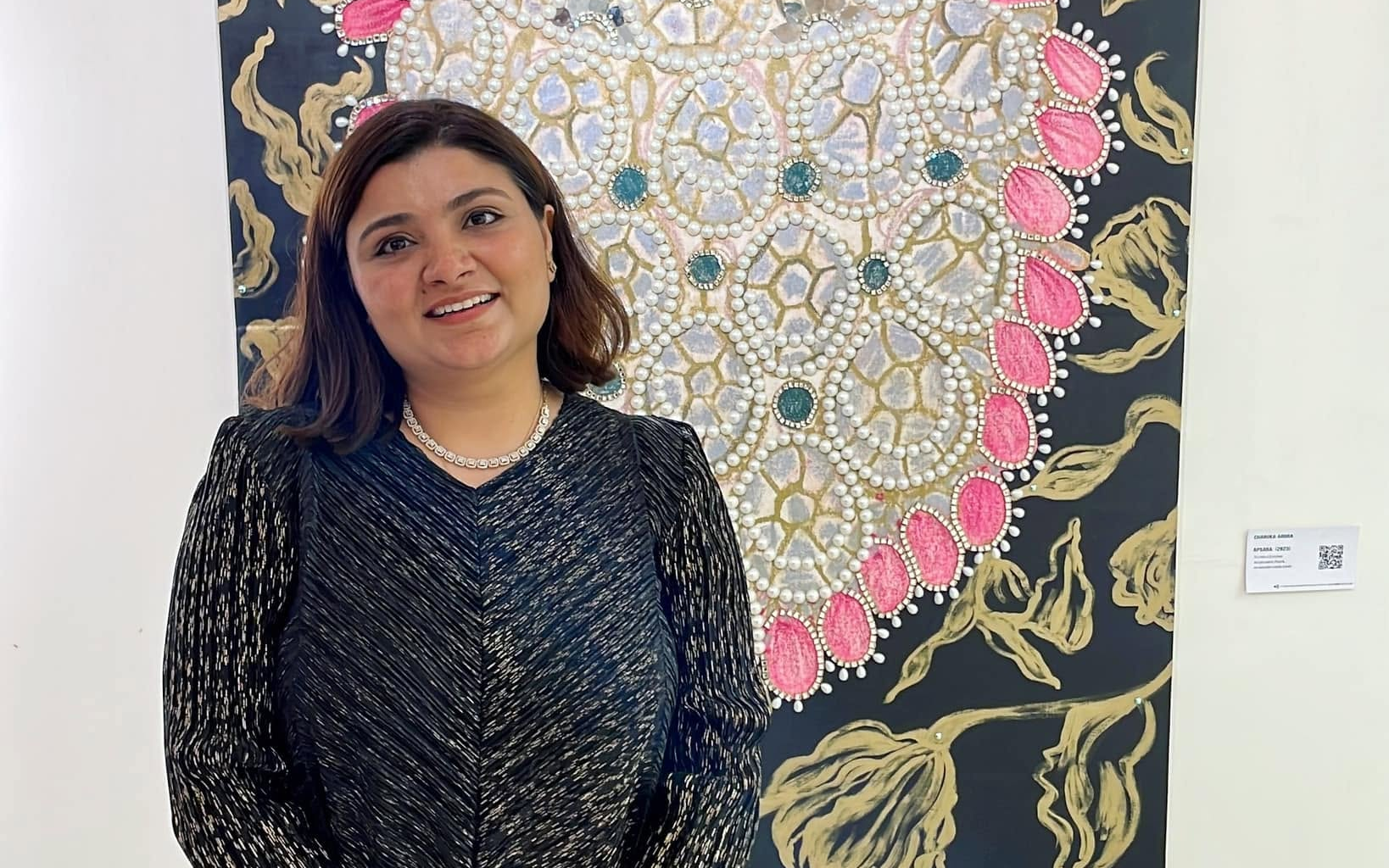
In this episode of Season 6 of the Arts to Hearts Podcast, founder Charuka Arora picks up the question most artists never say out loud but carry with them constantly. Will I ever make it?
But the most interesting part of the conversation is not the answer she lands on. It is what the question itself reveals about the kind of pressure artists are living under right now.
Because if you actually sit with this episode for a while, what becomes clear is that for most creatives, the deeper fear is not really failing at art at all. It is the fear of being left behind while everyone else around them seems to be moving forward.
The Question Itself Is the Real Problem
Will I ever make it sounds like a fair question.
It is not.
The question assumes three things that do not survive any scrutiny. It assumes there is a finish line. It assumes “making it” is universal that you would recognise it when you saw it. And it assumes the verdict will come from somewhere external the gallery, the algorithm, the market, the press, the audience.
None of these assumptions are true. There is no finish line. There is no shared definition of success. And the artists who eventually build something meaningful almost never describe a moment of arrival. They describe a slow accumulation of years they once thought were going nowhere.
So the framing of the question is doing damage every time an artist asks it. Not because the desire underneath is wrong most artists want exactly the things they should want but because the framing forces them to live as though a judge is going to walk in and announce a verdict on their life. No judge is coming.
The first thing this episode does, almost without naming it, is invite the listener to put the question down.
Maybe the Internet Broke Something in How Artists See Themselves
There was a time, not very long ago, when artists mostly compared themselves to a handful of people they actually knew. The peers from their MFA. The artists in their city. The friends from a residency. A small circle, with shared context, where comparison still felt meaningful because everyone had a rough idea of what everyone else was actually going through.
That time is gone, and it has been gone for a while now. Today, the average artist is comparing themselves to several thousand other artists every single day, often before breakfast, often without even realising they are doing it. Someone just got represented. Someone launched a beautiful collection. Someone sold out a show. Someone got featured in a magazine you have been quietly hoping to pitch to for two years. Someone’s reel just hit a million views.
Someone, somewhere, seems to have figured the whole thing out while you are still trying to schedule next week’s post. After enough of this, it becomes almost impossible to not start believing that everyone else is moving faster than you are.
But the thing comparison almost never gives an artist is the actual story behind those outcomes. The years of rejection. The months when nothing was working. The doubts. The unanswered emails. The small wins that took half a decade to add up. When artists consume only the outcomes of other people’s careers without ever seeing the timelines underneath them, they end up measuring their own beginnings against somebody else’s middle, and they walk away from that comparison convinced that there is something wrong with them.
There usually is not. They are simply earlier in the same long journey as the people they are quietly comparing themselves to.
The Exhaustion Is Structural, Not Personal
The strongest section of this episode is the one where Charuka names what most artists are actually tired of. It is not the painting. It is not the studio. It is not even the rejection.
It is the job description. Being an artist today means being the artist, the marketer, the social media manager, the photographer, the editor, the website builder, the accountant, the customer service team, and the person answering the DMs. Many artists are also doing all of this around a separate income source, because the art alone does not yet pay rent.
It is a job description nobody could realistically fulfil. And yet most artists treat their inability to do it perfectly as a personal failing. They read structural exhaustion as evidence of inadequacy.
This is the part of the episode worth pulling out and underlining. The exhaustion you feel as an artist right now is not a sign you are not cut out for the work. It is a sign the system you are operating inside has become impossible to operate inside without burning out. Recognising the difference between these two things changes the entire emotional tone of a creative career.
“More” Is Almost Always the Wrong Response
There is a pattern in artist behaviour that becomes obvious once you have watched enough careers up close. When the work is not landing, the response is almost always the same.
Do more. Post more often. Try a new platform. Take another course. Build a Substack. Open a print shop. Run an email list. Apply to more open calls. Add another offering. Add another funnel.
This response feels productive. It feels like control. It feels like the artist is doing something about the silence.
The deeper truth and this is the argument the episode is making whether it states it directly or not is that compounding has almost never come from doing more. It has come from doing the same thing for longer than most people are willing to.

The artists who eventually break through were not adding new strategies every six months. They were the ones who stayed inside one direction long enough for it to start working. The ones who posted the same kind of work for years before anyone really noticed. The ones who sent the same series to strangers until somebody said yes, and then somebody else, and then somebody else.
The fix is almost never more. The fix is longer. It is one of the most counterintuitive lessons in any creative career, which is exactly why so few artists ever actually act on it.
Play Has Been Treated Like Wasted Time
Somewhere in the last decade, something broke in the way artists relate to their own work.
Play started being treated like a luxury.
This is worth dwelling on because it explains a lot of the burnout in the creative community right now. Most artists used to spend significant time making things nobody asked for. Trying mediums, they were bad at. Wasting paint. Making bad work on purpose.
Following instincts into corners that turned out to be dead ends. That space has shrunk. Now every painting has to be a piece. Every post has to perform. Everybody of work has to be cohesive enough to pitch. Every studio hour has to be justifiable.
This sounds like discipline. It is actually attrition. Artists who lose the ability to play eventually lose the ability to make anything that does not feel like content. The work becomes optimised.
The instincts become marketing decisions. The studio becomes a workplace. And the relationship the artist once had with their own practice the one that pulled them into this life in the first place slowly stops feeling like anything at all.
This is one of the reasons Charuka returns again and again to the importance of unprofitable creative time. It is not romantic advice. It is structural advice. Artists who do not protect playtime in their practice are eventually unable to produce anything except the same thing, refined into oblivion.
What If You’re Not Actually Struggling With Art at All?
One of the sharpest ideas Charuka raises in this episode is that most artists who feel like they are struggling are not really struggling with their work. They are struggling with not knowing.
Not knowing when opportunities will come. Not knowing whether anyone is paying attention. Not knowing whether the direction they have chosen is the right one. Not knowing whether the work is good enough yet. Not knowing whether the months and years they have already poured into this life are eventually going to compound into something real, or whether they are quietly disappearing into a void.
Most other careers in the world come with built-in milestones to confirm that someone is on the right track. Promotions. Raises. New titles. Performance reviews. Annual evaluations. External markers that say, in plain language, yes, you are progressing. Creative careers do not come with any of that, and it is one of the most psychologically demanding things about choosing this life.
An artist can spend six months making the best work of their entire practice and still have absolutely no external signal that they are moving forward. And when there is no measurable progress, self-doubt rushes in to fill the silence, because self-doubt is what shows up when there is no other information available.
The problem most artists believe they have is am I good enough? The actual problem most artists have is how am I supposed to tell? Once you see those two questions as completely different things, the entire emotional weather of a creative career starts to shift.morous things over and over again, without proof that any of it was going to work.
The Part Worth Carrying Around With You
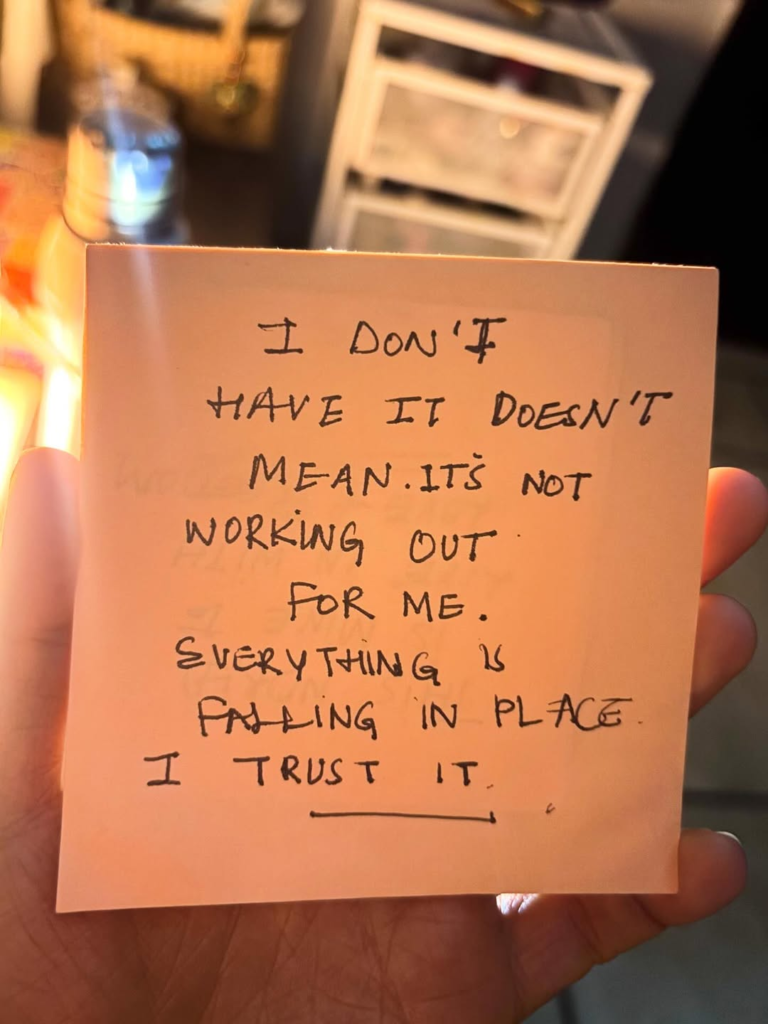
If there is one idea from this conversation worth folding up and putting in your pocket, it is this. The artists who eventually build something real are almost never the ones who solved the question of am I behind? They are the ones who quietly stopped asking it.
They figured out, often without realising it, that the question itself was the thing draining them. Once they put it down, what they discovered underneath was a much smaller, much more liveable question am I still here? Am I still making? Am I still curious? Am I still showing up to the work, even on the weeks when nothing else is responding?
These are questions you can actually answer. They sit inside your reach. They do not move every time someone else has a good week on the internet, and they do not require anyone else’s permission to count.

This is the quiet shift this episode is really pointing toward. Not a new strategy. Not another platform. Not a different version of success borrowed from someone whose career looks more visible than yours. Just a small, daily decision to measure your creative life by something the internet cannot see. The hour you spent in the studio. The work you made that nobody asked for. The conversation you had with yourself about what you actually wanted to make next. The fact that, after everything, you are still here.
The artists who get somewhere meaningful in this decade are most likely going to be the ones who learned to stop borrowing the world’s measuring tape, and started building their own. Slowly. Privately. In the years that nobody is watching.
If there is anything worth carrying with you from this conversation, it is that simple, quiet, and entirely under-your-control shift.
You are not behind. You are not late. You are not the wrong kind of person for the creative life you want.
You are just somewhere inside the part nobody talks about the part where the foundation is being quietly built, even when you cannot see it yet. And the only thing left to do is keep building it.
Watch the full episode now and hear Charuka unpack the myths every artist quietly carries about success, comparison, burnout, and the question she thinks every artist should be sitting with instead.
Watch & Listen to this podcast Episode.
Listen to this & other episodes on