


The Art World’s Greatest Unsolved Mysteries
Art history is often presented as a story of discoveries, masterpieces, and creative breakthroughs. Yet beneath the surface of some of the world’s most celebrated artworks lies a different kind of story, one filled with unanswered questions, missing clues, and mysteries that have resisted explanation for decades, and sometimes centuries.
Who painted a record-breaking masterpiece that sold for hundreds of millions of dollars? What really happened during Vincent van Gogh’s final hours? Who stole some of the most valuable artworks ever taken from a museum, and where are they now? Even in an age of advanced forensic analysis, scientific imaging, and extensive historical research, many of the art world’s most fascinating puzzles remain unresolved.
Some mysteries stem from missing evidence. Others emerge from hidden layers beneath famous paintings, disputed attributions, or identities that have been lost to time. In several cases, modern technology has revealed new clues while simultaneously raising new questions. Rather than closing the book on these stories, each discovery seems to deepen the intrigue.
The enduring appeal of the Art World’s Greatest Unsolved Mysteries lies not only in the possibility of finding answers but also in what they reveal about art itself. Every artwork carries a history, and sometimes that history is far more complicated than it first appears.
From anonymous street artists and vanished masterpieces to secrets hidden beneath centuries-old paintings, here are ten art mysteries that continue to captivate historians, researchers, and art lovers around the world.
1. Has the Mystery of Banksy Finally Been Solved?
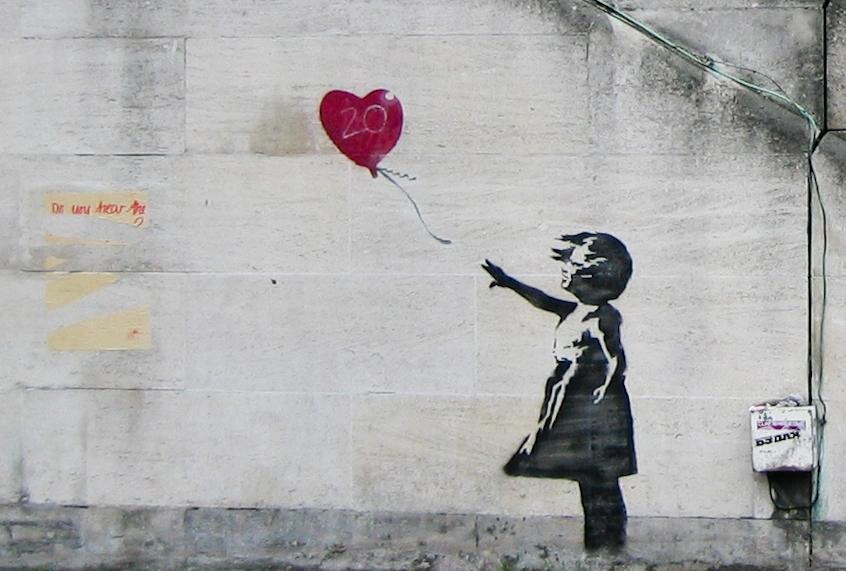
For decades, one of the art world’s most enduring questions seemed almost impossible to answer: who is Banksy? The elusive street artist rose to international fame in the 1990s, creating satirical murals and stencil works that appeared overnight on city walls, bridges, and public buildings. Despite becoming one of the most recognizable artists of the twenty-first century, Banksy managed to keep his identity hidden, transforming anonymity into an essential part of his artistic persona.
The mystery fueled endless speculation. Journalists, art historians, and amateur detectives proposed dozens of theories, suggesting that Banksy might be a single artist, a collective, or even a well-known public figure working under a pseudonym. As his works began selling for millions of dollars and attracting global attention, interest in uncovering his identity only intensified.
In recent years, however, the mystery has become less clear-cut. Investigations by journalists and researchers have repeatedly pointed toward Robin Gunningham, a Bristol-born artist long associated with the Banksy name. In 2026, a major Reuters investigation assembled extensive evidence linking Gunningham to Banksy’s career, drawing on historical records, photographs, travel patterns, and legal documents. Yet despite the growing body of evidence, no official confirmation has ever come from Banksy himself.
That uncertainty leaves the art world in an unusual position. Many observers believe the mystery has effectively been solved, while others argue that without direct confirmation, the question remains open. More importantly, Banksy’s anonymity has become inseparable from his art. The hidden identity helped shape the mythology surrounding the work and turned the artist into a cultural phenomenon. Today, the mystery is no longer simply who Banksy is, it is whether the world’s most famous anonymous artist ever intended to be unmasked at all.
2. What Really Happened to Vincent van Gogh?
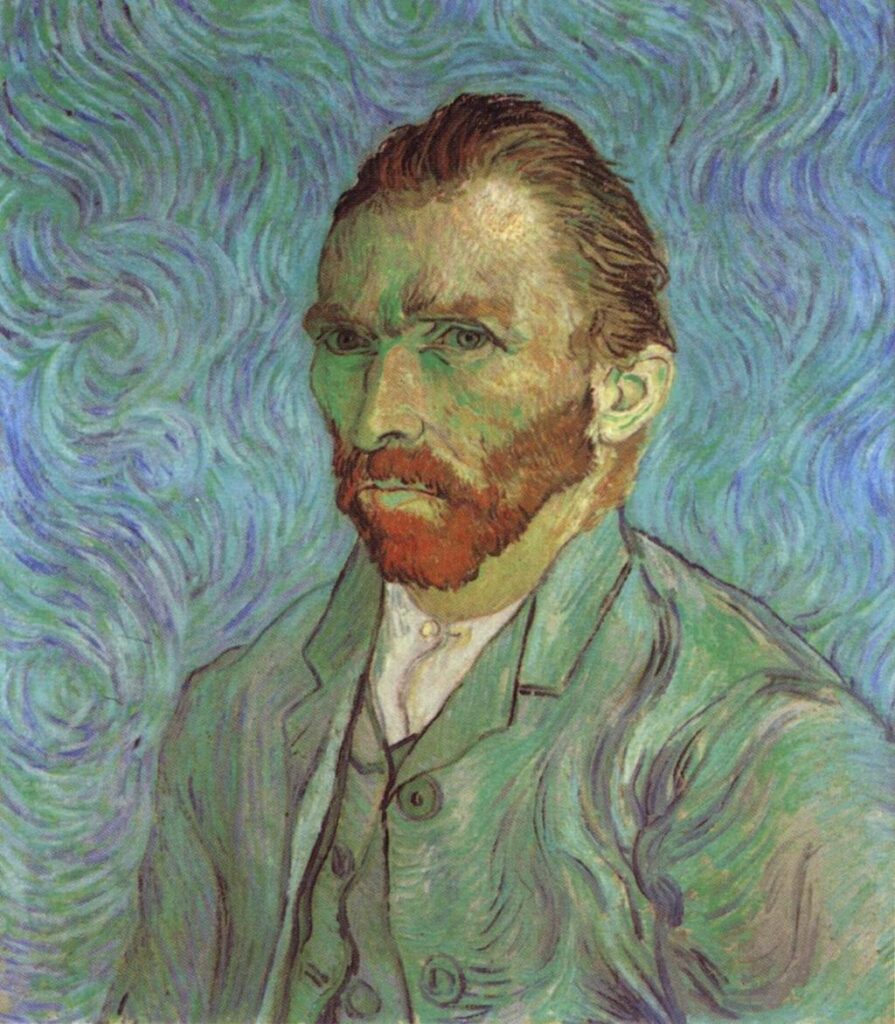
Few events in art history have been examined as closely as the death of Vincent van Gogh. Today, Van Gogh is celebrated as one of the most influential artists of all time, yet the circumstances surrounding his final days continue to generate discussion among historians more than a century later.
On July 27, 1890, while living in the French village of Auvers-sur-Oise, Van Gogh suffered a gunshot wound to the abdomen. He returned to his lodging and died two days later, on July 29, at the age of thirty-seven. Contemporary accounts, statements from those who knew him, and much of the historical evidence led scholars to conclude that the artist had taken his own life. For decades, this explanation became the accepted account of his death.
The story might have ended there if not for a number of lingering questions. Historians have noted uncertainties surrounding the events of that day, including the absence of detailed eyewitness accounts and the limited evidence available from the scene. These questions gained renewed attention in 2011 when biographers Steven Naifeh and Gregory White Smith proposed that Van Gogh may have been accidentally shot by local teenagers rather than intentionally shooting himself.
Their theory attracted widespread interest, but it has not displaced the traditional explanation. Many art historians, researchers, and institutions, including the Van Gogh Museum, continue to regard suicide as the most likely conclusion based on the available evidence. At the same time, the lack of definitive proof means that some questions remain open to interpretation.
More than 135 years after his death, Van Gogh’s final hours remain a subject of careful historical debate. While the prevailing explanation is well established, the absence of complete certainty ensures that one of art history’s most famous tragedies continues to invite investigation and discussion.
3. The $500 Million Isabella Stewart Gardner Museum Heist
Some mysteries revolve around hidden identities or disputed artworks. Others involve crimes so audacious that they seem almost impossible to believe. The theft from the Isabella Stewart Gardner Museum belongs firmly in the latter category.
In the early hours of March 18, 1990, two men disguised as police officers arrived at the museum and convinced security guards to let them inside. Once admitted, they handcuffed the guards, tied them up in the basement, and spent more than an hour moving through the galleries. By the time they left, they had stolen thirteen works of art, making it the largest property theft in modern history.
Among the missing pieces were masterpieces by Rembrandt van Rijn, including The Storm on the Sea of Galilee, the artist’s only known seascape, as well as works by Johannes Vermeer, Edgar Degas, and Édouard Manet. The stolen collection is now estimated to be worth hundreds of millions of dollars, and possibly far more on today’s market.
What makes the case so remarkable is not just the scale of the theft but the complete absence of a resolution. Despite decades of investigation by the FBI, art crime specialists, and international law enforcement agencies, none of the stolen artworks have been recovered. Authorities have identified various suspects and explored numerous leads over the years, but no arrests have ever resulted in the recovery of the missing masterpieces.
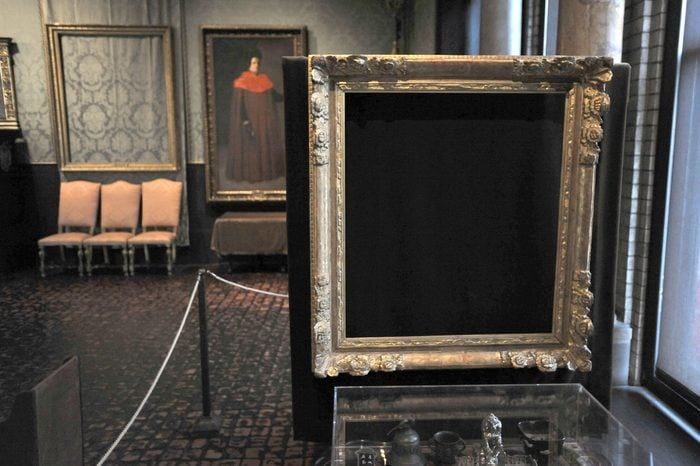
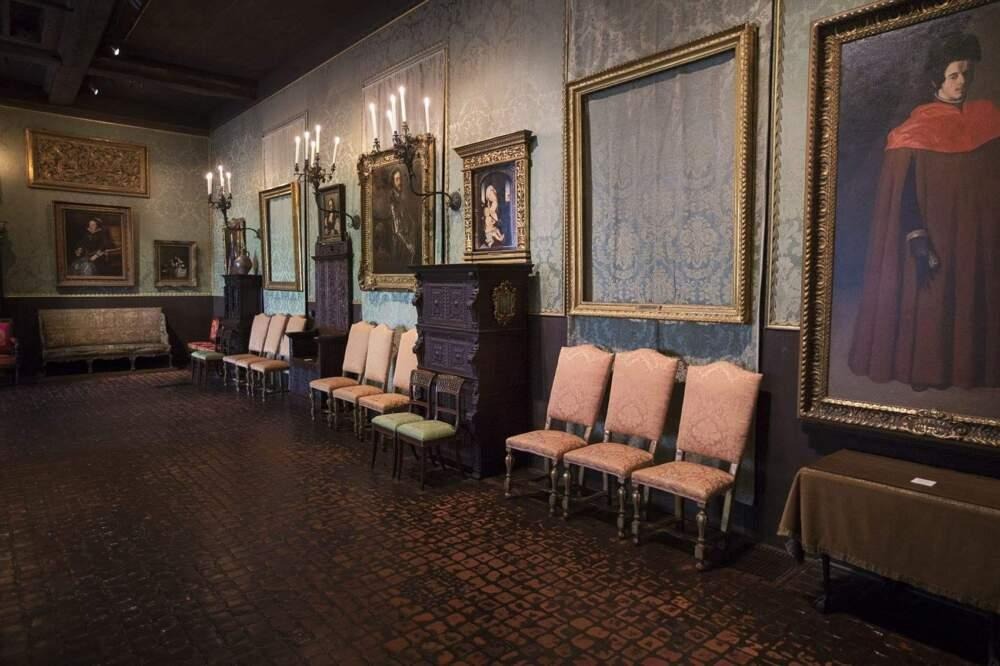
Today, the museum still displays the empty frames where the paintings once hung. They serve as a powerful reminder that one of the greatest art crimes ever committed remains unsolved. More than three decades later, the central question persists: where are the missing masterpieces, and who ultimately took them?
4. Did Leonardo da Vinci Really Paint Salvator Mundi?
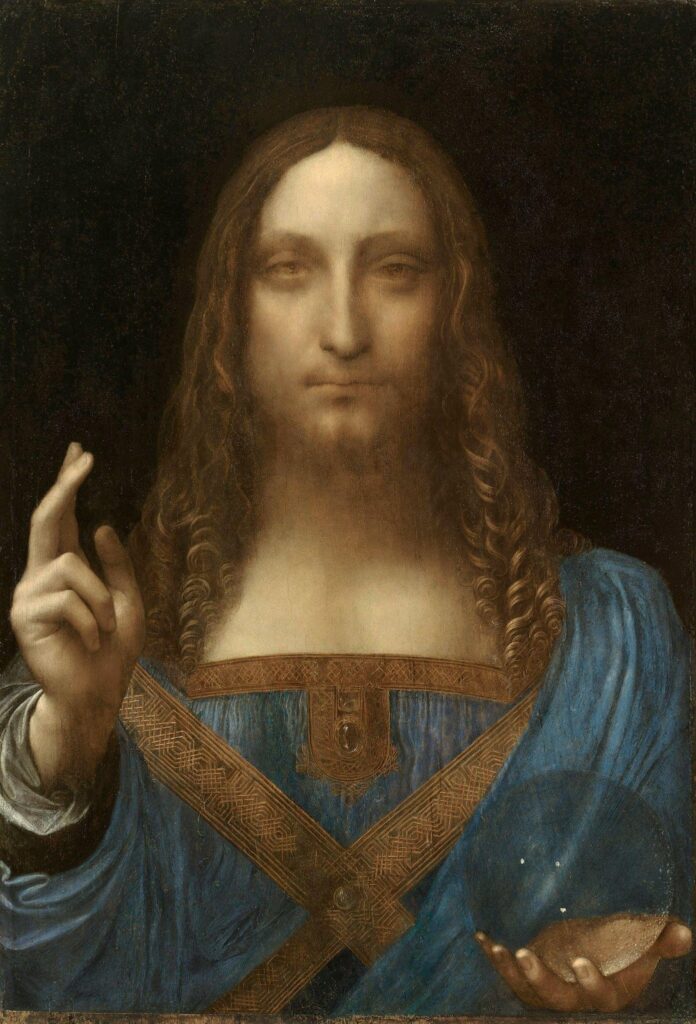
In 2017, the art world witnessed one of the most astonishing sales in history when Salvator Mundi was auctioned for $450.3 million, making it the most expensive painting ever sold. The extraordinary price was driven largely by one factor: the belief that the work was painted by Leonardo da Vinci, one of the most celebrated figures in Western art.
The painting depicts Christ holding a crystal orb and raising his hand in blessing. For centuries, however, its origins were unclear. The artwork passed through private collections, suffered damage, underwent extensive restoration, and was at various times attributed to artists within Leonardo’s circle rather than to the master himself. Its dramatic rediscovery and subsequent attribution to Leonardo transformed it from a relatively obscure painting into a global sensation.
Yet the attribution remains one of the most hotly debated questions in art history. While several leading Leonardo scholars have supported the claim that the painting is at least substantially the work of Leonardo, others disagree. Some experts argue that parts of the painting may have been executed by assistants in Leonardo’s workshop, with the master contributing only certain passages or revisions. Others question whether the painting should be attributed to Leonardo at all.
The debate highlights a larger challenge in Renaissance art. Major workshops often involved students and assistants working closely alongside celebrated masters, making authorship difficult to determine centuries later. Unlike modern artists, Renaissance painters frequently collaborated on commissions, blurring the line between individual and collective creation.
Today, Salvator Mundi remains both a masterpiece and a mystery. It may be the most expensive painting ever sold, but one of the most important questions surrounding it remains unresolved: how much of the work was truly painted by Leonardo da Vinci himself?
5. Is There Another Woman Hidden Beneath the Mona Lisa?
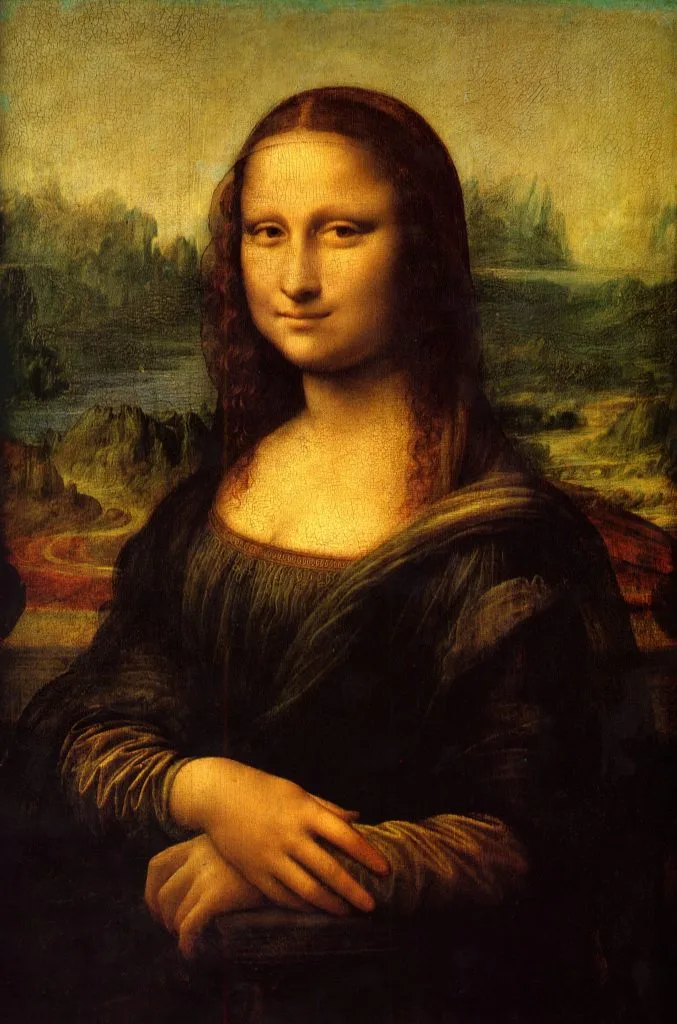
Few artworks have inspired as much fascination as the Mona Lisa. Painted by Leonardo da Vinci in the early sixteenth century, the portrait has captivated viewers for centuries with its enigmatic expression, innovative technique, and remarkable realism. Yet one of the most intriguing mysteries surrounding the painting may lie beneath its visible surface.
For decades, researchers have used increasingly sophisticated imaging technologies to study the Mona Lisa without damaging it. These methods allow experts to examine hidden layers of paint, underdrawings, and alterations made during the creative process. In 2015, French scientist Pascal Cotte published findings based on more than a decade of analysis using high-resolution, multispectral imaging. According to his research, the layers beneath the familiar portrait appear to reveal an earlier composition that differs significantly from the image seen today.
Cotte argued that these findings may represent a different portrait hidden beneath the final painting. Some observers suggested this could indicate that Leonardo originally painted another woman before eventually creating the Mona Lisa known today. The possibility generated widespread interest because it raised questions about Leonardo’s working methods and the identity of the sitter.
However, many art historians and Leonardo specialists remain cautious. Critics of the theory argue that the underlying features may simply reflect the artist’s normal process of experimentation and revision rather than an entirely separate portrait. Renaissance painters often adjusted compositions as they worked, leaving traces of earlier ideas beneath finished paintings.
As a result, the evidence remains open to interpretation. Scientific imaging has undoubtedly revealed hidden layers beneath one of the world’s most famous artworks, but scholars continue to debate exactly what those layers represent. More than five hundred years after it was painted, the Mona Lisa still refuses to give up all of its secrets.
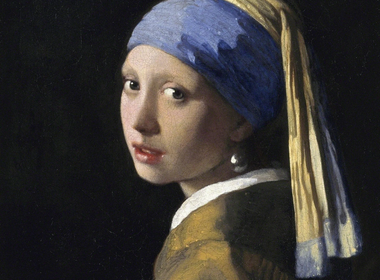
6. Who Is the Girl with a Pearl Earring?
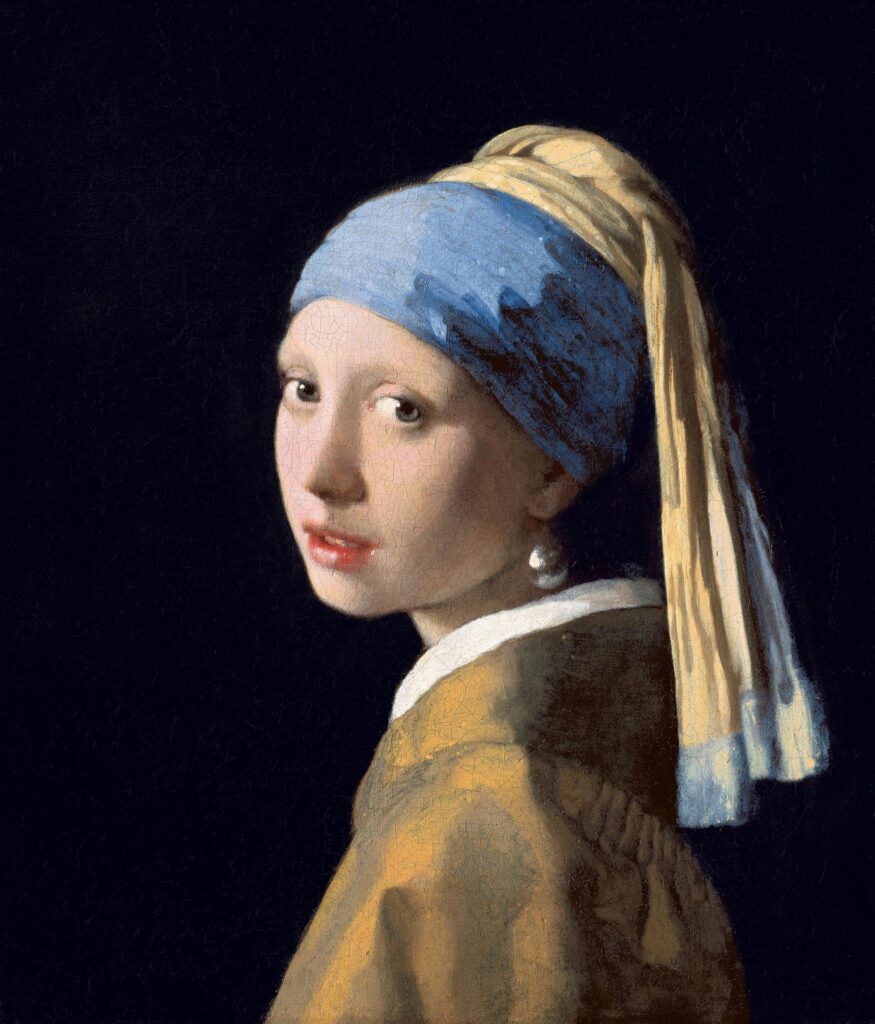
Some mysteries endure not because of hidden clues or missing evidence, but because history simply never recorded the answer. Such is the case with Girl with a Pearl Earring, one of the most beloved paintings in Western art.
Created around 1665 by Johannes Vermeer, the work depicts a young woman turning toward the viewer, her lips slightly parted and a luminous pearl earring catching the light. The painting’s intimacy and realism have captivated audiences for centuries, earning it the nickname “the Dutch Mona Lisa.” Yet despite its fame, the identity of the young woman remains unknown.
Part of the mystery stems from the nature of the artwork itself. Modern research suggests that the painting was likely not intended as a formal portrait. Instead, many scholars classify it as a tronie, a popular Dutch artistic genre that depicted expressive faces or character studies rather than specific individuals. If this interpretation is correct, Vermeer may not have intended to record the likeness of a particular person at all.
Nevertheless, theories about the sitter have flourished. Some have suggested she was a daughter of Vermeer, while others have proposed that she may have been a household servant, a patron’s relative, or someone from the artist’s social circle. The problem is that no contemporary records identify the model, and Vermeer left behind very little documentation about his artistic process.
Recent scientific examinations have provided fascinating insights into the painting’s pigments, brushwork, and original appearance, but they have not solved the central mystery. The girl’s identity remains lost to history.
More than 350 years after Vermeer painted her, the young woman continues to gaze out at viewers across the centuries. We know almost everything about the masterpiece itself, except who inspired it.
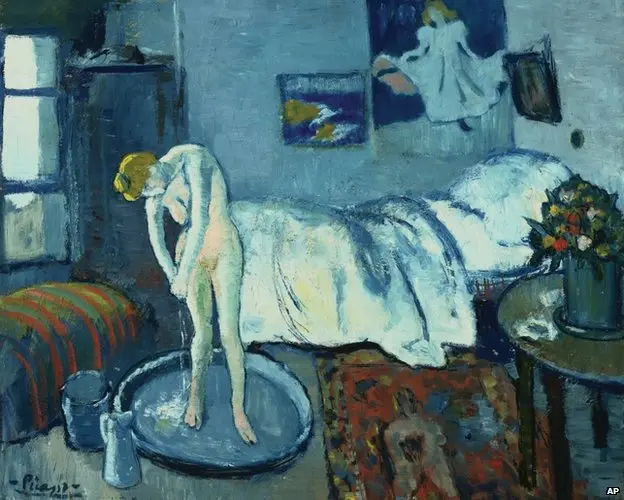
7. Who Is the Man Hidden Beneath Picasso’s The Blue Room?
Artists have long reused canvases, especially during periods when money was scarce. Yet few discoveries have generated as much excitement as the hidden portrait found beneath The Blue Room, one of the earliest masterpieces by Pablo Picasso.
Painted in 1901 during Picasso’s famous Blue Period, The Blue Room depicts a woman bathing in a sparsely furnished interior rendered almost entirely in shades of blue. The painting was created when Picasso was just nineteen years old and living in Paris, a time marked by financial hardship and rapid artistic experimentation.
For years, conservators suspected that something lay beneath the visible surface of the canvas. Their suspicions were confirmed through infrared imaging, X-radiography, and other advanced scientific techniques. In 2014, researchers revealed a hidden portrait concealed underneath the finished painting. The image shows a bearded man dressed in formal attire, resting his head on one hand in a thoughtful pose.
The discovery immediately raised a new question: who was he?
Despite extensive study, the man’s identity remains unknown. Some scholars have suggested he may have been a friend, patron, or art dealer connected to Picasso’s early years in Paris. One frequently discussed possibility is that the sitter was Ambroise Vollard, the influential dealer who helped promote many modern artists. However, no evidence has conclusively confirmed this theory.
The mystery offers a fascinating glimpse into Picasso’s creative process. Rather than discarding an earlier work, the young artist painted directly over it, preserving a hidden image that would remain undiscovered for more than a century.
Today, technology has revealed the existence of the portrait, but not the identity of the man himself. Beneath one of Picasso’s most celebrated paintings, an unknown face continues to keep its secret.
8. Did Caravaggio Leave a Confession Hidden in His Paintings?
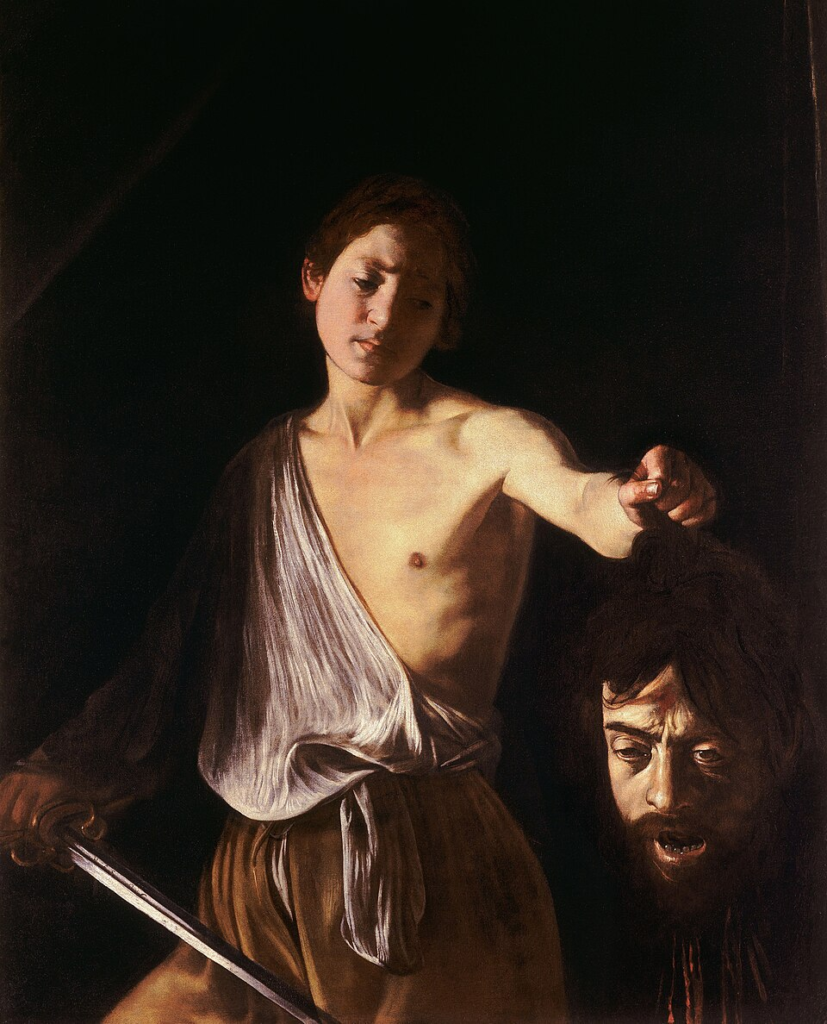
The life of Caravaggio was as dramatic as the paintings he created. Widely regarded as one of the most influential artists of the Baroque period, Caravaggio revolutionized European painting through his powerful use of light, shadow, and startling realism. Yet his career was also marked by violence, scandal, and a crime that continues to shape how historians interpret his work.
In 1606, Caravaggio killed a man named Ranuccio Tomassoni during a violent confrontation in Rome. Historical records confirm the killing, although the exact circumstances remain unclear. Following the incident, Caravaggio fled the city and spent much of the remainder of his life moving between Naples, Malta, and Sicily while attempting to secure a pardon.
What has fascinated scholars for centuries is whether the artist’s later paintings reveal feelings of guilt, remorse, or self-reflection. One work often discussed is David with the Head of Goliath, in which many historians believe Caravaggio painted his own likeness onto the severed head of Goliath. If true, the image may represent far more than a biblical scene. Some scholars have interpreted it as a symbolic act of repentance, with the artist portraying himself as the defeated giant.
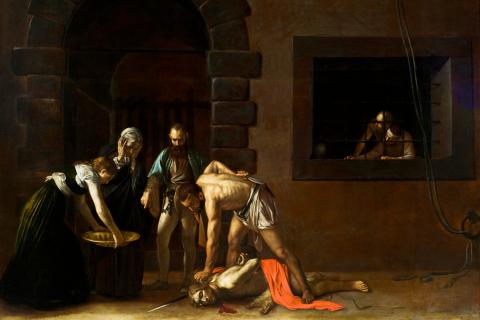
Another painting frequently examined is The Beheading of Saint John the Baptist, notable because it contains what is widely accepted as Caravaggio’s only known signature. The signature appears within the pool of blood beneath the saint, an unusual choice that has prompted decades of discussion among art historians.
Importantly, no documentary evidence proves that Caravaggio intentionally embedded a confession in his art. Yet the timing of these works, combined with the artist’s turbulent life, continues to invite interpretation. Four centuries later, scholars still debate whether these paintings contain hidden messages, or whether viewers are simply reading meaning into images created by one of history’s most complex artists.
9. Who Stole the Missing Panel of the Ghent Altarpiece?
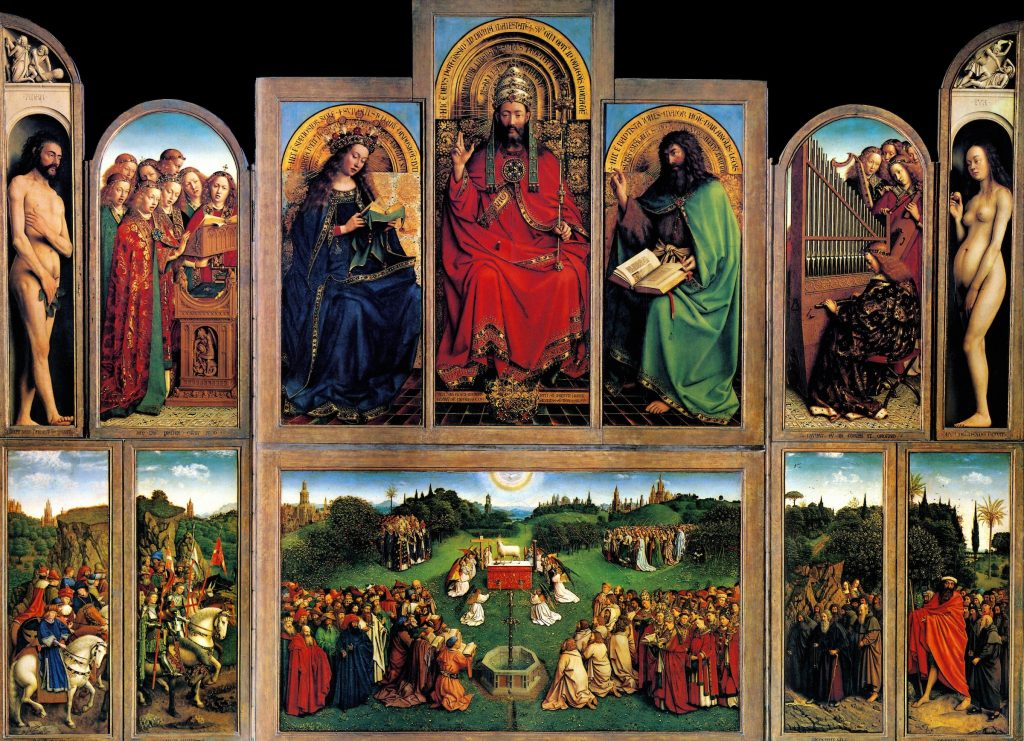
Some art mysteries involve hidden identities or disputed authorship. Others concern masterpieces that vanished without a trace. Few cases are as famous, or as frustrating, as the disappearance of The Just Judges, one of the panels from the Ghent Altarpiece.
Completed in 1432 by Jan van Eyck and traditionally associated with his brother Hubert van Eyck, the Ghent Altarpiece is considered one of the most important works in European art. Housed in Saint Bavo’s Cathedral, the monumental altarpiece has survived wars, political upheaval, and multiple theft attempts. Yet one piece of the masterpiece remains missing.
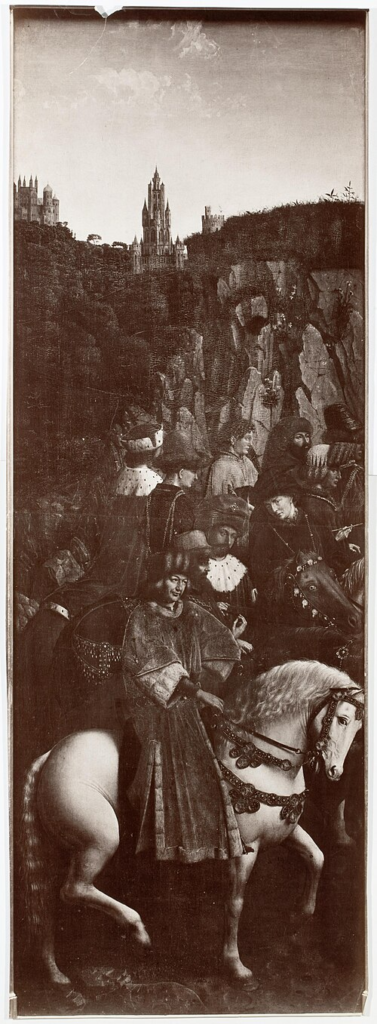
In April 1934, two panels were stolen from the cathedral. One of them, Saint John the Baptist, was anonymously returned a few months later. The second panel, known as The Just Judges, was never recovered.
The case took an even stranger turn when a Belgian stockbroker named Arsène Goedertier reportedly confessed on his deathbed that he knew where the missing panel was hidden. However, he died before revealing its location. Investigators searched the places connected to his cryptic statements but found nothing. Since then, countless theories have emerged. Some believe the panel was hidden somewhere in Belgium and remains undiscovered. Others suspect it was destroyed, secretly sold, or moved long ago beyond recovery.
Despite decades of investigations, searches, and public appeals, the original panel has never resurfaced. A replacement copy now occupies its place in the altarpiece, but the mystery remains unresolved.
Nearly a century after the theft, one question continues to haunt art historians and detectives alike: where is The Just Judges panel, and will it ever be found?
10. Where Are the Missing Masterpieces from the Rotterdam Heist?
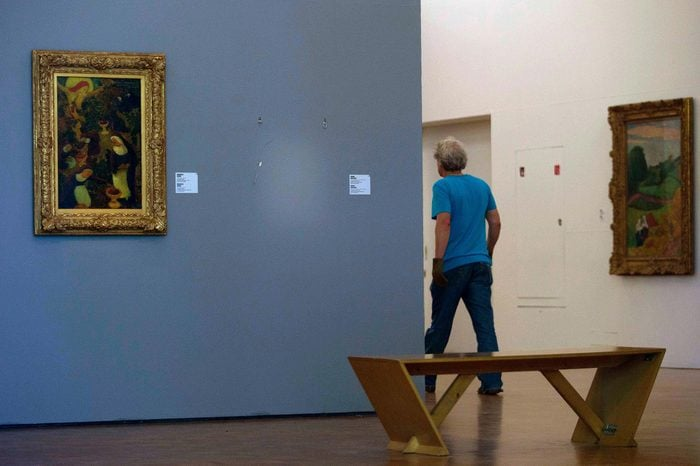
Not every art mystery involves an unknown artist or a centuries-old painting. Some are surprisingly recent. In 2012, the art world was stunned when thieves carried out one of the most significant museum robberies of the twenty-first century, stealing seven masterpieces from the Kunsthal Rotterdam in just a matter of minutes.
The theft occurred in the early hours of October 16, when intruders entered the museum and removed works by some of the most celebrated artists in history. Among the stolen paintings were pieces by Pablo Picasso, Claude Monet, Paul Gauguin, Henri Matisse, and Lucian Freud. The robbery was swift, carefully planned, and devastating for the art world.
Authorities eventually arrested several individuals connected to the crime, and convictions followed. Yet solving the theft did not solve the mystery. The whereabouts of the paintings remain unknown.
The most controversial chapter of the case emerged during the investigation when the mother of one of the convicted thieves claimed she had burned the artworks in a stove to destroy evidence. The statement attracted international attention because, if true, it would mean the permanent loss of several irreplaceable masterpieces. However, she later withdrew the claim, and subsequent investigations failed to produce definitive proof that the paintings had been destroyed.
As a result, uncertainty continues to surround the fate of the missing works. They may have been hidden, secretly transferred through criminal networks, or lost forever. More than a decade after the robbery, no confirmed trace of the paintings has emerged.
The thieves were caught, but the masterpieces were not. Until the artworks are recovered, or their fate is conclusively established, the Rotterdam Heist remains one of the most intriguing unsolved mysteries in the art world.
For all the knowledge we have gained about art history, some questions continue to resist definitive answers. Museums, historians, scientists, and investigators have spent decades examining these mysteries, uncovering remarkable clues along the way. Yet many of the most intriguing puzzles remain unsolved.
Perhaps that uncertainty is part of their lasting appeal. A missing masterpiece, a hidden portrait, an anonymous artist, or a centuries-old debate reminds us that art is more than a collection of objects. It is a record of human lives, ambitions, secrets, and stories, many of which remain incomplete.
As technology advances and new evidence emerges, some of these mysteries may eventually be solved. Others may remain unresolved, continuing to inspire speculation for generations to come. Until then, they serve as a reminder that even the most famous works of art can still hold surprises.
Which of these art mysteries would you most like to see solved?
Many of these mysteries remind us that art is often shaped as much by what remains unknown as by what we can see. If you’re interested in exploring another side of art history, take a look at our feature on ten remarkable ocean-inspired masterpieces that transformed how artists viewed the sea. From dramatic storms to moments of quiet reflection, these works reveal how the ocean has inspired generations of artists and continues to captivate viewers today. Read it here: 10 Ocean Paintings That Changed How Artists Saw the Sea