
This artist turns jewellery into wearable sculptures ┃ Shu Wang

At Arts to Hearts Project, our Magazine Issue 12 with the theme This Is Me brought us artists working in every medium imaginable. Painters, illustrators, mixed media artists, photographers. And then Shu Wang’s submission came through, and we realised we had been thinking too narrowly about what This Is Me could look like.
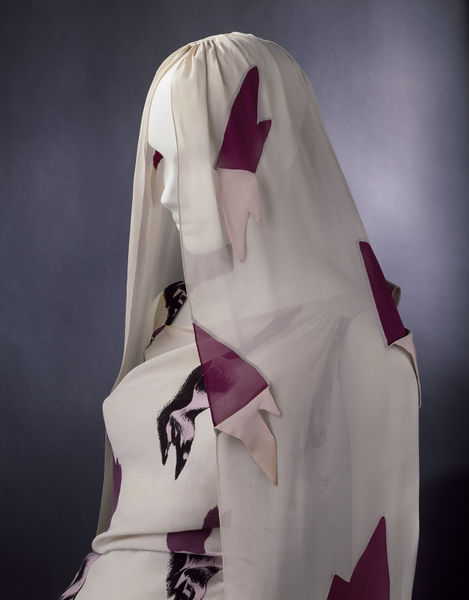
Because for Shu it does not look like a painting or a drawing or even a traditional sculpture. It looks like something you wear on your body. Something that presses and restricts and supports and redirects how you move through space. Something that is not complete until a human body is inside it negotiating with it in real time.
Shu is one of our selected artists for this issue. And her practice sits in a place we have genuinely not encountered before. She started in material engineering. A science track. Technical problem solving. How to make things lighter, stronger, more efficient.
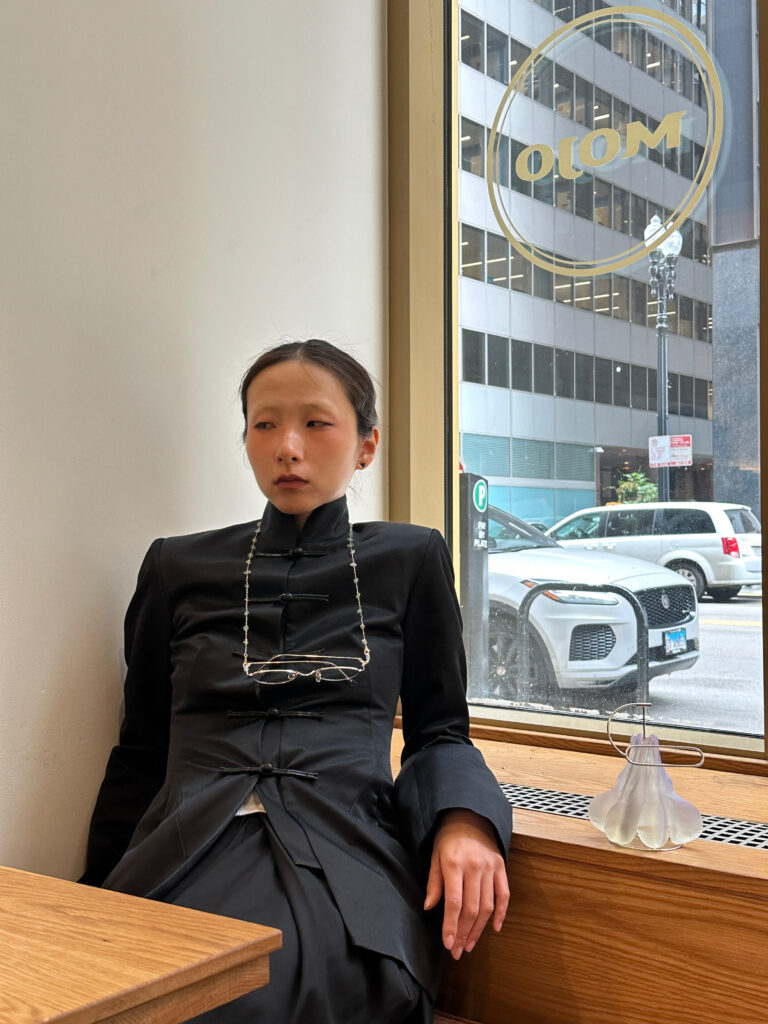
And that background matters because it is still in everything she makes. The precision, the structural thinking, the understanding of how materials behave under pressure.
But at some point she crossed a line that engineering could not follow her across. She stopped asking what materials can do and started asking what materials can hold. What they can transmit. What they can make a body feel. That shift took her out of engineering and into art and honestly it is the kind of origin story that makes everything about her work click into place once you hear it.
Her practice moves between sculpture, jewellery, and installation. And she does not see those as separate disciplines. They are all part of one system that she is building around a single question. What happens between a structure and the body that encounters it? Not what does the object look like on its own. What does the relationship between the object and the person feel like in real time?
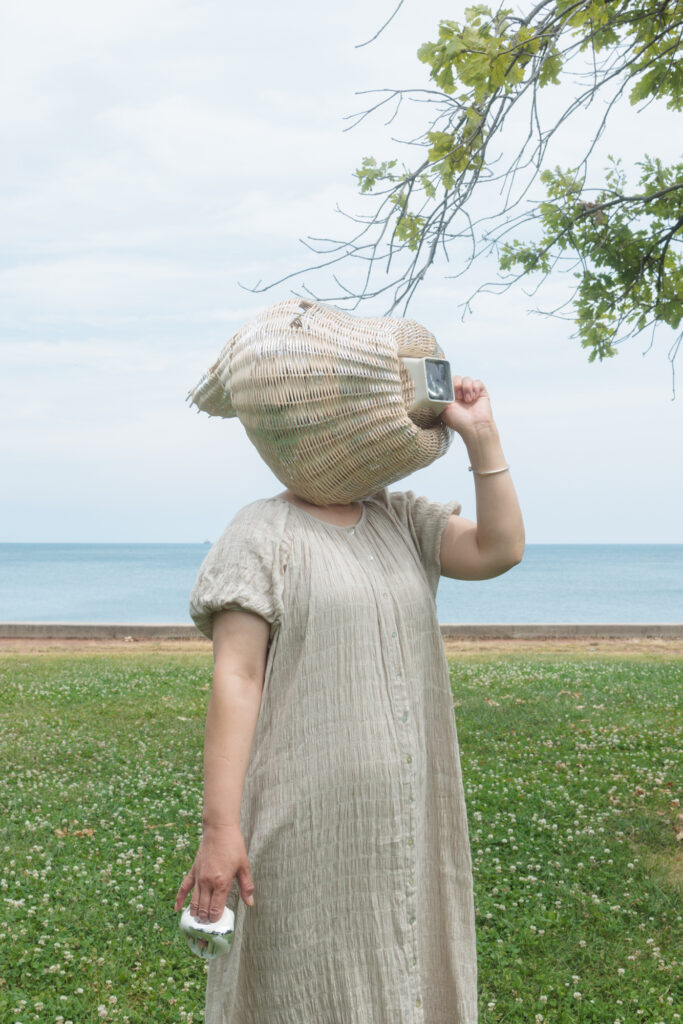
That question drives every piece she makes and the way she talks about it during the interview is precise and thoughtful in a way that is clearly shaped by both her engineering brain and her artistic instinct working together.
She works with metal and transparent materials and earth tones and digital fabrication and hand-making and she moves between all of these based on what each piece needs at each stage of its development.
Nothing about her process is random but nothing about it is rigid either. There is a constant calibration happening between structure and sensation, between precision and unpredictability, between what can be planned and what can only be discovered through physical contact.
Now let’s hear from Shu in her own words about how engineering became art, what it means to make objects that are only complete when a body is inside them, and why she believes the best work is felt before it is understood.
Q1. Shu, can you share a bit about your journey into art and how you moved from material engineering into sculpture and jewelry?
I began in material engineering, partly because of the educational system I was in at the time. Coming from a science track, I was expected to choose a technical field, and material engineering felt like the closest access point to what already interested me, namely working with metal and eventually with jewelry. At that stage, my understanding of materials was largely technical.
Material engineering is fundamentally concerned with solving functional problems, such as how to make things lighter, stronger, or more efficient. It operates within systems of optimization and performance. What drew me elsewhere, however, was not only what materials can do, but also what they can hold, transmit, and express. That distinction ultimately led me to shift fields.
In art, material is no longer simply a solution; it becomes a language. It can carry weight, pressure, and resistance, and it can affect the way the body moves and responds. My practice emerged from that transition. I still work closely with structure, but not as a purely functional system. Across sculpture, jewelry, and installation, I use structure as a way to observe how the body negotiates between internal sensation and external conditions.
Q2. Your work often begins with emotion and reaction what does the start of a new piece usually look like for you?
It often begins with a reaction, though not in the form of a fully articulated idea or emotion. More often, it starts with a tension, a sense that something does not align between how I feel and what is being asked, expected, or imposed. That moment usually remains unresolved for some time. Rather than trying to express it directly, I begin by constructing a structure around it.
I try to hold that tension within a form that can be worn, carried, or encountered by the body. In that sense, form is not the starting point. It emerges through a process of testing, through movement, resistance, pressure, and the way the body responds. So the beginning is instinctive, but the work itself is built through construction. What develops is a system in which that initial tension can be experienced rather than simply described or explained.
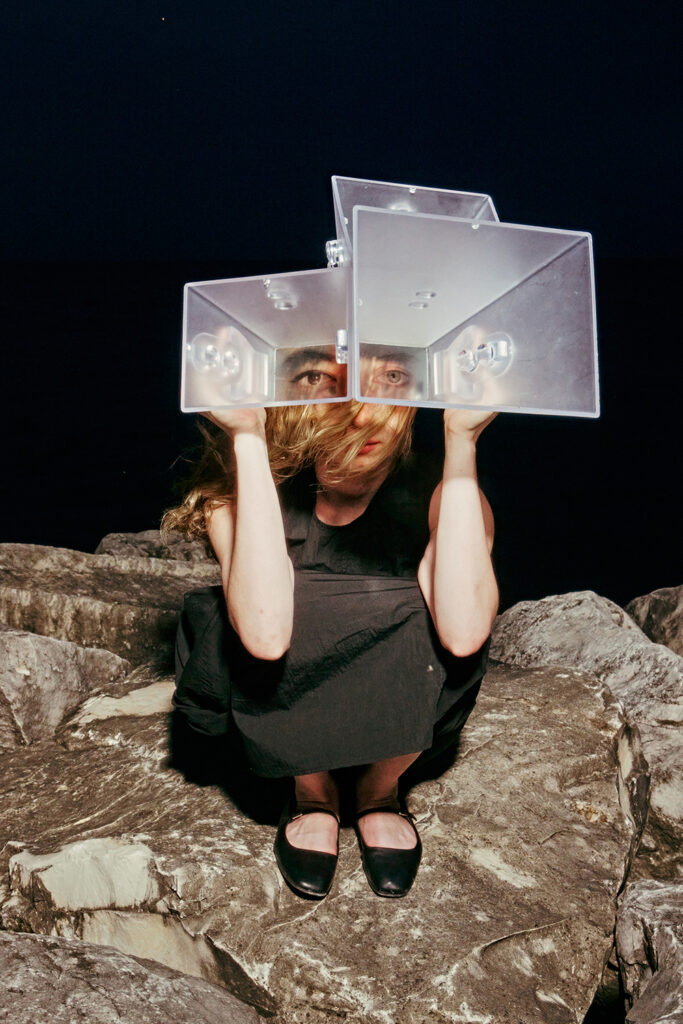
Q3. Your practice blends traditional craftsmanship with digital fabrication how do those two approaches work together in your process?
I do not approach hand-making and digital fabrication as opposing methods. For me, they belong to the same process, but they function at different moments within it. Digital tools allow me to construct systems that are precise and modular. They help establish proportion, repetition, and connection, especially when I am building structures that need to hold together or be reconfigured.
Hand-making introduces something else, namely adjustment, variation, and a certain degree of unpredictability, particularly once the work comes into contact with the body.
I move between the two in order to calibrate the work.
One method helps define the structure, while the other tests how that structure behaves in lived, physical relation to the body. So the relationship is not really about balance for me. It is about function. Each process pushes the work toward a point where structure and bodily experience either align or productively resist one another.
Q4. The body plays a central role in your work how do you think about the relationship between an object and the person who wears it?
That relationship is not simply a matter of activation. When the work is worn or approached, it begins to establish conditions. It may press, restrict, support, redirect, or alter movement. At the same time, the body responds by adjusting, resisting, accommodating, or withdrawing. What interests me is this exchange, this ongoing negotiation between structure and bodily response.
The work is therefore never entirely fixed. It shifts according to how the body carries it, how closely someone approaches it, and how they choose to engage with it. In that sense, the object and the body do not operate as separate entities with separate roles. They function together as a system in which perception is produced through interaction. A piece is never fully resolved as an object alone; it becomes complete only through that continuing negotiation with the body.
Q5.Color plays an important role in your sculptural forms how do you approach it within such tactile work?
The palette tends to remain within earth tones, silver, and transparent surfaces, and those choices usually emerge from the materials and processes themselves rather than from a separate decision to apply color. Transparency allows structure to merge into its surroundings or alter how the environment is perceived. It often appears in digitally fabricated elements, where precision and clarity are more present. Silver comes from the metal components.
It has a certain neutrality, but it also reflects light and movement, so it changes with the body and its environment. Earth tones tend to belong to the more organic or hand-built parts of the work. They absorb light differently and retain a sense of weight, residue, and process. Occasionally, more muted colors enter the work as well.
When they do, they tend to carry a subdued intensity that is closer to the way a moment is remembered than the way it was originally experienced. So for me, color is not something added onto the work; it is embedded in the way materials are formed, processed, and encountered through the body.
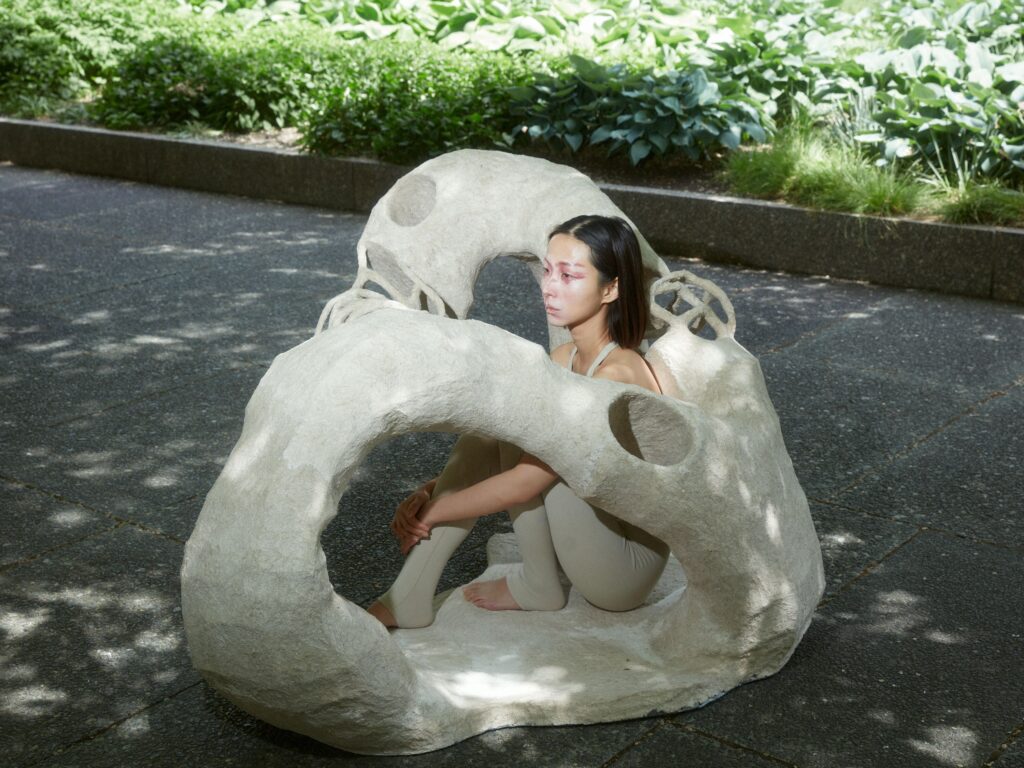
Q6. What has been one of the biggest challenges of building a multidisciplinary practice that people may not see from the outside?
I would not describe my practice as multidisciplinary in a fixed or categorical sense. What interests me more is the movement between disciplines than the occupation of multiple disciplines as separate fields. Each work brings together different materials, techniques, and processes, but I do not think of those as isolated categories. I think of them as parts of a single system.
What becomes challenging is that this system does not sit comfortably within any one field, whether fiber, metalsmithing, jewelry, sculpture, or installation. Each piece may contain elements associated with those disciplines, but none of them fully defines the work. What is not always immediately visible is how much negotiation that requires.
Each context carries its own expectations about how an object should be viewed, worn, understood, or evaluated, and my work does not fully conform to any single one of those frameworks. The challenge, then, is maintaining a coherent internal logic while moving across systems that are not entirely compatible. Over time, I have come to see that instability not as a problem to solve, but as a necessary condition that keeps the work open.
Q7. As your work gains more exposure, how do you stay connected to the personal and emotional core of your practice?
The work that gains exposure is always something that has already been made, so in that sense it belongs to an earlier moment. What I am working through in the present is still changing, and because of that, the emotional core of the practice is not something fixed that can be fully defined in advance.
What matters to me is preserving that process without resolving it too quickly. I try to let the work remain personal by allowing it to develop on its own terms before it becomes legible to others. Usually, that core only becomes visible later, through the form the work eventually takes. So the connection is not something I consciously try to maintain as a stable center. Rather, it unfolds over time between what has already been shown and what is still in formation.
Q8. When someone encounters your work, what do you hope they notice first: the form, the body, or the feeling it creates?
I think the feeling often comes first. Form and the body may provide the initial points of entry, but what I hope the work produces is a shift in sensation through weight, proximity, tension, or a subtle change in posture and attention. If something registers before it can be fully explained, whether curiosity, hesitation, or recognition, then the work has already begun to operate. The form can be read later, and the body can be understood later. What stays with me is that first quiet moment of felt perception, before language fully catches up to it.
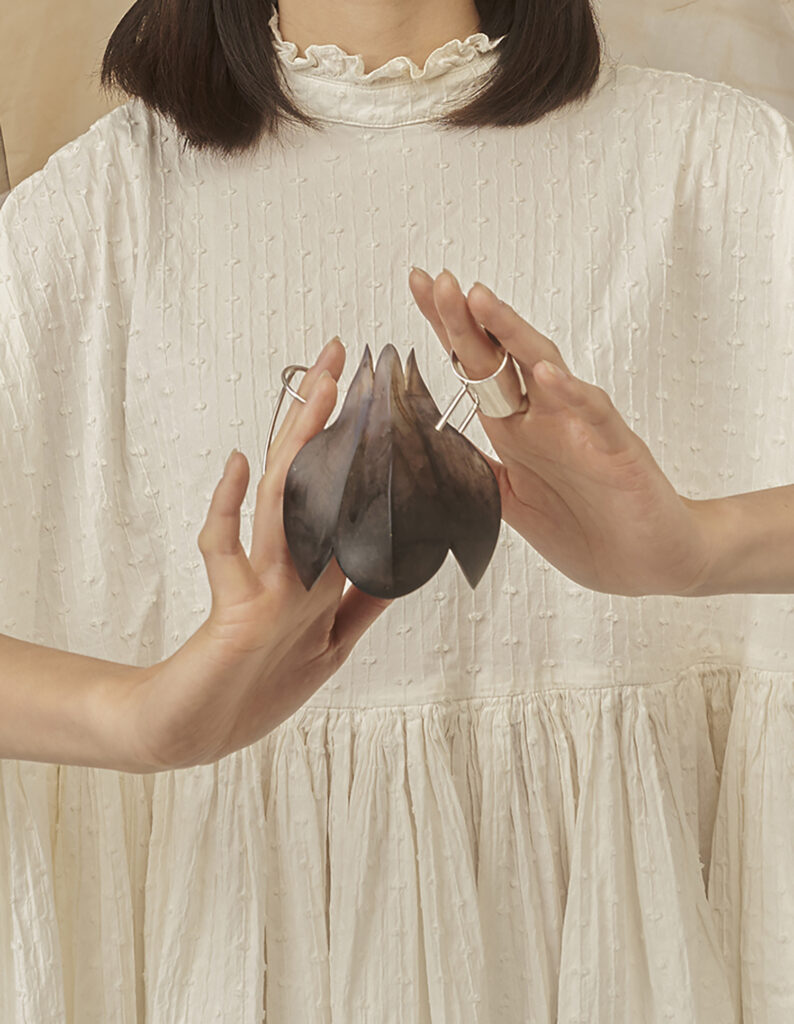
Q9. When you think about your work now, what feels like success to you?
For me, success is closest to the response the work creates in others, not in the sense of approval, but in the sense of activation. A finished object matters, and a strong concept matters, but neither feels complete on its own. The work becomes fully real when it produces a perceptual shift, when someone adjusts their posture, hesitates, leans in, or recognizes something without needing it to be explained.
That kind of response suggests that the work has moved beyond description and entered lived experience. If a piece can maintain its structural integrity while still leaving space for another person’s experience to enter, that feels like success to me.
Q10. What advice would you give to artists who want to create work that is both conceptually strong and physically experienced?
I would say that artists should treat material and condition as their measure, rather than as illustration. They should begin by identifying the state they want the work to produce, not simply the story they want it to tell. They should ask what the work needs to do in space, on the body, and in the viewer’s attention. How does it shift weight, distance, posture, hesitation, or awareness?
Those questions are often more important than explanation at the beginning. It is also important to prototype through experience, not only through sketches. Artists should let the body, the room, and the encounter provide feedback. They should refine the work until the concept becomes inseparable from the physical experience. They should also resist the urge to over-explain. If the structure is precise enough, the work can be felt before it is fully understood.

As our conversation with Shu came to a close, we kept thinking about a distinction she made early on that we have not been able to shake. The difference between what a material can do and what a material can hold.
That sounds like a small distinction but it is actually enormous. One belongs to engineering. The other belongs to art. And the fact that Shu crossed from one to the other and understood exactly where the line was tells you everything about the kind of thinker she is.
Most of us interact with objects every day without thinking about what they are doing to our bodies. A chair shapes how we sit. A bag changes how we walk. A ring on a finger changes how we move our hand even when we are not aware of it. Shu thinks about these interactions deliberately and builds work that makes them visible.
That makes you feel the negotiation between your body and the thing it is carrying or wearing or standing near. And once you start noticing that negotiation you cannot stop noticing it. Her work rewires your awareness of how objects and bodies relate to each other and that rewiring does not go away when you leave the room.
How many of us make work and then worry about how it will be received? Shu has built her entire practice around the understanding that the receiving is part of the making. The viewer is not an afterthought. The viewer is a collaborator. And the work is designed from the ground up to leave space for that collaboration to happen.
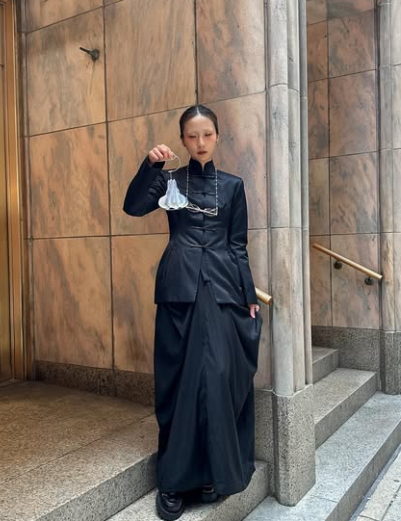
We find that genuinely exciting because it challenges one of the most deeply held assumptions in art, that the artist completes the work and the viewer simply observes it. Shu says no. The viewer completes it. The artist just builds the conditions.
For anyone interested in Shu’s work, whether for a collection or an exhibition or a commission, her pieces exist at an intersection of sculpture, jewelry, craft, and conceptual art that very few practitioners occupy. The engineering precision in her structures gives the work a material integrity that holds up under serious scrutiny.
And the conceptual framework around body and object and sensation gives the work a depth that keeps expanding the more time you spend with it. These are pieces that function differently depending on who encounters them and how, which means they are never static and never fully resolved. That is not a limitation. That is the whole point. And it is what makes her work genuinely rare.
Follow Shu Wang through the links below and experience what happens when an object stops being something you look at and starts being something you feel.