

This Norwegian artist’s pastel landscapes feel like places you almost remember │Kristin Holm-Dybvig
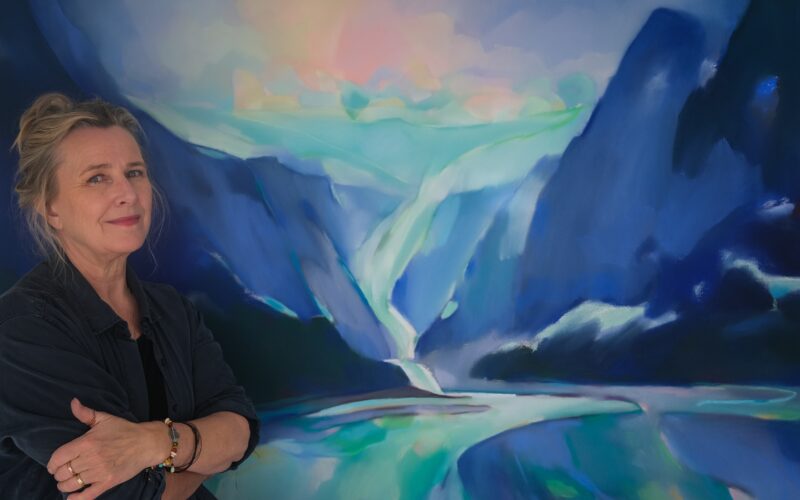
At Arts to Hearts Project, we come across a lot of landscape paintings. Beautiful ones. Technically impressive ones. But every now and then there is one that does something different. It does not just show you a place. It makes you feel like you have been there. Not in real life. In some other way. Like a dream you had once and forgot about until just now.
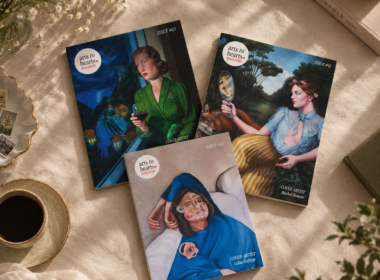
That is what Kristin Holm-Dybvig’s paintings did to us. And that is why she is one of our selected artists in the 101 Artbook Landscape Edition.
So before you read the interview, let us tell you about her.
Kristin lives on the Norwegian coast. On a peninsula. Water everywhere. Fjords, streams, sea, wetlands. And the thing is, water just keeps showing up in her paintings. She does not sit down and think today I am going to paint water. It just appears. Every time. Like it is part of her brain at this point. Part of her language. She cannot separate herself from it and honestly why would she.
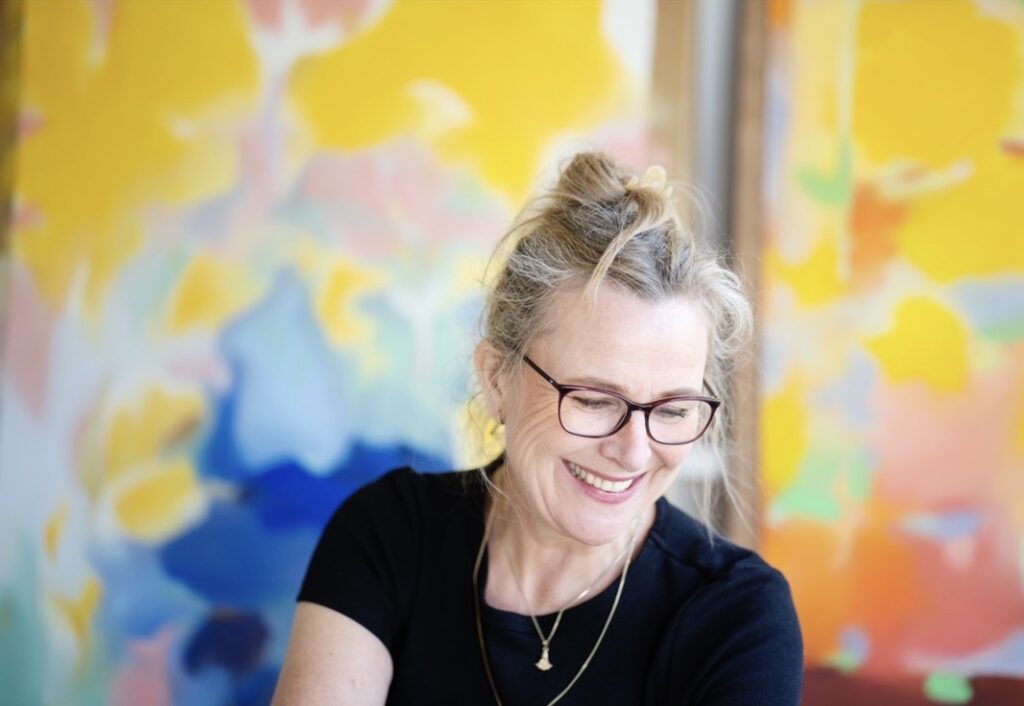
She works in soft pastels which, if you have not spent time with pastels, you might not realise how different they are from everything else. The pigment just sits there on the surface. Nothing over it. Nothing sealing it in. It breathes. And Kristin builds these layers and then smudges them and then builds again and the whole thing ends up feeling like it is still forming. Still settling. Like you caught the painting in the middle of becoming itself.
And she does not paint real places. That is the thing. She paints from memory. And memory does not give you the photograph version of a place. It gives you the feeling version. The light. The atmosphere. The emotional weight of being somewhere that moved you. The details are gone. What is left is the truth of it. And that is what she paints. Which is why people look at her work and go I know that place even though the place does not exist anywhere. It only exists in the painting and in whoever is standing in front of it.
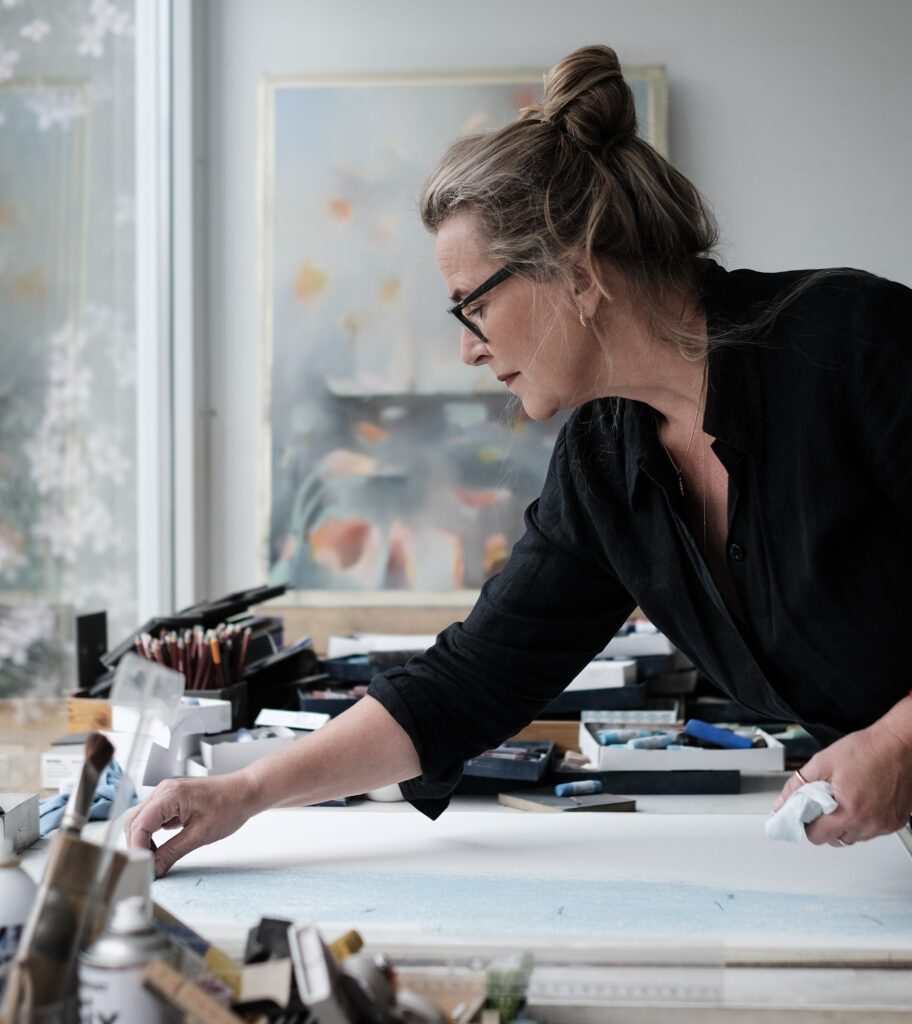
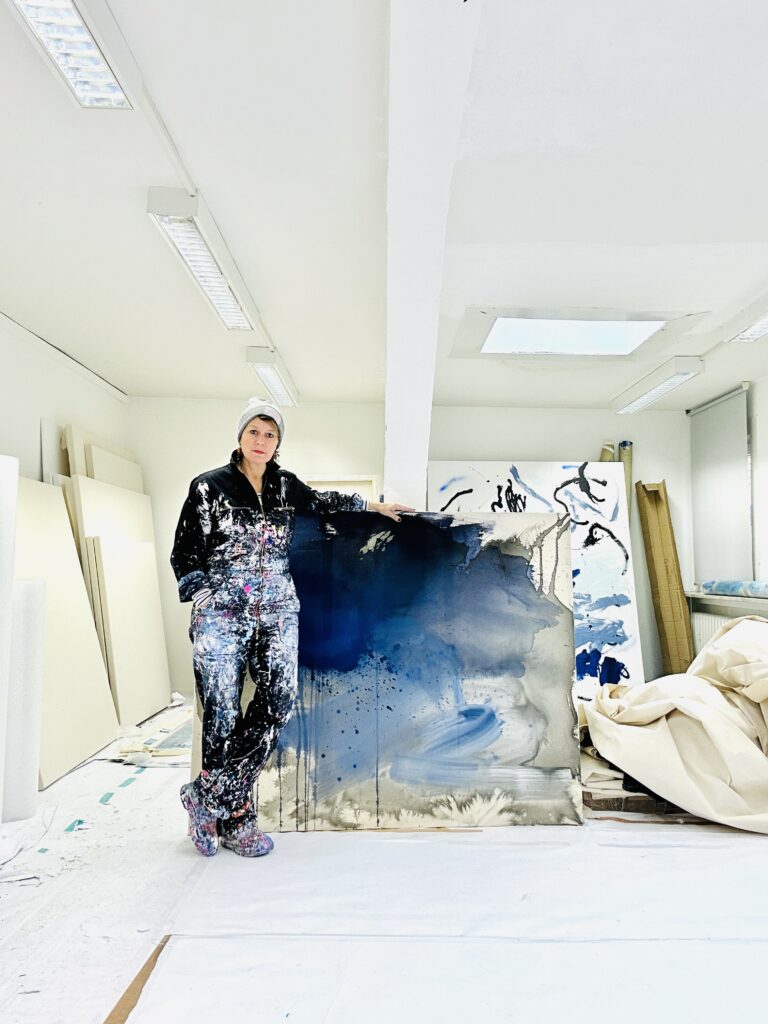
She took a long road to get here. Art school in England. Graphic design. Art therapy training where she first fell in love with pastels and learned how colour connects to what people are feeling inside. Then full time studio work. All of those years are in her practice now. You can feel it.
And sometimes she starts a painting with nothing. Just colours that feel right together. No image. No plan. And then landscape just starts surfacing. Water shows up. A horizon. Some sense of somewhere. She does not force it. It just comes. Because that is where her mind goes when it is making sense of feeling. Straight to landscape. Straight to water.
Let’s get to know Kristin through our conversation with her where she talks about living surrounded by water and painting from memory, why pastels feel more honest to her than anything else.
Q1. You trained in England at the Tobias School of Art before pursuing art therapy and later full-time art. How did that journey from graphic design and therapy back to studio art shape the way you now approach making work?
Working seriously across several fields over a long professional life has given me both a broad understanding of my own capacities and a deep awareness of what truly drives me forward — what matters, beyond the many colleagues and lifelong friendships I have gained along the way. From graphic design I brought with me a strong sense of composition and spatial awareness, as well as a foundational fluency with digital tools and social media. My training in art therapy, on the other hand, provided an extensive knowledge of colour, a distinctive understanding of artistic content and working processes, and a solid grounding in materials and techniques — it was also there that my enduring affinity for pastel first took root. In my studio practice today, all of this knowledge converges. I draw continuously on everything I have learned and absorbed, which makes the work both demanding and profoundly enriching. The practice itself is an ongoing process: it constantly challenges me to develop content more deeply, while at the same time requiring an ever-greater level of craftsmanship and attentiveness to material.
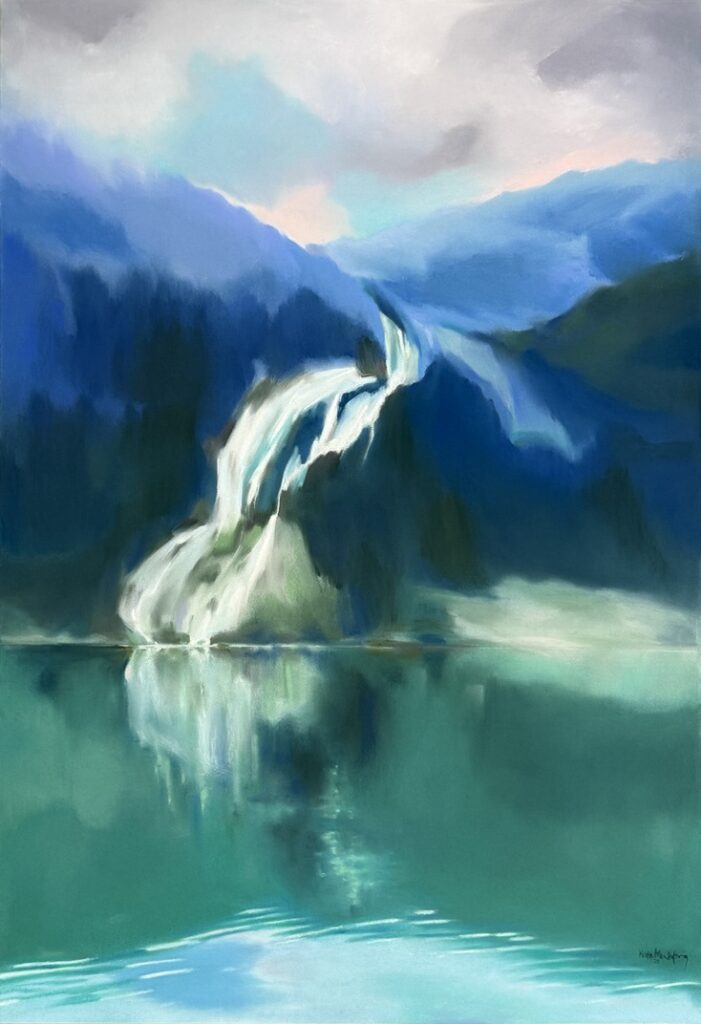
Q2. Soft pastels are central to your practice. What drew you to this medium, and how do its qualities help you articulate atmosphere and emotion?
Soft pastels have become central to my practice because they offer an immediacy that feels both intimate and physical. The pigment sits almost naked on the surface, allowing colour to breathe rather than be sealed in, and this openness gives the work a particular sensitivity to light, air and touch. I was first drawn to pastel during my training in art therapy, where its tactile and responsive nature made it a powerful tool for emotional expression, and that early experience has continued to shape how I use the medium today. Pastel allows me to work directly with atmosphere. Layers can be built and erased, smudged and reformed, creating a sense of instability and presence at the same time. This fragility mirrors the emotional states I am often drawn to — moments that hover between clarity and dissolution. In this way, pastel becomes not only a material but a language, capable of holding subtle shifts in mood, memory and perception.
Q3. When a landscape or memory pushes you to paint, is there a specific moment a light change, a feeling, or a colour shift that typically unlocks the work for you?
For me, a work often begins with a subtle impression rather than a fully formed image. It may be a shift in light, a fleeting colour in the landscape, or a lingering emotional resonance from memory — something small that lingers and insists on being explored. These initial sparks rarely feel literal; they are more like an invitation to enter a mood or atmosphere, a sense of a place or moment distilled through feeling. Once I begin, the act of working with pastels — layering, smudging, and responding to the material — allows the memory or landscape to unfold gradually. The slow, deliberate process gives me space to reflect on what is essential, to translate the ephemeral qualities of light, colour, and emotion into a form that carries both intimacy and presence. Often, it is the interplay between gesture and colour, and the subtle shifts in tone, that truly unlock the work, letting the atmosphere emerge naturally on the paper.
Q4. Your palette can shift from calming, muted tones to vibrant, expressive hues. What governs your choice of colour range for any given piece?
I work primarily from memory, drawing on lived experiences of places and fleeting moments. What remains most strongly is often not the specific image but the atmosphere and emotional residue of a situation, and this is what I seek to translate into the work. My own state of mind plays a role in what I am drawn to explore, but the palette ultimately emerges in the moment of making. The mood I want to evoke determines the range of colour. Life unfolds in all tonalities: some moments are saturated and vibrate with energy, while others are shaped by shadow and darkness, or by a quiet play of light. It is this emotional and atmospheric spectrum that guides my choices of colour.
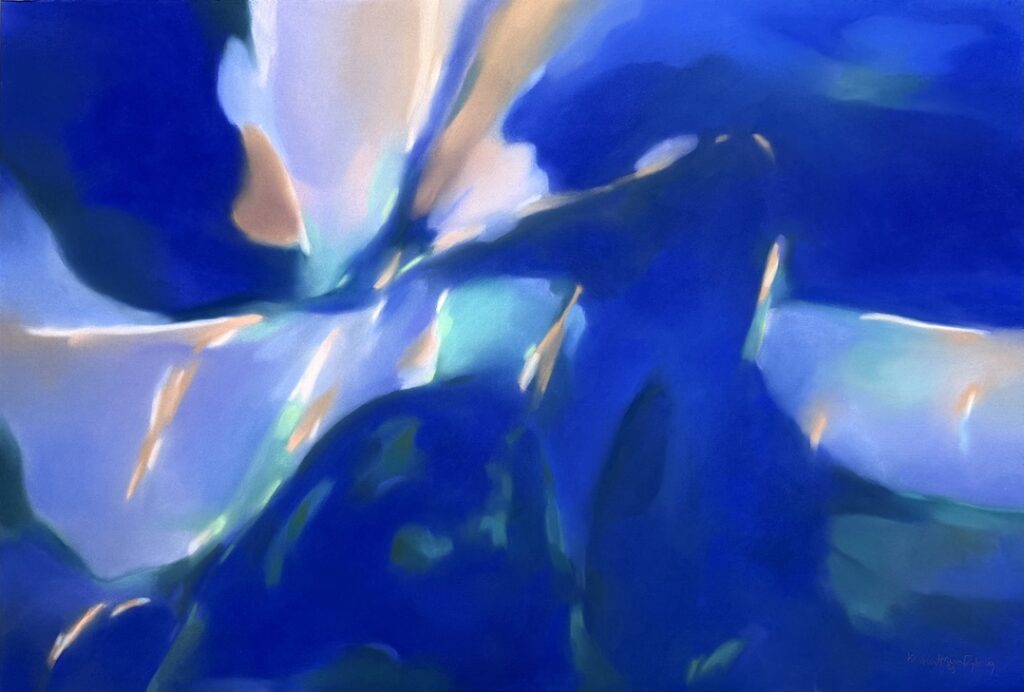
Q5.Many of your works don’t depict specific places but suggest the feeling of a moment. How do you translate a felt experience into visual form without relying on literal representation?
The landscape that surrounds me has shaped me and become part of my inner life. I notice that water is almost always present in my images — in all its forms: streams and rivers, fjords, open sea, wetlands, pools. I live on a peninsula on the Norwegian coast, and water is an inescapable presence here; it naturally permeates my visual language. Often I begin a work in a relatively abstract way, guided by a colour combination that feels compelling. Yet quite quickly an inner need arises to make sense of it all, and at that point landscape forms begin to surface almost inevitably. They are the first shapes I recognise. At other times, when a particular place has left a strong imprint on me, I try to distil it — to find its essence so that the image is freed from literal description. What I ultimately want to convey is the atmosphere I have experienced. That emotional and sensory resonance feels more important to me than faithful representation; it becomes a kind of universal language through which the work can speak.
Q6. You sometimes integrate hints of abstraction alongside figurative touches in your color fields. How do those decisions evolve during the making process?
The balance between abstraction and figurative elements often evolves organically during the making process. I may begin with a purely abstract exploration of colour, light, or mood — an impression drawn from memory or a fleeting experience. As I work, an inner need sometimes arises to “make sense of it,” and subtle hints of landscape, water, or other forms emerge. These figurative touches are rarely literal; they are distilled, suggestive, and meant to evoke rather than define. This interplay between abstraction and recognisable elements allows me to maintain a sense of openness in the work. It creates space for both my own reflection and the viewer’s interpretation. The slow, deliberate handling of pastels — layering, smudging, and building colour fields — gives time for these decisions to emerge intuitively. The gestures, the shifts in tone, and the interaction of shapes and colour gradually reveal where abstraction and figuration need to meet, giving the work both emotional resonance and visual tension.
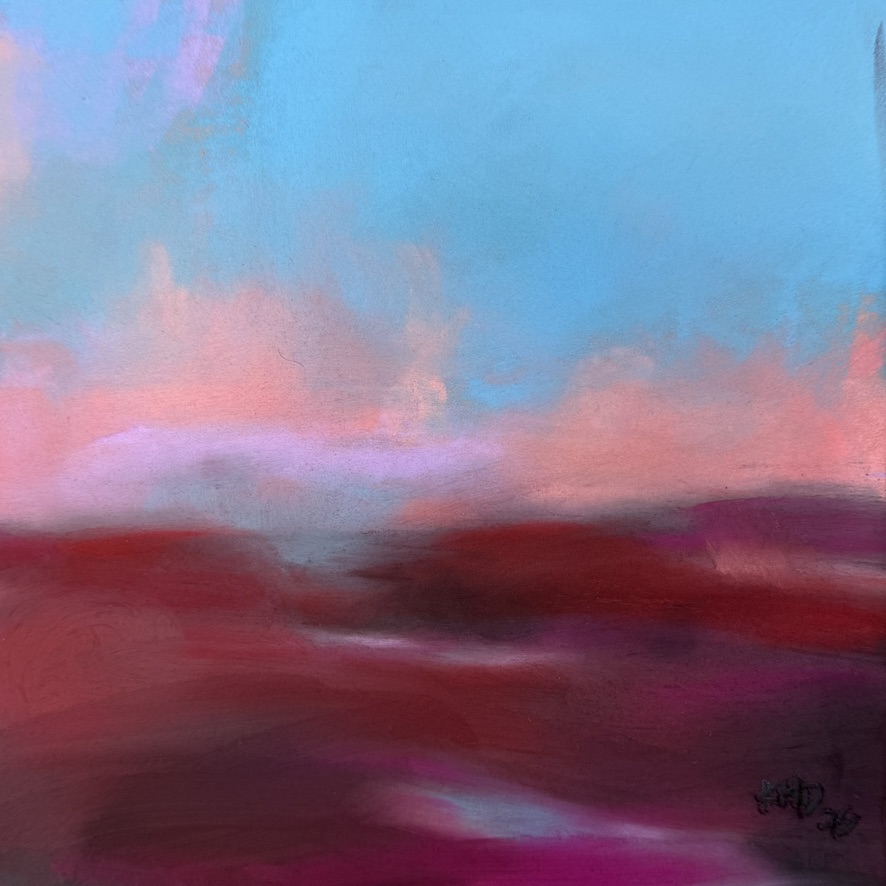
Q7. You’ve developed a strong presence on platforms like Instagram, where community and exchange are active. How has sharing work online shaped your process or confidence as an artist?
Working as a visual artist can be a solitary practice. Much of my time is spent alone in the studio, immersed in a process that is deeply personal. Social media, however, has opened up a vital space for connection — with fellow artists, collectors, curators and people who are simply drawn to the work. To receive feedback, whether on a finished piece, a work in progress or a new opportunity, feels both generous and energising. Online platforms have allowed my work to reach a far wider audience — potential buyers, galleries and exhibition venues — in a way that is immediate, personal and efficient. I experience Instagram as a kind of evolving portfolio, built gradually and with a distinctly personal voice. My website, in turn, offers a quieter space for deeper engagement, where viewers can explore my practice more fully and make contact. I am very conscious of how I present the work: the images I choose to share, and the visual narrative they create, are part of how the work is framed and understood.
Q8. When viewers respond emotionally to your work, do their interpretations ever surprise you? How does that reflection feed back into your practice?
Most of the responses I receive suggest a sense of recognition: viewers often feel that they know the place in the image, or that the atmosphere resonates with something in their own memory. That kind of emotional identification is deeply meaningful to me. One of the most touching responses came in relation to an abstract landscape with a waterfall. A woman initially asked where the place was, as if she wanted to locate it on a map — but then she paused and changed her mind. She realised that she already knew it. It was her place, one filled with personal memories and emotional weight. Her interpretation was profoundly moving to me, and she ended up purchasing the work. Moments like this affirm my belief that the work does not need to describe a specific site in order to be true. When a viewer finds their own landscape within the image, the painting becomes a shared space of memory and feeling — and that, in turn, quietly reinforces my trust in working through atmosphere rather than literal depiction.
Q9. What advice would you offer to artists hoping to create work rooted in memory and colour, while navigating the challenges of working with soft pastels?
I would encourage artists to trust their memories rather than trying to reproduce them. Memory is already an act of abstraction — it distils experience into atmosphere, rhythm and emotional tone. Working from that residue, rather than from literal reference, allows the work to remain open and alive. With soft pastels, it is especially important to build a relationship with the material. Learn how different papers, pressures and layering methods affect the pigment. Let the dust, the smudging and even the accidents become part of the language of the work, rather than something to control away. Colour should not be chosen only for harmony, but for meaning. Ask what a hue feels like rather than what it represents. Soft pastels are uniquely suited to subtle shifts in mood, and those small transitions often carry more emotional weight than dramatic contrasts. Finally, patience is essential. Pastel demands slowness, attentiveness and care. In that quiet, deliberate pace, space opens for memory and feeling to settle into the surface — and it is often there, in those fragile layers, that the most resonant images emerge.
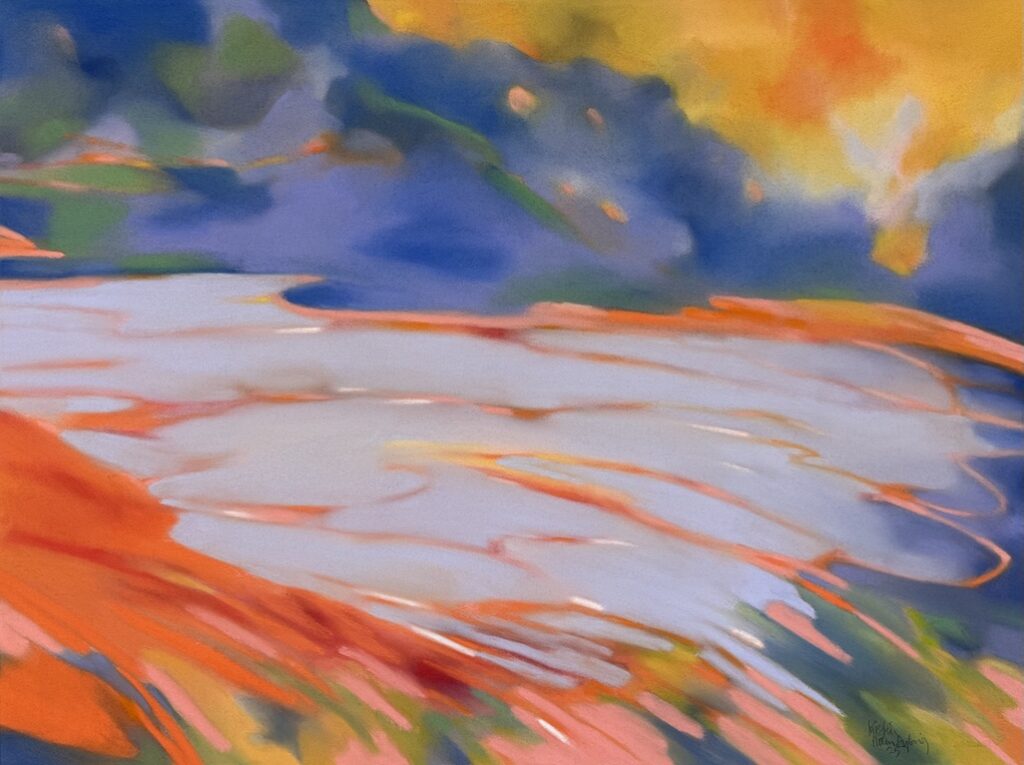
As our conversation with Kristin came to a close, we kept thinking about fragility. Not as a weakness. As a choice.
Kristin chose soft pastels. A medium where the pigment sits right on the surface with nothing protecting it. Most artists want their work to be permanent, sealed, stable, safe from the world around it. Kristin chose the opposite. She chose a medium that responds to light and air and touch. That can be smudged with a finger. That feels like it is still settling even after the painting is done.
And we think that choice says everything about what she is after. She is not trying to make permanent records of things. She is trying to hold moments that by their nature cannot be held. Atmospheres that shift. Memories that are half vivid half dissolving. The feeling of being somewhere that was beautiful and knowing you will never stand in exactly that light again.
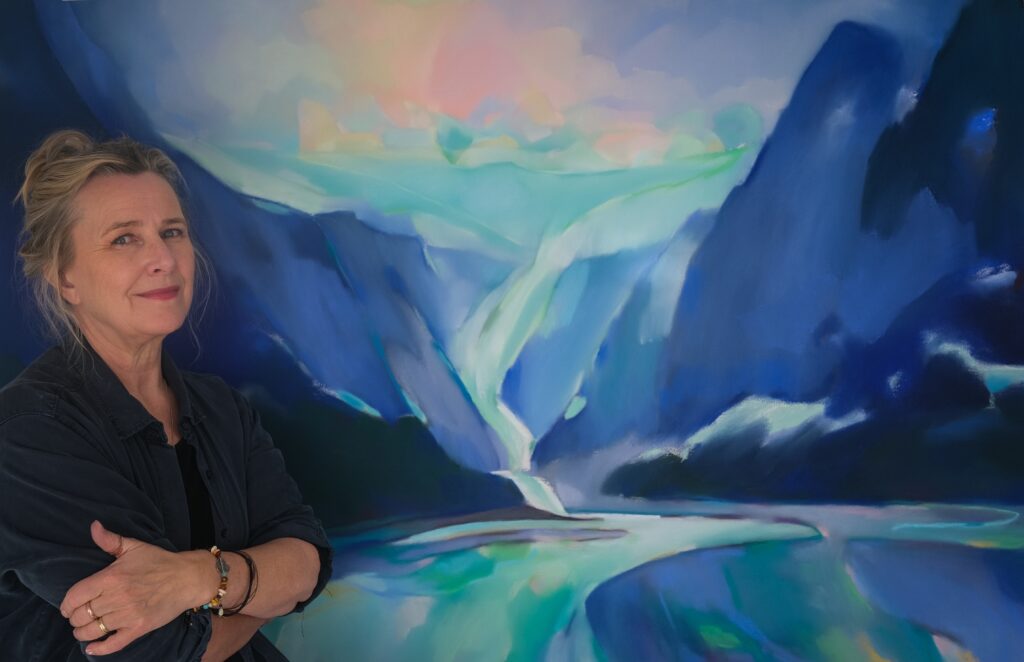
Pastels do that. They hold things without gripping them. They let the image breathe. And when you stand in front of one of Kristin’s paintings you can feel that breathing. The painting is still. But it does not feel finished in the way a sealed oil painting feels finished. It feels like it is still arriving. And that is what makes it feel alive.
She works from memory and she does not apologise for what memory leaves out. She does not try to fill in the gaps with photographs or reference material. She trusts that what stayed with her is what matters. The atmosphere. The colour of the air. The weight of the light. And she lets everything else go.
We think there is a lesson in that for everyone. Not just artists. For anyone who is trying to hold onto something. A place. A feeling. A person. A time in your life that you know is passing. You cannot keep all of it. But you can keep what mattered most. And if you hold it lightly enough it stays alive instead of becoming a frozen copy of what it used to be.
For anyone looking to bring Kristin’s work into their home, these pastels offer something most art does not. They change with the room. Morning light reveals one painting. Evening reveals another. Your mood changes what you see in them. They are not objects that sit passively on a wall. They are quiet, breathing, shifting presences that become part of the rhythm of your days. That is a rare thing to find. And it is worth holding onto. Lightly.
Follow Kristin Holm-Dybvig through the links below to explore her beautifully atmospheric landscapes and immerse yourself in her quietly evocative worlds.