

Erin Bell Turns Canadian Landscapes into Paintings of Peace and Belonging
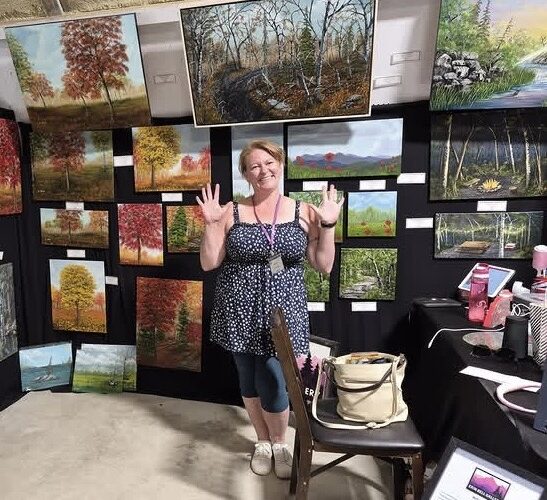
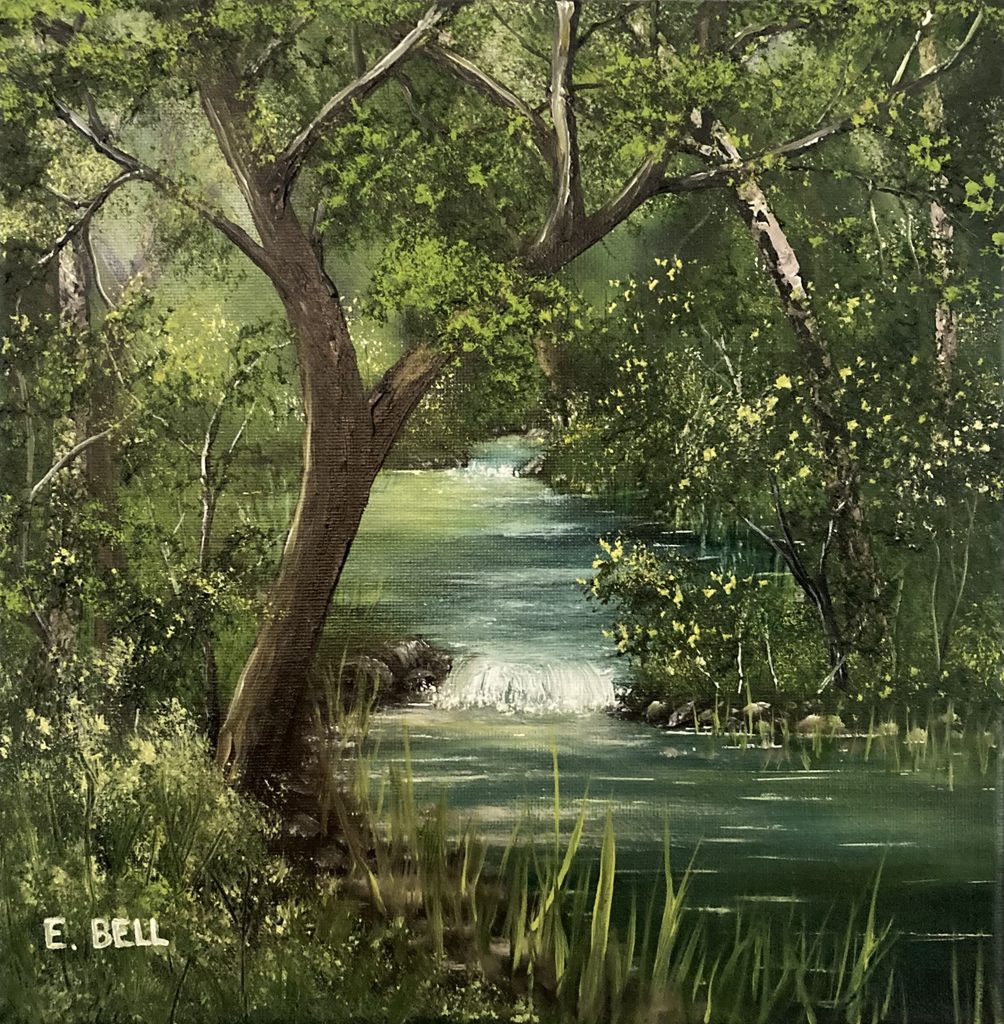
At Arts to Hearts Project, our 100 Emerging Artworks book brought us a hundred remarkable pieces by emerging artists from around the world, one work each. But Erin Bell’s painting made us pause, because for her a landscape was never really about scenery at all. It is about belonging, and about an artist who spent much of her life searching for a place to feel at home before discovering she could paint her way into one. She is one of the artists selected for this edition.
Erin is a Canadian landscape painter based in Manitoba, and her relationship with nature runs far deeper than subject matter. Having lived all over Canada, she came to know how frightening it can be to arrive somewhere new, and how steadying it is to find that nature is always already there.
While the rest of us rush around, the trees, the mountains, the rivers, and the oceans simply stay, and that constancy became her anchor. People, she will tell you honestly, have never come easily to her. Nature she understands. It gives her peace, strength, and a sense of belonging she spent years looking for elsewhere, before realising it had been with her all along.
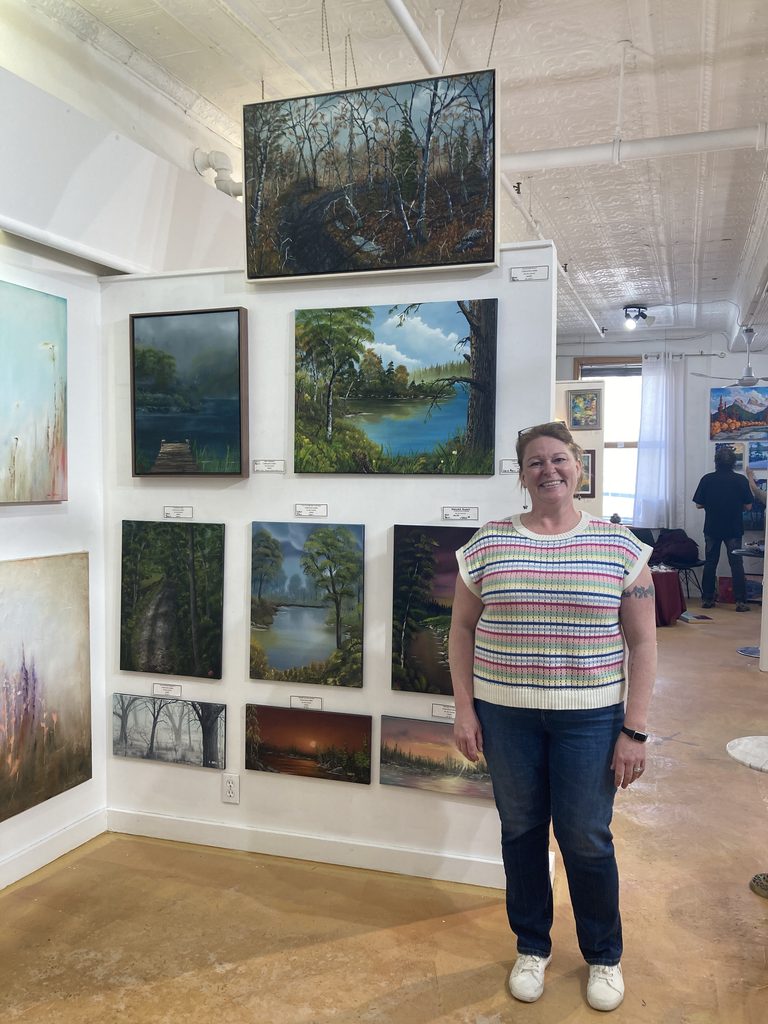
Her paintings rarely begin with a place. They begin with a feeling that slowly turns into colour. The remembered smell of a forest on a warm, damp summer morning pulls her toward something green and lush; in the depths of winter, she escapes into the warm reds and yellows of a sunset she once watched.
Many of her scenes are not real at all, but a quiet blend of dreams, wishes, and memory, a long winding driveway she has always imagined, a farmhouse at the end of the road, horses grazing in a meadow without a care. The place is invented, but the feeling is entirely true, and painting it is how she keeps it alive.
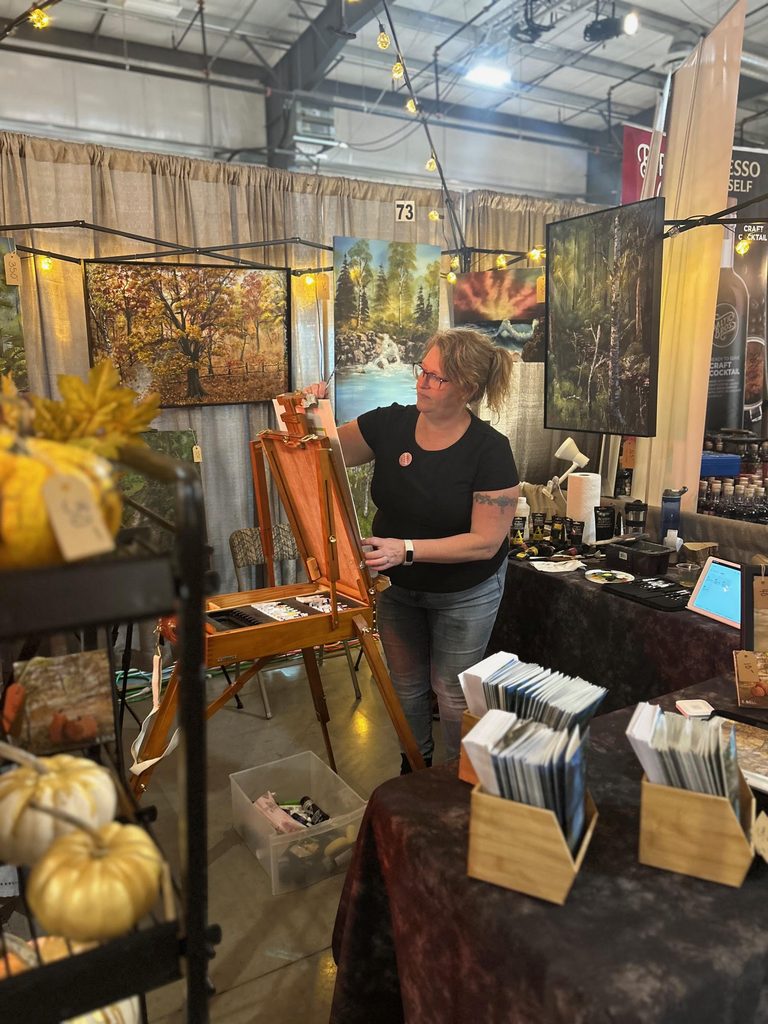
She works in oil, moving fluidly between brushes and palette knives, often with a palette knife in one hand, several brushes in the other, and one more held between her teeth. Skies and water she builds through patient blending; mountains, rock, and tree bark she carves with the knife, chasing texture and effect.
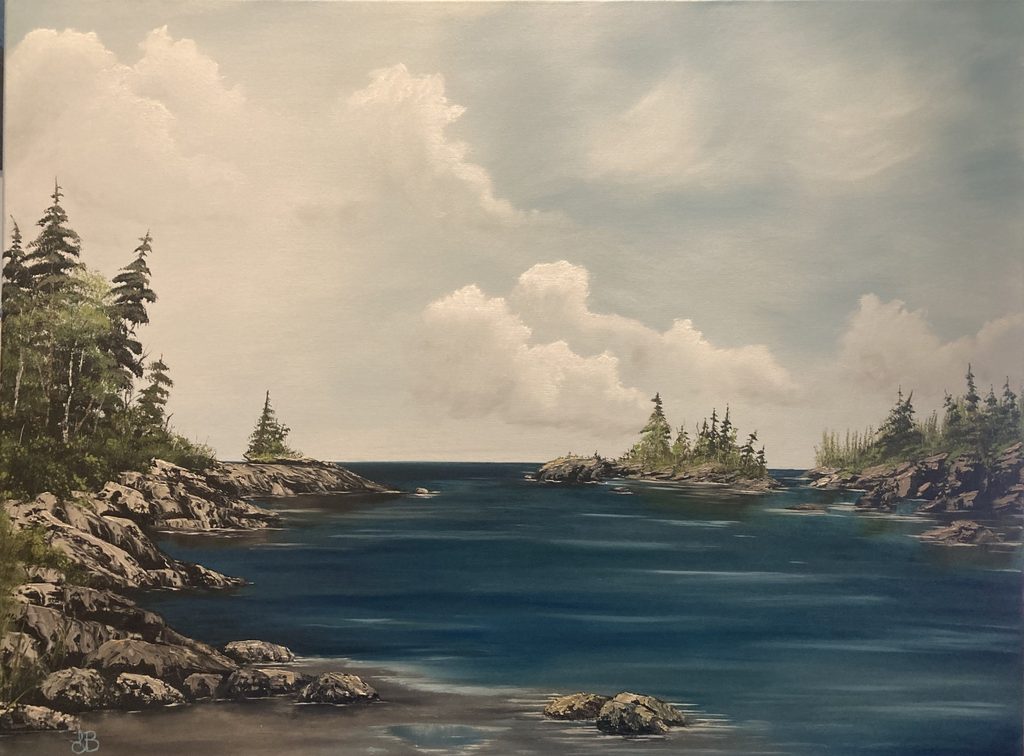
Trees are her favourite thing to paint, with skies a very close second, and for the same reason: neither is ever the same twice, and in that endless, shifting possibility she finds complete freedom. Nothing about the work is rushed. Each piece is made slowly, deliberately, with the kind of care that only time allows.
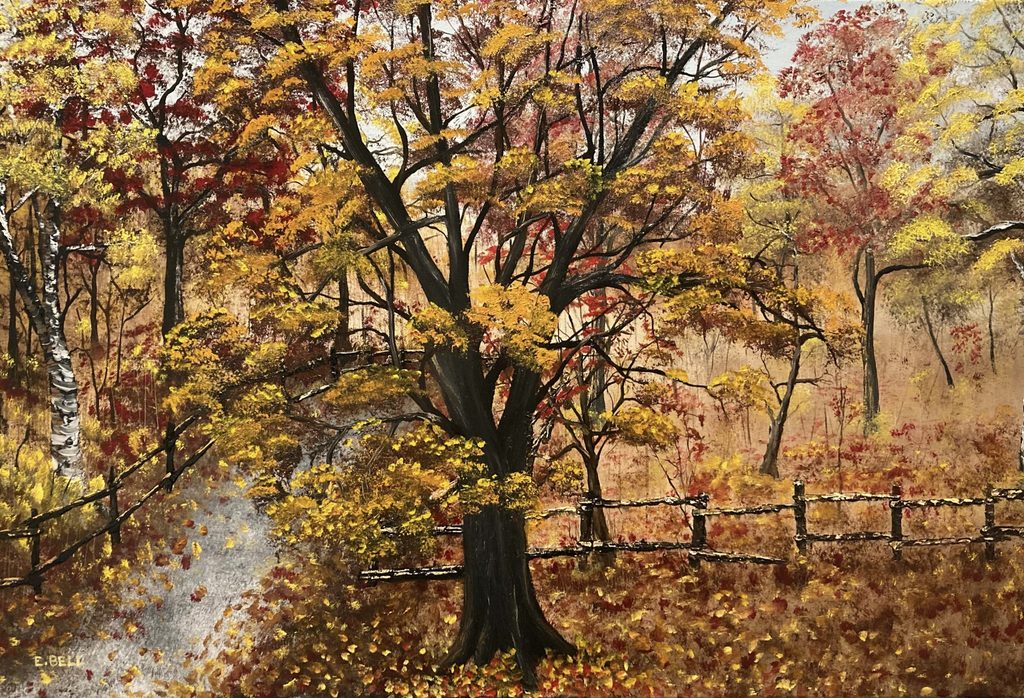
That slowness is not an accident but a quiet act of resistance. Erin describes herself as a slow and steady person living in an increasingly fast world, and she remembers a time before screens filled every home, when people spoke face to face and life felt less artificial. Her paintings are, in part, a way back to that quiet. Her subjects are almost always peaceful and serene, somewhere to escape to, somewhere still enough to think, and the act of painting is, for her, the deepest escape of all.
Underneath all of it is a story of healing. Erin first returned to the easel during a difficult chapter of her life, walking into her studio anxious, insecure, and lost, searching for solace, and what she found instead was a kind of home.
Painting quickly became far more than a hobby, and today she crosses that same threshold feeling confident and whole. Success, for her, has nothing to do with recognition. It is about freedom, connection, and protecting the joy and the quiet healing that painting brings, and she holds to one principle above the rest: quality over quantity, and never rushing the work.
Now let’s hear from Erin about finding belonging in nature, how a feeling becomes a colour, why she refuses to rush her work, and what returning to the easel gave back to her.
Q1. Could you take us back to the beginning of your creative journey and share what first drew you to painting?
When I was young, I was in awe of other talented artists in my family. It always made me want to learn how they did it!
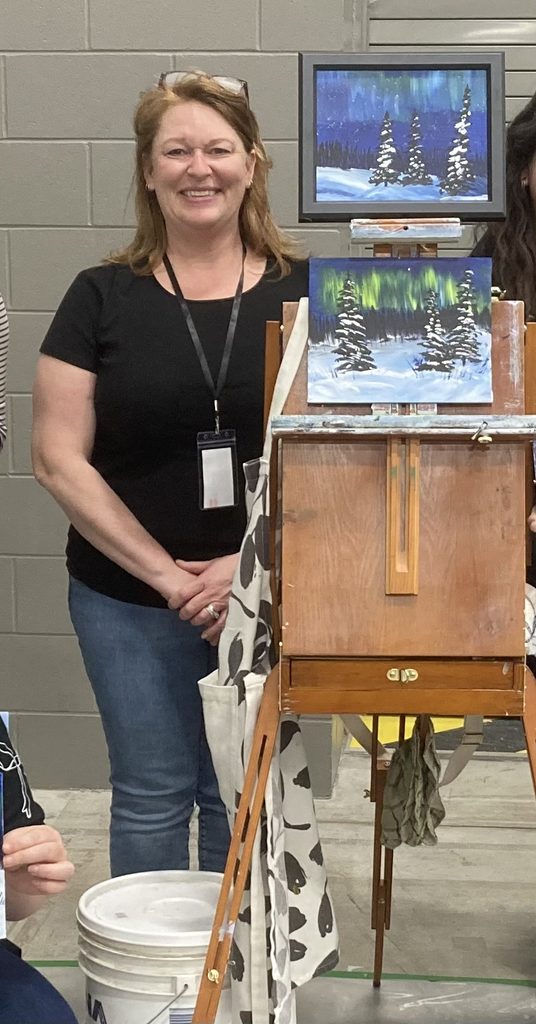
Q2. You have lived across different parts of Canada. How have these places shaped the way you see nature?
The landscapes in Canada are so diverse, and there is still so much I haven’t seen! Getting to know different parts of this beautiful country has been an incredible adventure. Being in a new place can be scary, but no matter where I went, I found familiarity and comfort in the resilience and simplicity of nature. While we all scurry around, the trees, mountains, rivers, oceans are steadfast. Somehow it grounds me.
Q3. You’ve described yourself as someone who was always searching for a sense of belonging. How has painting helped you find that feeling?
Absolutely. The search went on for a very long time before I realized that what I was searching for was with me all along. It is less about where I am in the world, and more about finding a way to relate to it, which has always been the challenge for me. People are difficult for me. Nature, I relate to. It brings me peace, strength, and rejuvenation.
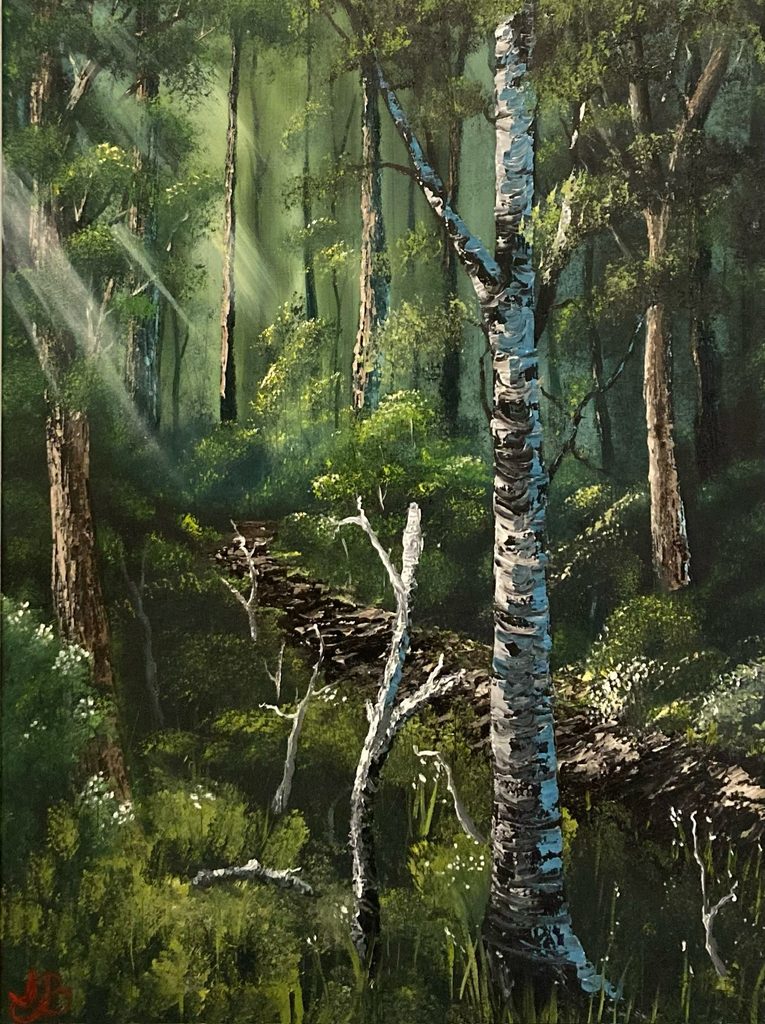
Q4. Your paintings often come from personal memories. How does memory influence what you choose to paint?
It usually starts with a feeling, and then turns into colors, if that makes any sense.
I close my eyes and remember the smell of the forest on a warm, damp summer morning, and it triggers a need to paint something green and lush.
In the winter I can escape into warm reds and yellows with a memory of a summer sunset. Revisiting these places in my memory refills my emotional coffers, and painting them helps me preserve them.
Q5. You primarily work in oil and use both brushes and palette knives. How do you decide which approach a particular landscape needs?
It’s usually about texture or desired effect. Sometimes I keep palette knife in one hand, 3 brushes in the other, and one in my teeth!
Skies and water usually require a lot of blending, and I use several different brushes for these techniques. When I’m trying to achieve texture and effect on mountains, rocks, and tree bark, the palette knife is essential!
Q6. You paint everything from skies and reflections to bark and foliage. Which part of a landscape do you most enjoy painting?
That’s a really tough one. I love all of it so much, but I’d have to say trees, with skies as a VERY close second. Both are things that are never the same twice, and I love the freedom and endless possibilities that offers.
Q7. You describe yourself as a “slow and steady” person living in an increasingly fast world. How has this shaped your life and your art?
In every way that it can. I remember life when cell phones and computers were in their infancy, and not part of most households. When the phone was tethered to the wall with a cord, and if you weren’t home when it rang, they’d just have to call back. When catching up with a friend was done in person, not by email, text or socials. When we had time for real human life, not this increasingly artificial one we’ve created.
Painting landscapes provides me with the ultimate escape. I find peace in the act of painting itself – it’s always a challenge and an adventure, and there’s something incredibly satisfying about that.
The subject matter of my art is almost always peaceful and serene, and some other place I’d like to escape to. Somewhere it’s quiet enough for me to think.
Q8. An Autumn Walk was inspired by a walk with your mother in Northwestern Ontario. What caught your attention and inspired you to paint the scene?
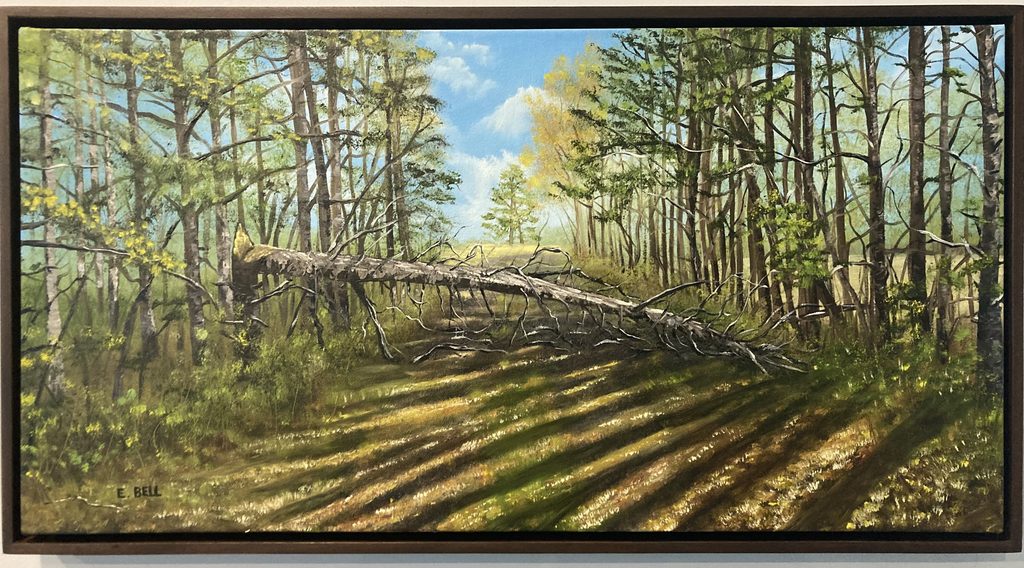
Those were the first puddles I ever painted! It was a crisp October day when we went for this walk, and I was first drawn to how far back into the woods I could see with the leaves gone. I love seeing the structure of the forest when the leaves fall away.
Mossy logs, limbs reaching towards the sun, and even fallen trees returning to the earth to nurture future generations. It’s like a peek behind the curtains. On our way back, I saw the reflection of the trees and the autumn sky in the puddles, and that was the moment I couldn’t wait to pick up my paintbrush, and paint “An Autumn Walk”.
Q9. In Welcome Home, you imagined a tree-lined driveway leading to a farmhouse. How do you combine imagined places with memories in your landscapes?
That’s tough to quantify, but I’ll try! For a commission or a specific place, I refer to photos. Most of my original work though, is a combination of dreams, wishes, and memories. A long winding driveway lined with mature trees has always been a dream of mine, and that was where “Welcome Home” began.
I imagined what would be at the end of the driveway, and it was a rambling farmhouse with a big kitchen where I’d cook up a hearty fall meal. Horses peacefully grazing in the meadow without a care in the world fill my heart with a feeling of calm.
The place itself is imagined, and the translation of that dream to an image on canvas is where the memories come in. I draw on memories for feelings, as well as technical components like colors, and perspective. What the trees look like, how to paint the fence, etc.
Q10. How do you protect your studio time when the business side of being an artist starts competing for your attention?
This is currently my biggest challenge! It’s very difficult to keep up with the business side of this venture and still find time to actually be an artist. When I feel snowed under, scheduling tasks helps. I set aside time for catching up on the computer and keeping my studio tidy enough to work in (the necessary evils). The rest of the time I try to treat painting as a full-time job.
I can’t force when I’m creatively and emotionally ready to paint, but those are times I use to varnish, finish edges, sign and authenticate artworks with documentation, etc.
There’s an extra challenge working from home because I have to turn a blind eye to the housework that needs doing until I “get home from work”, but once I’m in my studio it’s out of sight, out of mind.
Q11. Your idea of success has changed as your career has developed. What does success mean to you now?
Success is a word that keeps redefining itself in my life. It’s not about recognition or accolades, it’s about freedom and connections. 2 years ago success meant finally finding something I could pour myself into that gave something back to my soul. 18 months ago it meant selling my first painting. 1 year ago it meant getting my first commission, and 6 months ago it meant having my work displayed in an a physical gallery (mine is an online gallery).
Now that I have done all of those things, I must be successful? What it means to me now is finding a balance between artistic freedom and business. First and foremost, I can’t let the balance shift to the point where painting loses it’s joy and magical powers of healing in my life.
Q12. How has your relationship with painting changed since you first returned to the easel during a difficult period?
When I first walked into my studio looking for solace, I felt insecure, extremely anxious, and lost. I found peace in the solitude of a quiet hobby, which quickly became so much more.
Now when I enter my studio I feel confident and in control by default, just by walking through that door. What this journey is doing for my heart and soul is the real reward.
Q13. What would you say to artists who feel they need to create faster in an art world that is always moving?
I’d say toss that idea right out the window. It is so much important to stay true to your work and developing your skills than it is to produce volume. Quality over quantity. Don’t rush it.
As our conversation with Erin came to an end, we found ourselves thinking about the quiet pressure the art world puts on artists to keep up, to produce more, post more, and never slow down.
Erin pushes back against all of that, simply by refusing to play along. So much of today’s art world runs on speed and volume, on feeding an endless scroll, on staying constantly visible, and it can leave artists feeling that the slow, careful work is somehow falling behind.
Erin takes the opposite view entirely. She would rather make fewer paintings with more care than chase quantity, and her advice to other artists is refreshingly blunt: throw the idea of creating faster straight out the window. Staying true to your work and developing your skills, she believes, will always matter more than how much you can churn out. We think she is onto something the art world often forgets.
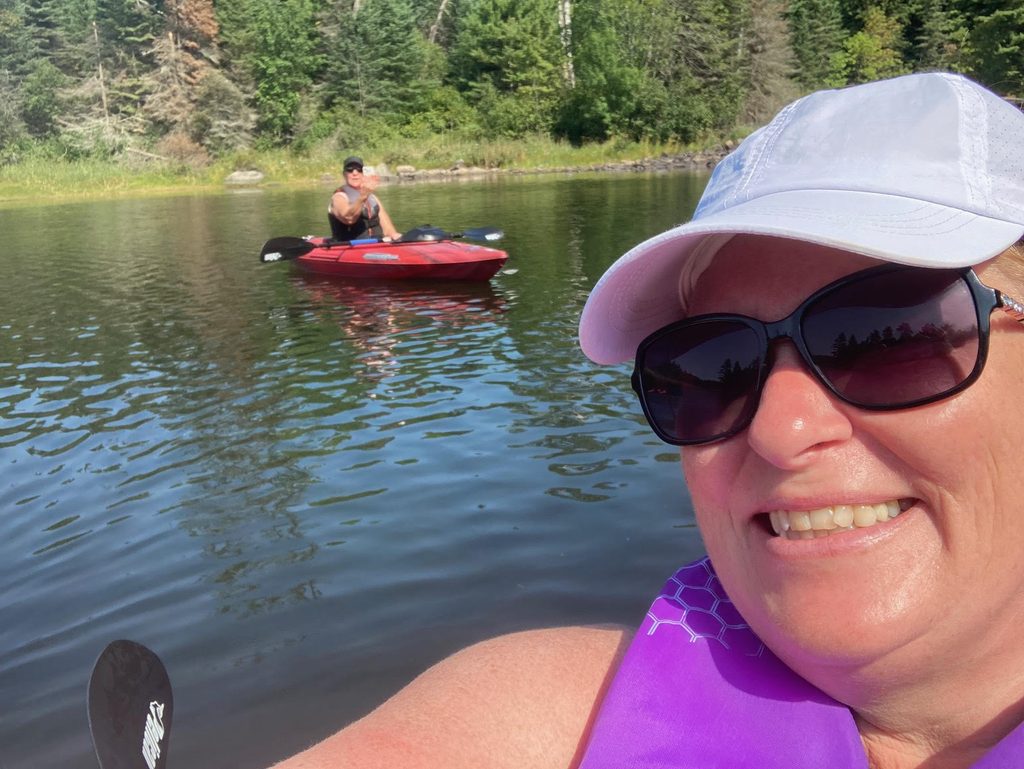
There is something timely in it, too. In an age when images can be generated in seconds and perfection is only a filter away, the slow, hand-painted landscape has quietly become something rare and valuable. Erin’s work carries the unmistakable mark of time, patience, and a real human hand, and in a culture racing toward the instant, that kind of care feels less old-fashioned than quietly necessary.
It is a reminder that some things are worth waiting for, and that art made slowly, from genuine feeling, still speaks in a way nothing rushed ever can.
For art lovers and collectors, Erin’s work brings calm and quiet into a room. Peaceful, light-filled landscapes, built from memory and dream, that feel like a place you could step into and breathe. They invite you to slow down, to escape for a moment, to find somewhere quiet enough to think. To live with one of her paintings is to keep a small, steady refuge on your wall, and a gentle reminder that there is no need to rush the things that matter.
Follow Erin Bell through the links below and see her work for yourself.
Applications for the 101 Art Book: Texture Edition will remain open until 15 October 2026. We encourage artists to submit their work well before the deadline to avoid any last-minute technical issues or delays.
Once the submission period closes, all eligible entries will be forwarded to the jury for review. While we aim to announce the results within 10 days, the process may take longer depending on the number of submissions received, so all results will be announced within three weeks of the deadline. If the deadline is extended, the jury review and announcement timeline will begin after the extended deadline has concluded.