


Ania Tomicka’s oil paintings reveal the dark, beautiful side of inner life
At Arts to Hearts project, one of the things we love most about putting together our Best of the Art World editorial is discovering artists whose journeys remind us that there is no single path to becoming an artist. Some are shaped by formal training. Others are shaped by curiosity, persistence, and years of showing up for the work.
Ania Tomicka belongs firmly in the second group.
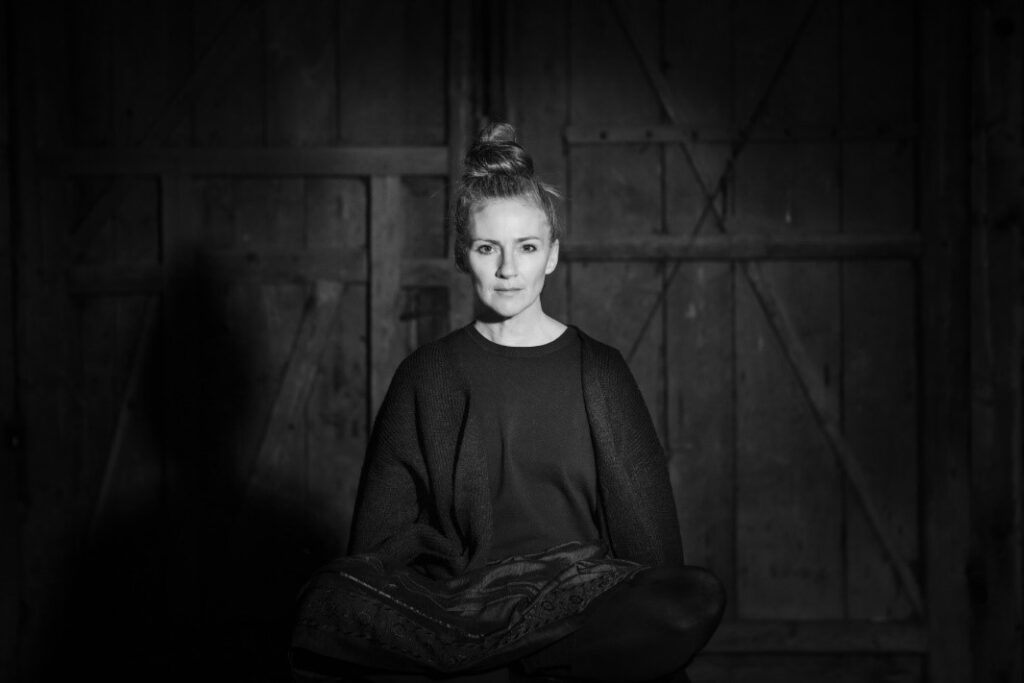
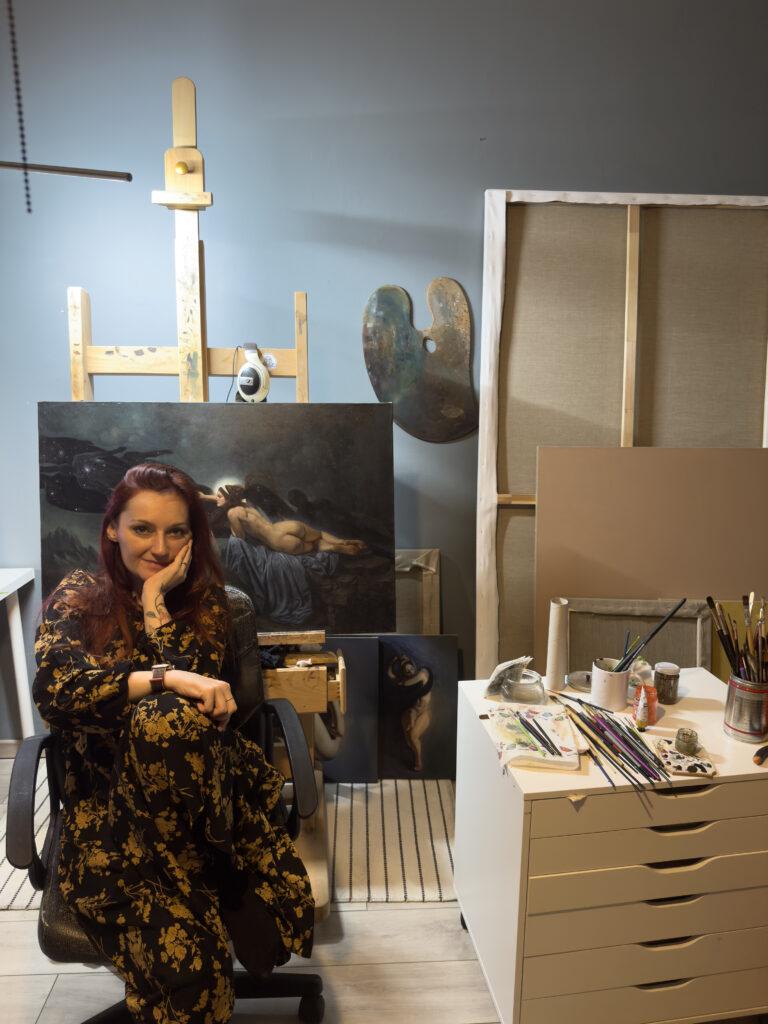
Born in Łódź, Poland, and based in Florence since the age of nine, Ania built her artistic practice through pure dedication. She did not come from a creative family, nor did she attend a traditional art academy.
Instead, she learned the way many great artists do—by becoming completely absorbed in drawing. What started with childhood sketches and an obsession with Sailor Moon eventually grew into a lifelong commitment to painting and self-discovery.
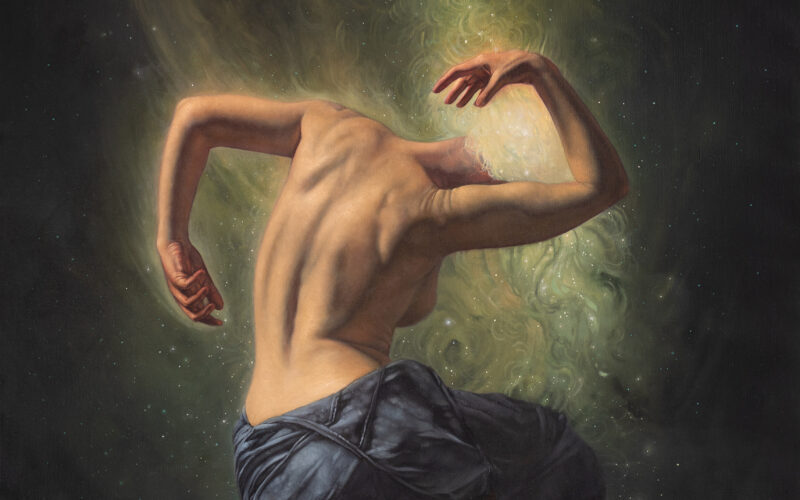
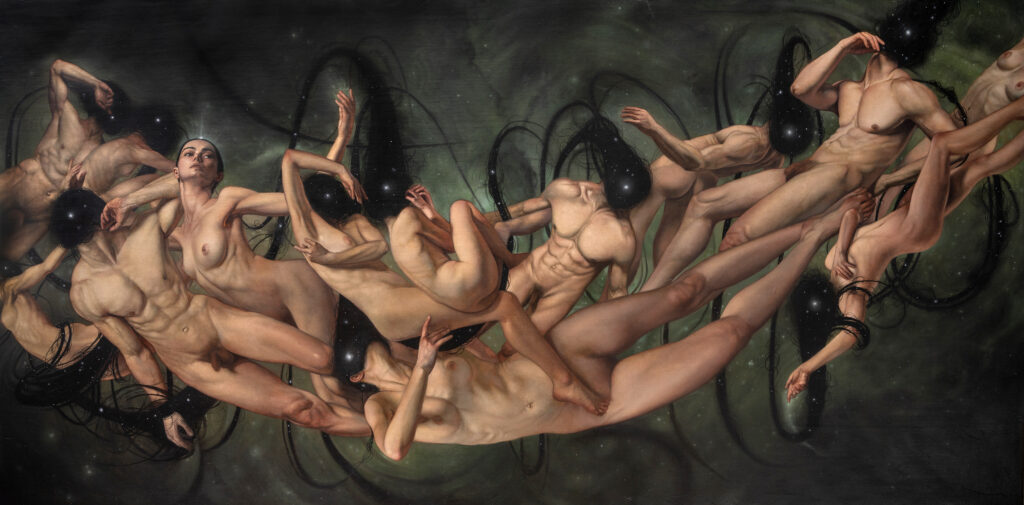
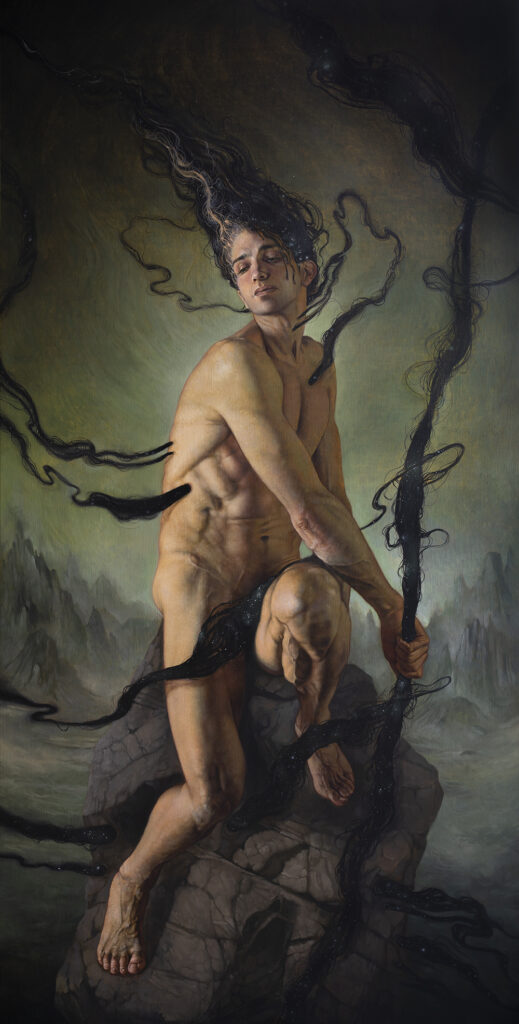
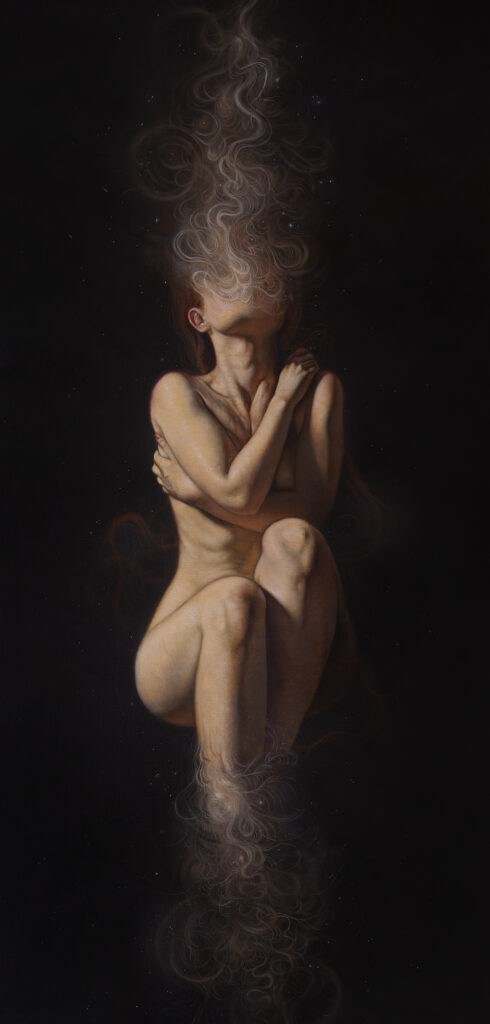
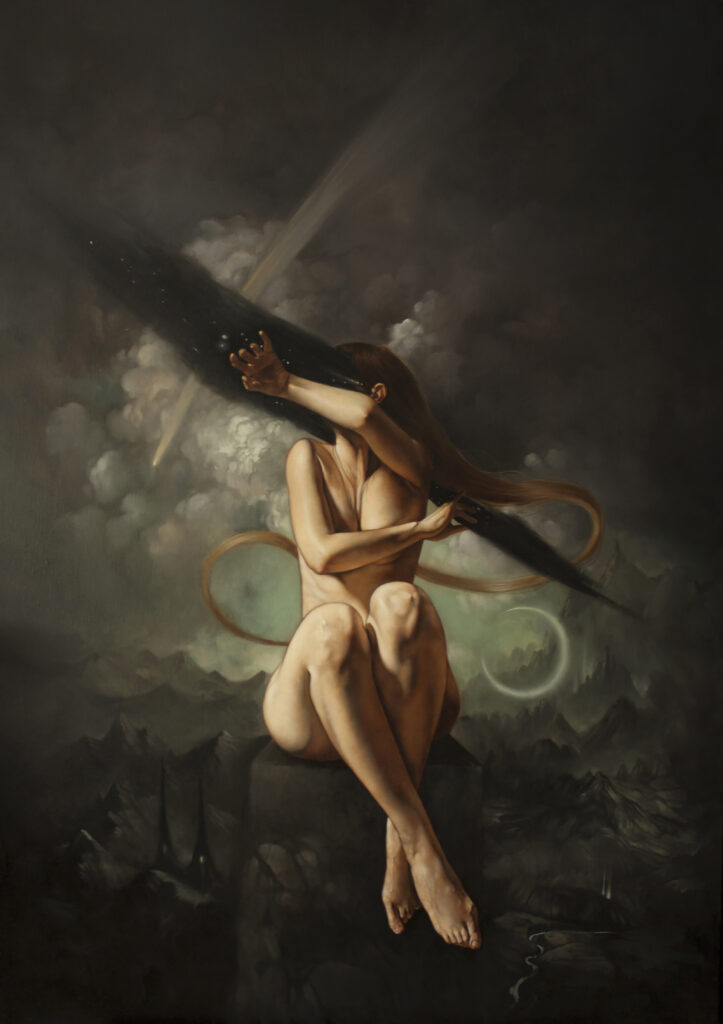
Today, Ania creates striking figurative works that feel both intimate and unsettling. Her faceless women seem to drift between presence and absence, carrying questions about identity, transformation, and the parts of ourselves that are constantly changing.
Working in oil, she combines technical precision with emotional depth, creating paintings that linger in the viewer’s mind long after they have looked away.
It is this ability to pair masterful craftsmanship with deeply personal storytelling that makes her work stand out. Her paintings invite us into uncertain spaces, asking us to sit with ambiguity rather than search for easy answers..
Let’s get to know Ania through our conversation with her, where she talks about self-taught beginnings, faceless figures, artistic obsession, and the ongoing search for identity that lies at the heart of her work.
Q1. Can you share a little about your journey and when drawing became more than just a childhood pastime for you?
It’s true, as a child, drawing was mostly an excuse to stay up a little later. But gradually I noticed I was getting better, and that awareness gave me the push to keep going. The satisfaction of improving did the rest: it was the first seed of an artistic identity.
Q2. Moving from Poland to Italy at such a young age must have been transformative, how did that experience shape you as an artist?
Moving so young helped me adapt quickly and learn Italian almost without realising it. I’m not sure the cultural shift really shaped my artistic path, or maybe I was simply too young to notice. The real turning point was something else entirely: the first time Sailor Moon aired on TV. I loved it so much that from that moment on I did nothing but draw her, obsessively, and without meaning to, my skills improved enormously.
Q3. You’ve said you can feel the phantoms of great masters in Florence yelling “work harder.” Is that history a gift or a weight?
For me it’s absolutely a gift. Being able to study such extraordinary works in person is a rare privilege. The more I look at them, the more I want to paint. What has always struck me most are the studies by twentieth-century masters at Palazzo Pitti. There’s something unique about seeing a work in person: you understand the structure, you read the technique, you feel the gesture. No reproduction comes close. Those “phantoms” you mention don’t weigh on me, they push me forward.
Q4. Your faceless figures have become a signature part of your work has their meaning evolved over time, or do they still hold the same personal significance?
There’s definitely something autobiographical in them. I am always searching for my own identity, and I think all of us are. That’s why I hope each person who looks at my paintings finds something personal in them. For me, painting faceless figures is also a way of evoking something larger: the mind wandering through dark and unknown spaces.
Q5. Figures in your work often seem to transform does that come from personal experience or emerge through the process?
I discover it as I go. Every painting seems to have a will of its own, and that’s why I don’t work from detailed studies. I start with just an initial idea, knowing it will develop on its own in unexpected ways.
Q6. Oil became your favourite medium early on, what does it allow you to express that other mediums don’t?
The complete control I can achieve with oil is something unmatched. The slow drying times allow me to keep working and reworking. I can blend and build those soft transitions between light and dark that are at the heart of my work. And then there’s the depth of the pigments, a richness no other medium can give.
Q7. You created Ciccetto this little pointy-eared creature who sneaks dark thoughts into your mind. Where did he come from?
Ciccetto belongs to the past now, but yes, he was the representation of that dark side that lives in all of us. And honestly, I just liked him.
Q8. Has a painting ever shown you something about yourself you didn’t want to see?
Some paintings have probably shown me how afraid I am of revealing my true identity, or perhaps simply of discovering it myself.
Q9. You named a painting Ghost of the Navigator after listening to Iron Maiden on loop. How much does music shape what ends up on the canvas?
Most of my painting titles come from songs that feel like they capture the mood of the work. Music is very important to me and one of my great passions is going to live concerts. Sometimes a song can inspire a painting, but most of the time it’s simply company that keeps my energy up while I work.
Q10. Your work blends classical technique with surreal imagery so seamlessly how do you honor tradition while still creating something uniquely your own?
For me, technique is completely at the service of vision. In fact, it’s precisely technique that gives you freedom: the more you master it, the more you can go wherever you want.
Q11. The women in your paintings are often caught in moments of transformation who are they to you, and where do they come from?
These women definitely reflect something of me, in their vulnerability and transformation. But I don’t think of my figures as tied to anything concrete. They are the vehicle for an idea, and I prefer to leave it open.
Q12. Pop surrealism often exists outside the traditional art world does that distance feel limiting or liberating to you?
Actually, I no longer identify with pop surrealism. I prefer to define my work as magical realism. But when I was part of that movement, it gave me a great deal of freedom and allowed me to take part in incredible group shows around the world.

Q13. Your work balances realism with mystery, has painting helped you find answers, or embrace uncertainty?
I’ve come to understand that uncertainty will always be part of my life. My work has helped me accept that.
Q14. Hidden emotions and inner complexity are recurring themes in your work why do you think we’re so drawn to what exists beneath the surface?
Because we sense the complexity of being human, and an innate curiosity pushes us to explore the depths of emotions and what lies beneath. That’s why I’m not particularly drawn to polished online personas: I prefer authenticity and directness, as I think most of us do.
Q15. Social media helped bring attention to your work early on, do you think visibility and creative success are the same thing?
In today’s world, I think visibility is a fundamental part of an artist’s work. But I don’t think it fully defines creative success. That depends a lot on what each of us means by it.
Q16. You once said you wanted to learn “everything about everything” in art does curiosity still drive your practice today?
Absolutely! But I’ve had to scale back, because most of the time it risks becoming a distraction. There are so many things I want to do and learn that I’ve had to accept I can’t do everything.
Q17. If you could speak to your younger self arriving in Italy and finding comfort in drawing, what would you tell her?
Draw more, you have plenty of free time!
As our conversation with Ania drew to a close, one thing stayed with us more than anything else. She said that uncertainty will always be part of her life. And that her work has helped her accept that.
That is not a small thing to arrive at. And it is not something most people ever fully manage.
We live in a world that is obsessed with certainty. With knowing where you are going, who you are, what you stand for. With presenting a clean and resolved version of yourself at all times.
And Ania is doing the opposite painting figures with no faces, bodies mid-dissolution, women caught in the act of becoming something they have not yet become. Not because she is being provocative. But because that is the most honest thing she can paint. Because that is what being alive actually feels like underneath the performance of having it all together.
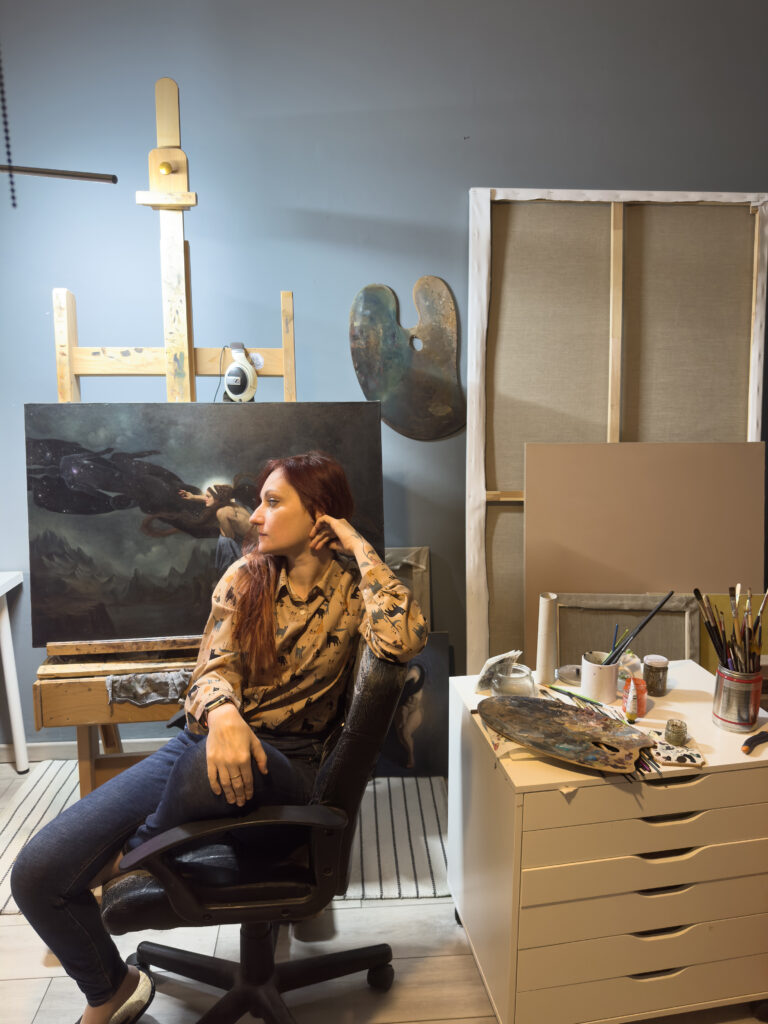
There is something deeply generous about that honesty. Because every person who stands in front of one of her paintings and feels something that particular feeling of being seen in your own uncertainty, your own searching, your own incompleteness gets to feel a little less alone in it. And that, we think, is one of the most meaningful things arts can do.
For those who collect work that carries genuine emotional depth that reaches something private and real and rarely spoken Ania’s paintings offer exactly that. Work that does not flatter or comfort but that holds something true. The kind you keep returning to because it keeps reflecting something back at you that you were not entirely ready to see.
She has been searching for herself through paint for decades. And the work that has come from that search is extraordinary.
Follow Ania Tomicka through the links below. Her work has a way of finding exactly what you were not looking for.