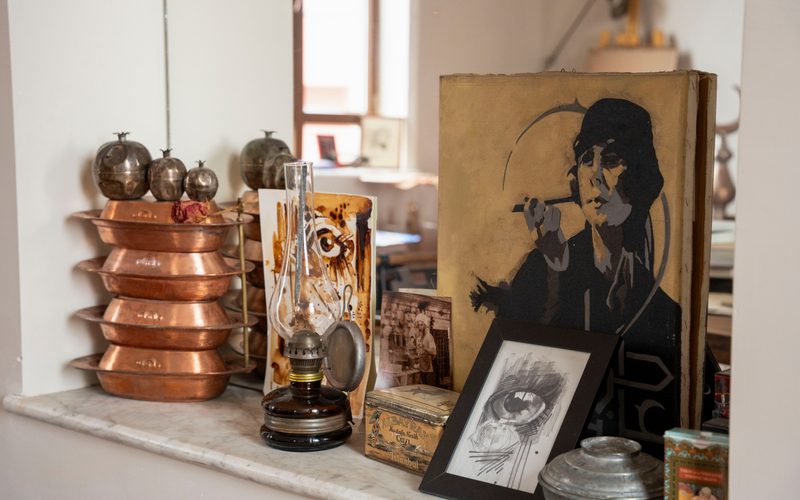

Przemysław Olczak Paints What It Feels Like to Be a Stranger in Your Own World
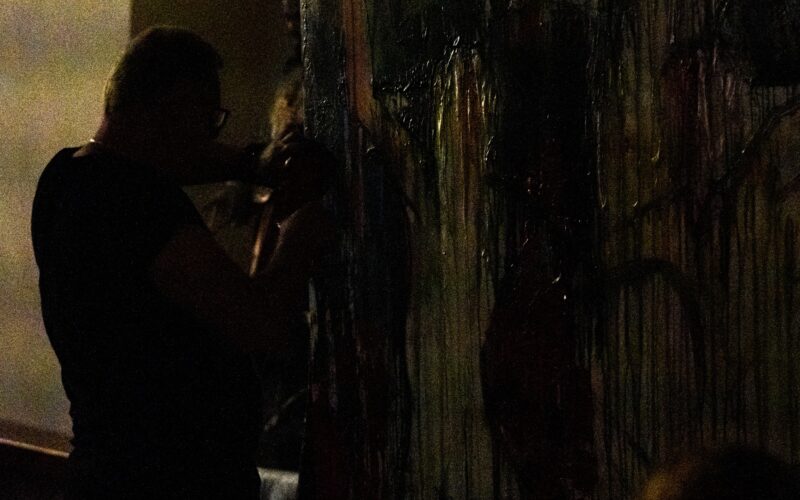
At Arts to Hearts Project, every edition of The Great Book of Art Makers celebrates not only the art, but the maker, their history, their sensibility, and the world they carry within. This second edition gathers 100 such artists from around the globe in a beautifully made collectible book, and one of them is Przemysław Olczak, a Polish painter who treats himself as a filter through which reality flows, transforming it into something intimate and entirely his own.
Przemysław grew up in a historic Polish city, in a home where the past was always present, around a table full of books, history, and literature, and where theatre, with all its magic and emotion, shaped his young imagination.
Long before he dared to call himself an artist, he sensed that an image could say what language could not, that it could speak through silence, colour, and form, and reach places words never quite touch. That belief became the foundation of his entire practice.
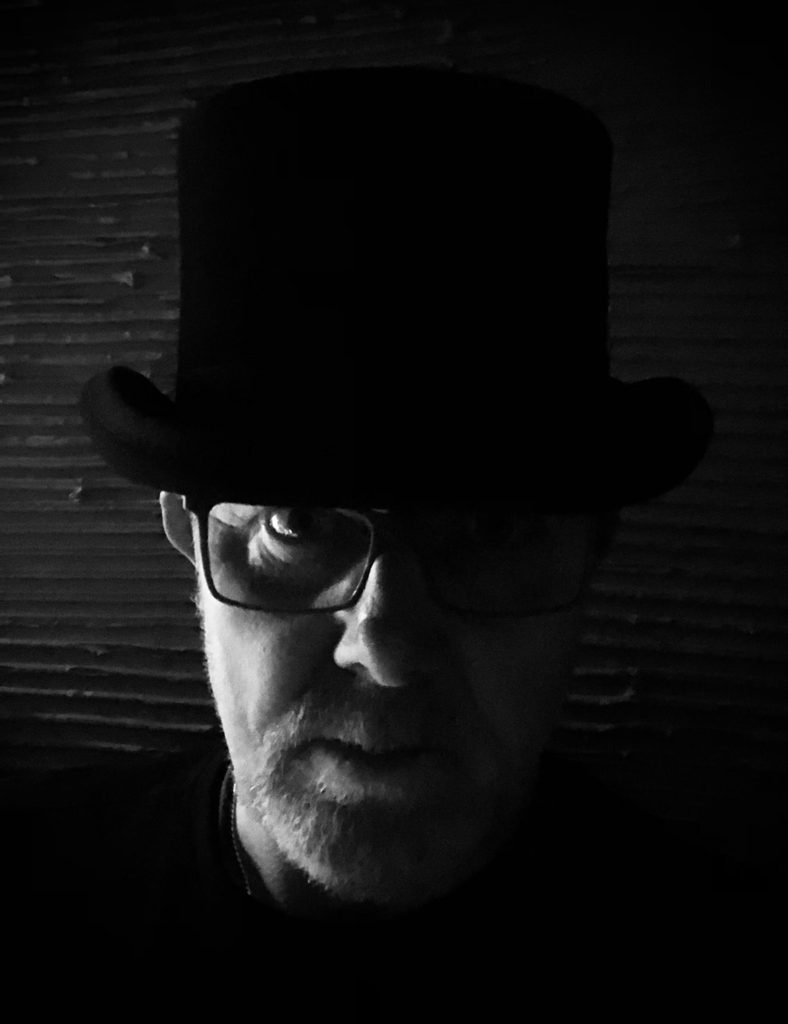
He does not paint the world as it looks, but as it feels once it has passed through him. Experiences, emotions, and fleeting impressions mix within him with memory and sensitivity, and settle into something entirely his own.
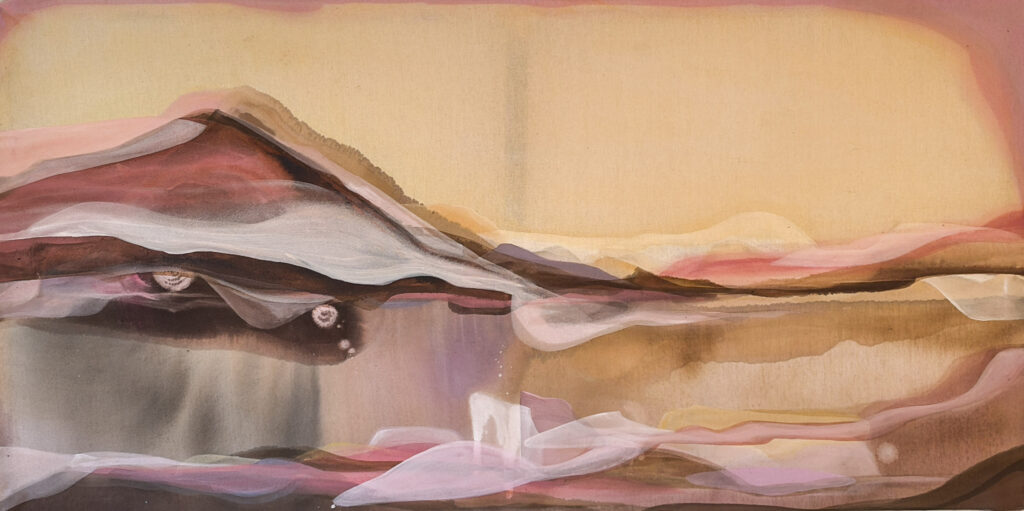
Working from a language of simplified signs, forms, and colour, he tries to lead the viewer gently through the spaces of the subconscious, into a world of desire and emotion. In his paintings, he often says, you see the form first, and only then begin to discover the meaning beneath it.
Those themes run deep in his work. He paints memory not as a faithful record but as an echo, filtered through imagination, an attempt to hold onto something fleeting before it slips away. He explores the strange loneliness of feeling out of place in a familiar world, and the masks of politeness we all wear, presenting our best selves even when it means hiding who we truly are.
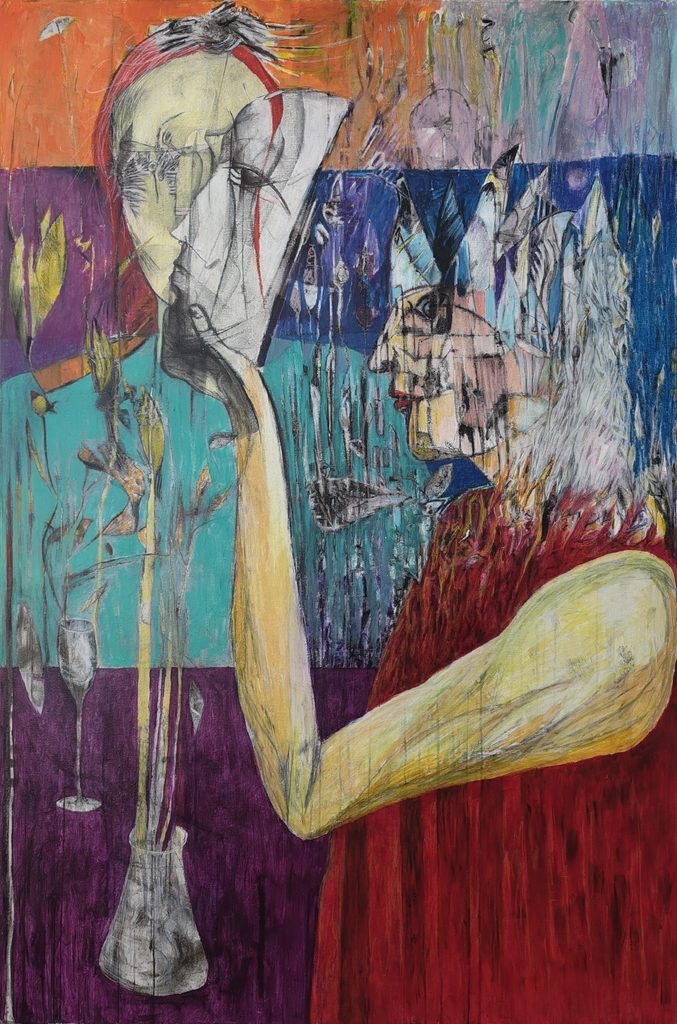
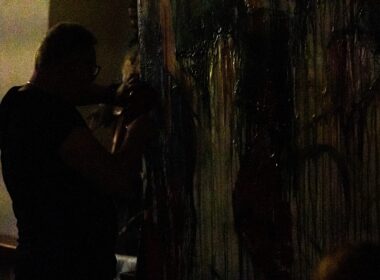
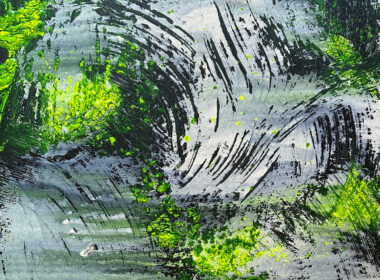
His process is as intuitive as his subjects. He has combined techniques for as long as he can remember, working with acrylic, pastel, pencil, charcoal, his own hands, and even random objects, mixing, rubbing, and scratching, pushing each material to the very limits of what it can do.
He often reaches for whatever feels right in the moment, guided by impulse and spontaneous gesture, and he is fascinated by the tensions and harmonies that emerge when different materials, each with its own texture and character, are allowed to meet and speak to one another. In his hands, chance is never mere coincidence; it becomes part of the work’s creative necessity, and the materials themselves seem to find their own voice.
Now let’s hear from Przemysław about painting the inner world, how memory and masks shape his work, why he lets his materials lead the way, and what it means for a painting to find a new life in someone else’s.
Q1. Przemysław, could you share a little about your background and how your journey as an artist began?
My journey as an artist began long before I dared to call myself one. I grew up in a historic city and its surroundings, in a home where tradition was a living story and the past always had a place at our everyday table. From an early age, I was surrounded by books and conversations about history and literature, words that opened doors to other worlds.
Theatre held a special place in my heart, its magic, emotions, and unique atmosphere. Frequent visits to performances and my own participation in theatrical productions gradually shaped my artistic sensitivity. It was there that the desire to create, explore, and tell my own stories first began to blossom.
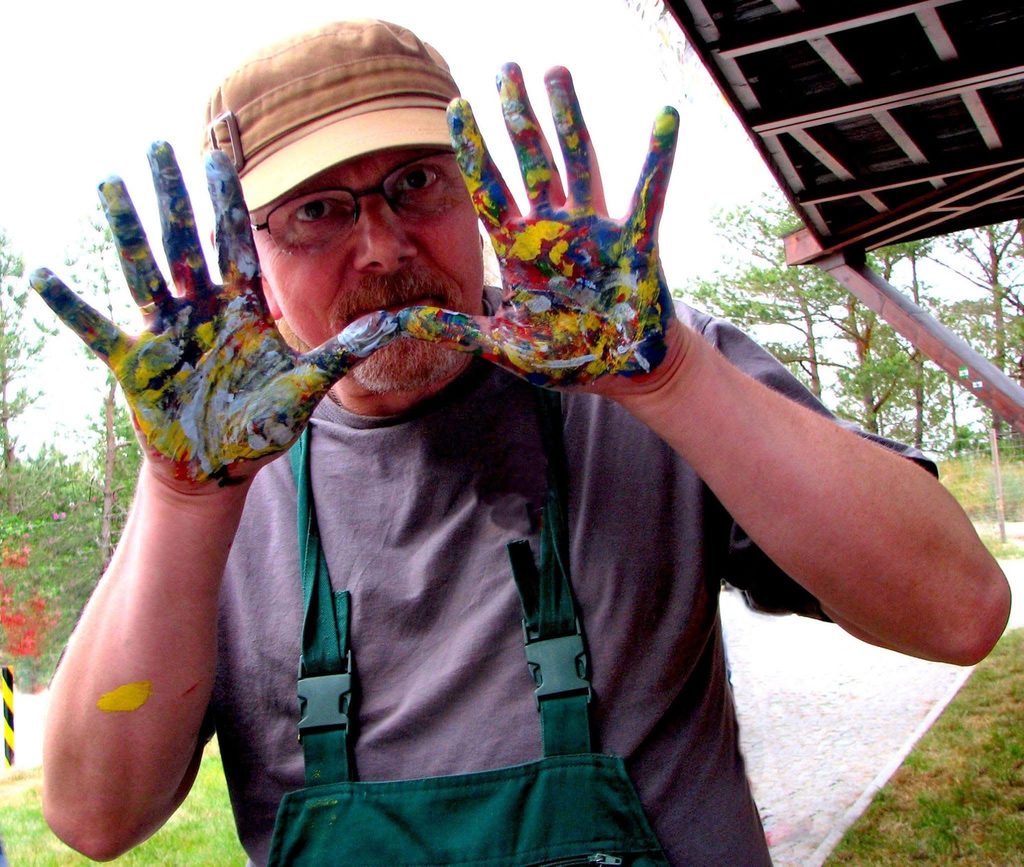
Q2. You describe art as a language beyond words. When did you realise painting could communicate emotions in this way?
I believe this awareness first emerged in my childhood, although at the time, I did not yet have the words to describe it. I grew up in a home filled with books, historical volumes, and art albums. They opened doors to worlds I had never known, yet somehow felt deeply connected to. Childhood curiosity and imagination became the catalysts for my artistic sensitivity. Illustration, symbol, sign each carried a story that reached beyond its literal meaning.
Over time, I came to understand that an image needs no translation to evoke emotion. It can speak through silence, colour, and form, reaching places where words cannot always enter. In this discovery, I found the beginnings of my own artistic language one that I continue to explore and develop.
Q3. Your paintings often feel like fragments of an inner world. What draws you to exploring these less tangible experiences?
As an artist, I am a kind of filter through which reality flows. Experiences, emotions, and fleeting impressions leave their traces within me, intertwining with memory and sensitivity.
What settles in my inner world becomes an inseparable part of who I am. A painting, therefore, is not so much a reflection of the world as its personal, intimate transformation into the language of art.
Q4. Your work Memories explores the way we hold on to the past. How do personal memories and recurring images shape your compositions?
Memories flow in an endless stream, beyond our control, like a river carrying images of moments long past. We cannot stop its course, but we can attempt to capture fragments of it, giving them new meanings. It is a subtle and demanding art in which memory becomes a space for creative interpretation. Images of the past do not exist in isolation they intertwine, connected through associations, emotions, and unexpected similarities.
Time blurs their outlines, yet simultaneously reveals hidden meanings. In my painting, memory is not a faithful record of reality, but rather its echo, filtered through imagination. Each composition becomes an attempt to preserve something fleeting, something that lingers between memory and oblivion, between silence and an inner voice.
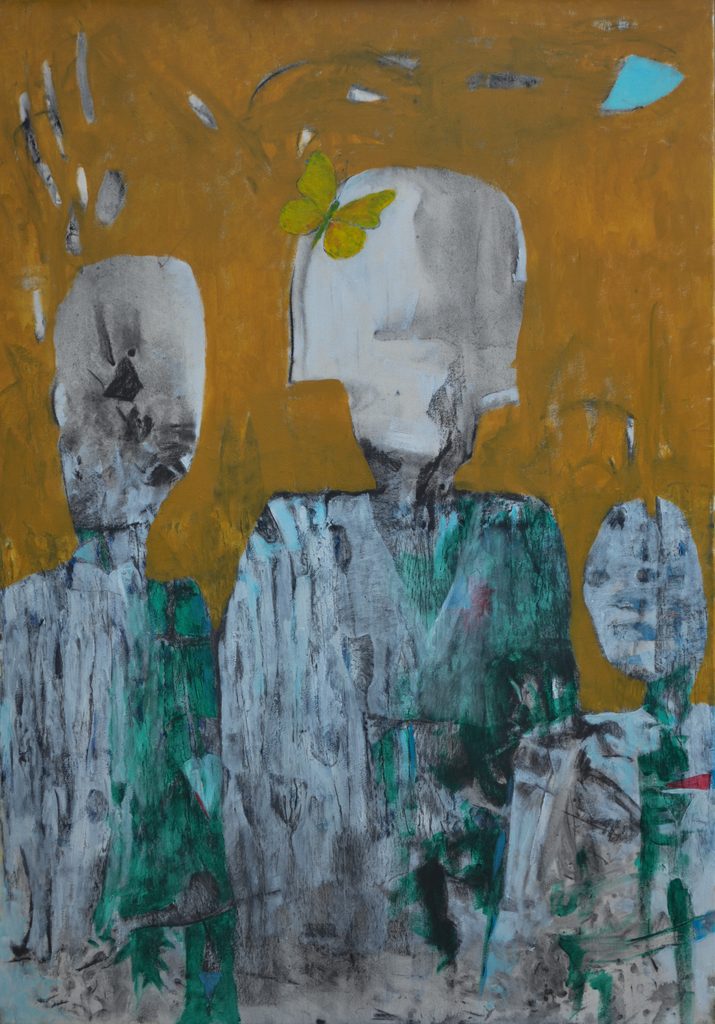
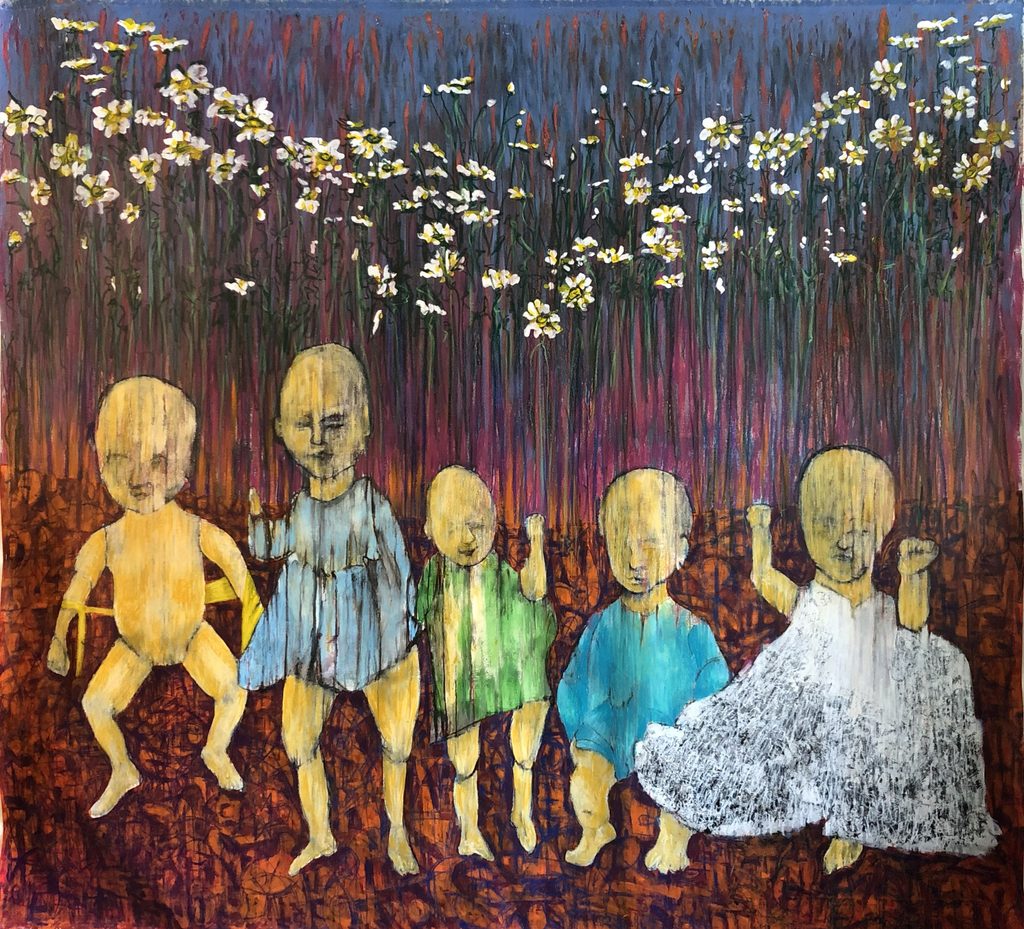
Q5. Monachopsis explores the feeling of not belonging. What drew you to this idea, and how did you translate it visually?
Monachopsis explores the subtle feeling of not belonging, of being a stranger in a seemingly familiar world. We all wear masks that conceal our inner demons — fears, contradictions, and unspoken desires. I am fascinated by the paradox of longing for connection while remaining isolated within ourselves.
Through this painting, I seek to capture the fragile boundary between our true identity and the roles we play. For me, Monachopsis reflects a profound loneliness — not born from the absence of others, but from the struggle to find our place among them.
Q6. You work with acrylic and mixed media. What happens when different materials come together on the same surface?
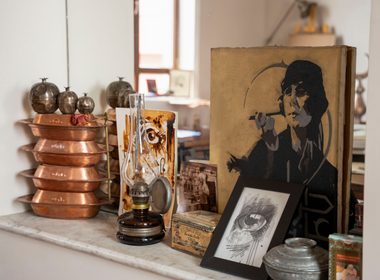
I have been combining different techniques for as long as I can remember. In my studio, materials coexist, waiting for the moment when they become part of a story. My choices are not always conscious often, they are guided by impulse, intuition, or a spontaneous gesture. I simply reach out and pick up whatever feels right at that moment.
I am fascinated by the unpredictability of different materials coming together, their interactions, tensions, and harmonies. Each material carries its own memory, texture, and character. By allowing them to engage in a dialogue, I discover possibilities I could never have anticipated. In this process, chance ceases to be mere coincidence and becomes part of a creative necessity, while matter itself finds its own voice.
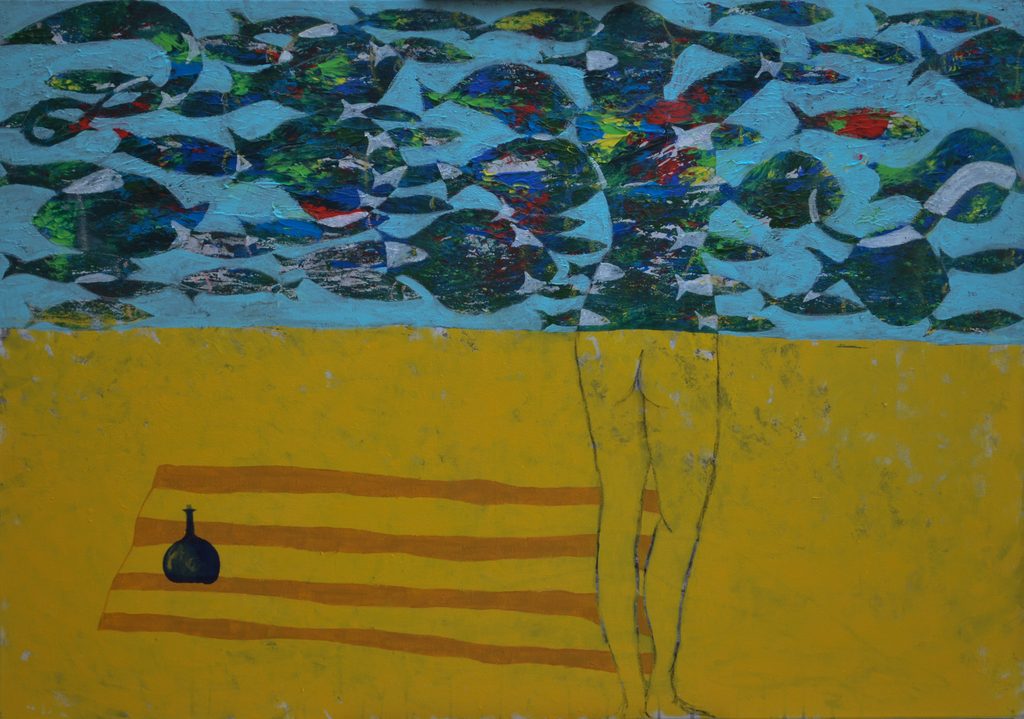
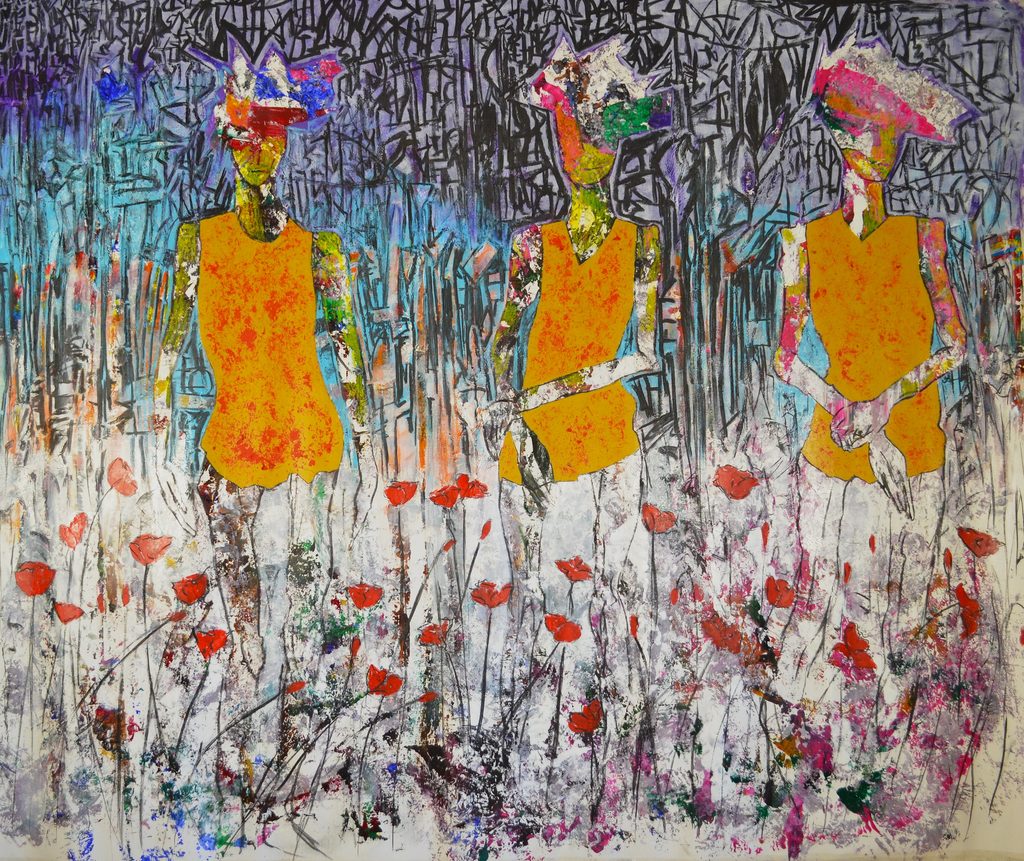
Q7. Guests raises ideas about presence and the roles we play. What interests you about exploring these themes through painting?
We are all merely guests in space, in time, and in the lives of others. Our presence is fleeting, yet we constantly strive to leave a trace behind. We arrive wearing masks of politeness, trying to present the best versions of ourselves, even when it means denying our true nature. Because it is what is expected of us, because it is what society demands.
I am fascinated by this subtle interplay between authenticity and social ritual, between the desire to be seen and the fear of revealing who we truly are. In my painting Guests, I seek to capture the paradox of presence we are here only for a moment, yet we behave as though we were meant to stay forever.
Q8. You hope your paintings become part of people’s everyday lives. What does it mean to you when someone chooses to live with your work?
It is a particular honour for me to know that my artistic message becomes meaningful to someone, that it finds a place in their world.
I believe in the idea of the open work of art, whose meaning does not end with the artist’s final gesture.
A painting that leaves my studio begins a new life, enriched by the viewer’s perspective, emotions, and experiences. It is the viewer who becomes the final piece of the story, giving the work a meaning I may never have imagined. I am fascinated by this transformation — the moment when a personal narrative ceases to belong solely to me and becomes part of someone else’s everyday life, memory, and sensibility, acquiring new and unexpected meanings.
Q9. How do you feel when a viewer finds a meaning in your work that you hadn’t anticipated?
As an artist, I can only point towards a path that the viewer may choose to follow when entering the world of my art. Yet I cannot know what they will encounter along the way, what emotions will awaken within them, or where their imagination might lead them.
Each person brings their own memories, experiences, and sensitivity to a painting, creating a narrative I could never have anticipated.
I am fascinated by the unpredictability of this encounter between two worlds. Sometimes, another person’s perspective reveals meanings within my work that I had not previously recognised. In those moments, the artwork becomes a space of mutual discovery, where the boundary between artist and viewer begins to dissolve. Perhaps it is precisely in this freedom of interpretation that art finds its deepest truth, continually being born anew.
Q10. Are there emotions or ideas you still hope to find the right visual language to express?
I am convinced that there is still so much within me waiting to find its form and the right moment to emerge. I cannot yet name these things or predict the visual language through which they will speak. And it is precisely this uncertainty that fascinates me most.
For me, creating art is a journey into the unknown, an ongoing dialogue with what lies beyond the boundaries of consciousness.
Sometimes, a painting is born from an intuition, from an emotion that has not yet found its name. I do not seek definitive answers, but rather the possibility of asking new questions. What awaits us? Where will our imagination lead us? Perhaps the most important works are those we cannot yet imagine, but which are already waiting somewhere within us to be discovered.
Q11. What advice would you give artists who are still learning how to translate their inner ideas and emotions into their own visual language?
Never force it. In art, as in life, sometimes we need to let go, allowing our thoughts and emotions to mature at their own pace. This does not mean standing still, but rather finding a different rhythm for the journey. I believe every artist should follow their own path, even when it leads through uncertainty and solitude. It is a difficult journey, requiring patience and courage, yet one that brings profound fulfilment.
Creative freedom is not about the absence of limitations, but about the ability to make our own choices. Only then can an authentic artistic language emerge — not from the need to meet expectations, but from remaining true to oneself. As Modigliani once said: “Your only duty is to save your dreams.”
As our conversation with Przemysław came to an end, his paintings lingered in our minds, honest reminders of the masks we wear and the loneliness they can hide.
This is the quiet territory Przemysław’s work lives in. He paints the feelings most of us carry but seldom speak of, the sense of not quite belonging, the polite faces we present to the world, the loneliness that can exist even in a crowded room.
In an age when so many of us curate a perfect version of ourselves to show others, his honesty feels especially moving. He does not offer easy answers or tidy reassurance; instead, he gives shape to something true and unspoken, and in doing so, he quietly reminds us that we are not alone in feeling it. There is real courage in making art about the parts of being human we usually try to hide.
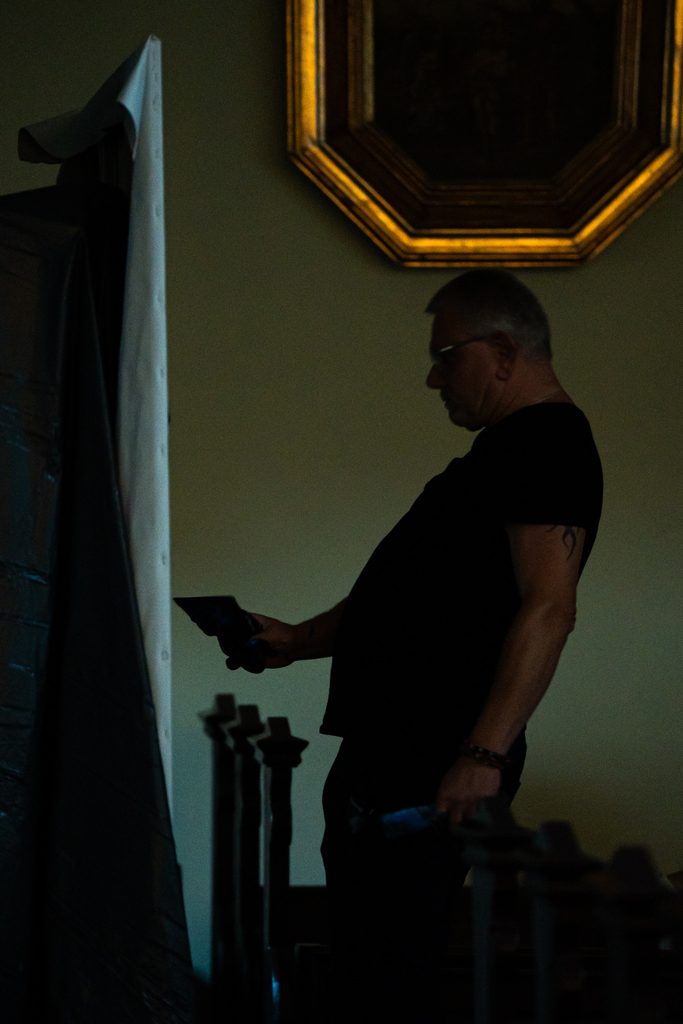
There is something generous, too, in how he thinks about his work once it is finished. Przemysław believes deeply in what he calls the open work of art, the idea that a painting is never fully complete until a viewer brings their own story to it.
The art world often treats meaning as something an artist alone decides and delivers, but he sees it differently, as a conversation, a shared act of discovery where the boundary between artist and viewer gently dissolves. He welcomes interpretations he never intended, and even learns from them. In a culture that likes its answers fixed and final, that openness feels quietly radical, a reminder that the most meaningful art leaves room for us inside it.
For art lovers and collectors, Przemysław’s work brings depth, atmosphere, and real emotional resonance into a space. Layered, mixed-media paintings that hold memory, mystery, and feeling, and that never give themselves away all at once. Different people find different stories in them, and they keep revealing more over time. To live with one of his pieces is to keep a quiet, honest companion on your wall, one that understands the things we cannot always say, and invites you to find your own meaning within it.
Follow Przemysław Olczak through the links below and see his work for yourself.
Calling all women artists. The women Artist Award opens its 7th edition for submissions today, a global celebration of rising creative voices. Paint it, photograph it, sculpt it, stitch it, whatever your medium, wherever you are, we want to see it. If you’ve been waiting for a sign, this is it.