
What If art could change & evolve like nature does? This artist makes it happen │Danielle Mano

At Arts to Hearts Project, we created our Artist of the Year Book because we wanted a place to celebrate artists whose work goes deeper than what you see on the surface. Artists who are not just making objects but building entire ways of thinking through what they make. This is our very first edition and honestly we were very careful about who belongs in it.
We wanted artists whose work makes you rethink what art can be made from, what it can do, and what happens to it after it leaves the studio.
Danielle Mano-Bella is one of our selected artists in this first edition. And we have to be honest, her practice is unlike anything else in the book. Maybe unlike anything else we have come across.
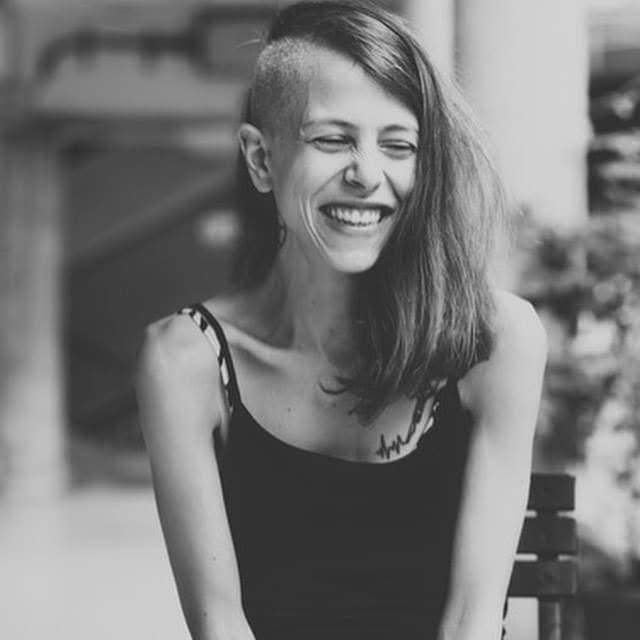
Danielle does not fit into one box. She never has. She started in performing arts, found her way into photography, then sculpture, then site-specific installation. She was already working across disciplines when most artists are still trying to find one. And then something happened in her life that took her practice somewhere none of us would have predicted.
She experienced a rare condition that affected her vision. Rather than limiting her, it led her toward a path she had never imagined. Where that path took her and what she discovered along the way is truly one of the most compelling creative journeys we’ve encountered. We would rather not give too much away, as her own telling captures it far more beautifully.
What we will tell you is this. Her work changes. Physically. Over time. The materials she uses respond to the world around them. Air, water, humidity, temperature. A piece you see today will look different in six months.
Not because something went wrong. Because it was designed to evolve. She is making art that behaves the way living things behave. And once you understand why she does that and what it means to her, everything about her practice clicks into place in a way that gave us chills.

Before any of this she spent years travelling. Documenting people from different cultures and communities. Going to Africa and other countries. Photographing. Sitting with people. Trying to understand what connects us to each other and to the natural world around us. That deep curiosity about human connection and belonging has been there from the very beginning and it still runs through every single thing she makes.
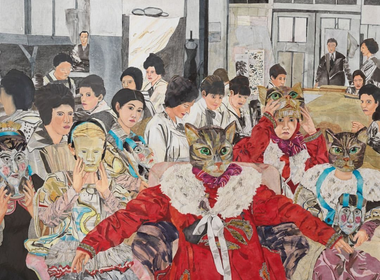
She also does something with photographic archives and collage that we found really compelling. She cuts images apart and puts them back together in new ways. And there is a very specific reason she does that; it connects to something she believes about how memory actually works. But that is her story to tell.
Let’s get to know Danielle through our conversation with her about the illness that changed everything, the material that remembers its own shape, and why she stopped trying to make permanent art and started making art that breathes.
Q1. Can you share your background and how your path across disciplines and materials shaped your current creative language?
I began my journey in the arts through performing arts, which led me to explore visual art, particularly photography. Initially, I was interested in studying different cultures and communities, starting with a trip to Africa and continuing my research in other countries and my own. This exploration allowed me to discover photography as a tool for working with human materials.
However, I always felt something was missing, especially from my interactions with people; I needed a tactile connection with physical materials alongside the human element. I started to take photographs and sculpt from them, working with the paper itself to create site-specific installations that incorporated additional materials, primarily natural substances that underwent industrial processes. A few years ago, I fell ill with a rare disease affecting my vision, which led me to explore genetics extensively.
Through this research, I collaborated with a startup specializing in innovative materials derived from silk for medical purposes. When I saw the materials they were producing, I recognized the potential for collaborative creation and the development of a new technique that would integrate these innovative materials into art. This allowed me to create objects that combine traditional techniques like photography and sculpture with these groundbreaking materials.
Q2. You work across photography, installation, and biotechnological materials. What draws you to working across mediums rather than staying within one?
I really enjoy experimenting with new things, and I strongly believe in the connections between different elements. I see this inspiration in nature, where different species grow side by side and interact with one another. Just like in nature, I believe we always maintain interactions within ourselves when we allow connections and encounters between one another. In the same way in creation, I feel that these interactions between techniques create a space for growth and the rediscovery of things that would remain stagnant without their integration.
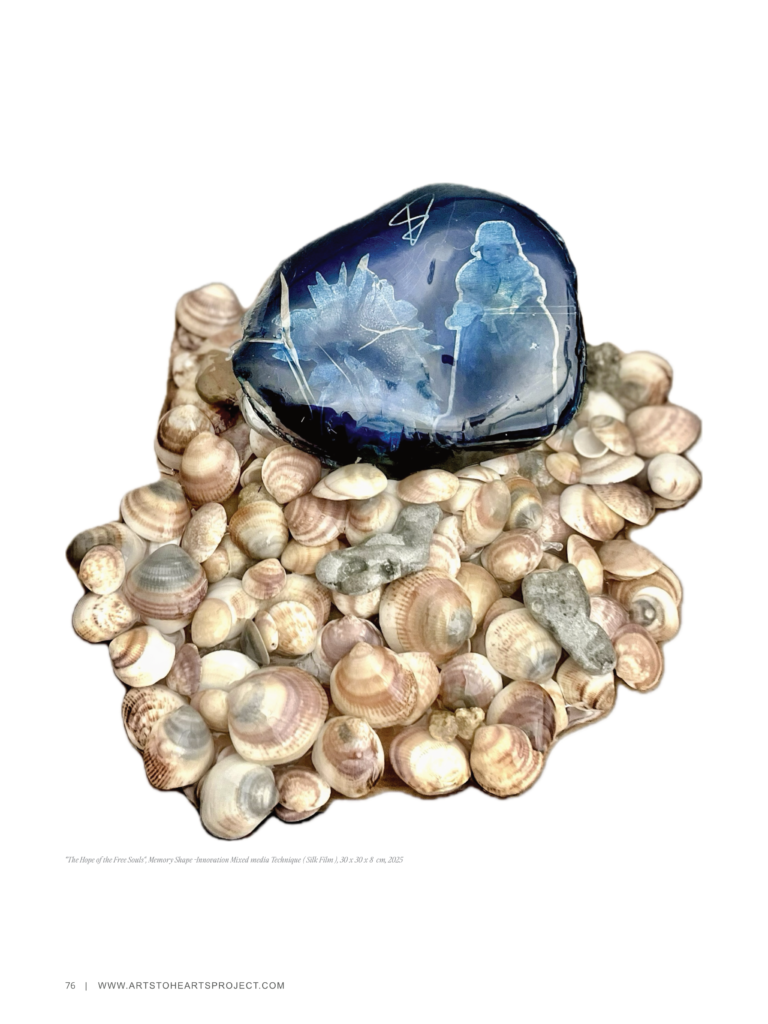
Q3.When did themes of identity, belonging, and the human–nature relationship become central to your practice, and was there a defining moment that shaped them?
Since childhood, I have had a great curiosity about people, primarily to understand them and their various behaviors, alongside a deep love for nature and the animal and plant world, with a desire to know and understand it as well. As I grew older, that curiosity came with the ability to see the connections between the two. I observed how our interactions as humans are influenced by different systems and how nature is also affected by those same systems we are connected to in mutual relationships.
The more fragile our relationships as humanity become, the more nature responds. Wars are a prime example of this; not only do we, as humans, destroy ourselves and experience significant crises instead of growth, but nature also suffers. Entire regions are harmed, air pollution increases, and, worst of all, our connection with one another and with our natural environment nature is damaged.
This concern for our relationships, the hope for a future of growth and peace both within us as humans and with nature as an inseparable part of it, has always existed within each of us, as long as we are ready to connect with ourselves and with others. At least, that’s what I believe; it simply requires an agreement to connect from an authentic place to ourselves and others.
Q4. Your use of biochemical materials allows the work to physically change over time. What interests you about creating works that are not fixed, but continue to evolve?
What draws me so much to the fact that the works are constantly changing is the understanding and feeling that it mirrors the situations in which we never stop evolving whether physically, mentally, emotionally, or spiritually. We are always in motion and change, just as in nature, where change is the only constant and inevitable aspect.

Q6. In your use of photographic archives and collage, does fragmentation reflect memory, perception, or something more psychological?
I operate from the perspective of memory as something that breaks down and is rebuilt, something that changes over time and is heavily influenced by our mental state. The ability to deconstruct various photographs and assemble them into a “new” complete image functions just like how our brain perceives many different moments, preserving them as memories.
However, those memories do not necessarily reflect the exact moment but rather the experience we had at that time. In the same way, collages are a combination of documenting a moment and a changing subjective memory.
Similarly, anyone observing the detailed collages can connect at any moment and notice a completely different documentary detail than what another person might see. This allows for entirely different interpretations, yet everyone is looking at the same image.
Q7. With nature as both subject and process in your work, what can creative practice gain from natural systems that conventional methods cannot?
I feel that even traditional methods share similarities and connections to natural systems. However, many times, as humans, our approach to the processes of forming artistic practice also stems from a desire to cling to control over a very specific outcome—this is especially evident in traditional techniques, which have a clear result and a way to apply them, even though that’s not necessarily correct.
In those methods, that clinging to control doesn’t actually align with how a natural system operates, where everything is constantly dynamic and changing, with change being the only constant.
In my creative process, I adopt the same patterns of action as a natural system and embrace the idea of surrendering to change and discovery without clinging to a specific control or a clear, desired outcome. Rather, discovery and change become the dynamic result that I aim for.
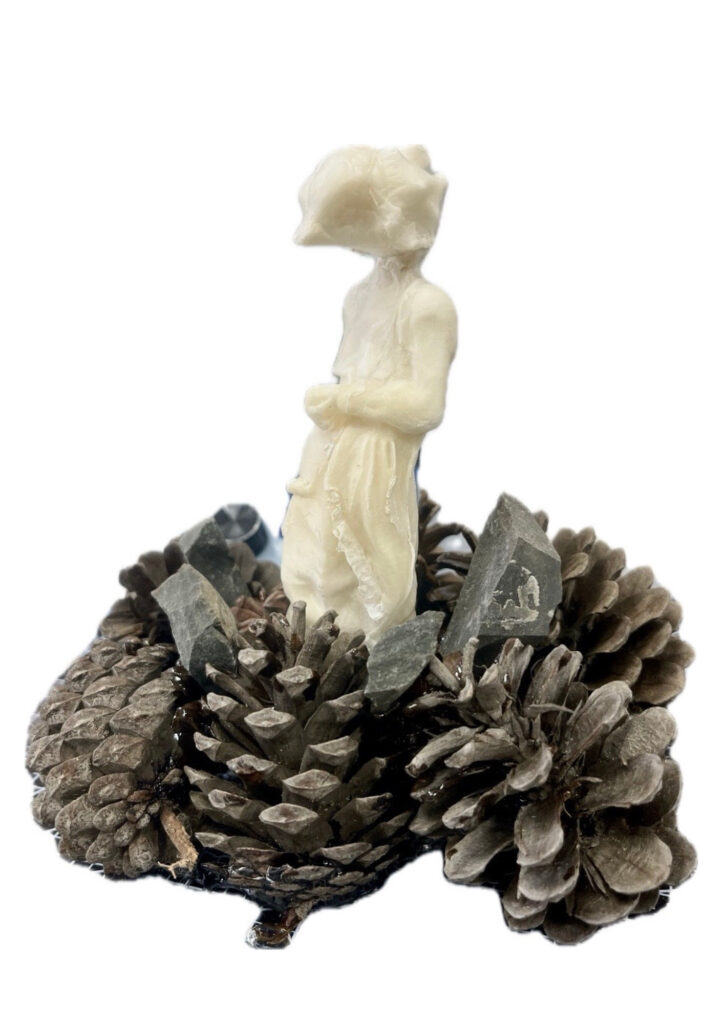
Q8. You’ve documented people across different cultures and communities, how has this shaped the ethical and emotional dimensions of your work?
The more I have explored and gotten to know people, the more I feel that my perception and consciousness are developing. Those connections with individuals from different cultures and communities represent a process of growth and learning for me a broadening and flexibility of thought. I can also say that through this, I have come to recognize how, despite all the cultural and ethical differences, we are all so similar when it comes to our emotional layers, and how we all operate from that place, both consciously and unconsciously.
Q9. You often explore parallels between biological processes and human experience, are materials shaped by air, water, or time metaphors, collaborators, or something else?
I absolutely see them as active partners in the creation, reflecting metaphorically the constant change and the environmental influence on the material, just as it applies to biochemical or natural materials, as well as to our physical and energetic bodies, consciousness, and soul.
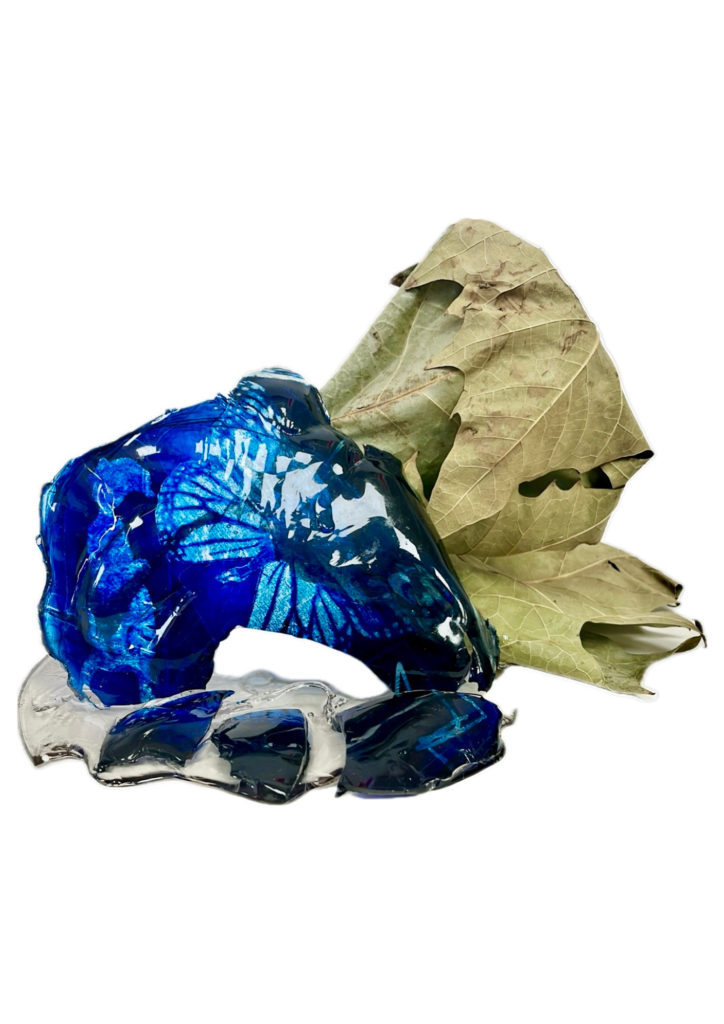
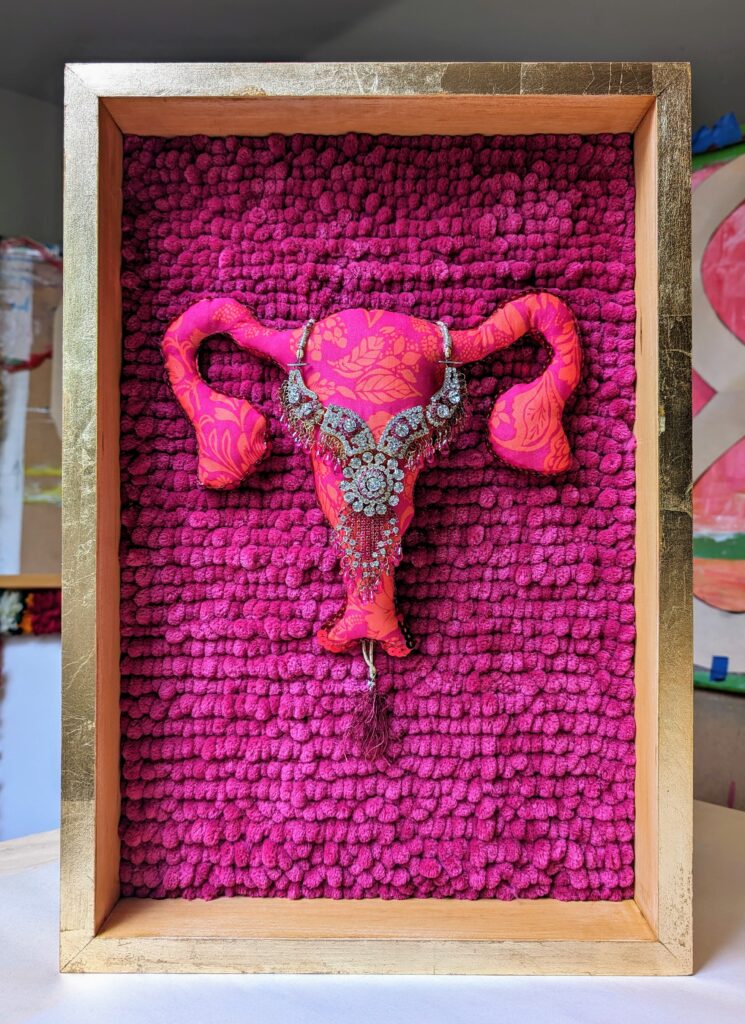
Q10. In Memory Shape, you work with silk-based biomaterials that physically change and “remember” their form. What led you to work with such materials?
These materials clearly reflect the process of environmental influence on the material, as throughout this transformation, there remains a strong connection to the original form of these materials when they return to a humid environment that allows them to regain their softness.
Just like these materials, I believe that the spirit and soul of a person, when they encounter a natural environment, return to a soft state within. This allows for a process of social renewal, both with the familiar environment and with the different one, not from the attachments that have affected them in the past often emotional traumas but from a surrender to their inner energetic memory that constitutes them. This material memory exists in scientific processes, in nature, and in humans.
Q11. Looking back at your earlier work, what do you feel you were searching for then that has become clearer in your recent projects?
In the past, I sought to understand the connection between things and myself ; today, I am in a process of learning about the healing .
Q12. What advice would you offer to artists building a practice across different materials and ideas, especially when the process feels uncertain?
Don’t stop when you encounter uncertainty; on the contrary, keep moving forward. Confidence is never certain; it is internal. Even if you feel afraid, that’s perfectly legitimate—continue to progress, step by step, and things will become clearer and stabilize.
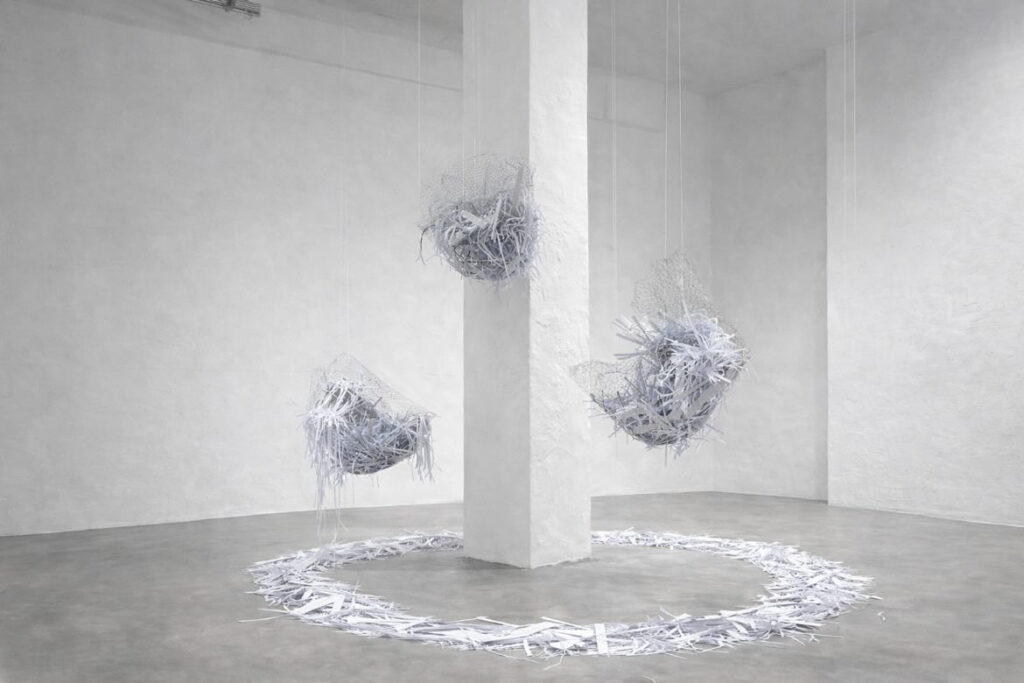
Danielle would like to give credit to Dr. Dror Eliaz, one of the owners of SilkIt startup company, for the ongoing collaboration in creating the technique using innovative biochemical materials in silk.
As our conversation with Danielle came to a close, we walked away thinking about control. And specifically, about letting go of it.
Because that is what Danielle does every single time she makes something. She chooses materials that will change without her permission. She builds work that will look different next month than it does today. She starts processes and then steps back and lets the air and the water and the time do their part.
Most artists want their work to be permanent. To stay exactly how they made it forever. Danielle wants the opposite. She wants her art to be alive. To keep moving after she is done with it. To respond to where it is and what is around it the way a living thing responds.
And honestly that takes a kind of bravery that we do not think gets talked about enough. Giving up control is terrifying for most people. Especially when it is your work. Your name. Your vision. Letting the materials have a say in what the final thing becomes, letting humidity and air and time reshape what you built, that requires a trust in the process that goes beyond technique. It is almost spiritual. And for Danielle it is.
She sees her materials as partners, not tools. The silk-based biomaterials she works with remember their original form. They change and then they return. They harden and then soften again when the conditions are right.
And she connects that directly to how she sees human beings. That we harden too. That life shapes us and sometimes damages us. But when we find the right environment, when we encounter something that allows us to soften again, we can return to something closer to who we actually are underneath everything that happened to us.
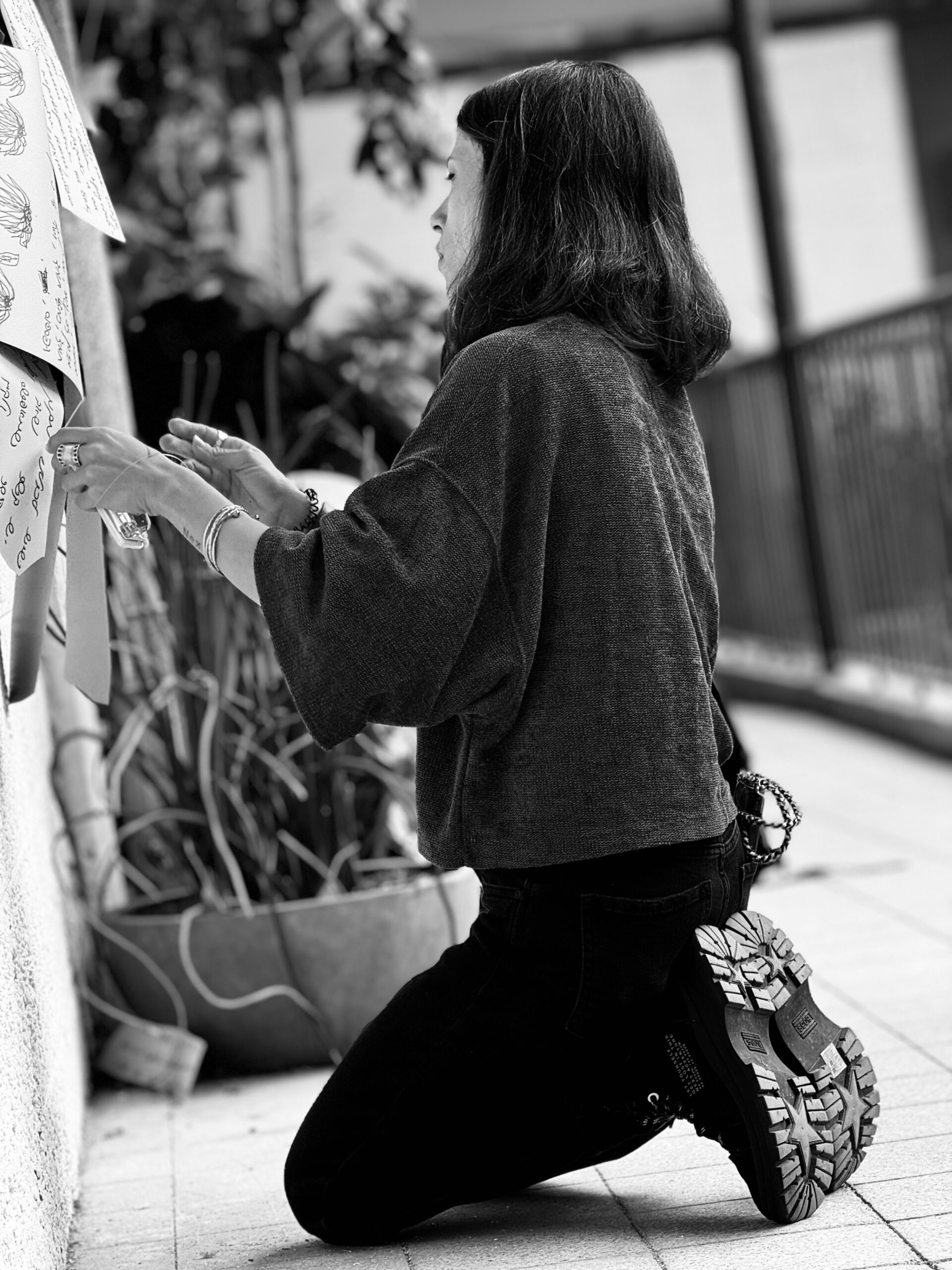
That is not just an art idea. That is a way of understanding what it means to be alive. And her practice holds that understanding in physical form. You can touch it. You can watch it change. You can come back to it a year later and find that it has become something different than what you remember. Just like memory. Just like people.
For anyone collecting or investing in contemporary art that is genuinely pushing boundaries, Danielle is someone to know right now. Her work exists at an intersection that very few artists occupy, between biology and art, between permanence and change, between control and surrender.
The materials she works with are innovative in a scientific sense and the way she uses them is innovative in an artistic sense. Her pieces are not static. They are ongoing processes. And owning one means entering into a relationship with a work that will keep evolving alongside you. That is not just collecting. That is participating in something alive.
Follow Danielle Mano-Bella through the links below and see what happens when an artist stops trying to make things permanent and starts making things that breathe.