
How working for the UN in Malawi brought Kristen Palana back to making fine art

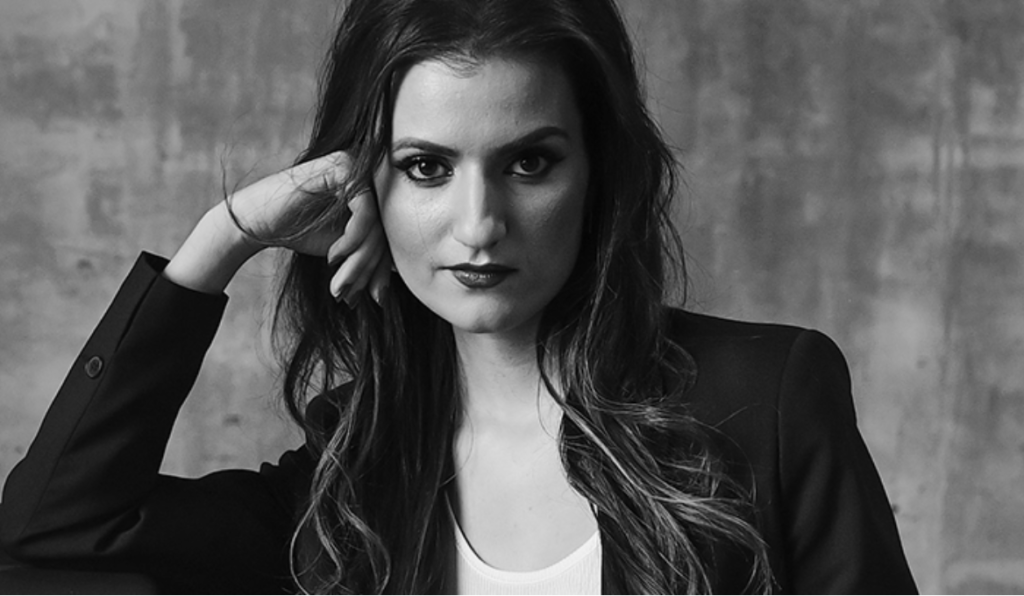
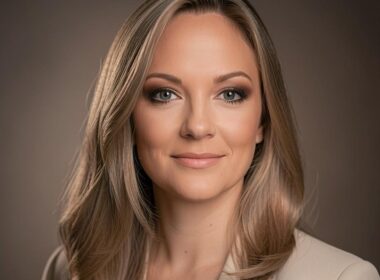
At Arts to Hearts Project, our Artist of the Yearbook was made for artists whose practice cannot be separated from how they have lived. Artists whose work carries the fingerprints of every country they have been to, every person they have sat with, every version of themselves they have been and left behind. Kristen Palana is one of our selected artists and honestly her life reads like five different lifetimes compressed into one.
Kristen grew up in a small town in Massachusetts. The kind of place where the world felt far away and the only window to it was a television screen. But even as a kid she had this feeling that what happened to people on the other side of the world was connected to her. That we are all linked at some level that most people do not talk about. That feeling never left her. It just kept growing and eventually it took her everywhere.
She has lived in Boston, Los Angeles, Dublin, New York, Rome, Myanmar, and Malawi. She has worked with the United Nations, UNICEF, WHO. She has taught at universities across continents. She has raised children in countries most people cannot find on a map. And through all of it she has been making art.
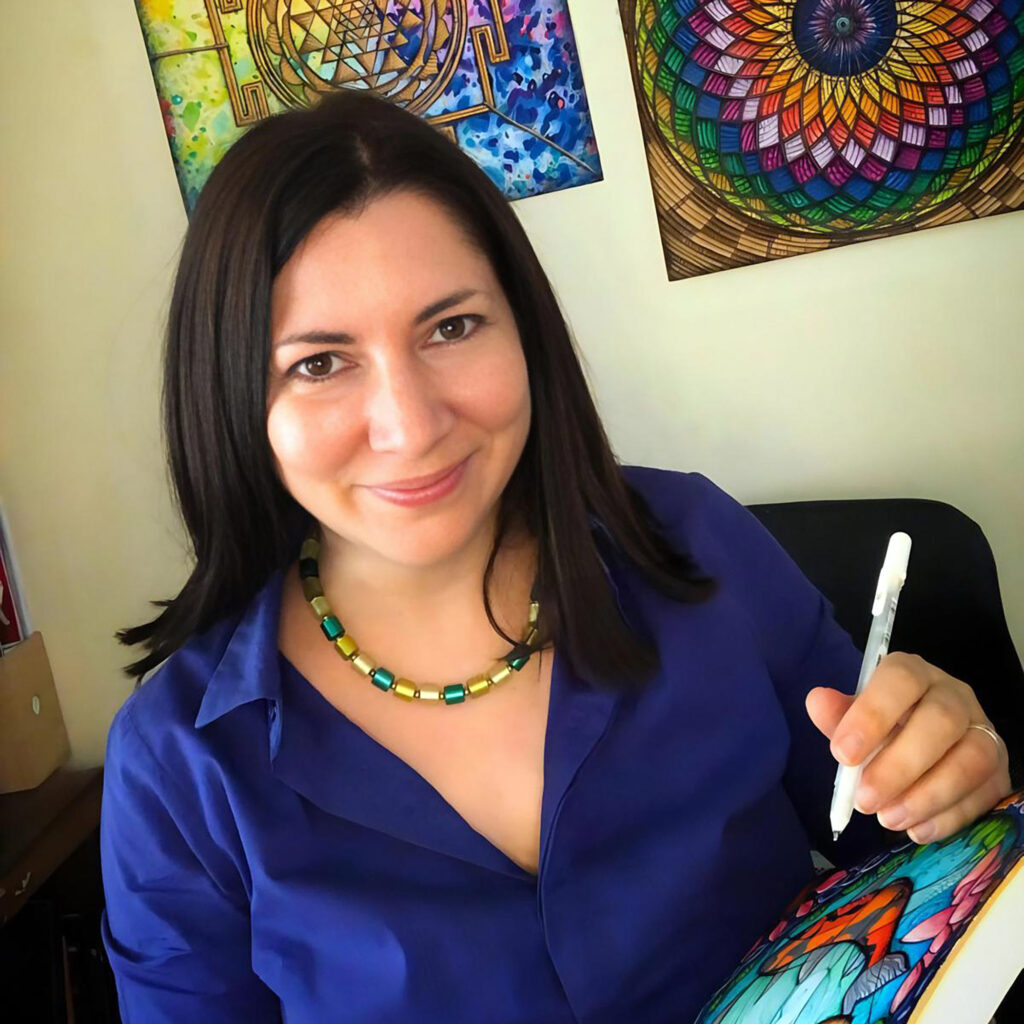
Sometimes in the foreground of her life and sometimes pushed to the edges by responsibilities and admin work and just the daily reality of keeping everything running. But it never fully stopped.
And here is what is interesting about where she has landed now. After all those years and all those places and all those roles, she came back to Rome and finally found the balance she had been looking for her whole career. Self-employed artist, university teacher, consultant. Everything in its place.
And the art she is making now is completely different from what she made in her twenties. Back then her work was dark and disturbing and pointed at everything wrong with the world.
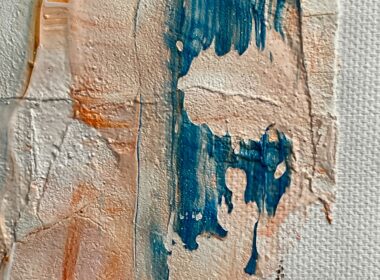
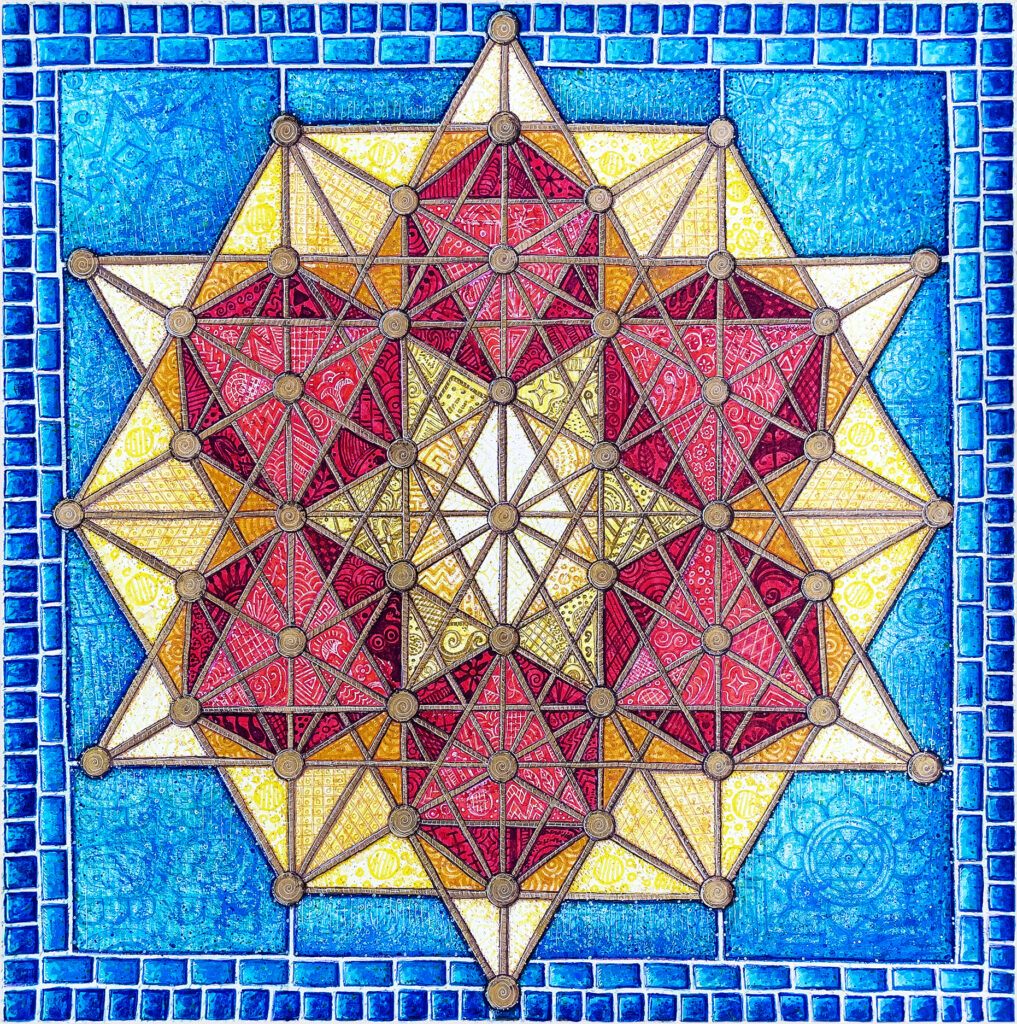
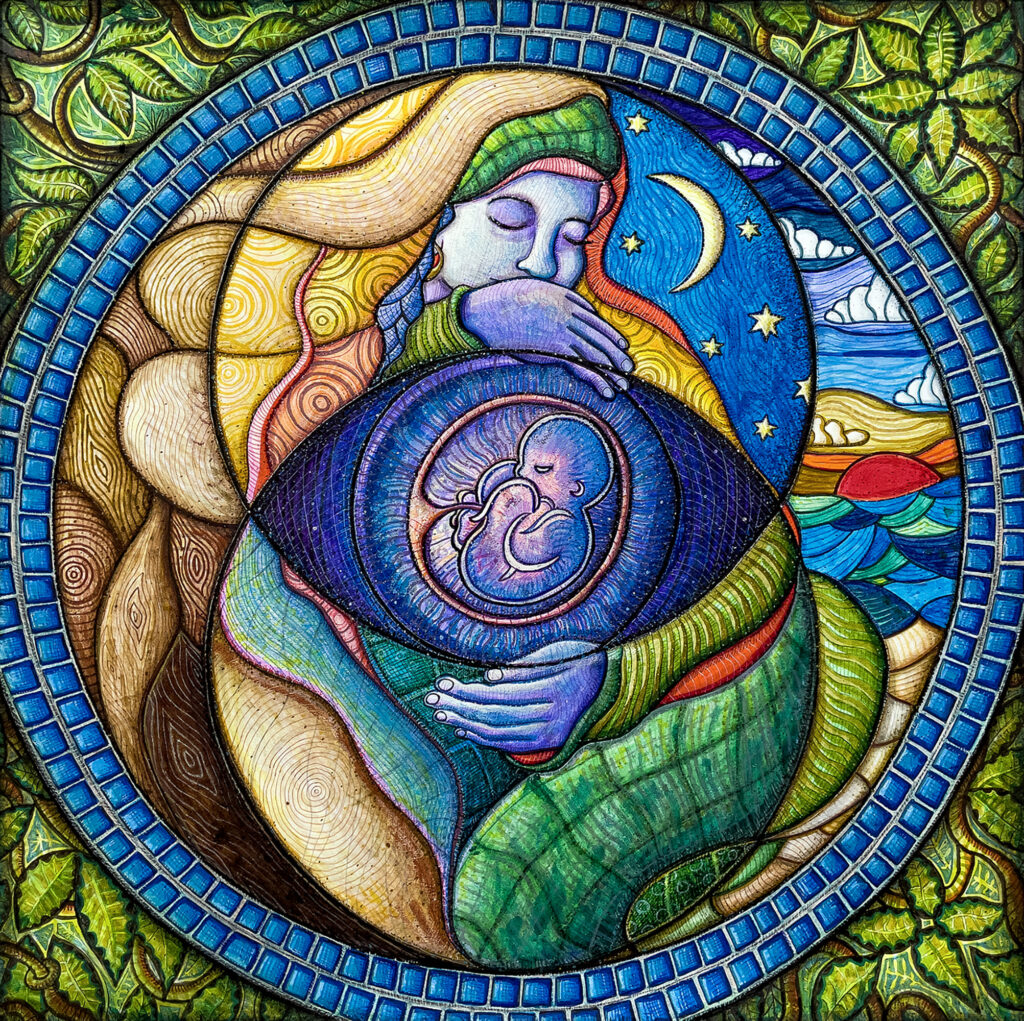
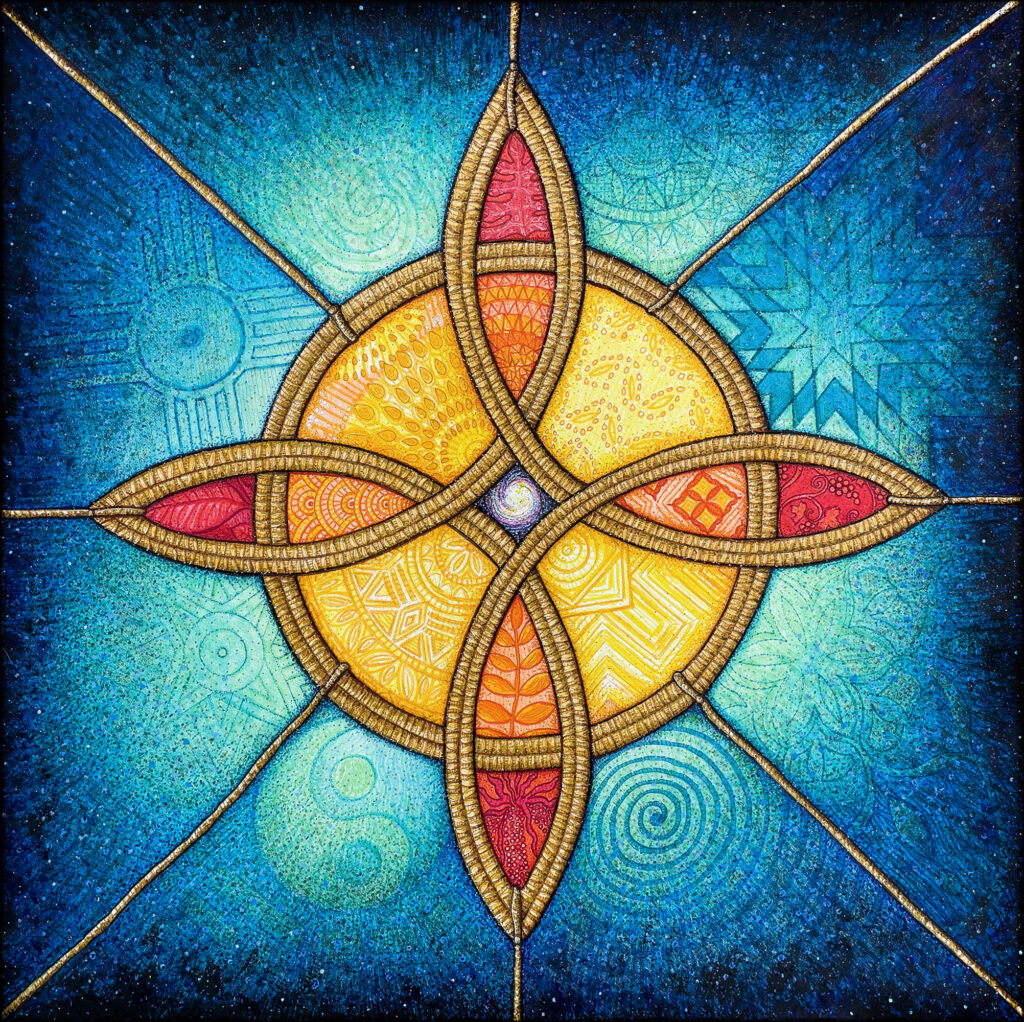
Now it is deliberately optimistic and healing and focused on something she calls impossible gifts, things like calm and strength and protection and abundance that you cannot buy in a store.
What changed inside her and why she made that shift is something she talks about in the interview and it is one of those answers that makes you rethink your own relationship with what you put out into the world.
People have written to her saying her art made them smile for the first time in months. Someone who was terminally ill told her they felt healing energy coming from her work. She does not claim to understand exactly what is happening. She just knows she puts intention into everything she makes and people on the other end are receiving something real.
There is a line she said that we keep thinking about. That instead of waiting for doors to open she builds her own door. How she learned that and what it cost her to figure it out is worth hearing directly from her.
Let’s get to know Kristen through our conversation with her about what a small town in Massachusetts and a village in Malawi have in common, why she stopped making dark art and started making healing art, what impossible gifts actually are, and what happens when you stop trying to fix the world and start trying to change how you see it.
Q1. Can you share your background and the journey that led you from small-town Massachusetts to creating healing art in Rome?
Thanks. I feel like I almost come from another planet, seeing as I’m also 49 years old, and so much has changed in the world and society in my lifetime so far. My hometown was very small, somewhat isolated except for what one could see on TV or in the movies, and the internet did not yet exist. But my background helped me to later connect with villagers in some of the poorest countries in the world.
For me, I’ve always been incredibly curious about other people and their stories. I always had a sense as a child that if something happened to someone else, even if it was the famine in Ethiopia that I was seeing on TV, that could also happen to my community. I had an overly developed sense that we’re all actually connected and one at an energetic level. As a teenager, I thought I would go into art because it seemed like it was one of the few skills that came easily to me.
I always felt that maybe art could help people in some way energetically. Of course, going into art school and the larger world, finally living in Boston for the first time and later Los Angeles, Dublin, and New York City in my twenties opened my eyes but also kind of dampened my youthful idealism a bit. I became more interested in being practical and making a living. It’s how I ended up going into academia, which was wonderful because I felt that I was able to make a living (and hopefully a difference) and make art at the same time. But as my responsibilities started to accrue more and more, and as I got married, moved abroad to teach in Rome, and had children…
I found myself doing more and more administrative work and less of my art. Now, after all of my time living in Italy and then Myanmar and Malawi from 2016-2024, I find myself back in Rome, Italy, but as a self-employed artist who’s also teaching at universities and doing consulting. I finally feel like I’ve hit the right balance.
Q2. You describe drawing as a meditative process that connects you to a higher consciousness what does that state feel like for you while creating?
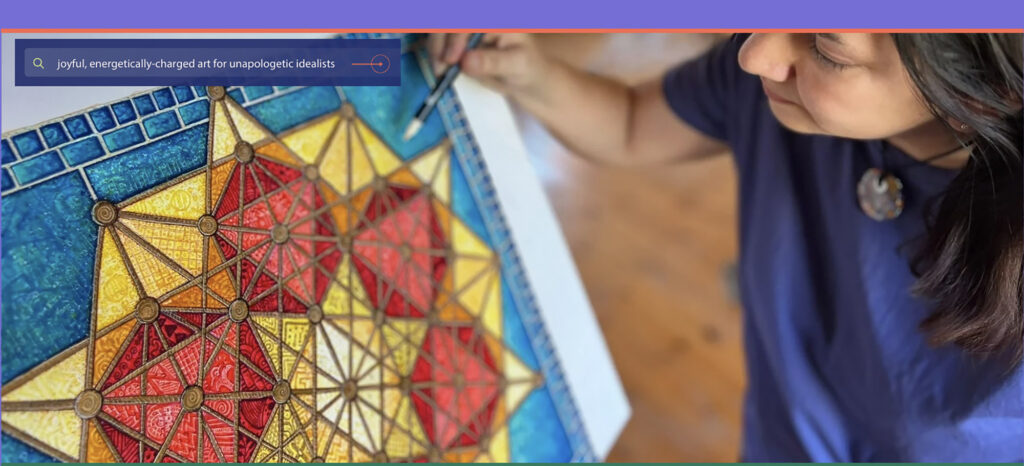
I find that as long as I set aside the time, no matter my mood or what’s already happened that day, the moment that I sit down and actually start drawing or painting, I slowly move into another state where I lose all track of time.
I enter a flow process, and I feel like I’m effortlessly tapping into something larger than myself. It can be anything from knowing exactly which color I’m going to use next to understanding that I’ve completely messed up and I need to paint over something, even if I personally feel too lazy to do so.
With conviction, I pretty much know what the next move is that I’m going to make. What’s interesting is I never know what a finished artwork is going to look like. It’s more like it comes in little pieces and sections, almost like a download.
Q3. You’ve said your work shifted from darker subjects to something more healing and optimistic, what changed in you over time?
I think I started out with the sense that I was going to change the world, and that I needed to point out all the things that were wrong with it to everyone else in an effort to then mobilize people to try and fix it. I feel like I’ve been so lucky in that I’ve had a chance to be in education. I’ve had a chance to do work for the United Nations. I had my own crowdfunding site for charities before crowdfunding was a thing.
The more I tried to change the outside world, the more I realized that I was never going to do it by myself, or really make much of a dent. I realized that the only way we can actually make the world a better place is to actually change our own state of mind and to focus on the world that you want to have, visualize how you want it to be as a means for actually bringing it about.
It might be that I’ve done too many meditation classes or listened to too many spirituality podcasts. But I almost would feel unlucky if I were to go back to my older way of making art because I do believe that what you focus on is what you attract more of in your life. As chaotic as our world is right now, it’s actually more helpful to focus on love and peace and the world that you want to see instead of cursing the bombs falling.
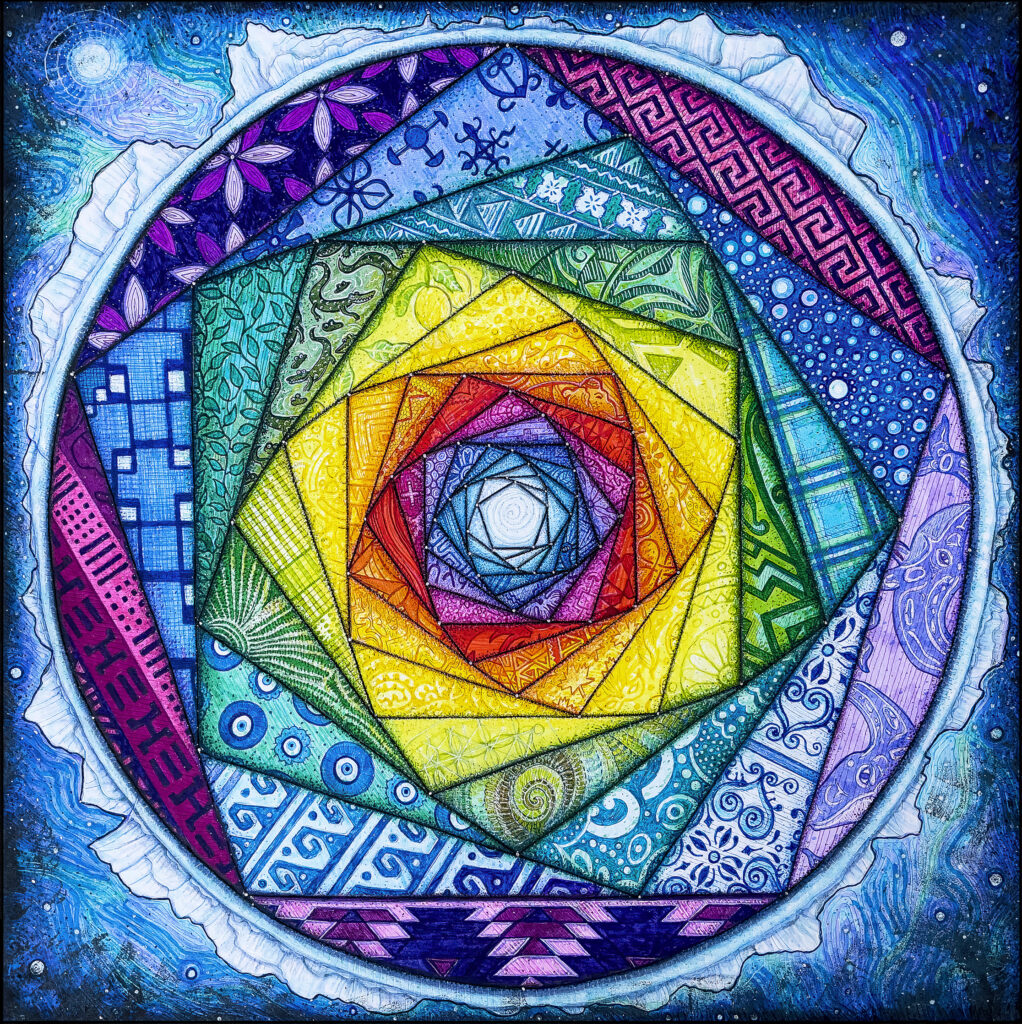
Q4. Malawi’s vibrant orange soil, powder blue skies, chitenje textiles, and warmth seem deeply present in your work, what did that place give you as an artist that nowhere else could?
I almost feel like I live in “opposite land” because a lot of people look at countries in Africa and they only think about war, famine, and poverty. Certainly, there are areas and situations that fit those old stereotypes. There was also the World Happiness Index that came out recently for 2026, and Malawi ended up in the bottom five of least happy countries in the world. It seems strange that I would say I found so much happiness in such an economically poor country.
First of all, I felt like I could breathe, not just figuratively, but literally. The air was so clean, especially after coming from three years in Southeast Asia. Because it’s such a remote part of Africa, I felt like I was really detached from the stress, materialism, striving for never-ending achievements, and the busyness of the industrialized world. I wish that everybody could experience this, and I believe it’s getting harder and harder now because people can’t even go a day without having to check their email or their phone or social media.
Society doesn’t even let us get away anymore in the way that we could sneak away for a weekend and do a digital detox 15 years ago. Malawi made me feel like I was on a kind of soul retreat, and in such splendid nature. I used to be so afraid of spiders, and there were some big spiders in Malawi. Oddly enough, after time, I became less terrified of nature and more interested, even in big, ugly bugs that would have previously sent me screaming.
I would just kind of watch with fascination (as long as they weren’t in my house and stayed outside.) Even the people I met were some of the nicest in the world.
There are so few safety nets and formal education and employment opportunities, but such a strong sense of community. You would see people laughing and smiling even if they were obviously very poor, in a way that we didn’t see when we would visit family in Germany, for example, or the US. Some people had a permanent scowl on their faces in our birth countries. I also appreciated that in Malawi, people really value bright colors and patterns. As much as I enjoy being back in Italy, I can’t help but notice that the “uniform” for everyone seems to be a black jacket, black pants, basically, very little color, almost like everyone’s going to a funeral.
Q5. You describe your pieces as “impossible gifts” when did you realize your art was affecting people beyond the visual?
When I started making fine art again and putting it on my website and online gallery, having sales, and sending out newsletters, I would occasionally start getting emails from people that were telling me that my art was having an energetic effect on them.
One person wrote that they had been clinically depressed and that my art made them smile for the first time in two months. That really was better than making any sale, just hearing feedback like that. I also received random emails from people who had medical issues. One was terminally ill and also felt a kind of healing energy coming from my art.
So I don’t know what’s going on. Certainly, I always have an intention when I’m making the art that I’m putting positive and healing energy into it. I don’t claim to be a magician or a magical Shamanic person. Whatever I’m doing, it almost feels like I’m putting a message in a bottle, but that people are alerting me that they’re receiving the message on their end as well, which is very gratifying.
Q6. How has working with organizations like the UN, WHO, and UNICEF influenced the way you think about the purpose of your art?
It’s interesting because when I moved to Malawi, I realized that art, design, and communication didn’t really exist in the universities there, so I couldn’t just fall back on what I’d always been doing. I changed my CV and applied to UN organizations, and found myself working in the Communications Team for United Nations Population Fund (UNFPA) in Malawi. I later also worked with UNICEF, UNDP, WFP and others.
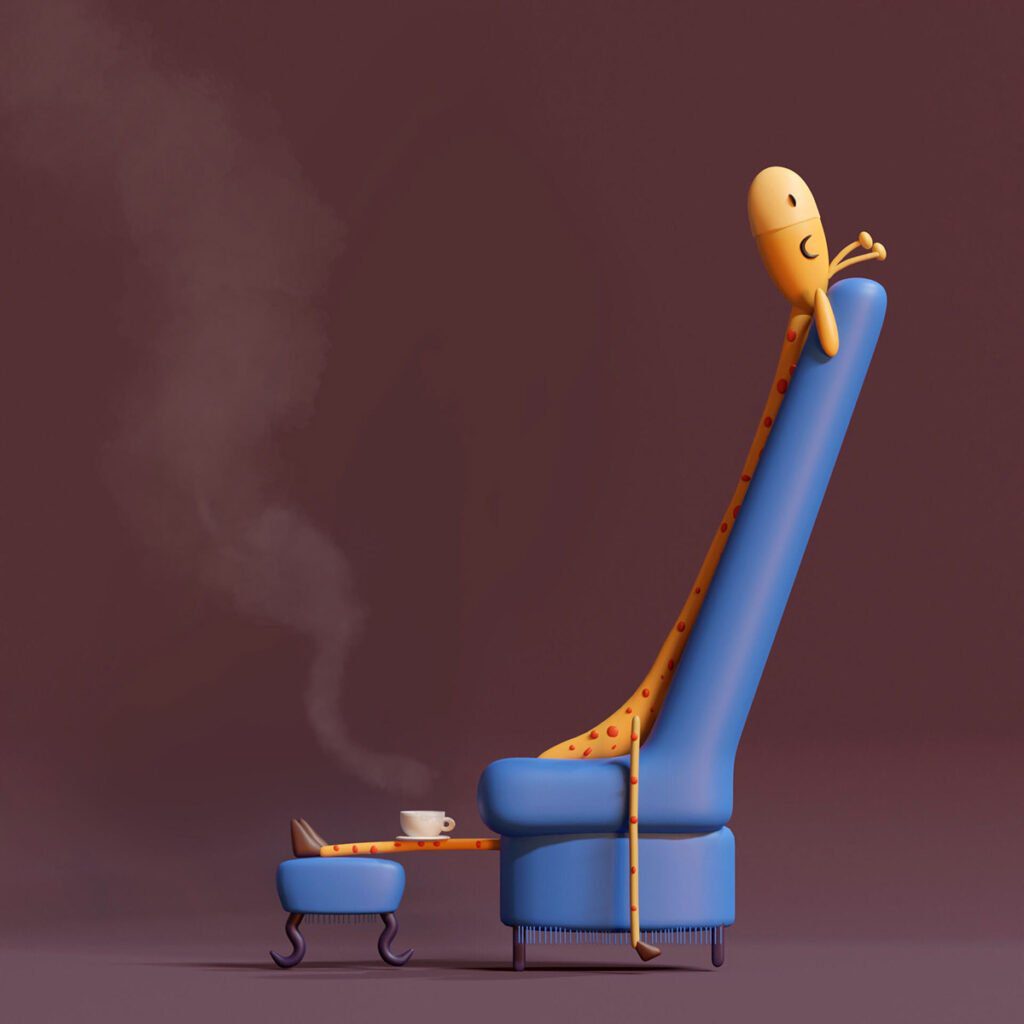
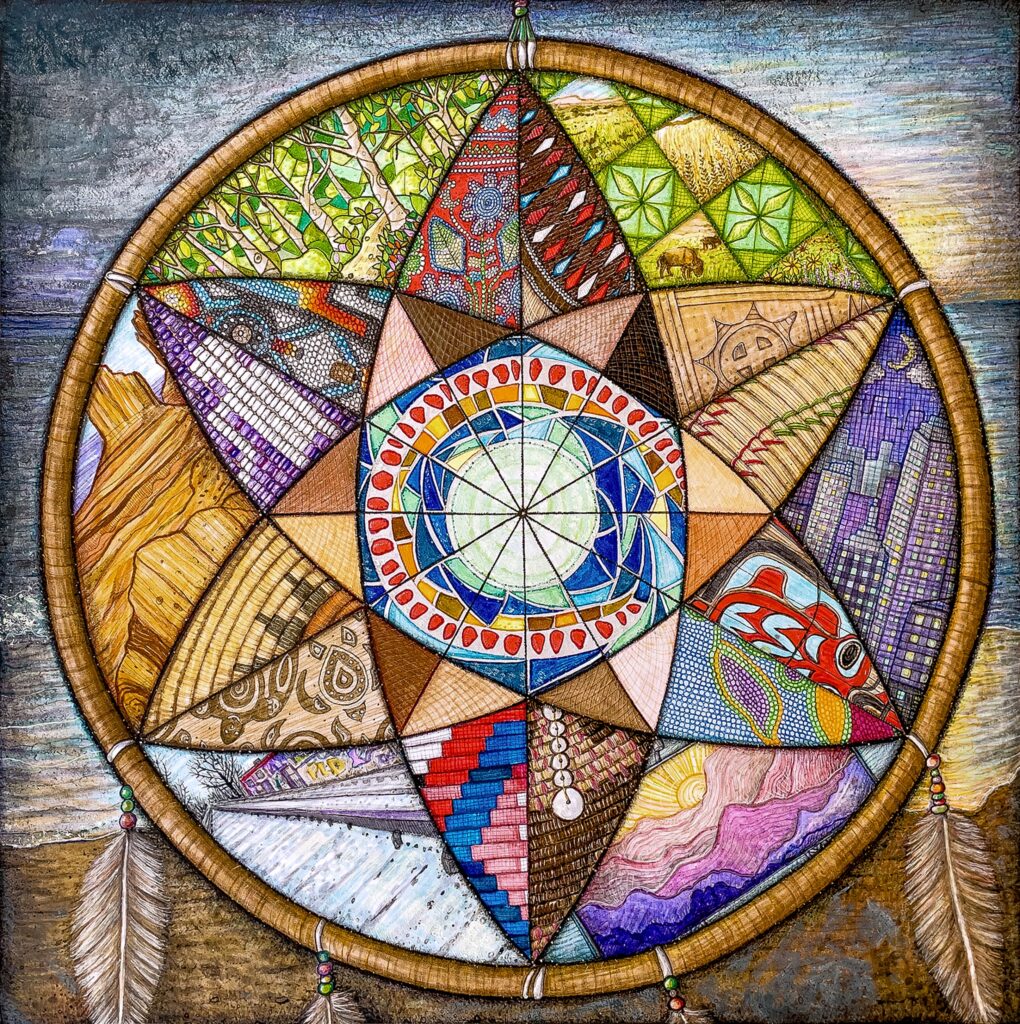
While I was there, I was creating characters and an animated series, banners for refugee camps, graphic design, and a lot of it revolved around hand-drawn illustrations that I was making. These illustrations were also inspired by the colors of Malawi and the patterns that people were wearing.
As I was doing that, I sort of accidentally rediscovered my love for making art, not just illustrations. I started to think, “Oh, what if I made my own art independent of this client work?” That’s something that I experimented with, especially after COVID. About a year or so into making my own art again (which started out mainly with patterns and animals of Malawi), I started to gravitate towards creative visualizations, meaning creating symbols that stood for things like protection, abundance, love, success.
Those manifestations were originally inspired by the mission statements and Development goals of United Nations organizations, the visions that they had for their organization to end all these problems in the world. These visions directly inspired the art that I’m still making to this day.
Q7. “The Art of Reset transformed a sacred Roman space into an immersive sanctuary what were you hoping to reset for yourself or the viewer?
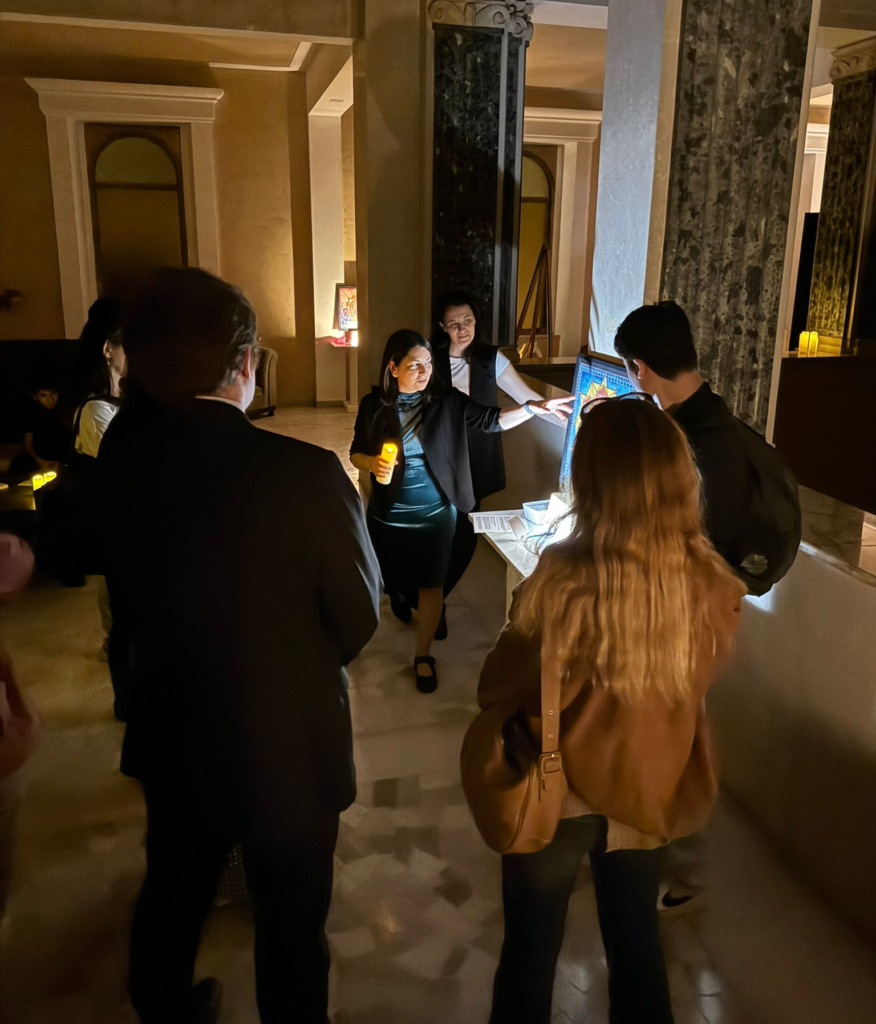
That was probably my first foray into really merging the art that I’m making with an actual wellness space. I was collaborating with a curator, from Rome I had met a few months earlier. Her name is Francesca Paradiso Casale, and she is a holistic therapist and founder of the organization, TuSai. Together, we were able to create this one-night immersive experience, which was very different than just a typical art exhibition.
It included my art, exhibited in the traditional way but with kind of a special lighting. We had all these candles everywhere, not the kind that could knock over and burn the place down, but battery-operated candles. Because the space was so big, I invested in six projectors and created multimedia projections on the ceiling and little spaces within the church. We also had a mindfulness meditation and exercise.
There was incense, there was candy, and we basically tried to speak to all the senses. This was meant to be sort of like a Friday reset for people completely burnt out from work and traffic. But I suppose you could say it was also a reset for myself too.It was a reintroduction of me as an artist returning back to Rome and trying to also do something art-related in person now that I was physically back in Italy.
Q8. You’ve said you had to build your own door, when did you realize waiting wasn’t enough?
I think as a teenager, I got the idea that if only I applied to the right university, show, or award, I would somehow be discovered, and all my problems would disappear, because somebody would just take me under their wing. I think also many people don’t realize that many of the most successful people in the art world had support from family or connections that allowed them to really start at the top or at least get their foot in the door.
That is not an option for most people, so we have to create our own connections. I feel that my time, especially living in Myanmar and Malawi, really reminded me that I had to reinvent my career and my art at different times. Nobody was going to knock on my door and offer me a job or an exhibition opportunity, especially upon arrival to my new host country. You really do sometimes have to reach out, even if you’re an introvert, and see how you can build something and create your own opportunities.
Q9. What excites you about moving into interactive and multi-sensory work?
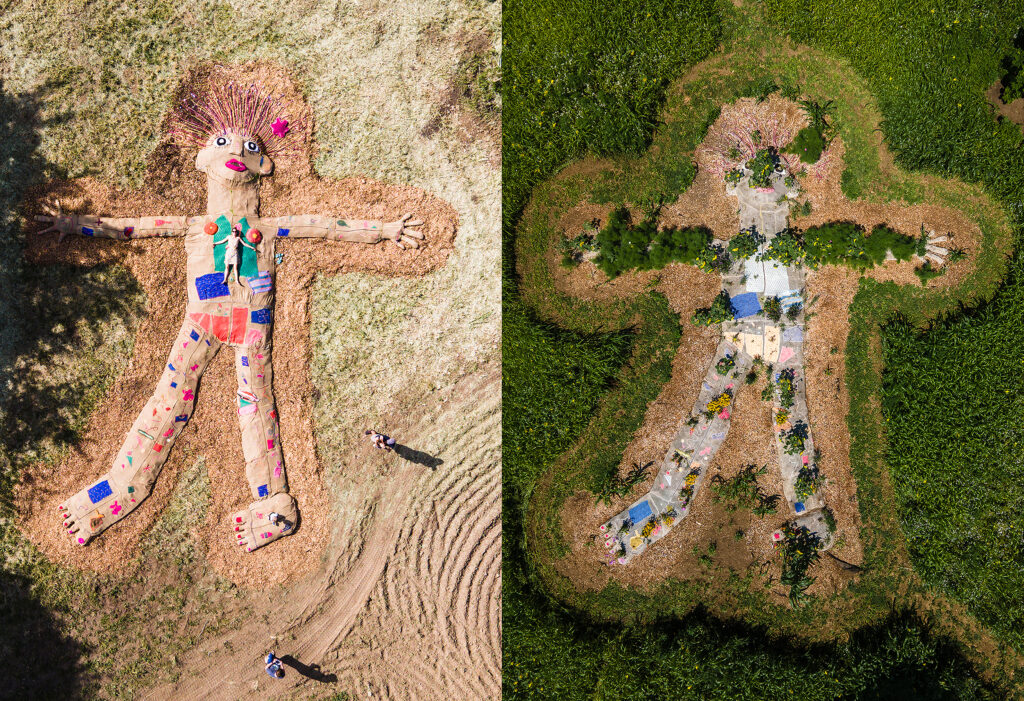
I love static images, but I feel that people can connect with the art more sometimes when they’re surrounded by it, immersed in it, or can experience it on many different levels, even if that’s a multi-sensory room, a public interactive time-based mural and installation, etc. I’m very excited to continue experimenting down this road.
Q10. What advice would you give to an artist who wants their work to actually help people, not just hang on walls?
I would say just make sure that you’re finding ways to connect your work with the people that would be most helped by it. Sometimes it’s tempting to work on your stuff in your studio and keep it to yourself, especially if you are shy. It can be time-consuming and upsetting to send it out into the world because no matter how well you do, you’ll always have rejections.
I feel like it’s a numbers game, and you will make progress as long as you commit to applying for exhibitions, awards, grants, collaborations, or approaching wellness centers or other individuals who share your interests. There are many ways that you can connect your art with those who might be most helped by it.
As our conversation with Kristen came to a close, we kept thinking about a question that does not get asked enough. What is art actually for?
Not what does it look like or what does it sell for or what gallery is it in. What is it for. What is it doing in the world. What changes in someone’s life because it exists.
Kristen has spent her whole career circling that question from every possible angle. She tried pointing at what was wrong with the world and hoping people would fix it. She worked inside massive international organisations trying to solve enormous problems through communication and design.
She taught students on multiple continents. And after all of that she arrived at something really simple. That the most useful thing she can do as an artist is put something good into the world and trust that whoever needs it will find it.
That sounds almost too simple to be meaningful. But the more we sat with it the more we realised how radical it actually is. Because most of us, artists or not, spend our energy reacting to what is broken. Pointing at problems. Arguing about solutions. Getting overwhelmed by the scale of everything that needs fixing. Kristen stopped doing that. Not because she does not care.
Because she realised that she was never going to fix the outside world by focusing on what was wrong with it. The only thing she could actually change was what she was putting out. So she started putting out calm and strength and beauty and healing. And people started telling her it was working.
We are not saying every artist needs to make healing art. That is Kristen’s path and it came from her specific life and her specific experiences. But the question underneath it applies to everyone. What is your work doing for the person who encounters it? Not what is it saying about you. What is it doing for them. Kristen answers that question with every piece she makes and she answers it with intention and care and a lifetime of experience that stretches from Massachusetts to Malawi to Rome.
For anyone interested in collecting Kristen’s work, her pieces carry something that is hard to quantify but impossible to ignore. People respond to them on a level that goes beyond aesthetics. They feel something. They relax. They smile. They sense an energy that they cannot quite explain but they know is real.
Whether you believe in the energetic dimension of art or not, the fact that multiple people independently reported physical and emotional responses to her work tells you something is happening that goes beyond paint on a surface. These are pieces that bring something into a room that the room did not have before. And that is worth paying attention to.
Follow Kristen Palana through the links below and see what happens when an artist decides that the whole point of making things is to help people feel better.