

The Story Behind The Starry Night
What if the most famous night sky in art never actually existed?
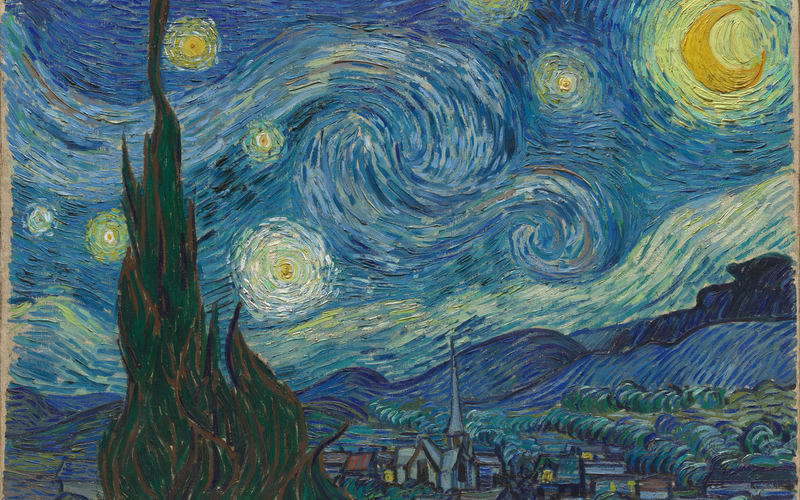
Look closely at Van Gogh’s The Starry Night and the scene feels almost familiar: a crescent moon glowing over a sleeping village, stars burning through deep blue, a dark cypress rising into the sky, bands of light sweeping across the night. It reads like a landscape, until you learn it isn’t quite one.
Van Gogh began the painting in June 1889 at the Saint-Paul-de-Mausole asylum in Saint-Rémy-de-Provence, inspired by the view from his window. But what ended up on the canvas isn’t a record of what he actually saw, the village came from somewhere else, the cypress was dragged dramatically closer, and the sky was reworked until it barely resembled the one outside his room.
One of the world’s most famous paintings, in other words, started with a real view. Then Van Gogh changed it.
The View From the Window
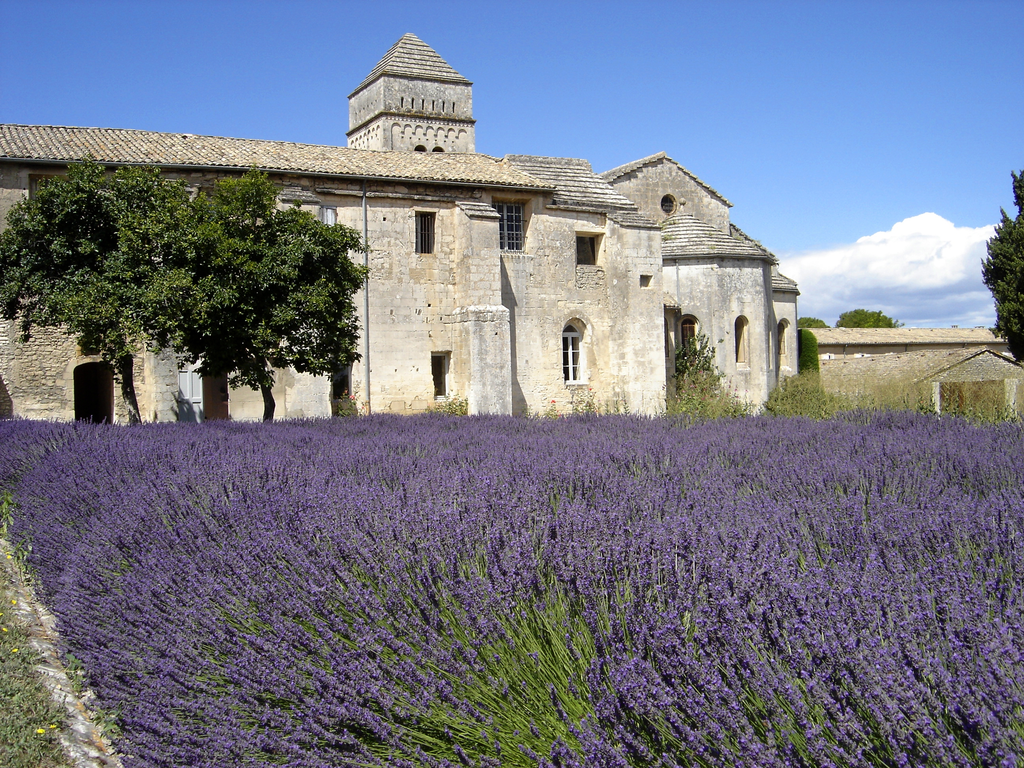
Van Gogh arrived at Saint-Paul-de-Mausole in May 1889, seeking treatment after the crises he’d been through in Arles. He told Theo in a letter shortly after that the change of surroundings was doing him good, and he hoped to keep working, which he did, almost immediately, returning again and again to the fields, orchards, and mountains visible from the asylum grounds.
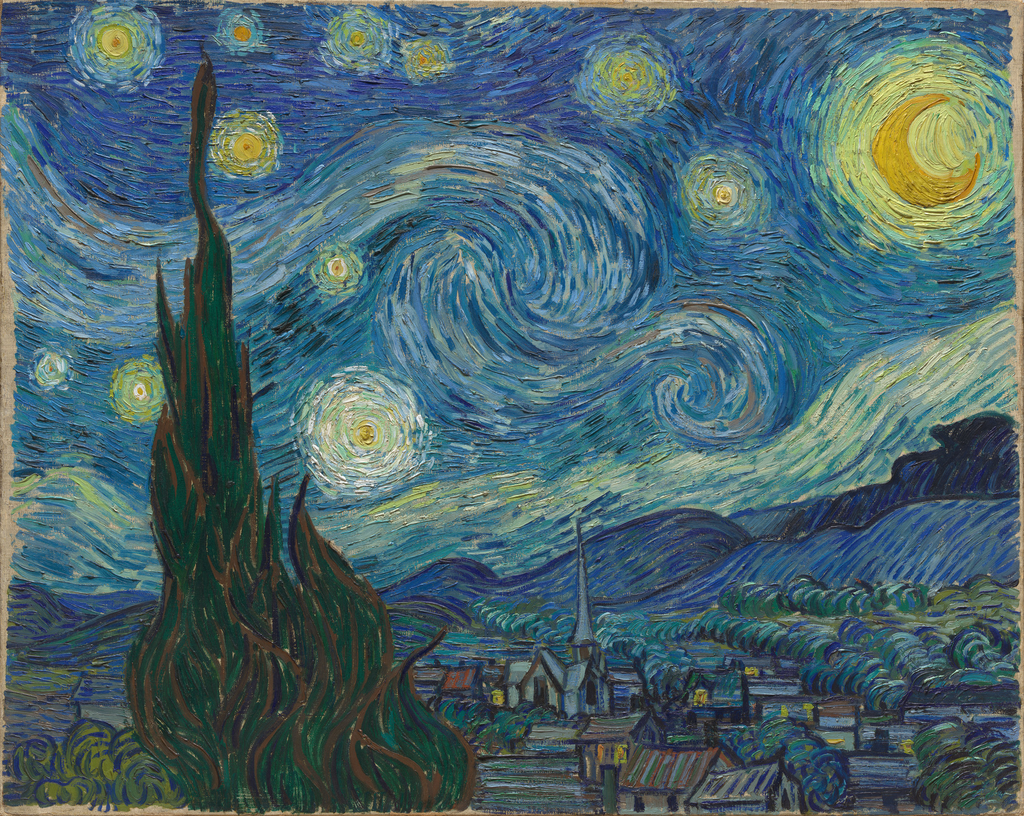
Then the sky took over his attention. In a letter to Theo, he described looking out before sunrise and seeing “nothing but the morning star, which looked very big” a reference to Venus, the bright point of light that sits just left of center in The Starry Night.
That detail changes how you read the painting. The sky wasn’t invented from nothing, Van Gogh really was looking at it. He just wasn’t copying it.
Read more : The Strange Beauty of Cats in Art
The Night He Painted Wasn’t the Night on the Canvas
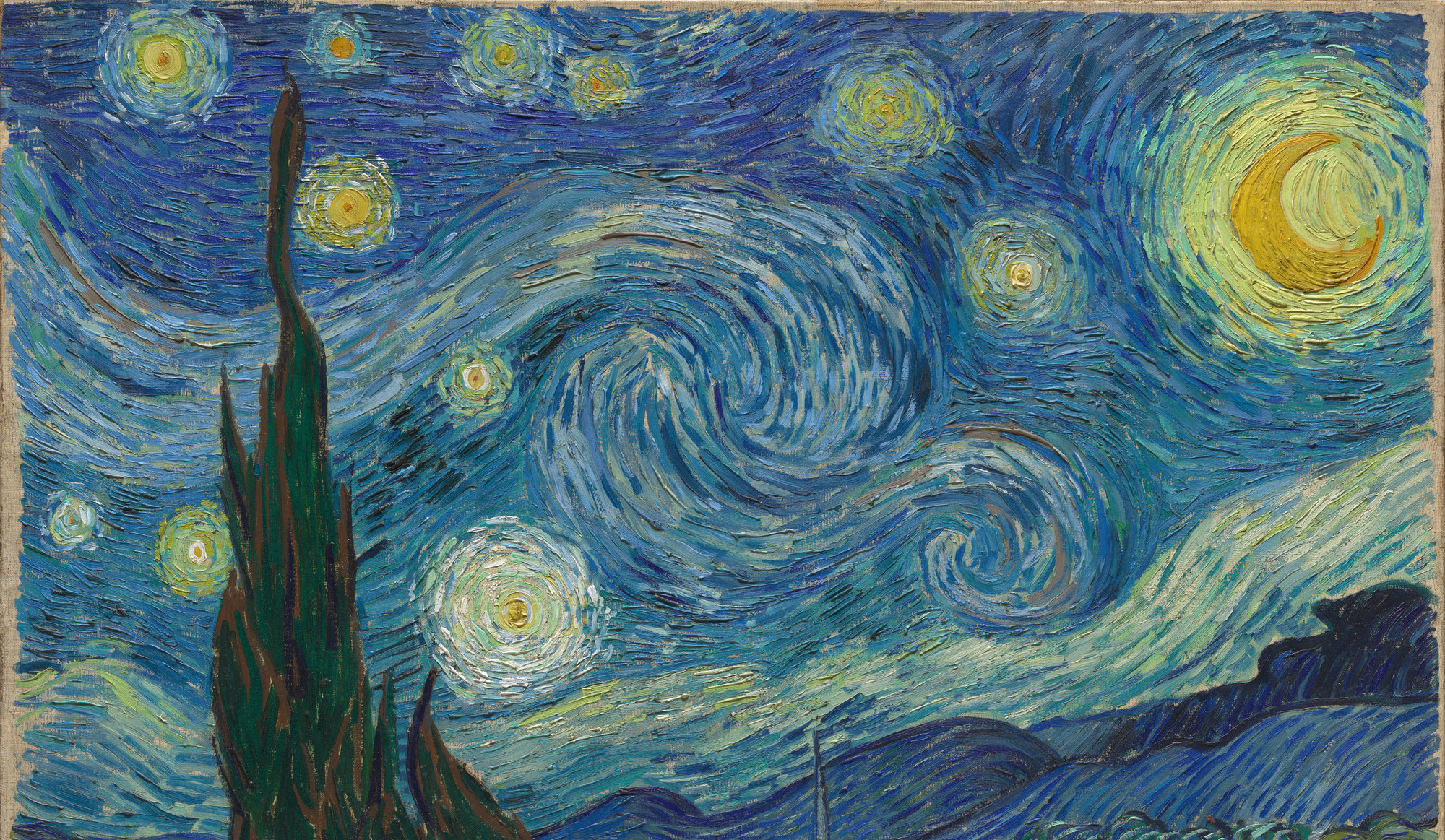
There’s something almost paradoxical about the painting: Van Gogh painted a night scene during the day. MoMA notes that although the vision it depicts took place at night, the canvas itself was worked on across several daytime sessions, under completely different light, meaning Van Gogh was translating a remembered experience rather than reproducing a view in real time.
And he changed plenty in the process. The village beneath the mountains wasn’t visible from his window at all, its pointed church steeple looks more like Dutch architecture from his native Netherlands than anything local to Provence. The cypress in the foreground was made far larger and closer than it would have actually appeared.
The result is neither pure observation nor pure invention. It’s Van Gogh’s reconstruction of a place he knew, which might be the painting’s first real secret.
When the Sky Became the Main Character
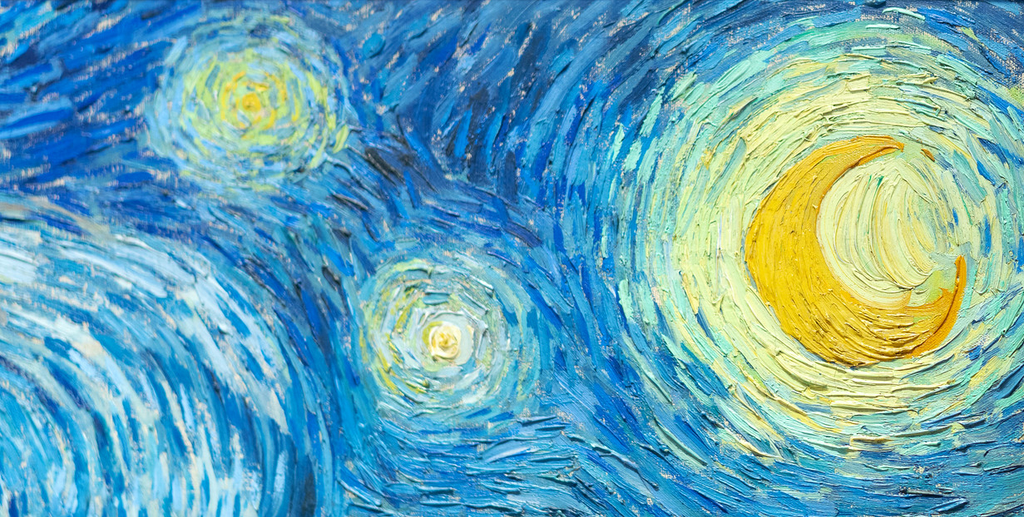
The landscape only occupies the lower slice of the canvas; the sky claims the rest, roughly three-quarters of the composition, built from short, thick brushstrokes that make the whole atmosphere look like it’s moving. The stars sit inside rings of color, the moon glows almost electrically, and two great currents of blue curl through the top of the frame as if the sky itself is turning.
This wasn’t new territory for him. Van Gogh had been fixated on nighttime for years, and once wrote that he found the night “much more alive and richly coloured than the day.” That line matters here because it undercuts the easy reading of this painting, darkness, for Van Gogh, wasn’t the absence of color. It could be as vivid and active as anything in daylight. The Starry Night is that idea, made visible.
Read more : Elsa Schiaparelli, the Designer Who Put Surrealism on a Dress
The Stars Were Real. The Sky Wasn’t.
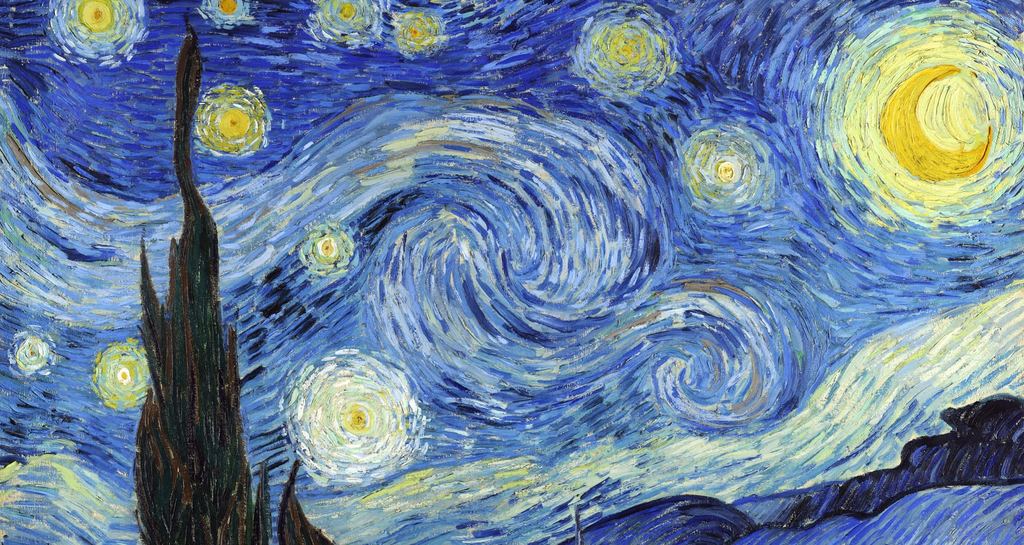
Venus really was visible in the pre-dawn sky around the time Van Gogh was painting, the bright object left of center in the composition. But he wasn’t working like an astronomer charting a real sky. He distorted the shapes of the stars and wrapped each one in exaggerated halos of light; researchers have also noted the swirling forms echo contemporary illustrations of nebulae, clouds of cosmic dust and gas, without the painting ever functioning as an actual scientific record.
This is really the crux of the whole piece: Van Gogh wasn’t choosing between reality and imagination. He was running both at once, observing the world closely, then letting the paint take it somewhere observation alone couldn’t reach.
Why Is the Cypress So Huge?
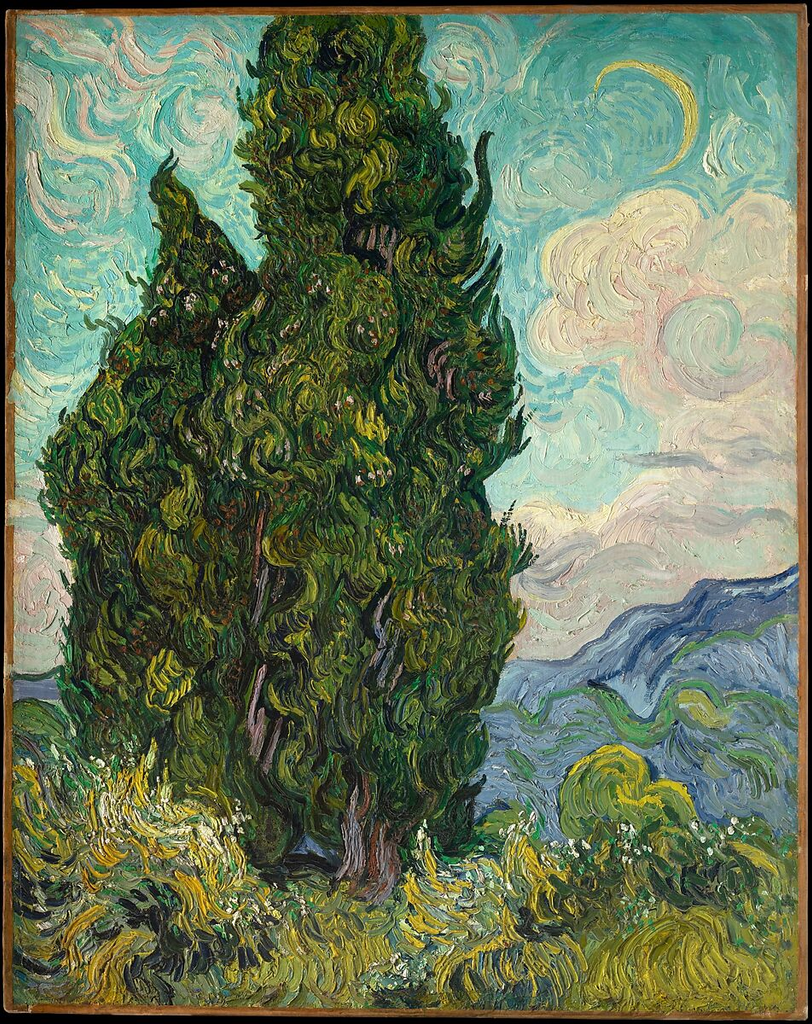
Then there’s the tree. The cypress on the left rises almost to the top edge of the canvas, dark and flame-shaped, cutting straight through the boundary between earth and sky.
Van Gogh had grown genuinely obsessed with cypresses during his time in the south of France. In a letter to Theo, he described their lines and proportions as beautiful, “like an Egyptian obelisk”, and called them one of the most difficult subjects he could imagine painting. By late June 1889, he was making dedicated studies of these “very tall and massive” trees.
It’s tempting to insist the cypress must symbolize something specific, death, most commonly. Van Gogh never gave a definitive explanation for any of it, so the symbolism is left for us to argue about. What we do know for certain is simpler: the cypress had become an obsession, and in this painting he blew it up in scale until it became the bridge between the grounded world below and the restless one above.
Van Gogh Didn’t Know He Was Painting a Masterpiece
There was no guarantee, when he painted it, that The Starry Night would become inseparable from his name. After his death in 1890, the canvas stayed with his brother Theo, then passed through a long chain of owners, Theo’s widow Johanna van Gogh-Bonger, the poet Julien Leclercq, the painter Claude-Émile Schuffenecker, back to Johanna, a Rotterdam gallery, a private collector named Georgette P. van Stolk, and finally the Paul Rosenberg Gallery, before the Museum of Modern Art acquired it in 1941.
For most of that history, it sat largely outside public view in private hands, nowhere near the fame it has today. The painting millions of people now recognize instantly spent decades as just one more Van Gogh, quietly changing owners.
So, What Does The Starry Night Mean?
That might be the wrong question to lead with. There’s no single sentence from Van Gogh explaining what every star, hill, or brushstroke is supposed to mean. What exists instead are his letters, his repeated fascination with night, his studies of the landscape around him, and the painting itself, which tells a more interesting story than a tidy symbolic answer would.
The Starry Night is really a painting about looking, and then transforming what you saw. Van Gogh started with an actual view outside an asylum window, the morning star, the hills, the cypresses, the countryside around Saint-Rémy, then rearranged nearly all of it: bringing some things closer, inventing others, swapping the architecture, intensifying the stars, and turning the sky into something that looks alive.
What’s on the canvas was never the night as it existed outside his window. It’s the night as Van Gogh imagined it, and more than a century later, that invented version may feel more real to us than the original ever could.
Explore the current open calls and submit your work: apply.artstoheartsproject.com