

Kamryn Tulare on how layering order changes final colour result
At Arts to Hearts, celebrating artists is not just something we do it is everything we do. It is the reason we exist. And our Best of the Art World editorial was born from exactly that commitment to find the artists who are doing something genuinely remarkable, to bring them to a larger community that deserves to know them, and to shine a light on the work that has real thought, real feeling, and real intention behind it.
We have featured some extraordinary artists through this series, and every single one has reminded us why this work matters.
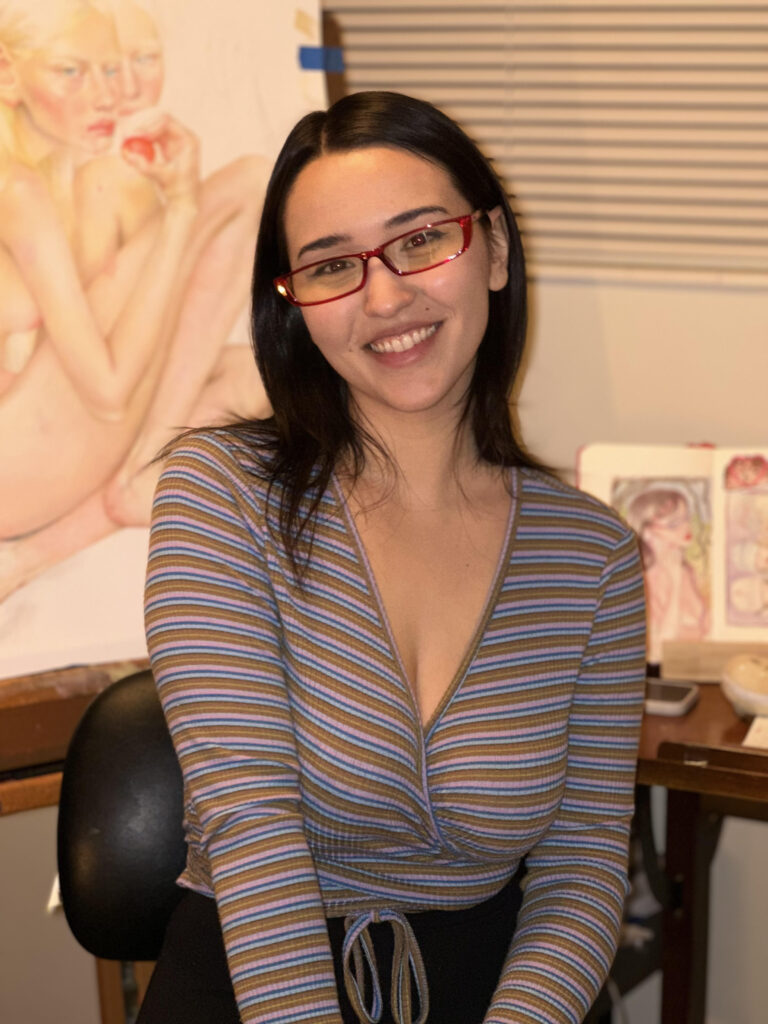
Today we are so excited to introduce you to Kamryn Tulare.
When we first came across Kamryn’s work, we did what we always do when something stops us, we sent it around to each other. Because there is a particular kind of art that makes you want to immediately show it to someone else, not to explain it, just to say look at this. Do you feel that too?
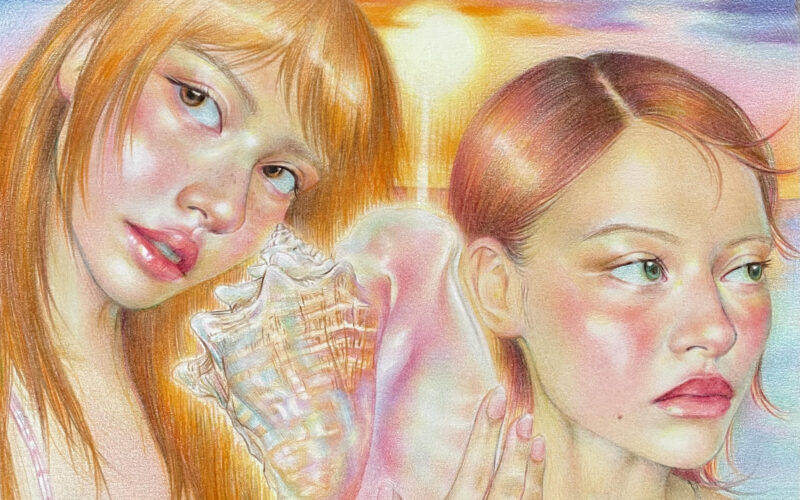
Her portraits of young women, layered in coloured pencil with a prismatic luminous quality that honestly has to be seen to be believed, have that effect. They are pink and sparkly and completely unapologetic about it. And they are also doing something that took us a moment to fully articulate something sharp, something emotionally precise, something that keeps giving the longer you look.
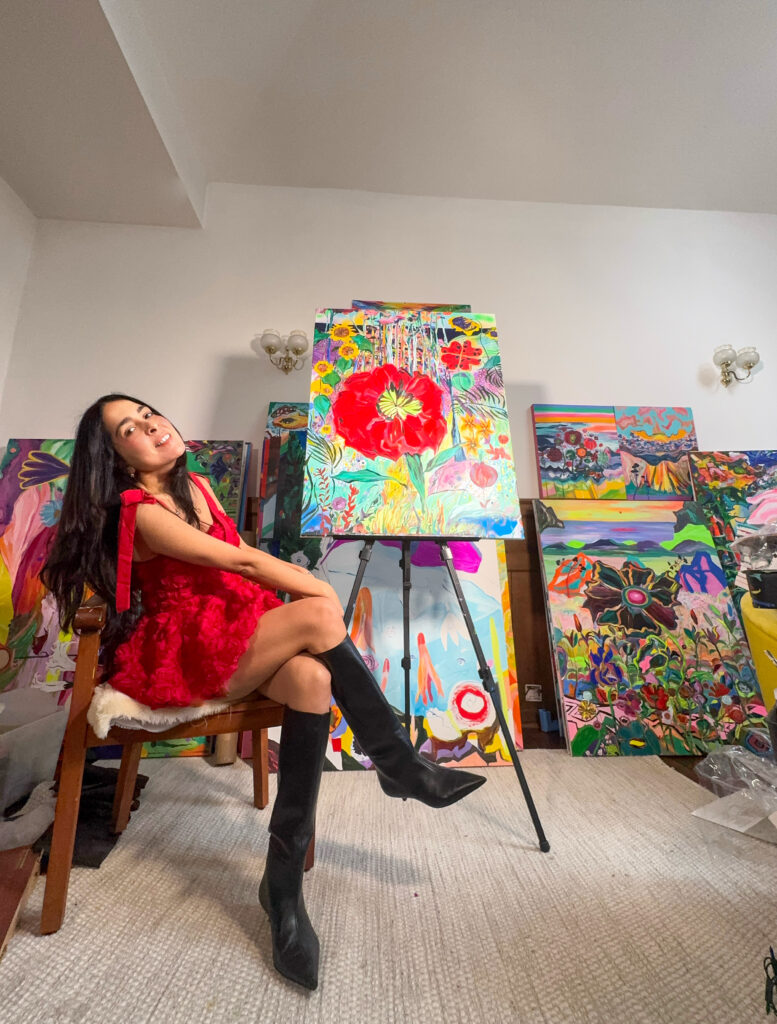
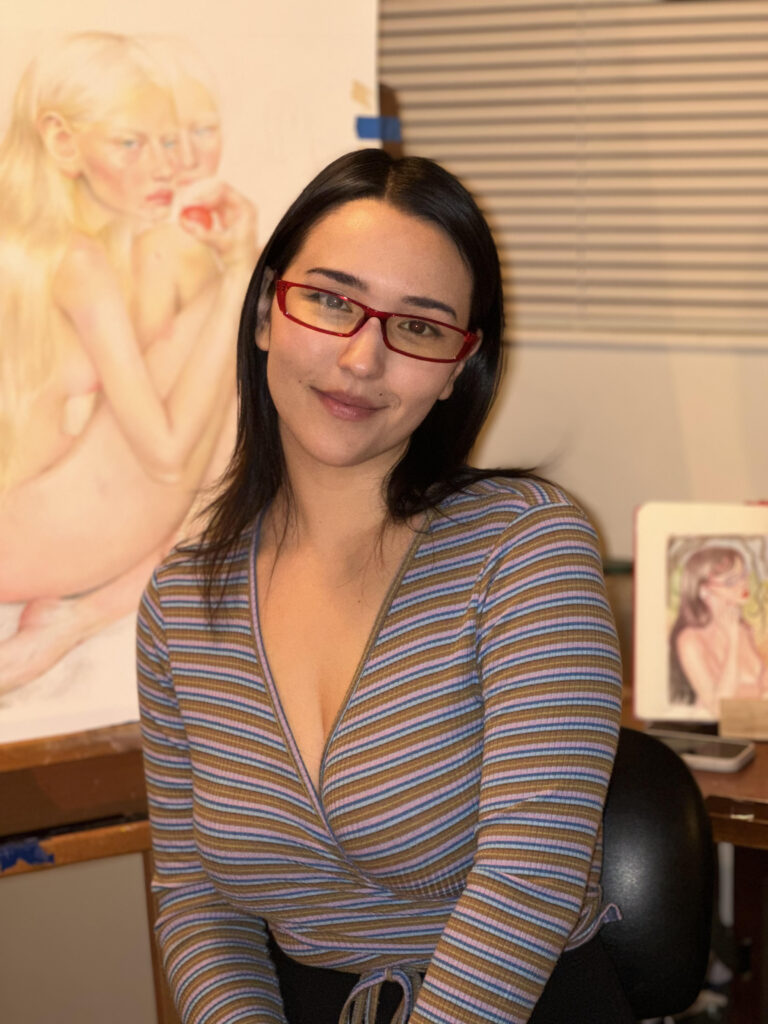
Kamryn is self taught and based in Seattle, and she works almost exclusively in coloured pencil which, she will be the first to tell you, is a medium that people consistently underestimate.
And she is right. What she does with it, the layering, the blending, the almost duo chrome effect she can create by drawing two pencils in the same spot is genuinely extraordinary. She fell in love with the medium at seventeen, layering cheap Crayola’s into something that surprised even her with how much depth it could hold. And she has never looked back.
Her work is rooted in something she describes as grotesque femininity the unnamed feelings, the fleeting thoughts, the very specific emotional experiences of young women that somehow never quite make it into the art world’s idea of serious subject matter. The nostalgia for an internet era you only lived through a screen.
The intense connection you feel toward women you have never met. The impossible tangle of admiration and jealousy that nobody has found the right words for yet. Kamryn is not waiting for the words. She is drawing it all down instead, in coloured pencil, with pink and sparkle and dark humour and a quiet insistence that these experiences matter. That they are worth capturing. That girly is not a limitation. It never was.
Let’s get to know Kamryn through our conversation with her, where she talks about coloured pencil as a serious medium, the girls she draws, and the unnamed feelings she refuses to leave unspoken.
Q1. Kmaryn! If you had to introduce yourself to a stranger who had never seen your work not the caption version, not the artist statement how would you actually describe what you do and why you do it?
“Hi! I’m Kamryn (with a ‘K’). I’m a Seattle-based artist that specializes in colored pencil and feminine contemporary art. I love all things pink, sparkly and shiny and draw portraits of young women that mirror our feelings and experiences influenced by internet and pop culture, currently striving to destigmatize and reframe girly imagery and themes in the art world and fine art spaces.
Q2. Coloured pencil is still a medium people underestimate they think school projects, not gallery walls. What made you stay with it when you could have moved to something more expected and what does it do for you that those other mediums simply don’t?
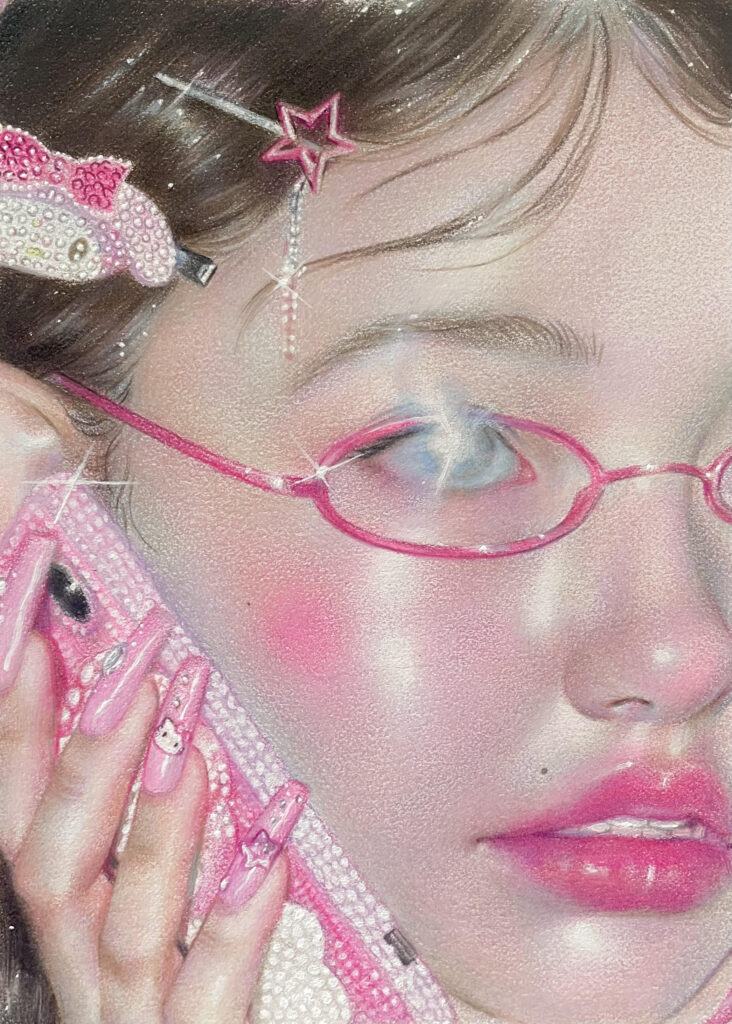
I think colored pencil is a lot more flexible than people might expect, with high quality pencils the amount you can layer, blend, and erase is astounding, and it can work with a multitude of different mediums. Sometimes when I’m working on a piece it can feel a bit like a puzzle to find which colored pencil has the right shade or hue to fit with the others I’m using. You can have two colors that might seem like they wouldn’t go at all but when you layer them (and sometimes it’s dependent on how you layer them), it can look amazing, whereas with something like oil paint it could just turn out muddy. Also, with the nature of how the pencils mark the paper, you can draw two pencils in the same spot and it can have an almost duo-chrome effect. I remember the moment I fell in love with colored pencils – I was probably seventeen and just doodling when I started to draw an eye, and I only had Crayola pencils on hand. I kept layering different pencils and building on the drawing until I made something that was so colorful and had a surprising amount of depth to it for some cheap colored pencils. I was kind of addicted from then on. I could go on and on, but suffice it to say, I just can’t get away from colored pencils.
Q3. Your layering technique creates this prismatic, almost luminous quality in the portraits. Is that process something you can lose yourself in, or does it require constant decision-making or is it somehow both at once?
I can definitely lose myself in that process, just because it comes so natural to me when I’m in the zone and really feel like I’m just playing around with colors. It’s a push and pull – I’m constantly working to strike a balance between drawing in a way that comes natural, and focusing on my references and outlines I have for a piece. I find that when I go too far to either side of that spectrum, I create a piece that is too far from the idea I had in my head, which is always what I try and stay loyal to.
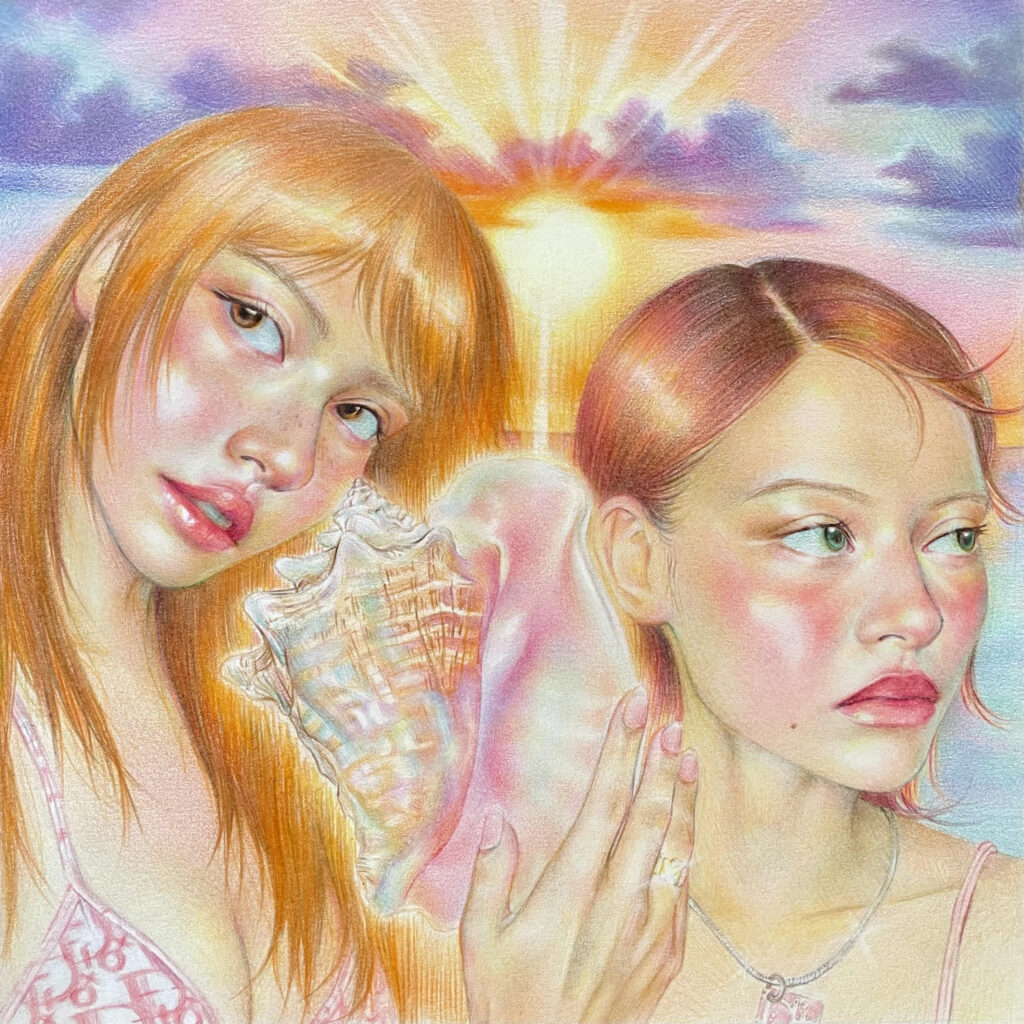
Q4. Your piece Midnight Combing Near Brighton was based on one of those vivid dreams and you’ve said it transformed your practice because it showed you that your ideas could be as absurd and flawed as they appear in your head. What was in that dream and what made you feel obligated to it?
Something I learned recently is that creativity is often more about receiving rather than doing, and I think a lot of artists work off of that. Honestly nothing crazy happened in that dream but it spoke intensely to feelings I was experiencing at that time. I felt that I was receiving something meaningful to me, whether I really understood what that meaning was or not, and I felt that not putting that beautiful imagery and the feelings I attached to it into my art would be a disservice to me and whatever was giving me that dream (I try not to question it too much). I’m a spiritual person (a bit “woo woo” as people say) so explaining it like this sounds quite serious, but at the end of the day it was a free idea for an art piece, and not overthinking it or changing my original idea turned out to be successful, because I love the finished product.
Q5. You work to depict feelings and thoughts from women that go unseen, unheard, unnamed. What are those feelings and why do you think they’ve been so hard to name before?
I first want to say that they’re not all negative thoughts and feelings (I feel like it might give off that connotation), and they’re not all complex – sometimes they’re just new and fleeting and that’s why they’re unnamed and not discussed in length. I think that’s why I have such a fascination with the internet and how women interact with it and the spaces that they create for themselves on social media. It’s constantly changing, cycling, with so much going on, that I love to capture the feelings associated or even just a glimpse of them. Sometimes those feelings are like: nostalgia for an era of your life you only experienced through the internet, feeling such intense empathy and connection towards other women you’ve never even met, not being able to discern between admiration, hate or jealousy, curating your entire life on your iPhone, phone and social media addiction mixed specifically with wanting to move to another country and living on a farm, etc., etc. I’ve probably experienced all of these and more and I know other women do too.
Q6. You see all your girls as unique individuals, influenced and interconnected by the same world and stories. What is that world what are those stories and who is at the centre of them?
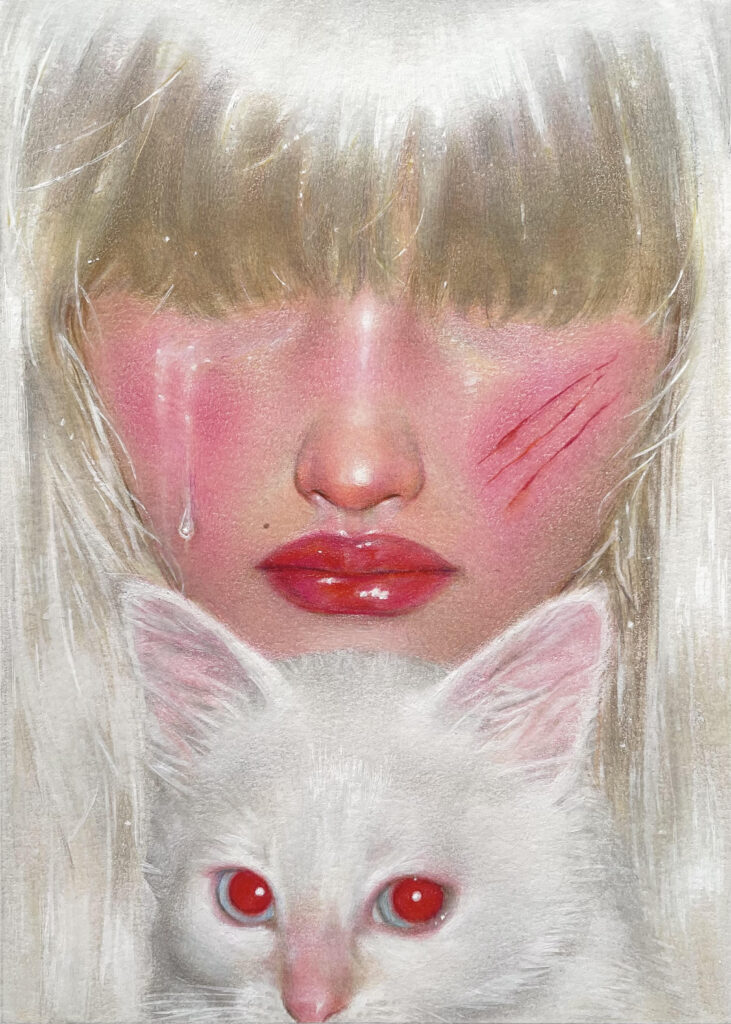
None of the girls I currently draw are directly real people, but I wouldn’t necessarily call them characters either. I think of them as manifestations of collective feelings/experiences or even just aesthetics amongst the communities of young women and femme individuals I observe and appreciate. To me they’re ‘my girls’ but for others I want them to be something people can connect and relate to, potentially experience something new from, or simply just admire. And sometimes the world or ‘story’ isn’t much more than a description: girls/young women with unique tastes and interests navigating and doing their best in a system consistently trying to take from and capitalize off them.
Q7. Dark humour and irony run through your visual language. What role does humour play in what you’re saying is it softening something difficult, or sharpening it?
I’m sure I don’t have to go into depth about how everyone feels like the world is so f*cked up in so many ways – I guess sometimes you have to laugh so you don’t cry. I do also think incorporating a bit of irony and humour certainly softens ‘sadder’ subject matter, and that often pairs well with the girly themes in my art, and I think it definitely makes my art more accessible. Not everyone wants something depressing or grotesque on their walls, in fact most people probably don’t want that (haha).
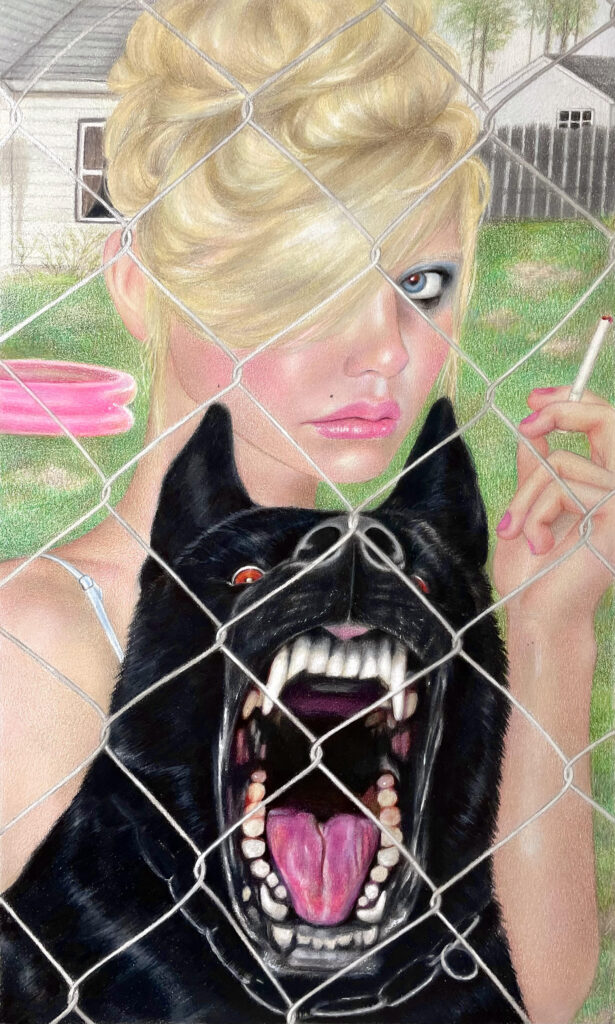
Q8. Has someone ever described what they felt looking at one of your portraits in a way that made you stop something that named what you’d put there more precisely than you could have yourself?
Someone once described my work as “grotesque femininity” and I really liked that. I think those words go hand in hand a lot of the time, and when I talk about my art and say that I want to depict feelings of women that go unnamed and unseen, it’s certainly the ‘grotesque’ part that I think doesn’t get recognized enough, and the use of that word is great because it encompasses a lot of other ways you can describe it (jarring, unpleasant, distorted, and so on).
Q9. What would you tell a young, self-taught artist who is nineteen years old right now who has a very specific, very personal visual world and is standing at the very beginning of all of this?
Your ideas, your vulnerability, and you being yourself are all your biggest strengths. Pursue and manifest your ideas, be vulnerable, and put yourself out there. It’s not that serious (and not that scary)!
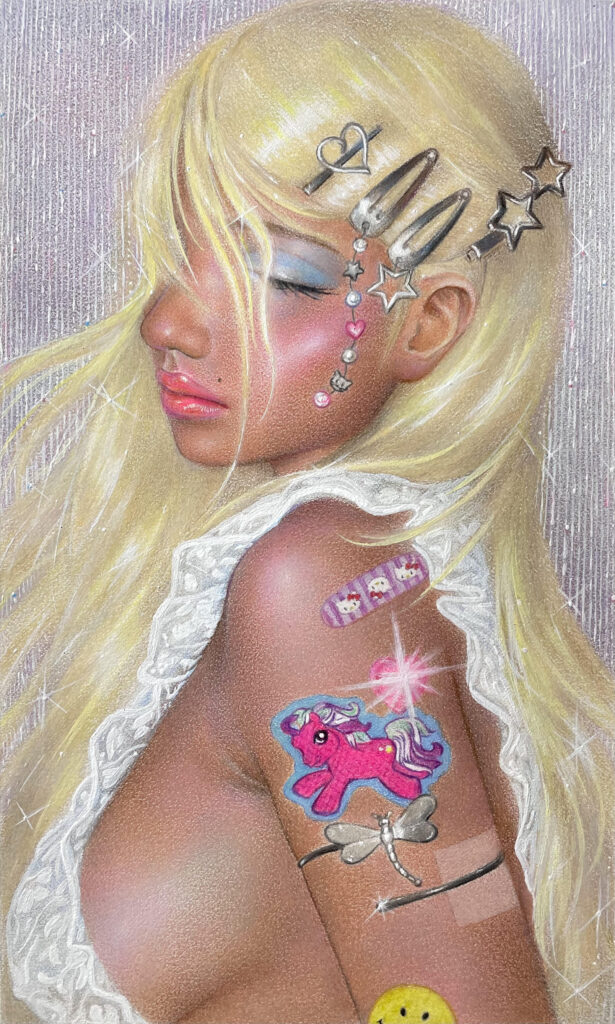
As our conversation with Kamryn drew to a close, we kept thinking about something she said that felt quietly radical that creativity is often more about receiving than doing. That sometimes an idea arrives, fully formed and insistent, and the only real job is to not overthink it. To trust it. To put it down exactly as it came and resist the urge to make it more acceptable or more legible or more palatable for the people who might not be ready for it yet.
That is what Kamryn does. And it is harder than it sounds.
Because the world she is working in fine art, gallery spaces, the long history of what gets taken seriously and what gets quietly dismissed has not always had a lot of patience for pink. For sparkle. For the specific, fleeting, deeply felt experiences of young women navigating the internet and each other and themselves.
And Kamryn is pushing back on that dismissal not through argument but through the work itself. Through portraits so luminous and so emotionally precise that you cannot look at them and think they are anything less than completely serious. Through a coloured pencil practice so technically accomplished that the medium itself stops being the conversation and the feeling becomes the only thing.
There is also something worth saying about what her work does in a space. These are not paintings that sit quietly on a wall and wait to be noticed. They pull you in. They hold a particular kind of warmth and a particular kind of wit and a particular kind of emotional honesty that makes a room feel more alive.
For those who collect work that they want to actually live with work that feels personal and present and connected to something real Kamryn’s portraits offer exactly that. Work that reflects an experience back at you. Work that makes the people in your life stop and look and feel something they recognise but could not quite name before.
She is at the very beginning of what is going to be a remarkable practice. And we are so glad we found her now.
Follow Kamryn Tulare through the links below and see the world through her girls’ eyes, you will recognise more than you expect.