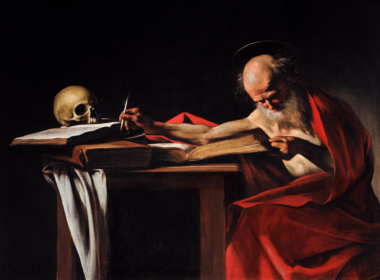

Jacqueline Hong on combining psychology and philosophy in mixed media art
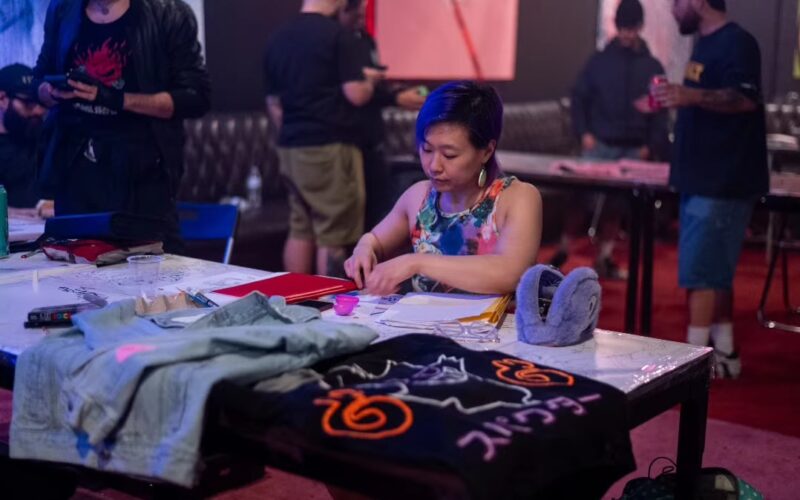
At Arts to Hearts Project, we are always looking for artists who make work that has something underneath it. Not just skill. Not just style. But a reason. A feeling that had to get out. Something the artist needed to say even if they could not say it out loud. That is the kind of work that stays with you. The kind where you look at it once and it is a pretty picture and then you look again and something else is looking back at you.
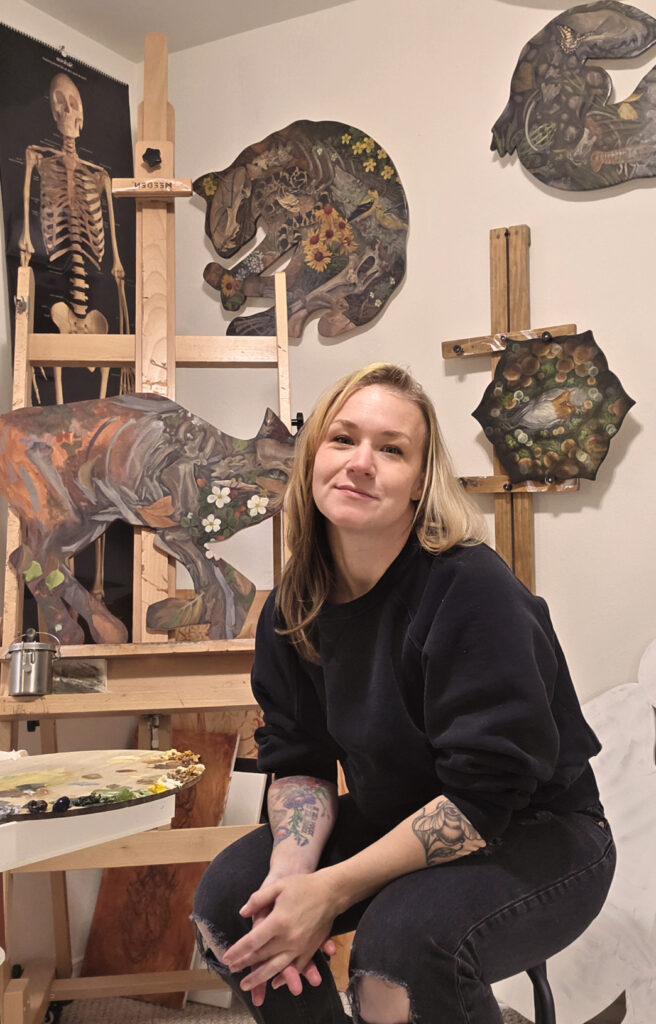
Jacqueline Hong makes that kind of work. And we are happy to have her in Arts to Hearts Magazine Issue 11.
So before you get to the interview, let us tell you about Jacqueline. Because her story is not one you hear very often in the art world.
She is Korean American. Born in New York. Moved around a lot as a kid. She has always been drawn to art. Always. But she comes from a family of doctors and she went into medicine. She trained as a psychiatrist. She finished her residency in 2024. And during that entire journey, sometimes working eighty hour weeks, she never stopped making art. Not once. That alone tells you something about what making things means to her. It was never optional. It was survival.
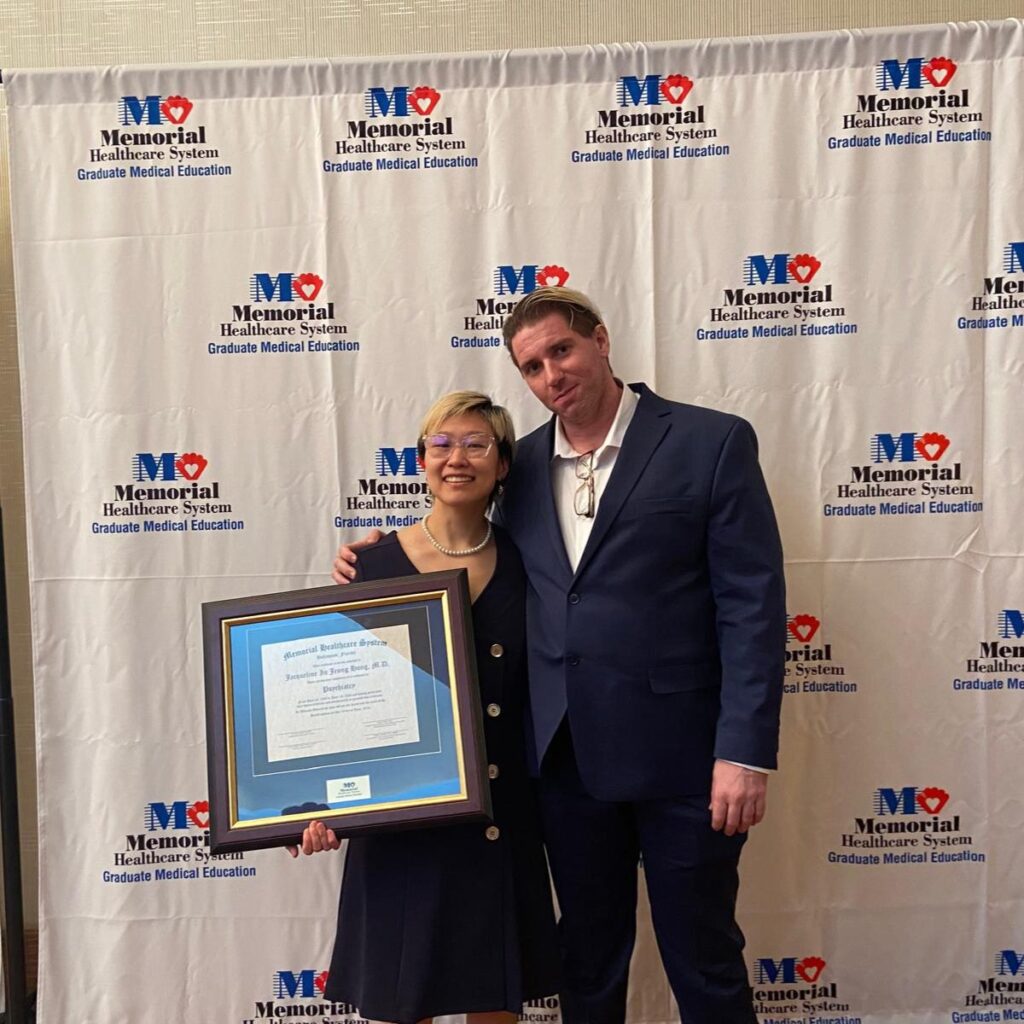
And her time in medicine did not take her away from her art. It gave her something. Years of sitting with human experience at its most raw. Her own and other people’s. That closeness to darkness, to suffering, to the parts of life most people look away from, all of that lives in her work now. You can feel it. Even when the surface is bright and playful and full of colour there is always something else going on underneath.
She grew up on cartoons and comics and videogames. Dragon Ball Z. Hellboy. Those worlds shaped her visual language from the very beginning. And her early work reflected that. Bright, clean, idealistic.
But as she got older and life got more complicated the work started changing. Getting darker. Getting layered. She started putting things into her paintings that she could not say out loud. And the interesting thing is that most people would look at the work and just see something beautiful. They would not see what was underneath unless they really looked.
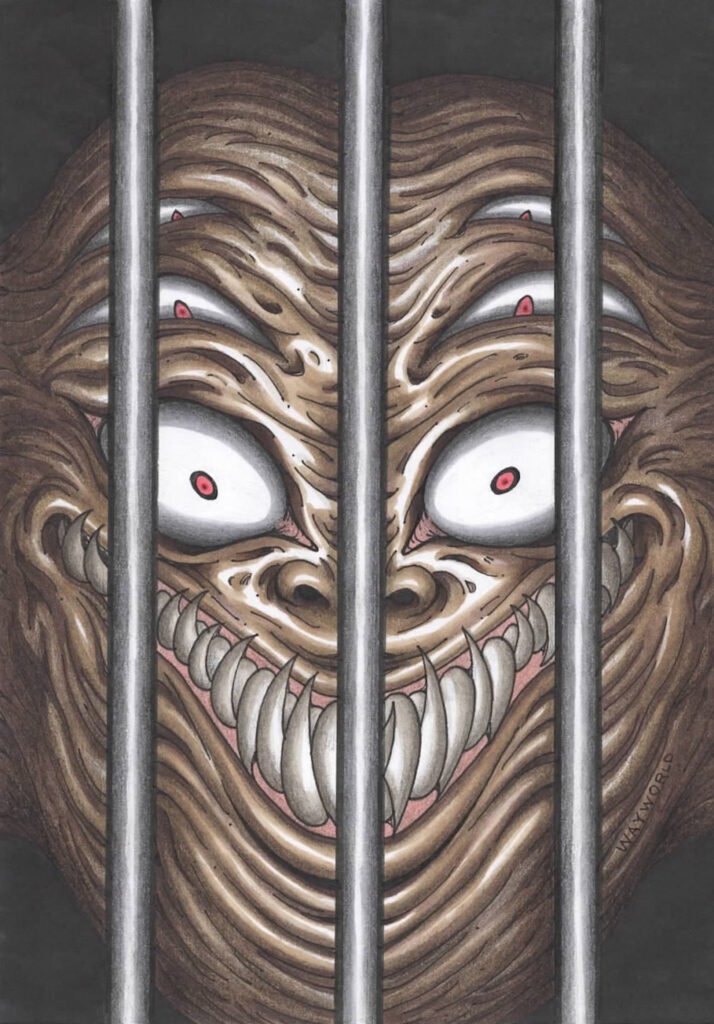
She is in a new phase right now. Trying to bring all of those sides together. The child and the adult. The cartoons and the shadows. The bright colours and the darkness. She was nervous about it at first. But she is finding that the space between those worlds is where the most honest work lives.
There is a psychological depth to her practice that goes beyond most artists and you will understand why when you read the conversation below. The way she thinks about what is conscious and what is hidden, the way dreams feed her work, the way she treats making art like an act of self-discovery, it is all there.
Let’s get to know Jacqueline more through our conversation with her.
Q1. Could you share a little about your background where you grew up, what drew you to visual art, and how that early interest evolved alongside your medical studies?
My parents are from Korea but I was born in New York. I actually moved around a lot as a kid, and at this point have lived in New York, Oregon, Pennsylvania, Texas, and now Florida. Like many creative people, I’ve always had an interest in art even from a young age. There was a time when I considered pursuing art full-time, but I come from a family of doctors, and we agreed as a family that medicine was by the far the more stable career option. While medical training was a bit miserable, I fortunately found an interest in Psychiatry and completed my residency training as a Psychiatrist in 2024. No matter how busy I was in training, sometimes working 80 hour weeks, I never stopped making art. Not to be dismissive, but in a strange way, I feel very privileged to have witnessed all that suffering in my personal life and in the lives of my colleagues and patients. Though the suffering was terrible, not everyone has access to that kind of darkness from a safe vantage point. I find it very difficult to make meaningful art without some darkness.
Q2. Your work draws influence from cartoons, videogames, comics, and surrealism. How do these varied influences converge in the tone, texture, and narrative of your paintings?
That is a great question, and something that I am still trying to explore. It’s interesting, when I was younger, I mostly focused on cartoons and fantasy. I tried to make my characters “perfect,” with bright colors and clean lines. Looking back, I realize that I was trying to keep my childhood alive by creating this idealistic world. As I got older and had to deal with the problems that all adults do like love, pain, and loss, my artwork became darker and layered with meaning. I started experiencing what I deemed “unacceptable” feelings, and though I couldn’t say them out loud, I found that I could scream them in my art. And yet, amazingly, I discovered that I could stay hidden. Many people just saw a pretty picture, and would not be able to see the deeper meaning unless they looked really closely. In my experience, art can be public and brave, while also being private and even cowardly. One of my favorite quotes comes from the psychologist D. W. Winnicott: “Artists are people driven by the tension between the desire to communicate and the desire to hide.” I feel like I am now in a new phase of my artistic journey, where I am trying to combine elements of the light and the dark, the old and the new, the child and the adult. At first, I was really nervous and hesitant to do so! I wanted to keep the two worlds separate, but I think true understanding and healing will come the more I explore the space between them.
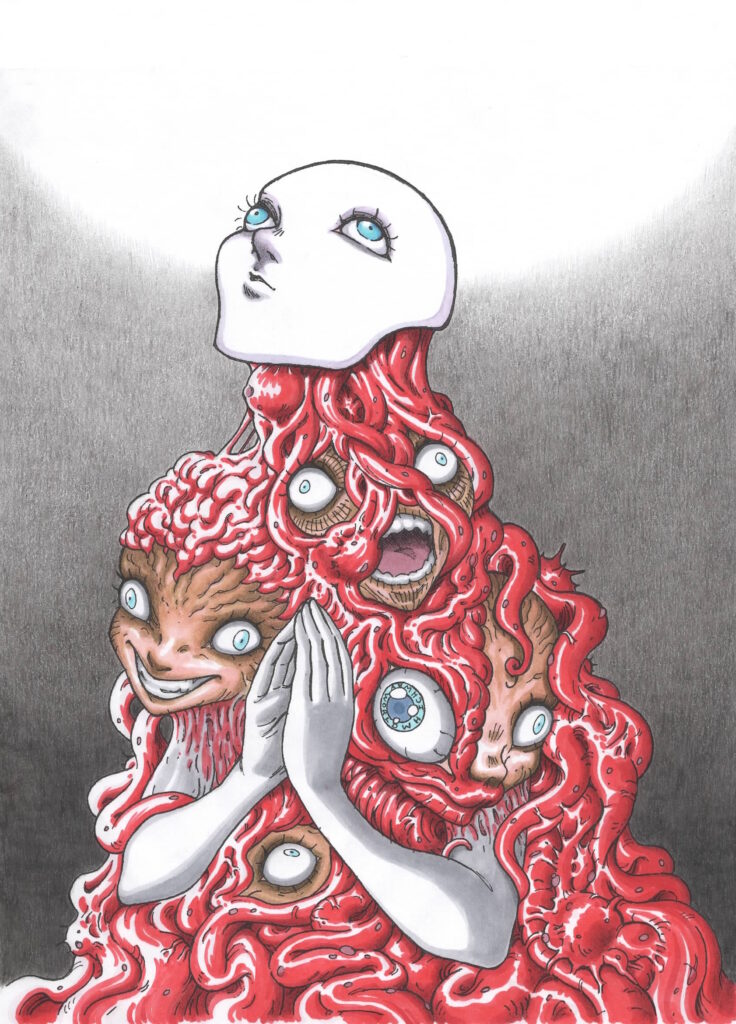
Q3. Artists like Akira Toriyama and Mike Mignola are part of your visual lineage. What about their work made you rethink your own approach to form and space?
Akira Toriyama, the creator of Dragon Ball Z was a major childhood influence and is probably still one of my favorite artists. I can vividly remember sitting in the floor all those years ago, eyes wide as the first episode of Dragon Ball Z exploded onto my small TV screen. I feel like he is one of those artists that can do it all, and it really set the bar for me in terms of character design and story. Though some people may consider his style to be a little un-serious, cartoonish, or simple, I actually think that his artwork is gorgeous and really goes to show how leaning into your strengths and being a bit unconventional can really pay off. At the end of the day his artwork conveyed the message that it was supposed to, and has touched the lives of millions of people around the world. I think the same principle applies to Mike Mignola, the creator of Hellboy, even though his work has darker undertones. I was impressed by how different his style was from all the other comic artists, and it really stood out to me. It must have been really hard to take that risk and lean into his style, with all its “simple” forms and use of negative space. At times, I’ve felt pressure to make my art more realistic or detailed to be taken seriously, but these two artists proved to me that you don’t have to follow convention to be good, and that “more isn’t always better.”
Q4. How do psychology and philosophical inquiry inform your use of metaphor, dream imagery, and surreal juxtaposition?
I think all meaningful art has elements of psychology and philosophy, whether the artist is aware of it or not. One of the most important lessons I learned from psychology was the concept of the conscious and unconscious. Our consciousness is who we think we are, but the unconscious – the world of dreams, fantasy, and repression – is who we really are under the surface. The psychologist Carl Jung took this concept further, and developed the idea of “the shadow,” which is essentially the darkness in all of us that we are afraid to acknowledge. However, to really understand yourself and fulfill your potential, Jung argues that you must explore your shadow, saying, “No tree can grow to heaven unless its roots reach down to hell.” I’ve been thinking about this a lot lately and have really been trying to “tap into” my shadow self. I have very vivid dreams, so sometimes a dream will inspire an idea for a picture. Other times, I really try and listen to my emotions, even if they’re ugly. The actual process of figuring out what you’re feeling and putting that on paper is almost like therapy in a way. It’s your own personal journey and no one can do it for you. It can get confusing and frustrating at times, and it almost feels like you have to wrestle with the art to get it just right. But once you figure it out, it is immensely satisfying and relieving! It feels like a weight has been lifted off, and you are left with something beautiful instead of something painful.
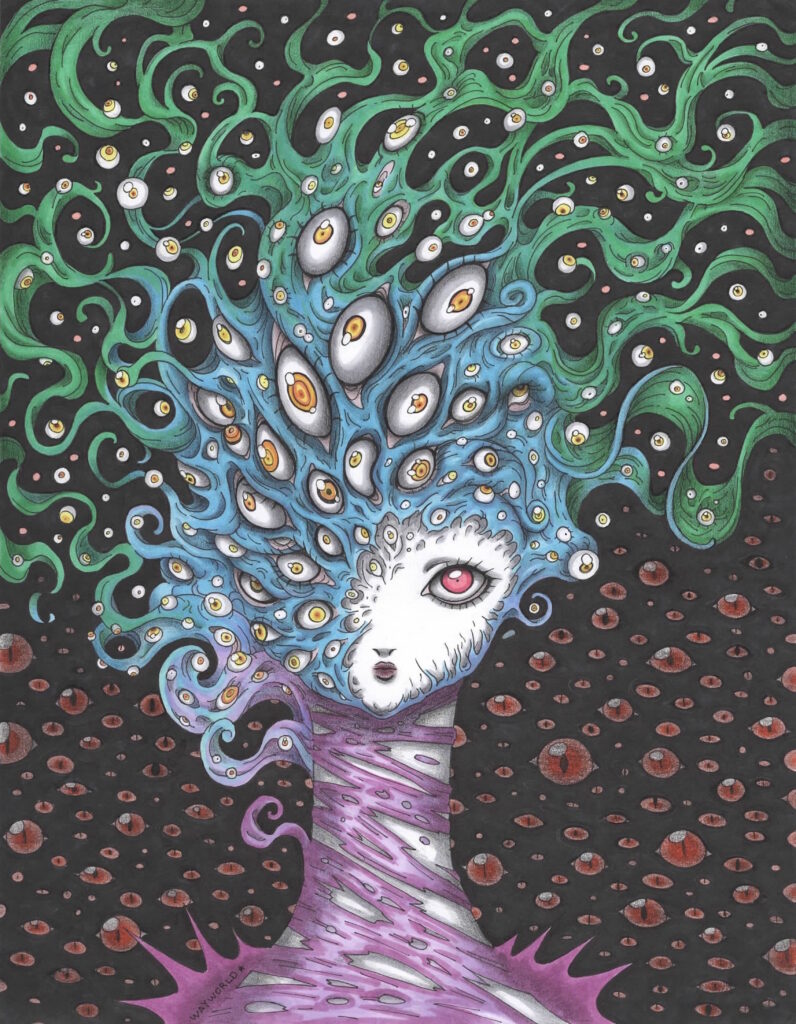
Q5. Do you find that emotional challenges or personal transitions often surface in your work organically, and if so, how do you make space for them?
I do think that is the case. I often do not have to try and seek out a topic for art, it usually comes to me. I get a lot of big feelings, and in those instances, an idea or concept will immediately come to my mind’s eye. I have a lot of projects that I have on my to-do list, but the projects at the top of my list are the ones that interest me the most and have a sense of emotional urgency behind them. As a doctor and powerlifter, there are certain areas in my life that require a lot of order and discipline, and must be done in a specific way. Being dutiful is definitely an important value for me. However, with art, I rarely let other people’s opinions or even my own sense of duty get in the way. I try to let the artistic vision have free reign, if that makes sense. It happens when it happens. I try not to think to myself, “ok, I need to make a beautiful picture for this gallery,” or “I need to make this picture according to this person’s specifications by this time.” Instead, I think to myself, “
I am feeling this emotion and it would feel so good to express this on paper.” Art is one of the only areas in my life driven solely by passion, desire, and excitement.
Q6. When someone reads one of your works differently than you intended, how does that affect your understanding of the piece?
It makes me happy! I absolutely love when people offer their interpretations of my art, and everyone has a different interpretation. That’s how I know I’ve done my job well. I never want to make a picture that has a meaning so obvious that you could write it out clearly in a sentence. That means there’s no deeper story there. Have you ever been to a movie that was superficially interesting, but you totally forgot about it an hour later? No one wants that! The best movies are the ones that are a little vague with multiple interpretations. It keeps you and your friends talking and debating for months. Sometimes, even I don’t know what I’m exactly trying to say in a piece, at least on a conscious level. For example, I don’t exactly remember what was going through my mind as I was making my piece, “Metamorphosis,” but months later I looked at it again and suddenly it hit me: “Oh my goodness! The picture is actually me!” I didn’t realize until much later that I was drawing the emotional dilemma that I was experiencing at the time.
Q7. You navigate both traditional media (pencil, pen, markers) and digital media. How do you decide which medium best serves a given idea?
I usually try to align my medium with whatever best fits the vision in my head. I’m still learning and exploring new mediums. Typically, though, rough sketches and line work are accomplished with traditional media. I don’t know why, but I just love the feeling of a pencil in my hand. Plus, the initial stages of figuring out the exact form and direction of a piece require a certain looseness and physical connection to the art that I never quite felt comfortable with when it came to digital art.
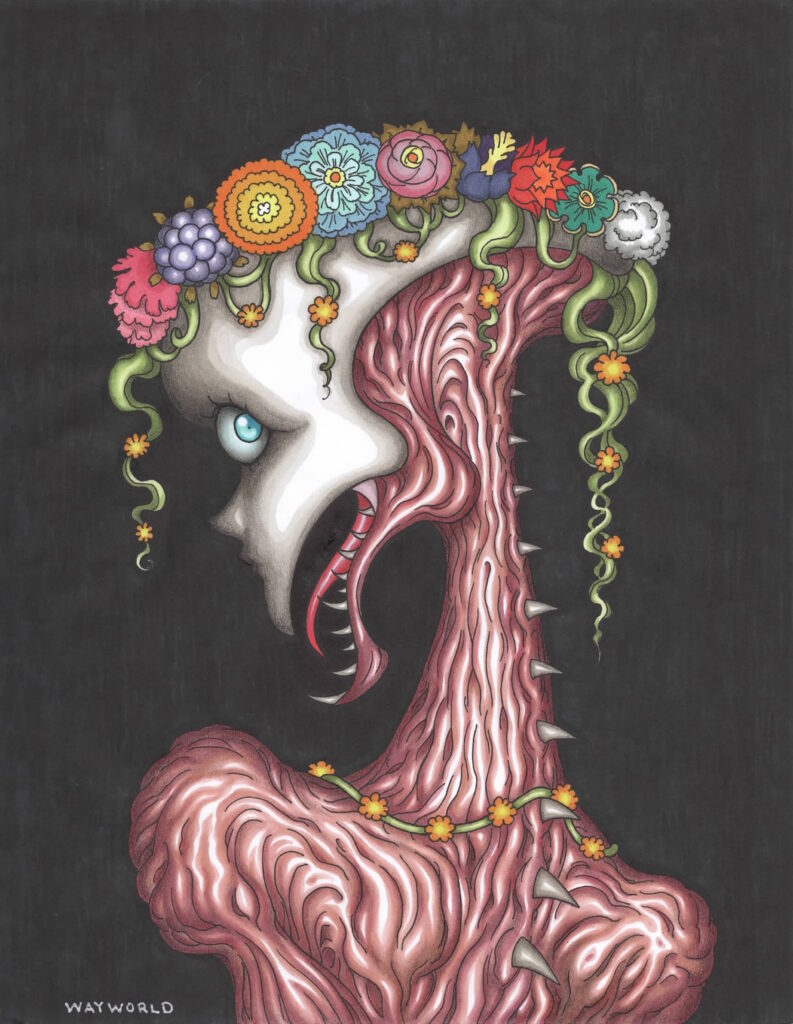
Q8. How has your sense of purpose as an artist changed since your early creative years to now, when art has become your primary focus?
Surprisingly, not much! I’ve always felt that my purpose on this earth was somehow going to be related to art. I’ve always been absolutely obsessed with it, I just have a lot more time for it now. It was necessary to put creativity on the backburner during medical training, and at that time, art was more relevant for survival. I think that was the main difference. I’ve been fortunate enough to have tried many things in my life, like psychiatry, Capoeira, powerlifting, juggling, and unicycling, but without a doubt, I’ve always been an artist first. I’ve never had to try very hard to find a reason to do art. Of course, it takes hard work and practice, but I never noticed because I enjoyed it so much.
Q9. What advice would you offer to artists who want to explore deeply personal material including dreams, fears, and internal contradiction while still making work that resonates with others?
Do it! I think the two are one and the same. We are not artists just so we can make pretty pictures or “safe” art. Sometimes I worry that people won’t “get” my art since it often touches on very personal topics, but I have to remind myself that we are all human and we’ve all had human emotions. Have faith in our collective human experience. My good friend and fellow psychiatrist’s favorite quote comes from Carl Rogers: “What is most personal is most universal.
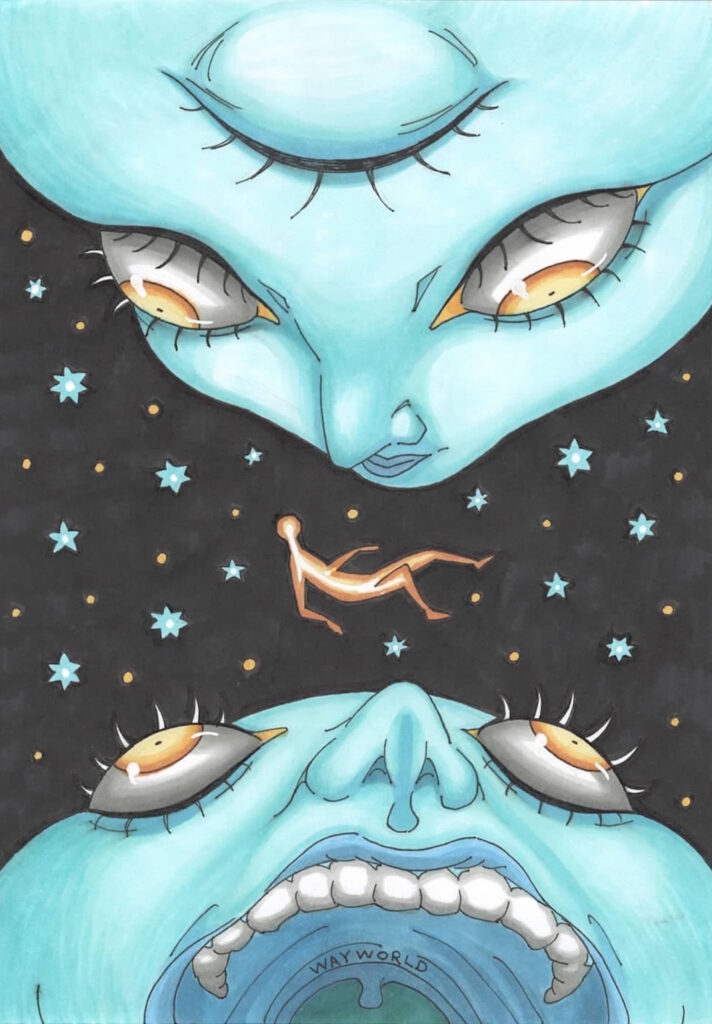
As our conversation with Jacqueline came to a close, we found ourselves thinking about a question we do not ask enough. What does it cost to be honest in your art?
Not honest in the easy way. Not honest like painting something pretty and calling it personal. Honest in the way where you put something on paper that you are afraid of. Something you have been carrying.
Something ugly or confusing or contradictory that you do not fully understand yourself. And then you frame it and put it on a wall where anyone can see it. That takes something from you. And it gives something back. But the taking comes first.
Jacqueline knows that exchange well. And what we respect about her is that she keeps choosing to make it. Every time. Even when it is uncomfortable. Even when she does not fully understand what she is making until months later. She keeps showing up to the page and putting down what is real instead of what is safe.
We think the art world could use more of that right now. More work where you can feel that something was at stake when it was being made. More artists who are willing to confuse themselves on paper and let the viewer sit with that confusion too instead of wrapping everything up neatly. Because the neat stuff is forgettable. The messy honest stuff stays. It lives in your head. You think about it in the shower three days later and you still do not know exactly what it meant but you know it meant something.
And there is something about the combination of skills Jacqueline carries that we think is genuinely rare. She understands the human mind professionally. She understands visual storytelling instinctively. And she has spent a lifetime absorbing the kind of pop culture imagery that millions of people grew up on and feel connected to without even thinking about why.
Those three things together in one artist, that is not common. And the work that comes from that combination operates on multiple levels in a way that rewards you every single time you come back to it.
For anyone looking to collect work that has real substance behind it, Jacqueline is someone to watch closely. Her pieces look one way from across the room and another way up close. They give you beauty first and then they give you something deeper if you are willing to stay with them. That is the kind of art that does not fade. It settles into your space and it keeps giving.
To follow Jacqueline’s journey and explore more of her work, you can find her through the links below.