


A Studio Visit and Interview with Artist Taylor Katzman

This studio visit takes us into the small, home-adjacent space in Milwaukee where painter Taylor Katzman works under the name Art Compulsions. The interview delves into her thoughts on how ideas evolve from quick notes and scribbles into full-fledged paintings, why she alternates between her home and studio instead of shutting one door and opening another, and how she allows time to unfold naturally rather than forcing a routine. We also hear about the people who move through this space with her, like her daughter popping in after school and her husband, whose old tool bench now holds rows of paint.
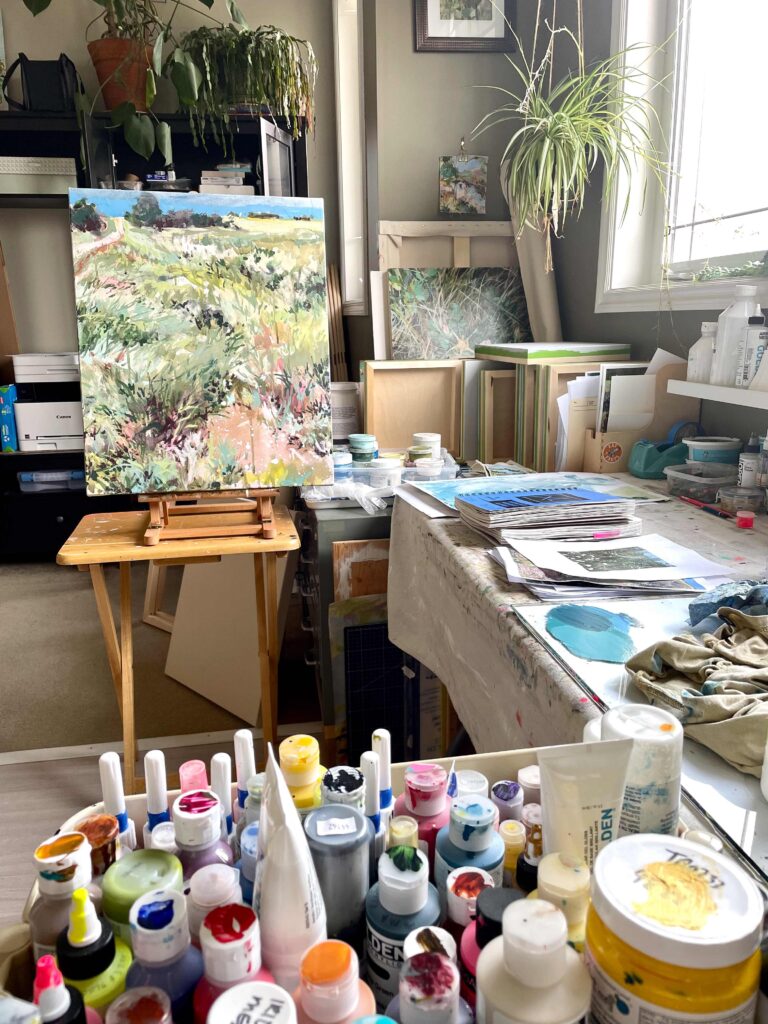
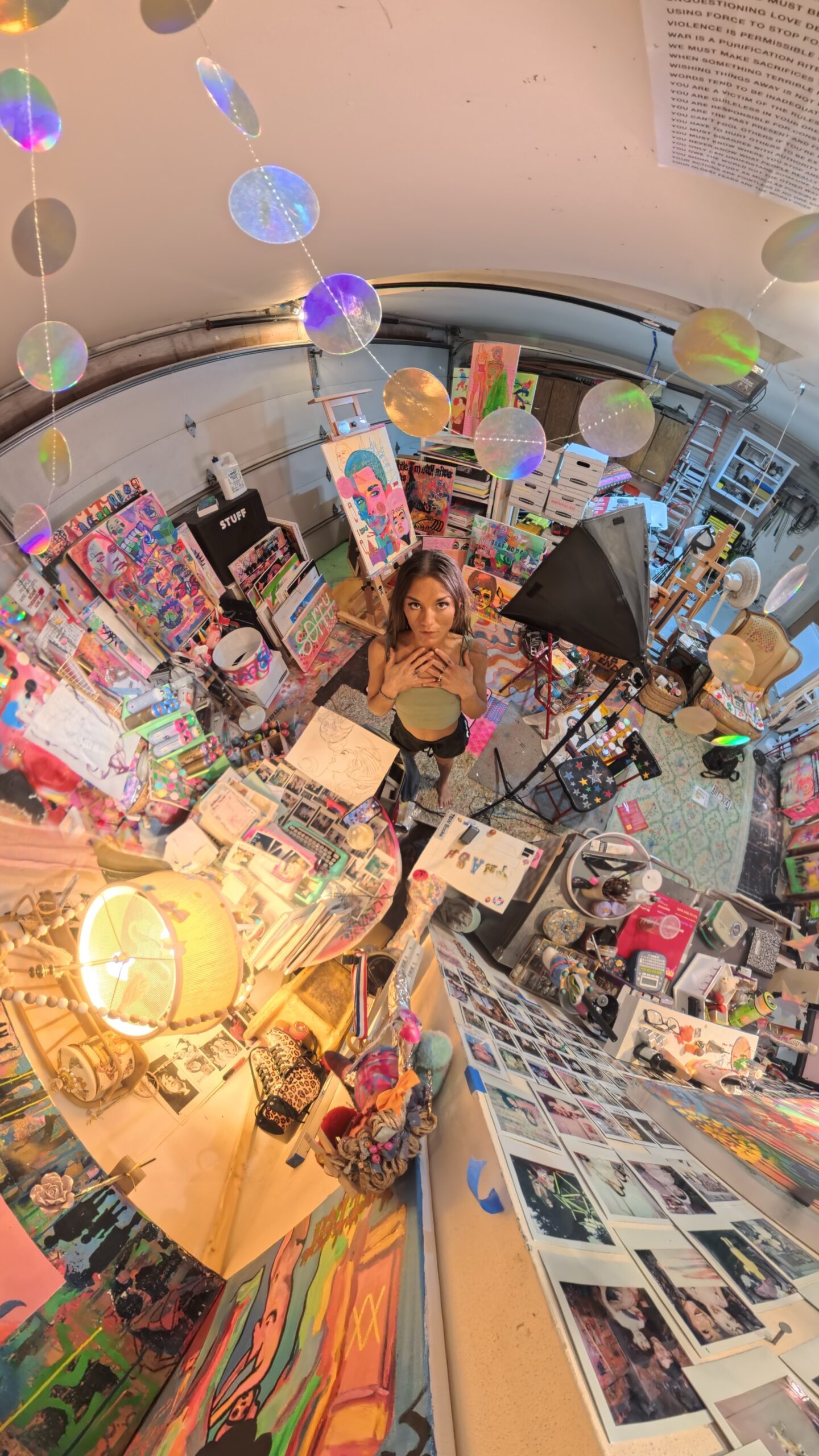
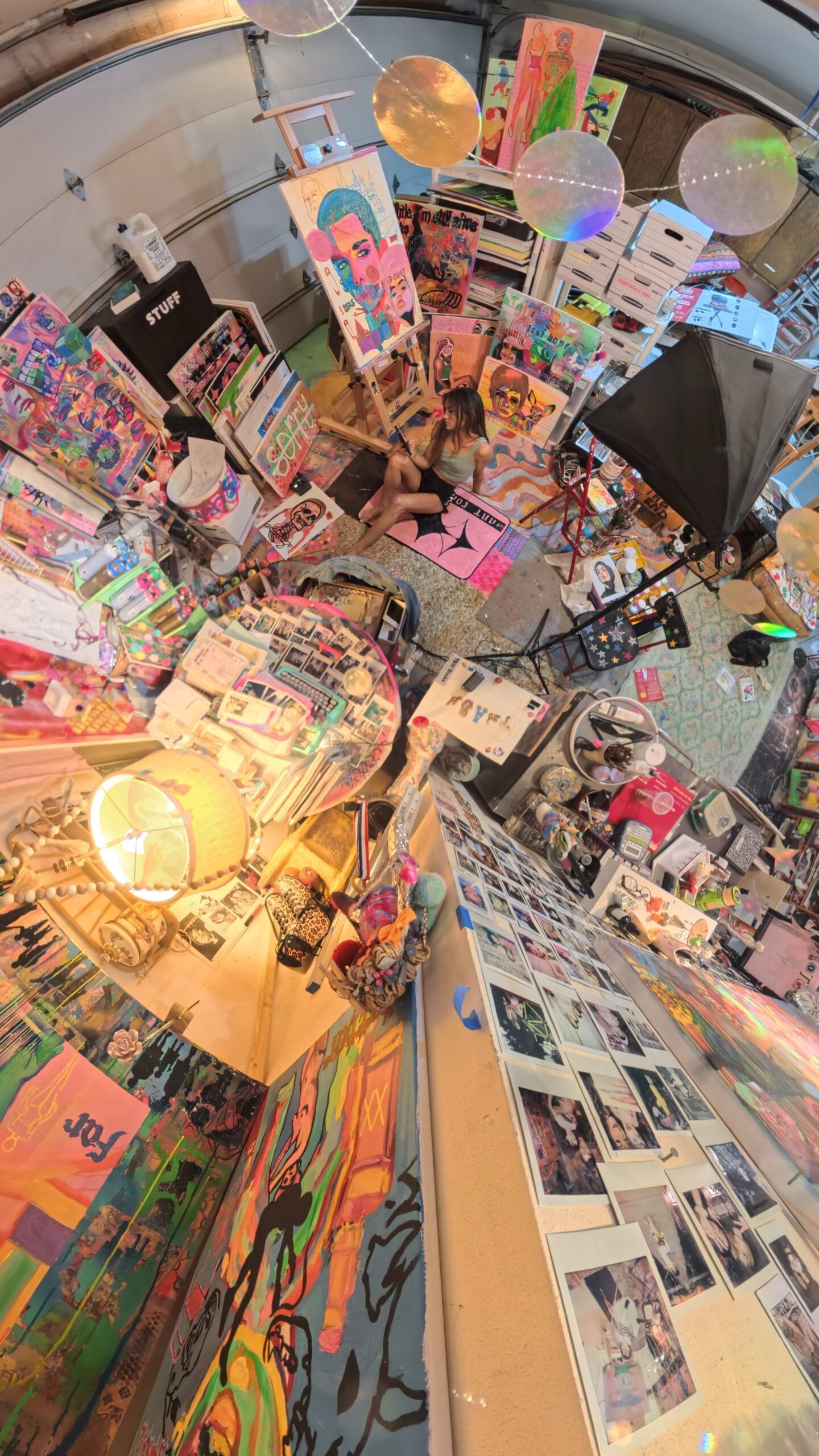
The studio is only a few steps from the house, close enough that family life and art life overlap. When you walk in, the smell is a mix of wet acrylic, damp brushes, and wood from the old workbench. Canvases lean everywhere, journals rest open on tables, and there is a feeling that you could pick up a brush at any moment. Sometimes the garage door stays open during daylight, and other times she shuts everything so the fluorescent paint can glow under a black light.

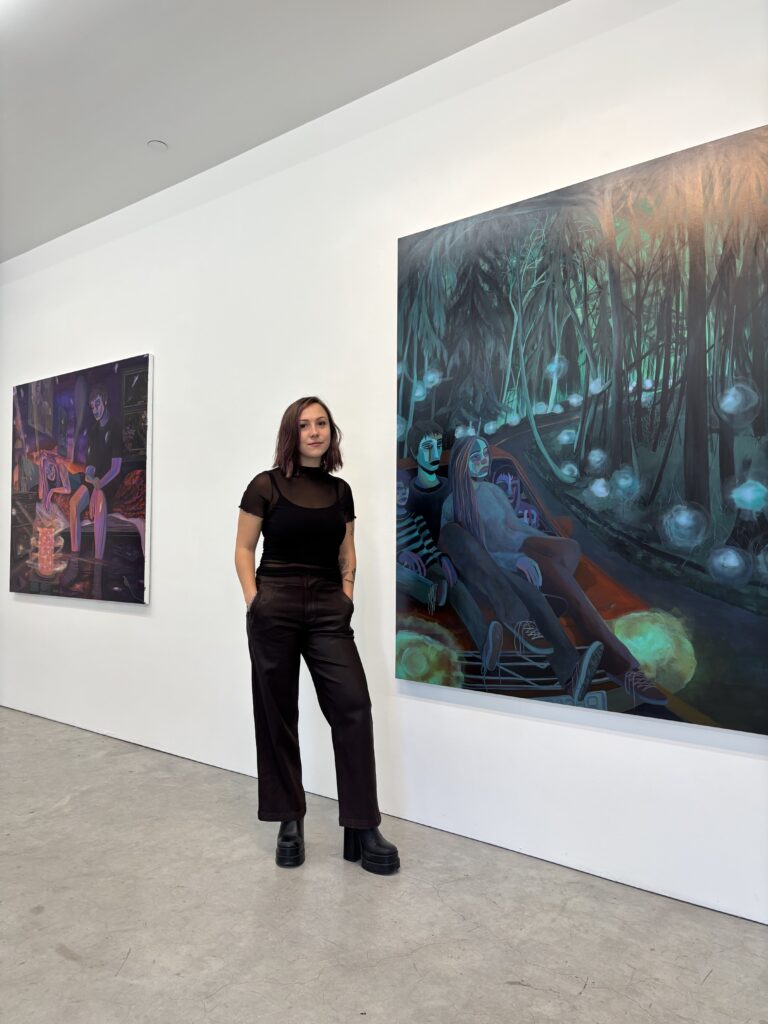
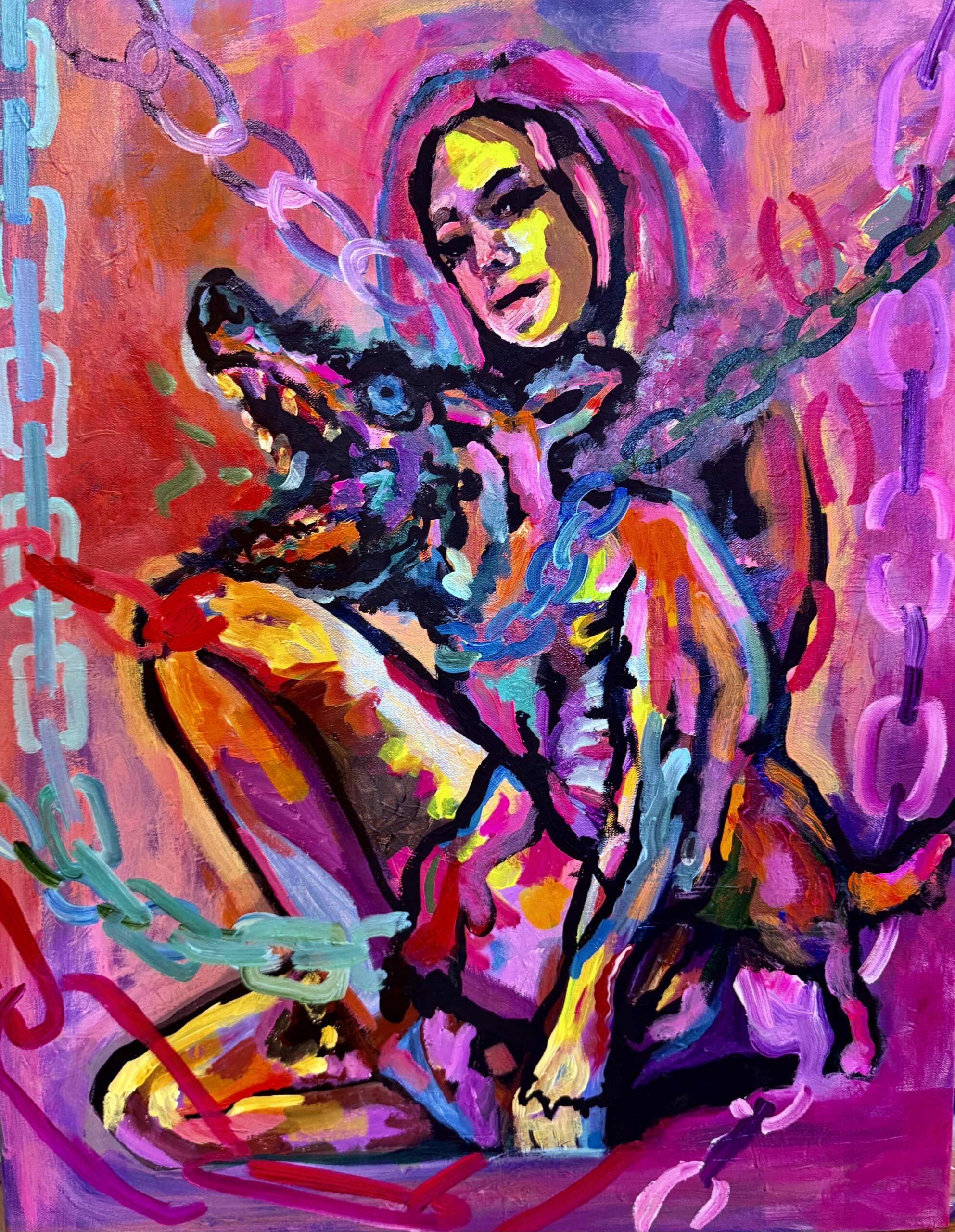
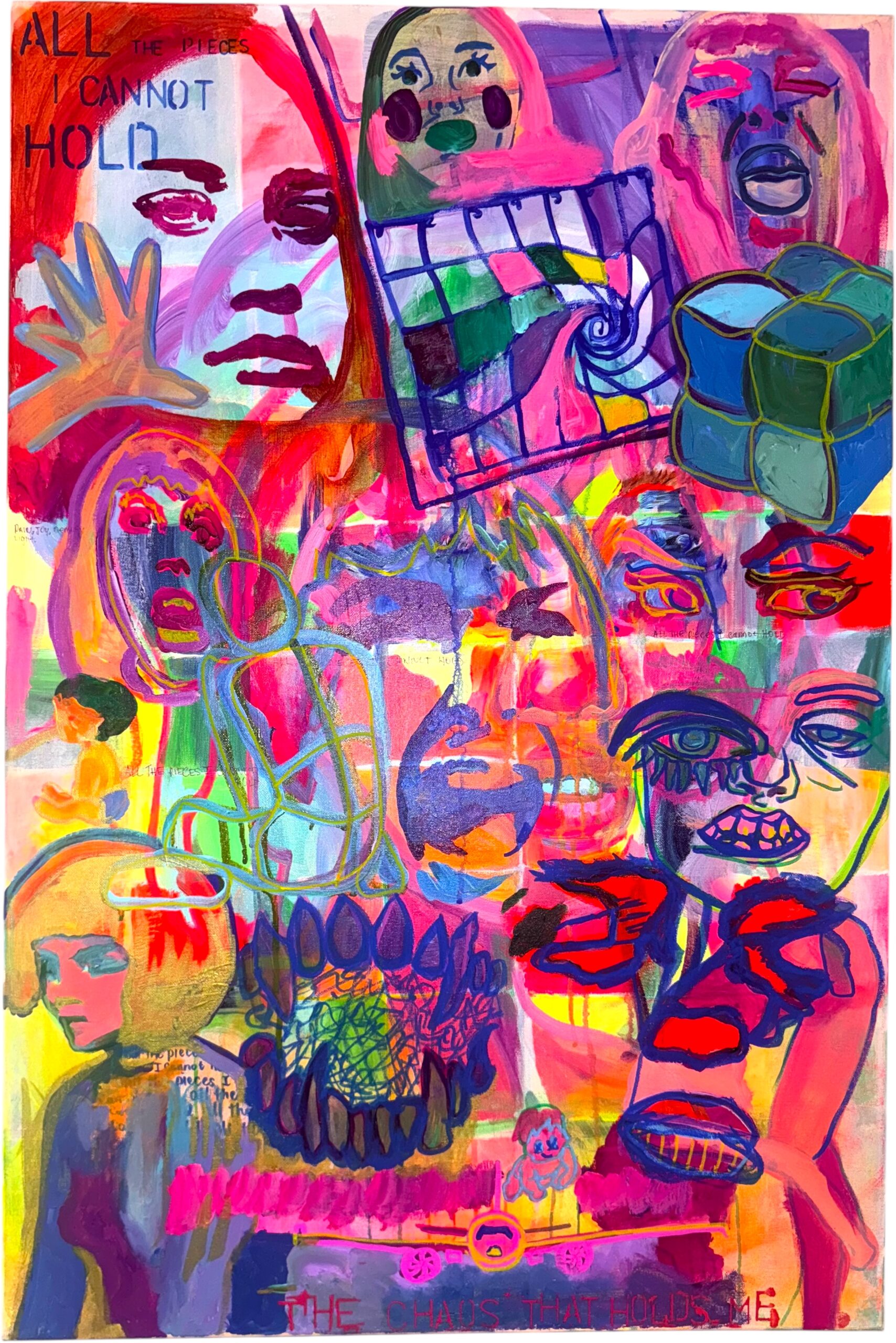
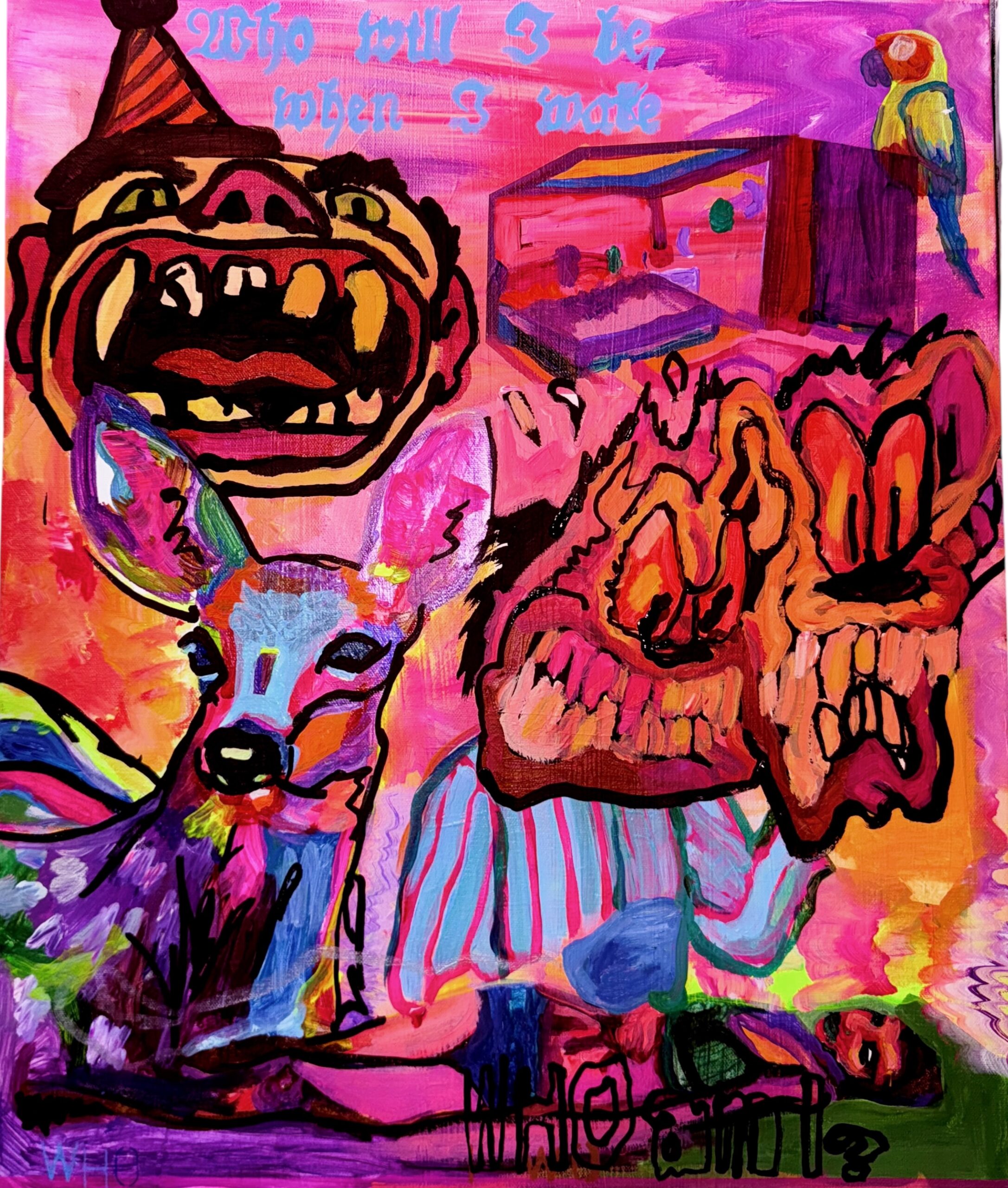
I’m Taylor Katzman, a Milwaukee-based acrylic painter working under the name Art Compulsions. My work explores emotion through expression — the kind that sits between language and silence. Using bold colour, layered text, and figurative imagery, I translate complex human experiences into visual form: love unravelling, identity rebuilding, memory looping.
I began painting in 2014 after years of filling notebook margins with ink figures and fragmented words. What started as compulsion became conversation — between colour and shadow, control and chaos. My creative philosophy centres on the belief that emotion has architecture; it can be built, broken, and rebuilt again on canvas. Each piece is both excavation and offering — an attempt to make the invisible visible.
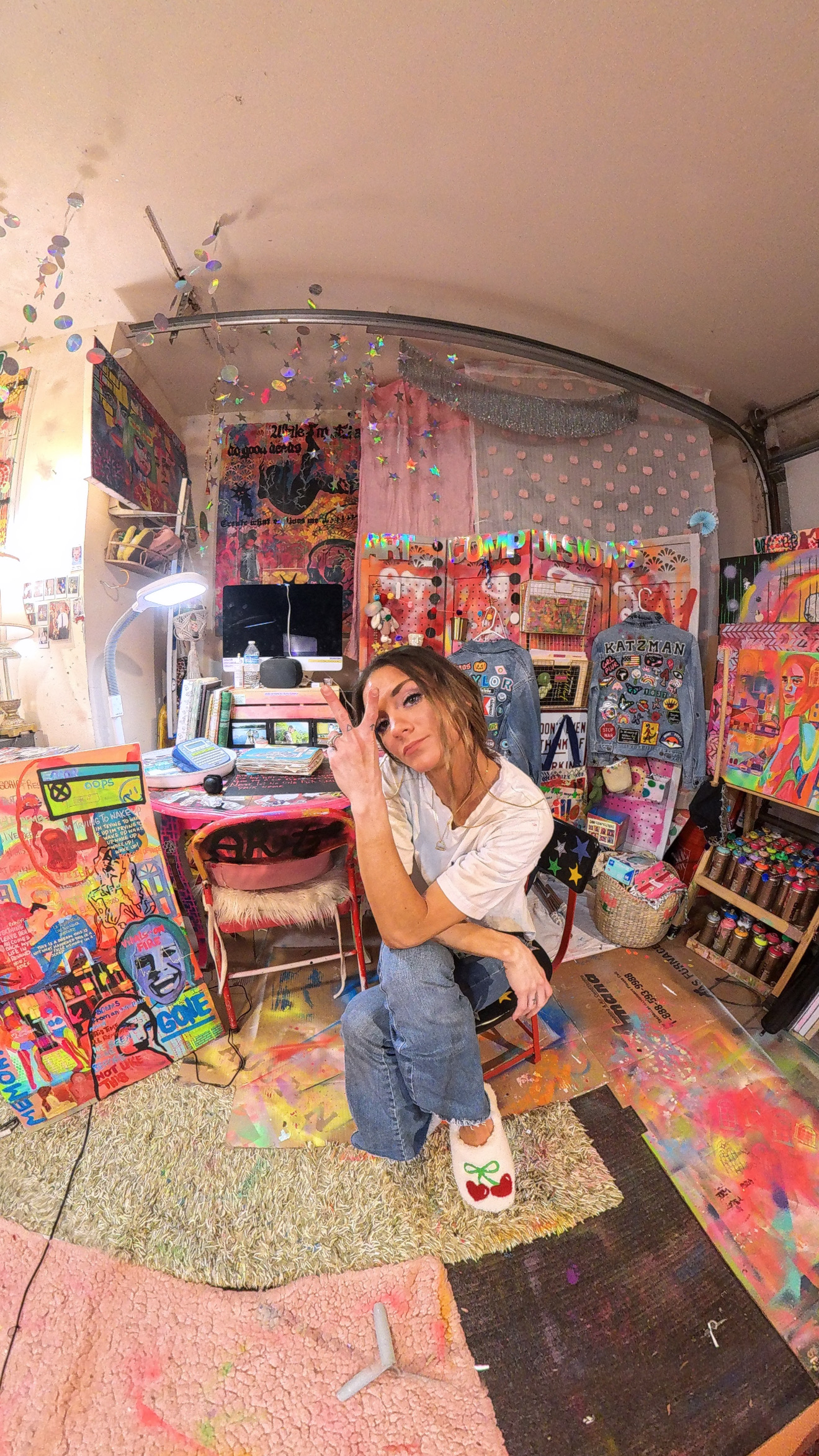
1. Can you walk us through your studio space? What’s the first thing you see when you walk in?
When you walk into my studio from the house, the first thing you see is a bookshelf filled with my personal journals, scrapbooks, and favourite novels, alongside zodiac books that fuel my inspiration. To the side, there’s an old tool bench my husband gave me, now filled with paints organised by colour. A fold-out table stands ready for journaling or sketching, and gets tucked away when it’s not time for that introspective phase. Another bookshelf holds reference books on anatomy and art practices, Polaroid albums that inspire my work, and even the books in which I’ve been published.
Above it, a model of the human body stands as a quirky muse. The wall is covered with Polaroids and memories, grounding the space in personal history. In the centre, where I paint, is a glorious mess, surrounded by shelves near the garage door holding all my in-progress canvases. I juggle multiple paintings at once, letting them sit until they tell me they’re done. A table holds my guided journals for emotional digging, and a pegboard divider keeps my files and tools within reach.
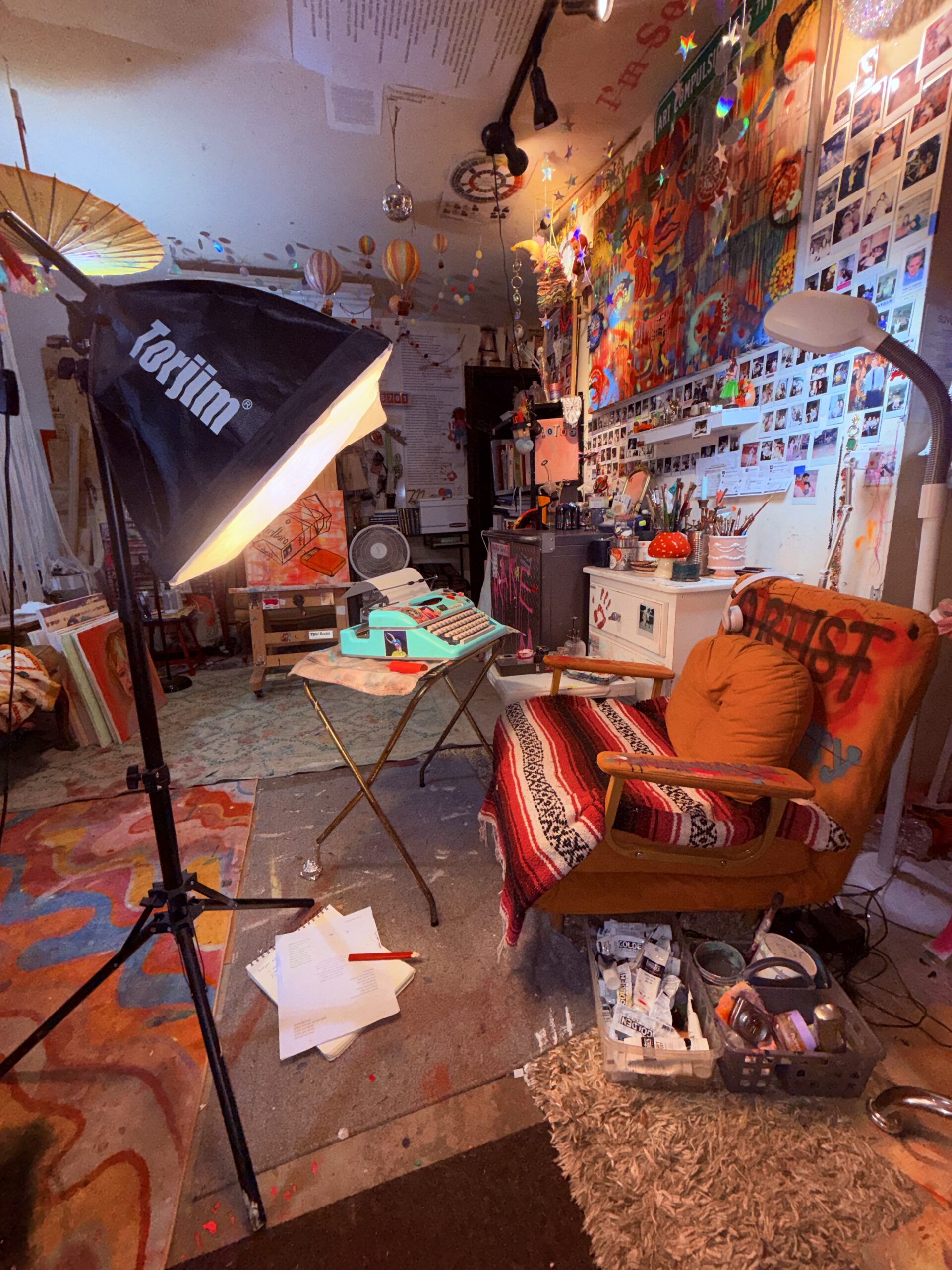
2. How is the space arranged to support the way you like to work on a painting from start to finish?
My studio sits just beyond a single door that separates it from my home — a small but meaningful divide. When that door closes, I step into focus; when it opens, I return to family and everyday life. Most often, though, I leave it open — drifting back and forth between both spaces throughout the day. That in-between flow mirrors the way I work best: shifting focus often, letting creativity and real life overlap instead of compete. It’s not inside the house, which helps me mentally shift into work mode, yet it’s close enough that I can slip in and create whenever the urge hits. I’ve always needed that balance — connection and separation in the same breath.
I don’t want a studio that requires a commute or strict scheduling; that’s how passion can start to feel like an obligation. Having my workspace nearby keeps everything natural and spontaneous — and more importantly, it keeps my work authentic. I can walk in barefoot, covered in paint, and get lost in the process without overthinking the clock. I’ll admit, I’m not the best at time management (and honestly, I have no desire to change that). I’ve learned to see it as part of who I am rather than something to fix. Sure, sometimes I’m late to appointments, but trying to force myself into a mould that doesn’t fit would only pull me away from my truth. Embracing who I am — fully and unapologetically — is what keeps both my art and my life in harmony. I don’t clean as often as I probably should, but that’s part of the rhythm here too. The space is meant to be lived in — messy, real, and always ready for creation at any moment.
3. What materials or tools do you keep closest to you while working?
Everything in my studio is arranged to be visible, even if not all of it is within arm’s reach. I keep my paints organised by colour in a big hat on a rolling cart, and my palette, brushes, and water cup (definitely not for drinking!) are always right next to me when I’m at the easel. I also keep a retarder on hand to slow down the drying time of my acrylics, and there’s always a jar of GAC 100 nearby, which I use to extend and smooth my colours. It’s pre-mixed with water, ready to use at any time. The way I set up my tools reflects how I work — everything’s in sight, so I can easily reach or spot what I need without breaking the flow. The easel, with my current painting, is the heart of it all, and everything else orbits around that space, keeping me ready to create in that authentic rhythm I live by.
4. Are there certain books, film stills, or notes that stay in the studio as part of your process?
I keep old sketchbooks and journals nearby, filled with fragmented thoughts, poem lines, and half-doodles that often evolve into full paintings. There’s also a wall of Polaroid snapshots — small moments that hold big feelings — they spark emotions and memories I can pull from when I need direction or connection. Scattered around the space are handwritten poetry lines and phrases, some half-finished, some later finding their way directly into the work itself. Those raw notes and images act like breadcrumbs through my creative process — pieces of my own story that help me stay anchored to the emotion behind each painting.
5. How do you usually keep track of ideas as they move from your journals into the canvas?
My ideas usually begin in my journals — a mix of scattered thoughts, poem fragments, and quick sketches. I’ll underline or circle the ones that pull at me, then bring them into the studio where they start to shift shape. Sometimes the words stay in my notebook; other times they end up written directly on the canvas, layered beneath paint like whispers only I know are there. I don’t follow a strict system; it’s more intuitive than organised. I move between paper and paint as if they’re extensions of the same language — what begins as writing almost always ends as feeling.
6. What does a typical day in this studio look like for you ?
My days don’t really follow a schedule — they breathe in their own rhythm. After dropping my daughter off at school, I either dive straight into the work or drift back into rest, depending on what kind of night I’ve had. There’s no guilt in that — it’s all part of the creative cycle. Some days begin when the sun rises; others don’t really start until after it sets. I’m a night owl by nature, so often the quietest hours — when everyone else has gone still — become the most alive for me. That’s when the studio hums. I move fluidly between painting, writing, and reflection — following whichever impulse feels magnetic. There’s usually music, half-finished sketches, and the occasional midnight coffee. The studio feels less like a workplace and more like an ecosystem — one that’s always awake somewhere, even when I’m not.
7. How does the light in this space change the way you approach a painting?
The light in my studio completely dictates my process. While I love natural light for sketching or layering subtle tones, I often have to eliminate it once I start painting. Because I use fluorescent pigments in nearly every piece—whether pure or mixed into other colours—their behaviour changes dramatically under different lighting, I’ll close the garage door, turn off any daylight, and work under a mix of black lights and dim lamps so I can see how the fluorescents actually react in darkness. It’s a strange half-lit atmosphere—part cave, part laboratory—where colour stops behaving like colour and starts glowing with its own pulse. Sometimes I feel like I’m painting in the dark with light itself.
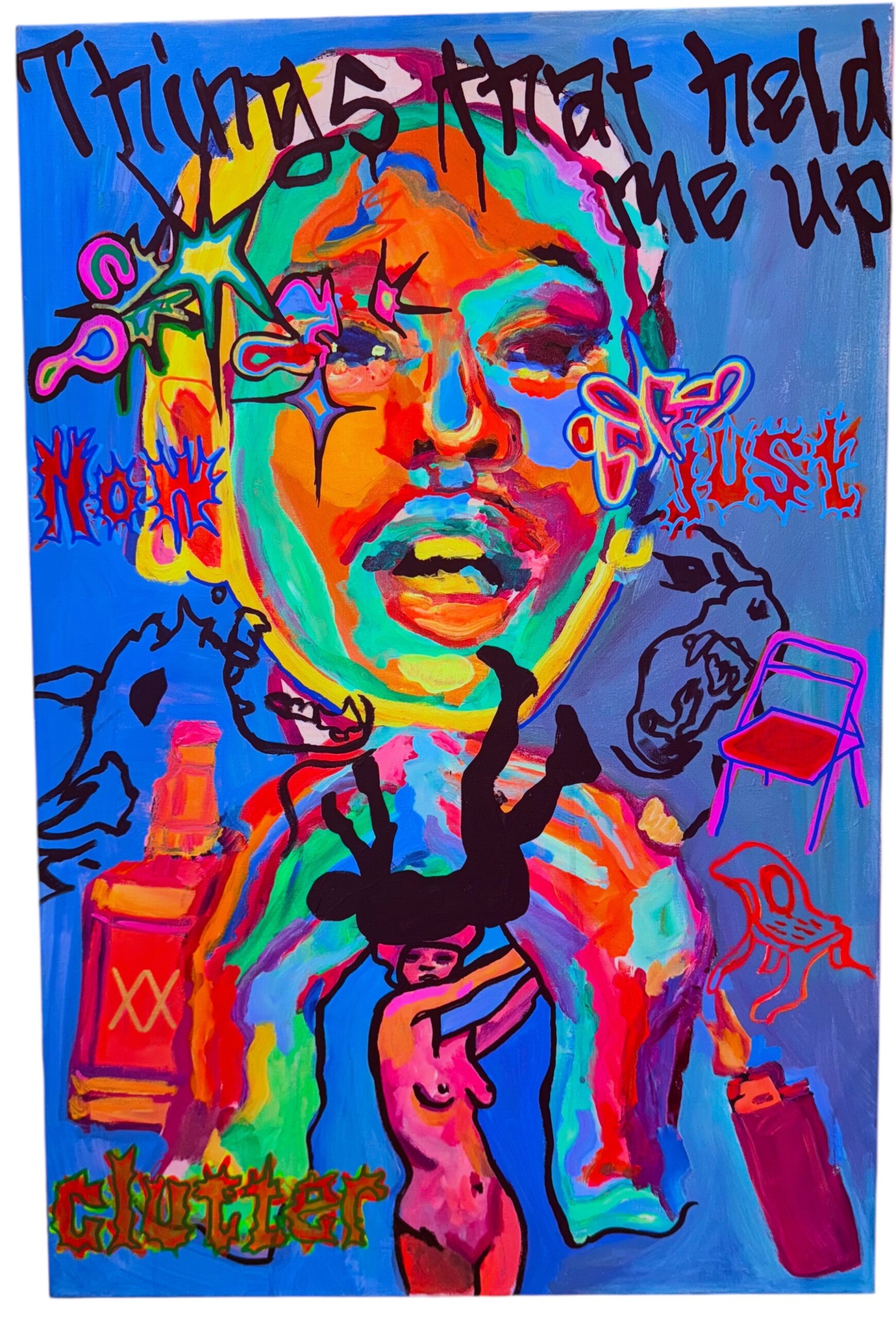
8. Do you have works in progress visible around the room, or do you prefer to focus on one piece at a time?
Let’s say “one at a time” isn’t in my vocabulary. My studio resembles a creative traffic jam—half-painted canvases leaning against every wall, drying in various states of completion. I juggle about twenty pieces at once; they all talk to each other while I’m trying to paint. It’s chaotic, but it’s a fluent kind of chaos.
9. Is there a spot in the studio where you usually pause to step back and look at the work differently?
Yeah—there’s a corner by the door where the light hits differently, kind of sideways. It’s the only place I can get enough distance to see if the chaos is actually balanced or just… chaos. I’ll usually stand there mid-process, arms crossed, half judging, half in awe that it’s even coming together. That spot feels like my “editor’s chair”—where instinct meets perspective.
10. If you get a chance to set up your studio anywhere in the world, where would it be?
Paris. Without a second thought. Leaving Paris felt like someone taking a pacifier from a baby — pure heartbreak. The air there hums with creative energy; every corner feels alive with colour, architecture, and history that whispers to you while you paint. But as much as I’d love to set up shop there forever, I’ve got roots. My home and family mean everything — and honestly, it takes a village to raise a child, and I have a town here. So for now, Paris stays my muse, even from afar.
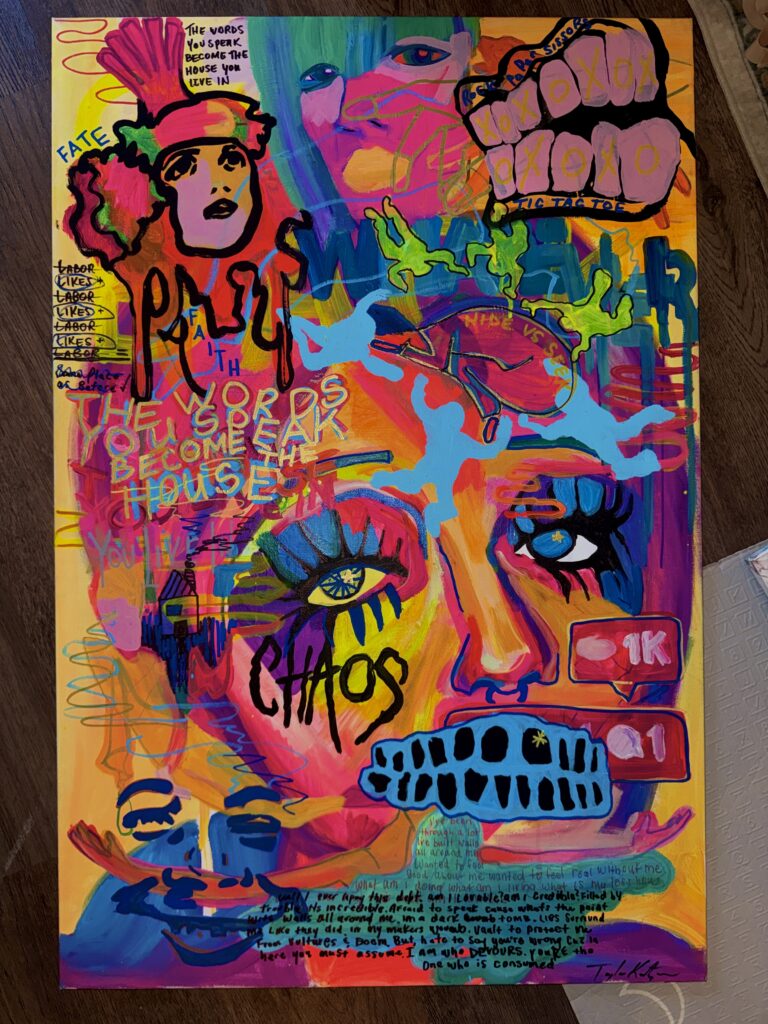
Leaving Taylor’s studio feels like stepping out of a place where thoughts and feelings don’t have to behave. The room hums with half-finished ideas, quiet confidence, and that familiar smell of paint, water and wood. Nothing here is stiff or perfect. Canvases lean, journals stay open, and life slips in and out as naturally as breathing.
Her paintings speak to emotions that can’t always be expressed out loud, and her approach to working reminds us that creating is not always tidy or planned. We learn from her that letting life unfold in its own time, allowing time to move at its own pace, and trusting our feelings in the moment can lead to honest and meaningful work. She shows us that it’s okay to be in process, to shift, to start again, and to let your space and your days breathe with you.
Visit our website to explore the virtual studio spaces of other artists. To be featured on our website, remember to apply for this month’s call for art.
Read more about Taylor on her Website and Instagram.
Arts to Hearts Project is a global media, publishing, and education company for
Artists & Creatives, where an international audience will see your work of art, patrons, collectors, gallerists, and fellow artists. Access exclusive publishing opportunities and over 1,000 resources to grow your career and connect with like-minded creatives worldwide. Click here to learn about our open calls.