
How reading about other artists’ lives saved her I Ana Melo

👁 418 Views
At Arts to Hearts Project, we’ve always believed that the most powerful art doesn’t come from perfect conditions. It comes from necessity. From people who had to create because making art was the only thing keeping them alive.
When we were curating our Everything is Art exhibition, we wanted artists who understood that art isn’t just what hangs on walls. It’s what saves you. What pulls you back from the edge. What gives you a reason to keep going when everything else has fallen apart.
Then we came across Ana Melo, and honestly, her art tells her story better than words ever could. Her story isn’t neat. It doesn’t follow any recognizable path. And that’s exactly what Arts to Hearts Project adores thoughtful art that comes from real experience, from survival, from the kind of honest struggle that shapes everything you make.
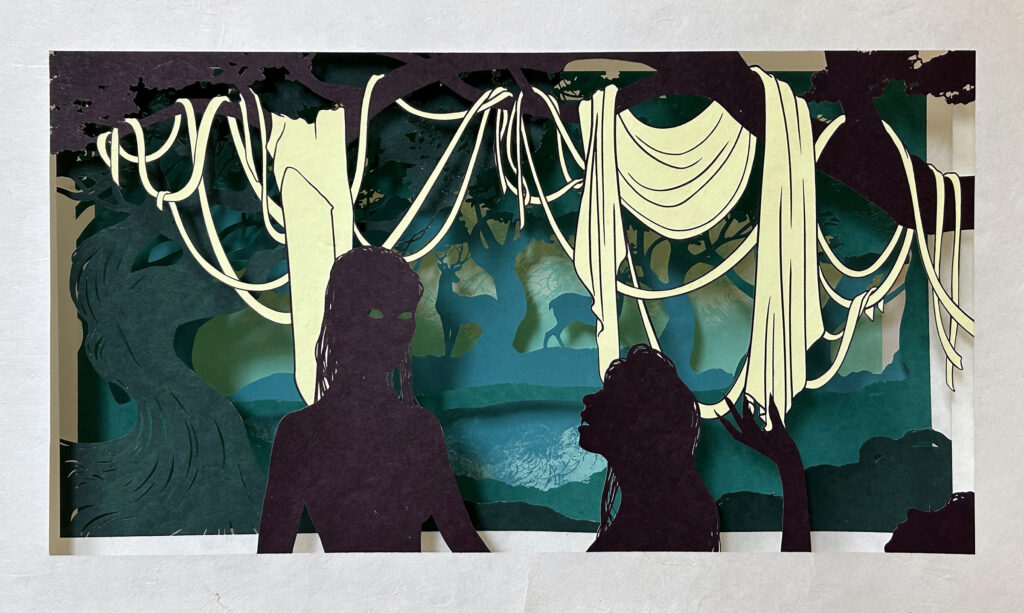
Ana makes quiet drawings and textiles, pieces that feel like holding a memory in your hands. She didn’t create them to impress anyone. She made them because she needed to. Creating was how she survived. You can feel that truth in every piece.
Now, before we hear from Ana, let me tell you about her.
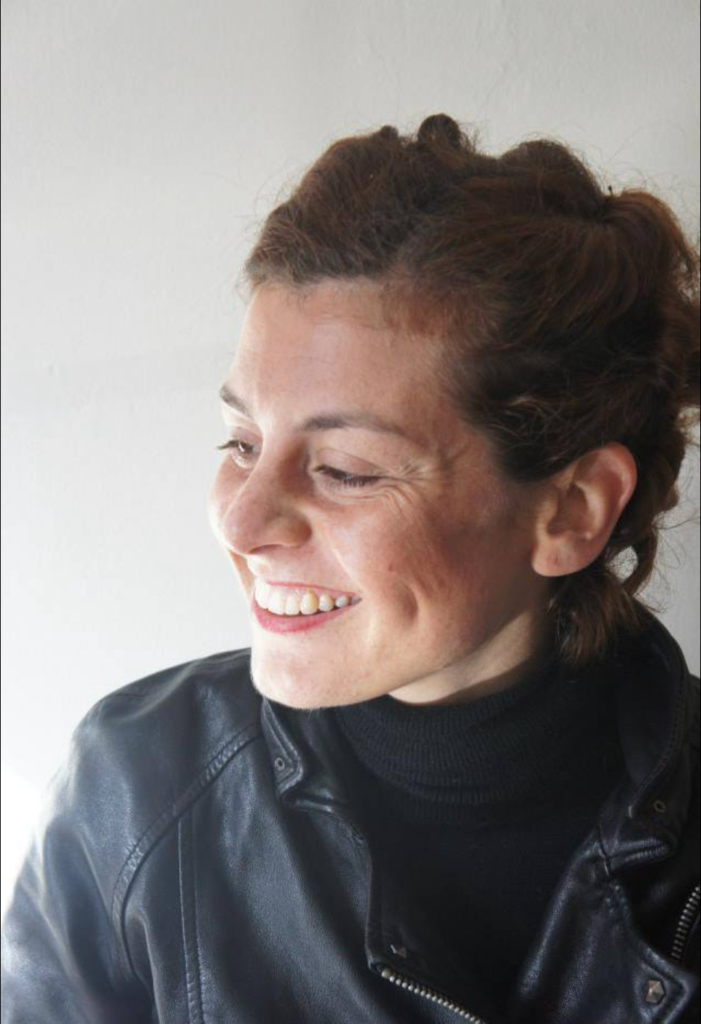
Ana grew up in Portugal where being a sensitive, creative woman wasn’t really valued. There wasn’t room for expression, especially if you were a woman. In her early twenties, everything fell apart. She had a breakdown that changed everything. She moved to London and started drawing at home, completely alone.
At the time, she worked in advertising. It took her years to take making art seriously. But London opened something in her. Just going to exhibitions, reading about other artists’ lives it made her feel less alone.
And that’s what actually saved her. Reading about other artists’ lives. Not their techniques or how they got successful. Their real lives. Their struggles. Their breakdowns. Knowing other people felt this way too gave her permission to keep going.
Ana’s practice today is about balance. She trusts her intuition, but she knows it needs support. For her, that doesn’t mean working 9-to-5 in a studio. It means having a healthy spiritual life. Helping other people. Right now, she runs women’s circles and works with textiles alongside them. That’s not separate from her art—it is her art.
She’s drawn to artists like Frida Kahlo, Dora Maar, Leonora Carrington, Amrita Sher-Gil. Women who made art before feminism even had words for what they were doing. Most of them aren’t well known. What pulls Ana to them isn’t just their work. It’s their lives. What art meant to them. Why they kept making it when everyone told them to stop.
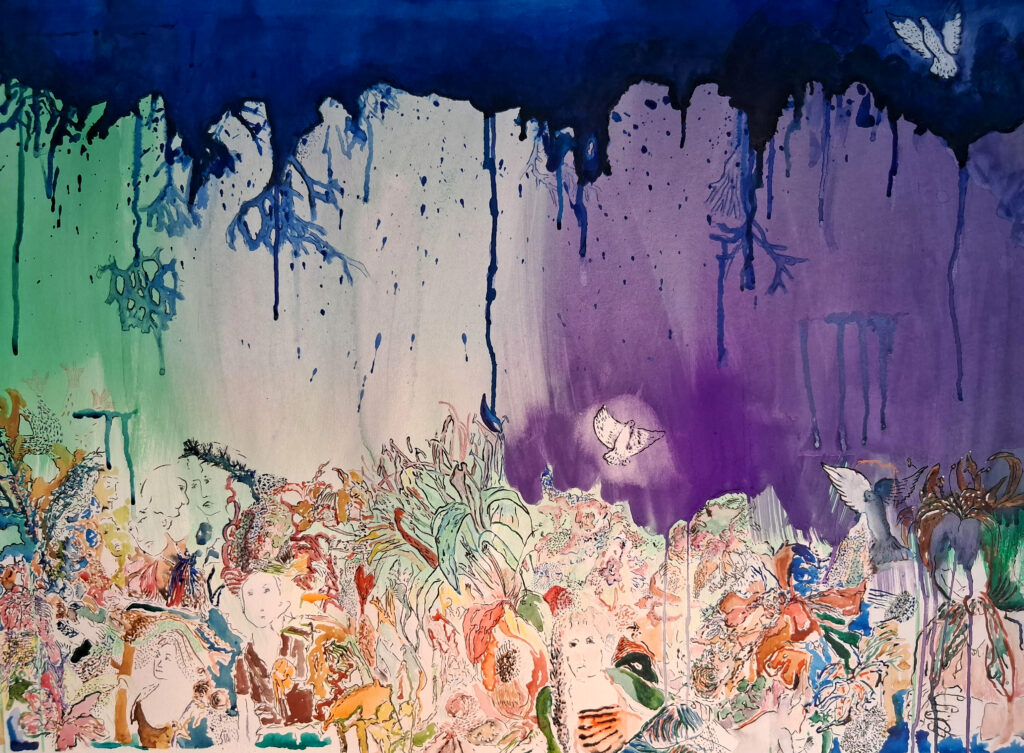
There’s a part of Ana’s story I think every artist needs to hear. There was a time when Ana was making serious money from her art. She was producing fast, selling everything, working nonstop. From the outside, she’d made it. She was living the dream everyone talks about.
But inside, she was always one step away from falling apart. She was working like a machine. Living completely in what she calls her masculine energy productivity, speed, output, more and more and more. Financially, it was working. But spiritually, it was killing her. She felt like a robot.
She couldn’t do it anymore. So, she did something terrifying. When everything was finally working, she walked away. She started exploring her feminine side. Not throwing away her masculine energy but bringing them together. She slowed down. Started the women’s circles. Began working with textiles. Not because it would sell, but because touching fabric took her back to her childhood. To her grandmothers. To healing things, she didn’t even know were broken.
Everything’s different now. How she lives. How she makes art. That’s when textiles became her language.
Let’s hear from Ana about how reading other artists’ lives kept her going, why her most successful period almost destroyed her, and what changed when she finally stopped running and started healing.
I began by asking Ana to share her background, where she grew up and how those early experiences shaped her relationship with art and creativity.
I grew up in Portugal, in a household where there was very little room for expression and for showing emotions, especially for a Woman. Also, in a Country and in an environment where sensitivity and creativity were not cherished neither valued. In my early twenties I had a massive breakdown and moved to London and started drawing at home, by myself. At that time, I worked in advertising, and it took me quite a while to take making art more seriously. Being in London really shaped me and opened my eyes and heart. Just going to exhibitions and Reading about artists life’s helped and inspired me and made me feel much less lonely.
Knowing that sketchbooks often function as private thinking spaces, I was curious about her decision to make parts of this process visible. I wanted to understand what that choice reveals about how she thinks about authorship and transparency in her work.
For me authorship in contemporary practice is related to how much of your soul you put into the work , how much is it something that comes from you and how much is it something that is dictated by the outside, how much of your work do you really own, regardless of if you are in its possession or not. When I say work, for an artist it can actually mean anything including his/her life. For me personally I love sketchbooks and I love how they show the spaces in between and see them as works of art in their own right.
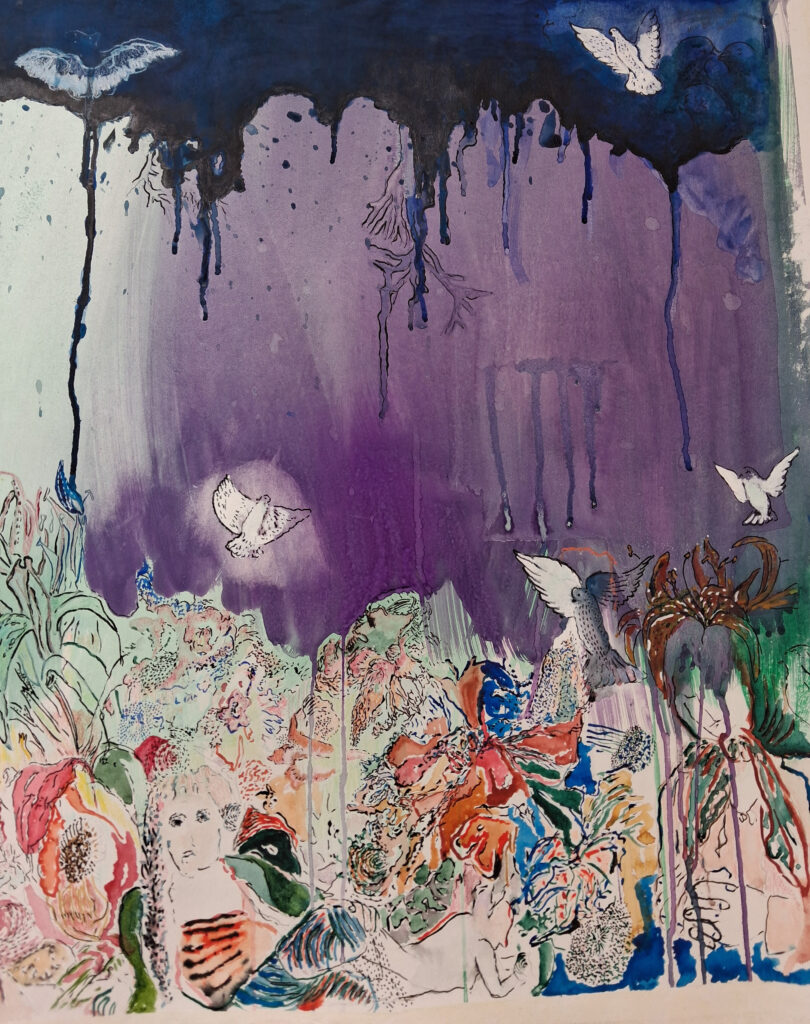
Many artists speak of intuition, but intuition is built over time. I asked Ana what kinds of discipline, study, or constraints have quietly shaped her instincts and how she’s developed her creative intuition.
I am a big supporter of following ones intuition, but I believe that it has to be underpinned and supported by some structure. The structure I guess depends from artist to artist. For me the 9 to 5 does not work and something that I realized that I need in order to make work that’s honest is a very healthy spiritual life and in some way or another be immersed in helping others. At the moment I do this through facilitating Women circles and working with textiles with these Women.
I wanted to know how she situates her work in relation to art history, whether there are particular lineages or artists she feels in conversation with, even indirectly.
Yes, well, I guess the feminist movement, which does not go so far Back. But even before the emergence of the feminist movement in the 60-70’s many female artits like Frida Kahlo, Dora Maar, Leonora Carrington, Amrita Sher-Gil, Pan Yuliang, and so on. Most of them are relatively unknown artists , but what attracts me to them is their life and what making art represented for them and , why they did what they did , what was the intention behind it, even if unconscious at the time.
I asked her to describe a moment in her practice when doubt fundamentally changed how she works, rather than stopping her. How did uncertainty shift her direction instead of derailing it?
I remember doubting about my way of working ( and still do) many times. That I should always be making and producing and very little research and reading, that I always had to work in a very energetic way and very like inspirational and masculine way but then I would appreciate other types of art that were done in a much more soft way, a kind of soft art, soft power.
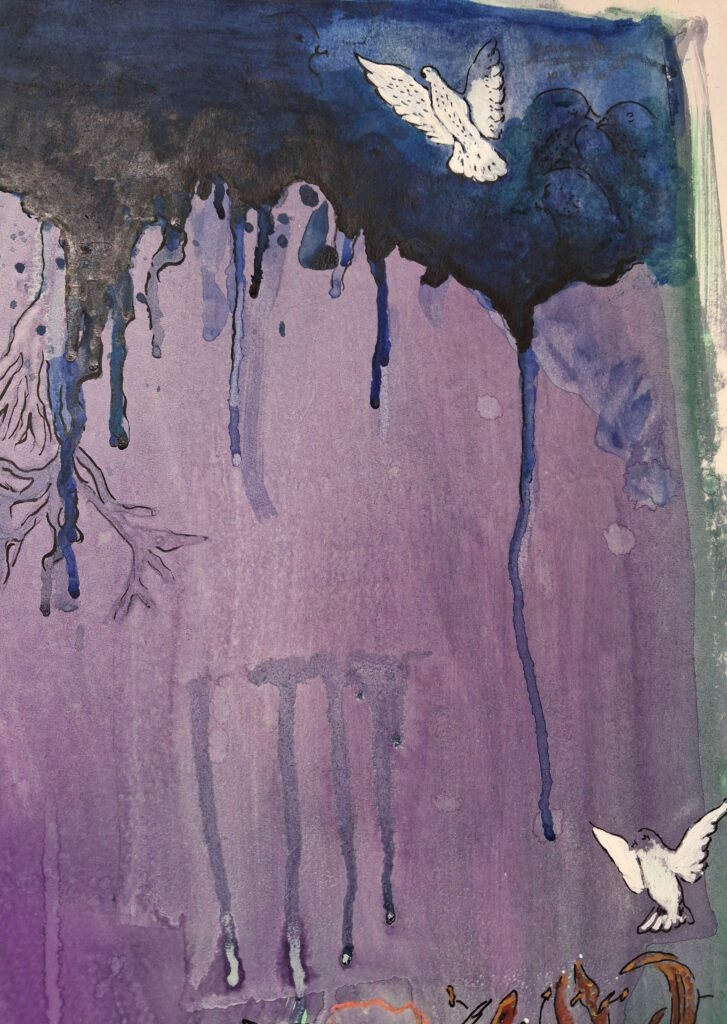
Her material choices feel intentional, so I asked how working with textiles influences meaning in her work. What does this medium allow her to say that language cannot?
At the moment I am really into textiles . I Believe textiles can convey a Spectrum of emotions that other mediums can not . emotions, feelings, a sense of ancestry and of protection too. For me it brings me Back to my childhood, to my grandmothers , to healing the old deep wounds that are being resignified. just by looking at textiles and touching them it brings me so much joy and a deep sense of belonging.
I was curious about how her understanding of “success” as an artist has shifted over time, and what prompted those changes in perspective.
Has your understanding of “success” as an artist shifted over time? If so, what prompted that change? Yes! My success as an artist has shifted Many times in small, short ways and once in a very deep, big way. When I was making the most money with my art I was always on the edge of a nervous breakdown or burnout. I worked a lot and very quickly, I produced a lot until I started painting children in a prison. I stopped then. I realized I was completely relying on my masculine side and living as a man and Felt like I way a robbot. Then and there I started changing my way of operating and I still am. I am more and more getting to know, accepting and relying on my feminine side and consequently combining it with my masculine. Life feels and looks different and so does my art. It was within this process that I became interested in textiles.
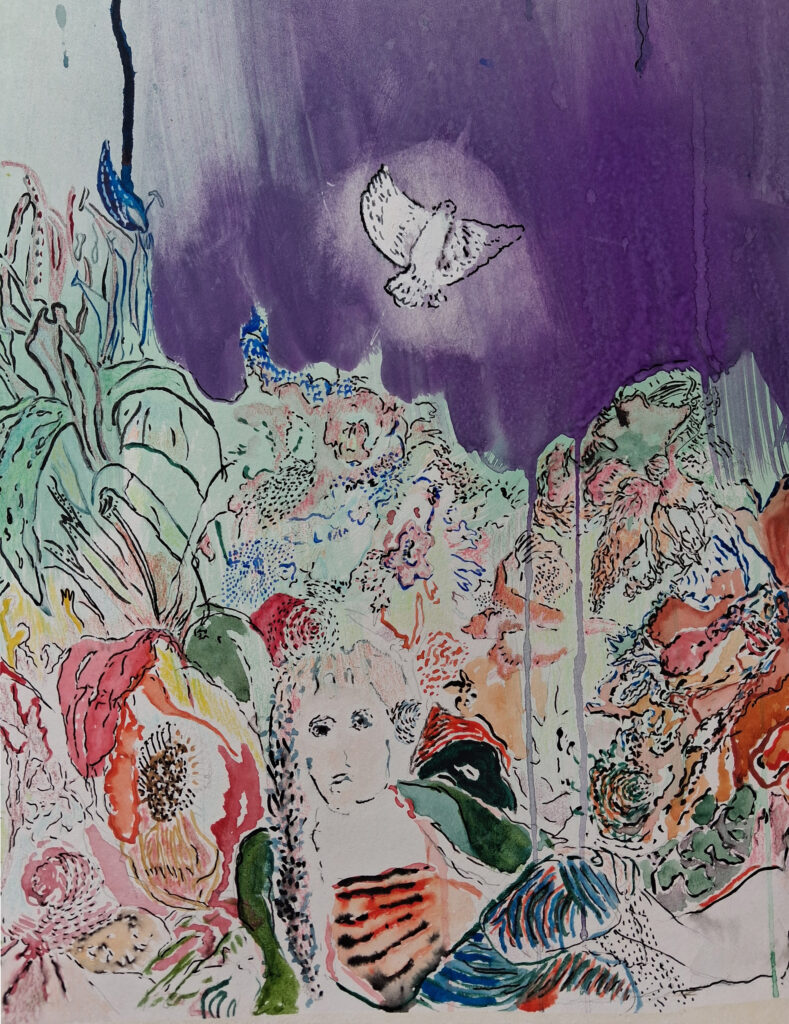
Looking back at earlier stages of her journey, I asked what aspects of her practice have remained constant, and what has quietly transformed along the way.
What has remained constant is my need to make art, my need to swap from one medium to another, my way of working where I juggle 3 or 4 projects at the same time. Also, I need to exercise before I make art. That has never changed. Either that or engage a bit in the material, practical part of Life before.
For my final question, I asked what advice she would offer to artists who are committed to depth and integrity, particularly when recognition or clarity feels slow to arrive.
Remember way you do the work. if you can not find it keep asking yourself, keep digging. when you find out the answers Recognition Will not be important anymore and then it Will arrive.
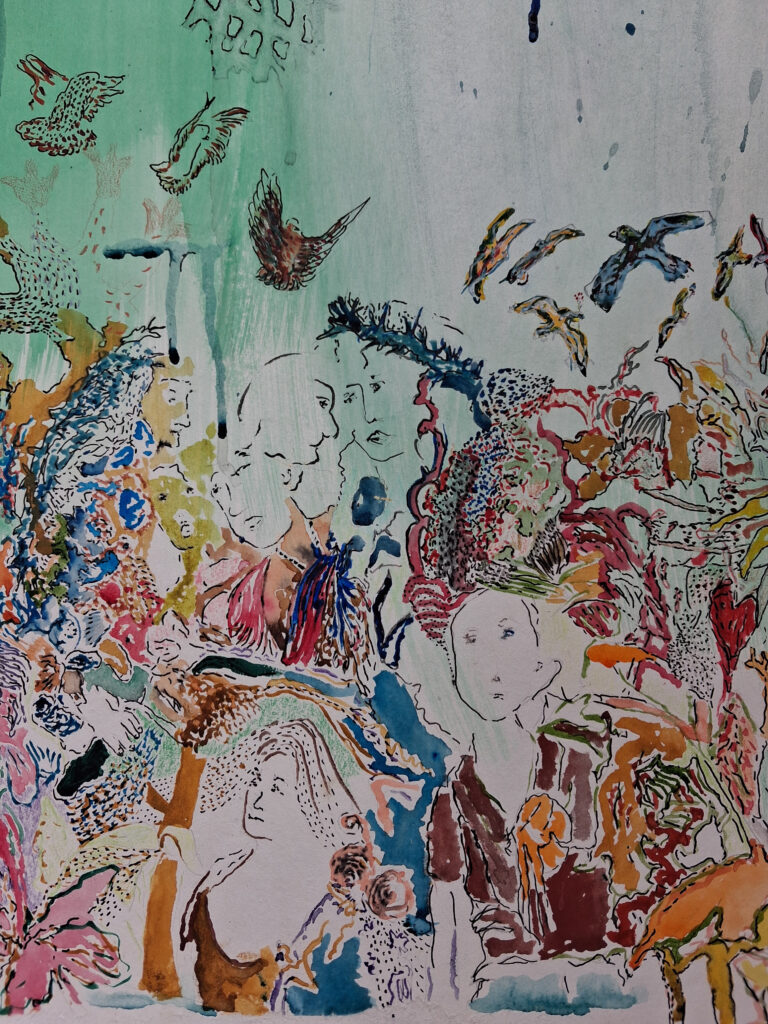
As our conversation with Ana wrapped up, I kept thinking about the artists I know who are burning out right now. Making all the right moves. Posting consistently. Producing constantly. Checking every box. And quietly dying inside. Ana’s been there. She made it to the other side. And what she found isn’t what I expected.
She didn’t find a better productivity system or a smarter marketing strategy. She found permission to stop performing and start living. That’s radical in a world that tells us our worth is our output.
Here’s what Ana’s story made clear to me: you can have financial success and be spiritually bankrupt. You can be productive and be empty. You can look successful from the outside while falling apart on the inside.
And walking away from that, even when it’s working, even when people think you’re crazy might be the bravest creative choice you ever make.
What gets me is how simple the shift was. Not easy. Simple. Stop creating for recognition. Start creating because you need to. Stop choosing between parts of yourself. Start letting them work together. Stop treating art as separate from your actual life. Start understanding they’re inseparable.
That’s not a formula. It’s a return. To why you started. To what matters. To who you are when nobody’s watching.
There’s something Ana said about finding your why that won’t leave me. When you really know why you’re doing this not the surface answer, but the deep truth recognition stops being the goal. It becomes irrelevant. And somehow, paradoxically, that’s when it arrives.
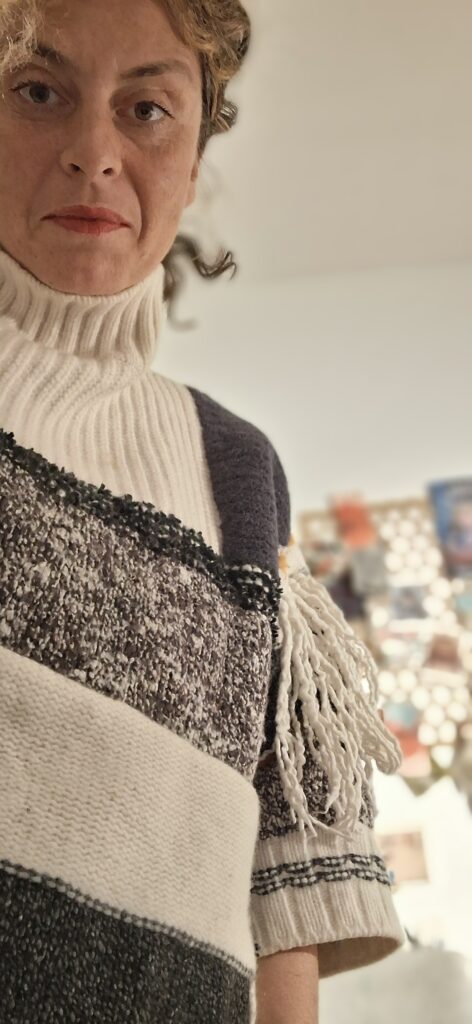
Because art made from desperation for validation feels different than art made from necessity. People can tell. They always can. Ana’s practice now the women’s circles, the textiles, the slow unfolding looks nothing like what we’re told success should be. There’s no viral moment. No explosive growth. No massive production schedule.
But there’s something else. Peace. Wholeness. The kind of creative life that sustains you instead of draining you.
That matters more than we admit. If you’re struggling right now, if success feels empty or the grind feels unsustainable or you’re wondering if there’s another way, Ana’s proof there is.
You don’t have to choose between soul and survival. You don’t have to work like a machine to matter. You don’t have to wait for permission to work the way your body and spirit actually need.
And you’re not alone. You’ve never been alone. Other artists have walked this exact path, felt this exact doubt, and survived it. Read about their lives. Not their wins. Their struggles. Let their survival remind you that you can survive too.
Your way of working is valid even if it doesn’t look productive to others. Your rhythm matters even if it’s not daily. Your creative life belongs to you, not to the algorithm or the market or anyone else’s expectations.
Follow Ana Melo through the links below and see what happens when someone chooses truth over performance, soul over metrics, and builds a creative life that actually feels like living.