
How Do You Turn Rejection Into a Voice That Won’t Quiet Down?


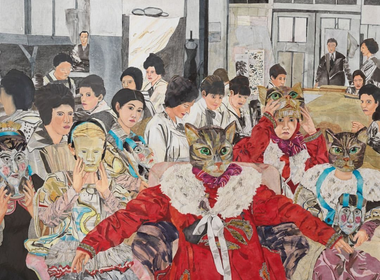
This Wednesday, for our artist feature, we sit down with Violetta, tattoo artist and visual poet, at a moment of expansion. After ten years carving stories into skin, she’s moving into exhibitions and larger projects that don’t stop at the body. In our conversation, she talks about growing up labelled “too much,” being turned away by an art college for looking like a “problem,” and refusing to tone herself down. She walks us through how overwhelming feelings turn straight into images, why her practice leans into pain, rebellion, and beauty that doesn’t ask for permission, and how she keeps the work grounded while dealing with that kind of intensity.
Violetta also draws a clear line between her mediums: tattooing as a ritual and responsibility, a decision that stays, and painting as a means of flight, following impulse, letting chaos lead. She speaks about the period when rejection almost shut her voice, and what pulled her back to creating. She answers how ideas arrive when emotions surge, what balance she finds between control and surrender, and what she hopes someone standing in front of her work takes with them in that quiet pause.
What we learned: she makes to survive and to connect; she doesn’t decorate, she exposes. Tattooing keeps her present; painting lets her travel through experience. She isn’t chasing approval; she’s building a place where people can see they’re not alone—and where being “too much” becomes a voice.
Violetta is a featured artist in our book, “Art and Woman 2025” You can explore her journey and the stories of other artists by purchasing the book here:
https://shop.artstoheartsproject.com/products/art-and-woman-edition-


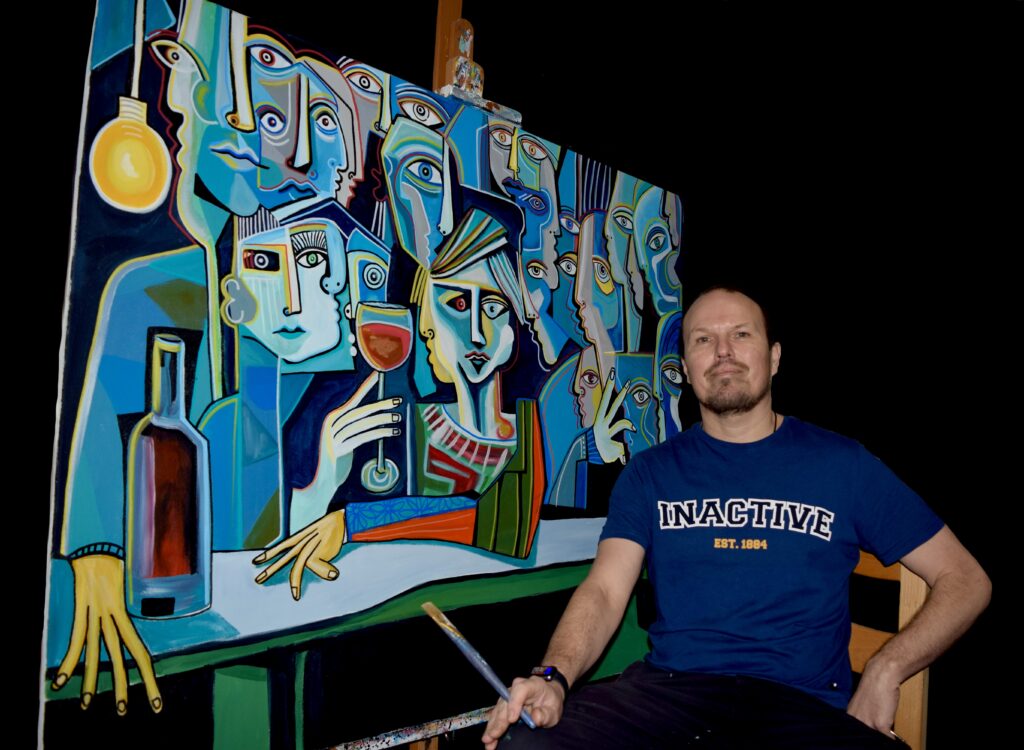
I’m Violetta, tattoo artist and visual poet. I transform raw emotions into images that cut straight to the bone—ten years in tattooing, now expanding into painting exhibitions and projects that transcend the skin. I graduated from art school with honours and wanted to enter art college, but they rejected me, saying I presented a problem: I was too impulsive, too sharp, too intense, despite my skills and achievements. i grew up surrounded by people who thought i was too much but i never toned it down. My work is about honesty, pain, rebellion and beauty that doesn’t ask for permission.
1. Violetta, growing up being told you were “too much,” how did that tension shape the way you approach creation today?
I was always told I was “too much.” I felt like a stranger in this world, so alien that sometimes it seemed I didn’t even exist for myself, that disappearing was the only way to survive – and the scars left by other people’s words cut deep into me, almost breaking me, nearly destroying me, but inside there remained a spark, some wild necessity to speak, and from that spark I pulled the fuel that still keeps me burning; I’m not afraid to be loud, sharp, chaotic in my creativity, and if someone is scared or steps aside – that is their fear, not mine; I’m still learning to be honest with myself and explore the depths of my soul where my truth beats, suffers, and is reborn.
Tattooing keeps me in reality, while painting allows me to travel through experience.
Violetta

2. Tattooing carries permanence while painting offers a different kind of freedom. How does moving between these mediums shift the way you express an idea?
For me, tattooing is a ritual, a fixation of an emotion or a memory forever, requiring full concentration and responsibility; the skin is a unique canvas that demands presence and attention; painting, on the other hand, is the opposite – it is flight and dissolution, a chance to go through space, follow an impulse, turn off the mind, let chaos guide me; moving between them, I find a balance between power and freedom, between control and total immersion in the moment, and I understand that tattooing keeps me in reality. In contrast, painting allows me to travel through experience.

3. When an emotion is overwhelming, what usually comes first for you, the urge to draw it out, or the image itself arriving fully formed?
First comes the feeling, like an incomprehensible wave, overwhelming me, refusing to be put into words, and sometimes I don’t even want to explain it because explanations are already an attempt to kill and tame it, while I want to feel and live it, to pulse with it. I take a brush, pencil, charcoal – it doesn’t matter – and let them follow the movement of my hands, as if I am handing over responsibility to my soul, not my mind; I don’t know how the work will end, but I know what emotion will live in it, and that is enough.
4. Rejection from art institutions early on could have silenced many people. What kept you moving forward instead of stepping back?
I was rejected, called “a problem,” too intense, too sharp, too unruly, and I believed them; they were telling the truth, and at that moment I was ready to think I was unworthy of holding a brush, that I was a disgrace to the art world; I stepped back, hid my creativity, showed my work to no one, and it felt like a small death; but I could no longer stay silent, could no longer limit myself, because inside me rose a rebellion and a fire that demanded release, and I realized: every rejection is not a sentence, but a challenge to accept, and my strength is not in others’ recognition, but in moving forward, bringing out what cannot stay inside, healing myself and others, showing that believing in yourself is not a crime.

I don’t decorate, I expose. My art is not about pretty, it’s about shaping chaos so it doesn’t eat me alive.
Violetta
5. Your work often carries rawness and rebellion. What keeps you anchored when translating such intensity into something sharable?
I hold onto honesty and connection with myself; I do not hide the pain, I do not pretend it isn’t there; it is simultaneously boldness and vulnerability, and I feel this tension, this struggle come alive in my canvases; when I create, I show the world my living, vulnerable truth, and that gives meaning to the whole process; I am ready to be misunderstood, unheard, unrecognized, but the main thing is not to betray myself, to stay honest with what is inside me, with what pulses and burns.

6. What do you hope someone standing in front of your work, whether tattoo or canvas, takes away in that quiet moment of encounter?
I want someone to feel that they are not alone, that their pain is significant, that it is a sign of life; if you are alive, you are capable of overcoming, and my paintings are a mirror for the brave, for those who are afraid but still take a step inward to heal, soothe, and love themselves; everyone will see their own experience, hope, or something special that keeps them afloat in a moment of despair; but it is always the feeling that you are not alone, that your “too much” should not be afraid of the light, and that it has the right to exist.

Violetta’s work carries raw emotion, born from experiences that once threatened to silence her. Through tattooing and painting, she gives form to intensity that might otherwise remain trapped inside.
Her journey shows us how rejection can become fuel, how rebellion can turn into creation, and how exposing scars can connect people through shared recognition of struggle. From her story, we learn that art can be a way of survival, a way to stay present, and a way to remind others they are not alone in their battles.
To learn more about Violetta, click the following links to visit her profile.
Arts to Hearts Project is a global media, publishing, and education company for
Artists & Creatives. where an international audience will see your work of art patrons, collectors, gallerists, and fellow artists. Access exclusive publishing opportunities and over 1,000 resources to grow your career and connect with like-minded creatives worldwide. Click here to learn about our open calls.