

Why Is Galactic Panther the Gallery Everyone Should Be Watching?

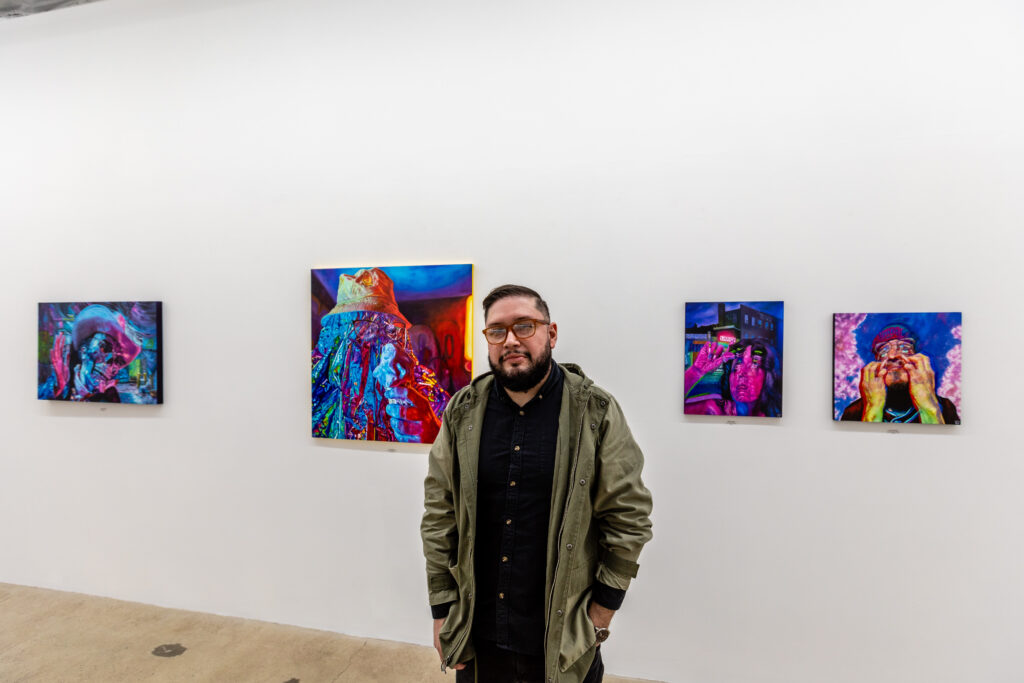
Every gallery begins with a vision, and Galactic Panther is one born from a belief in authenticity, inclusivity, and bold creativity. In this week’s Best of Art World series, we had the privilege of speaking with Elijah Pollard, the founder whose leadership has transformed the gallery into an international stage for underrepresented voices and innovative practices.
From its beginnings in Morgantown, West Virginia, to its expansion into Old Town Alexandria on the DC Metro line, Galactic Panther has grown into a vibrant hub where outsider, self-taught, emerging, and international artists come together. Each exhibition reflects Elijah’s dedication to showcasing work that is sincere, surprising, and deeply engaged with cultural and political discourse.

From painting and hand-pulled prints to experimental video, Galactic Panther curates’ exhibitions that blend abstraction, figuration, and conceptual practices, creating a visual and emotional rhythm that invites viewers into a dialogue with the work. Through both in-person and innovative online experiences—including VR, AR, NFTs, and Artsy view rooms the gallery continues to connect artists and audiences across the globe.
Let’s get to know Elijah Polard better through our conversation and discover how her vision, passion, and approach continue to shape Galactic Panther into a space where authentic creativity and diverse voices thrive.
Q1. Your gallery has a strong curatorial voice rooted in regional narratives and contemporary discourse. How has your mission evolved over time since its inception?
I am drawn to artwork that feels authentic. I originally opened Galactic Panther in Morgantown, West Virginia, a small university centered city near Pittsburgh. From day one I exhibited many outsider / self-taught artists from nearby & from around the world. I also love children’s artwork. I love the raw expressiveness, the sincerity, etc. But of course, authenticity can be expressed in many ways. I strive to show underrepresented artists from diverse backgrounds along with artists who have received more recognition. I love work that allows the artists’ true voice(s) through in whatever bizarre, beautiful, and unique ways that may happen. When my friend Erik decided to partner with me to expand Galactic Panther into an additional space in Old Town Alexandria on the DC Metro line, I will say that there was indeed a shift. The shift was not from a change of mission, but the location naturally altered the work.

The artwork that was considered local now included artists from DC, Baltimore, Richmond, etc. Also, when we’re working with national and international artists & they see that we are in the DC area, they often send more politically charged works than they might to someone that was located in another part of the world. Another thing that changed was the ability to be able to showcase more and more international artwork. We currently are showcasing artists from Nigeria, and we have shown several artists from France, and many other parts of the world, first instance. This helps to satisfy my cultural interests and offer up new cultural experiences to our community. It’s also nice because we can connect with different populations locally that are from different parts of the world because the DC area is such a beautiful melting pot. One other thing that I’ll mention is that from day one the mission of Galactic Panther has been to serve people in need, so we have always shared a portion of our sales with charities that help people in the community with food security.
Q2. Your exhibitions often feature a bold mix of abstraction, figuration, and conceptual practices. How do you curate the mix of mediums and styles?
Like many newer galleries, we offer our fair share of group exhibitions. Once the theme is set, much of the rest is quite open. Even the theme itself, of course, will be translated by our artists in many unique ways. The concept is the thread that links through the work, so often times the outward expression of the concept varies in dramatic ways. We have a focus on paintings and hand pulled prints, but I often like to expand into realms of experimental video, etc., to keep the mix fresh and the viewer engaged.

Some might say that we expect a lot of our viewer, and perhaps that’s true, but we know they are up for it and intrigued by what they experience when they come in. I love arranging exhibitions that have a broad range of styles and media. It’s a wonderful world of play. It may seem odd, but it feels a bit like dancing or choreographing dance moves in some way. I’m looking at colours, and shapes, and rhythms, and space, and textures, and subject matter, and I link the work not just conceptually, but very much visually of course as well. Then, when the solutions are found, it’s like a song or a love letter has been written, or something new has been created. I love this process!
Q3. Describe how you select artists for your gallery and how do you ensure their works align with your gallery’s philosophy?
I’ve been enjoying taking in artwork on nearly a daily basis for many years through museums, galleries, books, studios, the web, etc. I’ve mentioned earlier that I am drawn to authentic works. I like the unique, the bizarre, the real thing that feels fresh or sometimes even ancient but with a new twist – something unexpected. I find some form of beauty in these works. I’m a huge fan of color and of artists who work from the heart. I try to avoid work that feels contrived /inauthentic, and although we are a commercial Gallery and have a need to sell artwork, I will often avoid work that looks like it was made solely to please the buyer or made solely to sell when it seems to share nothing of the artist. We want to sell, but we still want it to be real / to be felt in other words. I’ve looked at artwork so much & for so long that I am always looking for a new, fresh surprise, and I love sharing that with our community and clientele.

Q4. How do you handle unsold artworks, Do you retain them for your gallery and showcase them in later exhibitions?
When possible, I do like to retain artwork after the allotted exhibition time if they haven’t sold. We’ve sold a lot of artwork this way. We get a lot of foot traffic being located right on the DC Metro line, and there are new people coming into the gallery every day that have not been there before, so this benefits everyone. When we finally run out of physical space, I also like to keep the artwork online on our website, and on artsy when possible, as well for an extended period. This benefits the clients, the artists, and the gallery.
Q5. Your exhibitions often challenge traditional aesthetics. Has participation in external art events or collaborations influenced your artist selections or curatorial direction?
Definitely. I love to visit exhibitions that showcase the artwork of neurodivergent artists for instance. There are groups that work with these artists that I visit – not just galleries, but sometimes studios as well. There’s one in Pittsburgh I visit. I’ve had the great fortune of seeing incredible outsider art exhibits in Prague in one of my favorite spaces called DOX, and also in Vienna, Austria, but I also love the opportunity to see artwork by children, and everyone in between. If you go to the Louvre, you’ll see works by da Vinci that you recognize, but there are also incredibly unique and bizarre works tucked away here and there as well. I’ve had the great benefit of going to the Uffizi in Florence, and at the same time, I step outside and meet with the people in the street who are selling sincere watercolors and ballpoint pen drawings for their next meal.

Many of these opportunities have come because I’ve had the opportunity to take university students abroad for study abroad experiences, and every one of these experiences expands each of each of us as a person. When the time came that I was unable to travel as much, I worked to bring those cultural influences back to the states to share with the community. Finally, I would say being a working artist has influenced my curating as well.
Q6. With the increased relevance of digital tools, how has the gallery adapted to online exhibitions, view rooms, or social media promotion?
Our team at Galactic Panther has gotten to the point now where our online exhibitions open on our website in tandem with the in person exhibitions. In addition to our website, we exhibit work on Artsy, which is a nice way to engage with audiences that are thousands of miles away. I believe the average distance between client and artwork for Artsy sales is over 3000 miles. We do special viewing rooms, social media blasts, emails, texts, etc. We have even offered AR and VR experiences to interior designers and other clients. We have an NFT gallery, etc. My gallery partner, Erik has a background in tech & marketing, so we lean into, rather than shy away from, innovation and technology.
As we conclude our conversation with Elijah Pollard, we are inspired by the vision and integrity she brings to her role as a gallery founder. Through Galactic Panther, she has cultivated a space that champions authenticity, embraces diversity, and sparks meaningful cultural exchange. Elijah’s journey reflects a commitment not only to bold curatorial practice but also to building a community where artists and audiences can connect on deeper, more human levels.
Follow Galactic Panther to see upcoming exhibitions and discover how Elijah and her team continue to build a vibrant, inclusive, and welcoming art community.