
8 Strangest Art Movements in History
👁 45 Views
Art history isn’t as orderly as textbooks make it seem. Beneath the polished narratives of Impressionism, Surrealism, and Renaissance masters lies a far stranger story, one filled with rebellion, absurdity, and ideas that, at first glance, make little sense at all
Some of the most fascinating strangest art movements didn’t aim to be beautiful or even understood. Instead, they emerged as reactions, against tradition, against politics, against the very definition of art itself. These were movements that embraced distortion over perfection, chaos over clarity, and experimentation over acceptance. They weren’t trying to fit in; they were trying to disrupt.
In moments of cultural tension or rapid change, artists often pushed their work into unfamiliar territory. They painted from the sky instead of the ground, turned everyday trash into installations, mocked masterpieces, and sometimes abandoned logic entirely. What resulted were movements that felt strange, even uncomfortable, but impossible to ignore.
And yet, many of these movements remain on the fringes of mainstream art history. Overshadowed by more “acceptable” styles, they are often dismissed as oddities rather than recognized for what they truly are: bold reimaginings of what art could be.
This article brings together some of the weirdest, most unconventional art movements, ones that challenge not just aesthetics, but the very purpose of art itself. Because sometimes, it’s in the strangest ideas that art finds its most honest voice.
When Perfection Became Strange: Mannerism
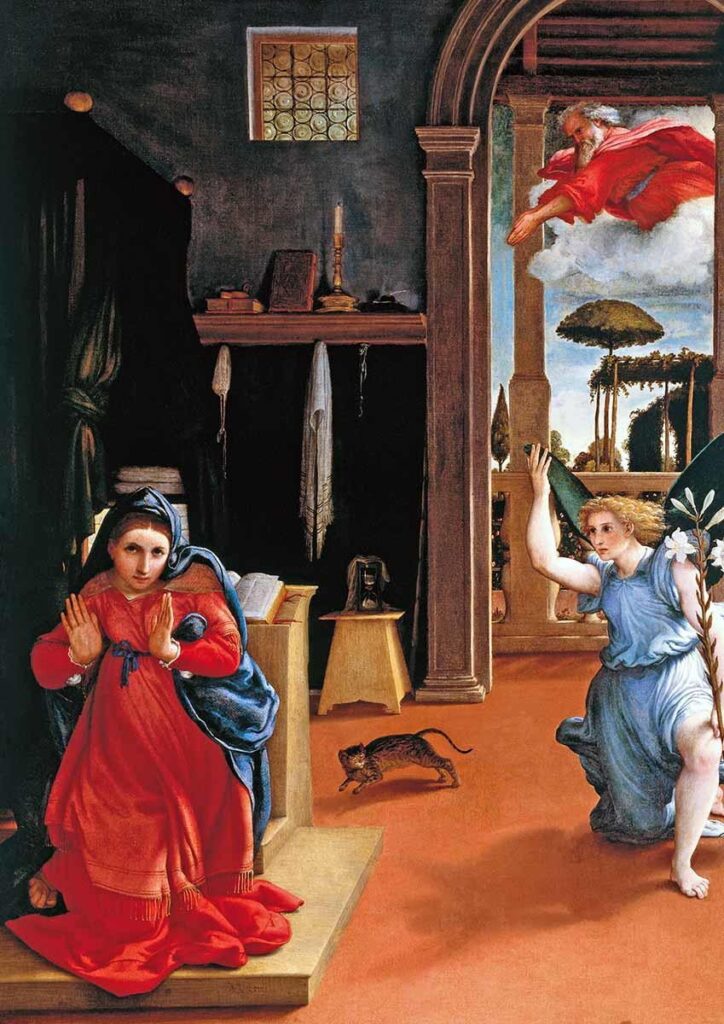
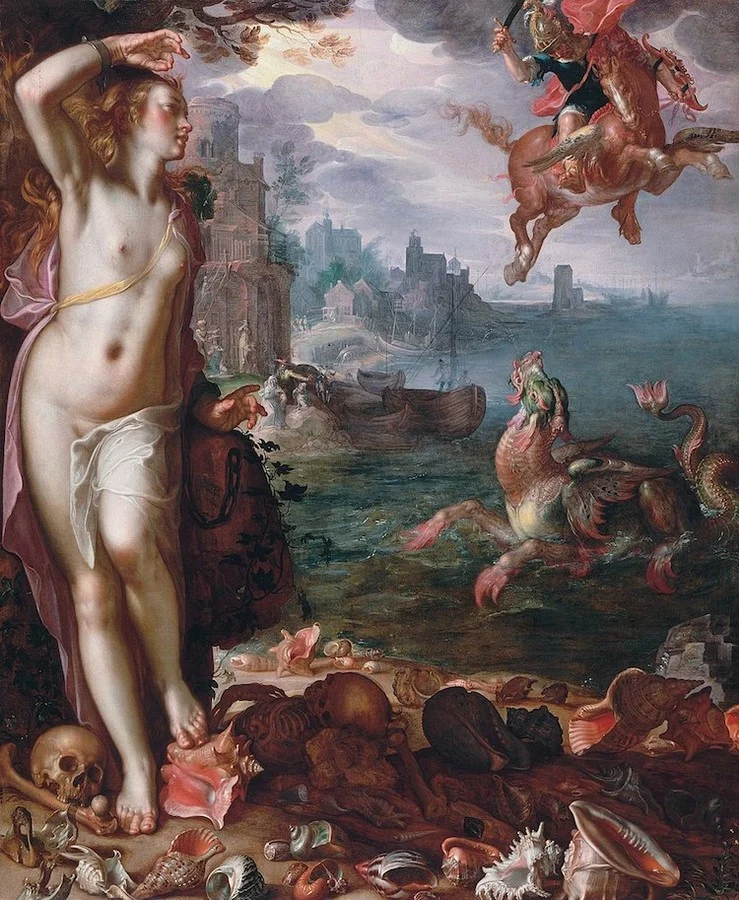
If the Renaissance was about balance, harmony, and ideal beauty, Mannerism was what happened when artists began to question all of it.
Emerging in 16th-century Italy, Mannerism didn’t reject tradition outright, it twisted it. Figures became elongated, poses turned theatrical, and compositions grew increasingly complex, almost to the point of discomfort. It was as if artists had mastered perfection and then decided it was no longer enough.
Painters like El Greco pushed the human form into something expressive rather than accurate, stretching bodies, distorting proportions, and intensifying colour to evoke emotion over realism. In works like Laocoön, the figures feel unstable, almost otherworldly, as though they exist in a space that defies logic. Similarly, Lorenzo Lotto’s Recanati Annunciation disrupts a familiar biblical scene by injecting panic and movement, the Virgin Mary recoils in fear, her reaction deeply human and unexpectedly dramatic.
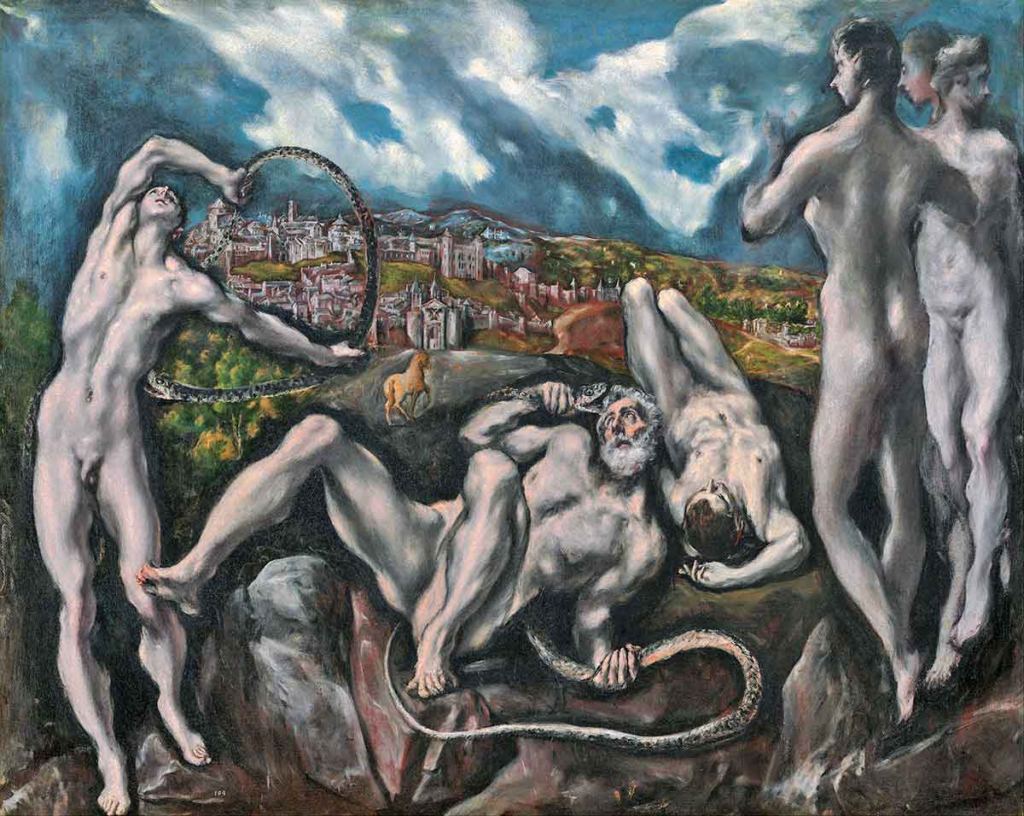
This was art that no longer aimed to calmly reflect the world but to complicate it.
Mannerism thrived on tension, between beauty and distortion, clarity and chaos, control and exaggeration. Critics at the time often saw it as excessive or even flawed, but in hindsight, it reads as something far more intentional: a turning point where art stopped simply imitating reality and began interpreting it.
In many ways, Mannerism marks one of the earliest moments in art history where “strange” became a deliberate artistic choice rather than a mistake.
Painting the World from the Sky: Aeropittura
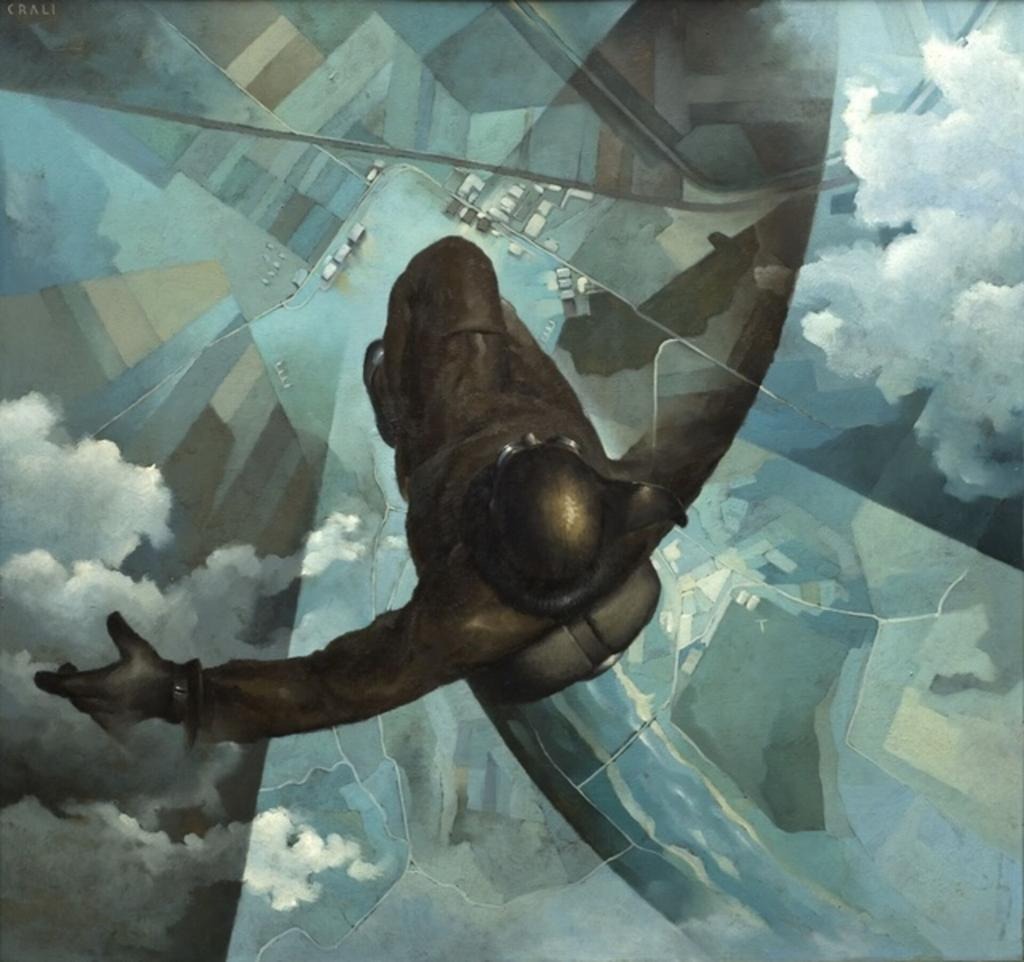
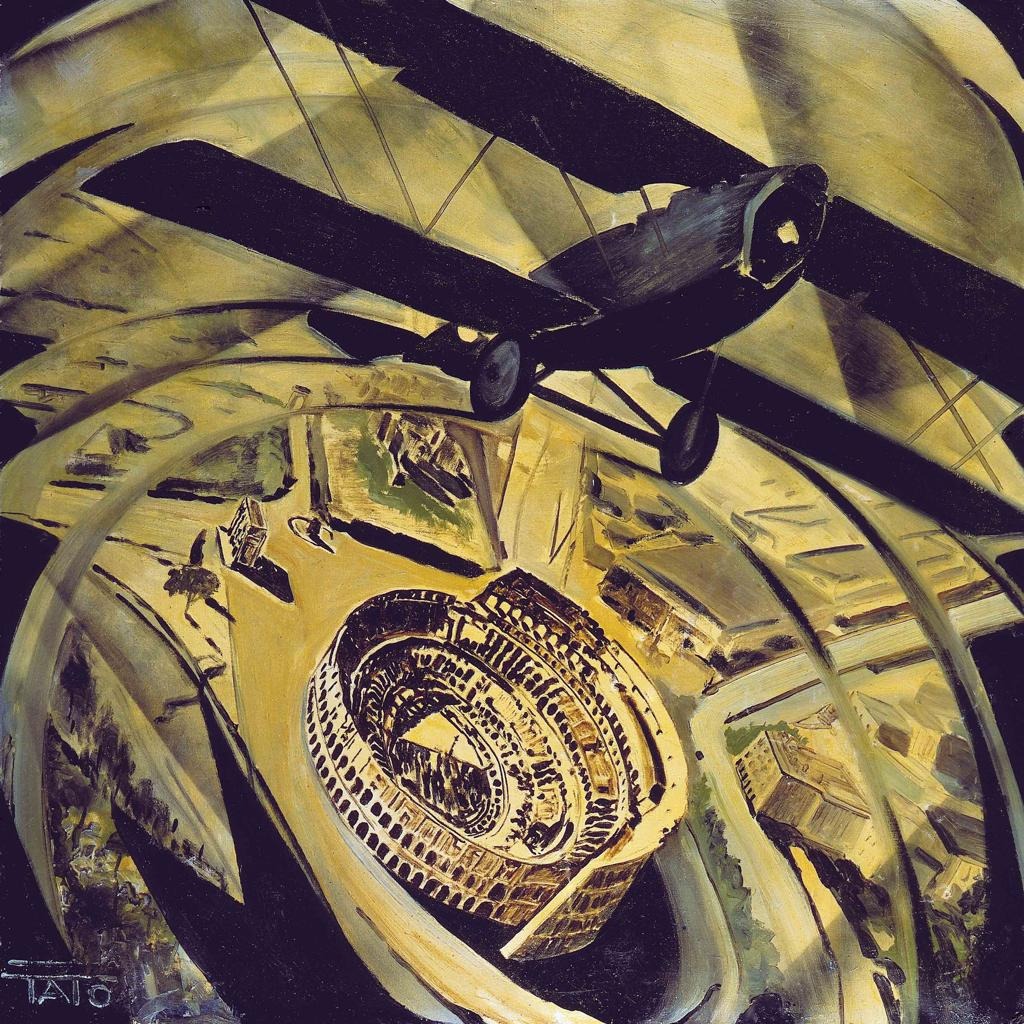
By the time Aeropittura emerged in the late 1920s, artists were no longer satisfied with painting the world as it appeared from the ground. Flight had changed everything, not just how people traveled, but how they saw.
A branch of Futurism, Aeropittura was built on the idea that the invention of the airplane had completely transformed human perception. Suddenly, the world was no longer horizontal but vertical, shifting, and unstable. Cities became patterns, landscapes turned geometric, and movement was no longer implied, it was immersive.
Artists like Tullio Crali captured this sensation with dizzying intensity. In Before the Parachute Opens, the viewer is pulled into a spiraling descent, where the human figure becomes almost indistinguishable from the machine itself. The body is no longer separate—it merges with the aircraft, becoming part of its motion, its speed, its danger.
There’s an undeniable thrill in these works, but also something unsettling.
Aeropittura wasn’t just about new perspectives, it was deeply tied to the political climate of its time. Many of its artists were aligned with Fascist Italy, embracing technology, war, and progress as symbols of national power. The skies they painted weren’t just spaces of freedom, but also of control and dominance.
This duality makes Aeropittura particularly strange. It’s both exhilarating and ideological, poetic and propagandistic.
In trying to capture the feeling of flight, these artists didn’t just change perspective, they redefined the relationship between humans, machines, and the modern world.
When Absurdity Became Art: Dada
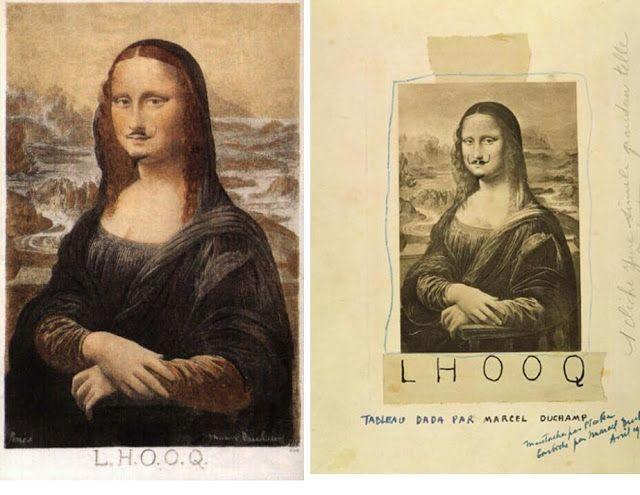
Not all art movements aim to create, some exist to disrupt.
Emerging in the aftermath of World War I, Dada was less a style and more a reaction. In a world shaken by violence and uncertainty, logic itself began to feel unreliable. For Dada artists, the idea that art should be rational, beautiful, or meaningful no longer made sense.
So they chose absurdity instead.
At the center of this movement was Marcel Duchamp, whose work L.H.O.O.Q. transformed one of the most revered images in art history, the Mona Lisa, into something playful and irreverent, simply by adding a moustache and a cryptic title. It wasn’t just a joke; it was a statement. A challenge to the authority of tradition and the seriousness of the art world.
Dada artists embraced chance, nonsense, and contradiction. They created collages from scraps, presented everyday objects as art, and often left interpretation entirely open, or intentionally impossible.
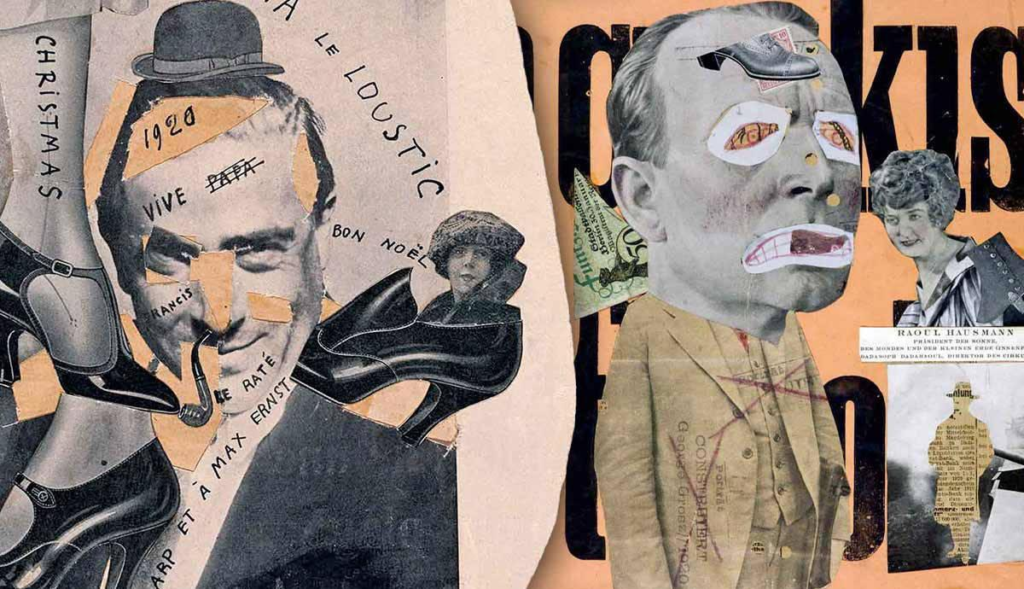
But beneath the humor was something sharper.
Dada wasn’t meaningless; it was a refusal to accept meaning as fixed. It questioned who gets to define art, and why certain objects or ideas are valued over others.
What makes Dada so strange is also what makes it enduring.
It reminds us that art doesn’t always need to provide answers. Sometimes, its role is to unsettle, provoke, and even confuse, because in that confusion, new ways of thinking begin to emerge.
When Art Became a Joke: The Incoherents
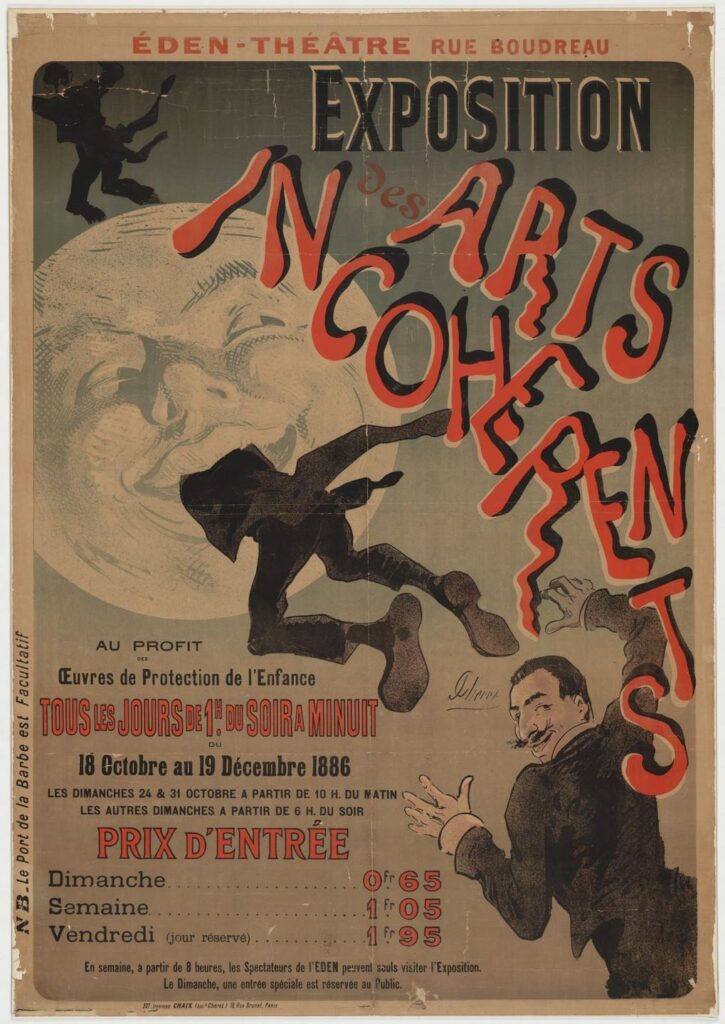
Long before Dada shocked the art world with absurdity, a lesser-known group had already started laughing at it.
The Incoherents, active in late 19th-century Paris, were less of a formal movement and more of a playful rebellion. They didn’t just question what art could be, they openly mocked it. Their exhibitions featured everything from childlike drawings to found objects, blurring the line between seriousness and satire.
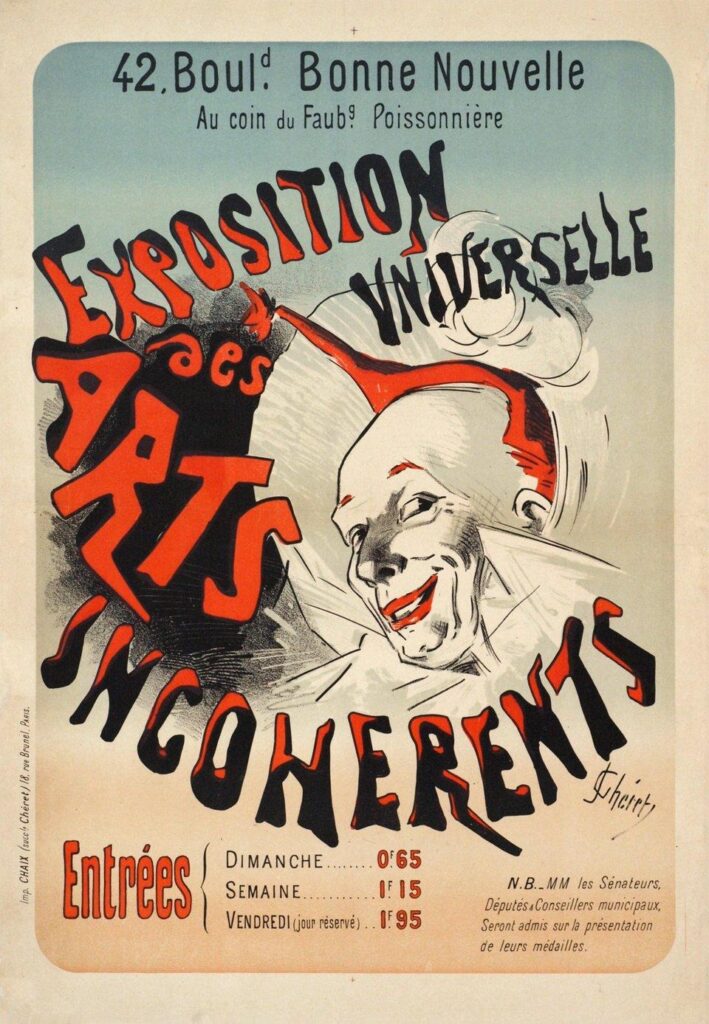
At a time when art was becoming increasingly experimental, The Incoherents pushed things even further, into pure nonsense.
One of their most striking contributions came from Alphonse Allais, who created monochrome paintings that were, quite literally, single blocks of color. A completely white canvas, for instance, was titled First Communion of Anaemic Young Girls in the Snow. A red one represented cardinals gathering tomatoes by the Red Sea. These works weren’t meant to be admired in the traditional sense, they were meant to be understood as ideas.
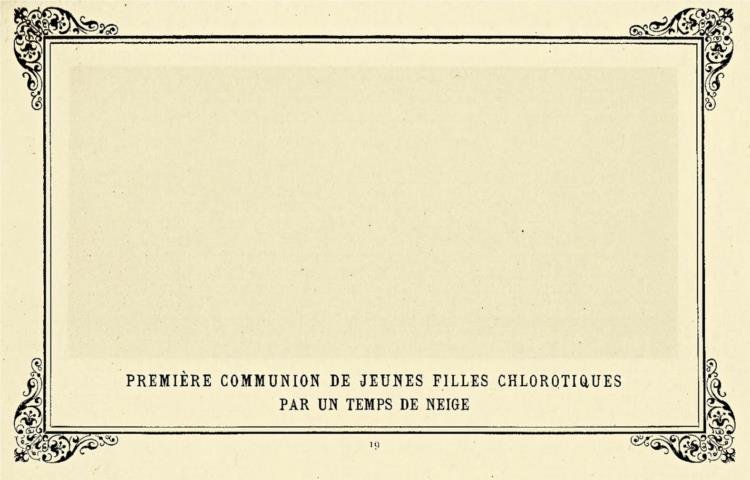
In many ways, they anticipated conceptual art decades before it became a legitimate movement. Even their playful reworking of iconic imagery, like a Mona Lisa smoking a pipe, predated the irreverence of Marcel Duchamp’s famous interventions.
But their humor came at a cost. Critics dismissed them as unserious, accusing them of turning art into spectacle rather than substance.
Still, that was precisely the point.
The Incoherents remind us that art doesn’t always need to be profound to be powerful. Sometimes, it can be absurd, ironic, and even ridiculous, and still manage to shift the course of art history in unexpected ways.
When “Nothing” Became Something: Arte Povera
In the late 1960s, when the art world was becoming increasingly polished, commercial, and gallery-driven, a group of Italian artists decided to move in the opposite direction, toward what was raw, ordinary, and often discarded.
This was Arte Povera, which literally translates to “poor art.” But the term wasn’t about lack, it was about intention.
Instead of expensive materials or refined techniques, these artists worked with what was readily available: rags, dirt, newspapers, wood, even live animals. The goal was to strip art down to its most essential elements and challenge the growing elitism of the art world. Why should marble be more valuable than cloth? Why should permanence define importance?
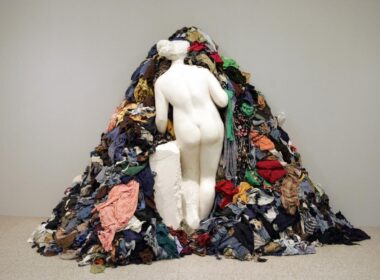
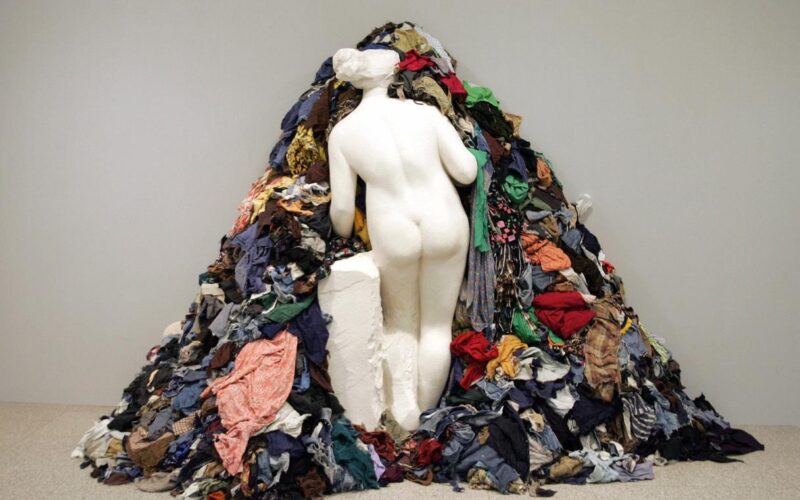
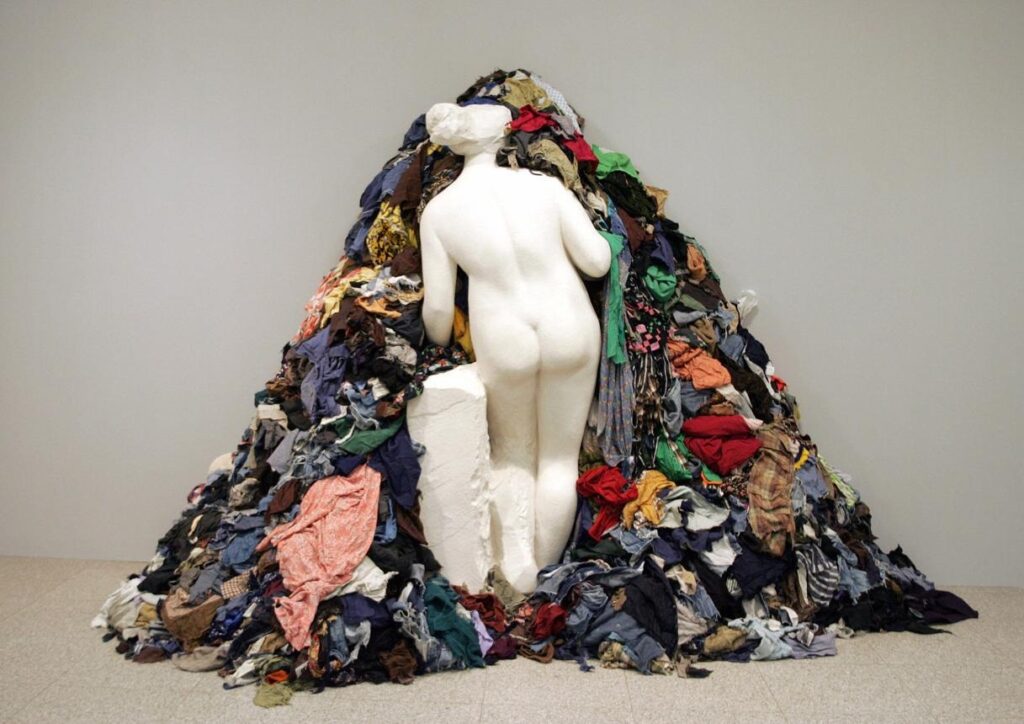
Artists like Michelangelo Pistoletto embodied this philosophy in works like Venus of the Rags, where a classical sculpture is placed in front of a chaotic pile of discarded fabric. The contrast is immediate and jarring, high art meets everyday waste, forcing the viewer to reconsider what holds value.
Even more radical was Jannis Kounellis, who once filled a gallery with twelve live horses. There was no traditional “art object” to observe, only an experience that disrupted expectations entirely.
Arte Povera wasn’t trying to impress; it was trying to unsettle.
By rejecting permanence and embracing impermanence, these works often existed only temporarily, emphasizing idea over object. In doing so, they shifted the focus of art from what we see to how we think about what we see.
And perhaps that’s what makes Arte Povera so strange, it asks us to find meaning not in what is presented, but in what we’ve been taught to overlook.
When Raw Expression Took Center Stage: Art Brut
Not all art comes from studios, academies, or formal training. Some of it emerges from far more personal, isolated spaces, driven not by technique, but by an urgent need to express.
This is where Art Brut, or “raw art,” finds its place.
Coined by French artist Jean Dubuffet, the term refers to works created outside the boundaries of the traditional art world. These were often made by self-taught individuals, including those in psychiatric institutions or those living on the margins of society—people untouched by artistic conventions or expectations.
What makes Art Brut so striking isn’t just how it looks, but where it comes from.
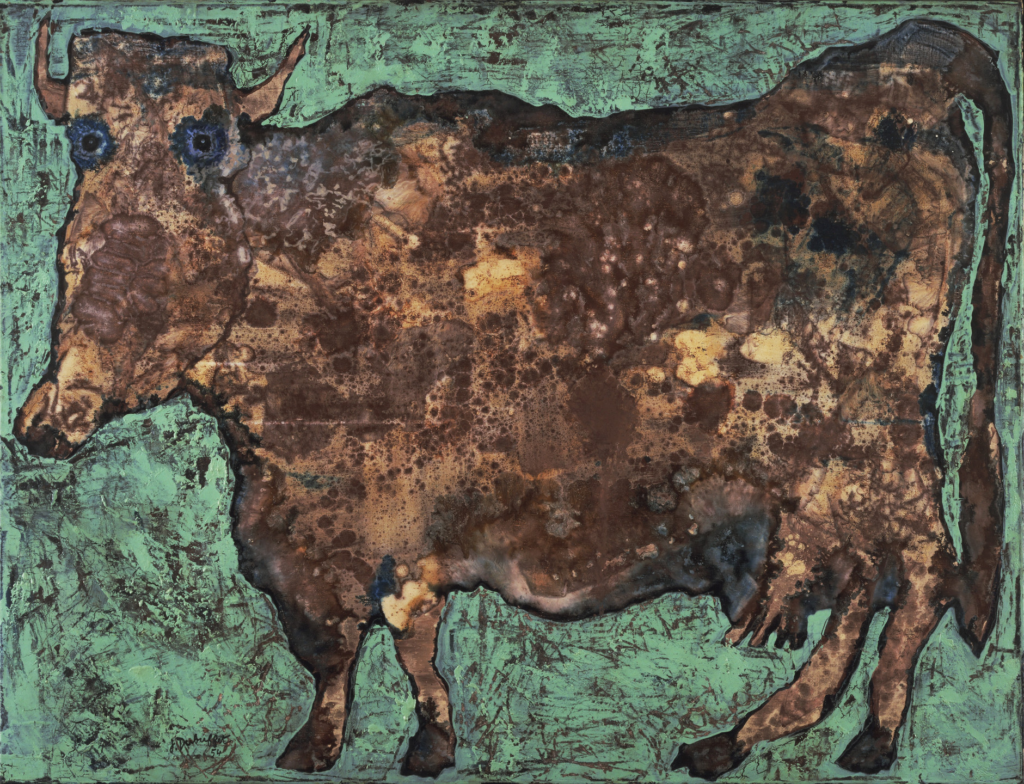
The works often feel intensely personal, filled with repetitive patterns, distorted figures, and unconventional materials. In Dubuffet’s The Cow with the Subtle Nose, the imagery appears almost childlike at first glance, but beneath that simplicity lies a deliberate rejection of refinement. The textures are rough, the lines are uneven, and the composition resists polish.
This is art that doesn’t try to impress, it insists on being felt.
Art Brut challenges one of the most deeply rooted ideas in art history: that skill and training define value. Instead, it proposes something far more radical, that authenticity, instinct, and emotional honesty can be just as powerful, if not more.
There’s something undeniably strange about it, but also deeply human.
Because in stripping art of its rules, Art Brut brings it closer to something raw and unfiltered, something that feels less like performance, and more like truth.
The Quiet Unease of Stillness: Metaphysical Art
Some art unsettles you not through chaos, but through silence.
Emerging in early 20th-century Italy, Metaphysical Art created spaces that felt both familiar and deeply strange. At first glance, the scenes appear ordinary, quiet streets, classical architecture, long stretches of shadow. But the longer you look, the more something feels off.
Time seems frozen. Figures, if present at all, appear distant or mannequin-like. Light behaves unnaturally, casting exaggerated shadows that stretch across empty plazas. There’s no clear narrative, no movement, just a lingering sense that something is about to happen, or perhaps already has.
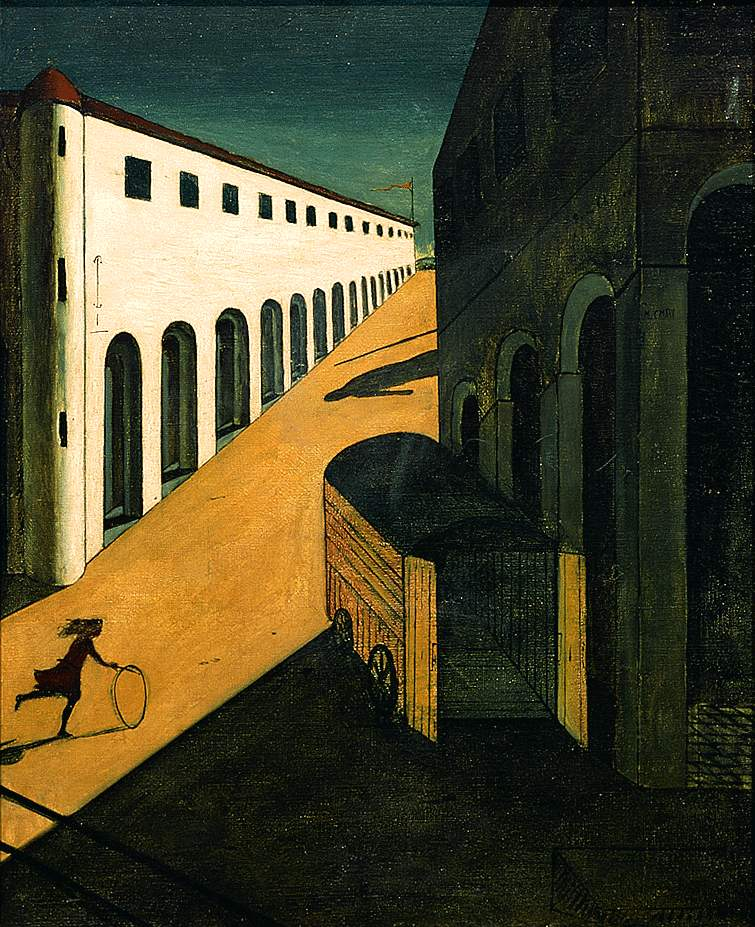
At the center of this movement was Giorgio de Chirico, whose works like The Mystery and Melancholy of a Street capture this eerie stillness with haunting precision. A small figure runs through a shadowed arcade, while in the foreground, an elongated silhouette stretches across the ground. Nothing explicitly threatening is shown and yet, the tension is undeniable.
Metaphysical Art doesn’t explain itself. It invites you to sit with uncertainty.
Unlike movements that embraced speed or absurdity, this one turned inward, toward introspection, memory, and the subconscious. It explored the space between reality and imagination, where logic begins to dissolve and feeling takes over.
What makes it strange isn’t what it shows, but what it withholds.
In these quiet, empty worlds, meaning isn’t given, it’s suggested. And in that ambiguity, Metaphysical Art creates a psychological landscape that feels as relevant today as it did a century ago.
When Chaos Became Freedom: Cobra
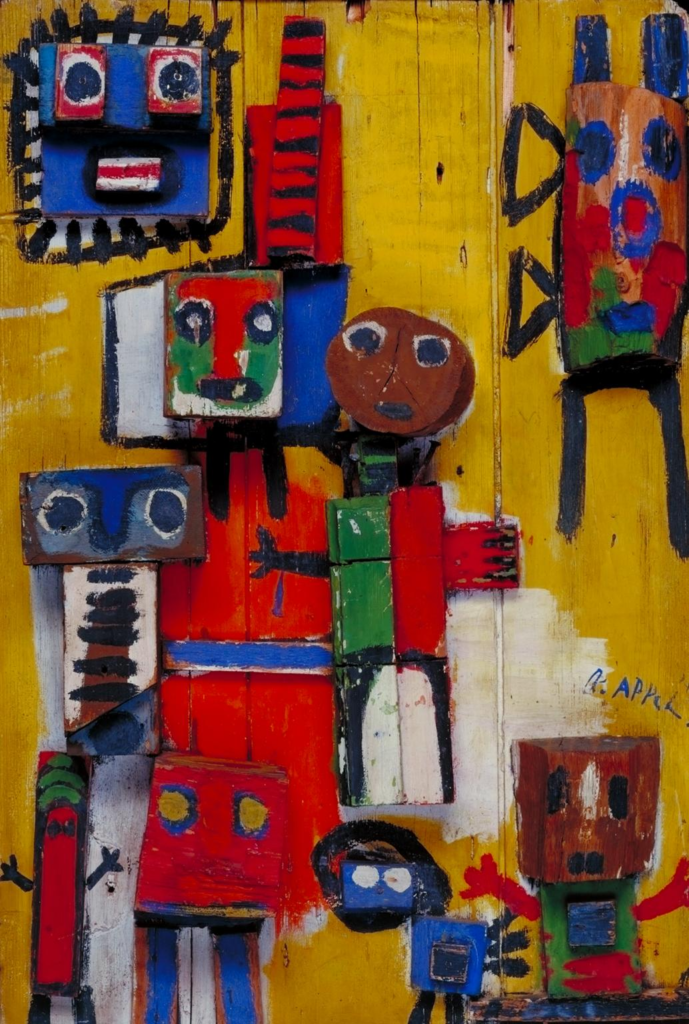
After the devastation of World War II, a group of artists across Europe sought a way to begin again, not by rebuilding tradition, but by completely letting go of it.
This was Cobra, a movement named after the cities it emerged from: Copenhagen, Brussels, and Amsterdam.
Cobra artists rejected structure, refinement, and academic rules. Instead, they embraced instinct. Their works were loud, messy, and emotionally charged, filled with bold colours, exaggerated forms, and figures that often looked like they had been drawn by children.
But this wasn’t about naivety. It was about unlearning.
Artists like Karel Appel believed that creativity should come from a place untouched by overthinking or control. His painting Questioning Children is a perfect example, its chaotic brushstrokes and distorted faces feel almost primal, as if the canvas itself is reacting rather than being carefully composed.
There’s a raw energy in Cobra works that feels immediate and unapologetic.
Many of these artists drew inspiration from children’s drawings, folk art, and non-Western traditions, not to imitate them, but to reconnect with a more instinctive way of creating. In a world recovering from conflict, this return to spontaneity became a form of emotional release.
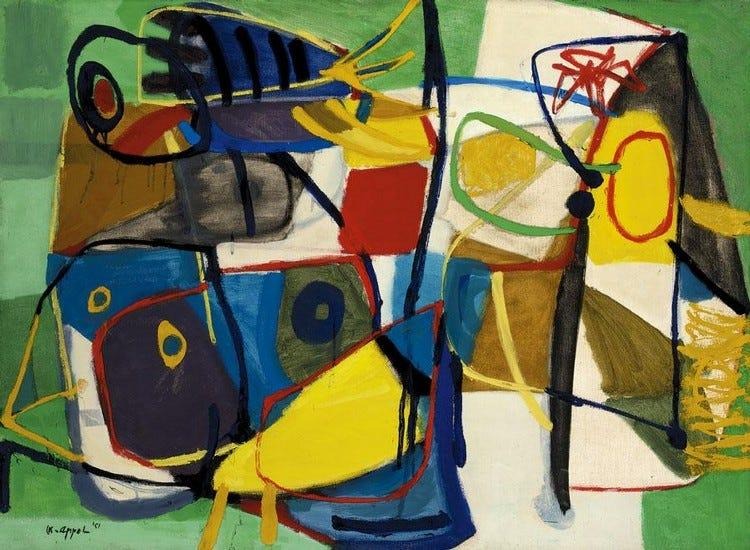
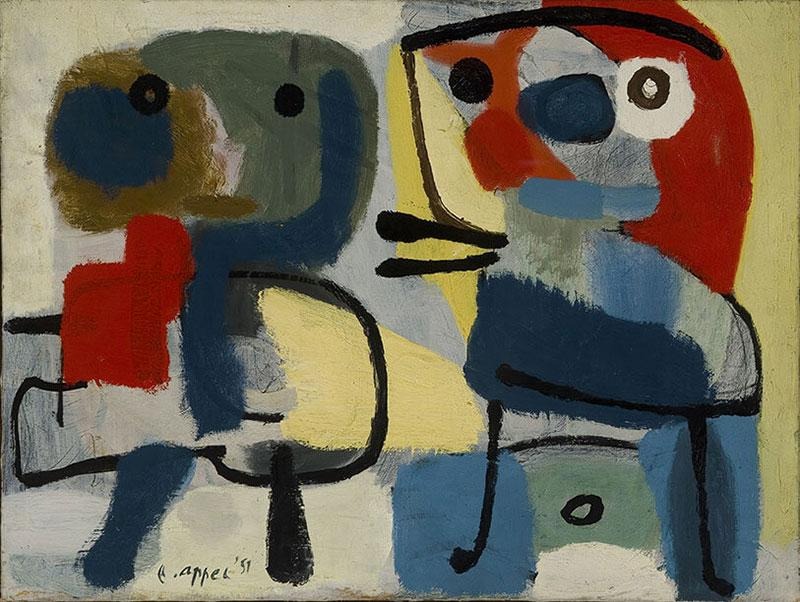
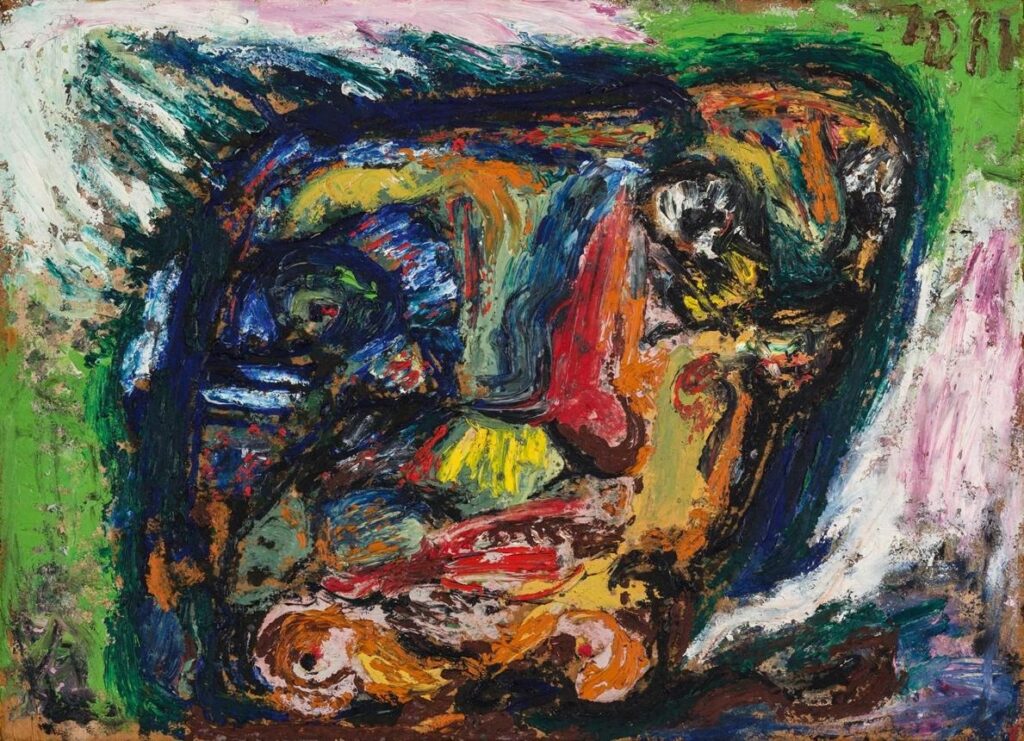
Cobra didn’t aim for perfection. It valued expression over outcome.
And that’s what makes it feel so strange, even today. It resists interpretation, avoids neat conclusions, and refuses to be contained within traditional definitions of “good” art.
Instead, it asks something much simpler and far more difficult:
What happens when you stop trying to control creativity, and just let it happen?
By now, these movements might feel wildly different from one another, some chaotic, some quiet, some humorous, others deeply raw. But what connects them is a shared refusal to accept art as something fixed or predictable.
Each of these movements emerged at a moment when artists felt the need to push back, against tradition, against politics, against expectations, or even against the idea that art had to “make sense.” Whether it was the distorted bodies of Mannerism, the aerial perspectives of Aeropittura, the absurdity of The Incoherents, or the raw honesty of Art Brut, these practices expanded the boundaries of what art could be.
And in doing so, they changed how we experience it.
Strange art movements often appear uncomfortable at first because they disrupt familiarity. They challenge our instinct to look for beauty, meaning, or resolution in predictable ways. But that discomfort is also where their power lies. They invite us to slow down, question our assumptions, and engage more deeply, not just with the artwork, but with our own way of seeing.
For contemporary artists, these movements offer something even more valuable: permission.
Permission to experiment without needing validation.
Permission to create without fitting into categories.
Permission to fail, distort, exaggerate, or simplify.
Because art has never evolved through perfection, it has evolved through risk.
And perhaps that’s the real takeaway. The strangest ideas in art history weren’t distractions from its progress; they were essential to it. They opened doors that more conventional movements couldn’t.So as you reflect on these movements, tell us, Which one would you want to explore more?
If you’re drawn to the darker, more unsettling side of art, you might also want to explore how Goya’s Black Paintings reveal one of the most haunting chapters in art history, a series created in isolation, filled with fear, distortion, and deeply personal imagery that was never meant to be seen.