
The Unseen Hours Behind Every Piece of Art Worth Looking At
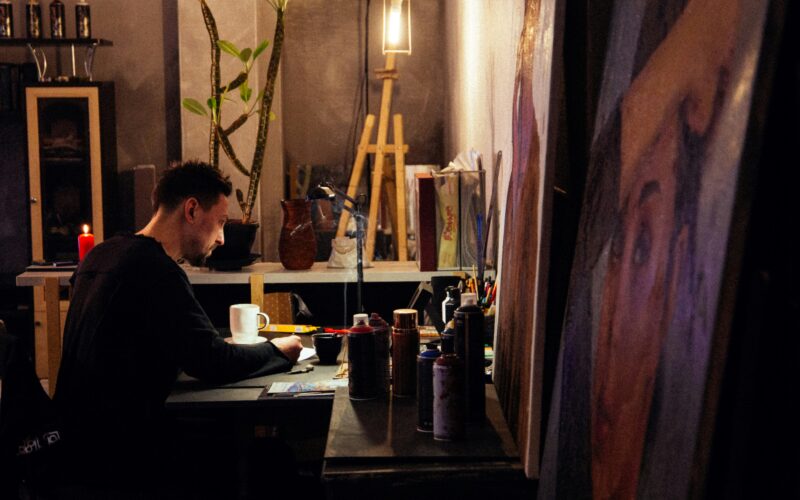
At Arts to Hearts Project, we love getting behind the finished work. The part nobody photographs. The hours before the painting exists, the doubt in the middle of it, the specific relief or disappointment when it is done. That is the part we are always most curious about.
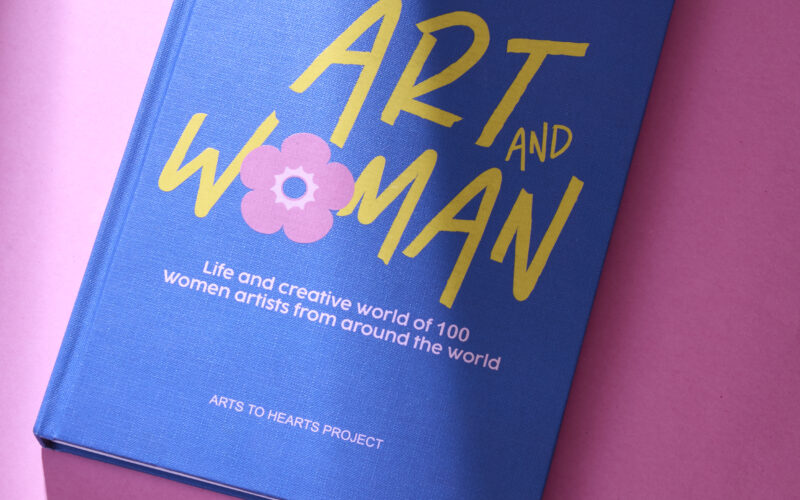
100 Emerging Artists of 2026 brings together 100 of the most compelling emerging artists from around the world. A premium hardcover coffee table book featuring voices from every discipline, gender, and creative background, making work that is bold, original, and impossible to ignore. Not artists who have arrived. Artists who are in the middle of arriving. Still discovering what they are capable of. Still surprising themselves. And for anyone who loves art, that is one of the most exciting places to be.
We wanted to know them a little differently. So we asked them something personal. What part of your creative process do you love the most? And what part still challenges you? Not the version from their artist statement. The honest one.
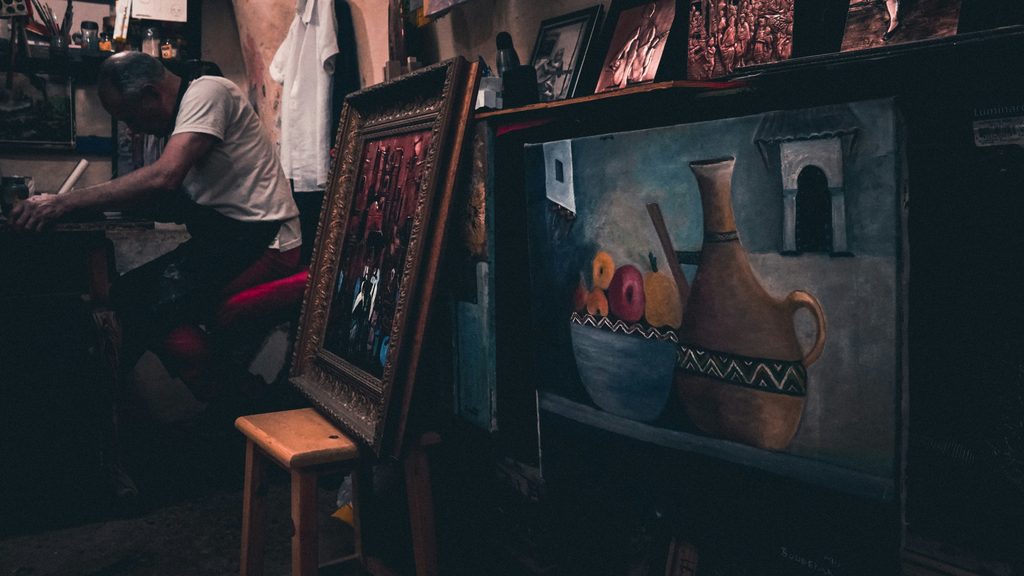
What came back stopped us. Because these are artists who are still close enough to the beginning that they have not yet learned to be guarded about it. The joy was real. The struggle was real. And the honesty sitting between the two was the kind you do not always get to see.
A few days ago we shared some of those answers. But more came in that deserved the same space. So we went back. Because this conversation was not finished. And honestly, with artists this good, we hope it never really is.
Here is what some of them told us.
Creation is the easy part. Completion is where the real courage lives.
Most artists will tell you that starting is not the hard part. The blank canvas is intimidating but it is also full of possibility. It can become anything. The hard part comes later. When the piece is mostly there but not quite. When you keep finding small things to adjust and cannot tell anymore whether you are improving it or just changing it. When the decision to stop feels less like a choice and more like a surrender.
Rocio Koizumi @rociokoizumiart puts it this way:
The part of the process I enjoy the most is drawing, choosing color palettes, and painting itself. I love seeing an idea slowly come to life through colors, textures, and small details. It’s the moment where I feel most connected to what I’m creating. What I struggle with the most is knowing when a piece is truly finished. If I keep looking at it, I always find new details to adjust or change. I also sometimes struggle with balancing my time between painting and all the other things that come with being an artist outside the studio.
Rocio Koizumi
The moment where she feels most connected to what she is creating. That is the part every artist chases. And for Rocio it lives in the colors, the textures, the small details slowly becoming something real. The struggle comes after. When the making is mostly done and the looking begins. Because a piece that you care about will always give you something else to find. And learning to trust it enough to stop is one of those things that does not get easier. You just get better at deciding.
The deeper you go into a subject the better the work gets. Some artists never stop digging
There is a kind of creative practice that begins long before the canvas is touched. That lives in libraries and old texts and the kind of deep research that most people would not recognise as art-making at all. But for the artists who work this way, the research is not preparation. It is the first and most essential part of the process. The painting is just where it finally surfaces.
Anguilla Ink @anguillaink reads before she paints. She told us why:
What I enjoy the most in my creative process is creation and research. I love reading, so I try to collect as much information as possible about characters belonging to myth and this kind of stuff, put them all together, and then I paint. While I don’t really like the advertising part, appearing in videos and this kind of stuff, because I think that the artist is not so important. It’s the artwork that matters.
Anguilla Ink
The artwork is what matters. Not the artist. That is a quietly radical thing to say in a world that increasingly asks artists to be their own brand, their own content, their own face. Anguilla would rather disappear into the myth and let what comes out of it do the talking. And honestly, for an artist who reads that deeply and research that obsessively before a single brushstroke is made, we think the work probably has plenty to say.
The resistance at the start and the freedom that comes after. Every artist knows this gap
There is a particular feeling that comes with sitting down to begin a new piece. Not excitement exactly. Something closer to friction. A heaviness that does not quite make sense given how much you want to be doing this. The blank canvas does not always welcome you. Sometimes it just sits there. And you sit with it. And you wait for something to shift.
Yothin Kanokbanpot @yothin_kanokbanpot knows that feeling well:
The part of my process I enjoy the most is entering a flow state, when I stop overthinking and become fully immersed in the painting. In those moments, time feels slower and more intuitive. The part I struggle with the most is the beginning. Starting a painting often comes with uncertainty and resistance. Sometimes it takes patience before the work begins to reveal its own direction and energy.
Yothin Kanokbanpot
Yothin has learned that staying with the uncertainty is what eventually opens the door to something deeper. As he gives the painting time, the process becomes slower and more intuitive. The overthinking begins to fall away, and the painting starts to speak back. Decisions feel less like decisions and more like listening. He has learned to trust that this state will come, and that the uncertainty at the beginning is not a warning. It is simply the door. And patience is the only way through it.
Inspiration does not wait for a convenient moment. The artist has to be ready anyway
The best ideas rarely arrive when you are sitting at your desk with a sketchbook open and a clear head. They come in the evening when you are supposed to be winding down. In the middle of a conversation. Right before you fall asleep. And for a fraction of a second they feel so clear and so obvious that you think there is no way you could forget them. And then you do.
Alessandra Nunziante @alessandra__nunziante describes it like this:
The part I love most about my creative process is the initial concept. Often it comes in the evening or at the most unexpected moments: it is something instinctive, almost impossible to control. I especially love the transformation process, that is, seeing what comes from my initial idea take concrete shape through work and observing how it evolves. The part that creates the most difficulty for me, however, is not losing that inspiration; avoid distraction and not just say: ‘Yes, I’ll mark it’, and then end up forgetting it.
Alessandra Nunziante
Yes I’ll mark it. And then end up forgetting it. We felt that deeply. Because that is not a failure of discipline. It is just what inspiration does. It arrives fast and leaves faster. And the gap between catching it and losing it is smaller than anyone would like. Alessandra loves the moment an idea starts becoming something real. The whole struggle is getting it far enough along to survive
Push too little and you stop growing. Push too hard and you lose the joy. The balance is everything.
Every artist who takes their practice seriously eventually faces this. The tension between staying in the comfortable place where the work feels good and pushing into the uncomfortable place where the work gets better. Neither extreme serves you. Too much safety and the work stops moving. Too much pressure and the thing that made you want to create in the first place quietly disappears. Finding the line between the two is not a problem you solve once. It is something you negotiate with every single piece.
Dawn Howell @dawn_howell_art puts it in a way every artist will recognise:
The part I love most is the meditative flow when I can zone out, paint intuitively, and lose all sense of time. Layering color after color, watching a world slowly come to life on the canvas. In those moments I am completely in my element, feeling at home in myself in a way nothing else quite matches. The greatest challenge is knowing how far to push myself. I have to challenge myself just enough to grow and evolve, without pushing so hard that I lose the joy that brought me here. That balance between safety and expansion is something I navigate with every single painting.
Dawn Howell
Feeling at home in herself in a way nothing else quite matches. That line stopped us. Because that is what the meditative flow actually is for Dawn. Not just a productive state. A place where she is most fully herself. And the challenge she carries into every painting is making sure that place stays accessible. That the pursuit of growth never costs her the very thing that makes the work worth doing.
The joy is real. So is the struggle. And every artist who shared with us this week was honest about both. That honesty is not a coincidence. It is what happens when artists are still close enough to the beginning that they have not yet learned to hide the difficult parts. The resistance at the start. The doubt in the middle. The inability to let go at the end. The ideas that arrive at midnight and disappear by morning. Nobody left any of that out. And we think that is one of the most valuable things you can read as someone who makes things or loves things that are made.
Because the polished version of a creative practice is easy to admire. The honest version is what actually helps. It reminds you that the struggle is not a sign you are doing it wrong. It is just part of what it means to care enough to keep going.
100 Emerging Artists of 2026 is full of artists exactly like this. If you want to discover them before everyone else does, the book is at the link below.
And if you are an artist who recognised something of yourself in these answers, we want to see your work. 101 Art Book: Faces Edition is now open for submissions. A curated international collection celebrating the human face through contemporary art. If portraiture or figurative work is part of your practice, this is your space.