

The Latest in the Art World: Museums, Milestones, and a Major Loss
The art world is heading into a busy autumn, with major museums, fairs, public art spaces, and galleries announcing exhibitions and projects that reflect just how broad the contemporary cultural landscape has become. This week brings news from New York, Abu Dhabi, Berlin, and beyond, MoMA’s expansive look at post-colonial African art, Frieze Abu Dhabi’s inaugural edition, new public commissions on the High Line, and a major new exhibition from South African painter Werner Bronkhorst.
The week also carries a significant loss: Yayoi Kusama has died at 97, the passing of one of the defining artistic voices of the postwar era, whose influence is still very much shaping how audiences experience contemporary art today.
Here’s what caught our attention in the art world this week.
MoMA Turns Its Focus to Africa’s Independence-Era Art
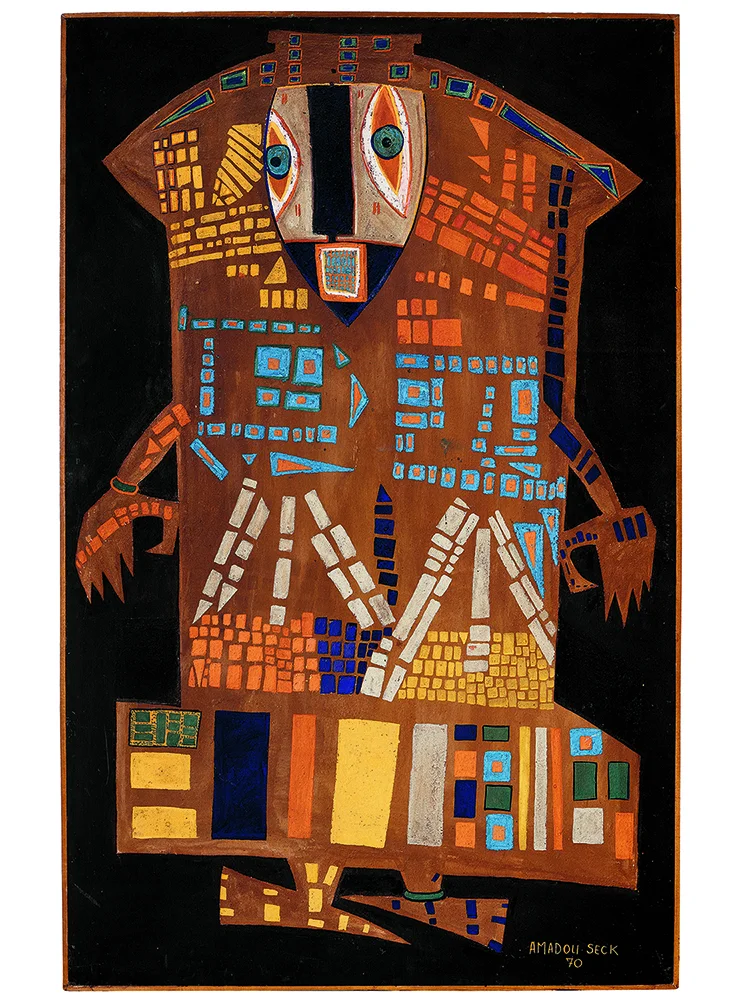
The Museum of Modern Art is preparing a major exhibition examining how artists across Africa responded to the political and cultural shifts surrounding decolonization. Freedom and Futures: Emancipatory Art in Africa, 1956–1982 will run from May 2 through August 14, 2027, bringing together roughly 250 works from collections around the world, including about 40 from MoMA’s own holdings.
Organized by curator Ugochukwu-Smooth C. Nzewi with former curatorial associate Erica DiBenedetto, the show approaches the period through the lens of “emancipatory art” treating independence-era art not as a single movement but as a set of distinct visual responses to shifting ideas of freedom, identity, political power, and cultural independence.
The exhibition takes its starting point from two major Pan-African gatherings: the First Congress of Black Writers and Artists in Paris in 1956 and the Second Congress in Rome in 1959, followed by five festivals held in Zimbabwe, Senegal, Algeria, Nigeria, and Botswana between 1962 and 1982. Work connected to these events will anchor six thematic sections spanning painting, sculpture, photography, film, tapestry, and printmaking.
The selection includes work by Mohammed Khadda, Uche Okeke, Valente Malangatana, and Iba N’Diaye. Khadda’s Africa Before One (1963) draws on Tassili cave imagery alongside Amazigh and Arabic script; Okeke’s Women Riot (1965) revisits the 1929 women’s tax revolt in eastern Nigeria; Malangatana’s Cry of Freedom (1973) reflects the closing years of Portuguese colonial rule in Mozambique; and N’Diaye’s Juan de Pareja Menaced by Dogs (1982) takes Velázquez’s portrait of Juan de Pareja as a jumping-off point for a meditation on neocolonialism.
MoMA has also been building its African art holdings ahead of the show, acquiring work by Khadda, Malangatana, Okeke, Mahjoub Ben Bella, Gavin Jantjes, Gazbia Sirry, and Ibrahim El Salahi. That collecting history reaches back to 1960, when founding director Alfred H. Barr Jr. acquired Tanzanian artist Sam Joseph Ntiro’s Men Taking Banana Beer to Bride by Night (1956), one of the museum’s earliest acquisitions of modern art by an African-born artist.
Freedom and Futures is the final installment in a three-part MoMA project on mid-century Africa run through the museum’s C-MAP Africa research group, following Ideas of Africa: Portraiture and Political, on Pan-African photographic portraiture, and Architects of Liberation: Modernism in Western Africa, on independence-era architecture. Together, the trilogy places African artists and their responses to decolonization at the center of a broader story about modernism, one shaped as much by political independence and the search for new cultural identity as by artistic experimentation itself.
Yayoi Kusama, Whose Dots and Mirrors Redefined Contemporary Art, Dies at 97
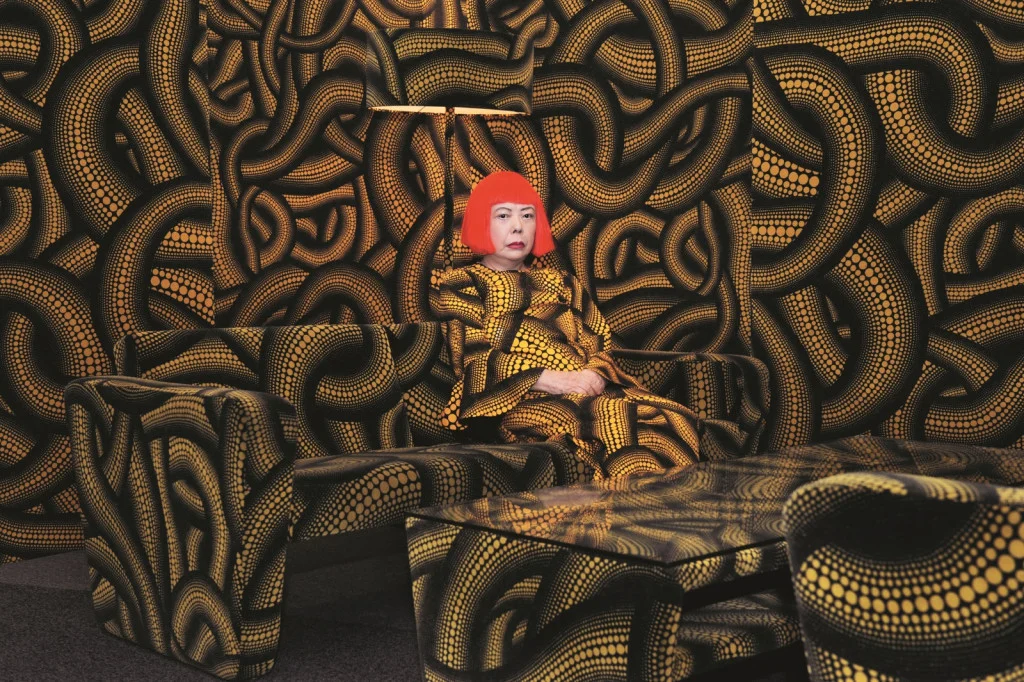
Yayoi Kusama, the Japanese artist whose polka dots, mirrored environments, and obsessive repetitions became some of the defining images of contemporary art, has died at 97. She died on August 14 at a hospital in Tokyo from multiple organ failure, according to her studio.
Born in Matsumoto, Japan, in 1929, Kusama began drawing as a child while experiencing hallucinations that would later become a central source for her art. Seeking to escape the conservative art world she’d grown up in, she left Japan for the United States in 1957 and eventually settled in New York, where she developed the dense, seemingly endless surfaces of her Infinity Nets paintings, a visual language that stayed central to her work for decades.
Through the 1960s, Kusama moved freely between painting, sculpture, installation, and performance. Her provocative Happenings, often featuring performers covered in her signature polka dots, doubled as both experimental artwork and protest against the Vietnam War. She moved through New York’s avant-garde scene alongside artists including Donald Judd, Joseph Cornell, and Eva Hesse, while resisting any attempt to file her neatly under movements like Pop art or Minimalism.
Kusama returned to Japan in 1973 and continued working from a studio beside the psychiatric hospital where she voluntarily lived starting in 1977. It was during this later period that the motifs that made her internationally famous became dominant, polka dots spreading across paintings, sculptures, and immersive environments, and pumpkins, an image she’d been drawing since childhood, becoming another enduring signature.
Her international profile grew dramatically in the 21st century. Her Infinity Mirror Rooms, evolving from an installation first created in 1965, became global museum sensations, drawing millions of visitors and turning the experience of seemingly endless space into one of contemporary art’s most recognizable encounters. A 2012 collaboration with Louis Vuitton pushed her visual language further into popular culture, and the Yayoi Kusama Museum opened in Tokyo in 2017.
Her market presence matched her cultural reach. She became one of the most sought-after women artists at auction, with her 1959 Untitled (Nets) reaching $10.49 million at Phillips in 2022, still her auction record. Her death comes as her work remains firmly in the international spotlight, with a major European retrospective scheduled at Amsterdam’s Stedelijk Museum. Across nearly eight decades, Kusama turned repetition, infinity, and personal experience into a visual language recognized around the world, one that made the line between art, environment, and audience increasingly hard to find.
Frieze Abu Dhabi Sets the Stage for Its First Edition
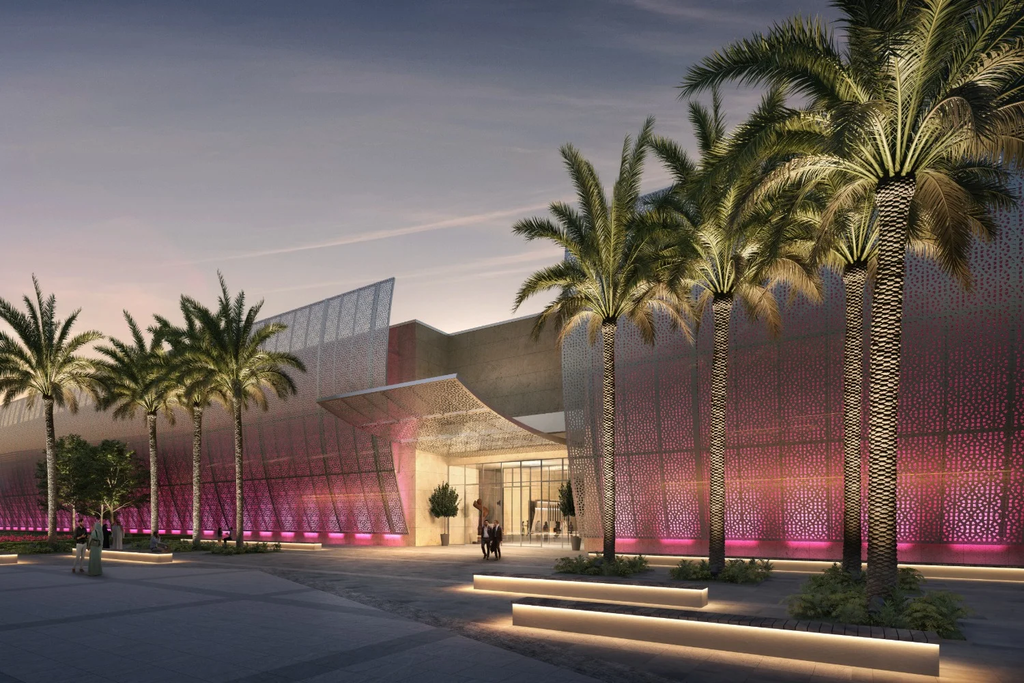
Frieze is expanding into the Middle East with the launch of Frieze Abu Dhabi, bringing 84 galleries from 36 countries and regions to Manarat Al Saadiyat from November 19 to 22, 2026. The inaugural fair marks Frieze’s first venture into the region, succeeding the 17-year-old Abu Dhabi Art through a new partnership with the Department of Culture and Tourism, Abu Dhabi.
The gallery lineup leans into the fair’s focus on the wider West Asia, North Africa, and South Asia region: UAE galleries including Carbon 12, Lawrie Shabibi, The Third Line, and Tabari Artspace will show alongside galleries from Beirut, Saudi Arabia, Tehran, and India. The international roster also includes Thaddaeus Ropac, Victoria Miro, Timothy Taylor, and Waddington Custot from Europe, plus Gagosian and Pace Gallery from the United States.
Beyond the main Galleries section, the fair introduces several curated platforms built around regional history and practice. Frieze Masters Abu Dhabi, curated by Marika Sardar, explores objects and artifacts from antiquity through the early 20th century through the theme of the Indian Ocean’s historic trade networks. Global Futures, curated by Tarini Malik, focuses on artists engaging with the cultural histories of the UAE and the wider region.
Focus, the fair’s younger-gallery section, offers bursaries to participating galleries and features solo presentations by Tahir Karmali, Marigold Santos, and Chonon Bensho. Other presentations across the fair spotlight artists including Ibrahim El-Salahi, Farideh Lashai, Samir Rafi, Emily Kam Kngwarray, Francesco Clemente, and Sheila Hicks.
The inaugural edition also introduces the Frieze Abu Dhabi Artist Award, alongside Frieze Sculpture and In Dialogue, a new annual exhibition pairing an established UAE artist with an emerging counterpart, programs that extend the fair well beyond its gallery booths. Frieze Abu Dhabi arrives amid growing international interest in the region’s art infrastructure, following Art Basel’s debut in Doha earlier this year, positioning Abu Dhabi as an increasingly important link between the Middle Eastern art scene and the global market.
High Line Announces Fall Commissions Exploring Labor, Identity, and City Life
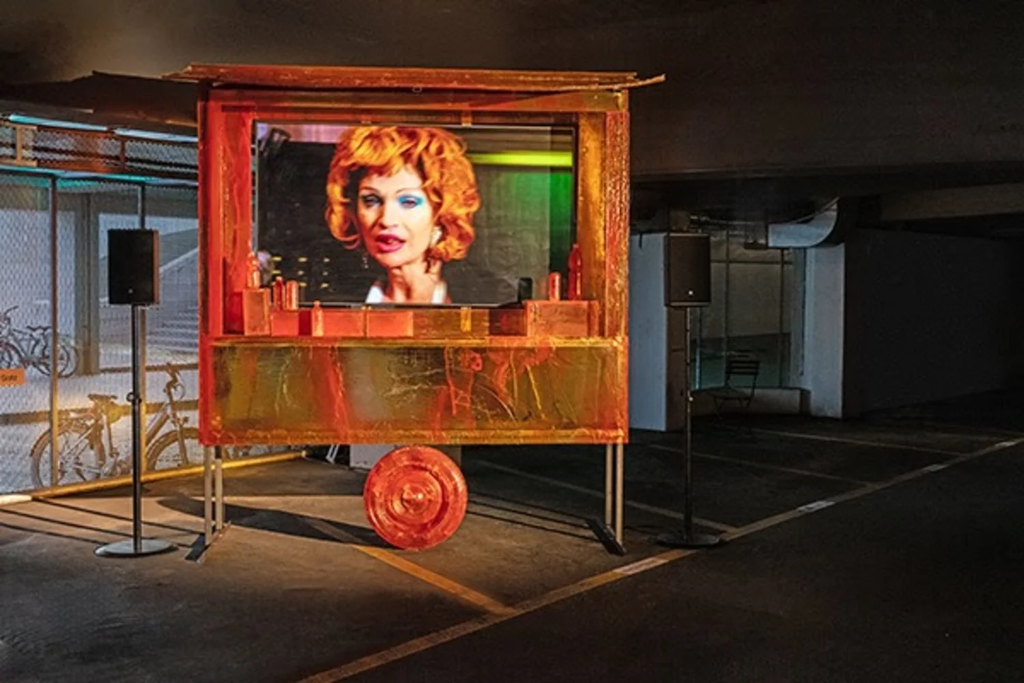
High Line Art has announced its fall 2026 commissions: new works by Marianna Simnett, Amol K. Patil, and Alvaro Barrington across different sections of the park, alongside a billboard project by Christopher Williams. Opening between September and November, the commissions continue the park’s broader 2026 focus on bodies, labor, infrastructure, and urban life.
Simnett’s Interlude (2026) opens in September near 30th Street and Hudson Yards, two concession stands, one featuring video of a food vendor preparing stadium hot dogs while singing a melancholic song. Known for blending performance, theater, humor, and unsettling imagery, Simnett uses the ordinary setting of a worker’s shift to get at vulnerability, agency, and survival.
At 24th Street near Chelsea, Amol K. Patil presents The Voices Cast in Dust (2026) in early October, a monumental bronze sculpture that fuses a mass of human figures into a single, tightly connected form, bodies and limbs pushing outward. Patil’s practice is closely tied to labor and working-class life, drawing in part on his family history in Mumbai, where his grandfather was a folk poet and his father an avant-garde playwright who documented the lives of mill and sanitation workers.
In November, Alvaro Barrington installs Western Beef-High Line (2026) near 14th Street, a steel-framed billboard built from colored plastic vinyl strips and supermarket-style milk crates, drawing a line between the industrial materials of everyday life and the sweeping Hudson River views once depicted by the Hudson River School. Barrington describes the piece as a contemporary “stained glass” proposition, tied to his interest in migration, heritage, and shared cultural identity.
The season also includes Christopher Williams’s MODEL (High Line Billboard, 18th Street and 10th Avenue, New York, 10011) (2026), opening in September. Based on an object from Williams’s enamel-on-glass series, the billboard reads as industrial from a distance but reveals hand-painted detail up close, its surface recalling the Rauhfaser wallpaper associated with 20th-century European working-class interiors, a deliberate contrast with the luxury architecture surrounding the High Line. Together, the commissions place ambitious contemporary art directly inside the rhythms of public life, using the park’s workers, architecture, and constantly changing cityscape as part of the work itself.
Werner Bronkhorst to Take Over a Berlin Skyscraper with His Largest Exhibition Yet
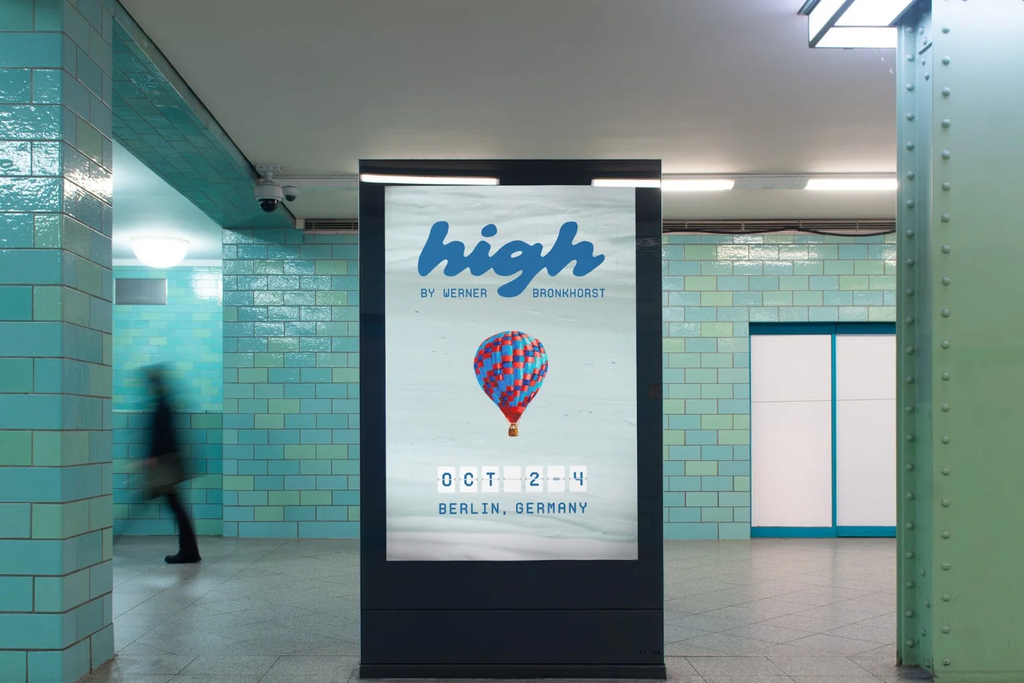
South African painter Werner Bronkhorst is bringing his largest exhibition to date to Berlin this October, filling the Atrium Tower at Potsdamer Platz with more than 40 new paintings. Titled HIGH, the show runs October 2 to 4 and marks Bronkhorst’s European debut, turning his fascination with scale, texture, and miniature figures toward the open sky.
Bronkhorst’s technique is built around heavily layered paint, thick, textured surfaces that read as almost sculptural backgrounds, across which he places tiny, meticulously rendered figures and objects. The contrast gives his paintings the feel of miniature worlds seen from above, somewhere between abstract expressionism and trompe l’oeil.
For HIGH, that imagined world moves upward: airplanes crossing distant horizons, hot-air balloons drifting through clouds, skydivers suspended against open sky. The centerpiece, Come Up For Air (2026), is a human-scale canvas populated by 25 individually detailed hot-air balloons drifting across a sunset.
The show continues Bronkhorst’s habit of building interconnected bodies of work around a theme, earlier series have covered snow and winter, sports, park life, and water, while a separate line of charcoal drawings has focused on speeding cars and black-and-white photographic language. He cites Andy Warhol, Willem de Kooning, Keith Haring, and René Magritte among his influences, and his paintings carry recurring, tongue-in-cheek references to “Sex, Drugs and Rock and Roll.”
Much of Bronkhorst’s audience has been built outside the traditional gallery system. With almost two million Instagram followers, he’s used social media to share his process directly with collectors and viewers, a following that’s translated into real market heat, with his original works reaching six-figure prices at auction and Tiebreak! (2025) setting a $460,000 benchmark at FairArt in December. With HIGH, Bronkhorst takes his densely textured, miniature-filled worlds into a far larger architectural setting, a new stage for work built around making viewers feel very small and completely immersed at the same time.
Read more : Elsa Schiaparelli, the Designer Who Put Surrealism on a Dress
Where the Art World Goes From Here
From long-anticipated exhibitions to new fairs, public commissions, and a major loss, this week’s news offers a revealing snapshot of where the art world is heading. Institutions are looking more closely at histories that have been overlooked, cities are turning public space into a platform for ambitious art, and major fairs keep expanding the geography of the international market.
There’s a sense of looking both backward and forward at once: MoMA’s exhibition invites a reconsideration of a chapter of art history too often told as a footnote to Europe and America, while Kusama’s death and Bronkhorst’s rapid rise show just how differently an artistic language can travel, across a single career, or across entirely new generations of audiences.
Taken together, these are the developments worth watching as the season unfolds, an art world still being rewritten through discovery, new platforms, and artists finding fresh ways to reach the public.
Explore the current open calls and submit your work: apply.artstoheartsproject.com