

What Artists Do Before They Share Their Art With the World
At Arts to Hearts Project, we have always believed that the most interesting part of any artwork is not what you see. It is everything that happened before you got to see it. The morning it started in. The ritual that made it possible. The hours of doubt and the moments of clarity that nobody else was there for.
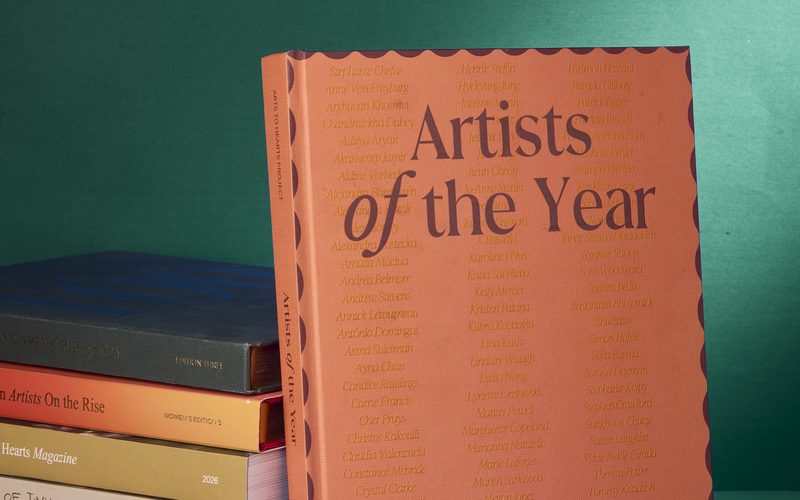
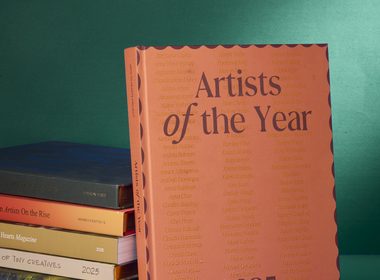
Women Artists on the Rise Edition 4 features 100 exceptional women artists from around the world in a beautifully crafted 232-page hardcover collector’s book. Wrapped in a gold-foiled die-cut jacket and filled with exclusive interviews, award-winning artworks, and contemporary practices across painting, sculpture, photography, mixed media, and more.
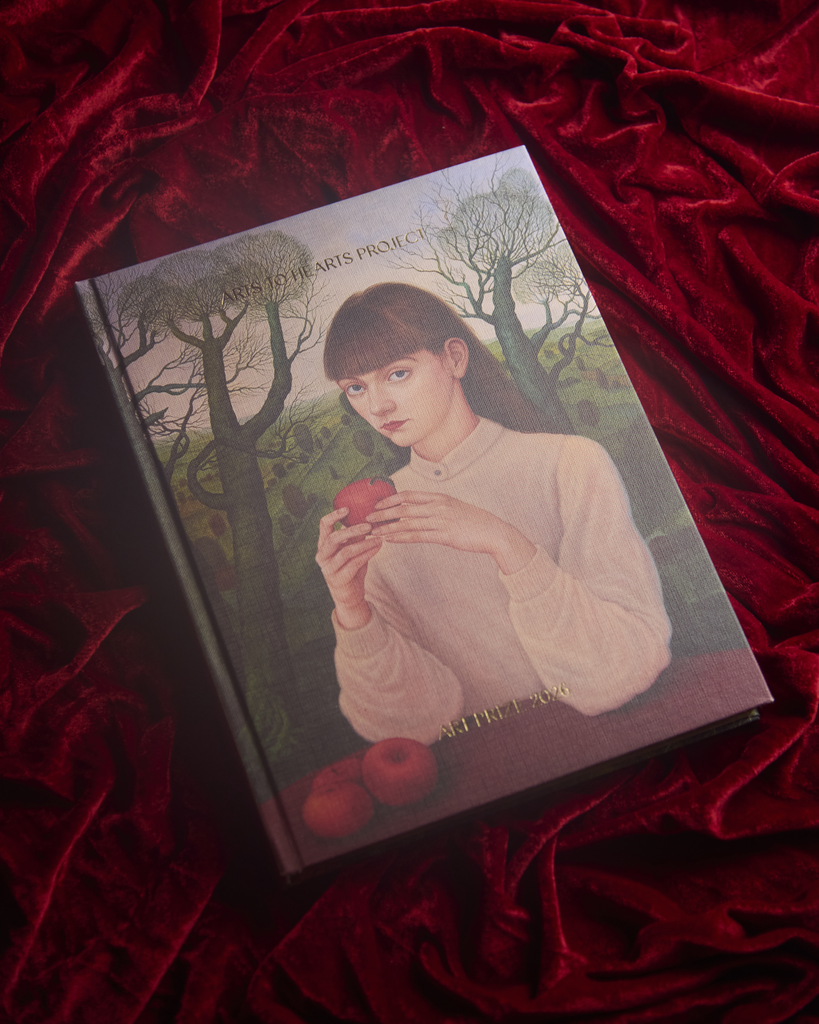
It is a book built to celebrate not just what these women make but who they are when they are making it. The practice behind the piece. The hours behind the work. The ordinary day that produces something extraordinary.
We have been asking the featured artists to take us inside that day. The answers that keep coming back are honest and specific and more varied than we anticipated. We have shared some of them already. But there were more sitting with us that deserved the same space.
We are back with more. Because the honest creative day of a working artist never runs out of things to say.
The practice that begins in charity shops and end markets before it ever reaches the studio
Most people think of the studio as where the work begins. But for some artists the real creative process starts much earlier. Before the first mark is made. Before anything is stretched or pinned or arranged. In the searching. The sourcing. The handling of materials that have already lived somewhere else and carry that history in them. That kind of practice does not begin with a blank canvas. It begins with a found object and the question of what it still has left to say.
Sabrina Nieddu @sabrina_nieddu_ describes her process this way:
“My creative process always begins with research and reading. Material is central to my practice, so much of the process comes from sourcing and working with found fabrics and objects. In the studio, I develop ideas through direct contact with recycled materials, which guide the project’s direction.”
Sabrina Nieddu
The materials guide the project’s direction. Not the other way around. That is the thing that makes Sabrina’s practice so distinct. She does not arrive at the studio with a fixed plan that the materials have to serve. She arrives with materials that have their own history and lets them shape what the work becomes. The research informs the thinking. The found fabric informs everything else. And the studio is simply where all of that finally comes together.
The most nourishing creative practices are often rooted in something that has nothing to do with art
We talk about creative routines as if they always begin at the easel. With the materials laid out and the intention set and the mind already focused on what is about to be made. But some of the most sustained and deeply felt practices begin somewhere else entirely. In the quiet before the studio. In the act of tending to something outside of the work. In the kind of morning that fills you up before you have made a single mark.
Debbie Moylan @Debbiemoylanart starts her day like this:
“My days start very early and quietly. I feed all my rescue animals, the stray cats outside, and the birds. I spend time outdoors listening to birdsong, writing, and reflecting before I begin painting later in the morning. My creative practice is deeply connected to care, routine, animals, and stillness.”
Debbie Moylan
The feeding and the listening and the reflecting that happens before the brush is ever picked up. That is not a warm up for Debbie. That is the whole foundation. The rescued animals cared for. The stray cats looked after. The birds listened to in the quiet before the day gets loud. By the time she gets to the canvas she is not starting from nothing. She is bringing everything that morning gave her.
The most underrated part of making art is the time spent just looking at it.
Nobody talks about the staring. The long quiet moments of just being with the work and letting it tell you what it needs next. The sitting that looks like nothing from the outside but is actually where some of the most important decisions get made. That is not procrastination. That is one of the most underrated parts of making art.
Belinda Zhang @belinda.z builds her practice around exactly that:
“On a typical studio day, a lot of the creative process involves applying thin layers of glaze and washes of different colors to really build up the depth within my pieces. But even more so is sitting with the artwork and just staring at it.”
Belinda
Even more so is sitting with the artwork and just staring at it. That line is the one that stays. Because Belinda is not describing a break between the real work. She is describing the real work. The layers of glaze and washes of colour build the depth. But the staring is what tells her where the depth still needs to go. You cannot rush that part. And the artists who understand that are the ones whose work has something in it that takes a while to fully see.
The photograph taken on a Tuesday. The idea it becomes three weeks later. That is a creative practice.
Not every creative process happens in real time. Some of the best ideas need to be captured in the moment and left alone for a while before they are ready to become anything. The photograph taken quickly because something caught your eye. The note scribbled before the thought disappears. The sketchbook you return to days or weeks later and find something waiting there that you had almost forgotten about. That kind of practice requires patience. And a particular way of moving through the world with your eyes open.
Veronica Boyle @veronicaboyle.art works exactly like that:
“In a typical day, my creative process looks like gaining inspiration from the world around me whether that be from other artists or moments of life. Often I take pictures or notes and will revisit the inspiration in my sketchbook to play around with ideas.”
Veronica Boyle
There is no rush in Veronica’s process. The photograph gets taken. The note gets written. And then life continues. The idea sits in the sketchbook and does whatever ideas do when they are left alone for a while. Which is usually become clearer. More themselves. Ready to be made into something that the hurried version never could have been. Some of the best work comes from the ideas that were allowed to wait.
The lived moment that becomes a sketch that becomes a painting that becomes a story.
Some creative processes move in a straight line from idea to finished work. And then there are the ones that move through layers. That begin somewhere quiet and internal and slowly find their way outward through a series of translations. Each one bringing the original feeling a little closer to something visible. Something that can be shared. Something that started as a moment in a life and ended as something that might resonate in someone else’s entirely.
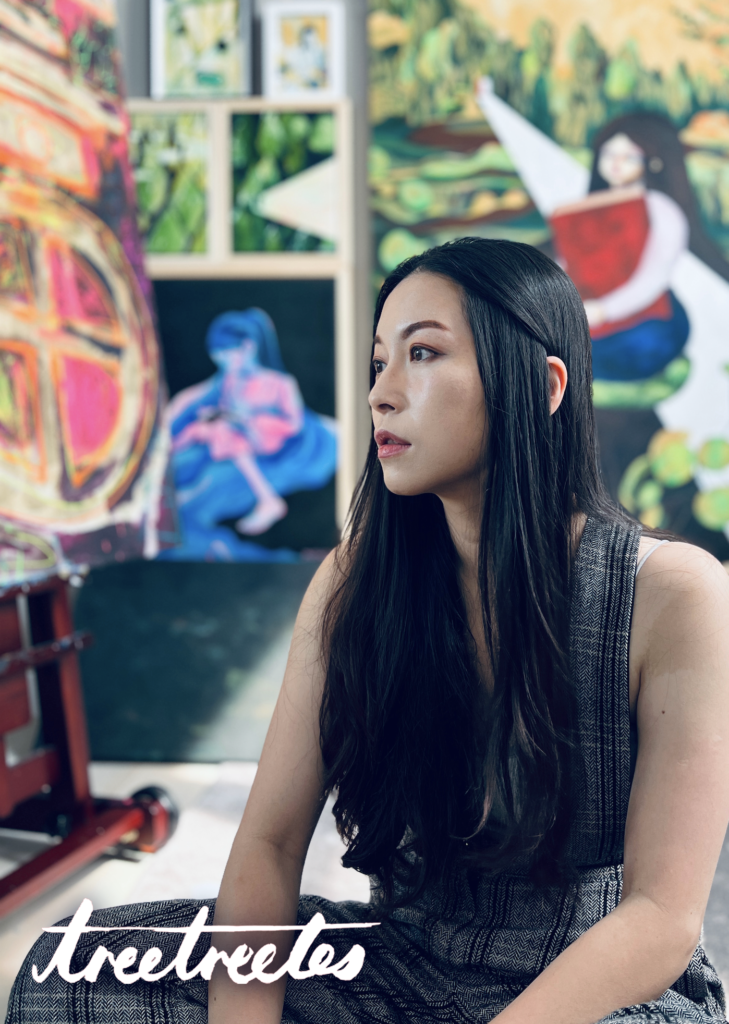
Tree Tree @treetreetes works through exactly those layers:
“On a typical day, my creative process begins with quiet observation and reflection. I gather emotions, memories, and small visual moments from life, then translate them into sketches and colors. Through painting, I slowly build stories that connect imagination with lived experience and inner emotion.”
Tree Tree
Most people walk past the small moments. The flicker of light on a surface. The feeling that comes and goes before it can be named. The memory that surfaces briefly and then disappears again. Tree Tree does not walk past them. She catches them. Brings them back. Translates them slowly into sketch and colour and story. And by the time the painting is finished it contains more of a life than most people would ever guess from looking at it.
Every artist we heard from this time had a completely different answer. And every answer was completely right for the person giving it.
A practice rooted in found materials and the history they carry. A morning built around care for living things before a single brushstroke is made. Layers of glaze and the long quiet of just sitting with the work. Moments photographed and revisited weeks later in a sketchbook. Emotions gathered from life and slowly built into stories through paint.
No two creative days looked the same. And yet all of them pointed to the same truth. That the work does not begin at the easel. It begins in how an artist moves through the world. What they notice. What they collect. What they tend to before they ever pick up a brush.
Women Artists on the Rise Edition 4 is full of artists exactly like this. One hundred women. One hundred practices. One hundred ways of arriving at the work every single day. The book is available now at the link below.
And if you are an artist with a practice of your own, do not miss this. Submissions for 101 Art Book: Texture Edition are open but the deadline is coming up fast. A curated international collection celebrating artists who work with surface, material, and tactile depth. If texture is central to what you make, this is the book for it. Submit before it is too late.