


10 Unfamiliar Photographs by Famous Artists
Photography is often expected to document reality, to present the world as it appears. Yet, across its history, many artists have used the medium to do the opposite, constructing images that feel familiar at first glance, but become increasingly difficult to interpret the longer they are observed.These unfamiliar photographs do not rely on obvious distortion, but on subtle shifts that alter how we recognise what we see.
The photographs in this selection are drawn from widely recognised works by some of the most influential artists in the field. Rather than relying on spectacle or obvious distortion, they introduce quieter disruptions. A portrait resists a fixed identity, a body is reconfigured beyond recognition, a familiar setting behaves in a way that does not align with everyday experience.
What makes these images unfamiliar is not immediacy, but delay. The unease does not announce itself; it emerges gradually, as recognition gives way to uncertainty. The viewer understands what is being seen, but cannot fully resolve it.
Spanning early Surrealist experiments to contemporary conceptual practices, these works demonstrate how photography can move beyond documentation into construction. In doing so, they shift the image away from clarity and toward ambiguity, where meaning remains open, and the familiar no longer feels entirely stable.
Cindy Sherman – Untitled Film Still #21, 1978
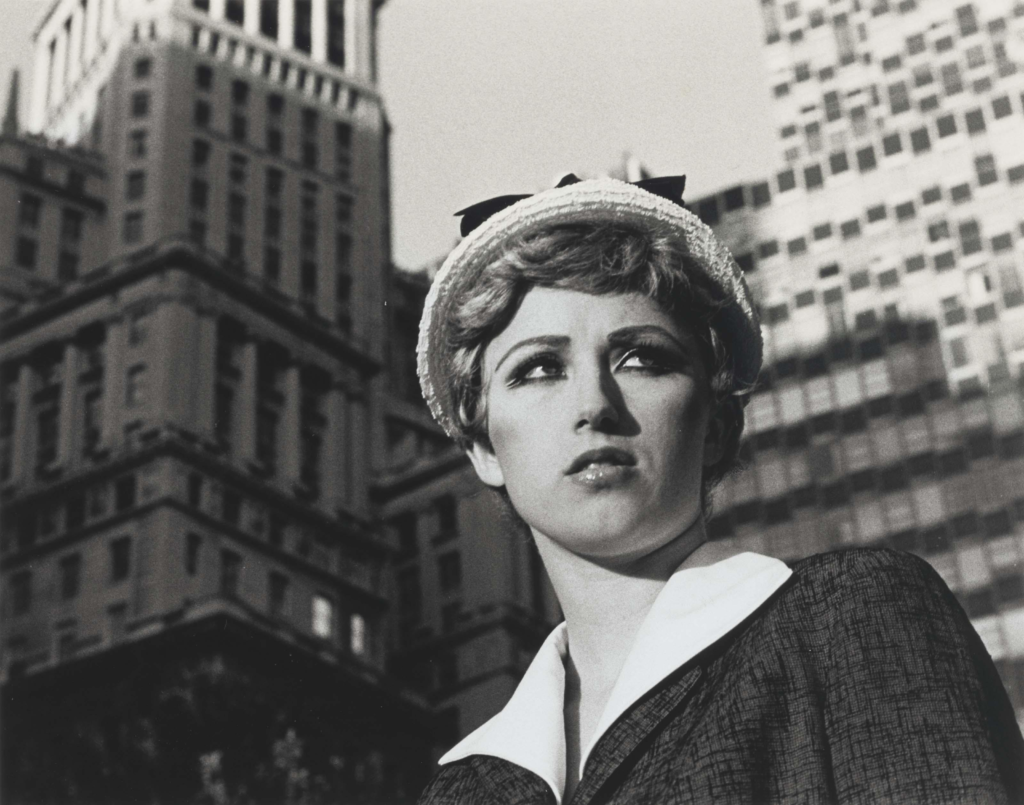
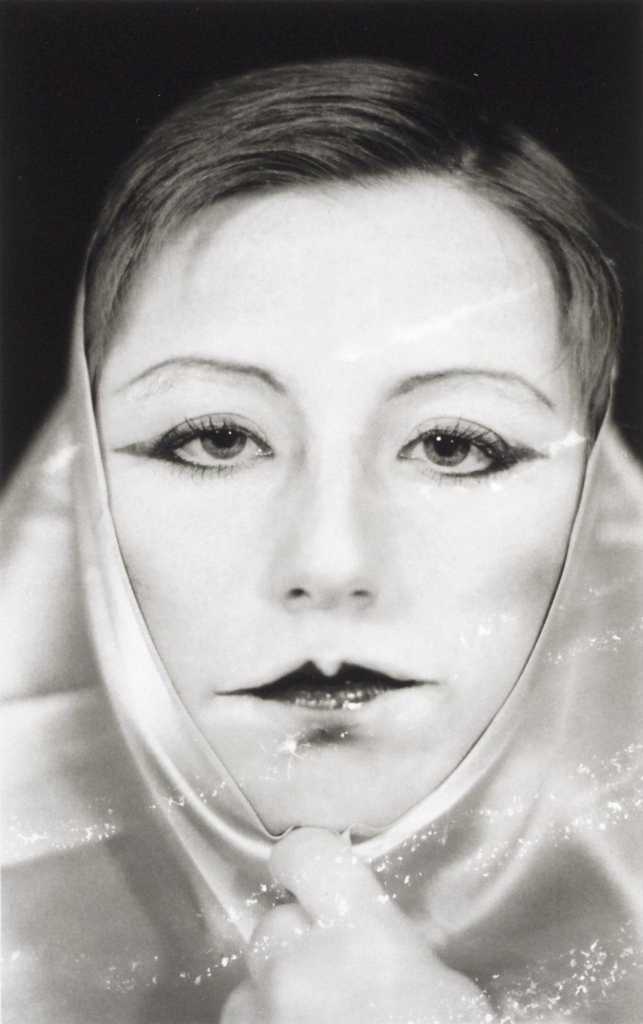
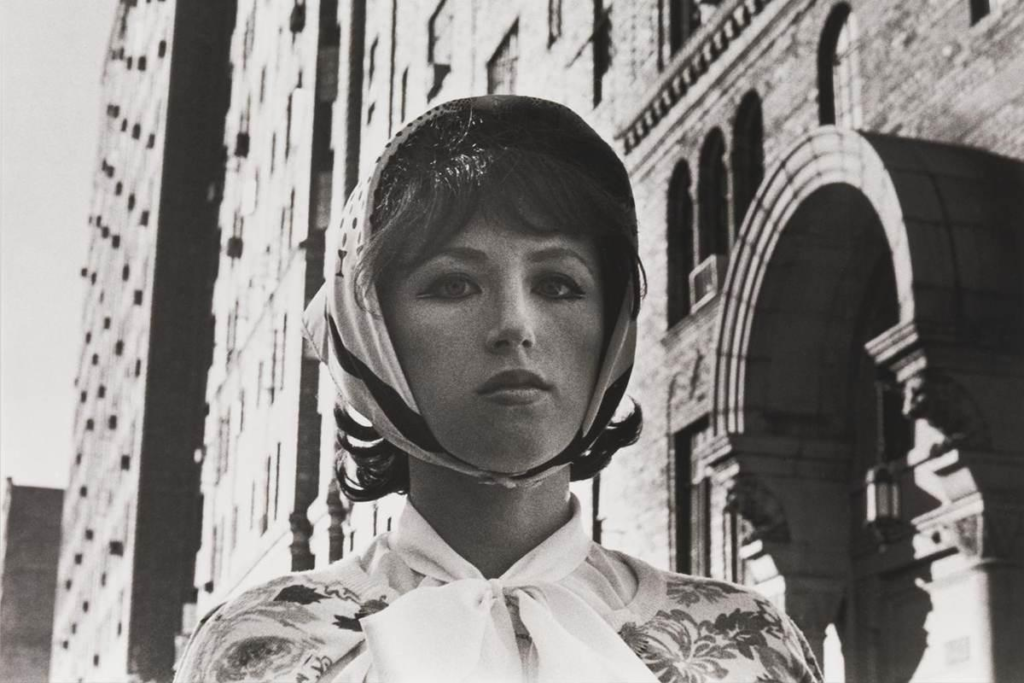
Cindy Sherman’s photographs often resemble stills from films, yet they do not belong to any identifiable narrative. In her Untitled Film Stills series (1977–80), she appears in a range of roles, a woman standing alone on a street, a figure in a domestic interior, a character caught mid-scene. The compositions feel familiar, drawing from cinematic language and visual culture, but the context remains undefined.
This absence of narrative is central to how the work operates. Sherman constructs each image herself, working as both photographer and subject, but she does not present a stable identity. Through costume, makeup, and setting, she adopts personas that appear recognisable yet cannot be traced to a specific story. The viewer is left to interpret what is being depicted, without clear resolution.
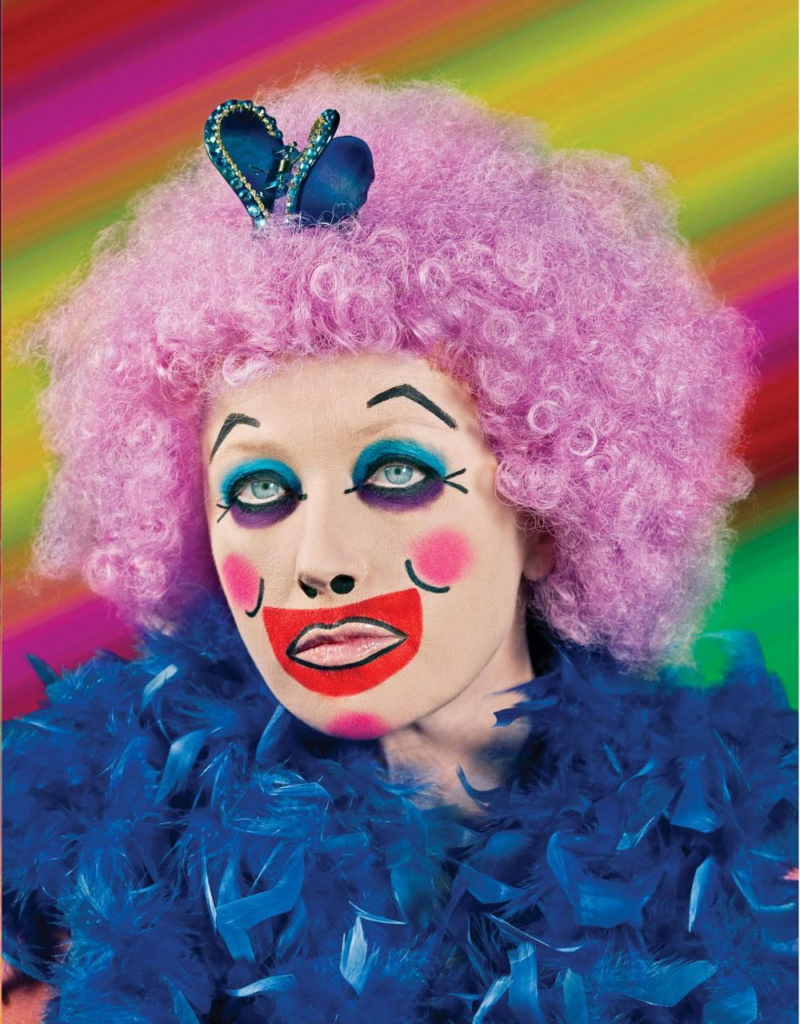
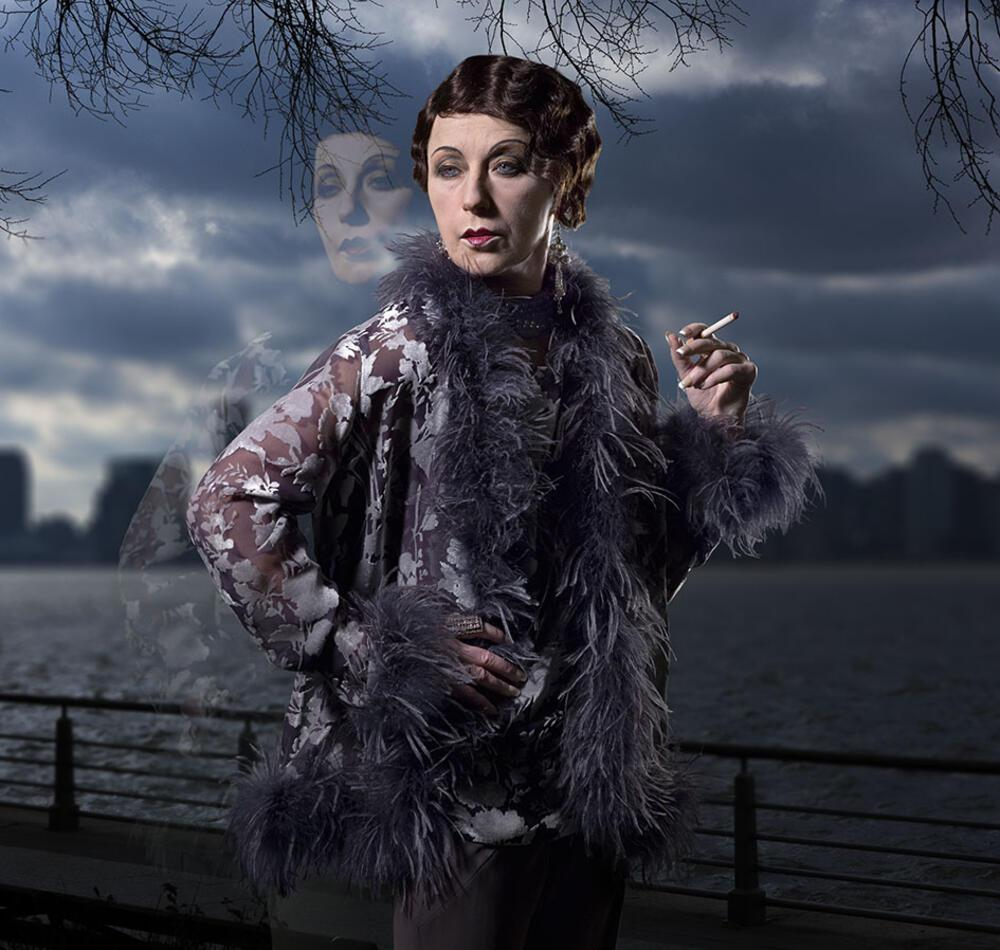
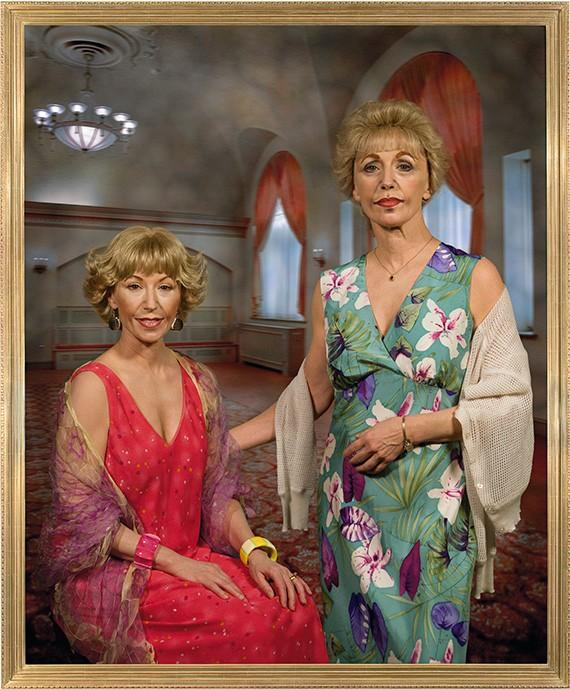
What disrupts the familiar in these photographs is not an obvious distortion, but a subtle instability. The images resemble something known, film stills, advertisements, portraits, but do not function in the same way. There is no beginning or end, no confirmed identity, and no fixed meaning. The sense of recognition remains incomplete.
This tension becomes more apparent the longer the images are observed. Expressions appear controlled, gestures feel deliberate, and the overall composition suggests construction rather than spontaneity. The photographs look real, yet are entirely staged.
Across her broader practice, Sherman continues to examine how identity is shaped through representation, particularly in relation to gender and media. By removing certainty and disrupting narrative expectations, her work shifts photography away from documentation and toward interpretation, where meaning is not given but constructed by the viewer.
Roger Ballen – Outland, (2001),Shadow Chamber (2005)
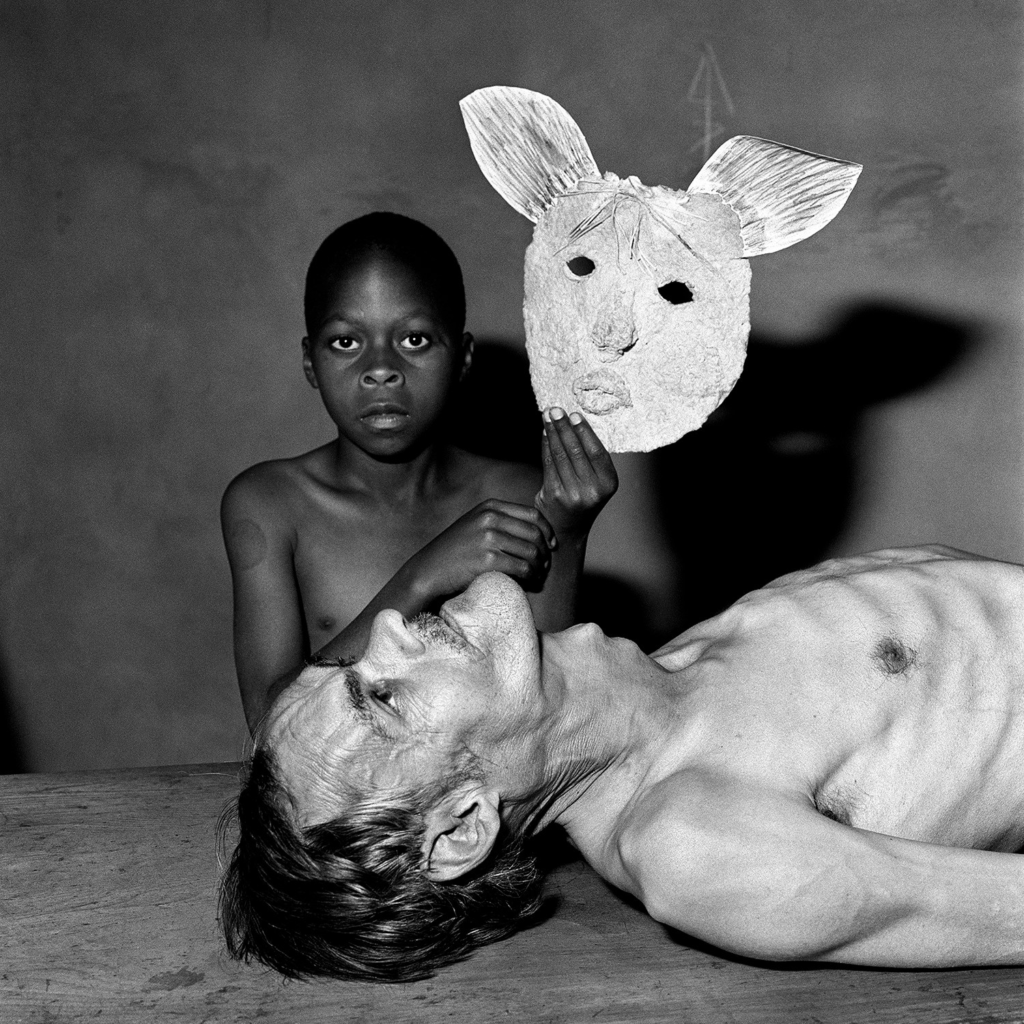
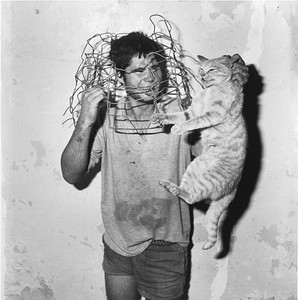
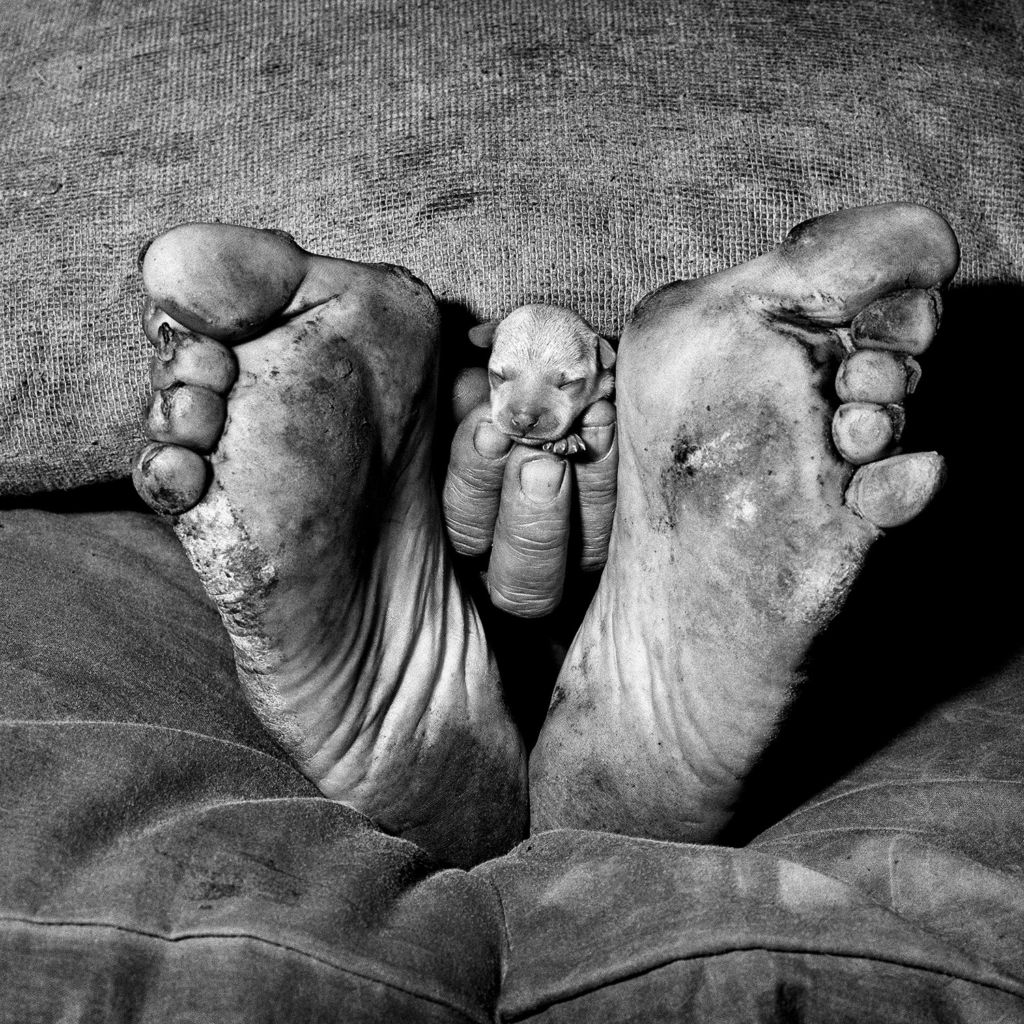
Roger Ballen’s photographs present environments that feel both real and constructed, combining elements of documentary observation with deliberate staging. Working primarily in black and white, he creates images set within confined interior spaces, rooms marked by rough textures, exposed wiring, scattered objects, and walls covered in crude drawings. These settings function less as physical locations and more as controlled visual environments.
In series such as Outland (2001) and Shadow Chamber (2005), Ballen brings together human figures, animals, and drawn elements within the same frame. Their relationships remain unclear. A figure may appear passive or disengaged, while an animal occupies the space in a way that feels both natural and misplaced. The drawings, often childlike or fragmented, extend across the walls, blurring the boundary between background and subject.
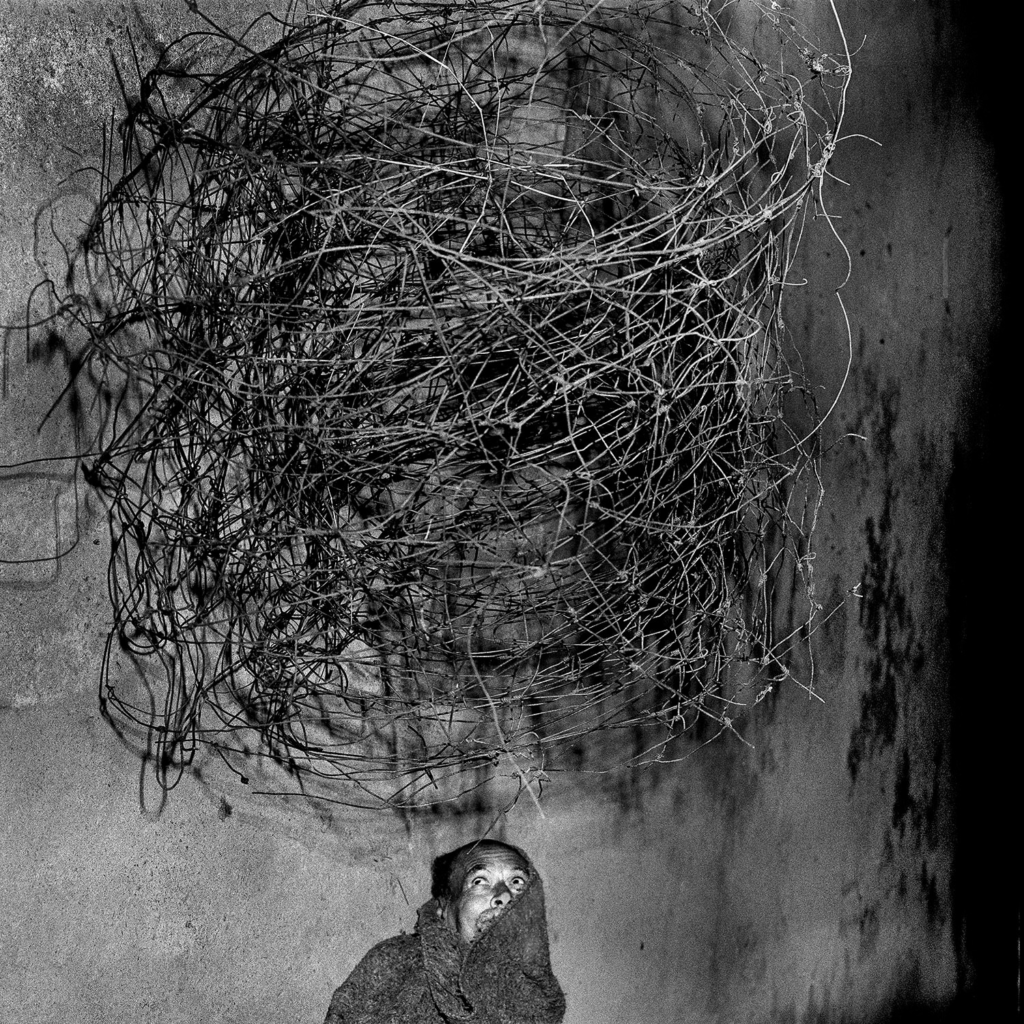
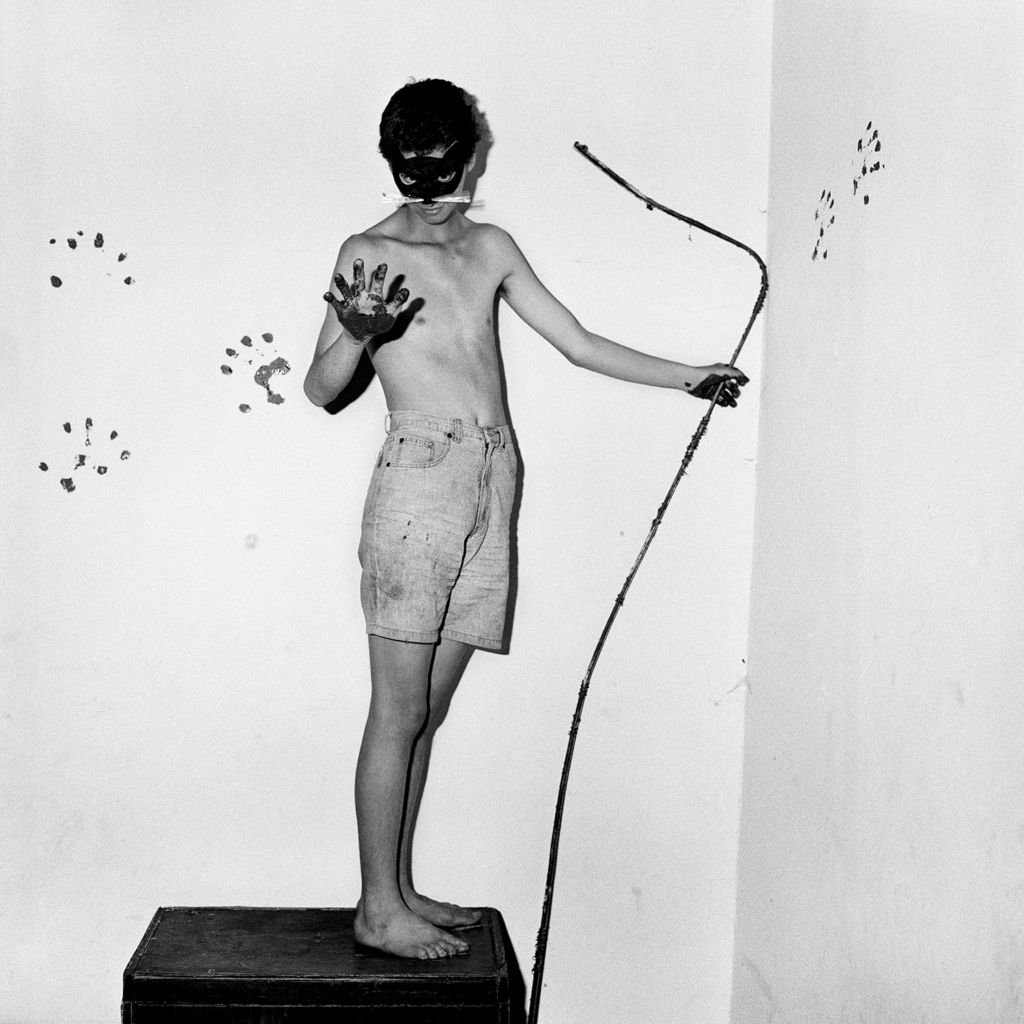
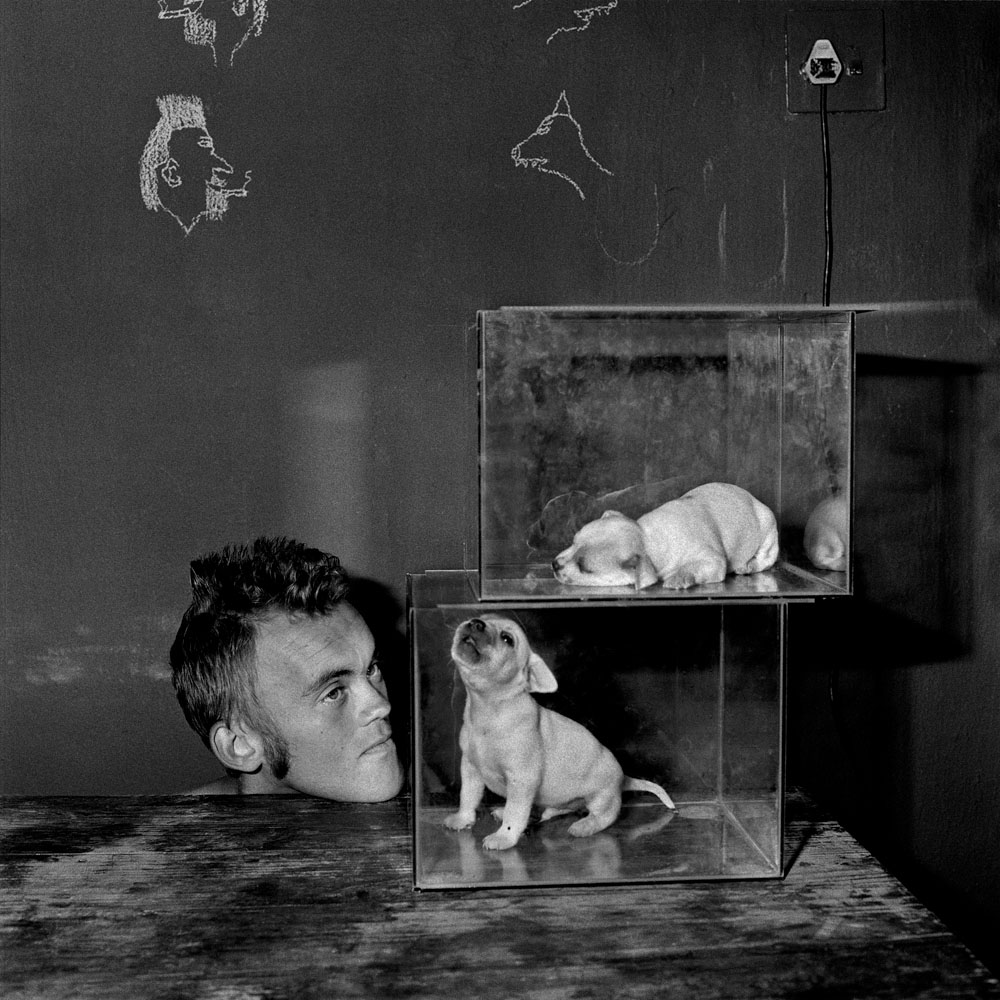
What disrupts the familiar in these photographs is the absence of hierarchy or clear structure. There is no single focal point that directs attention. Instead, the viewer’s gaze moves across the image, encountering details that resist immediate interpretation. Elements that might typically be separated, people, animals, marks, objects, are compressed into the same visual field without explanation.
The images do not fully align with documentary photography, yet they do not present themselves as entirely fictional. This ambiguity creates a sense of instability. The viewer is aware that the scene has been arranged, but cannot determine how or why.
Ballen’s work does not offer resolution or narrative clarity. Instead, it constructs a visual space where meaning remains uncertain, and where familiar elements are reorganised in ways that make them difficult to place or interpret.
3. Diane Arbus – Identical Twins, Roselle, New Jersey, 1967
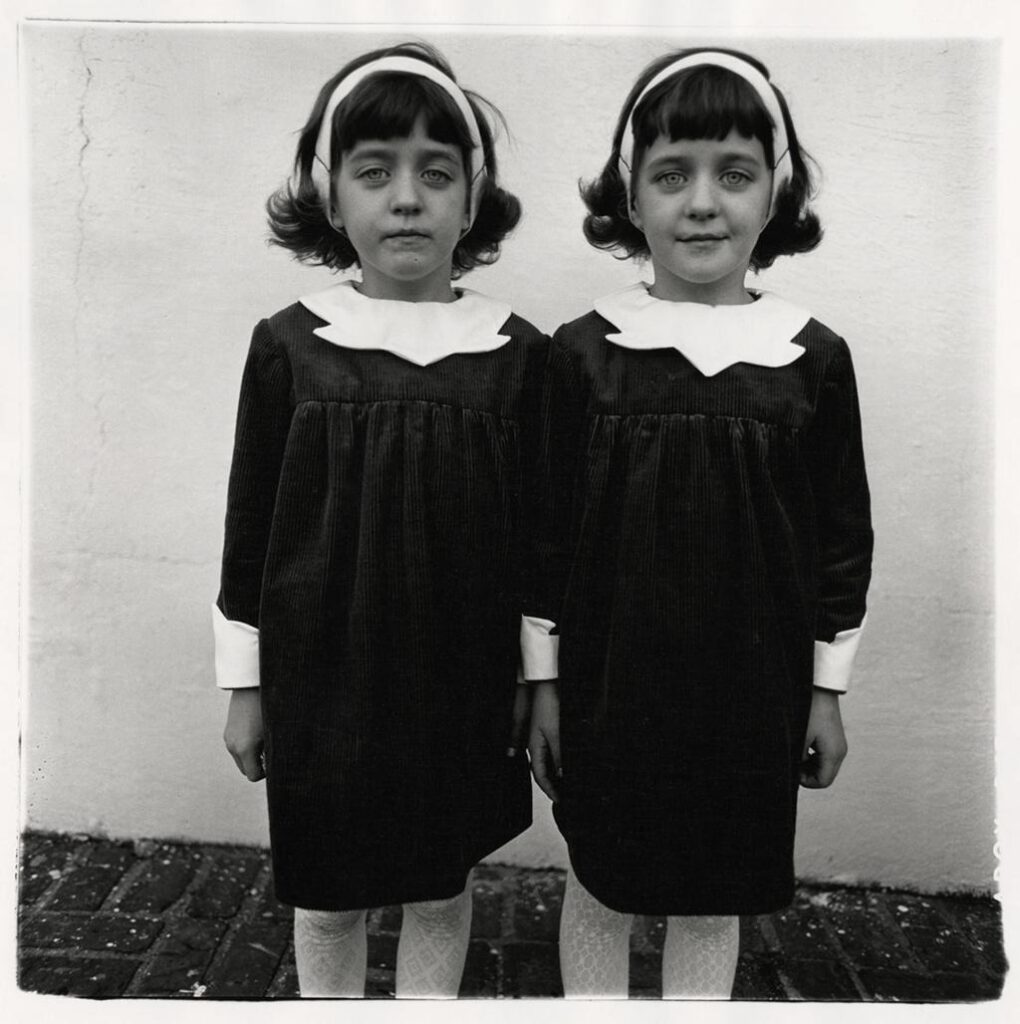
Diane Arbus’s photographs are grounded in observation, yet they often produce a sense of unease that is difficult to locate. Working primarily in black and white, she focused on individuals and situations that existed outside conventional representation, approaching her subjects with a direct and consistent visual style. Her images are neither stylised nor overtly manipulated, but their effect is rarely neutral.
In Identical Twins, Roselle, New Jersey (1967), two young girls stand side by side, dressed alike and facing the camera. The composition is straightforward and symmetrical, yet small differences in expression and posture disrupt the expectation of sameness. The photograph appears simple, but becomes increasingly difficult to read as the viewer notices these variations.
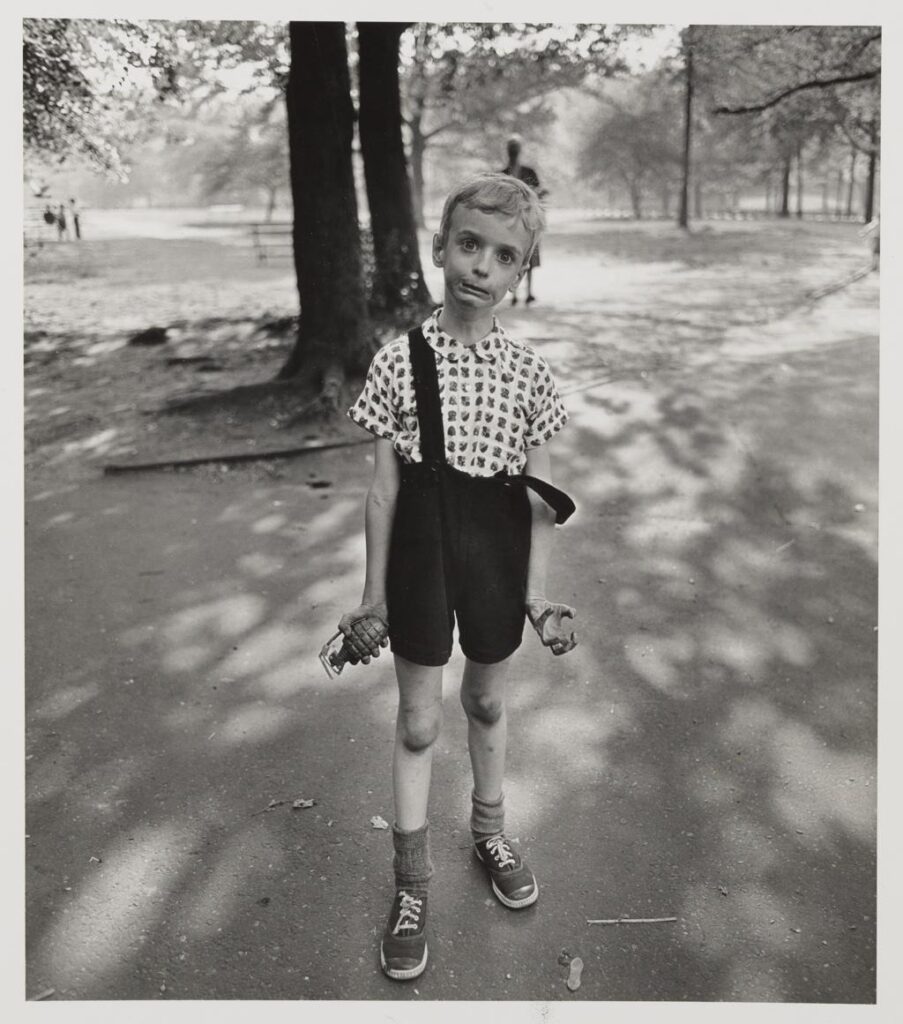
A similar tension is present in Child with Toy Hand Grenade in Central Park (1962). The setting is familiar, a public park, but the boy’s expression and gesture introduce an intensity that feels disproportionate to the situation. The object in his hand, though a toy, alters the tone of the image, creating a disconnect between subject and context.
What disrupts the familiar in Arbus’s work is the directness of the encounter. Her subjects meet the camera without hesitation, reducing the distance typically maintained between viewer and subject. There is no attempt to guide interpretation or soften the image.
The photographs remain open, without clear explanation or narrative. They present ordinary situations that, through framing and timing, become difficult to categorise. This ambiguity is central to their effect, positioning the viewer in a space where recognition and uncertainty coexist.
4. Man Ray – Le Violon d’Ingres, 1924
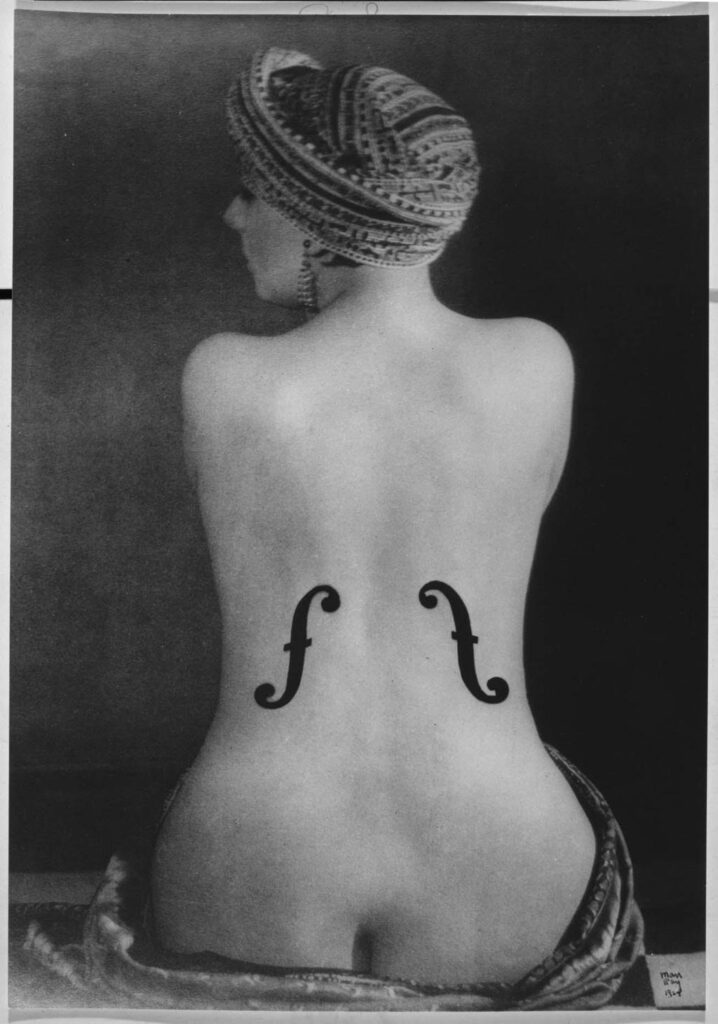
Man Ray approached photography as a medium for experimentation rather than documentation, using it to alter how images are perceived rather than simply record what is visible. Working within the Surrealist movement in the early 20th century, he explored ways to disrupt the relationship between object, image, and meaning. His photographs often begin with familiar subjects, but are transformed through process and intervention.
In Le Violon d’Ingres (1924), a female figure is presented with painted violin f-holes on her back. The alteration is minimal, yet it changes the way the body is read, shifting it between human form and object. The image appears composed and controlled, but its meaning becomes unstable as the viewer navigates these conflicting interpretations.
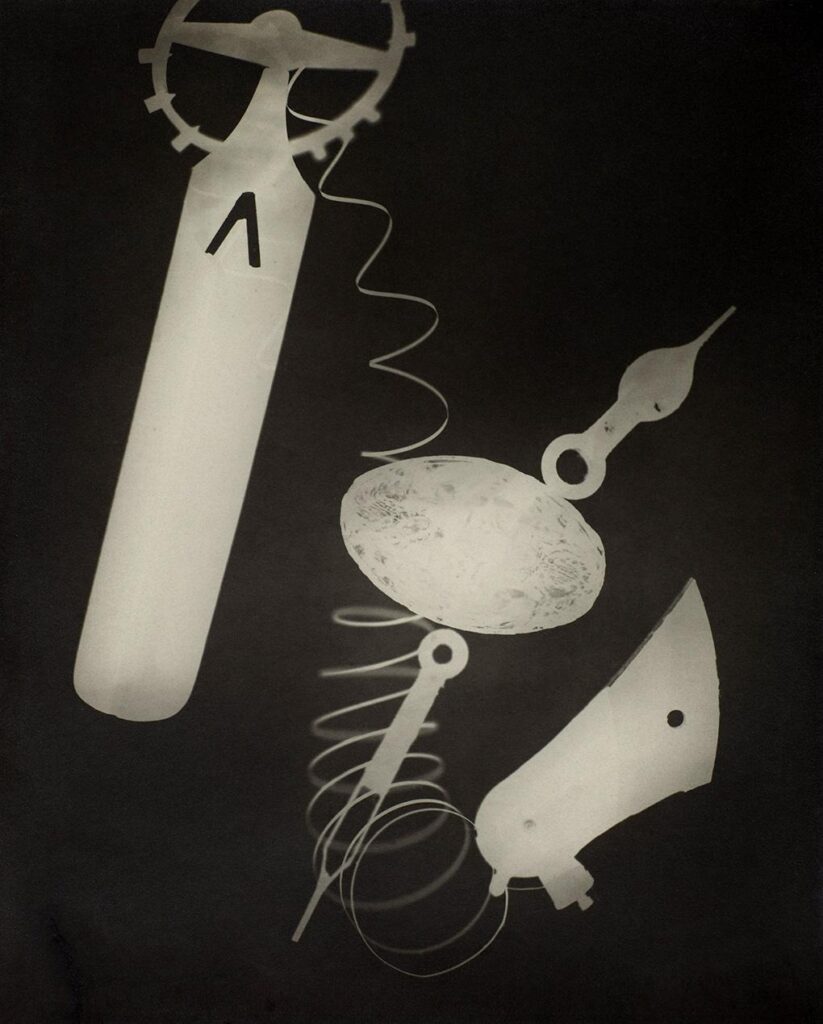
Man Ray’s rayographs extend this approach further. Created without a camera, by placing objects directly onto light-sensitive paper, these images remove conventional perspective and context. Everyday items appear as silhouettes or abstract forms, detached from their original function. Without a clear subject or spatial reference, the viewer is left to interpret the image without familiar visual cues.
He also experimented with solarization, a technique that partially reverses tones, producing images where light and shadow behave unpredictably. Faces and objects appear altered, not through distortion of form, but through a shift in how they are rendered.
What disrupts the familiar in Man Ray’s work is the transformation of both subject and process. By changing how photographs are made, he changes how they are understood, moving the medium away from representation and toward construction.
5. Lee Miller – Portrait of Space, 1937
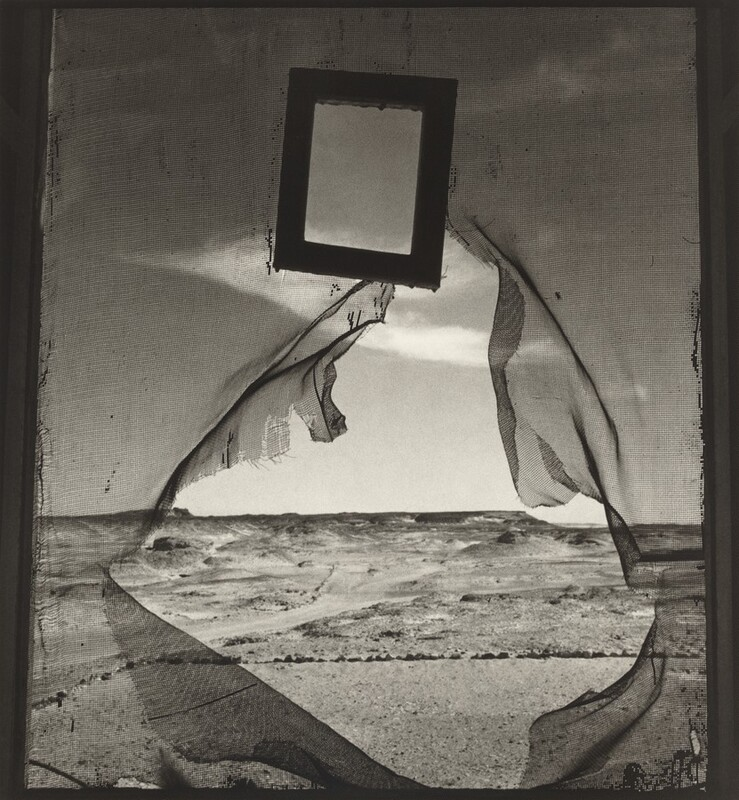
Lee Miller’s photographs often begin with ordinary subjects but present them in ways that make them difficult to interpret. In works such as Portrait of Space (1937), a torn piece of fabric frames a distant desert landscape, creating a visual interruption that alters how the space is perceived. The image appears simple, yet its composition disrupts the relationship between foreground and background.
Working within Surrealist circles in the late 1920s and 1930s, Miller experimented with composition, perspective, and photographic techniques to shift how familiar objects and environments are understood. In many of her images, elements are repositioned or partially obscured, making it difficult to determine how they relate to one another.
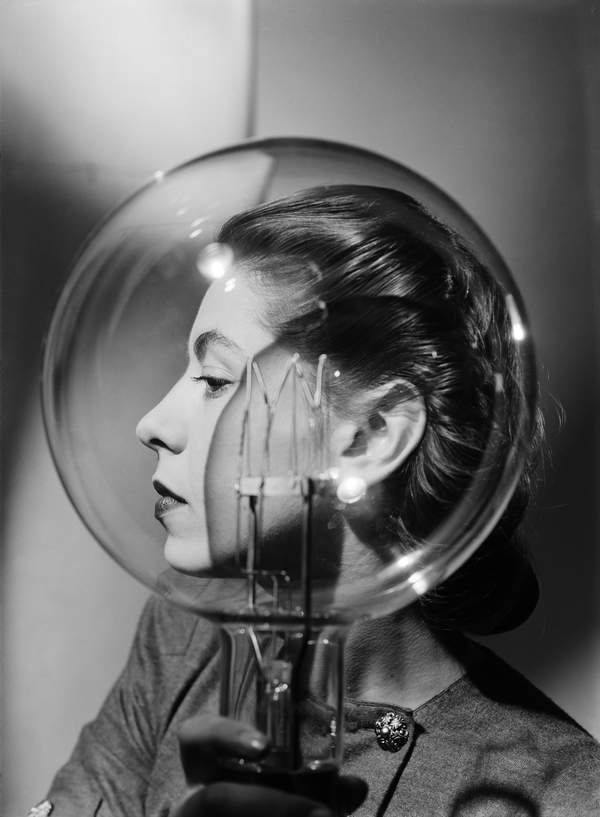
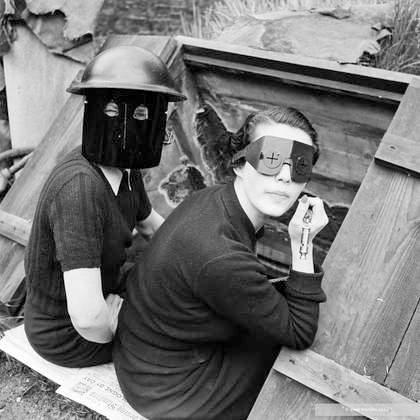
In several of her works, everyday elements are repositioned to disrupt their usual context. A chair viewed from an unusual angle casts a shadow that appears disproportionate to its form. In other images, the human body is fragmented or partially obscured, appearing detached from a stable environment. These shifts are subtle, but they change how the image is read.
Miller also worked with solarization, a technique that partially reverses tones, producing images where light and shadow behave unpredictably. This effect does not distort the subject entirely, but introduces a visual instability that makes the image feel altered. Faces and objects remain recognisable, yet they appear slightly removed from their natural state.
What disrupts the familiar in Miller’s work is this combination of recognisable subject matter and altered presentation. The photographs do not rely on overt manipulation or dramatic staging. Instead, they introduce small but significant changes that shift perception. The viewer is able to identify what is being shown, but not fully reconcile how it appears.
Unlike more overtly surreal images, Miller’s photographs maintain a controlled and minimal composition. This restraint intensifies their effect. The unfamiliar does not come from excess, but from precision. By altering perspective, fragmenting form, and experimenting with process, she creates images that remain grounded in reality while subtly undermining it.
6. Hans Bellmer – La Poupée, 1936
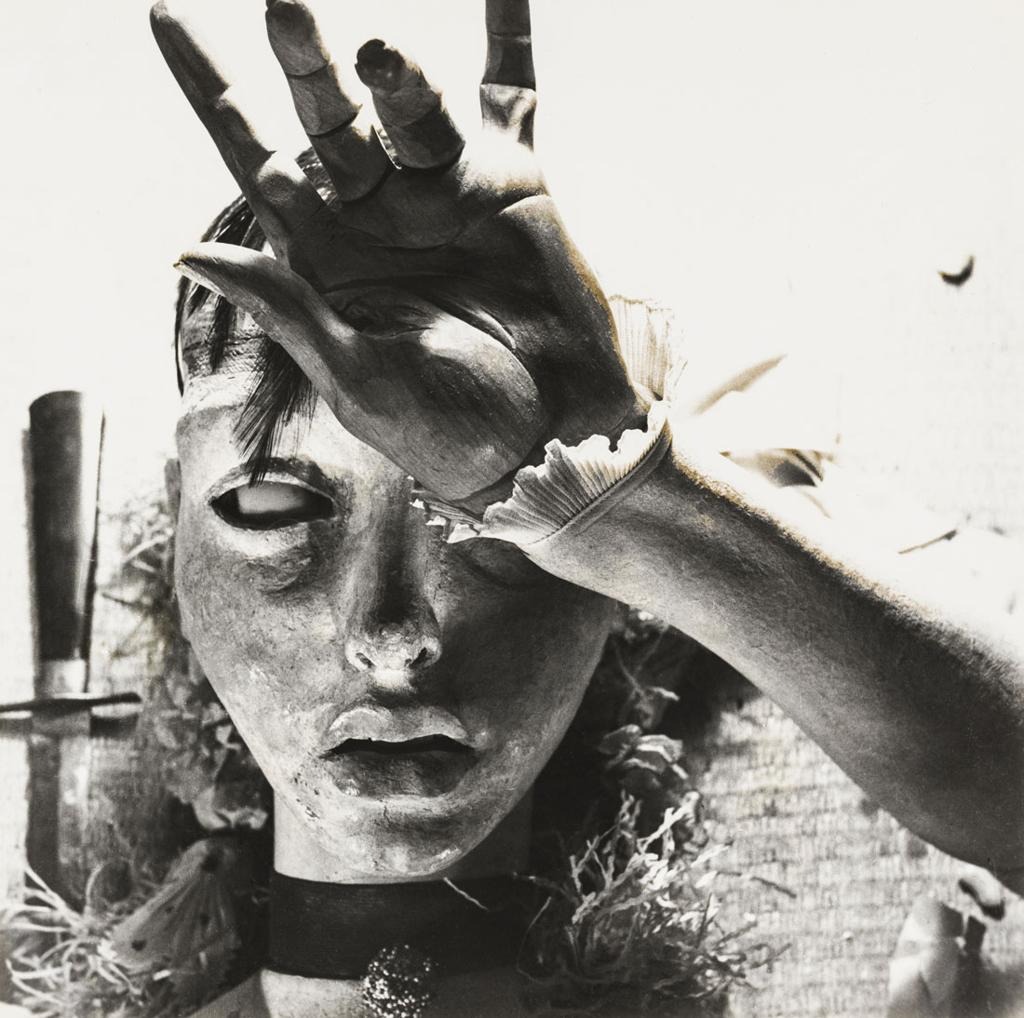
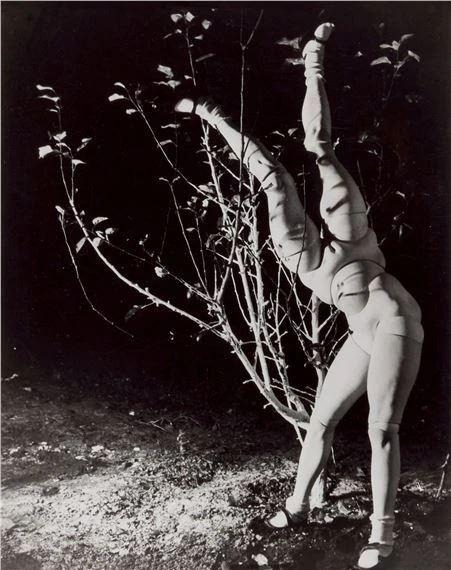
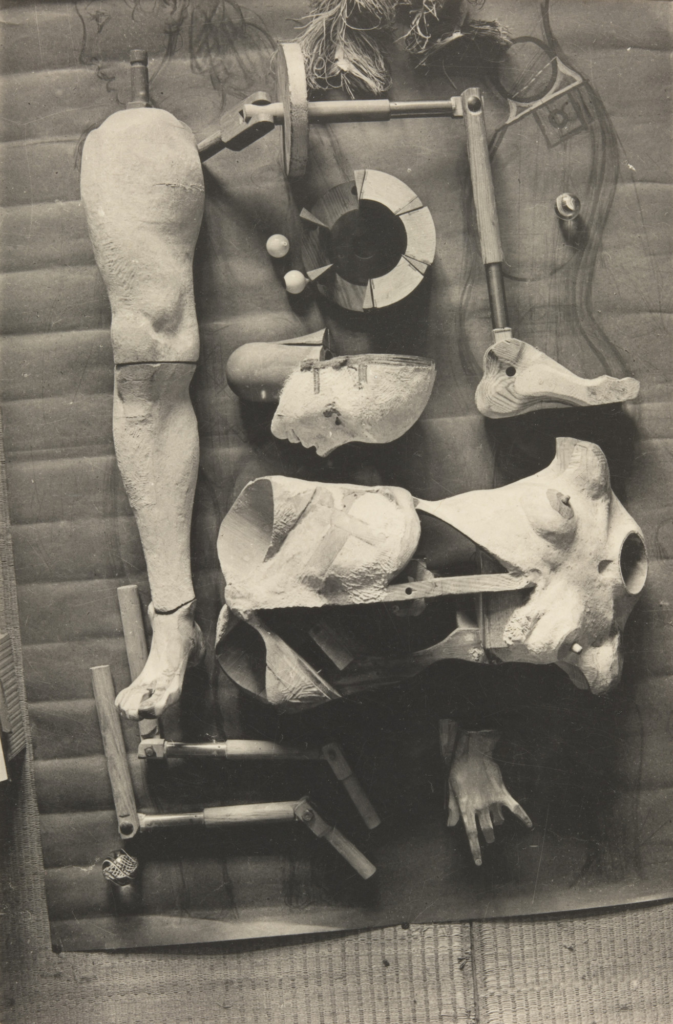
Hans Bellmer’s photographs are among the most visually disorienting works associated with Surrealism. In the 1930s, he constructed life-sized dolls made of wood, plaster, and metal joints, designed to be taken apart and reassembled in different configurations. These figures became the central subject of his photographic practice.
In La Poupée (The Doll), Bellmer presents forms that resemble the human body but do not follow its natural structure. Limbs are duplicated, rearranged, or positioned in ways that disrupt anatomical logic. At first glance, the images appear sculptural, but the closer one looks, the more difficult it becomes to recognise the body as coherent or stable.
The photographs are carefully composed, often staged in interior settings or against neutral backgrounds, which isolates the figure and directs attention to its construction. There is no surrounding narrative to explain what is being seen. The focus remains entirely on the altered body and its unfamiliar configuration.
What disrupts the familiar in Bellmer’s work is the manipulation of form. The human body, typically understood through proportion and symmetry, is reassembled into something that resists recognition. The images do not rely on movement or expression; instead, they produce unease through structure alone.
Bellmer’s work engages with broader Surrealist interests in the subconscious and the instability of identity, but its impact is immediate and visual. The photographs do not present a symbolic or abstract idea alone; they confront the viewer with a form that is recognisable yet fundamentally altered, making it difficult to reconcile what is being seen with what is expected.
7. Claude Cahun – I am in training don’t kiss me, 1927
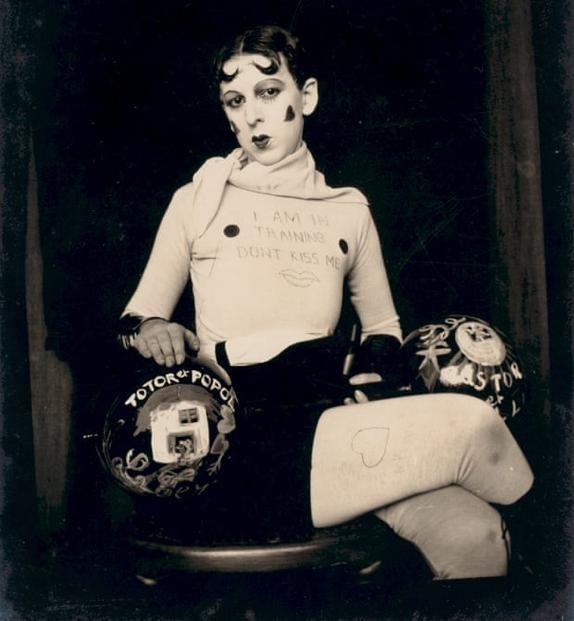
Claude Cahun’s photographs challenge the idea of identity as something stable or easily defined. Working in the 1920s and 1930s, she produced a series of self-portraits that resist clear categorisation, often presenting herself in ways that blur distinctions between masculine and feminine appearance. Her work predates many later discussions around identity, yet remains closely aligned with them.
In images such as I am in training, don’t kiss me (1927), Cahun appears in a staged setting, dressed in a costume that complicates conventional expectations of gender. The photograph is carefully constructed, with attention to pose, clothing, and expression, but its meaning is not immediately clear. The viewer is presented with a figure that appears familiar in form, yet difficult to define.
Rather than presenting a single version of herself, Cahun adopts multiple personas across her work. Each image introduces a variation, shifting how identity is represented and perceived. This repetition does not clarify the subject; instead, it reinforces the idea that identity can be constructed, performed, and altered.
What disrupts the familiar in these photographs is the instability of representation. Portrait photography often relies on the assumption that it reveals something essential about the subject. Cahun’s work resists this expectation. The images appear controlled and deliberate, yet they do not offer a fixed or recognisable identity.
The photographs remain open to interpretation, without guiding the viewer toward a single reading. By presenting identity as something fluid rather than fixed, Cahun challenges conventional portraiture and expands how photography can be used to explore the self.
8. Frieke Janssens – Smoking Kids, 2010–12
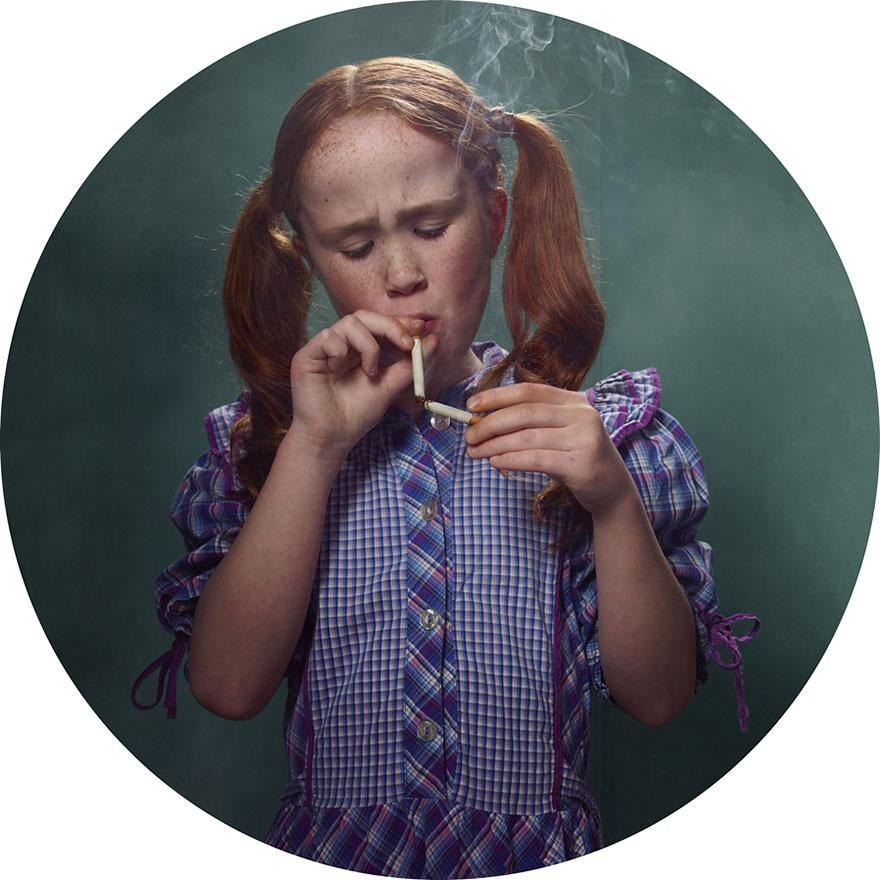
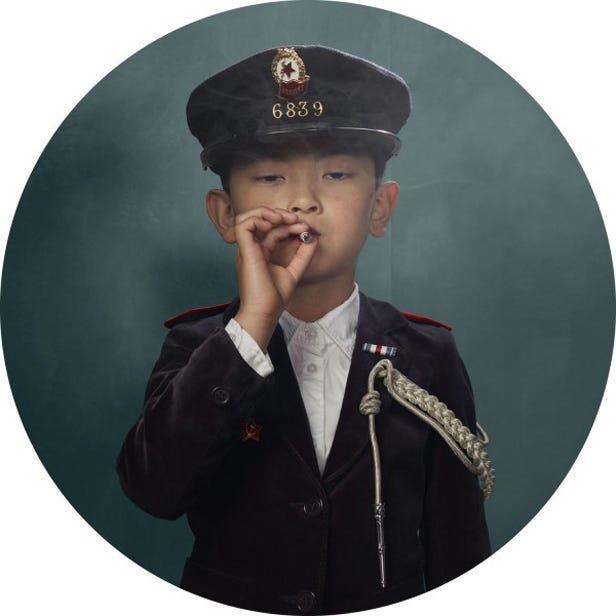
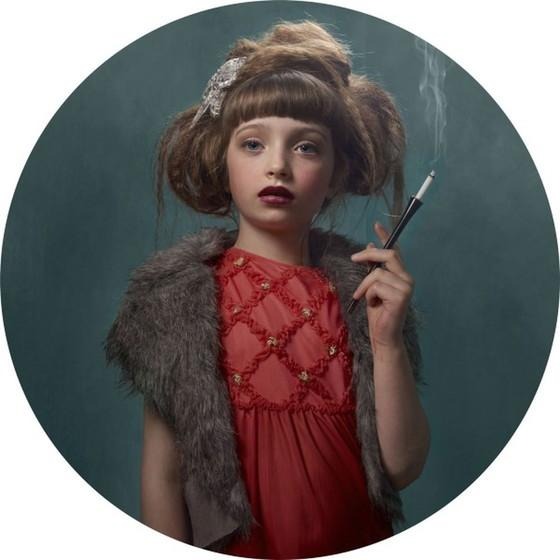
Frieke Janssens’ Smoking Kids series (2010–12) presents a series of carefully staged portraits of children holding cigarettes. The images are composed with precision, often set against neutral studio backgrounds, with subjects dressed in clothing that does not immediately correspond to a specific time period. The overall aesthetic is controlled and formal, resembling traditional portrait photography.
At first glance, the photographs appear straightforward. The children are posed, well-lit, and clearly presented. However, the presence of the cigarette introduces a disruption that is difficult to ignore. The object is small, but its meaning is significant, shifting the tone of the image away from neutrality.
The work is based on a real reference point, inspired by images of adults smoking that the artist encountered in different cultural contexts. By transferring this behaviour to children, Janssens alters how the act is perceived. The familiarity of the gesture remains, but its placement within an unexpected context changes its effect.
Importantly, the cigarettes used in the series were not real, and the scenes were constructed with attention to safety and staging. Despite this, the images retain their impact. The discomfort does not come from the act itself, but from the way it is presented.
What disrupts the familiar in these photographs is the tension between form and subject. The images follow the conventions of portraiture, yet introduce an element that does not belong within that structure. This contrast creates a sense of unease, as the viewer attempts to reconcile what is seen with what is expected.
9. Lara Zankoul – The Unseen, 2013
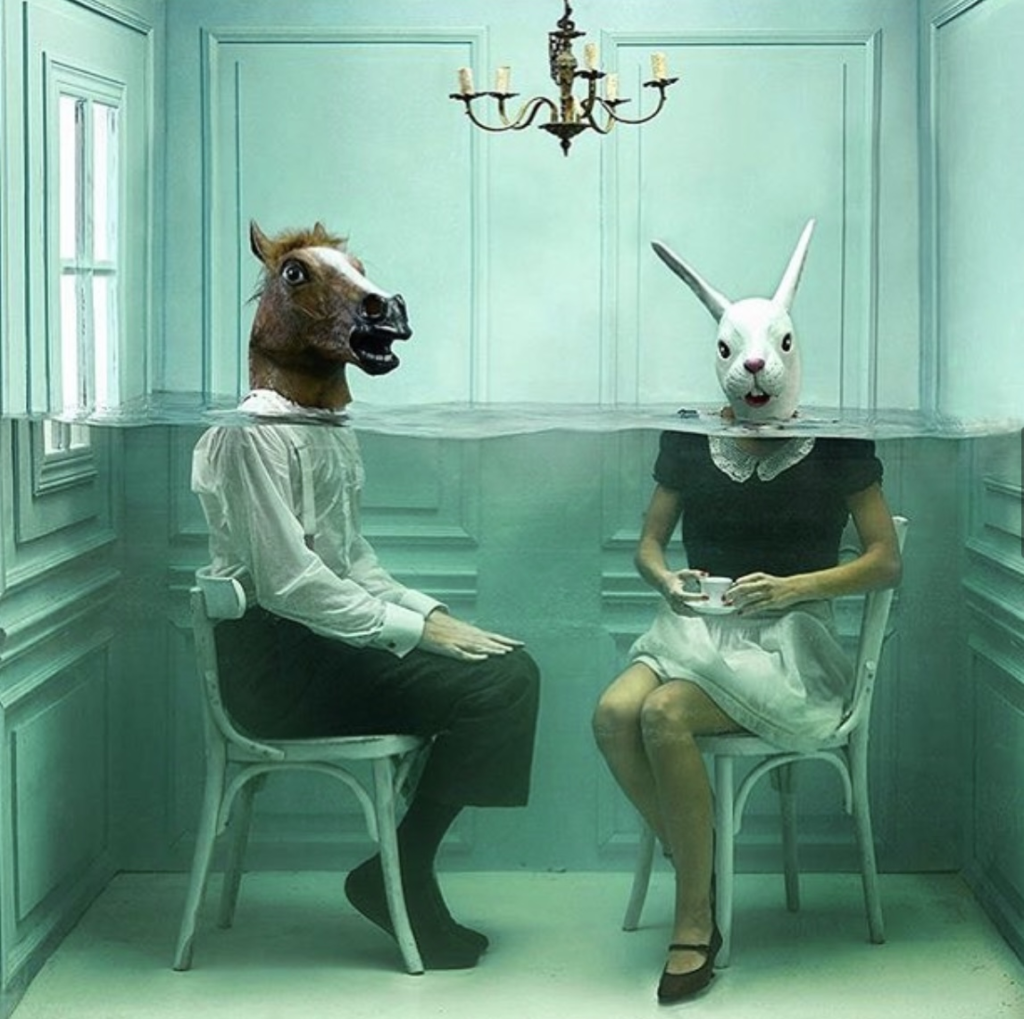
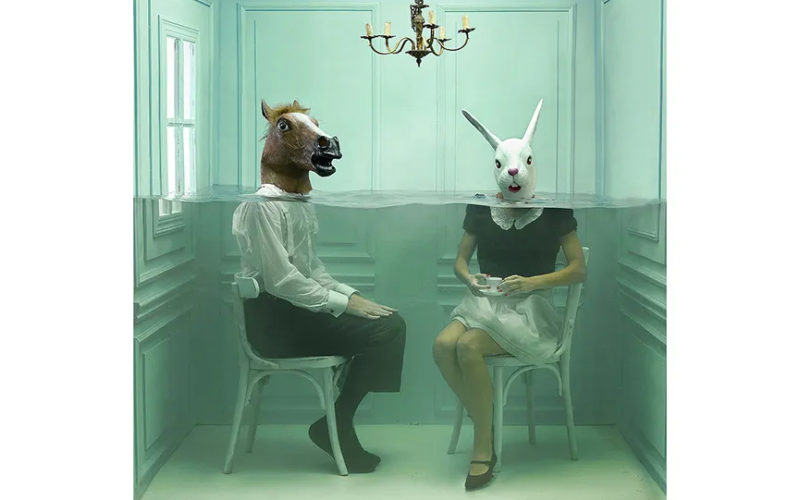
Lara Zankoul’s The Unseen series (2013) presents familiar interior spaces that have been unexpectedly submerged underwater. Rooms that resemble everyday domestic environments, complete with furniture, objects, and human figures, appear suspended beneath the surface. The scenes are constructed physically rather than digitally, with elements arranged in water to create a controlled but unusual setting.
At first glance, the images retain a sense of normalcy. Chairs, tables, and personal objects are placed as they would be in a typical interior. However, the presence of water alters how these elements behave. Fabrics float, hair drifts, and objects appear weightless. The environment remains recognisable, but its logic has shifted.
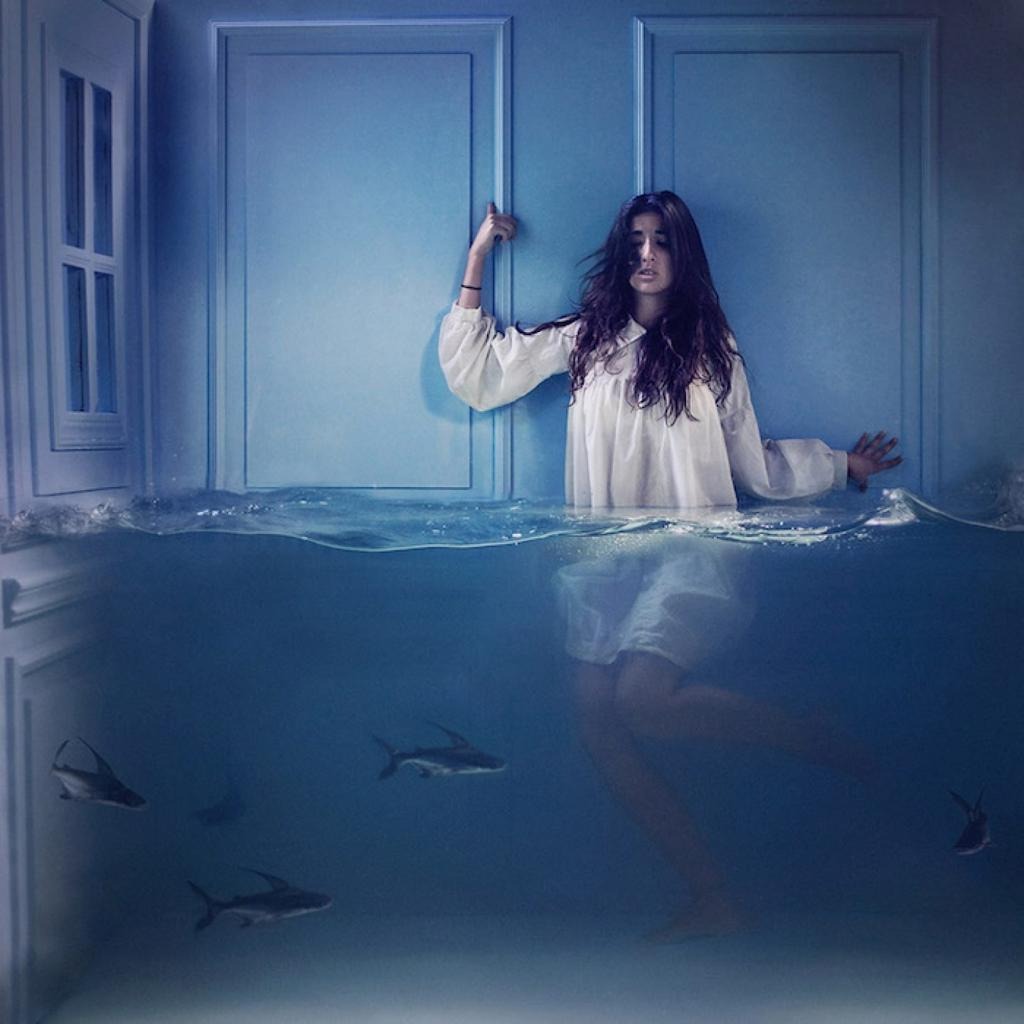
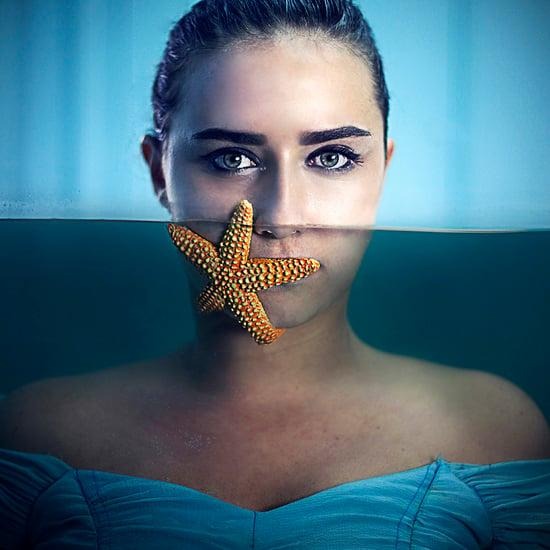
What disrupts the familiar in these photographs is this contradiction between setting and condition. Interiors are spaces associated with stability and control, yet here they are transformed into environments that cannot exist in everyday experience. The viewer recognises the components of the scene, but cannot reconcile them with how such spaces are normally encountered.
The figures within these images often appear calm or neutral, further intensifying the dissonance. Their presence does not react to the altered environment, which removes any clear narrative explanation. The scene is neither chaotic nor dramatic, but quietly unresolved.
Zankoul’s work does not rely on visual excess or distortion. Instead, it introduces a single, controlled shift that changes how the entire image is perceived. By placing the familiar within an impossible condition, her photographs create a space where recognition remains intact, but understanding becomes uncertain.
10. Dora Maar – Portrait of Ubu, 1936
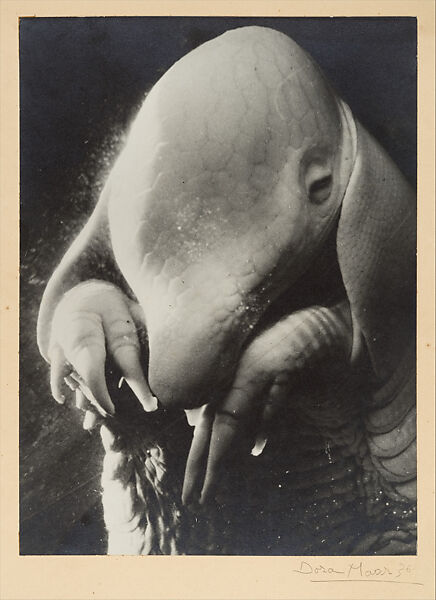
Dora Maar’s photographs transform familiar subjects through subtle but deliberate manipulation. In works such as Portrait of Ubu (1936), she presents a form that is difficult to immediately identify, a creature-like figure that appears both organic and unfamiliar. The image is sharply focused and clearly composed, yet its subject resists easy recognition.
Working in the 1930s within Surrealist circles, she used techniques such as photomontage and superimposition to construct images that appear coherent at first glance but resist straightforward interpretation.
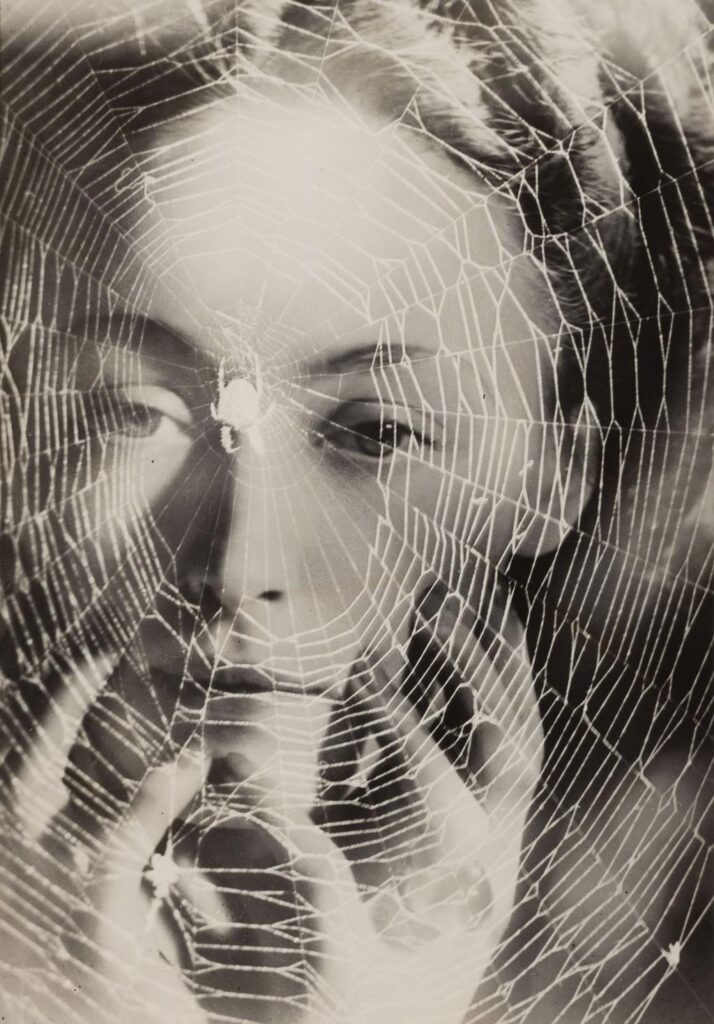
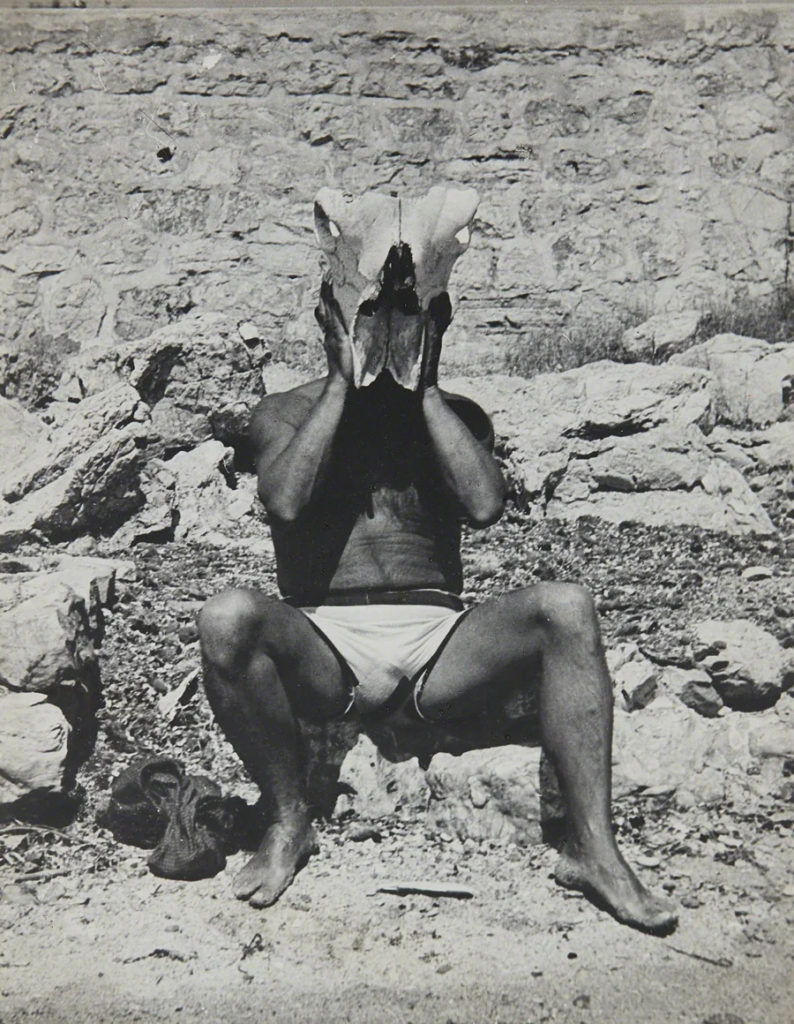
In several of her works, recognisable figures and objects are placed in unexpected relationships. A portrait may be altered by the introduction of an incongruous element, or a scene may combine multiple visual layers that do not align spatially. These compositions do not rely on overt distortion; instead, they shift the logic of the image just enough to make it feel unstable.
One example includes images where a subject interacts with an object in a way that disrupts normal perception, such as a figure partially obscured or visually merged with another form. The result is not entirely abstract, but it does not fully correspond to reality either. The viewer is able to identify individual components, yet their combination remains difficult to resolve.
What disrupts the familiar in Maar’s work is this controlled imbalance. The photographs retain the structure of conventional images, portrait, still life, staged scene, but introduce elements that do not belong within that structure. This creates a tension between recognition and uncertainty.
Maar’s approach differs from more visibly experimental practices in that the alteration is restrained. The images do not overwhelm the viewer with complexity, but instead invite closer inspection. It is through this process of looking that the instability becomes apparent.
By combining known subjects with unexpected visual relationships, Maar produces photographs that remain grounded in reality while quietly undermining it, leaving the viewer to navigate an image that feels both familiar and unresolved.
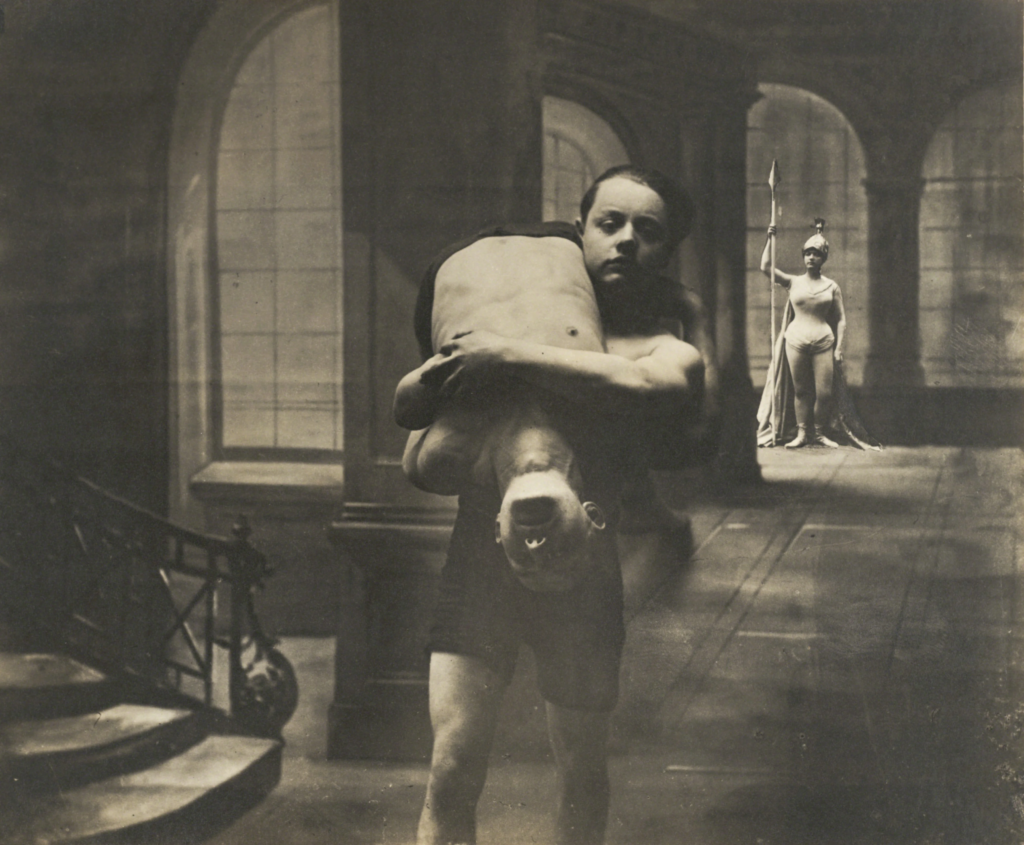
These photographs do not resolve themselves easily. They remain open, shifting slightly each time they are viewed, asking the viewer to sit with uncertainty rather than move past it. What begins as recognition often gives way to something less stable, where meaning is not fixed, but gradually unsettled.
This ability of photography to hold both clarity and ambiguity continues to shape how artists approach the medium today. Images no longer function only as records, but as spaces where perception, memory, and interpretation intersect. The familiar is not always confirmed; it is often questioned, reframed, or quietly altered.
It is this diversity of perspectives that continues to expand photography as a field. Initiatives such as the 101 Art Book Project by Arts to Hearts Project, now in its ninth edition, reflect this ongoing evolution by bringing together artists from across the world within a single, curated framework. The Photography Edition, in particular, focuses on how photographers engage with themes of observation, storytelling, and experimentation, offering a broader view of how the medium continues to develop.
Together, these practices, both historical and contemporary, highlight photography’s ability not just to capture what exists, but to reshape how it is understood. And as this conversation continues to evolve, so too does the list of images that challenge how we see.
If you could add one more photograph to this list, which one would it be?
If you’re curious to explore further, you can also read our feature on weird artworks by famous artists.