

Carmen Taracena Hides an Entire Chess Game Inside Every Painting
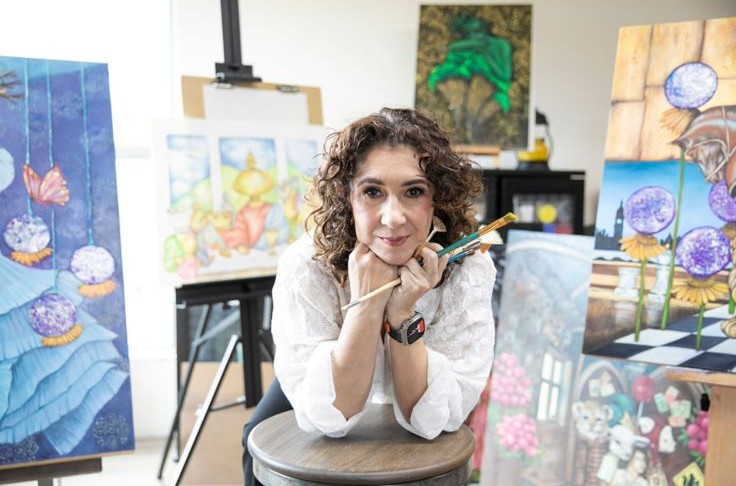
At Arts to Hearts Project, some ideas don’t need much convincing. They just feel right from the moment they come up. “Women Artists on the Rise” was one of those ideas — and three editions later, it still feels just as necessary as it did the first time.
We keep coming back to this book because we keep meeting women who remind us why it matters. Women creating through full lives and hard seasons, putting something real and deeply human into their work, and deserving every bit of recognition that comes their way. First edition, second edition, and now the third, because the stories keep coming, and we are not ready to stop telling them.
And with every edition, the work that arrives surprises us. It moves us. It reminds us that art made from a real place hit differently than art made for any other reason.
We opened the call, and once again artists showed up from all over the world. Different countries, different mediums, different life experiences but all of them creating from a real place. From joy, from grief, from memory, from struggle. From everything life had handed them, good and hard alike.
What struck us most wasn’t just the quality of the work, it was the weight behind it. The sense that every piece submitted carried a story that went far beyond the canvas.
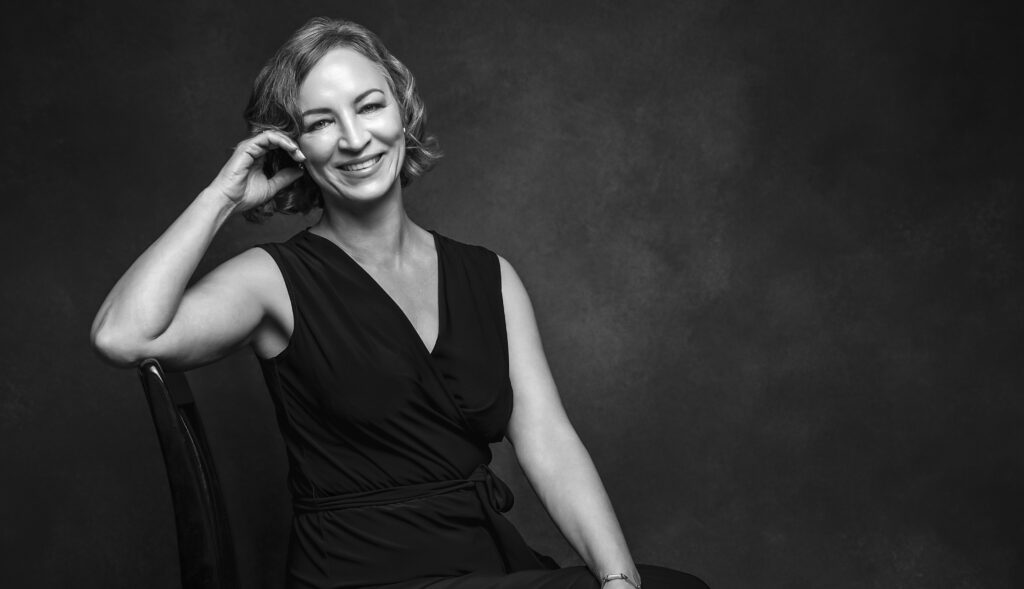
And that’s when we found Carmen Taracen.
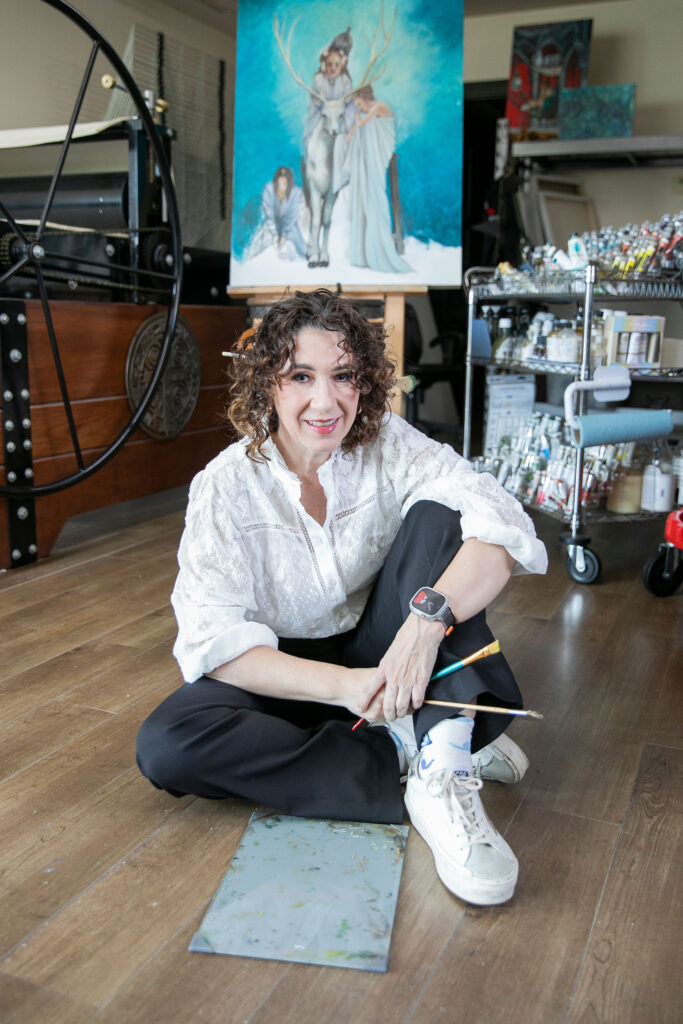
Carmen grew up in Mexico with a pencil almost always in her hand. Art found her early, and for a long time, it seemed like the path ahead was set. Recognitions came, competitions followed, and there was a quiet confidence in her that felt earned. She was someone who knew, from a very young age, that this was her language the one that made the most sense, the one that felt most like home.
But then life happened family, loss, grief that came in more than one round and somewhere in the middle of all of it, the art had to wait. Not because she wanted it to, but because sometimes surviving takes everything you have. Sometimes you have to set down the thing you love most just to get through the day.
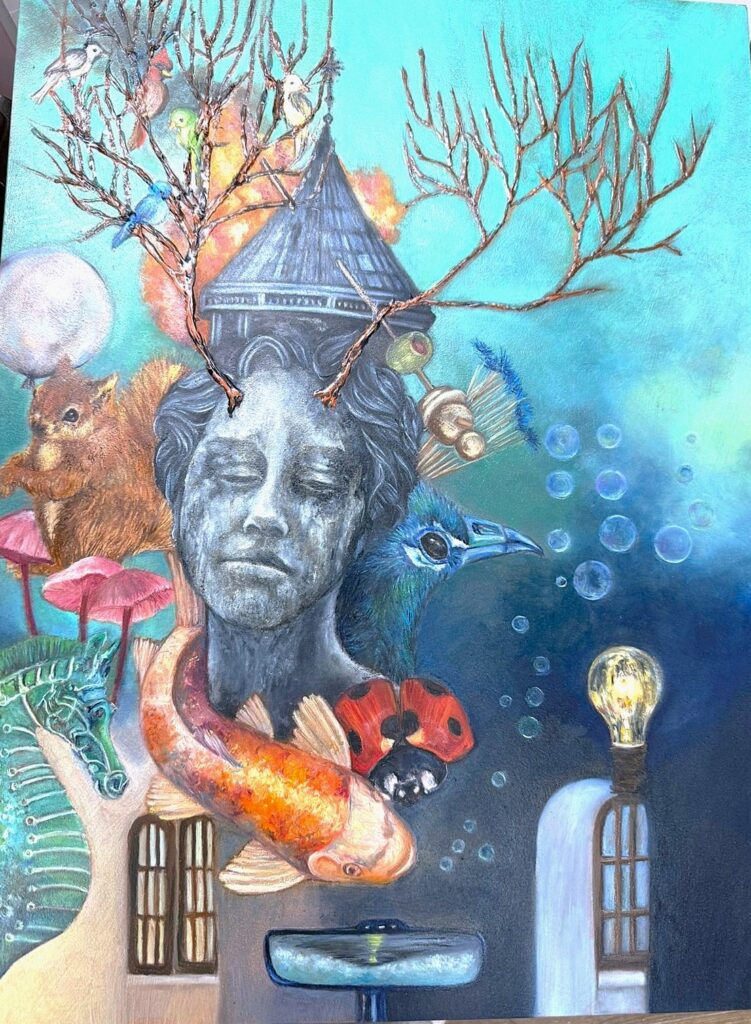
She came back to her practice five years ago, and you can feel that entire journey in her work. The years away didn’t diminish her, if anything, they deepened her. Her paintings are layered with color, filled with symbols, and shot through with references to chess a game she plays and a metaphor she lives.
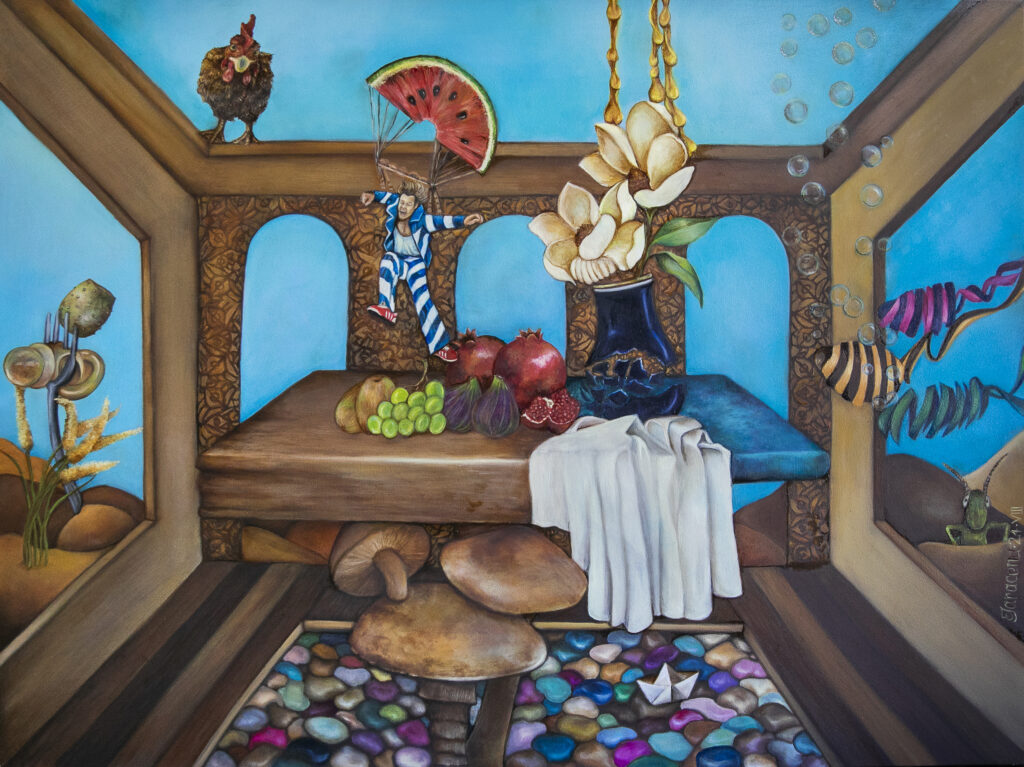
The strategy, the sacrifice, the constant need to think three moves ahead just to hold your ground that’s what it means to be a woman navigating spaces that weren’t always built for you, and Carmen puts all of it on the canvas without flinching. She doesn’t soften it or dress it up. She just paints it honestly, and that honesty is exactly what makes her work so hard to look away from.
Her work is tender in places and fierce in others, sometimes both at once. It doesn’t try to explain itself. It just pulls you in and makes you feel something and in a world full of art that tries very hard to impress, that kind of quiet power is rare.
Now, let’s hear from Carmen herself in her own words, about her art, her journey, and everything that brought her back to the canvas.
Q1. Can you share your background, and reflect on how your early engagement with drawing and formal training shaped the foundations of your artistic practice?
Drawing began in primary school, accompanied by various recognitions until reaching university. When I decided to start a family, I had to postpone everything. Between motherhood and various tragedies, I came to a complete stop. I resumed my path five years ago, now consolidated in very firm strokes, after a reinvention of all my work.
Q2. You describe your work as emerging from both fragility and strength. How do these qualities coexist in your images, and how do they inform your use of color, form, and gesture?
Between my practice and the pause that life forced me to take, a strong conviction resurfaced of the path I had to teach through my multi-palette of colors and my experiences in each canvas or artistic expression. These five years, in retrospect, only came to give an identity to my childhood memories mixed with the outcry of current injustices and outlined by my condition of being a woman, playing chess, and the challenges this brings me. Also defined by an unbreakable inner strength.
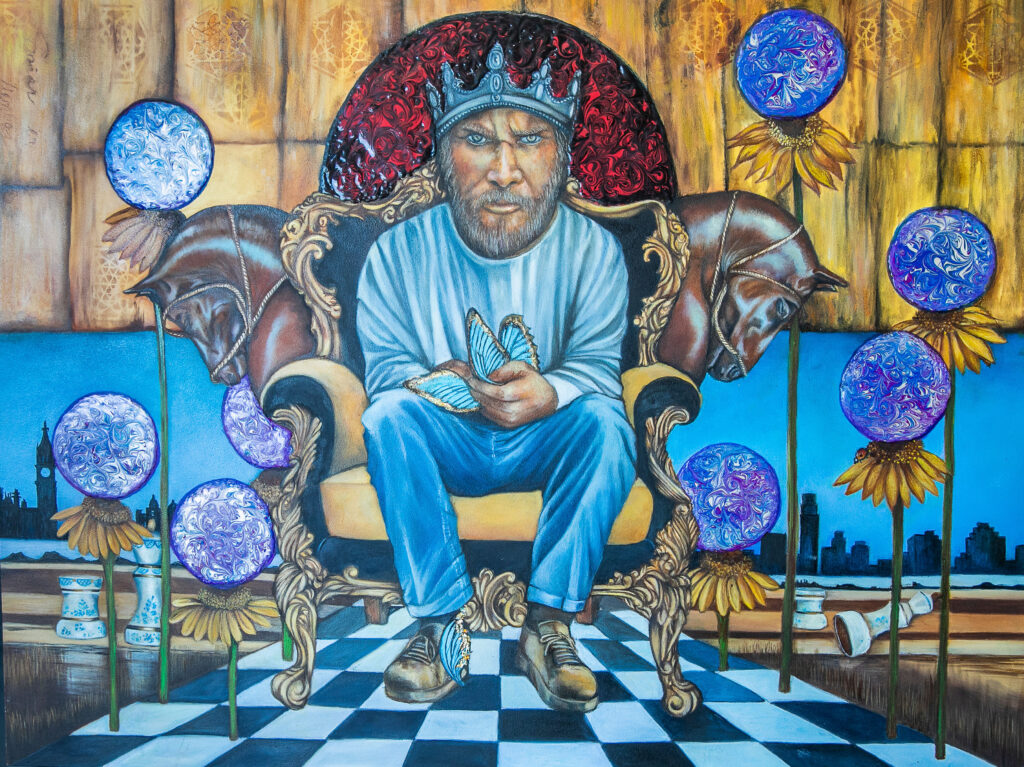
Q3. How does your practice distinguish between what is felt internally and what is seen outwardly, and how does that tension manifest in a specific work?
It is reflected in each figure with many symbols, mainly involving references to chess and capturing those game dynamics and their solutions.
Q4. How have your intentions as an artist evolved since your earliest days in competitions and workshops, compared to the work you are making now?
The evolution is in the forms and the clarity in representing them. However, no color is predominant in my works, because I enjoy playing with all tones, experimenting with various techniques, and launching projects that arise in my mind at every moment.
Q5. Can you discuss a piece where you felt the work moved beyond literal representation into an expressive or suggestive realm, and what challenge that transition posed?
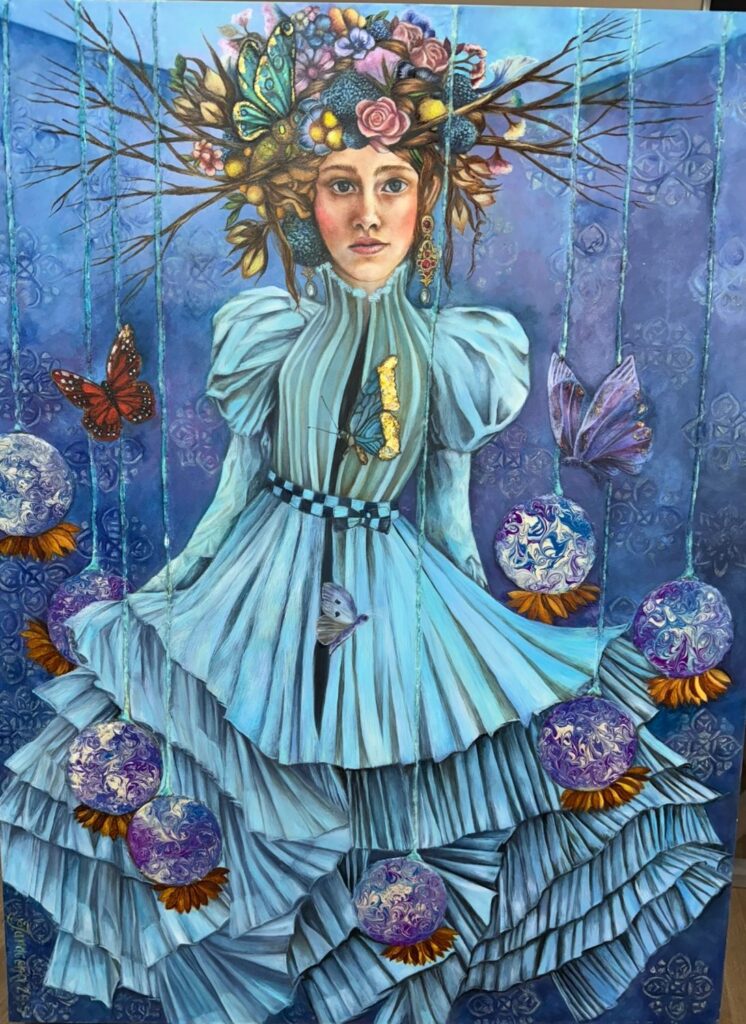
Yes, the title is “Traces of My Soul.” In this work, almost my entire life is condensed, and it was a turning point to paint it because of the transition it marked after some losses and personal tragedies, setting a very clear direction in the way I express my work.
Q6. What is the relationship between technique and message in your work? Do you feel that mastery of medium expands what you can express conceptually?
I love experimenting with different techniques to express my soul and share more of my experiences. Each time I feel more comfortable combining them to reach my point of expression.
Q7. You’ve developed both painting and sculptural skills. In what ways do these disciplines converse within your practice?
I find it difficult to express myself in writing, but with each passing year I enjoy a little more putting into words what each of my ideas represents. I continue working with the pen and greatly admire people who are skillful with it. This area is in total evolution, so that people who see my works have a reference through my texts for each visual element I project.
Q8. Many artists speak of the studio as a space of encounter. For you, what is the emotional terrain of the studio, and how does it shape the work you produce?
My studio has moved to different spaces in my home where each technique finds its representation, even in the decoration of spaces, which I also enjoy. However, going to my studio fills me with satisfaction, making hours feel like seconds, because painting for me is not work limited to a single space.
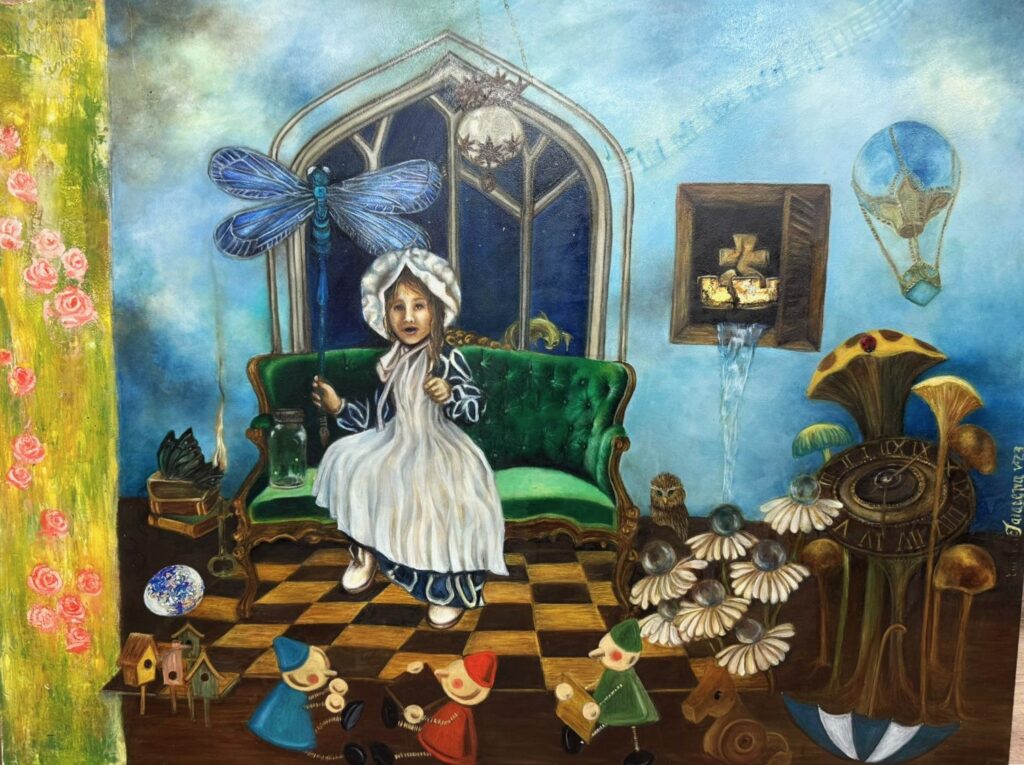
Q9. How do you see your role, if at all, in responding to or shaping conversations around contemporary Mexican art today?
It is constantly changing, and it is dynamic. It is always a living expression of the strength that defines us. It is incredible to be so present to capture what we have as a condition of our country, realities and experiences that sometimes cannot be expressed with a simple word, but can be conveyed with the strength of our strokes.
Q10. What advice would you offer to emerging artists who seek to articulate their own experiences and social realities through a sustained and thoughtful visual practice?
To be introspective in order to reach the climate of the authentic inner voice and be able to express an original identity in each work. Continue being yourself.
As we wrapped our conversation with Carmen, I found myself thinking less about her art and more about everything she had to live through before she could make it.
There’s a kind of artist who creates when conditions are perfect. When the studio is ready, when life is stable, when there’s enough time and enough quiet. And then there’s someone like Carmen, who put down everything she loved to survive, carried grief that most people would never recover from, and still found her way back to the canvas not despite all of it, but through it.
Most of us don’t know what that takes. And sitting with her story after this conversation made me think about how often we use timing, circumstances, and pain as reasons to stay away from the things that matter most to us.
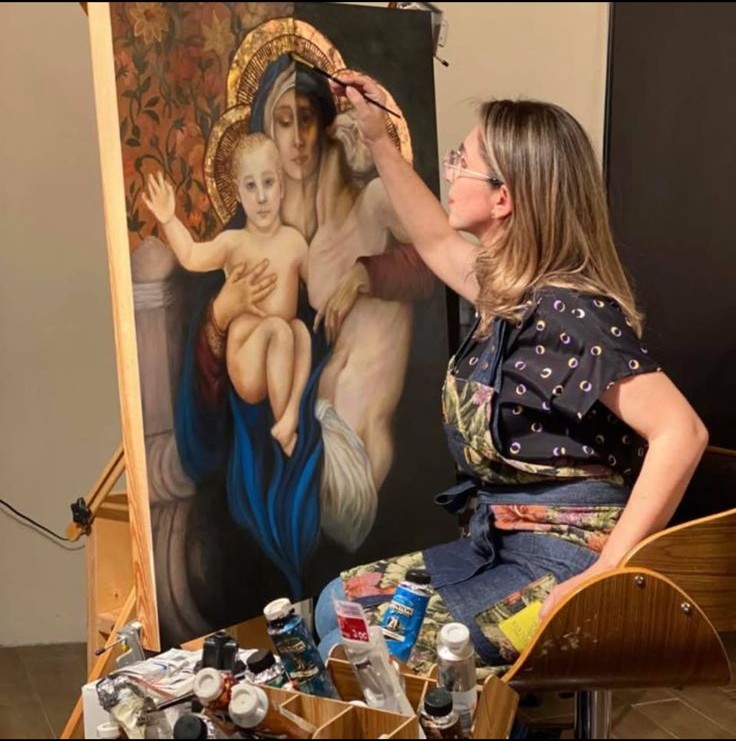
How we tell ourselves we’ll create when things settle. When we feel ready. When enough has healed. Carmen’s work quietly asks whether any of that waiting is actually necessary or whether the creating itself is what carries you through.
Every colour she layers, every chess symbol she returns to, every figure she places on the canvas isn’t just an artistic choice. It’s evidence. Evidence that the hardest seasons of your life don’t have to be the ones that silence you.
That you can lose a great deal and still come back with more to say than ever before. That being a woman navigating spaces that weren’t built for you doesn’t make you smaller it makes your work sharper, more honest, more necessary.
Carmen didn’t come back to art with explanations or apologies. She came back with everything she had lived, and she put it all on the canvas without flinching. That’s not just courage. That’s precision. Knowing exactly what your practice needs and trusting it enough to show up anyway.
She’s worth following closely. Not just for the work she’s making now, but for what someone with that kind of honesty shows is possible.
Follow Carmen from the link below and see more of her art.