


How Claudia Cheng Is Expanding the Canon Through Contemporary Curation

Across the shifting landscape of contemporary art, where countless voices vie for attention and the story keeps rewriting itself, Claudia Cheng has found a direction that feels both purposeful and quietly bold. Her journey began with a clear, instinctive understanding: women have shaped art history in profound ways, yet their contributions have too often gone unrecognised. That realisation stayed with her and slowly shaped the way she saw the world. Rather than turning toward the familiar names already secured in the canon, she was drawn to overlooked artists whose work carried emotional depth and intellectual force but had never been placed at the centre. This instinct became the foundation of her curatorial vision.
The deeper she moved into art history, the more those gaps came into focus. She saw how many women had changed movements, redefined mediums, and shifted the way we understand art yet their contributions were still framed as side notes rather than essential chapters. That imbalance wasn’t something Claudia could ignore. It became her purpose.
For this week’s Best of the Art World series, we’re honoured to share Claudia’s journey, a curatorial path centered on bringing women to the forefront of the art world and creating space for their stories to be heard with clarity and confidence.
Much of Claudia’s work is about bringing these artists forward in ways that feel true to their voice. She doesn’t treat them as additions; she treats them as the centre. This approach shapes everything she touches the exhibitions she curates, the collections she advises, and the long-term relationships she builds with artists and collectors who care not only about beauty, but about legacy and meaning.

Claudia Cheng’s curatorial work grows out of long-term relationships with artists and a deep respect for research as a way of understanding practice. Based between London and Hong Kong, she has curated more than a dozen exhibitions internationally, bringing together projects that balance thoughtful inquiry with openness to a wide range of artistic approaches. Her exhibitions often combine newly commissioned works with existing pieces, resulting in presentations that feel both grounded and forward-looking.
The way she approaches exhibitions is shaped by time and attention. Rather than starting with a fixed concept, her curatorial frameworks evolve gradually through reading, conversation, and close engagement with how ideas take form in the studio. Working closely with galleries, she develops projects that prioritise narrative depth and give artists the space to push their practices in new, considered directions.
Alongside her exhibition work, Claudia’s practice extends into editorial and advisory roles. Through artist interviews and written features published on her platform, she contributes to wider conversations in the art world, often drawing attention to voices that sit outside the usual institutional spotlight. As an independent art advisor, she works closely with collectors to help build collections with clarity, intention, and a sense of longevity, allowing her curatorial perspective to meet each collector’s individual vision.
This balance between curating and advising reflects a consistent interest in how art is encountered and cared for. Across her projects, exhibitions are conceived not just as displays, but as environments, places where artworks can be experienced with time and attention, and where connections can form naturally between works, spaces, and viewers.
Across her roles as curator, editor, and advisor, Claudia Cheng continues to build thoughtful frameworks that support artists, invite deeper audience engagement, and expand how contemporary art is experienced and understood.
Let’s step into her story and look more closely at the ideas, experiences, and sensibilities that continue to shape the curator she is becoming.
Q1. You’ve emphasised that one of your core missions is bringing women artists’ narratives forward. What led you to focus on that specifically and how has that focus influenced the kinds of exhibitions and collections you support?
My focus on women artists began almost instinctively. I’ve always been drawn to voices that expand the canon – artists whose practices carry both academic and emotional resonance, and yet haven’t always been given the same visibility. When you study art history, you realise how many extraordinary women shaped its trajectory, but often from the periphery. My work is about bringing those contributions into the centre and giving them the space, scholarship, and audience they deserve. This focus naturally shapes the exhibitions I curate and the collections I support. Whether I’m working with emerging or established artists, I’m interested in practices that open new portals into how we see, feel, and think. That lens influences everything I do, from exhibitions I curate to the long-term dialogues I build with collectors who want their collections to carry meaning and legacy.
Q2. In your curatorial process, how do you approach building a narrative from selecting artists to shaping the exhibition experience while maintaining room for audience interpretation?
My curatorial process always begins with research and dialogue, grounded in reading art-historical books and studio visits with contemporary artists. My ongoing conversations with artists about what drives their practices and how they’re responding to the world subconsciously shape the conceptual spine of a show long before it takes on a physical form. Once a theme crystallises, I invite artists whose practices resonate with it to create new works in response to my curatorial vision. I prefer commissioning new pieces over selecting existing ones, as it’s incredible to see how artists interpret a shared concept through their own visual language. It transforms the exhibition into a time capsule of the artists’ current inspirations and thought processes. I think of curating as conducting – bringing together distinct voices and arranging them into new harmonies. I love weaving together artworks of different styles and movements, finding connections to paint a cohesive story. When placed together, the works form a layered conversation that neither the artists nor I could create alone. Those intersections are where the narrative takes shape and where viewers can find their way in. My goal is always to curate an aesthetically unified space that feels considered yet open-ended, inviting viewers to encounter the works through the lens of their own emotions and identities. Ultimately, the exhibition becomes a continuous conversation between myself, the artists, and the viewers who complete the experience.

Q3. You’ve spoken about wanting exhibitions to create “spaces for conversation.” Can you share an example of a moment where a show you curated genuinely shifted dialogue or perspective among its viewers?
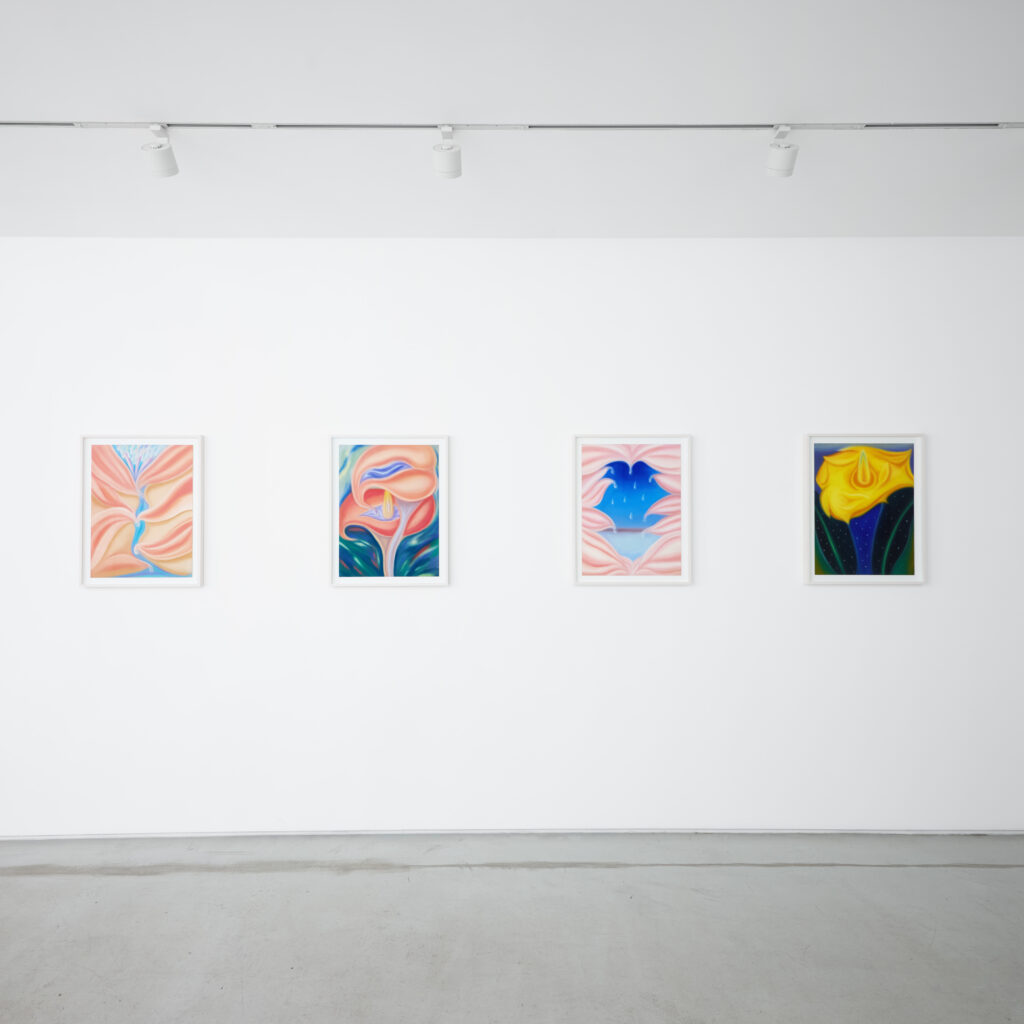
One example is The Peace of Wild Things, an exhibition I curated at Soho Revue earlier this year that was inspired by Wendell Berry’s poem of the same name. I invited each artist to create a new work in response to the poem’s meditation on nature’s sublime stillness and mystical harmony. The resulting constellation of interpretations revealed an intelligence far greater than our own which unites all living forms in universal oneness. One work contained an entire cosmos within a single flower, another depicted the waves of a woman’s hair unfurling like the ocean’s, dissolving boundaries between self and earth. We hosted a sound bath during the exhibition, which became a transformative moment in the space. The meditative atmosphere allowed visitors to slow down, absorb the works through different senses, and speak openly with one another about what they were feeling. Many told me afterward that the experience shifted their perspective, helping them connect to the artwork and to themselves in a deeper, more expansive way.

Q4. How do you define your advisory role for collectors compared to your role as a curator? Do you find tensions or opportunities between advising and curating?
For me, advising and curating go hand in hand. In both, I champion artists whose work I truly believe in, whether I’m guiding a collector or curating an exhibition. The difference lies in the way I approach each role. Advising is adapted to each individual and is cantered around understanding a client’s tastes, ambitions, and what they want their collection to reflect. My role is to translate their sensibilities into thoughtful, long-term choices. Curating, in contrast, comes directly from my own vision. The exhibitions I curate are always shaped by how I see the world.
Visitors have often walked into a space I’ve curated and said, “This is clearly a Claudia Cheng curation,” and that brings me a lot of joy.
It’s meaningful to feel that my voice is recognised and that my work consistently reflects an authentic, aligned curatorial style.

Q5. Many curators talk about “signature style” or “signature vision”. Do you feel you have a curatorial signature, or do you deliberately aim to be different each time?
I do feel that I have a signature vision, and it emerges organically from how I see the world and understand our place within it. I’m deeply attuned to the parallels between the female body and the natural world – both are vessels that hold, transform, and give life. I believe it’s not a coincidence that the cycle of a woman mirrors that of the moon. I’m also drawn to the universe’s synchronicities – the subtle moments that remind us of we’re part of something larger, interconnected, and continuously evolving. This sensibility naturally shapes the artists and practices I gravitate toward. I’m interested in works that speak to the universality of life forms and explore the porous boundaries between the body, nature, and the cosmos. So, while each exhibition is inspired by a specific context, the underlying vision behind all my shows remains consistent: weaving together the threads that connect the human experience to the natural and celestial worlds.

As we wrapped our conversation, with Claudia Cheng, what stays with us is her unwavering belief that art becomes most powerful when it restores what history has overlooked. She reminds us that centering women artists isn’t about correction it’s about truth-telling. Throughout our conversation, her clarity was gentle but steady: visibility is care, and curation is a way of honouring voices that have carried the weight of culture without always receiving its recognition.
What Claudia builds exhibition by exhibition, relationship by relationship is a more open, thoughtful art world. One where viewers are invited to slow down, to feel their way through a space, and to let artworks meet them with sincerity. She trusts the emotional intelligence of audiences, and she trusts the artists she brings forward. That trust becomes the atmosphere of her shows: grounded, reflective, and quietly transformative.
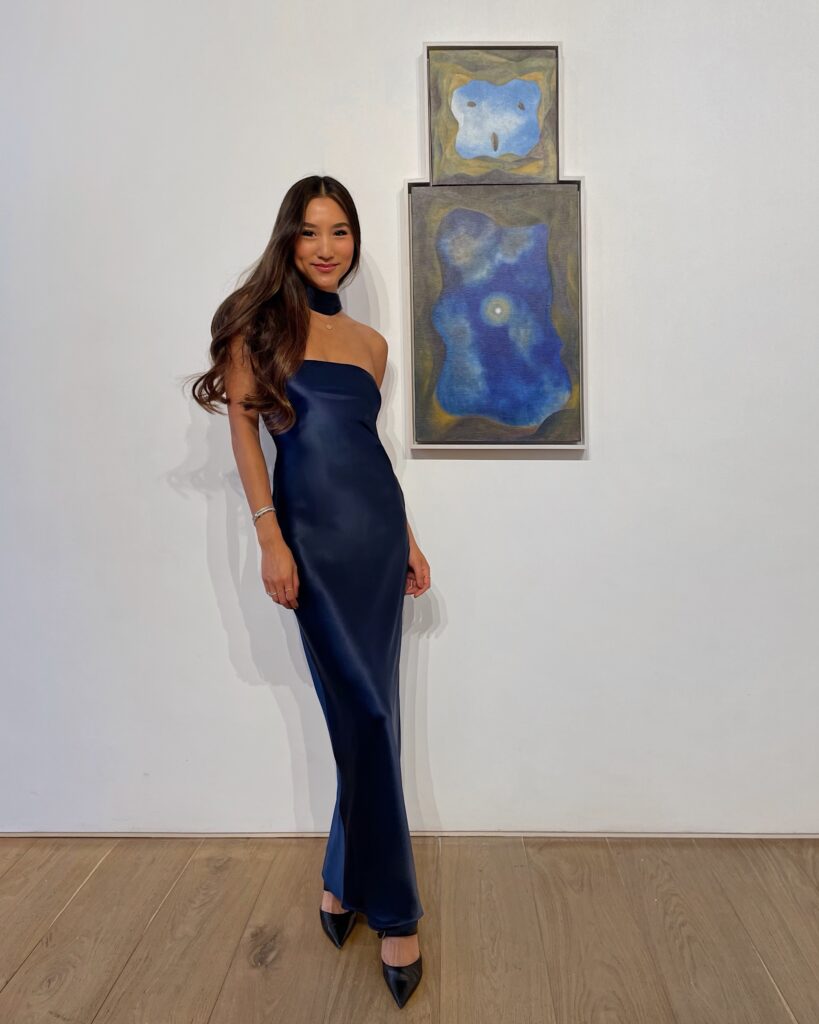
Her vision is not loud, but it is unmistakable. She sees the connections between people, nature, and the unseen rhythms that shape our inner lives — and she curates from that place. In her hands, an exhibition becomes less about display and more about dialogue, a space where stories unfold gently and meaningfully.
Claudia leaves us with a reminder that feels especially resonant: the art world grows stronger when its centre becomes wider. When those who were once overlooked are finally heard. When care guides decisions. When intuition is valued as much as intellect.
Follow Claudia Cheng to witness a curatorial practice shaped by integrity, curiosity, and a deep commitment to making the art world feel more human.