
Why Every Artist Should Post Reels

👁 816 Views
Picture this: you’re curled up on the couch, phone in hand, scrolling faster than your brain can keep up. Post after post flies by until … wait, there it is. Your own artwork. The piece you spent weeks creating. And here’s the strange part… you almost scroll past it yourself. Not because it isn’t beautiful, but because in a feed full of movement, it just sits there. Quiet. Competing with cat videos, cooking reels, and time-lapses.
That’s when it clicks. Social feeds don’t slow down for still images anymore. Our eyes are trained to stop at motion , the sweep of a brush, the tilt of a canvas. One static photo now has to fight a battle it was never designed to win.
Here’s the encouraging part: as an artist, you already know rhythm, pacing, and how to guide attention. You’ve been doing that on canvas all along. Reel isn’t a whole new skill set, it’s just another surface to tell a story.
And don’t worry, you don’t need fancy gear or perfect editing. You don’t even need to talk on camera if you don’t want to. All you need is a shift in perspective: the same way your brush leads the viewer across a painting, your camera can lead them across a 10-second clip. That’s enough to stop the scroll.
The best part? People may pause for motion, but they stay for honesty. A quick glimpse of your hand mixing colours, or the sound of a brush tapping a jar, can feel more real and memorable than a polished final shot.
The Harsh Truth: Still Posts Don’t Stand Out Anymore
Think about the last time you posted a still image of your artwork. You probably spent time framing it, making sure the lighting was good, maybe even editing it a bit. You uploaded it, wrote a caption, and hit share. But as soon as it landed in the feed, it looked like every other post in that endless scroll. No movement, no surprise, just a picture among pictures.
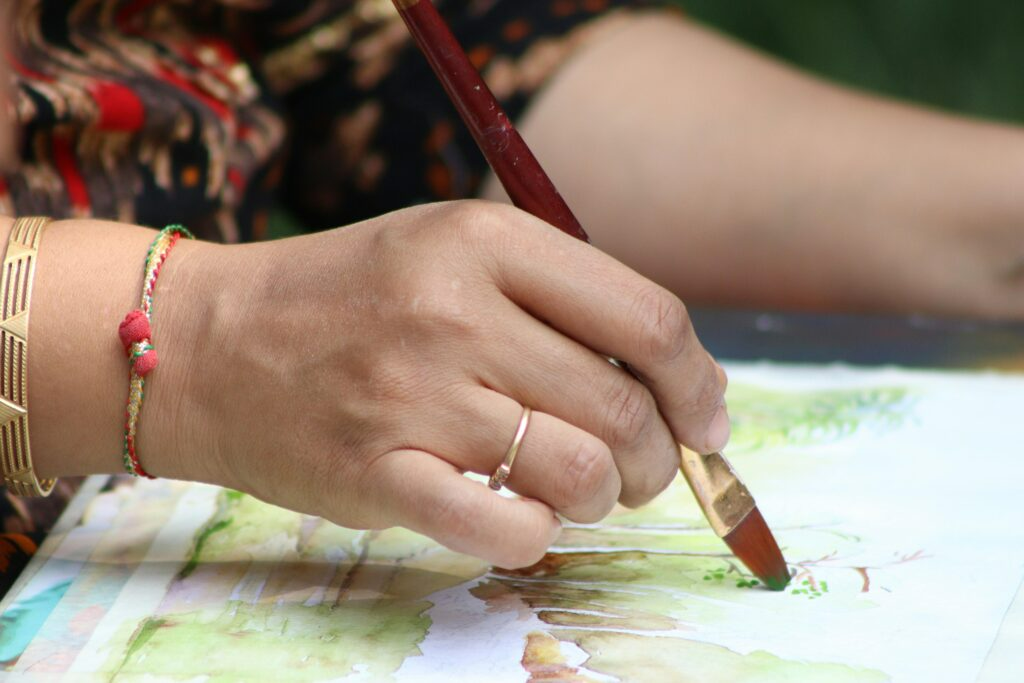
The reality is that people aren’t scrolling the way they used to. Platforms have shifted from image-first to motion-first. Reels, Shorts , these are the currencies now. Even if you don’t like that truth, the feed isn’t designed to highlight stillness anymore. That doesn’t mean your art is less valuable, it means the stage it’s performing on has changed.
Here’s the kicker: people aren’t ignoring your work because it isn’t good. They’re bypassing it because their brains are wired to stop at movement. A flicker of video signals “something’s happening here.” An image, no matter how gorgeous, signals “this can wait.” And in the world of scrolling, “this can wait” often means “this will never be seen.”
This shift isn’t your fault, but it does mean adapting. You don’t have to abandon still posts entirely , they still matter for your grid. But if you want attention in the moment, Reel is the tool that gets people to pause long enough to even read your caption or notice your work.
So, the invisibility problem isn’t about talent or quality. It’s about learning to speak the feed’s new language. And luckily, reel is a language you don’t have to master overnight. Like your art, it’s learned through practice, experiments, and tiny shifts that add up to big visibility.
What Makes Someone Actually Stop Scrolling?
Here’s a little secret: most people don’t stop because of perfection, they stop because of curiosity. Think about it. How often do you pause on a reel not because it’s polished, but because something caught your attention , a hand moving quickly, paint dripping, a sudden burst of color? Humans are wired to notice beginnings, transitions, and unexpected moments.
When you think of scroll-stoppers, don’t imagine glossy commercials. Imagine a clip where the first second shows something unfinished, mid-action. Maybe your brush hovering over the canvas, or the palette knife scraping across a surface. That sense of “oh, what’s happening here?” is what freezes a thumb mid-scroll.
The biggest mistake artists make is thinking they need to show the final masterpiece first. In reality, the process is the hook. A blank canvas turning into something recognizable, a messy studio transforming into a gallery-ready piece, or even a mistake turning into a solution , these are the visual stories people want to watch unfold.
Movement is another magnet. Even the tiniest motion , paint swirling in water, hands arranging tools, a quick pan across textures , can feel alive compared to a still shot. You’re not competing with Hollywood productions, you’re competing with boredom. And small bursts of life always beat static perfection.
So, if you want to stop a scroll, think less about impressing and more about inviting. Give viewers a glimpse that makes them curious, that makes them want to stay long enough to see the next frame. The art doesn’t have to be finished to be powerful. Sometimes the halfway point is where the magic lies.
Turning Your Process Into a Story (Without Overthinking It)
Every artist has a process, but not every artist shares it in a way that feels like a story. That’s the difference between a reel people watch once and one they rewatch, share, or comment on. The secret isn’t fancy editing, it’s storytelling basics: a beginning, a middle, and an end.
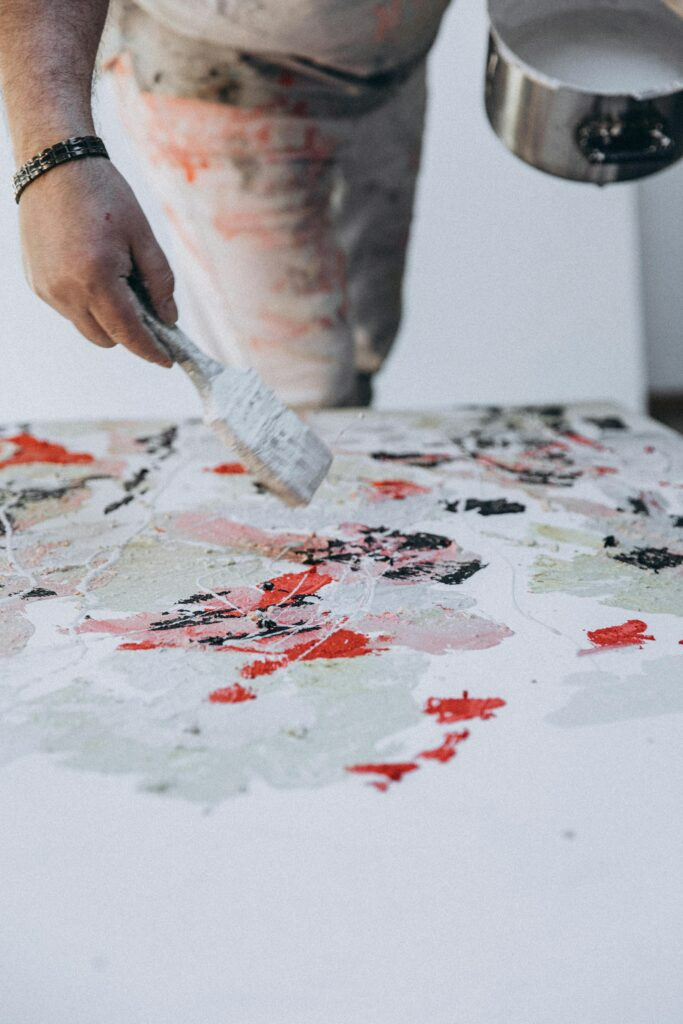
Start with a hook. This could be as simple as a brush touching a blank canvas, a palette full of color, or a close-up of your hands mixing paint. Then move into the middle, the part where transformation happens. Let people see the strokes, the layering, the messy trial-and-error. Finally, end with some form of resolution. Maybe the finished piece, maybe just a satisfying detail shot.
Your viewer doesn’t need the full documentary, they just need a snippet that gives them a sense of progress. Humans love arcs, even small ones. Watching something go from nothing to something in under 20 seconds is deeply satisfying, no matter the subject.
And here’s where it gets personal: don’t edit out your quirks. Maybe you always sip coffee mid-process, or your dog wanders into the studio. These moments are gold. They remind viewers that they’re not just watching art appear, they’re watching you live it. That personal thread makes them more invested in both the process and the artist.
So, when you think of process reels, don’t worry about cinematic drama. Focus on making it feel like you’re letting someone peek over your shoulder while you work. That intimacy is the story.
Do You Need Fancy Gear to Make It Work?
Here’s the part where a lot of artists freeze. They imagine needing a tripod, studio lights, a high-end camera, editing software, and hours of free time. The thought alone can feel heavier than actually making the art. But the truth? Your phone is enough. In fact, sometimes “too polished” can make a reel feel distant, while casual clips feel more authentic.
Natural light is your best friend. Set up by a window and you’ve already solved 80% of your “production” issues. Your studio, messy or not, is more interesting than a staged set. And your hands, moving in real time, are more engaging than a hyper-edited montage. People aren’t looking for flawless, they’re looking for real.
Tripods help, sure, but you don’t need one right away. Prop your phone up on a stack of books or lean it against a jar. Editing apps? Most platforms now have built-in tools that are intuitive and quick. Cut, speed up, slow down , all within the same app you post from. You don’t need to overthink it.
The secret to gear is this: start with what you have, upgrade later if you want to.
The magic isn’t in the equipment, it’s in the story you’re showing. A grainy but engaging reel will always outperform a perfect but boring one. Engagement comes from connection, not camera quality.
So no, you don’t need to become a filmmaker overnight. You just need to capture the art already happening in your space and let people in on it. The tools are secondary. Your perspective is the real value.
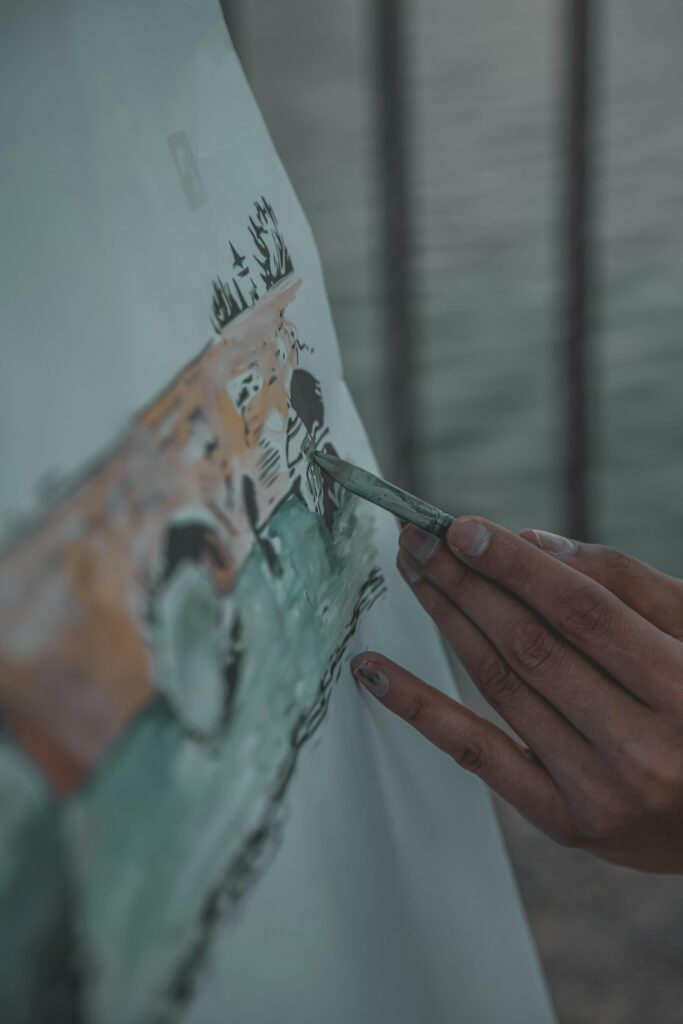
Hate Being on Camera? Here’s a Better Way
Let’s be real , not every artist wants to show their face online. The good news is, you don’t have to. There are endless ways to make powerful reel content without turning yourself into the main character. Your art can be the star, and your presence can remain behind the scenes.
Think of hands. Just your hands creating can be mesmerizing. The motion of mixing, drawing, layering, cutting , these are intimate enough to feel personal without showing your whole self. Add in detailed shots, close-ups of textures, or even wide pans of your workspace, and you’ve already created variety without ever stepping into the frame.
Another trick?
Narration without appearance. Record your voice talking about your process or sharing thoughts while showing only the art. It adds a layer of connection, as if you’re guiding viewers through what they’re seeing, without needing to appear on screen. This works especially well if you’re camera-shy but comfortable speaking.
And don’t underestimate the power of angles. A camera facing down at your desk, a time-lapse of your canvas, or even an over-the-shoulder shot can tell a full story without your face ever entering the picture. It’s about perspective, not performance.
So if being on camera feels like too much, don’t force it. Lean into the aspects of your practice you’re most comfortable sharing. The art doesn’t care if your face is there , it shines either way.
Finding a Posting Rhythm That Doesn’t Drain You
Here’s where many artists burn out: they think going “all in” on reel means posting daily, editing nonstop, and spending more time on content than on art. That’s the fastest path to exhaustion, and honestly, it’s not sustainable. The key isn’t frequency, it’s rhythm.
Start small. One or two reels a week can be enough to build momentum. Consistency matters more than volume. If your audience knows they’ll see you regularly, even if it’s not daily, they’ll stick around. And the platforms reward patterns over sudden bursts of activity followed by silence.
Think about the quality of connection, not just the quantity of posts. A single thoughtful reel that tells a story will do more for your audience than five rushed clips that feel repetitive. It’s better to create with intention than to create with panic.
Batching can help. Film multiple short clips while you’re already in the flow, then spread them out over time. That way, you’re not interrupting your creative process every day to “make content.” You’re simply documenting what’s already happening and sharing it in manageable doses.
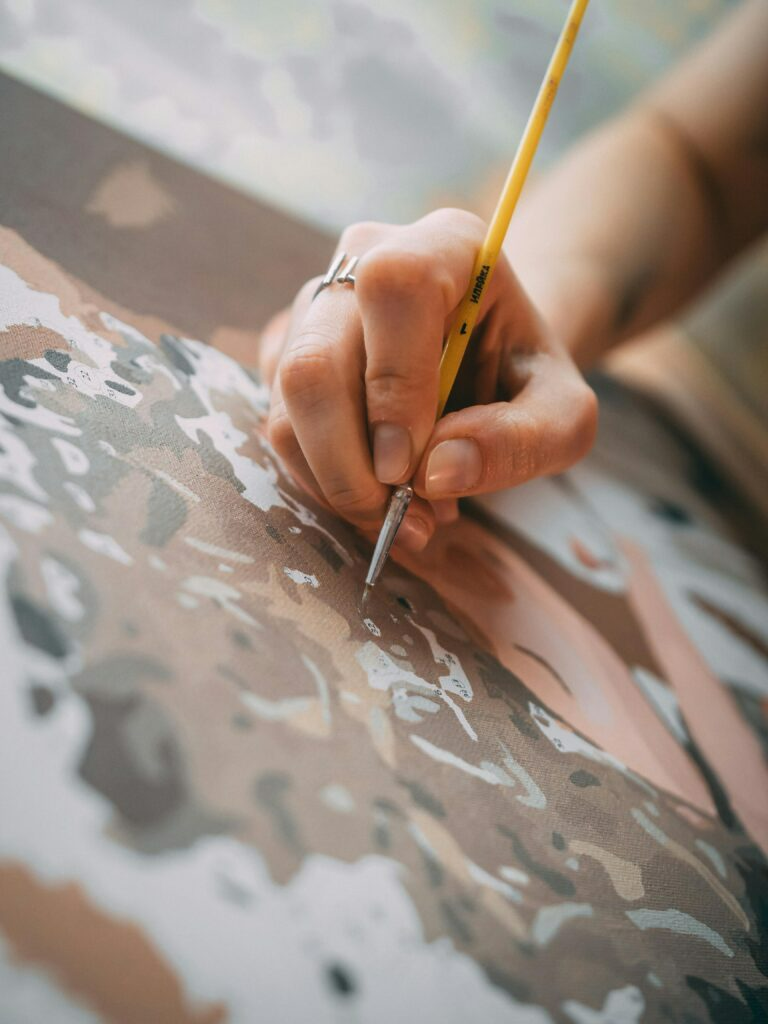
So, the answer isn’t “as often as possible.” It’s “as often as you can without resenting it.” reel should feel like an extension of your practice, not an obstacle to it. If you keep it sustainable, you’ll keep it authentic , and that’s what audiences respond to most.
Why Showing the Messy Middle Builds More Trust Than the Final Reveal
Think about how often you see a still photo of a painting and swipe past it. Now, imagine that same painting filmed as the final brushstroke lands, the artist stepping back with paint still on their hands. That moment feels alive, it makes you pause. reel has the power to transform a flat post into a story that pulls people in and keeps them watching.
Showing the process is often more magnetic than just presenting the polished outcome. A time-lapse of clay taking shape, a canvas going from sketch to color, or even a quick clip of you mixing paints lets people experience art in motion. It’s less about perfection and more about presence, about letting viewers peek behind the curtain.
Artists sometimes hold back from showing the “messy middle” because they think it weakens the final reveal. In reality, it does the opposite. The contrast between beginning and end makes the transformation dramatic, almost cinematic, and your audience loves to feel like they’ve witnessed the journey.
The magic of reel lies in its ability to humanize art. It bridges the distance between creator and viewer. When you show yourself in the act of making, even briefly, you’re not just sharing a product, you’re inviting someone into your world. That’s what makes them stay, and more importantly, return.
So, the next time you feel unsure about posting a simple still, ask yourself: how could I show the life around this work? That little shift in approach might be the reason your post goes from “seen and scrolled” to “watched and shared.”
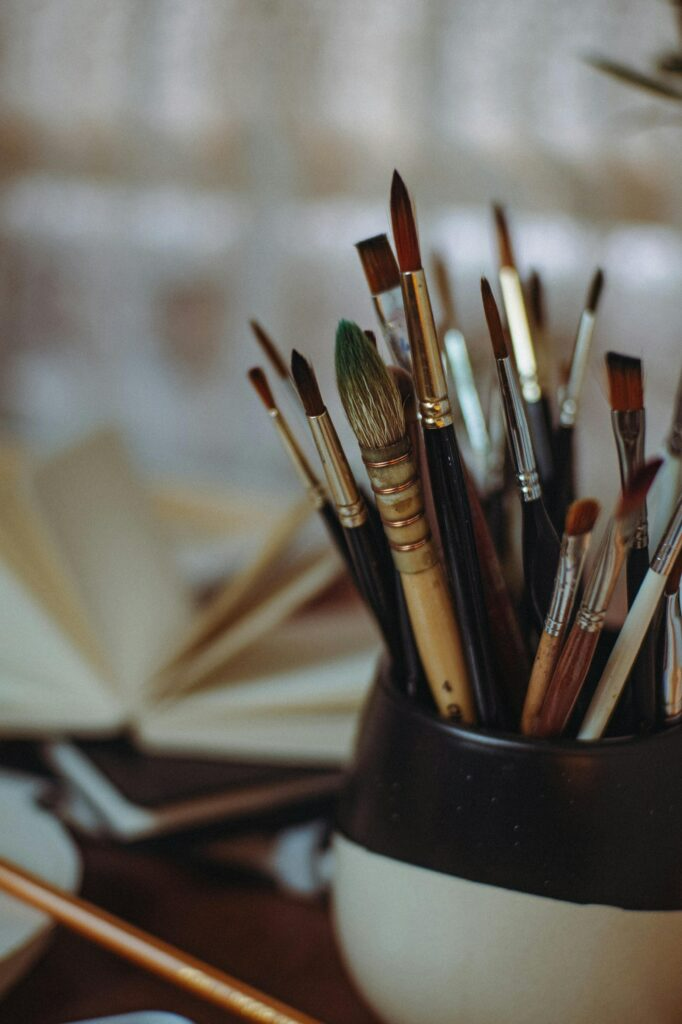
Why “Done” Isn’t Always the Hook
A finished artwork is satisfying for you, but not always the best entry point for your audience. By the time you share the polished version, the energy of the making has already passed, and the story feels over. But when you let people in mid-creation, you create suspense. They want to know what happens next.
Think about reading a mystery novel. You wouldn’t hand someone the last page first. You’d let them enjoy the tension and unfolding along the way. reel works the same way for art. A half-finished sculpture, a half-painted canvas, or even a half-edited photograph builds anticipation that static posts rarely achieve.
Many artists fear that showing work before it’s ready will “spoil the surprise.” The reality is, process posts are often the most engaging because they feel alive and in motion. The audience doesn’t need polished perfection, they crave a sense of being part of the moment.
Your “in progress” doesn’t have to be glamorous. A clip of you wiping your hands on a rag, your desk full of sketches, or the noise of your tools at work all add authenticity. People aren’t just watching art, they’re watching you live through it. That shared humanity is what hooks them.
So, instead of waiting for the “big reveal,” flip the script. Share earlier, share messier, and you may find that the journey itself becomes the real attraction.
Ten Seconds That Can Hook a Stranger Into Staying
Here’s the challenge: social platforms reward speed, but art is often slow. The good news is that you don’t need long, cinematic productions to stop a scroll. Even a 10-second clip can hold someone if it sparks curiosity or emotion. Short doesn’t mean shallow, it means focused.
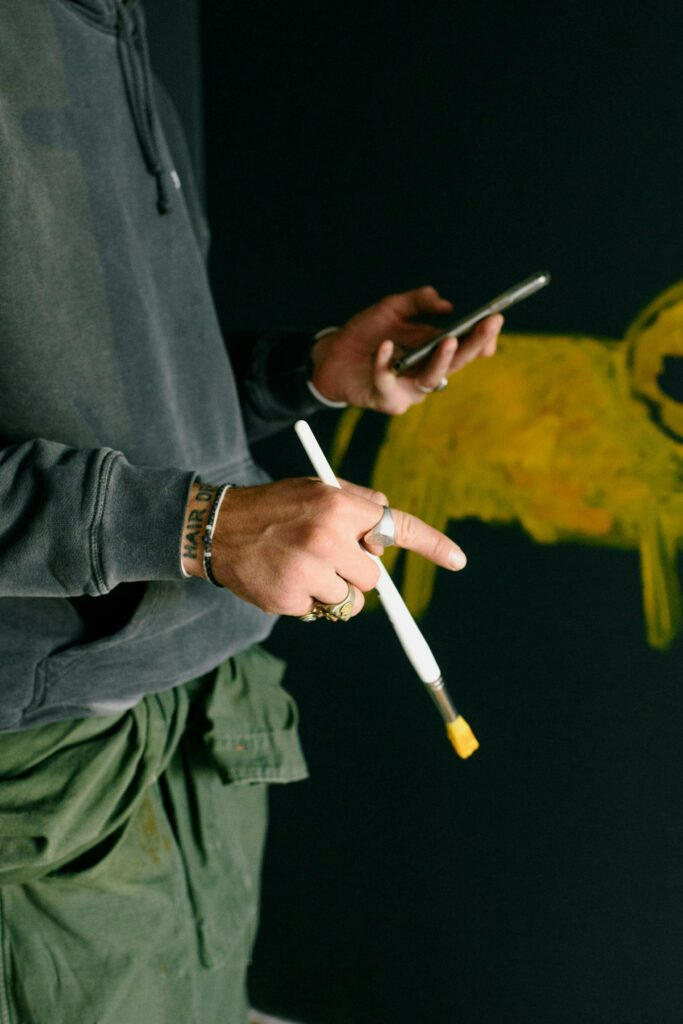
Think of these clips as visual haikus. They don’t tell the whole story, but they give just enough to make someone pause. A brush dragging across canvas, a glaze dripping onto pottery, or a pencil sketch forming with quick, confident lines can all feel captivating in a few seconds.
The key is intention. Don’t overthink fancy editing or trends if that feels unnatural. What matters is whether the moment you’re sharing has a pulse. Does it reveal movement, texture, or transformation? If it does, you already have a short but powerful reel.
Short clips also carry another benefit: they lower the barrier for you. Instead of worrying about creating a “perfect” reel, you can grab your phone, capture a small piece of your process, and share it. Consistency becomes easier when you don’t treat every post as a production.
So next time you hesitate to post because “I don’t have time to edit,” remember: a single 10-second window into your process might connect more deeply than a polished still that gets lost in the feed.