
How Marcella Granick Explores Identity through Fragmented Figures and Shifting Forms

👁 314 Views
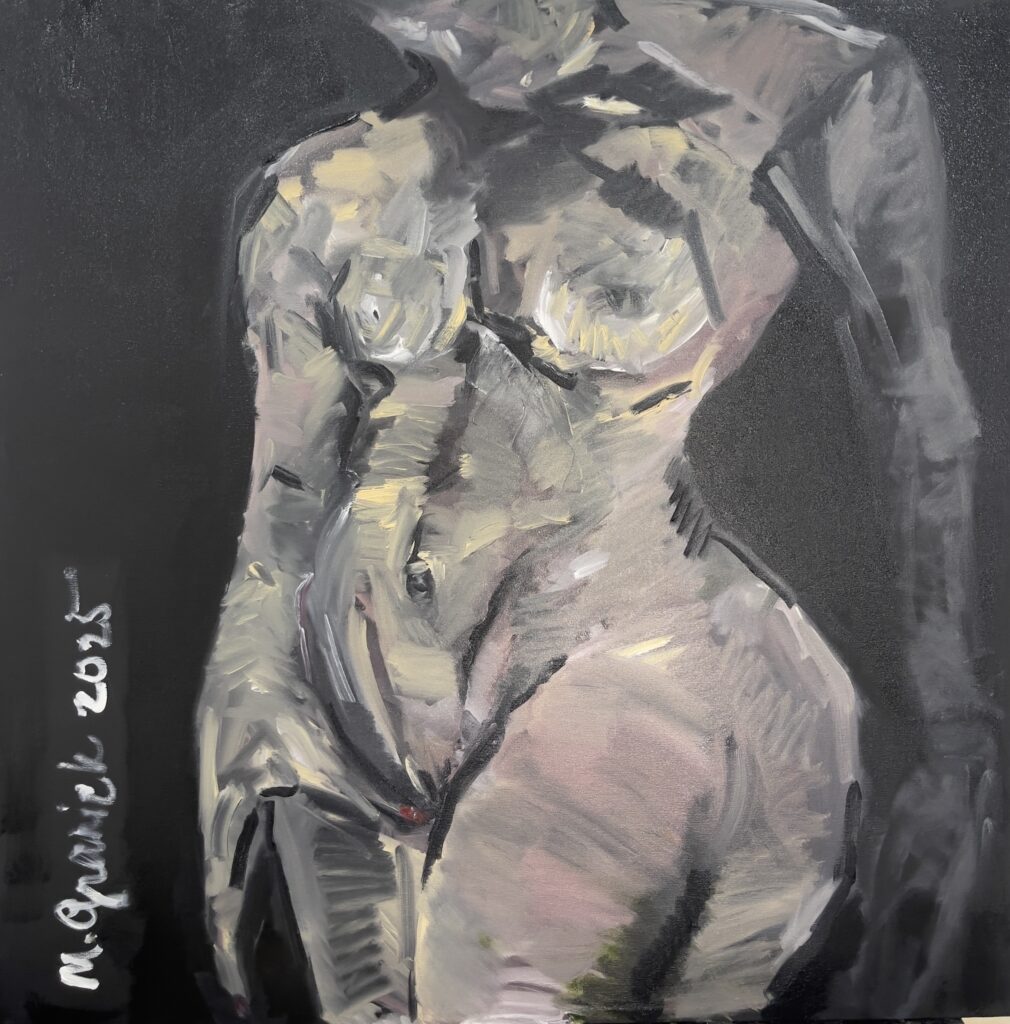
For this edition of Arts to Hearts Project, we’re in conversation with Marcella Granick—a figurative artist whose work explores the in-between spaces of identity, memory, and the body. Through this interview, she talks about why she’s drawn to faces and figures that aren’t fully visible, how her background in sociology shapes the way she paints, and what it means to let imperfection lead the way.
We learn how her experience of leaving a corporate life to return to art full-time changed her approach—both in the studio and beyond. She shares how her paintings evolve with her, often holding space for contradiction, transition, and emotional weight. Whether she’s using charcoal or oil, Granick doesn’t aim to capture something final—instead, she invites us into a process that’s constantly shifting, and all the more human because of it.
Marcella Granick is a featured artist in our book, “100 Emerging Artists 2025” You can explore her journey and the stories of other artists by purchasing the book here:
https://shop.artstoheartsproject.com/products/the-creative-process-book

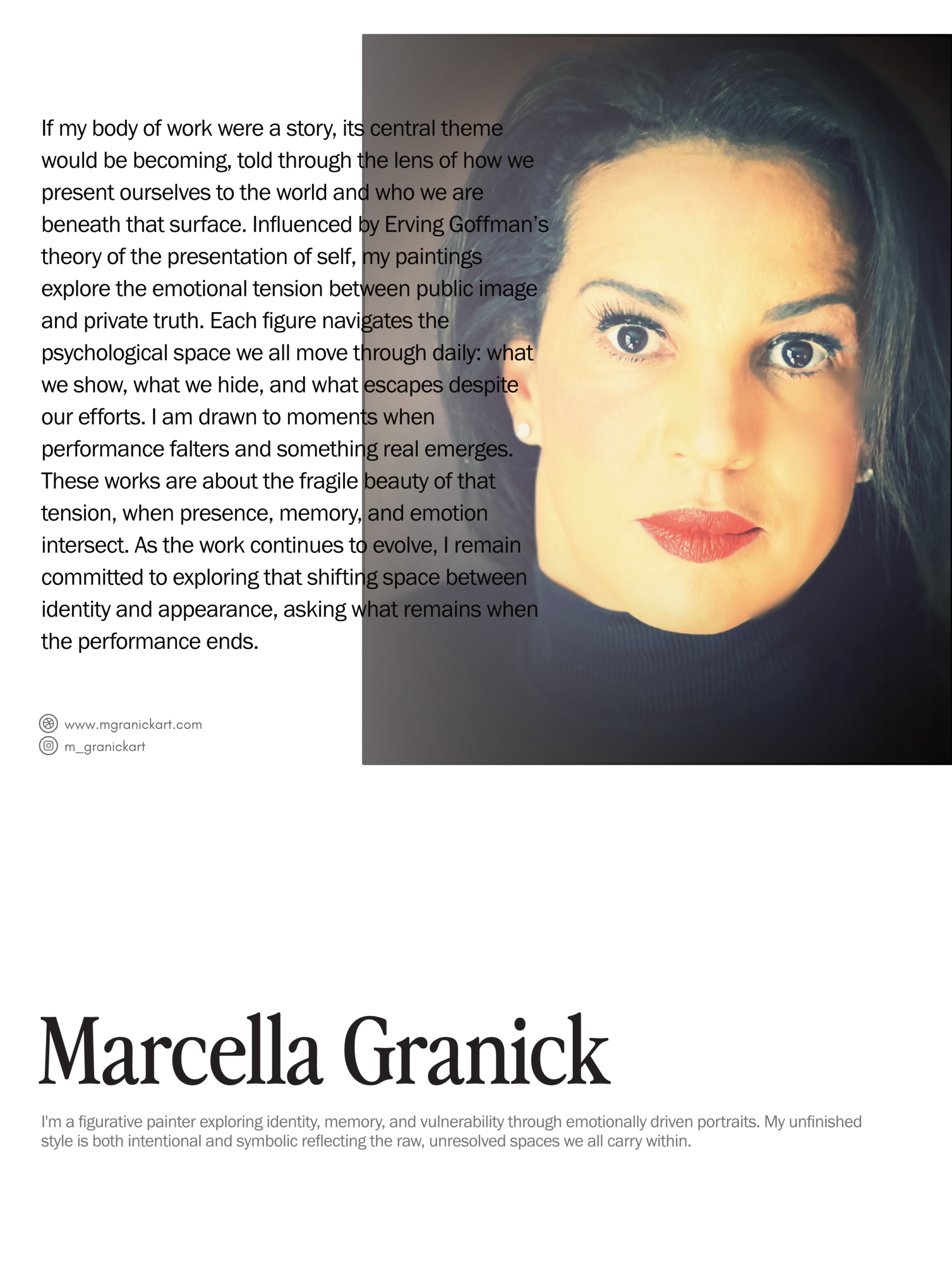
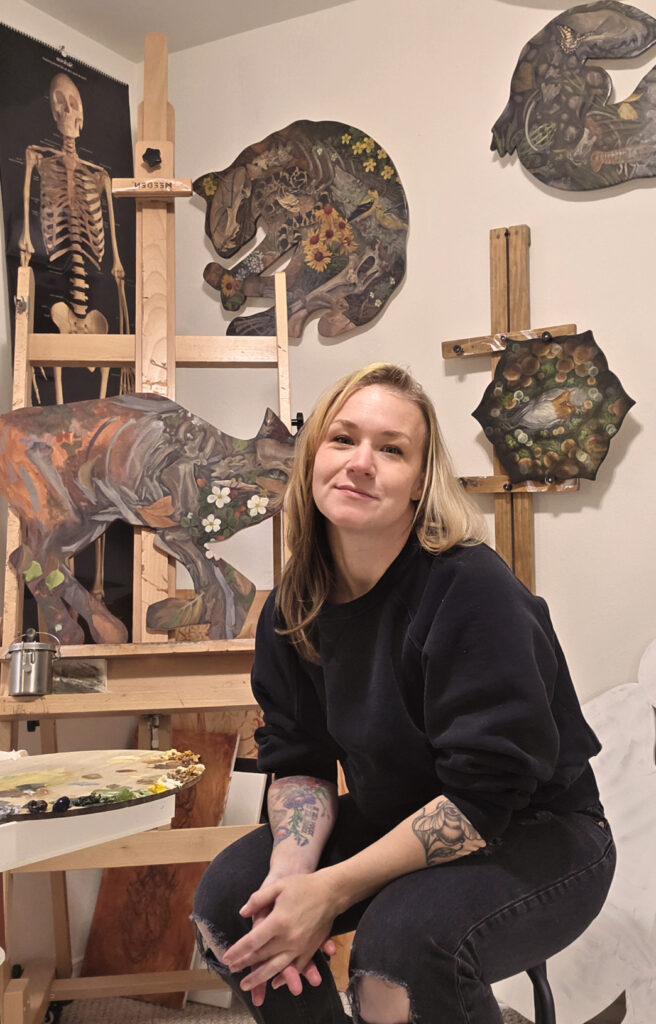
MGranick is a contemporary figurative artist whose work investigates the complexities of identity, emotional presence, and the body in flux. Working primarily in oil and charcoal, she explores themes of fragmentation, ambiguity, and transformation through gestural mark-making and restrained palettes. Her background in sociology informs a deep inquiry into how individuals perform and negotiate the self within cultural and psychological frameworks. Originally from the United States and currently based in Thailand, Granick’s artistic development was shaped by her role as both model and muse for the late Canadian painter Jon Tobin, who mentored her during her early years of practice. She is mainly self-taught, with a process that resists resolution and embraces the tension between presence and disappearance. Her work has been exhibited internationally and featured in Artist Close Up magazine.
1. What first drew you to explore identity as something unfinished or constantly shifting?
My interest in identity as a fluid, unstable construct developed from both personal experience and academic study. From an early age, I became acutely aware of the ways we modify ourselves to fit into different social roles—how much of who we are is shaped in response to external expectations or internalised norms. This experience was later reinforced through my training in sociology, where I studied theories of self-presentation, symbolic interactionism, and the performance of identity. Art became a space where I could examine these dynamics visually—through gesture, distortion, and fragmentation. I’m less interested in defining who someone is, and more compelled by how identity shifts under pressure: how it fractures, reforms, or resists categorisation altogether. That instability feels not only accurate, but necessary to represent.
2. How does imperfection show up in your process—and what does it teach you along the way?
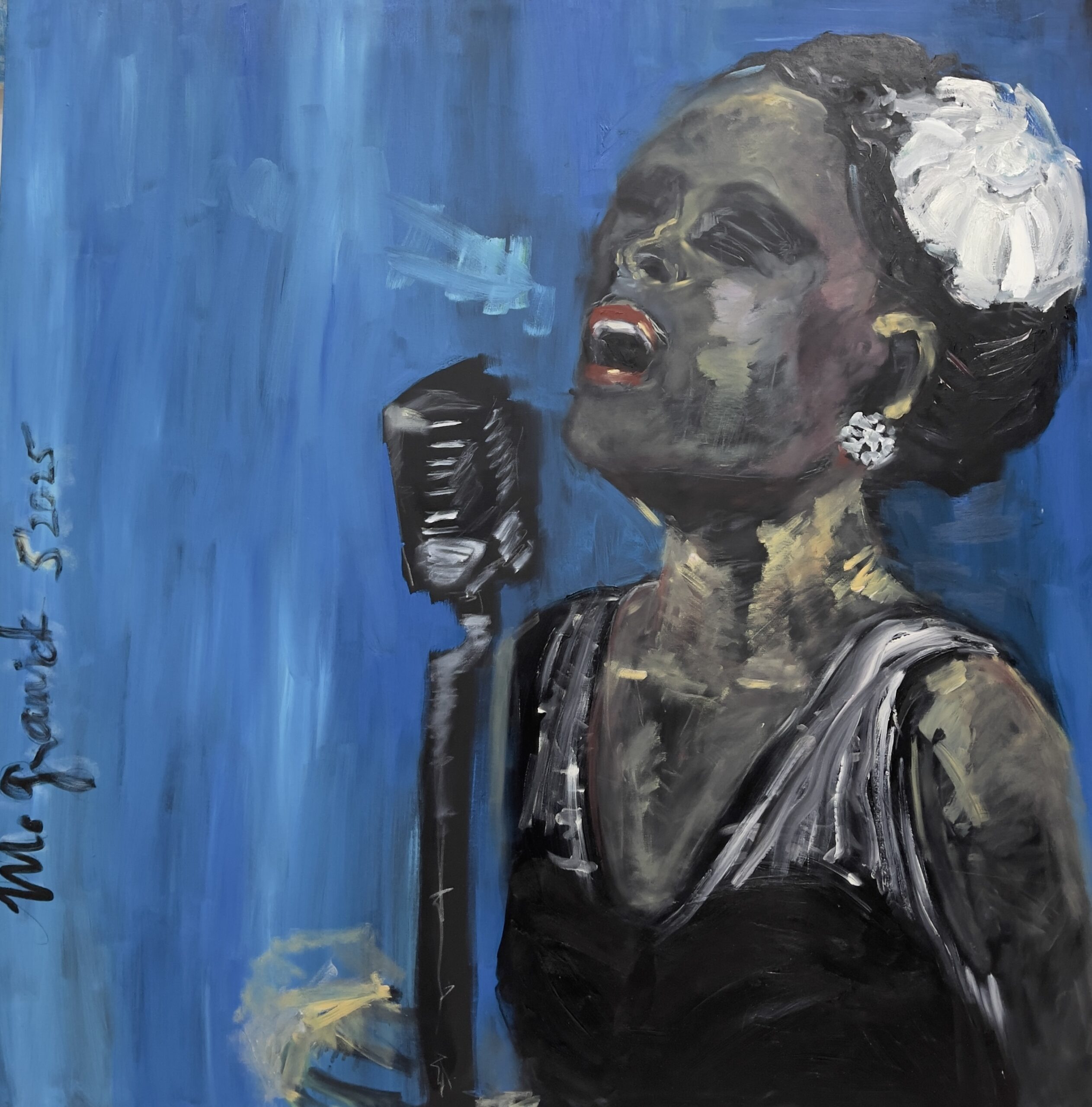
Imperfection is not something I attempt to correct or conceal—it’s integral to the work. It shows up in the unresolved edge of a form, a blurred gesture, a tension between what is rendered and what is withheld. These moments are often where the emotional weight resides. Rather than aiming for technical polish, I focus on what the image is communicating beneath the surface. Imperfection teaches me to stay present, to allow the work to remain open. It reminds me that meaning doesn’t always emerge through control or clarity, but through vulnerability, rupture, and ambiguity. By allowing the figure to remain incomplete or off-balance, I create space for a more honest engagement—with the subject, and with myself.
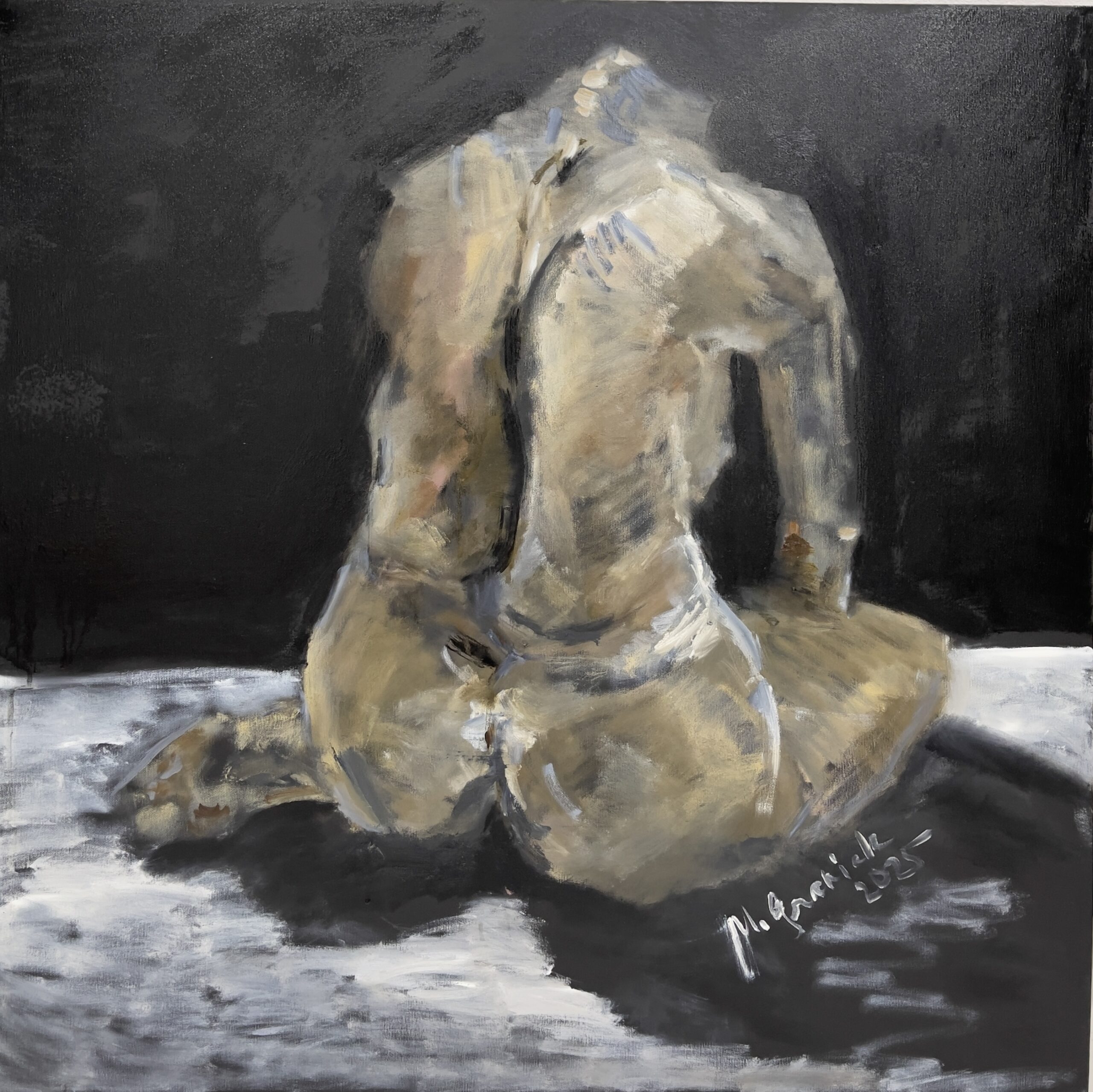
I’m less interested in defining who someone is, and more compelled by how identity shifts under pressure.
3. You describe your work as capturing transformation—do you find your subjects change with you over time?
Yes, absolutely. The figures I paint often act as mirrors—sometimes consciously, sometimes not. In earlier works, the subjects tended to recede or fragment, reflecting a preoccupation with absence, withdrawal, and erasure. As I’ve grown more rooted in my practice and more willing to take up space in my own life, the figures have shifted as well. They’re less obscured now—more assertive in posture, more grounded in their presence. While the visual language remains restrained, the psychological tone has evolved. What was once about dissolution has become more about emergence. These shifts aren’t deliberate—they surface gradually through the process. But over time, the arc becomes clear: the work moves with me.
4. What role does abstraction play in helping you express the layers of identity?
Abstraction allows me to move beyond the literal and into the psychological. By distorting or fragmenting the figure, I’m able to access aspects of identity that are unstable, conflicted, or obscured—those dimensions that don’t conform to coherent narratives or fixed visual categories. A blurred face or incomplete form can express ambiguity, memory, or emotional residue in a way that traditional representation often cannot. I see abstraction not as a retreat from meaning, but as a method of deepening it. It opens up space for contradiction and complexity—for what’s hidden, in transition, or not yet fully formed. Identity, as I experience and depict it, is layered and dynamic. Abstraction gives me the formal freedom to reflect that.
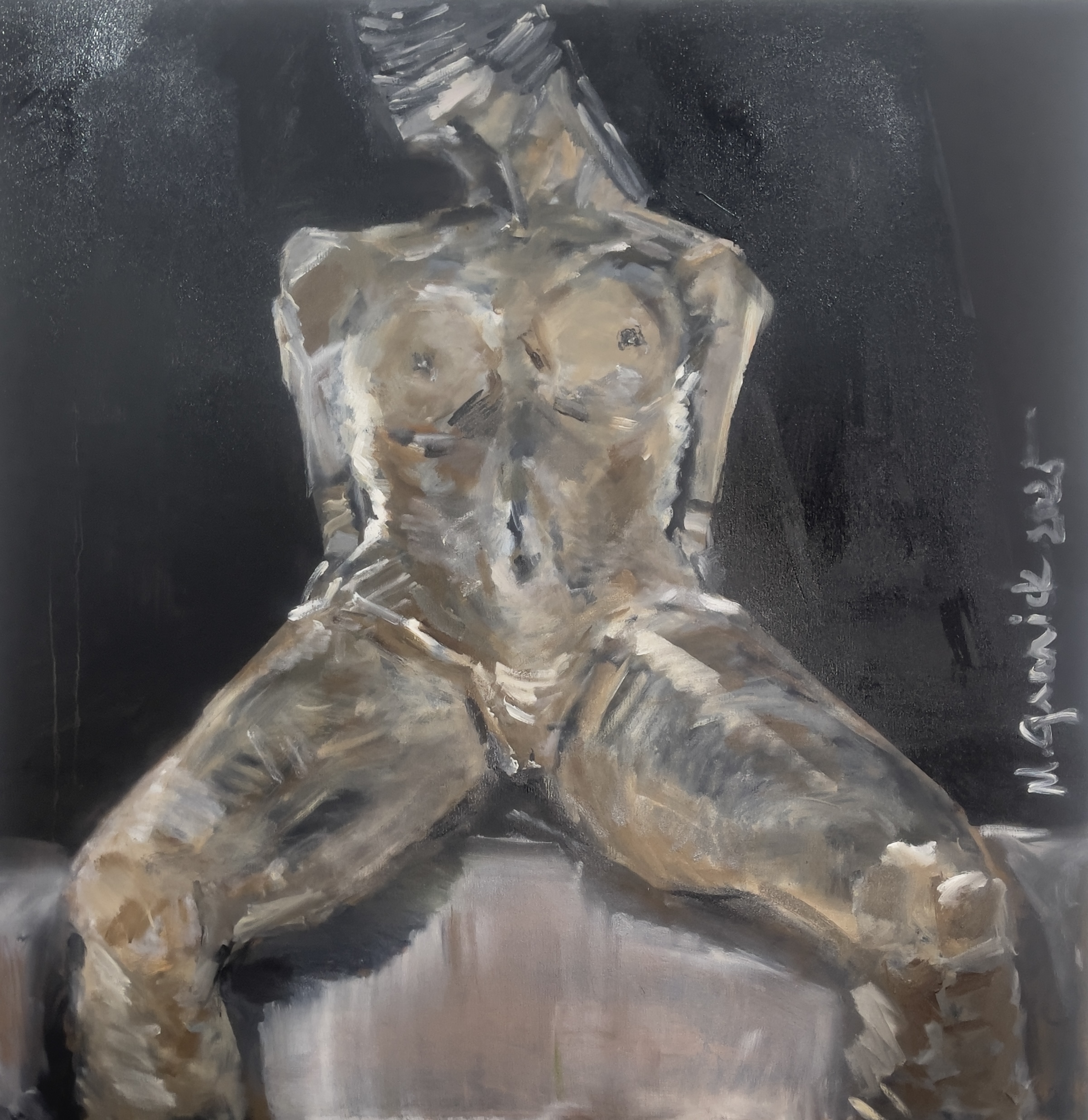
Imperfection teaches me to stay present, to allow the work to remain open.
Marcella Granick
5. Has there been a moment in your own life that shaped the direction of your recent work?
Yes—leaving my corporate career to return to art full-time marked a significant shift, not only in how I live but in how I approach the work. That decision involved an unmaking: stepping away from a fixed identity, relinquishing external validation, and confronting long-suppressed parts of myself. It created space for more profound vulnerability, and with it, a new clarity of purpose. Since then, the work has become more direct—less about retreat and more about reckoning. The figures assert themselves differently now. They still carry ambiguity, but there’s a greater sense of presence, of refusal to disappear. That transition—from containment to articulation—has defined the tone and direction of my recent paintings.
6. How do you know when a piece feels “done,” if it’s rooted in the idea of constant evolution?
I rarely think of a painting as “finished” in the traditional sense. Instead, I look for a shift in the work’s energy—when it no longer feels in conflict with itself, when the tension becomes stable enough to hold without more intervention. There’s often a moment when the painting stops asking for resolution and begins to assert its logic. That’s when I step away. Because the work is rooted in flux—both conceptually and formally—it’s essential to preserve a sense of openness. Completion, for me, isn’t about closure or polish; it’s about whether the piece can sustain ambiguity without collapsing. When the painting feels like it could continue evolving without me, I know it’s time to let it go.

Marcella Granick’s work reminds us that identity isn’t something fixed—it’s something we live through, question, and grow with. Through fragmented figures and layered forms, she paints the push and pull of presence and absence, control and surrender.
Her journey from sociology to painting, from structure to fluidity, shows how meaningful it can be to leave space for the unknown. We learn from her that art doesn’t need to offer answers—it can simply hold what’s in motion.
To learn more about Marcella, click the following links to visit her profile.
Arts to Hearts Project is a global media, publishing, and education company for
Artists & Creatives: An international audience will see your work of art, patrons, collectors, gallerists, and fellow artists: access exclusive publishing opportunities and over 1,000 resources to grow your career and connect with like-minded creatives worldwide. Click here to learn about our open calls.