

5 Museums to Visit in Mexico City
Five ways to see a city through its art, history, and people.
Mexico City is the kind of place where a museum visit can change the shape of your day. You might walk in looking for one painting and leave thinking about an entire civilisation. You might come for Frida Kahlo and find yourself paying closer attention to the objects she kept around her. You might go to see Diego Rivera’s murals and end up looking just as closely at the building that holds them.
That’s what makes choosing museums here so interesting. They don’t all tell the same story of Mexico, and they certainly don’t look at it from the same angle. Some take you deep into the country’s ancient past, while others bring you closer to the artists, ideas, and movements that shaped modern Mexico.
So, if you’re putting together a list of 5 museums to visit in Mexico City, these are five worth making room for. We’ve chosen them for the very different experiences they offer: the vast collections of the Museo Nacional de Antropología, the monumental murals of Bellas Artes, Frida Kahlo’s Casa Azul, Diego Rivera’s Anahuacalli, and the modern and contemporary art of Museo Tamayo.
Together, they take you across centuries without making the city feel like a history lesson. And perhaps that’s the best way to visit them: curious about what you’ll find, but without deciding in advance exactly what you’re supposed to see.
01. Museo Nacional de Antropología
If you want to understand the sheer depth of Mexico’s history, start here.
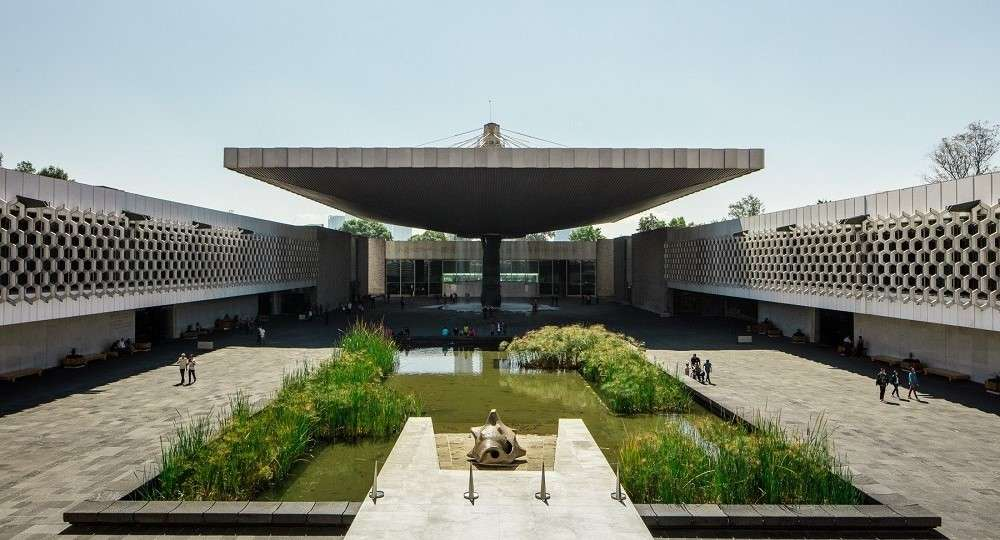
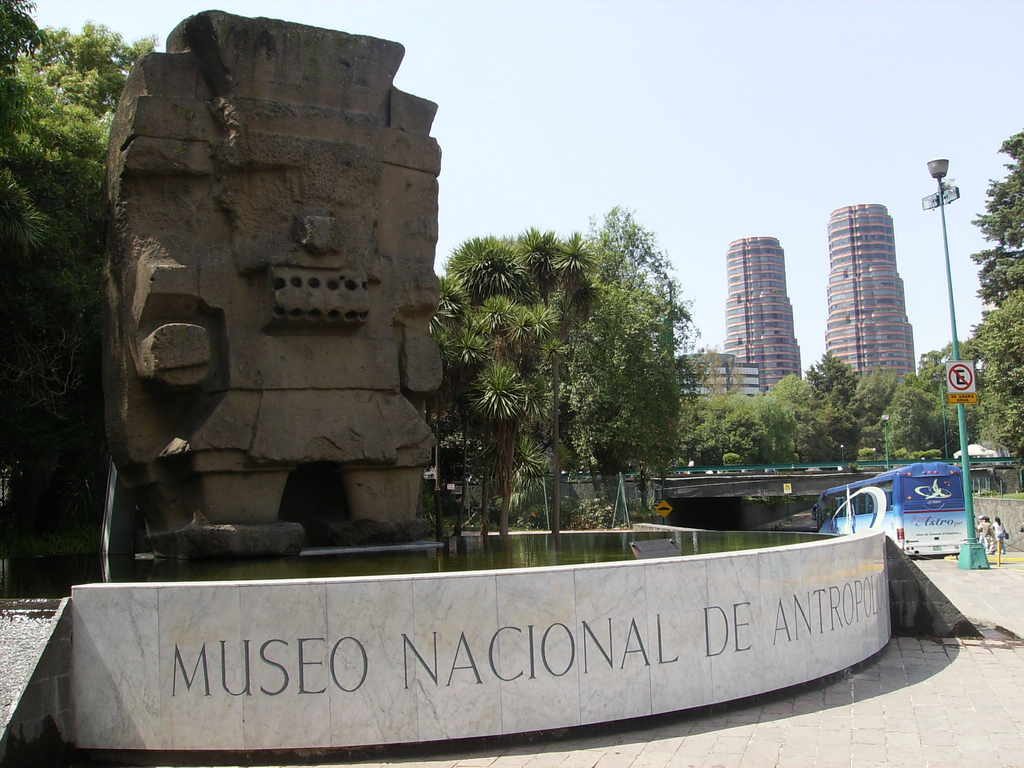
The Museo Nacional de Antropología in Chapultepec is enormous, but its scale isn’t the only reason it stays with you. The museum brings together the archaeology and ethnography of Mexico, taking you across different cultures, regions, and periods of the country’s history. Its roots go back to 1825, when Mexico’s first national museum was established. The museum in its present location opened in 1964, designed by architect Pedro Ramírez Vázquez.
Before heading into the galleries, take a moment in the central courtyard. The enormous concrete structure known as El Paraguas is difficult to miss, with water cascading around its single central column. The architecture was designed to draw from pre-Hispanic ideas of courtyards and monumental structures, so even the building begins the conversation before the objects do.
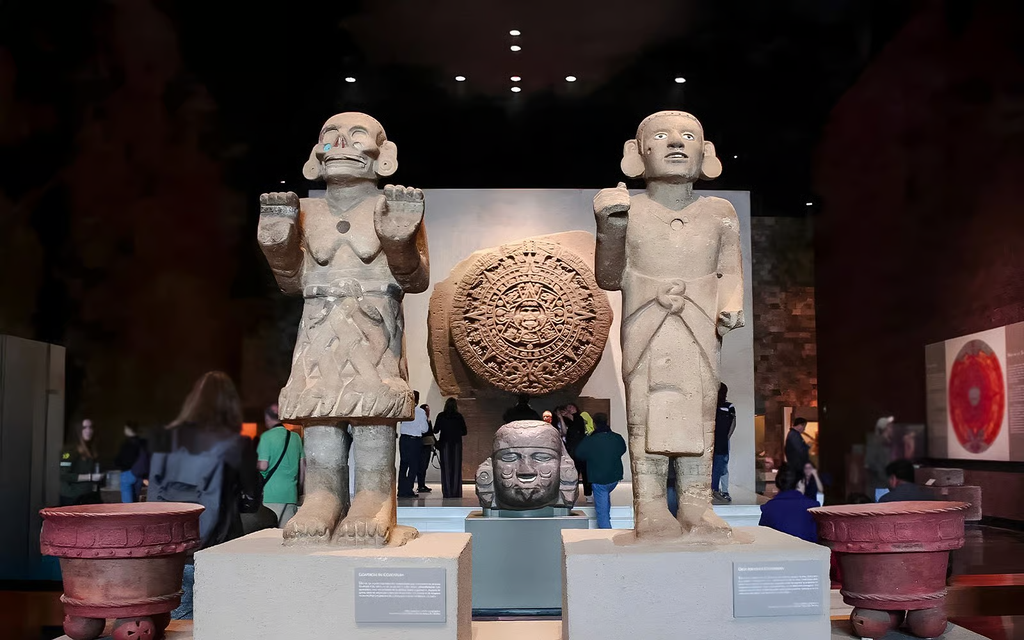
Inside, you’ll find some of the most recognisable objects in Mexican archaeology, including the Piedra del Sol, the Coatlicue, and the Piedra de Tízoc. But the museum is much more than a collection of famous archaeological pieces. Its ethnographic galleries shift the focus toward Indigenous peoples and living traditions, connecting the country’s ancient history with communities and cultures that continue to shape Mexico today.
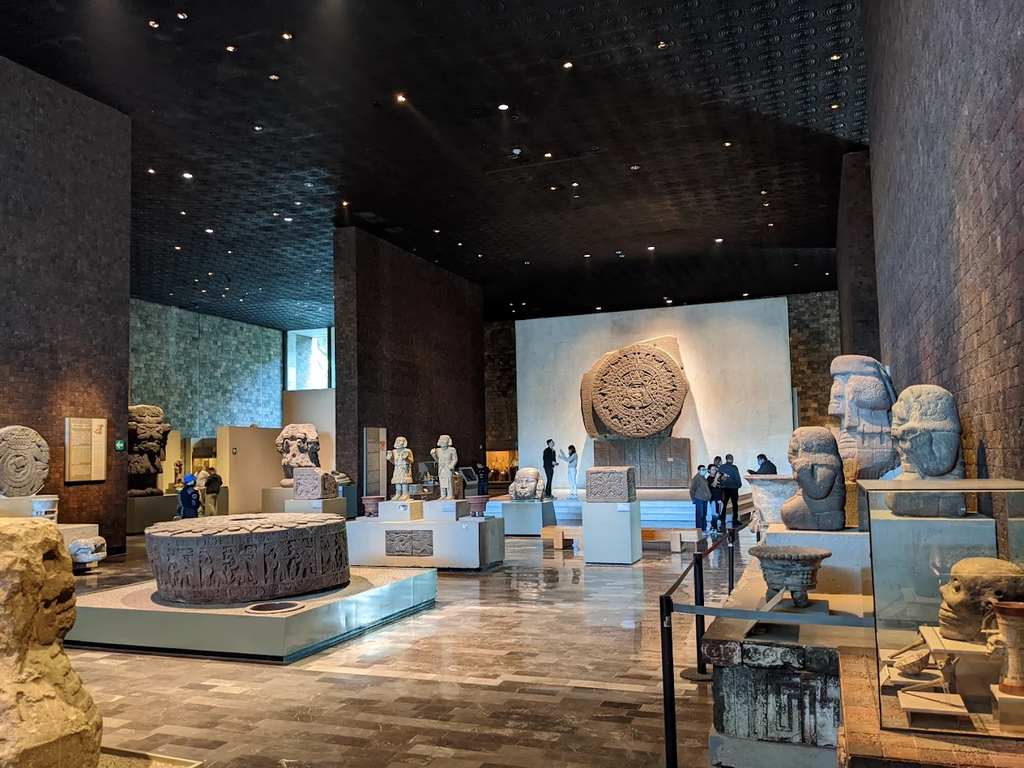
That’s what makes this museum worth giving time to. You don’t have to absorb every gallery or memorise every civilisation. Instead, let the scale of it sink in. A sculpture here, a textile there, a reconstructed space, an object whose purpose you may not immediately understand, and slowly, the picture gets larger.
The Museo Nacional de Antropología isn’t simply a place to look at Mexico’s past. It shows how that past continues to sit alongside the Mexico of today.
02. Museo del Palacio de Bellas Artes
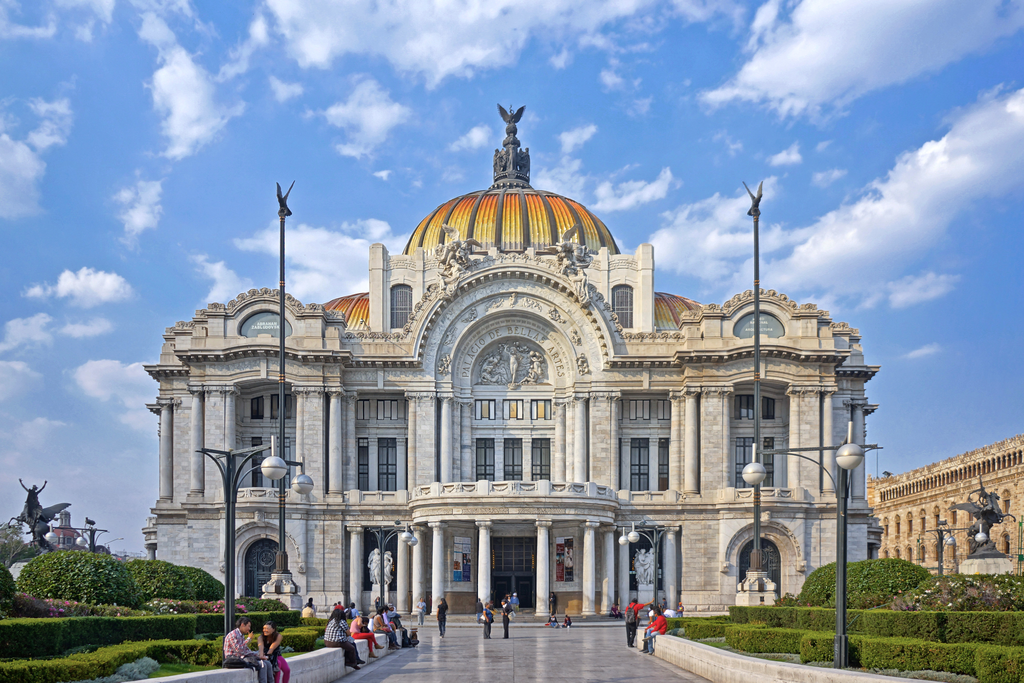
There are museums where you walk in and find the art on the walls. At Bellas Artes, the walls are part of the reason you came.
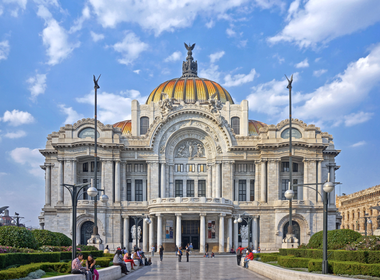
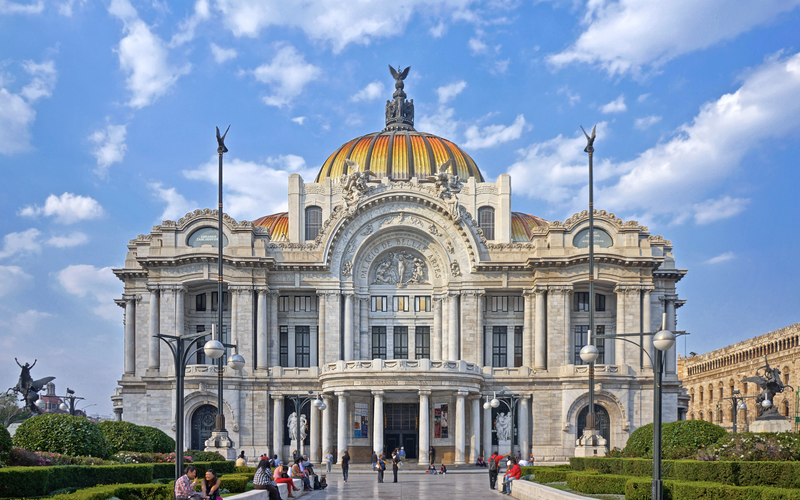
The Palacio de Bellas Artes is one of Mexico City’s most recognisable buildings, but its history is almost as layered as the art inside it. Construction began in 1904, when Italian architect Adamo Boari was commissioned to design a new national theatre. The project was interrupted by the Mexican Revolution and years of technical and financial difficulties before architect Federico Mariscal completed the building. It finally opened in 1934.
Then there are the murals.
The Museo del Palacio de Bellas Artes houses 17 monumental murals by some of the most important figures of Mexican muralism, including Diego Rivera, José Clemente Orozco, David Alfaro Siqueiros and Rufino Tamayo. The collection also includes works by Jorge González Camarena, Roberto Montenegro, Manuel Rodríguez Lozano and Rina Lazo.
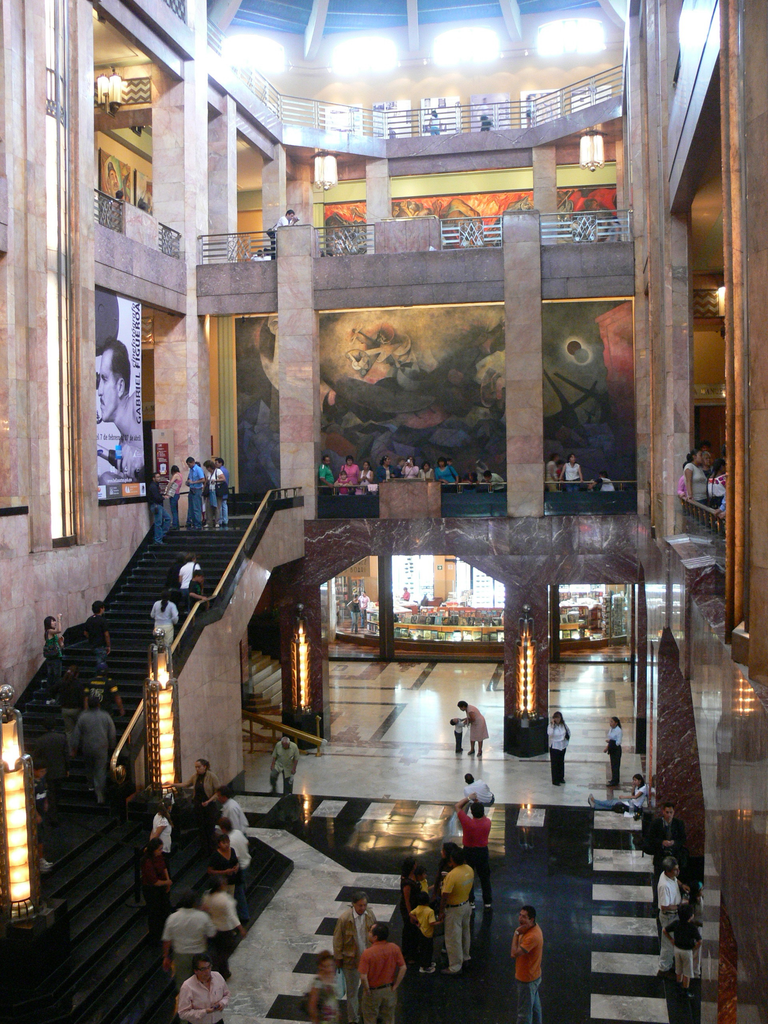
And these aren’t paintings you can casually glance at before moving on. Rivera’s El hombre controlador del universo, Orozco’s Katharsis and Siqueiros’s Nueva democracia are enormous, politically charged works filled with people, symbols and arguments. Mexican muralists weren’t interested in making art that existed quietly in a gallery. Their work addressed revolution, power, inequality, technology, history and the complicated business of building a modern Mexico.
That context changes the way you see them.
Look closely and you’ll find that the murals reward lingering. Faces appear among crowds. Historical figures sit alongside workers and politicians. Details that seem decorative at first often carry a much sharper meaning.
And then, every so often, remember to look away from the murals and back at the building itself. Bellas Artes was created as a major cultural institution, not simply an art museum, and its programme has long included theatre, opera, dance and music alongside visual art.
Come for Rivera if you must. Stay for the argument happening across the walls.
03. Museo Frida Kahlo (Casa Azul)
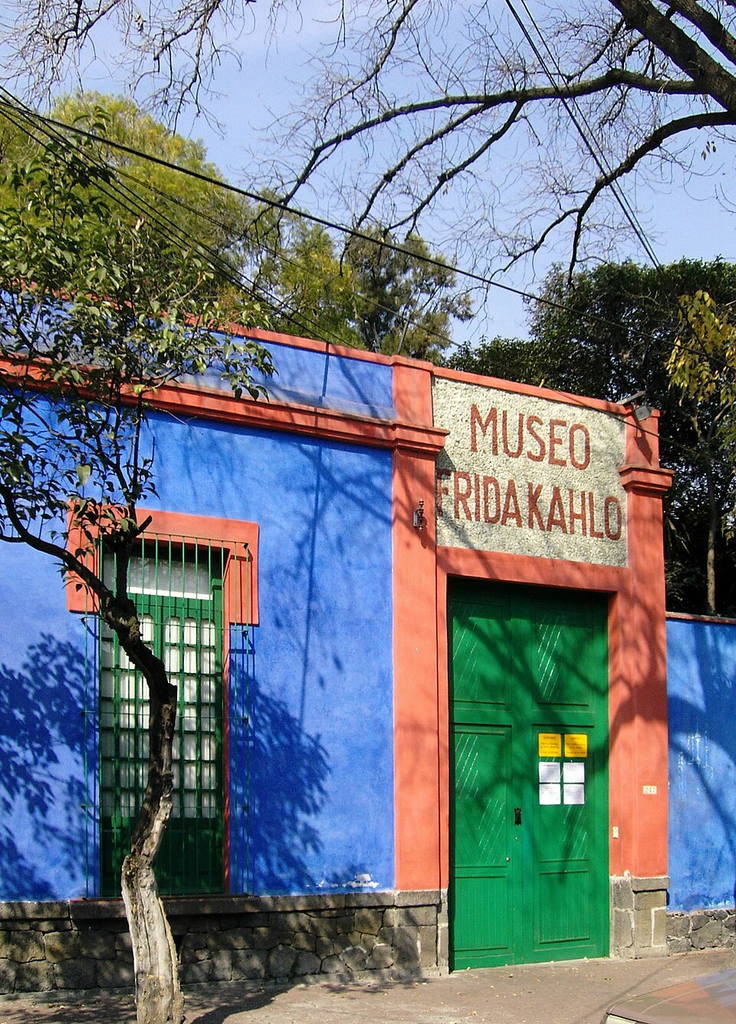
There is a difference between seeing Frida Kahlo in a museum and seeing the place where Frida Kahlo lived.
Casa Azul, the cobalt-blue house in Coyoacán, was the Kahlo family home. Frida was born here in 1907, spent much of her life here, and died here in 1954. Four years later, the house opened to the public as the Museo Frida Kahlo.
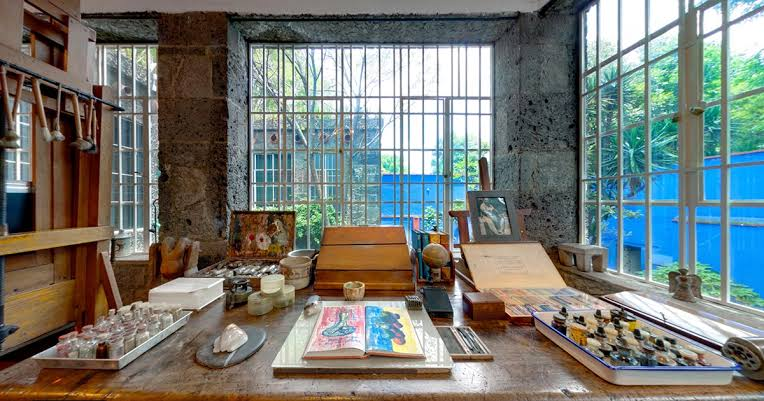
That makes the visit feel different from walking through a conventional gallery. The paintings are here, but so are the things that surrounded them: furniture, photographs, books, clothing, personal objects, pre-Hispanic pieces and folk art collected by Frida and Diego Rivera. The rooms themselves have become part of the story.
Her studio is particularly revealing. It preserves the space where she worked, including the easel Nelson Rockefeller gave her. Elsewhere, her bedroom recalls the years when illness and injury kept her confined to bed. After the 1925 bus accident left Kahlo with serious injuries, she began painting during her recovery, using a specially adapted easel that allowed her to work from bed.
Then there are the clothes.
In 2004, a bathroom and several storage rooms at Casa Azul were opened after remaining sealed for decades. Among what was found was a remarkable collection of Kahlo’s clothing and personal belongings. The dresses, blouses, jewellery, shoes and other pieces offer another way of understanding how deliberately she constructed her public image.
It’s easy to arrive at Casa Azul already knowing the Frida Kahlo of posters, portraits and instantly recognisable eyebrows. The museum gives you the chance to meet a less flattened version of her: the artist, collector, daughter, wife and woman whose surroundings were deeply intertwined with the way she presented herself and her work.
And that’s really the reason to visit. Casa Azul doesn’t just show you what Frida painted. It gives you a glimpse of the life around the paintings.
04. Museo Anahuacalli
Diego Rivera spent decades collecting pre-Hispanic objects. He eventually had so many that he needed somewhere to put them, and Anahuacalli was his answer.
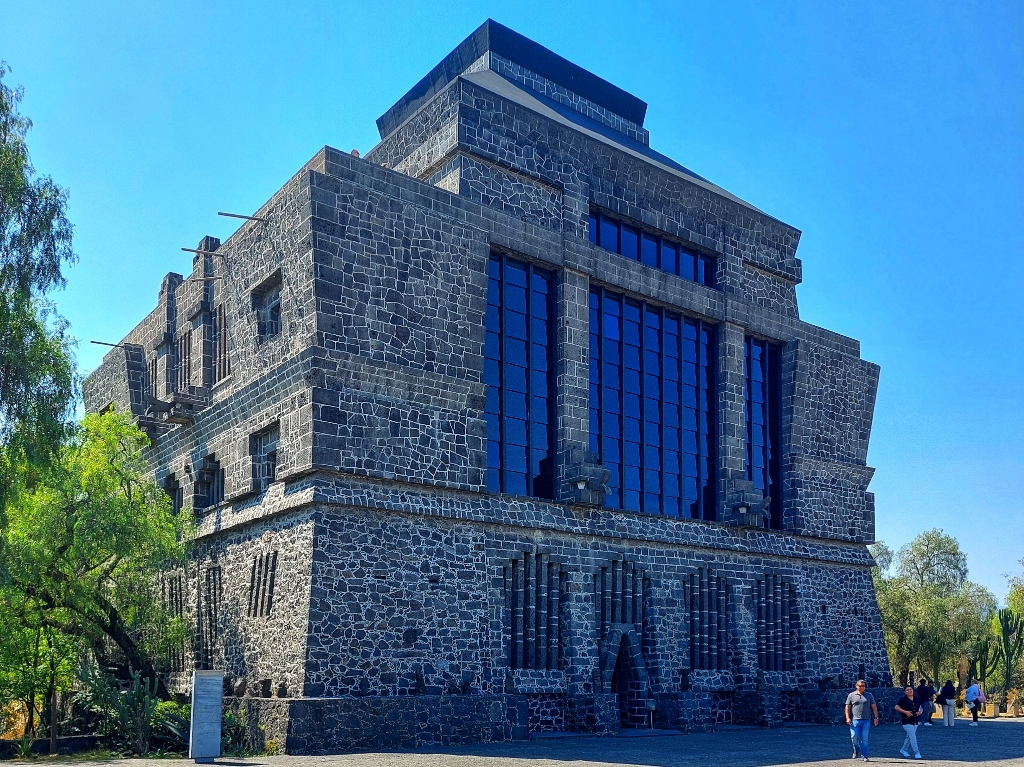
But calling it a museum built to house Rivera’s collection doesn’t quite capture what makes this place unusual. In the volcanic landscape of Pedregal, in southern Mexico City, Rivera imagined a building that could exist in conversation with the objects inside it. He worked on the project with architect Juan O’Gorman, and although Rivera died in 1957, the building was completed and opened to the public in 1964.
Made largely from volcanic stone, Anahuacalli doesn’t resemble the polished museum spaces you might expect in a capital city. Its monumental, dark exterior and stepped forms were inspired by pre-Hispanic architecture, while the building itself is a distinctly 20th-century creation. Rivera wanted the architecture to give his collection an appropriate setting rather than treating the objects as isolated pieces in glass cases.
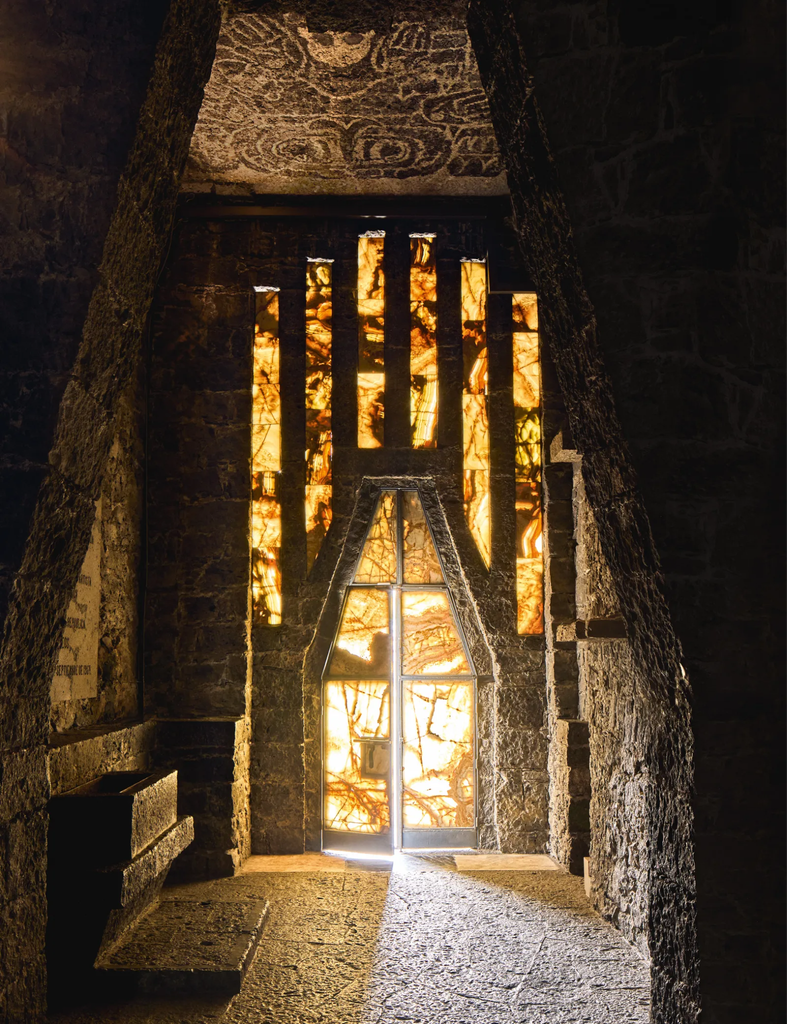
Inside are thousands of pre-Hispanic objects that Rivera collected throughout his lifetime. Ceramics, sculptures, vessels, masks and other works represent cultures from across the territory that is now Mexico. But the collection isn’t interesting simply because of its size. Rivera studied these objects closely, and their forms and visual language found their way into his own paintings and murals.
That connection is worth keeping in mind as you move through the museum. You aren’t only looking at the things Rivera collected; you’re seeing some of the visual sources that helped shape the way he thought about Mexico.
And then there is the setting. Anahuacalli rises from the volcanic landscape of Pedregal, surrounded by the terrain that Rivera and O’Gorman deliberately incorporated into the project. The result is a museum that feels inseparable from its surroundings.
If Bellas Artes shows you Rivera as the monumental muralist, Anahuacalli lets you meet the collector behind the paintings, and the much older artistic world that fascinated him.
Read more : The Story Behind The Kiss
05. Museo Tamayo
By the time you reach Museo Tamayo, you’ve already travelled through ancient civilizations, monumental murals, Frida Kahlo’s home, and Diego Rivera’s fascination with pre-Hispanic art. This is where the story takes a turn toward the present.
Museo Tamayo feels refreshingly different because it wasn’t created to celebrate a single chapter of Mexican art history. Founded in 1981 by artist Rufino Tamayo and his wife Olga Flores Rivas, the museum was imagined as a place where Mexican audiences could encounter modern and contemporary art from around the world alongside the country’s own artistic voices.
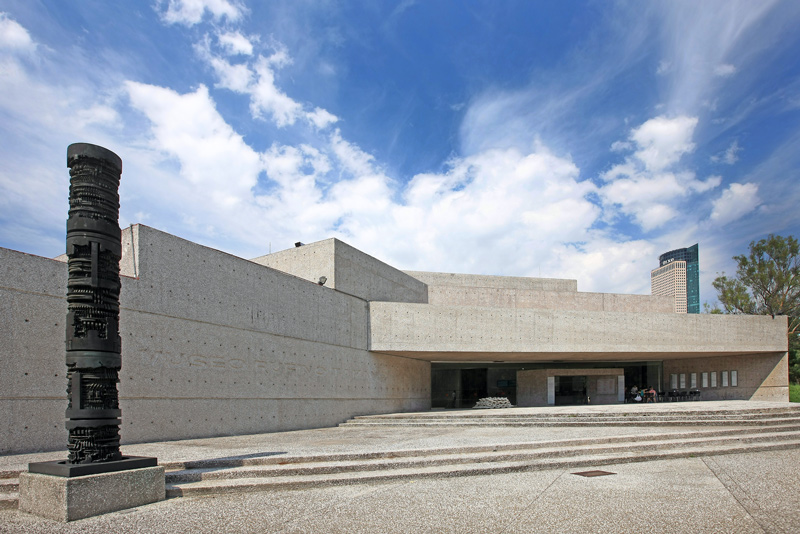
The building is worth lingering over before you even step inside. Designed by renowned architects Teodoro González de León and Abraham Zabludovsky, its stepped concrete forms echo pre-Hispanic architecture while feeling unmistakably modern. Sitting on the edge of Chapultepec Park, it blends into the landscape rather than competing with it.
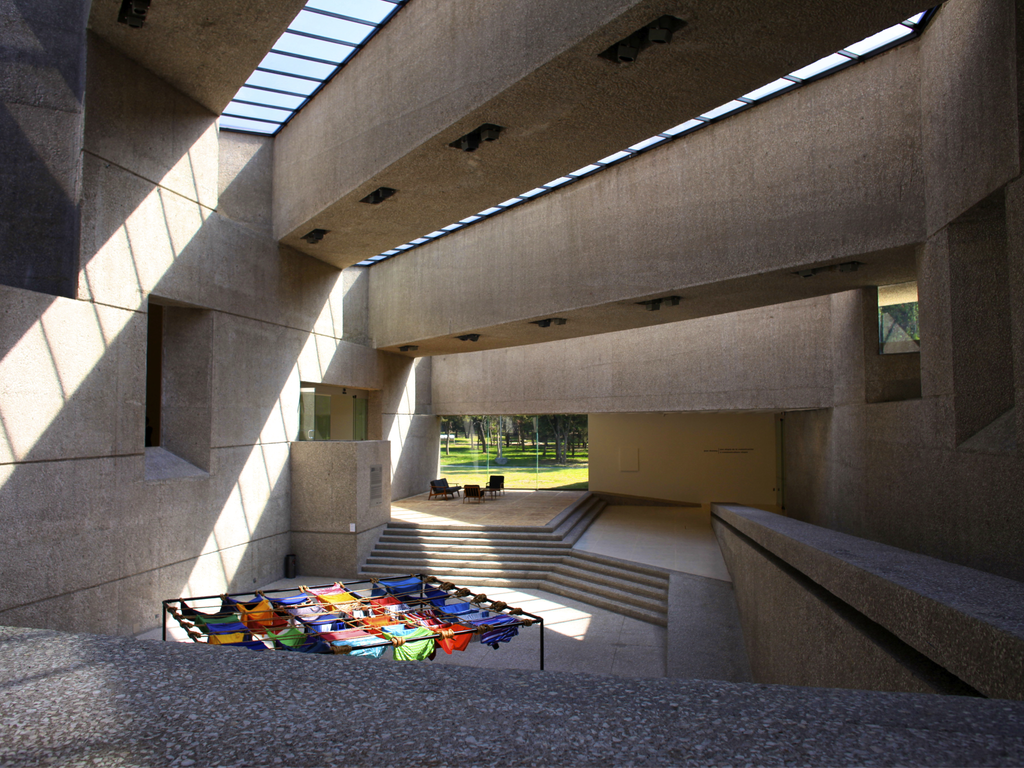
Inside, the collection moves far beyond one artistic style or period. Works by artists such as Pablo Picasso, Henry Moore, Isamu Noguchi, Helen Frankenthaler, Louise Nevelson, and Wifredo Lam sit alongside pieces by Mexican artists, creating conversations that stretch across countries and generations. Alongside its permanent collection, Museo Tamayo is also known for ambitious temporary exhibitions that regularly bring contemporary artists from across the world to Mexico City.
What makes this museum especially rewarding is its pace. Unlike Bellas Artes, where history arrives on a monumental scale, Tamayo invites slower looking. Installations, sculpture, painting, photography, and experimental contemporary works often share the same visit, making each gallery feel a little unexpected.
It is also a reminder that Mexico City’s art scene didn’t stop with Rivera, Kahlo, or the muralists. The city continues to be one of Latin America’s most important centres for contemporary art, and Museo Tamayo is one of the places where that conversation is constantly evolving.
If the first four museums help you understand where Mexico’s artistic story comes from, Museo Tamayo shows you where that story continues to grow.
If You Have More Time
Five museums barely scratch the surface of Mexico City’s art scene. If your itinerary gives you another afternoon, or you simply aren’t ready to stop, there are plenty of other places worth seeking out. Museo Nacional de Arte (MUNAL) offers a sweeping look at Mexican art from the colonial period into the 20th century, while Museo de Arte Moderno focuses on Mexican and international modern art. Museo Soumaya brings together an eclectic private collection spanning centuries and continents, and Museo del Estanquillo offers a very different view of Mexican culture through Carlos Monsiváis’s vast collection. For contemporary art, there’s Museo Universitario Arte Contemporáneo (MUAC), while Museo Casa Estudio Diego Rivera y Frida Kahlo gives you another chance to step into the world of the two artists, this time through the modernist homes and studios designed by Juan O’Gorman.
The city, seen differently
What stays with you after these museums isn’t one particular version of Mexico City. It’s how quickly that version can change.
A few rooms at the Museo Nacional de Antropología can take you centuries into the past. At Bellas Artes, history unfolds across enormous walls. Casa Azul brings you closer to the everyday world behind one of Mexico’s most recognisable artists, while Anahuacalli reveals the ancient objects that fascinated Rivera enough to build a museum around them. Then Tamayo shifts the conversation again, opening it to artists and ideas from far beyond Mexico.
Perhaps that’s the pleasure of visiting museums here: you don’t leave with one neat picture of the city. You leave with several, and they keep overlapping long after you’ve walked back outside.
Explore the current open calls and submit your work: apply.artstoheartsproject.com