
How Samantha Paradise Uses Recycled Materials to Create Art About Femininity & Power
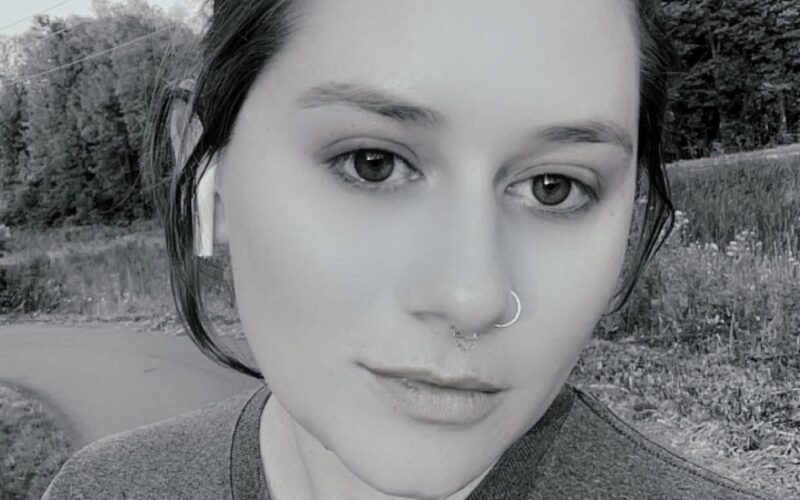
At Arts to Hearts Project, Issue 13 of our magazine was built around the theme “The Things We Hold Onto,” and the work it brought in moved us in a hundred different directions, some through memory, some through love, some through place.
Samantha Paradise was one of the artists we chose, and her answer was fierce and clear. What she holds onto is women’s power, their anger, their desire, and above all their hope.
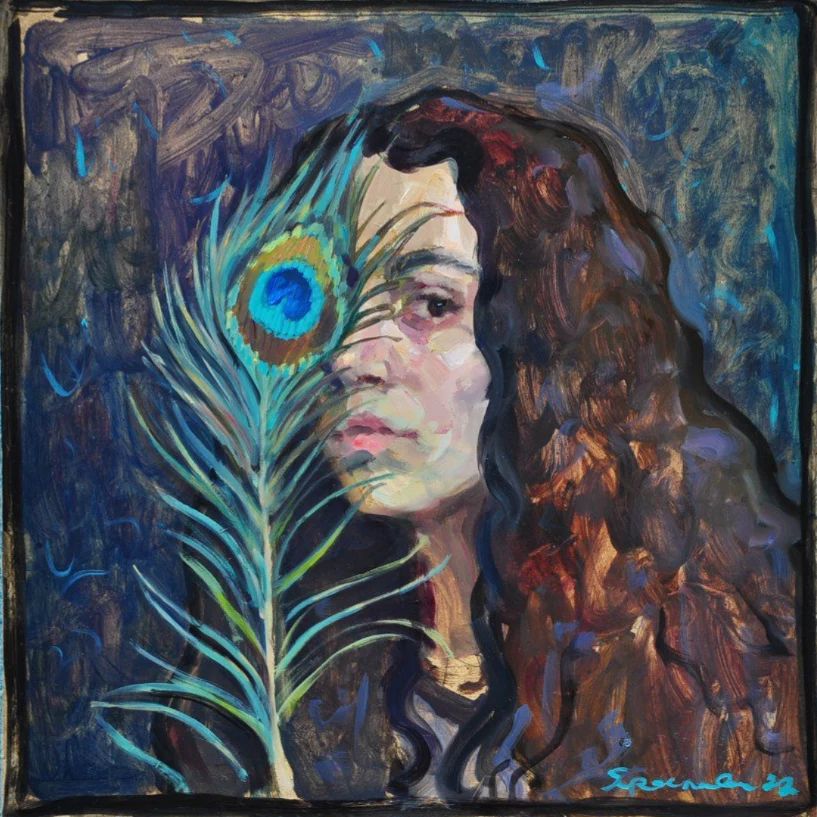
Samantha is a multidisciplinary American artist, a painter, embroiderer, and installation artist, whose work is unapologetically about women. For her, creativity and womanhood have always been inseparable. As a child, she assumed most artists were women, because women create not only art but life itself. That belief runs through everything she makes.
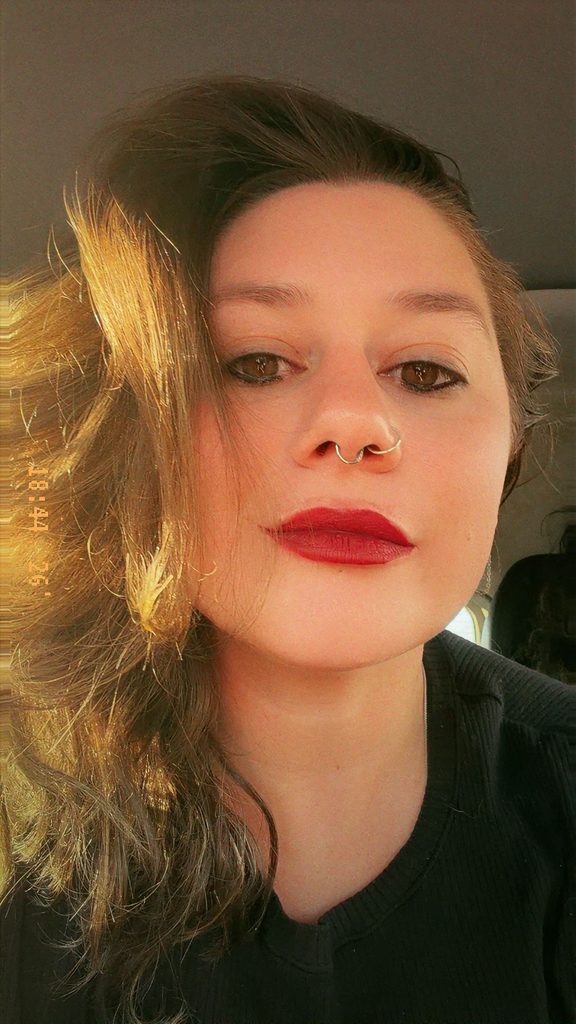
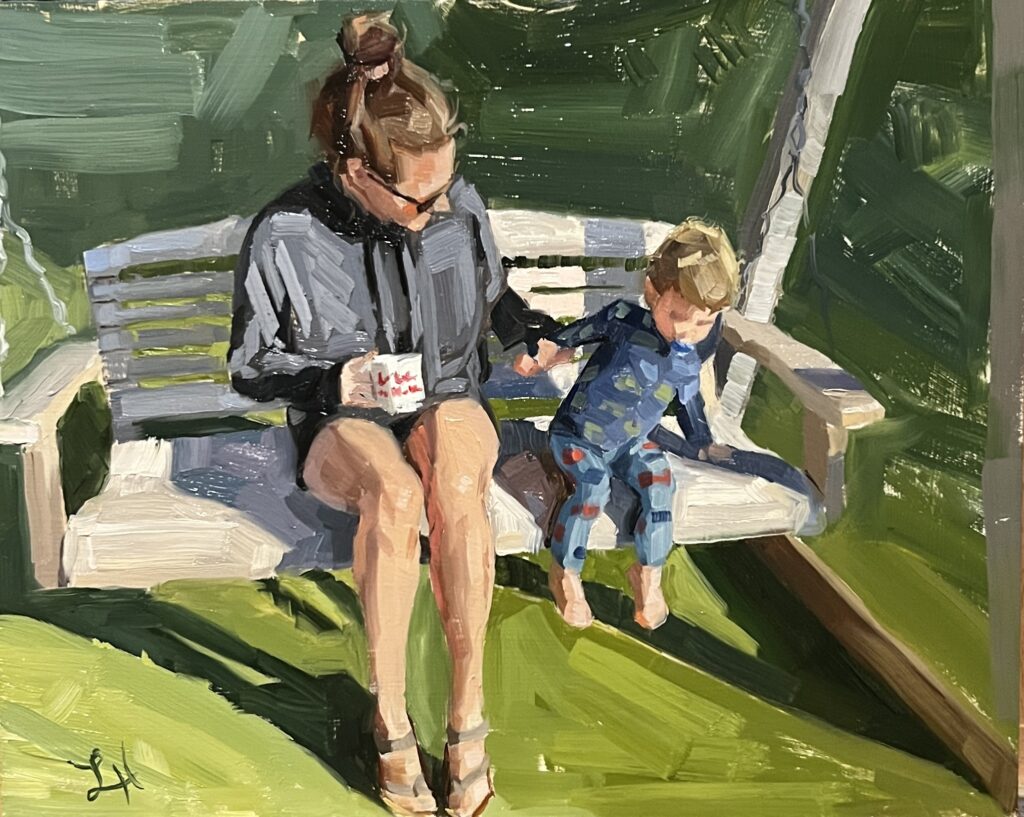
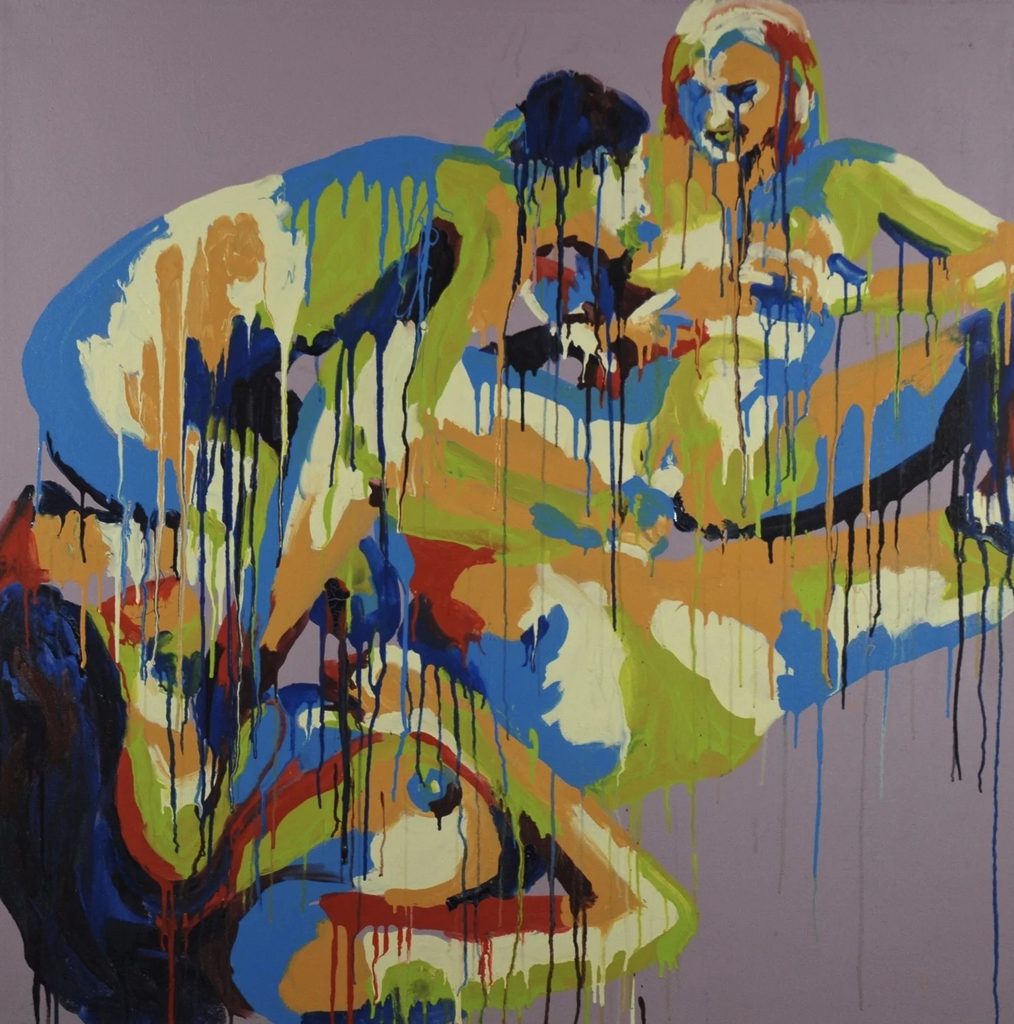
She paints the female body, female desire, and female rage openly, treating them not as things to hide, but as things to reclaim.Her materials carry as much meaning as her imagery. She works with recycled house paint, partly to limit her environmental impact, and partly because she loves the history held in it, the bold colours people once chose for their own homes, now living on in her work.
And then there is her embroidery, which she uses with real intention. Stitching, a craft long dismissed as “women’s work,” literally pushed through a painted surface, an art form long dominated by men, is, as she calls it, very poetic. The softness of the thread against the power of the image is where much of her meaning lives.
Her work is bold, and she knows it makes some people uncomfortable. She welcomes that discomfort, because it echoes the discomfort she felt being seen as an object from a young age. By painting desire openly, she hopes to normalise it, to soften the harmful ideas that surround women’s bodies and women’s wants, and to create a space where people can finally talk about these things honestly.
It is not always easy, and her work is not always met with respect, but to her, that only proves how necessary it is.
Above all, Samantha believes art is political, and that it can be a genuine force for good. Even as she watches women’s rights being challenged, she holds onto her optimism, convinced that women will keep persevering, and that art is one of the most powerful ways to keep the conversation going.
To change even one person’s perspective, she says, is revolutionary. And sometimes, simply making someone feel less alone is enough.
Now let’s hear from Samantha about why creativity and womanhood are inseparable, what it means to reclaim female desire, why she stitches softness into rage, and how art can be a radical act of hope.
Q1. Samantha, can you take us back to the beginning and share how your journey as an artist started?
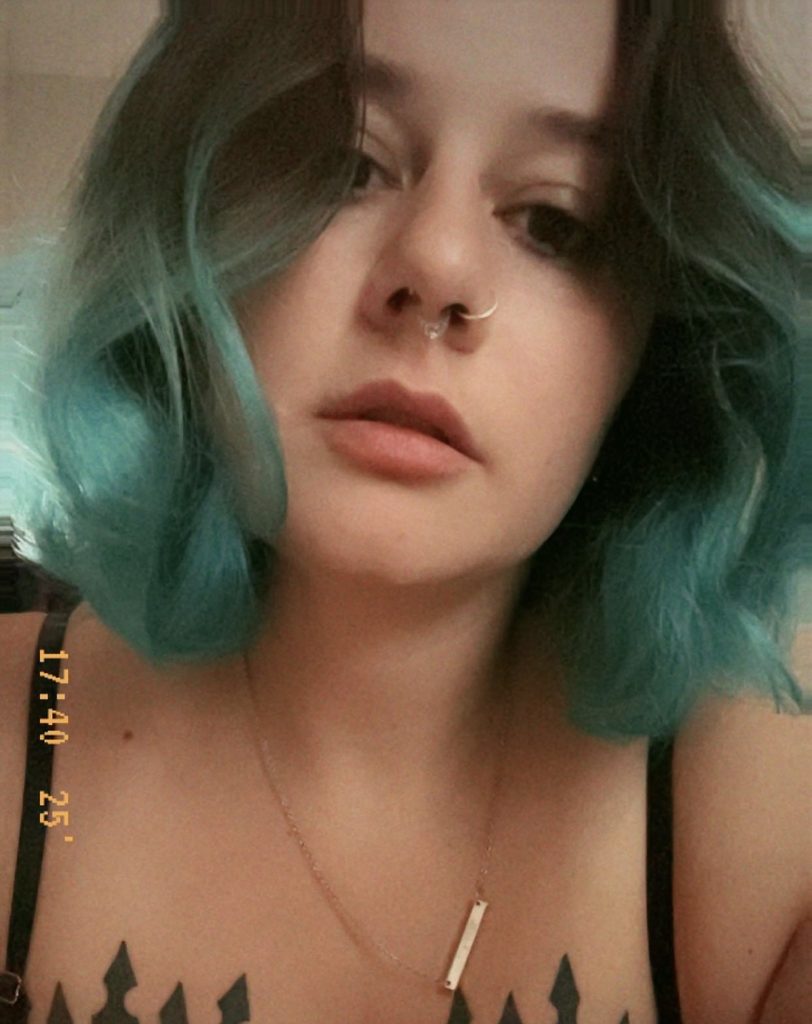
I can’t remember a time in my life I wasn’t creating. As a child I remember thinking that most artists were women, because women are so amazing at creating art and life. In my mind creativity is so ingrained in the experience of womanhood, whether that be creating opportunities or navigating a patriarchal society. The act of creation is so powerful and integral to life.
Q2. You describe your paintings as a physically visceral experience. How does applying paint shape what appears on the canvas?
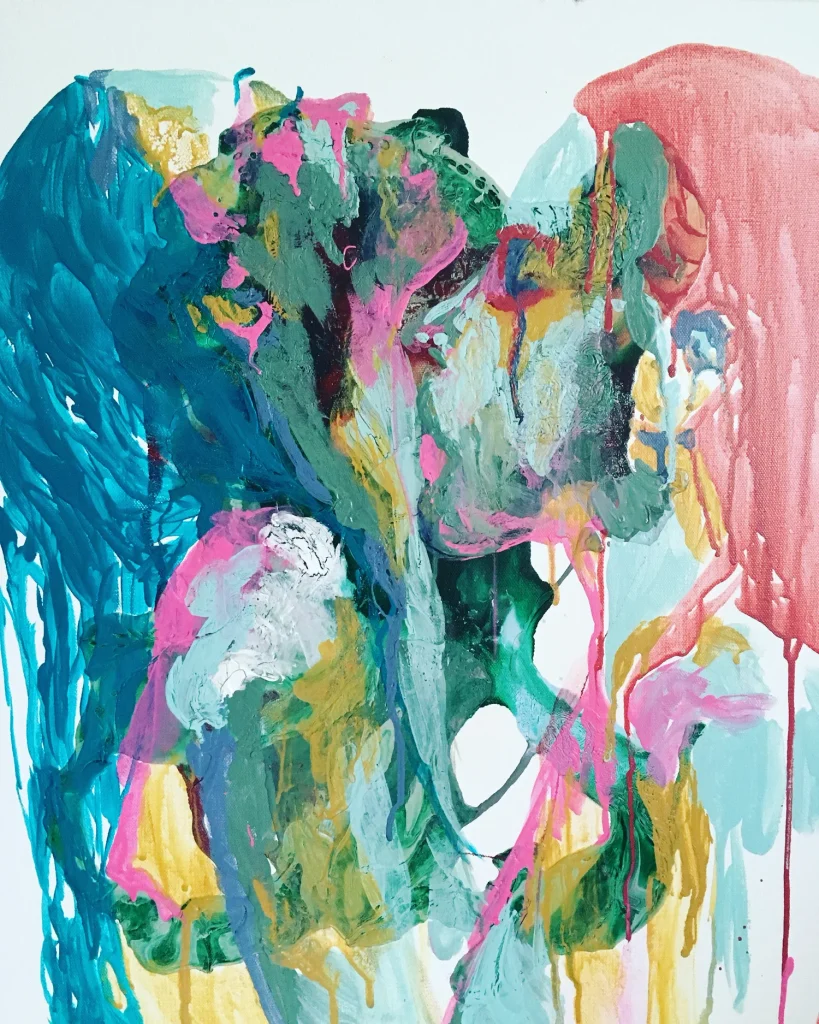
The physical process of applying paint to the canvas is an intimate act. I try not to overwork the surface, allowing the gessoed canvas to show through in places.
I do this purposefully, reflecting how women are often overlooked in society. This creates a balance between revealing as little of the subject as possible and allowing the viewer’s mind to fill in the gaps.
This use of negative space allows the viewer to become part of the art-making process, creating an individual experience for each person. That connection between the artist, the viewer, and the work is the most important part to me.
Q3. You work with acrylics, house paint, and embroidery. What does combining these materials allow you to express?
I use recycled house paint and do my best to limit the environmental impact of my work. Beyond that, I love the history the materials bring into my imagery. I like the idea of incorporating the bold colours people once chose for their homes.
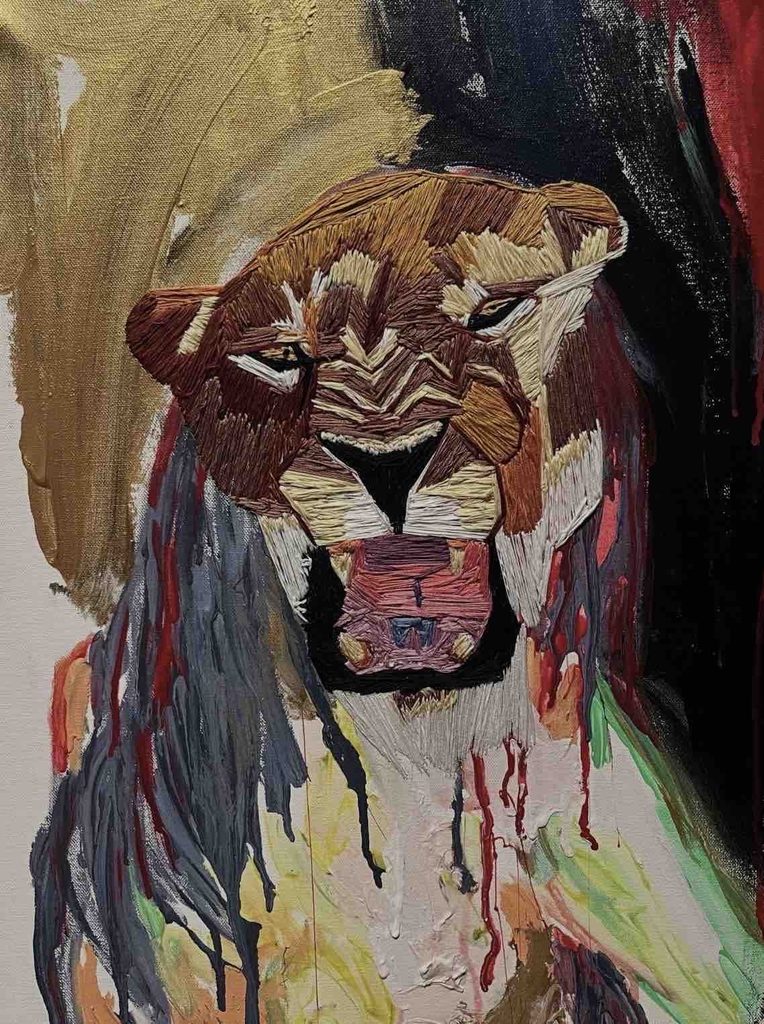
Embroidery is especially interesting because of the gender stereotypes associated with different art forms.
The act of embroidery, a traditionally woman-dominated “craft,” literally stabbing through a painting, a historically male-dominated art form, is very poetic.
Q4. What drew you to bringing embroidery into your painting practice?
The abrupt change in texture instantly draws the viewer in. Adding another layer of texture allows me to continue exploring femininity, how women are treated in society, and female rage. Embroidery also lets me add impactful information to the surface without overworking the canvas.
I have an entire series based on female predatory animals. The juxtaposition of the softness of the thread and the predatory nature of the animal works so well together.
Q5. Your paintings explore female sexuality openly. What does painting desire allow you to reclaim or question?
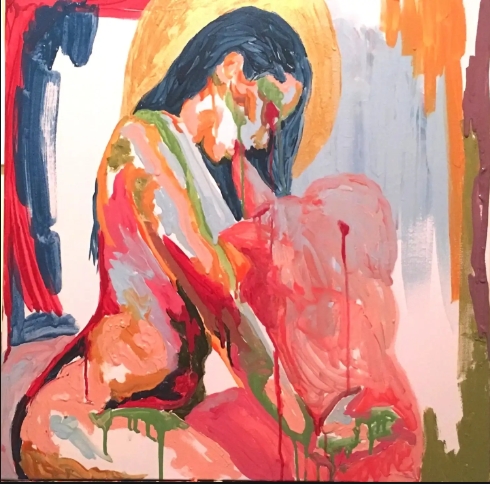
Creating stark images of female desire is incredibly empowering. I embrace the discomfort some viewers experience when looking at my work because it mirrors the discomfort I felt being viewed as a sexual object from a young age. I cannot say that I am always respected or treated well because of my work, but those responses only reinforce why I feel the work is important.
Opening up about sexuality helps normalize it, while my art creates a space where people can express themselves safely.
The conversations my work invites can help destigmatize harmful stereotypes surrounding sexuality.
Q6. Are audiences becoming more comfortable discussing female desire, or do artists still have to challenge expectations?
I see a change in the way certain creators online are talking about sexuality, and it gives me a lot of hope. Even though our rights are being stripped away, I try to remain optimistic that women will continue to persevere.
I believe art is an avenue for speaking to people, and we need these conversations more than ever.
Art is political and a radical act of revolution.
Q7. Has an exhibition, response, or opportunity made you feel your work was reaching the audience you hoped for?
Every opportunity to show my work is exciting, and I hope it speaks to everyone. However, some viewers take my art as an invitation to objectify me as the artist. Others take the work at face value, seeing it as salacious rather than as an opportunity to discuss women’s desires.That’s why I’m so compelled to do interviews. I find it especially exciting to explain my thought process.
Q8. What responsibility do artists have when addressing socially uncomfortable subjects?
I think artists are especially fortunate to have the opportunity to create work that examines the flaws in our society. Art is political and can be used as a force for good.
I truly believe that art can change the world, even if it is simply a way to make someone feel less alone. Changing even one perspective is revolutionary.
Q9. What advice would you give artists making deeply personal work while finding their place in the art world?
The beautiful thing about making personal work about the human experience is that you can probably find someone who has experienced something similar. The work finds a home in different ways.
Art can bring large groups of people together, creating a feeling of shared connection, while also inviting an intimate bond between the artist and an individual.
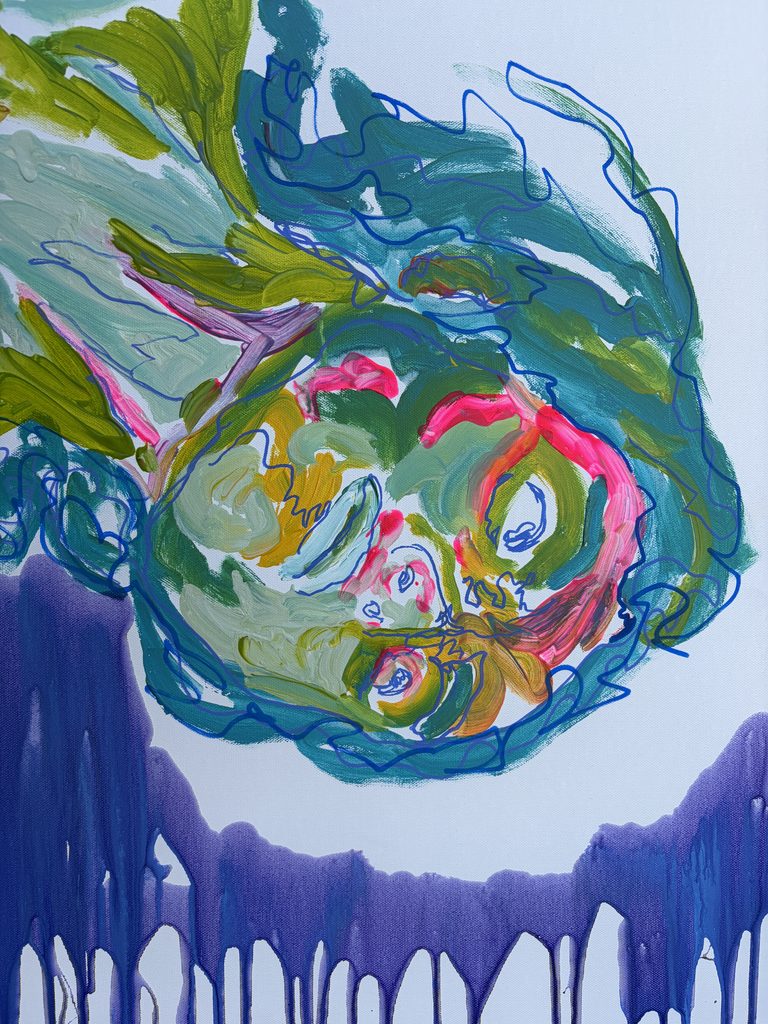
Talking with Samantha left us thinking about anger, desire, and all the parts of themselves women are so often told to keep hidden, and about how the art world has long done its share of that hiding too.
For centuries, the female body was one of art’s favourite subjects, but almost always painted by men, for men, posed and softened for someone else’s gaze. Artists like Samantha are quietly rewriting that. She takes the same subject and hands it back to women, painting desire and anger and the body on her own terms, as something to own rather than something to be looked at.
It is part of a wider, overdue shift happening across the art world right now, women telling their own stories instead of sitting still inside someone else’s, and refusing to make that story more comfortable than it really is.
There is something bracing, too, in how unafraid she is of discomfort. So much of today’s art is made to be liked, easy to scroll past, easy to sell, easy to agree with. Samantha’s work does the opposite. It is meant to stop you, unsettle you, and start a conversation you might not have chosen to have.
We think that is exactly what art is for, not only to decorate a room, but to push at the edges of what we are willing to talk about, and to make someone, somewhere, feel a little less alone.
For art lovers and collectors, that makes her work both bold and genuinely meaningful. These are layered, confronting pieces, paint and stitch and bare canvas, that carry a clear point of view and refuse to apologise for it. To live with her work is to keep that conversation in the room, and to support the growing space for women to speak openly, honestly, and entirely in their own voice.
Follow Samantha Paradise through the links below and see her work for yourself.
Our 101 Art Book: Texture Edition is open, and this one is all about surface, the rough, the soft, the layered, the tactile, everything that makes a piece ask to be touched. If you build, carve, weave, scratch, or work texture in ways nobody else would, and the feel of your work matters as much as the look, show us. Any medium, anywhere, any stage. What counts is a surface worth reaching for. Every featured artist started by submitting. This could be yours.