




How an Architecture Career & Years of Black-and-White Drawing Led NYT to Oil Painting
At Arts to Hearts project, our Best of the Art World editorial has always been about one thing: finding artists whose work deserves a bigger audience and giving them the space to tell their own story. Over this series we have spoken with painters, sculptors, illustrators and gallerists from all over the world, and every conversation has taught us something new.
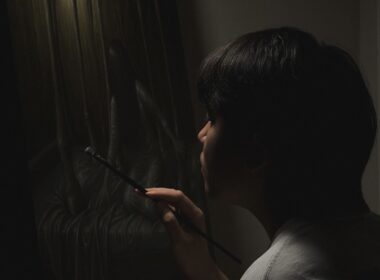
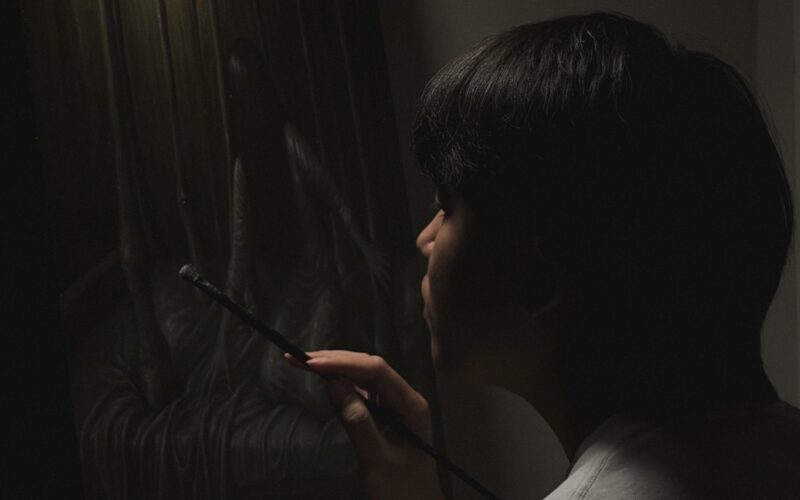
Today we are honoured to introduce Night, a painter from Thailand who works under the artist’s name NYT. NYT did not begin his working life in a studio. He trained as an architect and went straight into the profession after graduating. Those years were demanding, and somewhere between the deadlines and the exhaustion, painting became the place he went to breathe.
He had been drawing in black and white since before university, but it was during this period that he picked up oil paint for the first time. What started as a way to cope slowly became the work he wanted to do with his life.
Architecture never really left him, though. You can see it in how carefully he builds each composition, and in how much weight he gives to the rooms his figures live in. For NYT, a space is never just a backdrop. Put a person in the right room, in the right posture, and you can create a whole feeling without anything actually happening. That idea sits at the centre of his work.
Oil paint is now his main medium, and his process is a mix of the logical and the intuitive. He plans his compositions the way an architect would, thinking about structure, balance and how the eye will move through the space.
Then come the details that give each painting its mood: walls built up with cracks, peeling paint and worn textures that hint at what a character feels inside, and ordinary objects like chairs, doors and apples that almost anyone can relate to. He often uses a small green apple to quietly pull the viewer’s attention, though he is happy to swap it for something else if the painting calls for it.
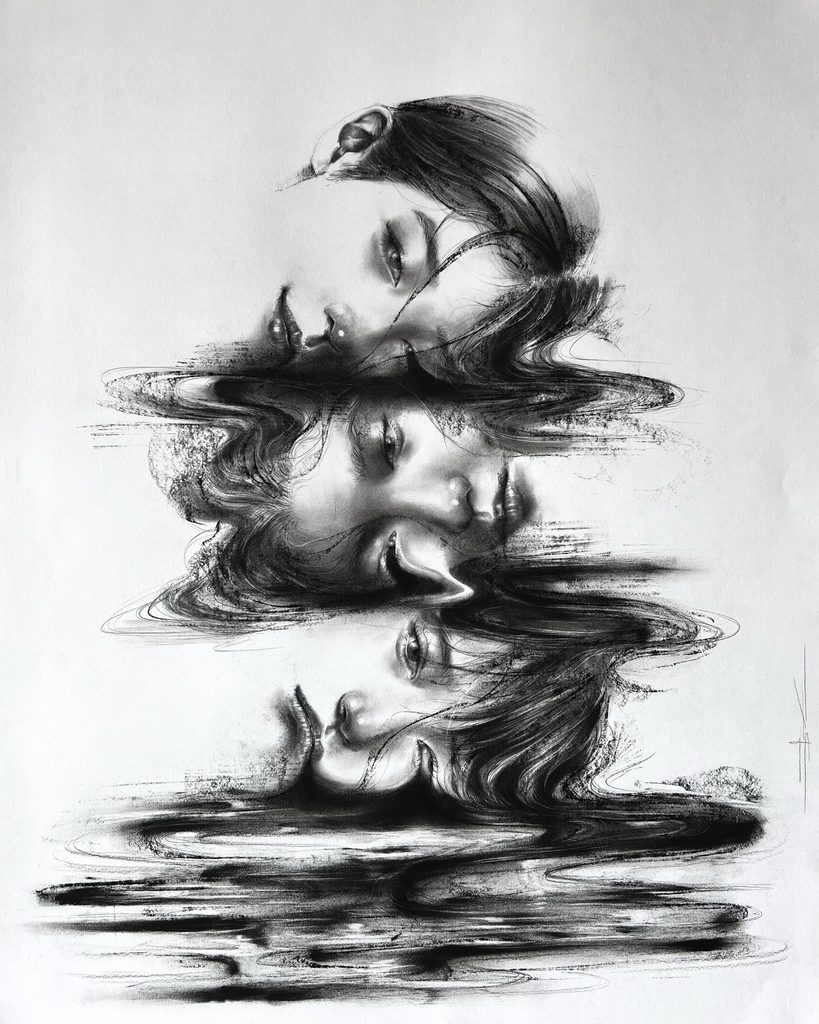
His paintings are full of solitary figures, often turned away from us or hidden behind their hair. His best-known character, Shy Girl, came from a question he kept asking himself after years of drawing portraits: if we can’t see someone’s face, can we still understand what they are feeling? He believes we can, and his paintings make a convincing case for it.
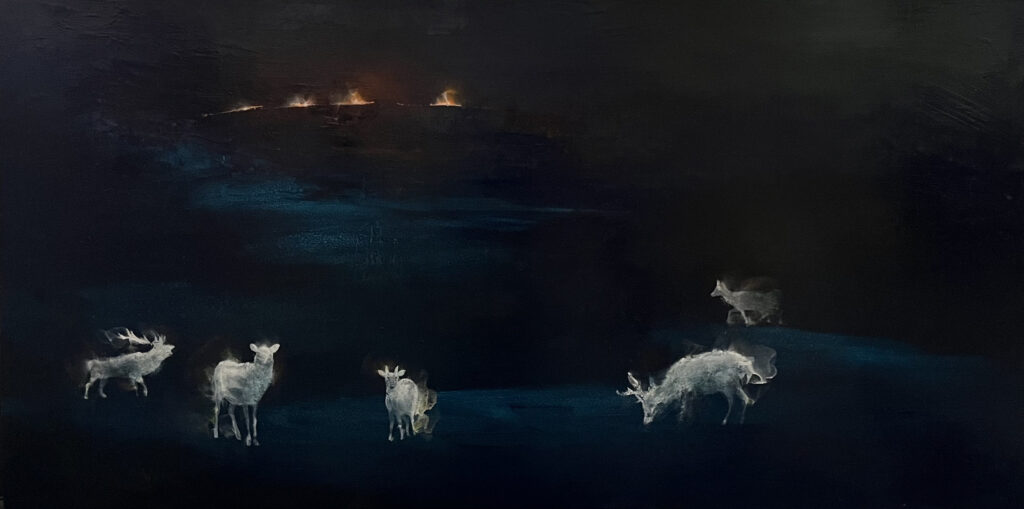
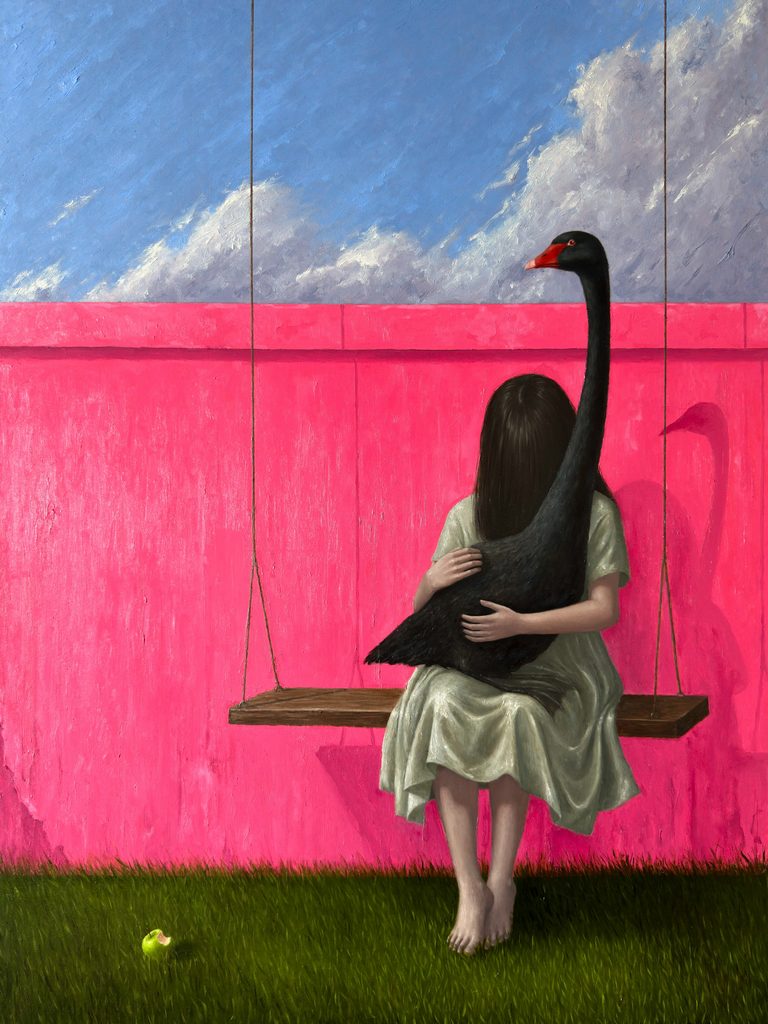
There is also a surprise in his colour. His early work was dark, and some viewers told him it felt frightening or even depressing. Instead of lightening the mood, he started planning bright reds, pinks and blues into his paintings right from the composition stage and letting them sit against the mood. The result is a painting that looks cheerful at first glance and feels a little uneasy the longer you stay with it.
For NYT, painting has always been more than a practice. It is how he made sense of some of the hardest moments of his life, and that honesty is what gives his work its weight. His paintings don’t ask for attention. They wait for you to notice what’s sitting under the surface.
Let’s get to know NYT through our conversation with him, where he talks about moving from architecture to painting, the stories he chooses to leave untold, and why he would rather let you find your own meaning in his work.
Q1. How would you introduce yourself and your journey as an artist to someone discovering your work for the first time?
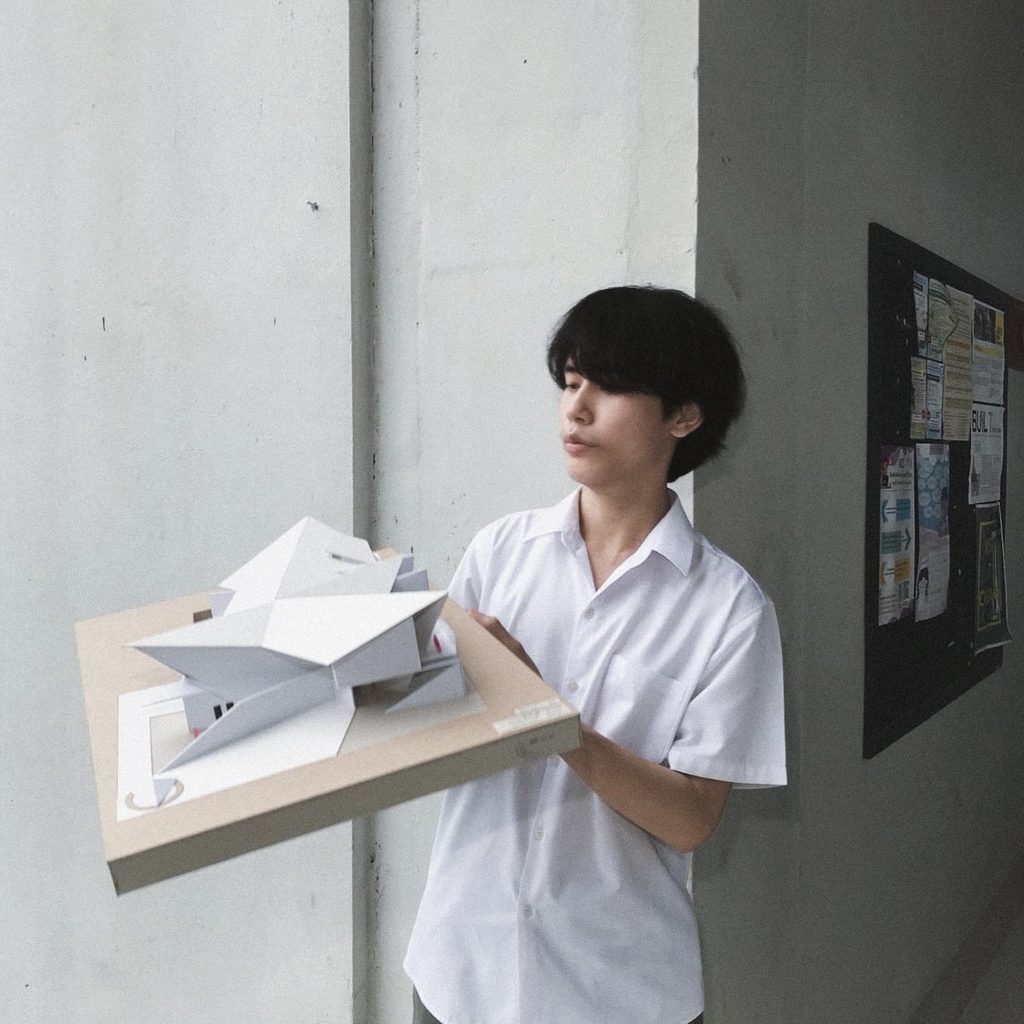
My name is Night, and I work under the artist name NYT. I’m an artist from Thailand with a background in architecture. After graduating, I started working as an architect. During that time, I went through different experiences and emotions, and art gradually became something that helped me find comfort and relief from the exhaustion of work.
It was also what brought me back to creating art more seriously. I had actually been making black-and-white drawings since before university, but it wasn’t until I started working as an architect that I began experimenting with oil painting. Although my path gradually shifted toward art, I still bring the logical thinking and sense of composition I learned from architecture into my work.
My paintings mostly explore human emotions through figures, spaces, and their surroundings. I like creating images that don’t reveal the whole story, leaving room for viewers to bring their own feelings and imagination into what they see.
Q2. You often place solitary figures in unusual interiors. What draws you to these quiet, psychologically charged scenes?
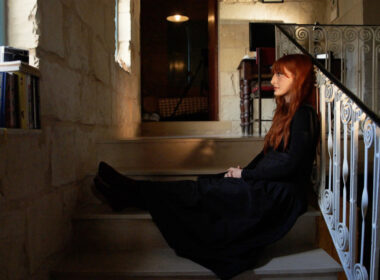
I’ve always been interested in the relationship between people and the spaces around them. To me, a space isn’t just a background for a figure. It also plays a part in shaping the atmosphere and emotions of a painting. Sometimes, simply placing a figure in a certain space, with a particular posture, can create a feeling without anything actually happening.
I like paintings that appear quiet and still, but somehow make you feel as though there’s a story hidden beneath the surface.
Q3. Your paintings often leave parts of the story unresolved. What interests you about allowing viewers to imagine their own interpretations?
I like it when a painting doesn’t tell you everything. I feel that leaving certain things unexplained gives viewers room to use their own imagination. Sometimes, not having all the answers is part of what makes an image interesting. I also like how different people can look at the same painting and imagine completely different stories. Even when I share the concept behind a piece, I don’t necessarily want viewers to interpret it exactly the way I do.
To me, one of the beautiful things about art is that everyone can find their own meaning in it.
Q4. You use bold colours against darker moods in your paintings. How do you approach colour when shaping their emotional atmosphere?
My earlier paintings often had darker colors and a more muted atmosphere. I received comments from people saying that my work felt frightening or even depressing. That made me want to experiment with brighter colors that deliberately contrast with the mood of the painting, right from the composition stage.
I like how an image can look colorful and vibrant while still creating a sense of discomfort or unease. To me, bright colors don’t always have to create happy feelings.
Q5. Everyday objects and architectural details appear throughout your work. How do you choose the elements that shape your visual storytelling?
I like bringing ordinary, everyday objects into my paintings, whether it’s a chair, a wall, or an apple. I feel these are things most people are familiar with and can immediately relate to through their own experiences. Even when these objects appear in unusual settings, that sense of familiarity can make the painting feel more approachable. From there, the story or meaning can be different for each viewer, depending on their own experiences.
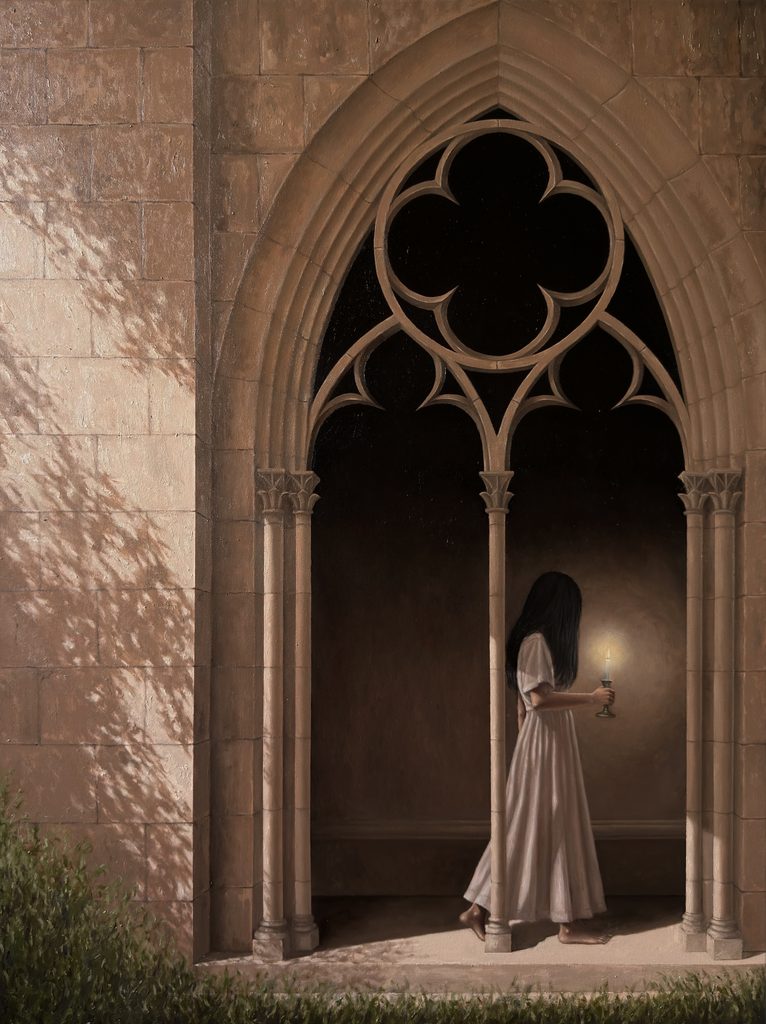
Q6. Many of your figures have their faces hidden. What does this allow you to communicate through posture and surroundings?
Before creating Shy Girl, I spent a long time drawing black-and-white portraits, where emotions were often communicated through facial expressions. Eventually, I started wondering what would happen if we couldn’t see a character’s face at all. Would we still be able to understand how they feel? That question became the starting point for Shy Girl, a female character whose face is hidden behind her hair.
I wanted viewers to sense her emotions through her posture, the space, and the things surrounding her instead. At first glance, she might seem like just a shy girl, but I feel there’s much more to her than what we can see.
Q7. Apples and textured walls recur in your paintings. What keeps drawing you back to these visual elements?
Probably apples and wall textures. I often use green apples as small visual elements that help draw the viewer’s attention, but they don’t always have to be green apples. It really depends on what works best for each painting. As for walls, I enjoy adding details like cracks, peeling paint, and other marks.
I feel these textures help create atmosphere and can sometimes reflect what a character is feeling inside, without having to show it through facial expressions.
Q8. What do you hope viewers discover when they spend more time looking at your paintings?
I hope that when someone spends a little more time with my paintings, they might begin to feel something they didn’t notice at first. But I don’t really expect everyone to discover anything specific. If a painting can make someone feel something, even if they can’t quite put it into words, that’s already meaningful to me.
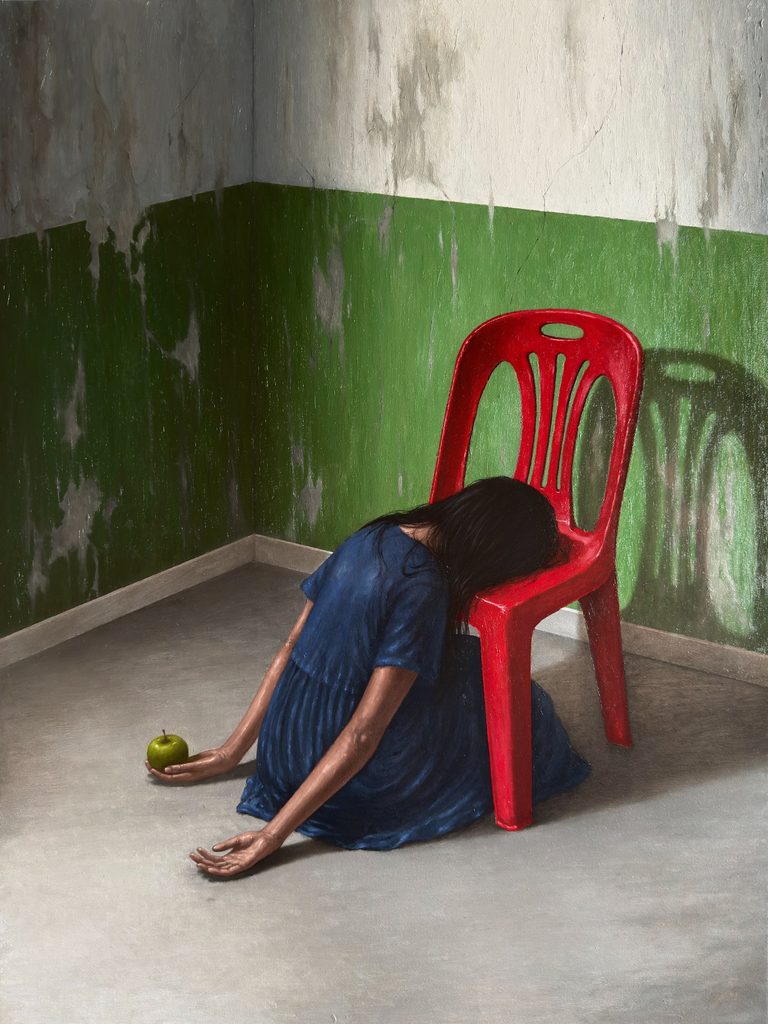
Q9. Is there a particular painting that holds special meaning in your journey and reflects your experiences as an artist?
I would say The Weight of Silence. This painting is about how people don’t always break down because of one major event. Sometimes, it’s the quiet exhaustion and emotions that slowly build up inside us, until they become an invisible weight.
Whenever I look back at this painting, it reminds me of some difficult times in my life. I’ve learned that growing into adulthood isn’t as easy as I once imagined, but art was one of the things that helped me get through those moments. The small apple in the character’s hand represents the hope that was still there, and that’s a feeling I’ll never forget.
Q10. Your understanding of success has evolved over time. How has your definition changed as your artistic practice has grown?
As I started taking art more seriously, my idea of success began to change. I feel that if one day I can make a living doing something I truly love, that would already be a kind of success for me. Having opportunities to exhibit my work, share my ideas, and let more people discover what I create also means a lot to me.
Along the way, meeting new people, exchanging perspectives, and growing through those experiences are all things I consider meaningful forms of success.
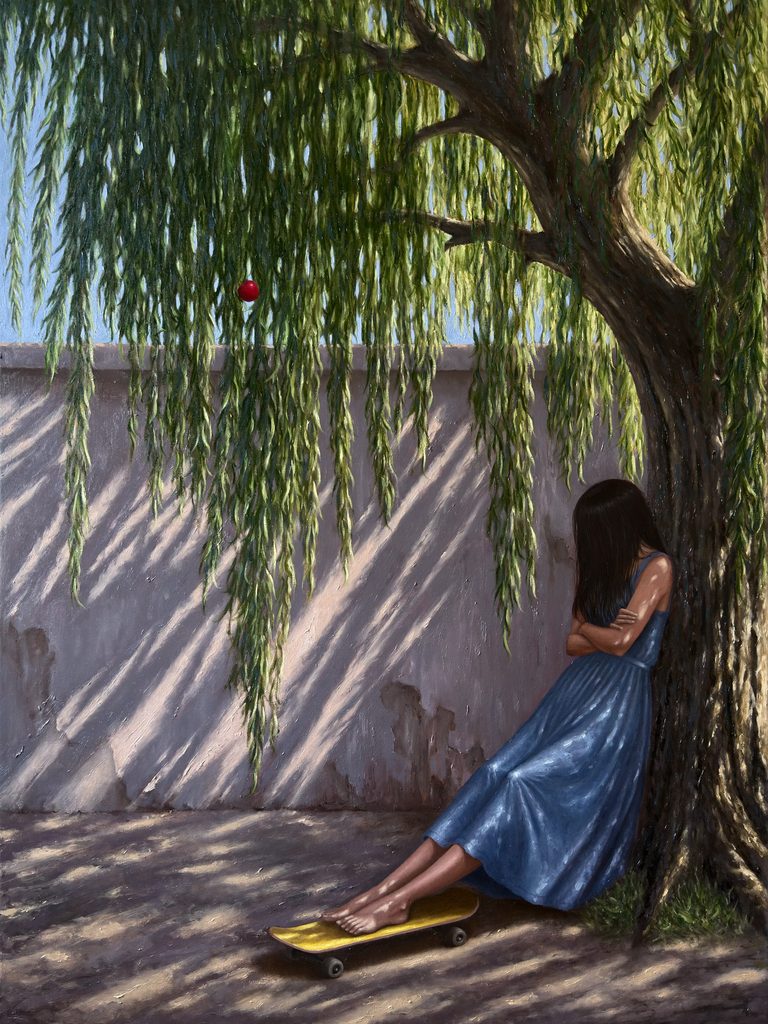
Concluding our conversation with NYT, we kept thinking about how many people carry a second life underneath their working one. NYT spent his days as an architect, and somewhere in the gaps, painting became the place where the tiredness of those days finally had somewhere to go. There is something kind in that idea. Most of us assume the thing we love has to wait until life makes room for it, and most of the time life never does. So the work gets made in the margins instead, in the evenings and the borrowed hours, by someone who simply cannot leave it alone.
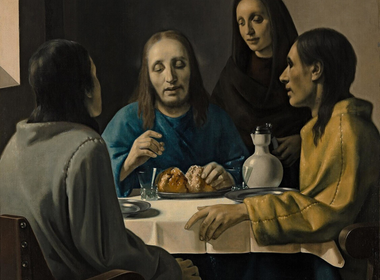
Painting that works through restraint also has a long and honourable history. From the lonely interiors of Edward Hopper to the hushed domestic scenes that have kept viewers coming back to figurative painting for generations, there is a tradition of artists who understood that a room can carry as much feeling as a face. NYT belongs to that conversation, and he brings something of his own into it: an architect’s feel for how a space holds a person, and colour bold enough to keep the quiet from ever turning heavy.
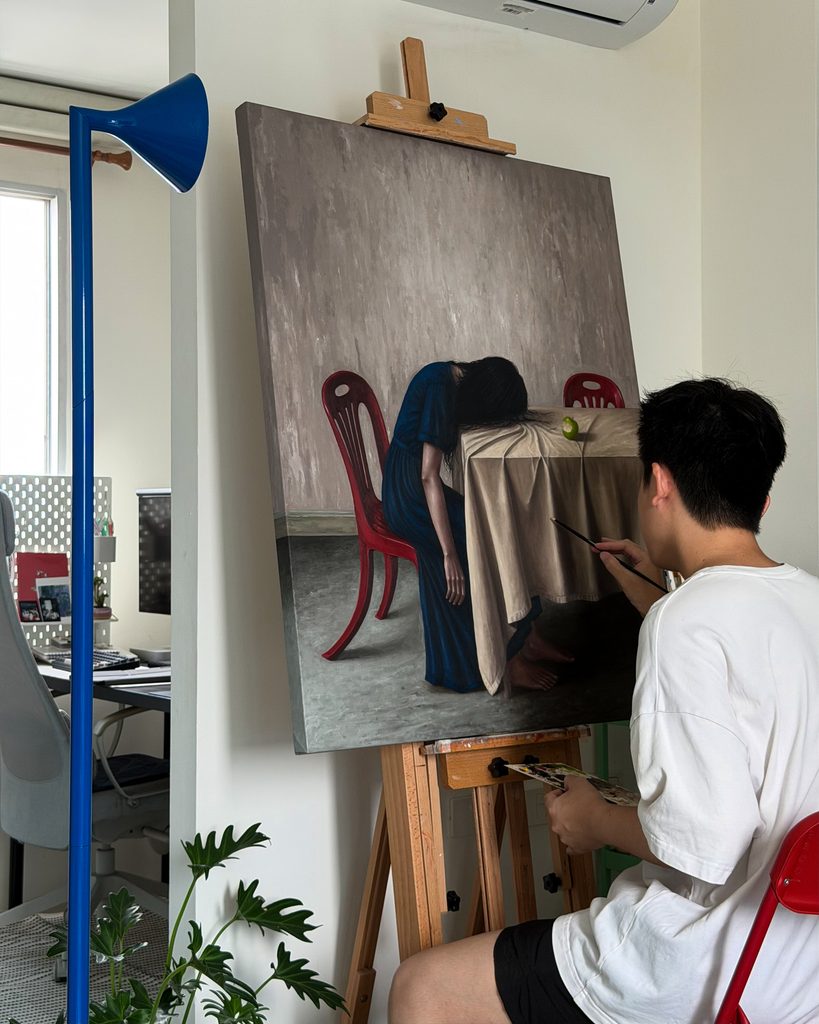
It also feels like the right kind of work for right now. So much of what we look at moves quickly, made to land in two seconds and be scrolled past by the third. A painting that lets you arrive slowly, that turns a figure away and trusts you to feel your own way into the room, is a generous thing to put into all that noise. It is a different sort of confidence from the loud kind, and it tends to be the kind people remember.
If you are reading this while building something around a full-time job, or wondering whether a quieter way of making can ever find its people, NYT’s path is a gentle reminder that your first career is not a detour. It is material. The logic you learned somewhere else will show up in your composition, in your patience, in the way you see a room. And work that comes out of a real, tired, ordinary life tends to reach the people who are living one too.
For collectors, that makes these paintings the kind you live with rather than simply hang. They are bold enough to hold a wall, still enough to keep working on you quietly, and open enough that everyone who walks into the room will read the scene a little differently. They are the sort of pieces that are better on the hundredth morning than on the first.
Follow NYT, through the links below and see for yourself how much a quiet painting can say.