
This artist uses fibre to create minimalist textile installations ┃ Zara Shahi

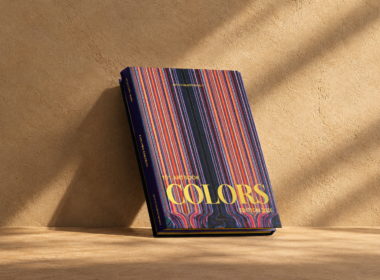
At Arts to Hearts Project, our Artist of the Year Book is our first edition and we filled it with artists who are making work that comes from real lived experience rather than abstract concepts.
Zara Shahi is one of our selected artists and honestly everything about her practice makes you want to slow down and pay closer attention to the things you normally rush past.
Zara is from Iran and is now based in Massachusetts. That journey between countries and cultures is not backstory for her. It is the active centre of everything she makes. How displacement and belonging and the feeling of living between two worlds shows up in her actual materials and her actual process is something she describes during the interview with a clarity that really moved us.

She weaves. That is where her practice starts. Thread by thread, slowly, patiently, in a rhythm that forces you to sit with whatever you are feeling instead of trying to resolve it quickly. There is something about how she describes that slowness and what it does to her thinking that we have not stopped considering since the conversation.
But she is not only a weaver. She also works with photography and video and installation. And the reason she needs all of those different speeds and approaches existing inside one practice is something we found genuinely compelling. It is not about being multidisciplinary for the sake of it. Each medium does something the others cannot and together they hold the full complexity of what she is working through.
Her choice of materials is deliberate in a way that surprised us. Silk, linen, transparent surfaces, things that tear and let light through and do not pretend to be indestructible. There is a reason she keeps choosing fragile things and that reason goes straight to the heart of what her work is about. But that is her story to tell.
Let’s get to know Zara through our conversation with her about what weaving teaches you about patience, why she trusts fragile materials to carry the heaviest things, and what the space between two countries taught her about making art.
Q1. Tell us a bit about yourself who you are, what you do, and some of the experiences that have shaped your journey and creative perspective.
I am Zara Shahi, an interdisciplinary artist from Iran, currently based in Massachusetts. My practice is rooted in fiber and weaving, but it often expands into installation, and photography, and video art. I am drawn to materials that feel fragile yet resilient, such as silk, linen, and transparent surfaces.
My journey as an artist has been shaped by my background in textile design, my experience of migration, and the process of building a life between cultures. Moving from Iran to the United States changed the way I think about belonging, distance, and what we carry with us, both physically and emotionally.
Through my work, I try to hold those in-between spaces: what is remembered, what is lost, and what continues to live within us. Art has become a way for me to connect personal memory with collective history, and to transform delicate materials into forms of strength, presence, and reflection.

Q2. Your work often moves between different mediums. How do you decide which medium a particular idea belongs in?
For me, the medium often reveals itself through the feeling of the idea. I usually begin with an emotion, a memory, or a question, and then I listen to what kind of material can carry it best. Some ideas need the slowness and intimacy of weaving, because thread allows me to think about connection, tension, repair, and time.
Other ideas ask for light, shadow, image, or installation, especially when I want the work to feel more immersive or to hold a sense of absence and presence. I do not see my materials as separate from the meaning of the work.
Each one brings its own language. A transparent thread, a suspended form, or a projected image can say something different, even when they come from the same emotional place. I try to let the concept guide the process, while also allowing the material to surprise me and change the direction of the work.
Q3. Do you find that slow material processes (like weaving) slow down your thinking in different ways than photography or digital media does?
Yes, very much. Slow material processes like weaving change the pace of my thoughts. Weaving asks for patience, repetition, and attention to small movements, and through that rhythm I often begin to understand the work differently. It gives me time to sit with a memory or feeling instead of trying to resolve it too quickly.
In that slowness, ideas can unfold gradually, almost like they are being built thread by thread. Photography and digital media move differently for me. They can capture something immediate: a light, a shadow, a moment, or a feeling that might disappear quickly. I am interested in the tension between these two ways of working.
Weaving allows me to process time slowly, while photography and video help me hold onto fleeting moments. Together, they create a balance between what is patiently made and what is briefly seen.
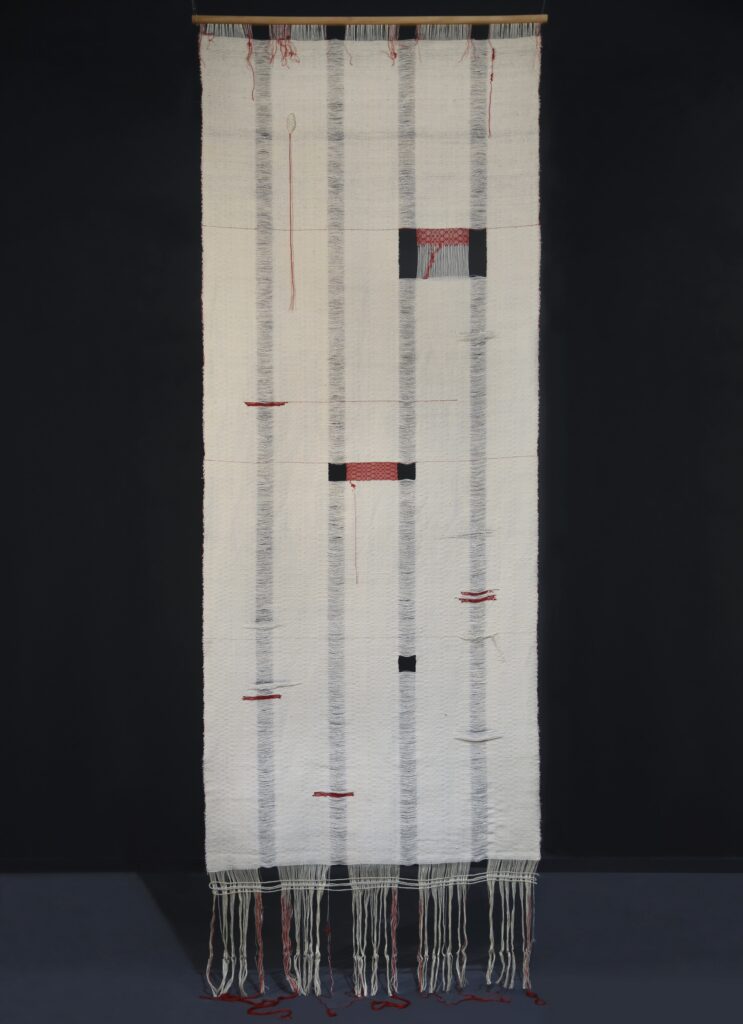
Q4. Works like Unspoken and your handwoven pieces are rooted in memory how does memory shape your making?
Memory is one of the main threads that moves through my work. I see it not as something fixed, but as something layered, fragile, and constantly changing. It can live in the body, in materials, in places, and even in silence. In works like *Unspoken* and my handwoven fabric pieces, memory becomes something that can be touched, stretched, hidden, or revealed through the process of making.
For me, materials often hold traces of what cannot always be said directly. A thread can become a line of connection, a woven surface can hold absence and presence at the same time, and transparency can suggest the way memories appear and disappear.
I am interested in how personal memories connect to larger histories, especially through displacement, migration, and cultural inheritance. In that way, my work becomes a space where memory is not only remembered, but also reconstructed through material.
Q5. Your work often explores memory and emotion, how do personal and collective memories come together in your practice?
I see my practice as a space where personal memory and collective memory meet. Many of my works begin from intimate feelings, such as longing, distance, silence, or the experience of being between places. But as the work develops, those personal emotions often open into larger histories connected to migration, cultural memory, and the landscapes that shape us. Landscapes appear in my work as both real and emotional places.
They hold movement, separation, return, and connection. I am interested in how an interior feeling can become a material form, and how something deeply personal can still speak to shared experiences. Through transparency, light, and shadow, I try to create spaces where memory feels alive, layered, and connected to both the individual body and a larger collective history.
Q6. When someone sees your work, is it more important to you that they feel something, or that they read something specific?
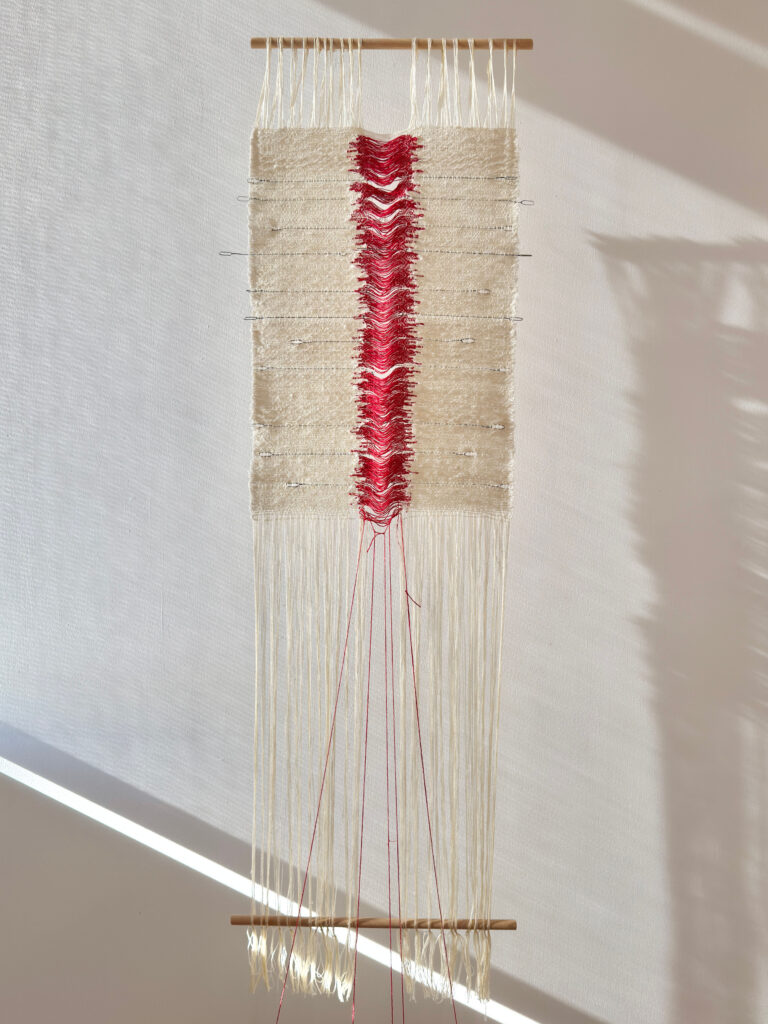
It is more important to me that they feel something first. I do not want the work to have only one fixed reading, because emotions are not simple or singular experiences. I ask viewers to enter the work through their own feelings, even if they do not know the full story behind it. I want the work to create a quiet space where people can pause, feel, remember, and maybe connect the piece to something from their own life.
Q7. What’s one challenge your practice has demanded that you weren’t expecting and how did it change you as a maker?
One challenge I did not expect was how much my practice would ask me to accept uncertainty. Working with delicate materials, often means that I cannot fully control the outcome. The material shifts, resists, tangles, or breaks in ways I could not completely plan. At first, that uncertainty felt frustrating, but over time it changed the way I make. It taught me to slow down, listen to the material, and see fragility as part of the work rather than a problem to fix. As a maker, I have become more patient and more open to the process.

Q8. Looking back, what has changed most, your work, your confidence, or the questions you explore?
What has evolved most is my trust in simplicity. In my earlier work, I sometimes felt that a piece needed to look more complex in order to feel complete or powerful. Over time, I have learned that simplicity can hold a lot of strength, especially when the material, form, and feeling are clear.
Now I am more comfortable allowing quietness, openness, and empty space to be part of the work. I no longer see simplicity as a lack of something, but as a way to make the emotion more direct. This has changed my visual language, but also my confidence as a maker. I have learned to trust that a delicate material or a simple gesture can carry meaning without needing to be over-explained or overworked.
Q9. What advice would you give artists who are still discovering why they make art, not just what they want to create?
I would tell them to pay attention to what keeps returning in their work, even before they fully understand it. Sometimes the reason we make art is already there in the materials we choose and repeat, the questions we avoid, or the feelings we keep trying to give form to. It also took time for me to understand why I make art. At first, I was more focused on what I was making or how the work looked,
but slowly I began to recognize the deeper patterns in my practice. I think emerging artists should give themselves time to notice those patterns instead of rushing to define a style or a clear statement. The “why” often appears slowly through making, failing, repeating, and realizing that certain subjects continue to ask for your attention. I would encourage them to trust that process and to be honest about what truly moves them, not only what looks impressive or successful from the outside.

As our conversation with Zara came to a close, we kept thinking about something that matters a lot in the art world right now. What happens when an artist refuses to speed up.
Because the contemporary art world moves fast. Galleries want new work constantly. Social media rewards daily posting. Collectors want momentum. And inside all of that pressure there are artists like Zara who are weaving one thread at a time and taking months to finish a single piece and refusing to apologise for it. That refusal is not stubbornness. It is integrity. And the work is better because of it in ways that anyone standing in front of the piece can feel immediately.
We also found ourselves thinking about fiber art and where it sits in the contemporary art conversation. For a long time textile and weaving were treated as craft rather than fine art. That hierarchy is finally breaking down and artists like Zara are part of why. Because when you stand in front of one of her installations and feel the light moving through those transparent surfaces and understand what the materials are holding inside them, calling it craft instead of art stops making any sense.
The depth is there. The conceptual weight is there. The emotional impact is there. The medium is different but the ambition behind it is operating at the same level as any painting or sculpture in any major collection.
And Zara’s decision to work across fiber, photography, video, and installation rather than picking one lane is something we respect. Each medium in her practice exists because it does something the others cannot. Taking any of them away for the sake of brand consistency would make the work weaker not stronger.
For anyone looking to collect Zara’s work, fiber and textile-based art is having a genuine moment in contemporary art right now and the artists who have been committed to it for years rather than arriving because it became trendy are the ones whose work carries real depth. Zara’s handwoven surfaces interact with light and environment in ways that make them genuinely site-responsive. They change throughout the day. And because every piece is built through hours of slow deliberate handwork, the craftsmanship alone sets them apart. These are pieces that belong in collections that value material intelligence, emotional depth, and artistic integrity that cannot be rushed.
Follow Zara Shahi through the links below and spend time with an artist who turned the space between two worlds into a home.