
This Artist Blends Oil Pastels With Her Fingertips to Create Soft, Glowing Worlds ┃Yoriko Kuroda
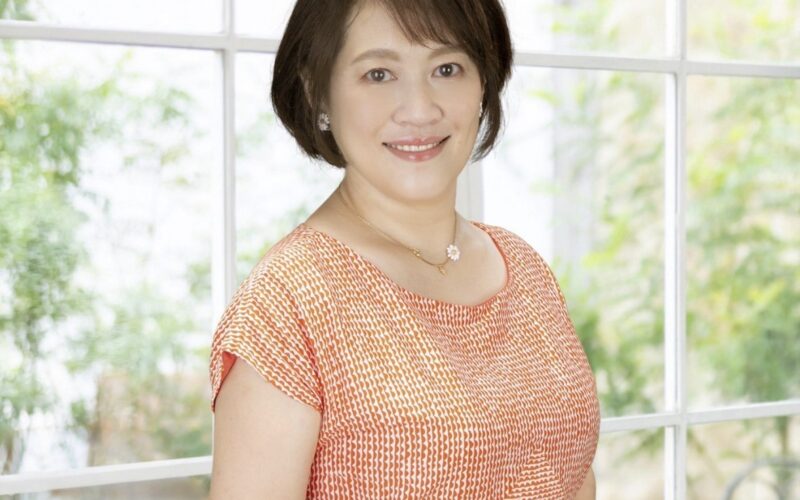
At Arts to Hearts Project, every issue of our magazine begins with a single idea, and for Issue 13, that idea was “The Things We Hold Onto.” We wanted to explore everything people carry with them through life. The memories, the people, the beliefs, and the small hopes we refuse to let go of, even when everything else changes. Ask a hundred artists what they hold onto, and you will hear a hundred different answers. But every so often, an artist does not just answer the question. She has lived it. That is what stayed with us about Yoriko Kuroda.
Yoriko is a Japanese artist who has held onto one thing her whole life: the need to create. Since childhood, she says, she could not live without drawing. It was as natural to her as breathing. But life took her through years when she was not able, or even allowed, to paint.
The desire never left her. It stayed quietly inside, gathering memories, emotions, and questions, waiting. Now that she is painting again, she describes it almost like releasing everything that had been held in for so long. There is an urgency to her work, a sense of making up for lost time, and of choosing hope.
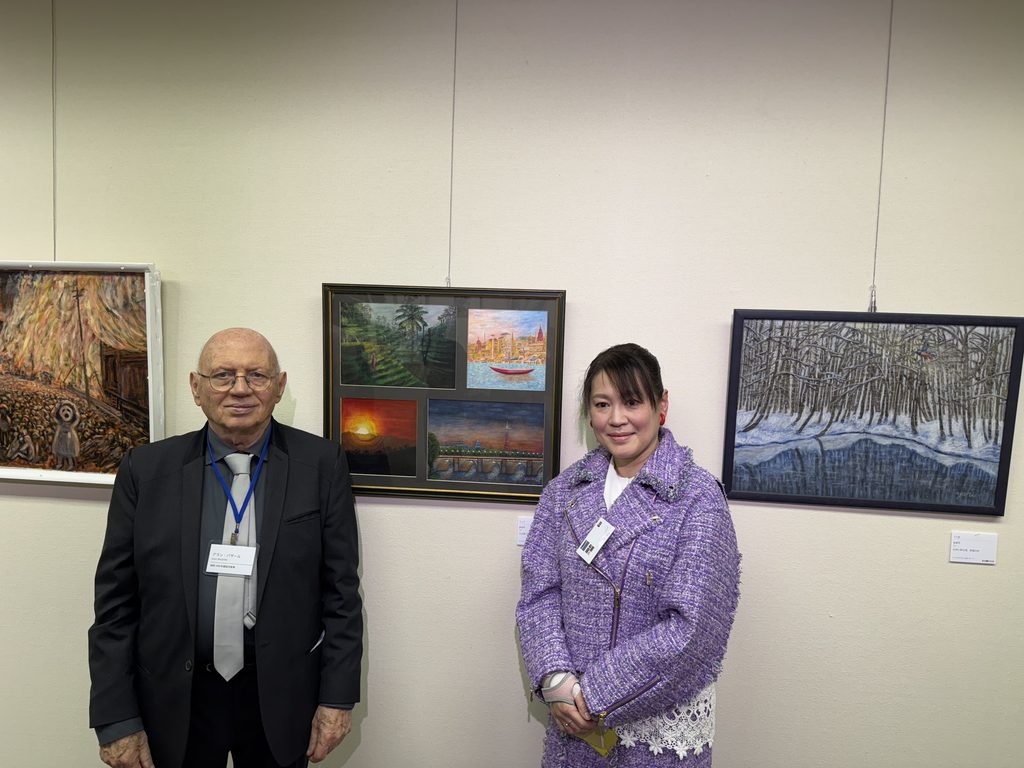
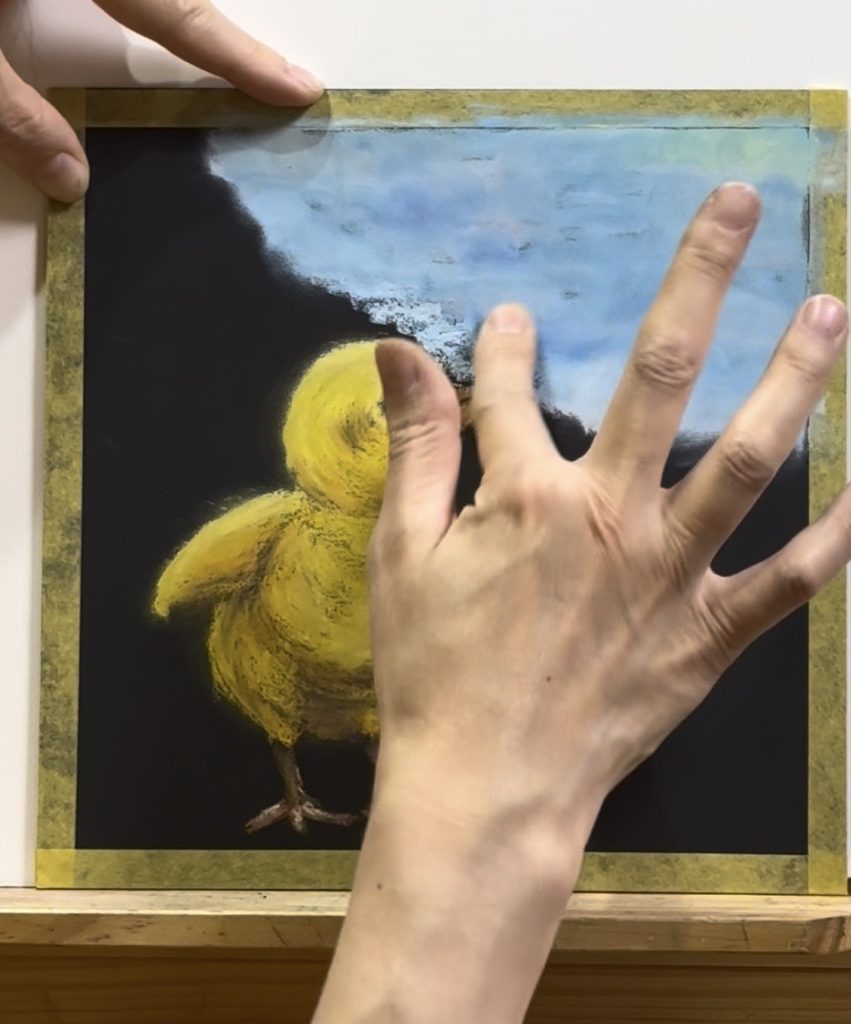
Her medium is unusual and quietly perfect for who she is. She works with oil pastels on blackboards, drawing and blending the colours directly with her fingertips. She fell in love with the way bright colour looks the moment it touches that black surface, the way light seems to rise up out of the darkness.
The pastel softens with the warmth of her hands, so in a way her own body becomes part of the painting. There is very little distance between her hand, her feelings, and the surface, and you can sense that warmth in the finished work.
That contrast, light emerging from darkness, is really the heart of everything she makes. Her paintings are quiet and contemplative, built up slowly with soft, glowing transitions of colour. Even when she paints sorrow, loneliness, or loss, she always leaves a trace of light somewhere. Not to erase the darkness, but to say that hope, beauty, and love can still exist within it.
She wants her work to be a quiet space where time slows down, where a viewer can step away from the noise of the world and meet a memory or feeling of their own.
What she holds onto most, and what she hopes to pass on to others, is a wish for peace. Music runs all through her work; she studied piano for many years, and you can feel its rhythm and silence in her images. Nature is everywhere too, birds, flowers, light falling through trees, origami cranes carrying prayers across the sea.
She is a person of deep faith, but the thing she most wants to express reaches beyond any one religion: simply love, and peace, and the belief that even the fiercest, most divided things can be gently softened.
As she has grown older, she has come to find beauty in fragile, fleeting things, a flower that blooms only briefly, an old place full of memory, a moment that will never come again. She is less interested now in capturing what is loud or strong, and more interested in the quiet passage of time and the unseen feelings that stay behind. Resilience, for her, is not about being strong or overcoming every darkness. It is about continuing to look for the small light that lives inside it.
Now let’s hear from Yoriko about the small flame she refused to let go of, why she paints light out of darkness, what peace really means to her, and the quiet kind of hope that only comes with time.
Q1. Yoriko, could you share a little about your background and what first inspired you to become an artist?
.
Since childhood, I have never been able to live without drawing. Creating images was something completely natural to me, almost like breathing.
Later, however, life took me through many different circumstances, and there were years when I was not able—or allowed—to paint. During those years, the desire to create never disappeared. It remained quietly within me, accumulating memories, emotions, questions, and an ever-growing passion for expression. Now that I am able to paint again, I sometimes feel as though I am releasing all the creative energy and passion that had been held inside me throughout those years. Perhaps that is why I feel such a strong urgency to create.
There are so many things I want to paint, and so many stories and emotions that I still want to give form to. My inspiration comes from everything that has shaped my life—nature, travel, music, literature, cinema, faith, and personal experience. I have studied piano for many years, and music has deeply influenced the way I understand rhythm, harmony, silence, and emotion.
These elements often find their way into my paintings as well. For me, painting has become another language: a way to transform what I have seen, felt, endured, and loved into something visible. Through my work, I hope that these experiences can become not only my own story, but something that may also touch another person’s heart.
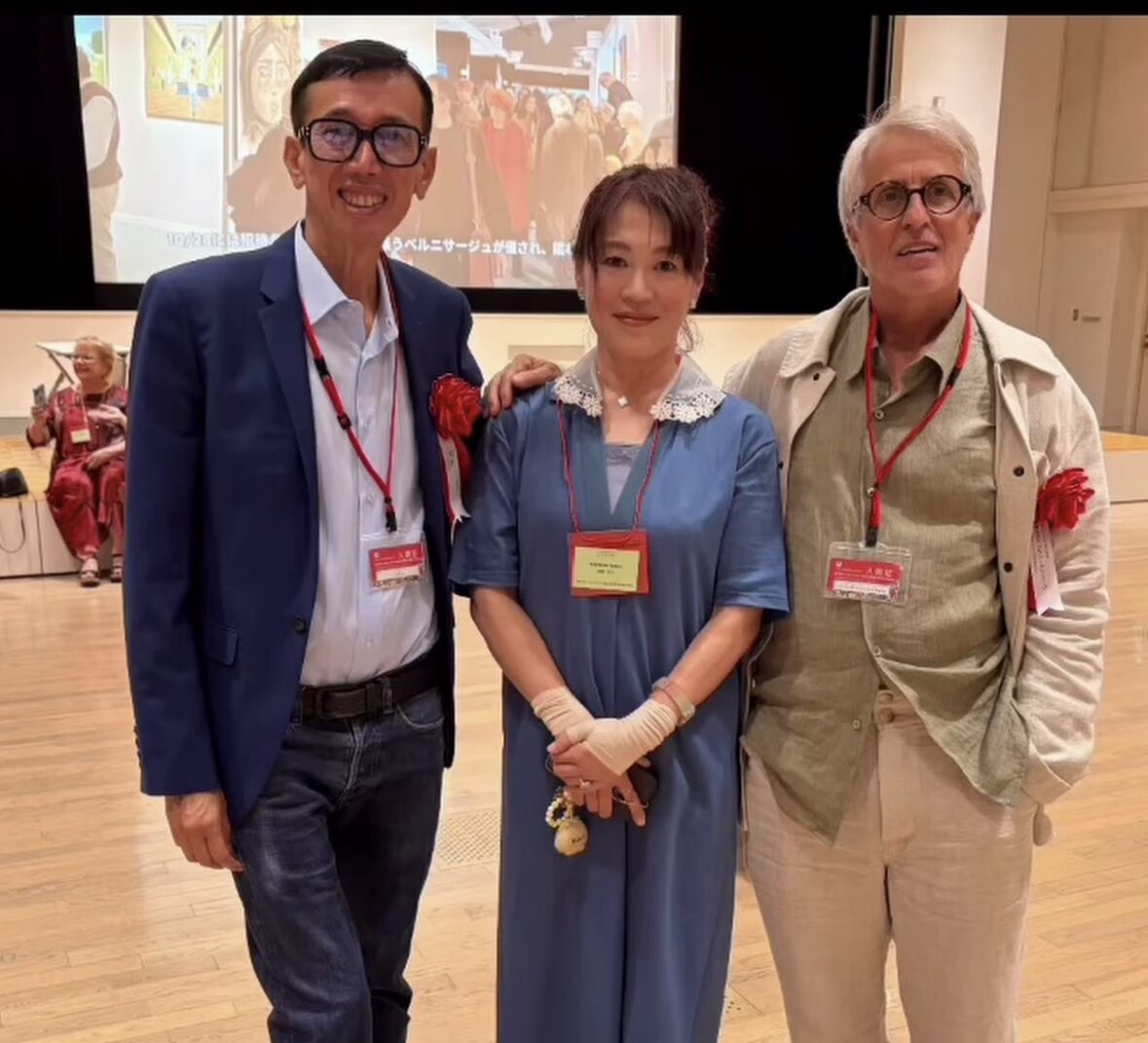
Q2. You’ve shared that you were discouraged from pursuing art, yet you continued creating. What gave you the courage to keep going despite that?
I am not sure that it was courage at first. For me, creating has always been something more fundamental.
Art is not simply something I enjoy doing; it is part of how I understand myself and the world around me.
There were years when I had to put art aside because of the circumstances of my life, but the desire to create never truly disappeared. It stayed somewhere inside me, even when I could not give it a visible form. When I finally began creating again, I realized how much of myself had been waiting there. Painting gave me a way to reclaim that part of who I am and to transform difficult experiences into something meaningful.
So perhaps what kept me going was not courage in the conventional sense, but the realization that I could not completely abandon something that felt so essential to my life. Every painting I make now feels, in some way, like recovering a piece of the time I lost—and choosing to move forward with hope.
Q3. You work with oil pastels on blackboards, which is a very distinctive surface. What first drew you to that medium, and what does it allow you to express?
At first, I was drawn to chalk art for a very practical reason. I thought it might be something I could begin more easily, without needing all the materials and equipment that oil painting requires. But once I actually started working with oil pastels on a blackboard, I discovered something completely unexpected. I was fascinated by the beauty of the colors the moment they touched the black surface. I also fell in love with the process of blending the colors with my fingertips, gradually creating exactly the shades I had imagined. There is something deeply therapeutic about this process for me.
The direct contact between my fingers, the pigments, and the surface creates a sense of intimacy that I have not experienced with other techniques. Watching colors emerge from the darkness of the blackboard can be surprisingly moving, and that contrast allows light and color to become especially vivid and expressive. I was also very fortunate to meet a wonderful teacher who has continued to inspire and guide me. That relationship has given me another source of energy and encouragement to keep creating and exploring this medium.
Q4. Your work often feels quiet and contemplative. What kind of atmosphere do you hope to create while you’re painting?
When I paint, I hope to create a quiet space where time seems to slow down for a moment. I want the viewer to be able to step away from the noise of everyday life, pause, and perhaps encounter a memory or emotion of their own. Even when I paint themes of sorrow, loneliness, loss, or the fragility of life, I do not want the work to remain only in darkness.
I always hope to leave a trace of light somewhere—a sense that hope, beauty, or love can still exist even in difficult moments. I am also deeply interested in those quiet moments when something ordinary suddenly feels sacred: sunlight falling through trees, a small gesture of compassion, a fading landscape, or a moment of silence between people. Perhaps that is the atmosphere I am always searching for in my work—a place of stillness where darkness and light can exist together, and where the viewer is free to feel something in their own way.
Q5. Many of your paintings have a soft, glowing quality. How do you create that effect with oil pastels?
I use oil pastels from several different brands, because each one has its own texture, softness, and character. I choose them depending on the particular area of the painting and the effect I want to achieve. For areas of light, I tend to use softer oil pastels. Rather than creating a strong contrast all at once, I gradually build up the relationship between light and shadow, blending and layering the colors little by little.
This allows the transitions to remain soft and gives the light a gentle, glowing quality. I think the effect comes not only from the colors themselves, but also from understanding the different qualities of the materials and allowing each pastel to do what it does best.
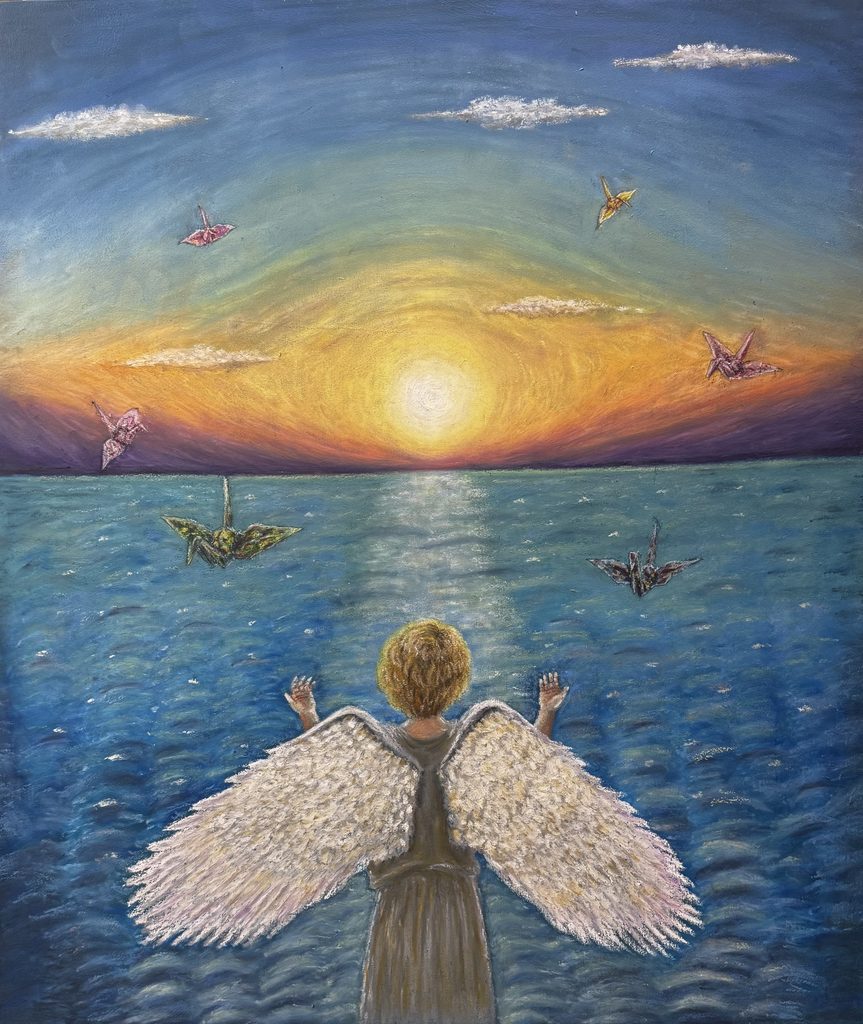
53 × 45.5 cm
Oil pastel on blackboard-coated plywood panel
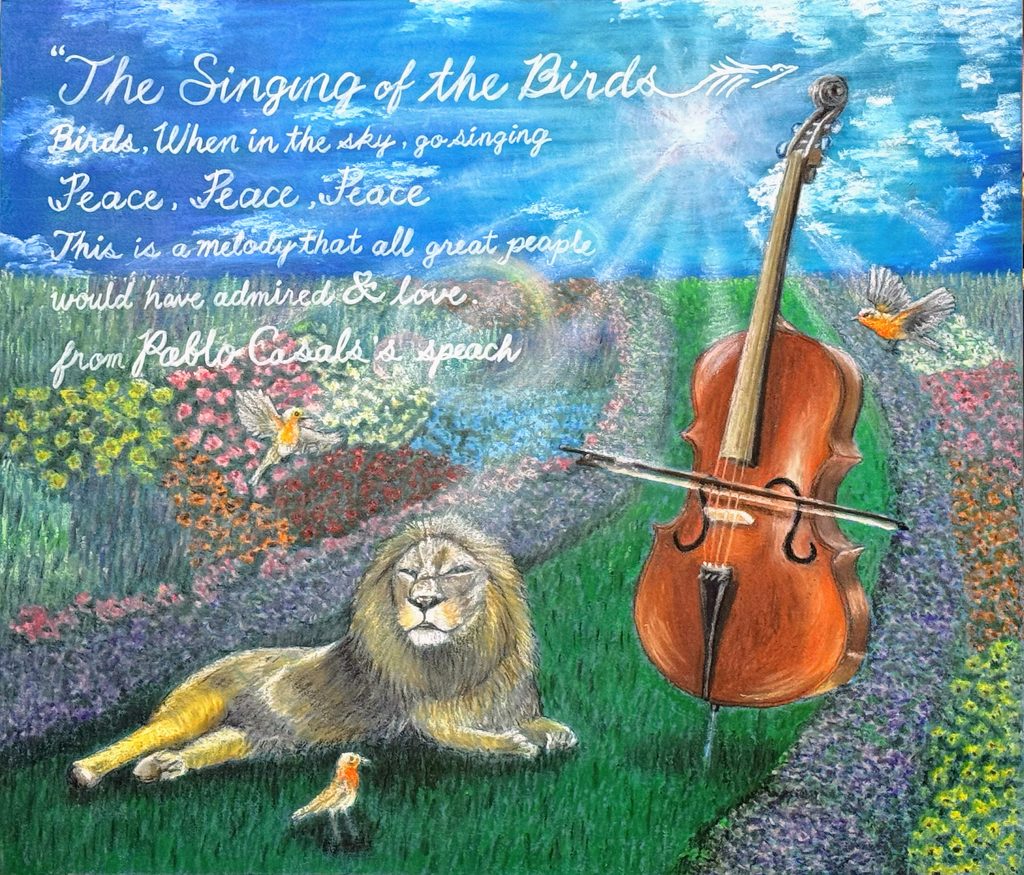
Q6. Garden of Peace has such a calming presence. What first inspired this work, and what does “peace” mean to you personally?
When I began Garden of Peace, I simply wanted to paint my own vision of peace—a place filled with flowers, birds, and a sense of harmony between all living things. As I imagined this scene, I began to hear the music of Pablo Casals, one of my favorite cellists, in my mind. His music and his lifelong message of peace have always moved me deeply, especially The Song of the Birds. I incorporated a few words inspired by his message into the painting as a quiet tribute to him. The lion also has a special meaning in this work.
I chose an animal often associated with strength and ferocity, and imagined even this powerful creature becoming completely still, enchanted by the sound of Casals’ The Song of the Birds. I wanted music to become an invisible presence within the painting—something capable of bringing even the wildest creature into a moment of peace.
For me, peace does not simply mean the absence of conflict. It is a state in which different lives can exist together without fear, where beauty, music, nature, and compassion can soften even what seems fierce or divided. Garden of Peace is my small imagined world in which, for a moment, that kind of peace becomes possible.
Q7. With Love from the Land of the Rising Sun feels like both a personal message and a cultural reflection. What story were you hoping to share through this work?
After the devastation of World War II, Japan adopted a Constitution that renounces war, and for more than 80 years, the country has lived under that commitment to peace. This history was very much in my mind when I created With Love from the Land of the Rising Sun. Japan is a small island nation surrounded by the sea, and I imagined sending a message of peace from these islands out across the ocean to the rest of the world. In the painting, origami cranes carry that message.
The folded paper crane has become a deeply meaningful symbol of peace and hope in Japan, and I wanted them to travel beyond borders, carrying prayers for peace wherever they go. The title With Love from the Land of the Rising Sun expresses that idea very simply. I wanted the painting to feel like a letter from Japan to the world—not a political statement, but a message from one human being to another.
Through these cranes, I wanted to send love, hope, and a wish for peace across the sea, with the hope that one day people everywhere may be able to live without fear of war.
Q8.Your paintings often focus on healing and hope. How do you translate those ideas into visual form?
Healing and hope are invisible, so I try to give them a visual language through light, color, nature, and small symbolic details. Light is especially important in my work. I often place a gentle source of light within darkness—not to erase the darkness, but to suggest that even in difficult or painful moments, something can still remain: hope, compassion, faith, or the possibility of healing. I also use elements from nature, such as birds, flowers, trees, water, and the sky.
Sometimes a small gesture between people, a bird returning, or a ray of light is enough to carry the meaning I want to express.
I prefer these quiet symbols to something overly dramatic, because I believe healing often begins in very small and almost unnoticed ways. I do not want my paintings to deny sadness or suffering. Instead, I hope to create a place where darkness and light can exist together, and where the viewer may discover their own sense of comfort or hope within the image.
Q9. You often imagine the unseen stories behind landscapes, flowers, and quiet places. Has that way of seeing the world changed as you’ve grown older?
Yes, I think the way I see the world has changed considerably as I have grown older. When I was younger, I was naturally drawn to strength, energy, and the vitality of life. But as the years have passed and I have experienced more of life, I have gradually begun to find beauty in fragility and impermanence—in things that bloom only briefly, places that hold traces of the past, and moments that will never come again. I think
I have also become more sensitive to the stories that may exist quietly behind what we see. A flower is no longer simply beautiful to me; I think about how briefly it blooms. An old place makes me wonder about the people who once stood there and the memories it may hold. Even an ending can contain its own kind of beauty. Perhaps the greatest change is that, when I was younger, happiness often felt connected to energy, excitement, and moving forward.
Now, I find a different kind of happiness in stillness—in an ordinary peaceful day, in quiet beauty, and simply in the feeling that, for this moment, everything is calm. That change in perspective has naturally become part of my paintings. I think I am now less interested in capturing only what is visible, and more interested in painting the quiet passage of time and the unseen emotions that remain behind.
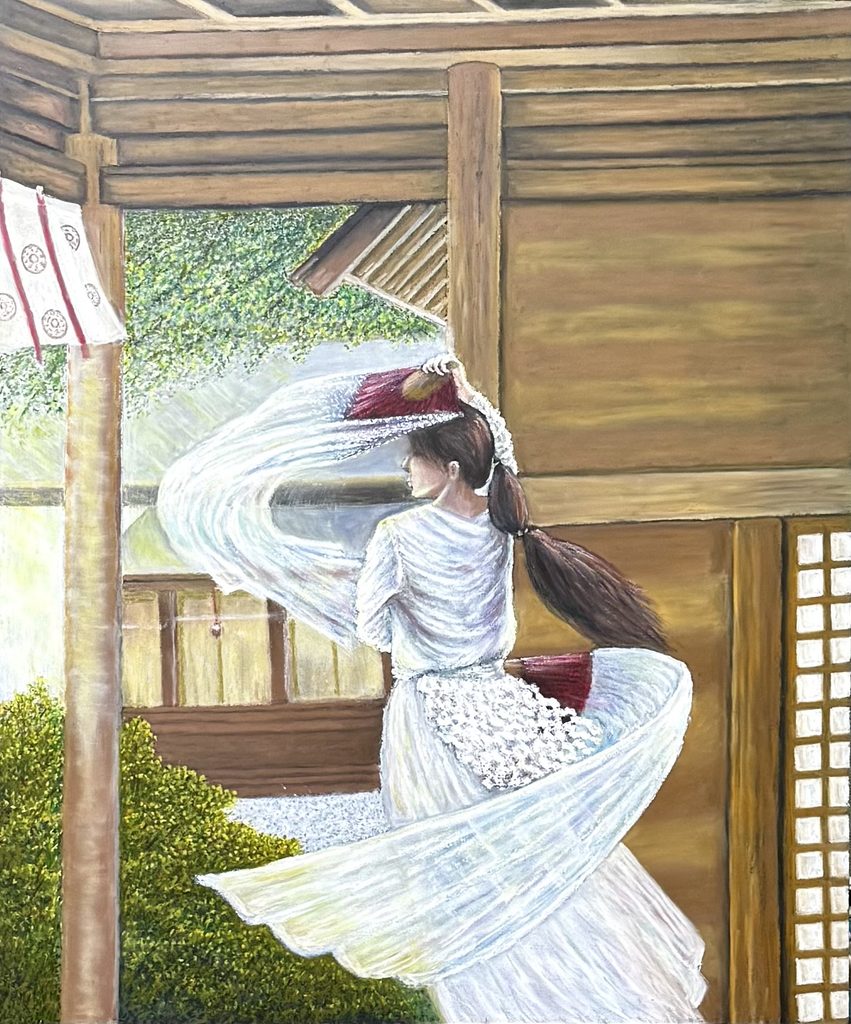
72.7 × 60.6 cm
Oil pastel on blackboard-coated plywood panel
Q10. Looking back, what has painting taught you about resilience and finding light during difficult times?
Painting has taught me that resilience does not always mean being strong. Sometimes it means allowing yourself to be vulnerable, accepting that there are things in life you cannot change, and still finding a reason to take another step forward. There have been difficult experiences in my life that I cannot erase or rewrite.
But through painting, I have learned that although I cannot change what happened, I can choose what I create from those experiences.
Sadness can become compassion, loneliness can become a quiet landscape, and pain can sometimes be transformed into something that carries hope. Painting has also taught me to notice small forms of light. Light does not always arrive dramatically. Sometimes it is found in a flower blooming for only a short time, in music, in nature, in an act of kindness, or simply in an ordinary peaceful day. Perhaps that is what resilience means to me now: not overcoming every darkness, but continuing to look for the light that exists within it. Painting has become both a way of searching for that light and a way of sharing it with others.
Q11. Your work combines faith with contemporary art. How do you hope it connects with viewers from different backgrounds?
I am a Christian, but I do not reject or deny religions that are different from my own. There are even times when I paint gods or sacred figures from other religious traditions. To me, the divine should never be something that causes conflict between people simply because their religions are different. I believe that, whatever form faith may take, it should bring comfort, hope, and happiness to the people who believe in it. Because I am a Christian, Christian spirituality and values naturally appear often in my work.
But at the deepest level, what I want to express is something more universal: love and peace. For that reason, I do not mind if viewers interpret my paintings differently from the way I do. Each person brings their own culture, faith, memories, and experiences to a work of art, and I respect that.
What matters most to me is that, beyond those differences, someone looking at my work might feel a small light of hope through the love and peace I try to express. If that light reaches them, then the painting has already crossed the boundaries of religion.
Q12. Oil pastel is less common than oil or acrylic in contemporary fine art. What possibilities does it offer you as an artist?
One of the things I love most about oil pastel is its physical closeness. Unlike painting with a brush, I often work directly with my fingertips. The pastel softens slightly with the warmth of my hands, and I blend and shape the colors through that direct contact. There is something very warm and intimate about creating an image this way.
I can feel the texture of the pigment beneath my fingers, adjust the pressure instinctively, and gradually transform separate colors into subtle shades and soft transitions. In a sense, my own body temperature becomes part of the process.
Oil pastel also gives me a wonderful freedom between drawing and painting. It can create strong, vivid marks, but it can also become extremely soft and delicate when blended. I can move from darkness into light, from a clearly defined form into something almost dreamlike, using the same material.
Perhaps that is why the medium feels so personal to me. There is very little distance between my hand, my emotions, and the surface. The warmth of my hands becomes part of the image, and I hope that some of that warmth remains in the finished work.
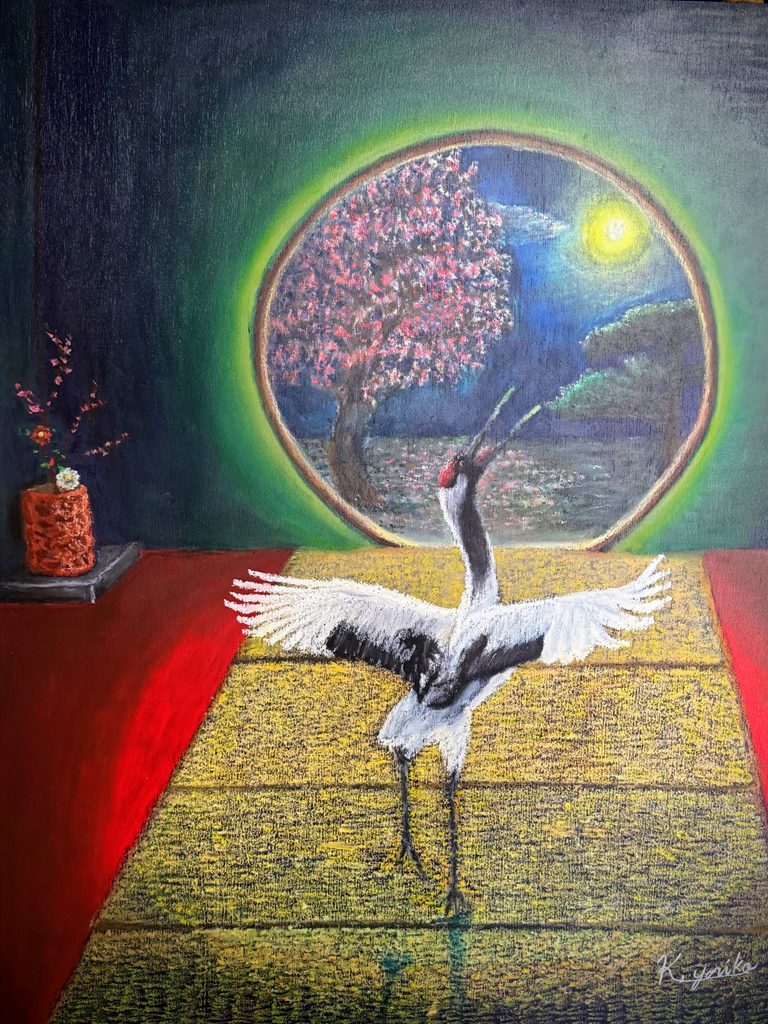
72.7 × 60.6 cm
Oil pastel on blackboard-coated plywood panel
Q13. Has there been a response from a viewer that reminded you why you chose to become an artist?
Viewers have sometimes told me that my paintings made them feel comforted, reminded them of someone they had lost, or brought them into a sentimental and reflective mood. I am always deeply grateful when someone shares such a personal response with me. But there is one small moment that has stayed in my memory. At an exhibition, a visitor seemed to have wandered into the gallery almost by chance. They moved around the space somewhat aimlessly, but for some reason, they stopped in front of one of my paintings and remained there quietly for quite some time.
We never spoke, and I do not know what they saw or felt in the painting. But after standing there, they seemed somehow lighter and more at ease as they left the gallery. That moment meant a great deal to me precisely because there were no words. It reminded me that art does not always need to be explained, or even consciously understood, in order to reach someone.
I paint because I cannot imagine my life without painting; creating feels essential to who I am. But moments like this remind me that something born from my own inner world can quietly enter someone else’s and perhaps offer them a moment of comfort or release. When that happens, I feel that the painting has found a life beyond my own.
Q14. What advice would you give artists who are pursuing their creative path despite discouragement?
I would tell them not to let the small flame inside them disappear. There may be times when circumstances make it difficult to create, or when the people around you do not understand why art matters so deeply to you. You may even have periods when you have to step away from your creative life. I know what that feels like. But a pause does not necessarily mean an ending.
The years in which I could not fully pursue art did not take away my desire to create. In some ways, everything I experienced during that time became part of what I am expressing now. I also believe there is no single correct timeline for becoming an artist. You do not have to arrive at a certain place by a certain age, and your path does not have to look like anyone else’s.
Listen carefully to the part of yourself that continues to want to create, even when others discourage you. Protect that small flame. You may not always be able to make it burn brightly, but as long as it is still there, you can return to it. And when the time comes, perhaps everything that has been quietly accumulating inside you will become the very thing that gives your work its own voice.
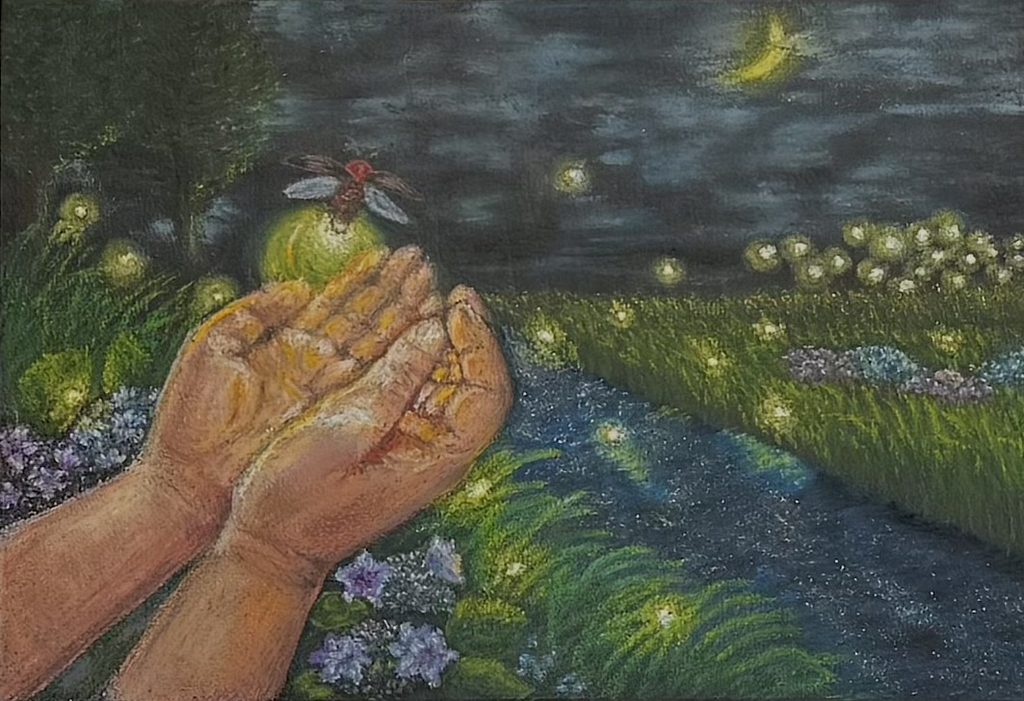
22.7 × 15.8 cm
Oil pastel on blackboard-coated plywood panel
As our conversation with Yoriko came to an end, we found ourselves thinking about the things we quietly hold onto, and how easily life can talk us out of them.
So many of us carry a small flame inside, some dream or need we hold close, and so often the world tells us to put it away, to be practical, to let it go. Yoriko kept hers alive through years when she could not paint at all, and when she finally returned to it, everything she had held onto came pouring out. That, to us, is the quiet power of her story.
It says a pause is not the same as an ending, and that the things we refuse to let go of will wait for us, however long it takes. Her paintings carry the same message. She places light inside darkness, not to pretend the darkness is not there, but to remind us that hope and beauty can live right beside it. In a loud, hurried world, her quiet, glowing work is a place to slow down and breathe.
We think so many people, artists or not, need to hear what she says. Protect the small flame, even when you cannot make it burn brightly. There is no single correct timeline for a creative life, no age by which you are meant to have arrived, and your path does not have to look like anyone else’s.
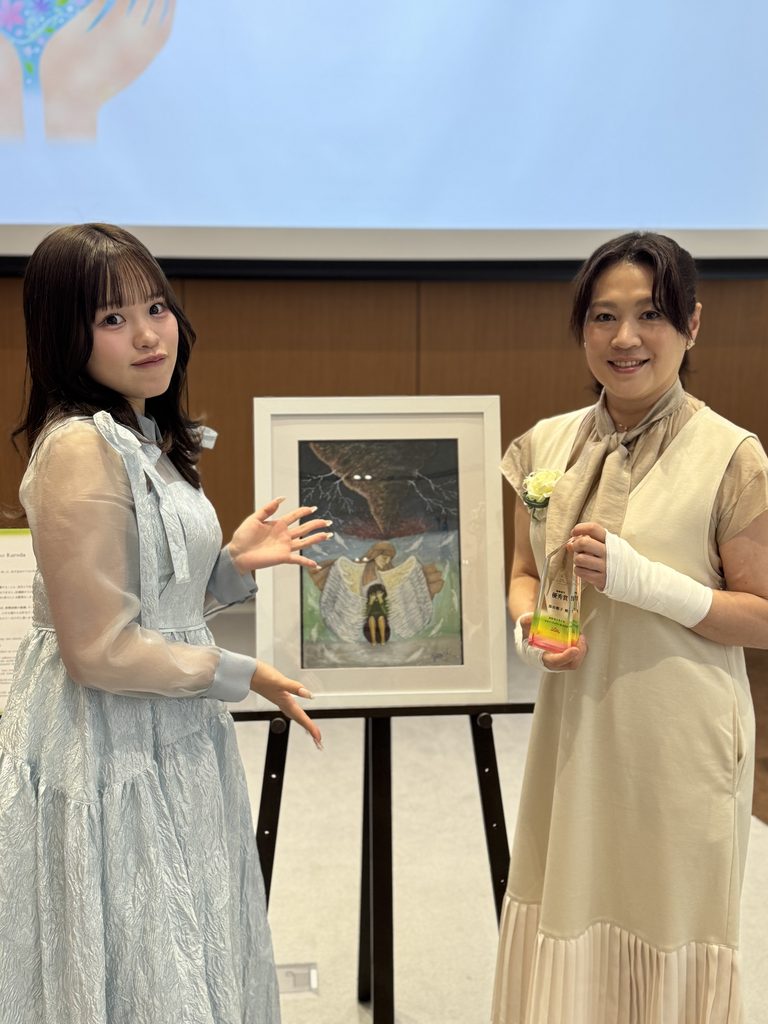
The years that feel lost are not always lost at all. Everything you gather in them, every joy and sorrow and question, can quietly become the very thing that gives your work its voice.
For art lovers and collectors, Yoriko’s work brings a rare kind of stillness into a room. Soft, glowing paintings that seem to hold their breath, full of gentle light and quiet symbols, the kind you can sit with when the world feels like too much.
People often find their own memories and feelings inside them, without needing a single word. To live with one of her pieces is to keep a small, steady light on your wall, and a reminder that even in the hardest moments, something bright can remain.
Follow Yoriko Kuroda through the links below and see her work for yourself.
Our Big Book of Mixed Media Artists 2026 is now open for submissions, and we believe the real magic happens in the mix, in what unfolds when different materials meet, collide, and begin speaking to one another. If you layer, pour, collage, stitch, or combine in unexpected ways, and your work reaches beyond a single medium, we want to see it. The materials do not matter. Geography does not matter. Career stage does not matter. What matters is that something real is happening between the layers. Every artist we feature began by submitting. This could be your edition.