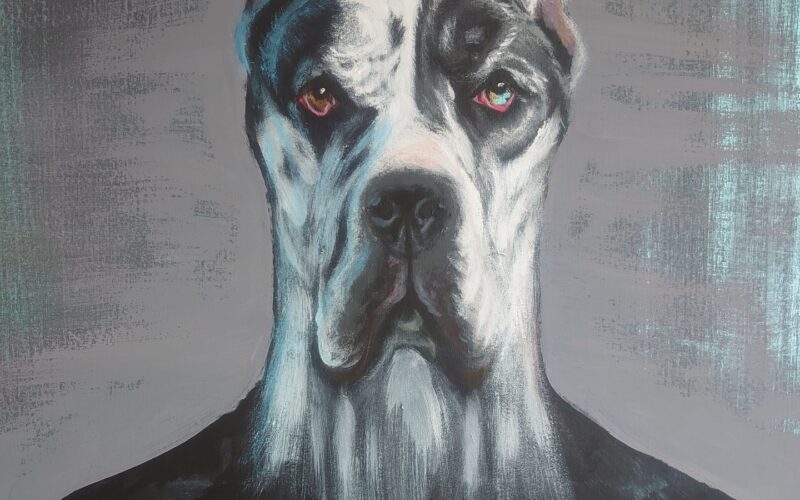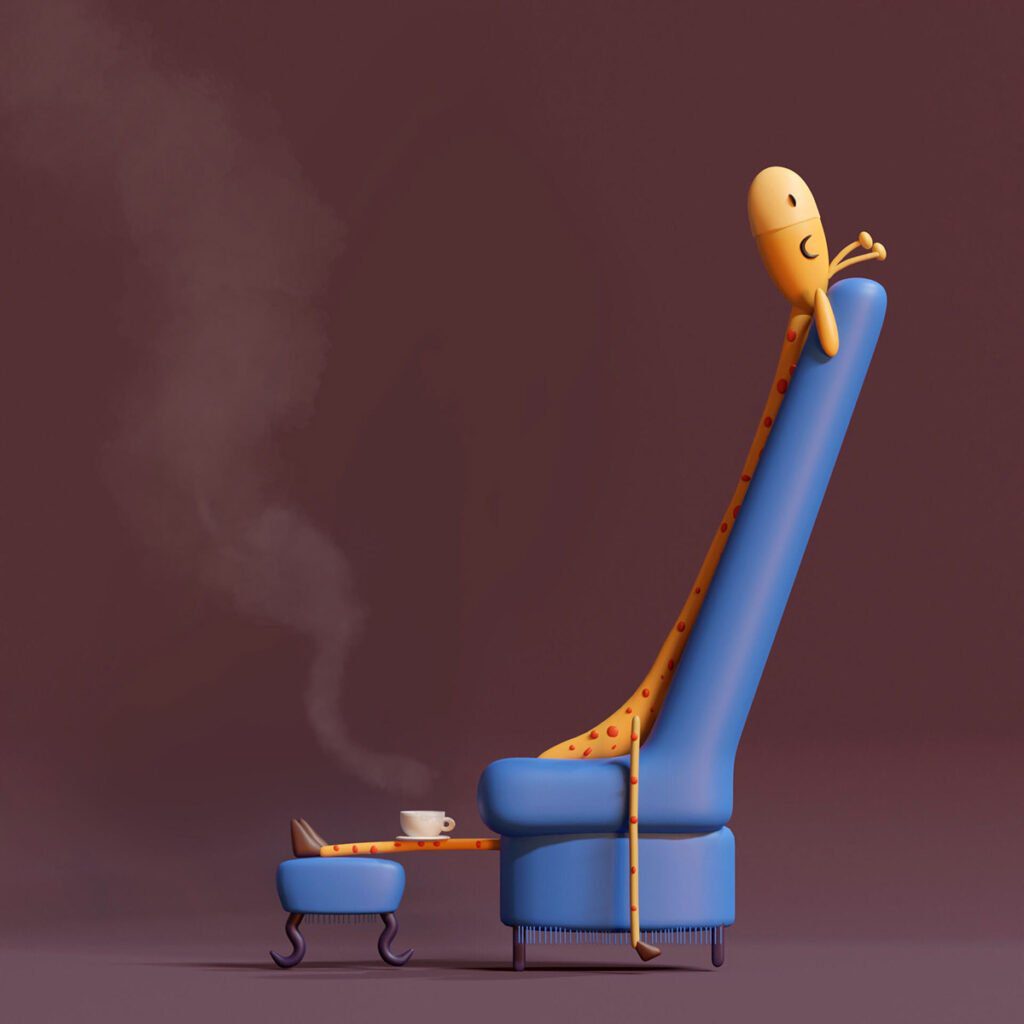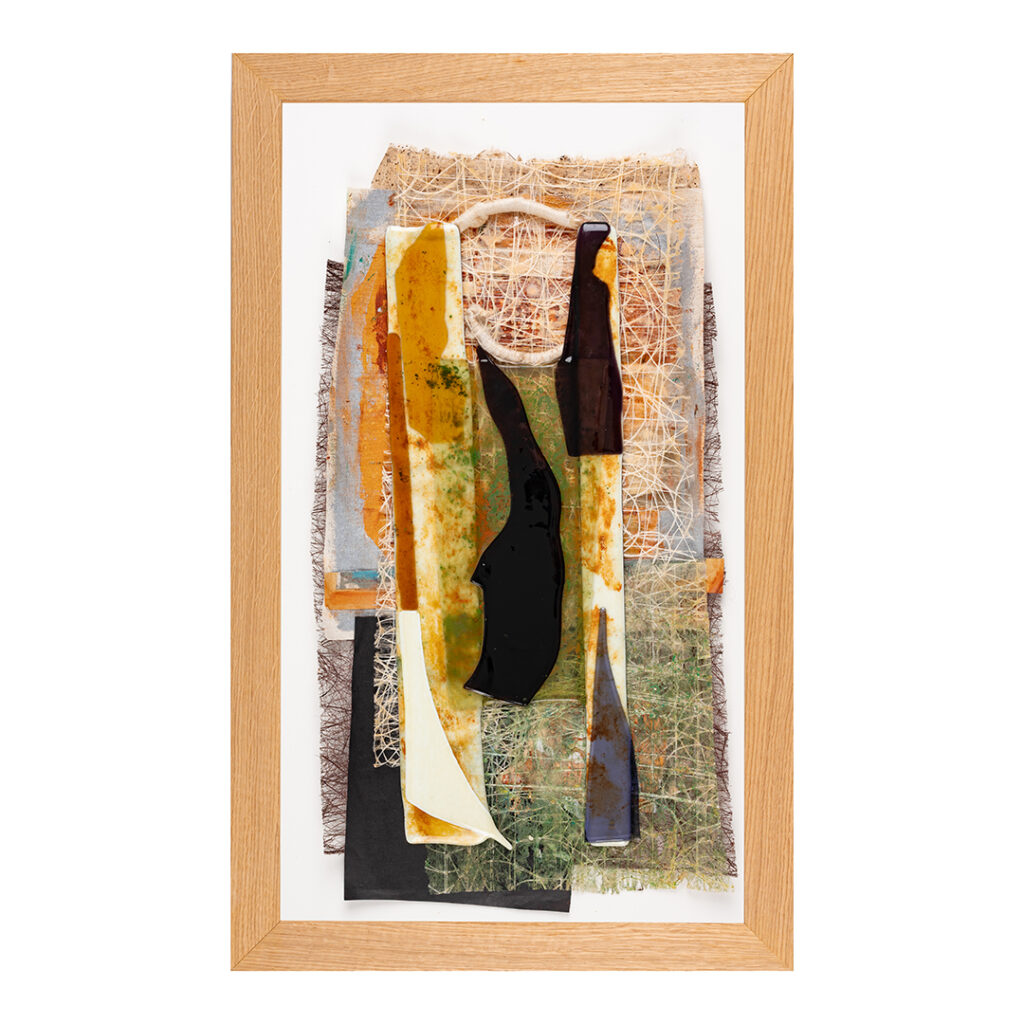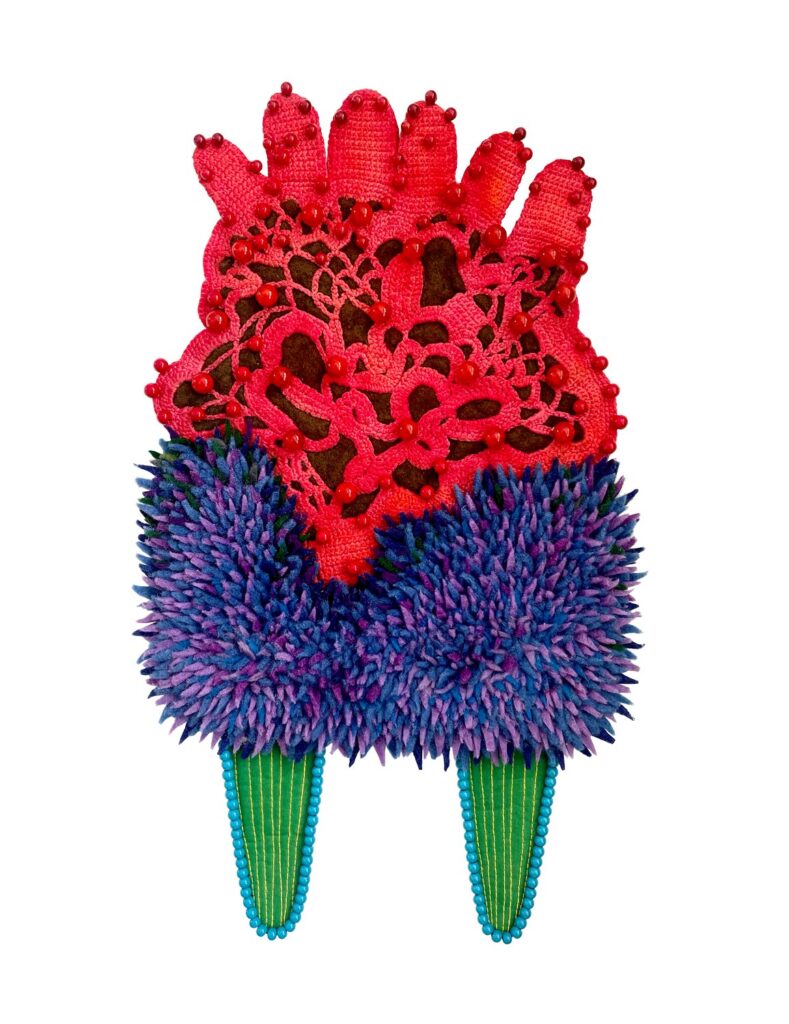

Liudmila Pakhomova’s Muted Colors & Golden Accents Give Her Art a Meditative Glow
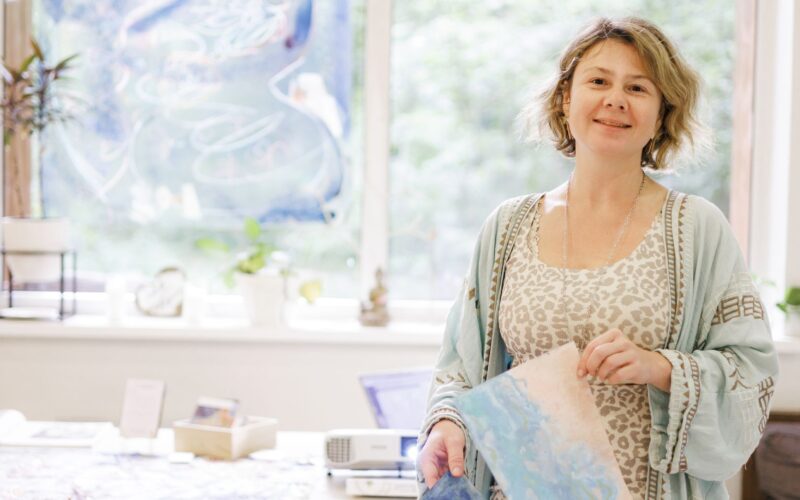
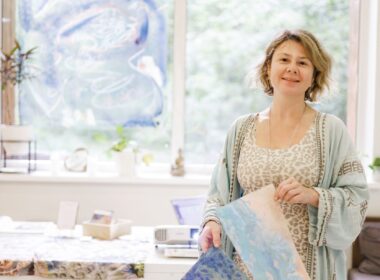
At Arts to Hearts Project, some of the artists we publish create work you simply look at, and others create work you feel your way into. Liudmila L Pakhomova belongs firmly to the second kind, and we were delighted to feature her in our 100 Emerging Artworks 2025 book. Hers is intuitive, deeply layered work that seems to go on breathing long after the final mark is made.
Liudmila is an intuitive mixed-media artist who paints from feeling rather than from a plan. There is no fixed image waiting at the end, only an emotion she follows through colour, movement, and texture, trusting the painting to reveal itself as she goes.
That openness gives her work its sense of aliveness, a feeling that something is still happening inside it, still unfolding, even once it hangs on a wall.
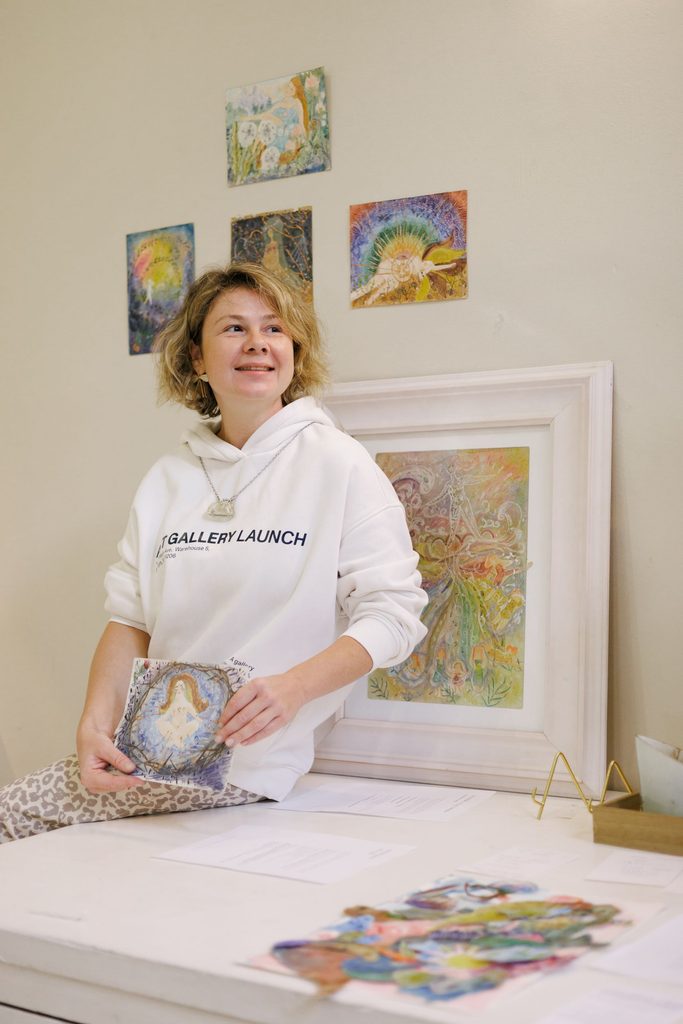
Her real love, though, is for materials. She works mainly with acrylic and ink to create bold, highly saturated paintings, but her practice has always been about experimenting and combining techniques. What began in watercolour and collage has grown into something far richer, layer upon layer of acrylic, ink, and pencil, and more recently, sand, soil, coffee, and natural elements like dried flowers, seeds, and shells.
Her surfaces have become dimensional, tactile, almost geological, and that fascination is now carrying her off the flat canvas entirely, into layered objects, sculptural forms, and spatial installations where the materials themselves become part of the meaning.
There is a deeper thread running beneath all of it. Alongside her art, Liudmila is a body therapist and holistic healer, and for her, painting, meditation, movement, and spiritual exploration are not separate practices but one continuous way of understanding herself and the world.
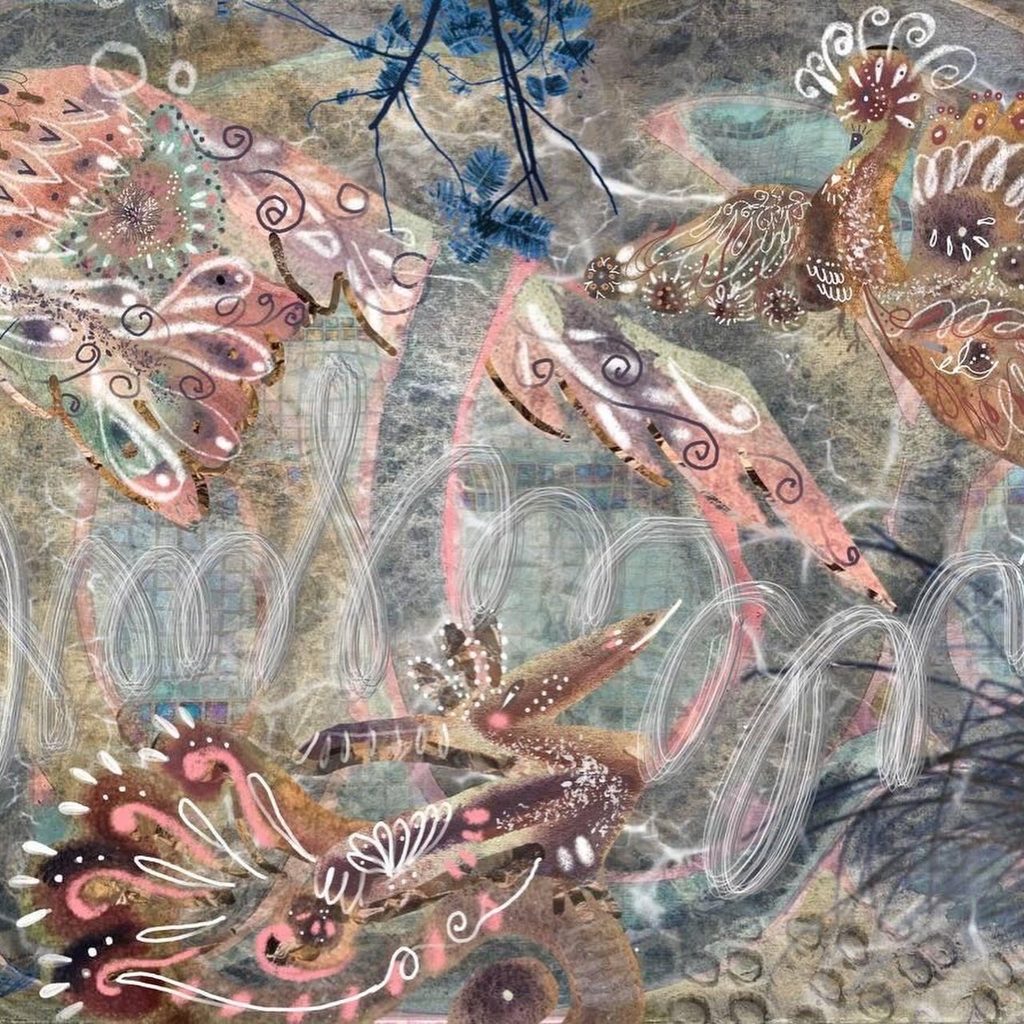
She is drawn to everything that lives beyond language, in sensation, emotion, and memory, and her work is, in many ways, a search for that wordless place and an invitation for others to find it too.
That instinct toward connection shapes where her practice is heading. Increasingly, she is moving toward participatory and immersive work, art that invites people to step beyond simply looking and become part of the experience itself.
Having exhibited internationally, from Berlin to Barcelona to London, and drawing on a background that reaches well beyond the art world, she is endlessly curious about what happens where different disciplines meet, and she keeps finding fresh, unexpected spaces for her work to live.
Now let’s hear from Liudmila about painting from feeling, the materials that are reshaping her work, the deeper connection between art and healing, and why, for her, a painting is never truly finished.
Q1. Liudmila, can you share how did art, meditation, and body awareness begin to influence one another in your practice?
For me, art, meditation, body awareness, and spiritual exploration are not really separate practices. They are different ways of exploring how we perceive ourselves and the world around us. Through meditation and body-based practices, I became increasingly interested in how much of our experience exists beyond words — in sensations, emotions, memories, and feelings.
Art became another language for this exploration, allowing me to express what is sometimes difficult to put into words and to follow unexpected connections. Over time, I also began bringing these approaches together in my work with others, creating experiences where art, attention, and body awareness can open up new perspectives and help us discover different ways of seeing and experiencing life.

Q2. Your paintings evolve through colour, texture, and intuition. What do you enjoy about allowing a work to develop without a fixed outcome?
I wouldn’t say that I begin with abstraction.
I paint intuitively, often starting with an emotion or a feeling that I try to express through colour, movement, or an image.
As I work, my own feelings and perceptions change. New layers, textures, and details emerge, sometimes gradually forming an image I hadn’t planned from the beginning. What I love most is that these works seem to continue living even after they are finished.
Because they are so multilayered and open to interpretation, I can return to the same painting and discover something new, depending on what I’m experiencing in my own life at that moment. And I see the same happening with viewers. Different people discover different images, stories, and meanings in the same artwork. In a way, each person brings their own experience into it.
Q3. You work with a range of materials, from watercolour and acrylic to natural elements. How has your experimentation evolved?
My practice has always been about experimenting with different materials and combining techniques. I initially worked mostly with watercolor and collage, gradually adding layers of acrylic, ink, pencils, and other textures. Over the past year, I’ve become increasingly interested in the physical qualities of materials.
I’ve been experimenting with acrylics, sand, soil, coffee, and natural elements such as dried flowers, seeds, and shells, creating richer textures and more dimensional surfaces. This exploration is gradually taking my work beyond the traditional two-dimensional surface. I’m now working more with canvas, layered objects, and sculptural elements, discovering how materials themselves can become part of the story an artwork tells.
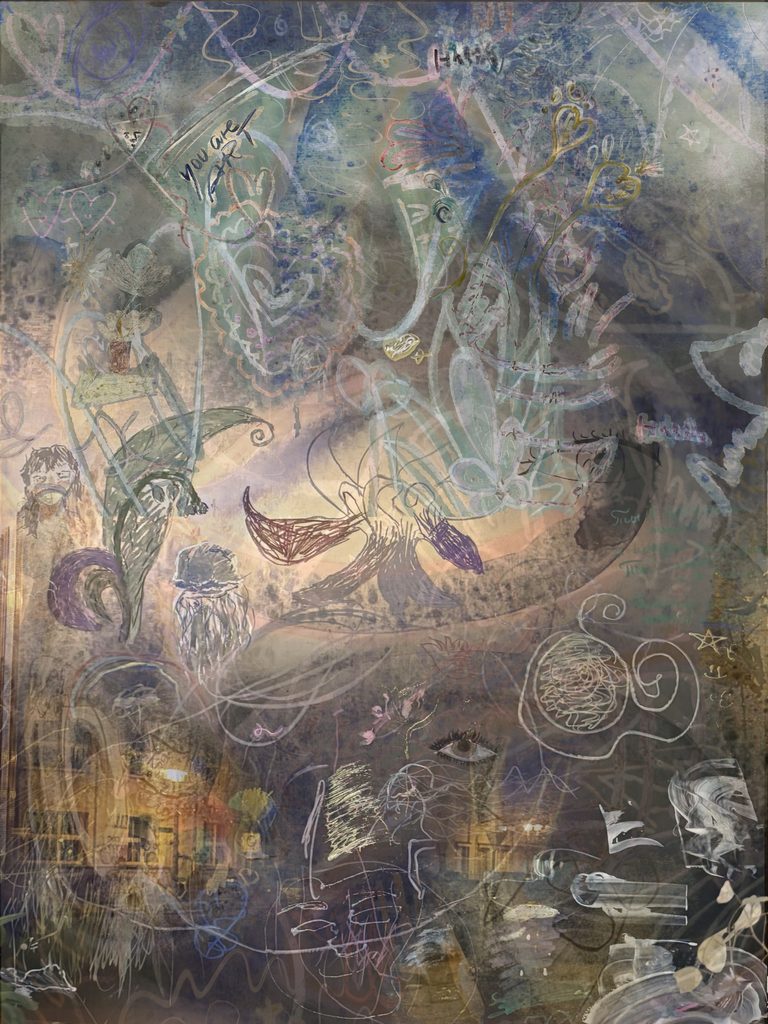
Digital mixed media; photographic textures from watercolor-based transparent film installations and participatory art experiences in Berlin and Moscow.
Q4. You want viewers to feel seen and connected through your work. What does this exchange between artist and viewer mean to you?
For me, an artwork doesn’t stop evolving when I finish creating it. It continues to live through the people who encounter it, each bringing their own experiences, emotions, and perspectives.
Sometimes I’m surprised by how deeply people connect with my work, discovering meanings and feelings I hadn’t consciously put into it. I find this exchange particularly fascinating because it works both ways — the viewer discovers something in the artwork, and I discover something new through their interpretation. This curiosity has gradually led me towards participatory art experiences, where people can go beyond observing and become part of the creative process. I’m interested in creating spaces where art becomes a way to connect, reflect, and see ourselves and the world from a different perspective.
Q5. In Edges of Identity, you explore identity and the different sides of who we become. How do changing perspectives shape your work?
Edges of Identity was originally inspired by the idea of how different sides of our personality emerge throughout the flow of life. The artwork was created by combining fragments of four of my original watercolours, which I then developed digitally in Procreate, adding drawn elements and photographic textures.
Recently, as my interest in spatial experiences has grown, I’ve started exploring how these same watercolour elements can exist beyond a flat surface. I’m now transforming them into layered 3D objects, small sculptural installations, and larger spatial concepts.
What fascinates me is how the same elements can create completely different images depending on where you stand and how you look at them. Just like our identity, the artwork reveals different sides of itself through changing perspectives.

Acrylic and mixed media on canvas
21 7/10 × 18 9/10 × 1 in | 55 × 48 × 2.5 cm
Q6. With your background in marketing and business strategy, what have you learned about building a sustainable artistic practice?
Coming from a background in marketing, business strategy, and project development, I was well aware that building a professional artistic practice involves much more than creating artworks. It’s also about communicating, building relationships, and finding the right people, spaces, and opportunities for your ideas. What I’ve found particularly exciting is discovering how my different areas of experience can complement one another and open up entirely new possibilities.
I’m now exploring how art, body awareness, and creative thinking can come together in experiences for individuals, teams, and organisations — from participatory art projects to team-building and strategic planning sessions. I believe some of the most interesting ideas emerge at the intersection of different disciplines, and this is something I’m increasingly interested in developing through my practice.
Q7. You’ve exhibited internationally in cities including Berlin, Barcelona, London, and Moscow. How have these experiences influenced your artistic perspective?
International exhibitions are a wonderful opportunity to meet and connect with other artists, curators, and visitors in person. I find these experiences incredibly enriching, both personally and artistically. Discovering how diverse art can be, hearing different artists’ stories, and exploring their approaches is always inspiring.
It’s also fascinating to see how people respond to my own work in person. I experienced this particularly strongly in Berlin, where I created a participatory art installation and watched how visitors interacted with it, bringing their own perspectives and becoming part of the artwork itself.
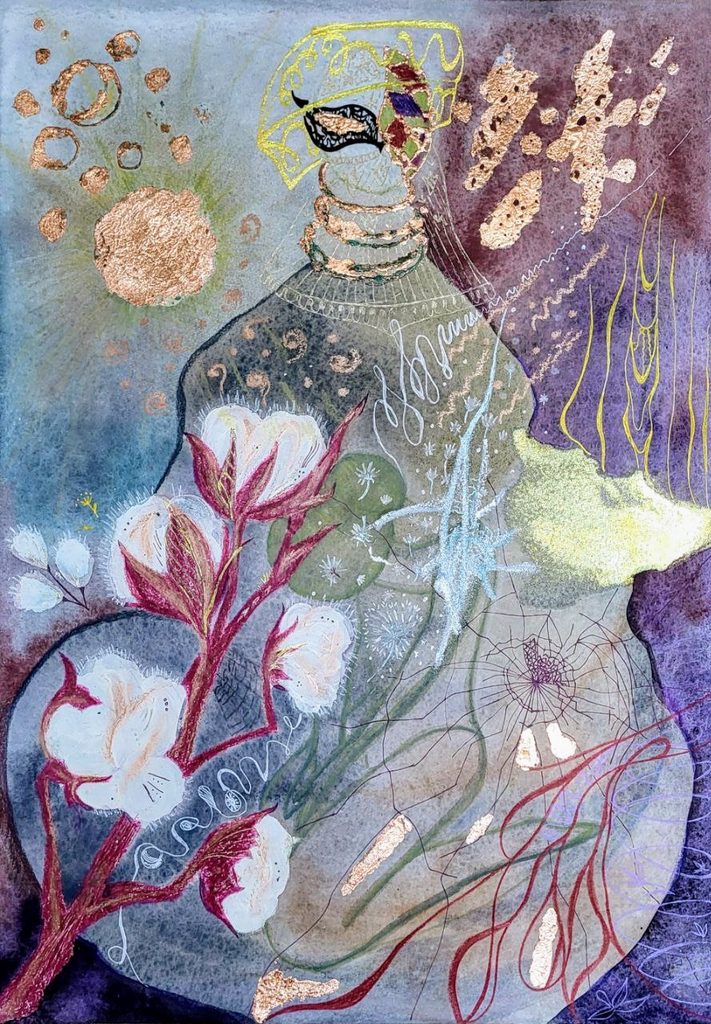
2024
Medium: Mixed media on paper
Materials: Watercolor, acrylic, ink, pens, colored pencils, and metallic leaf.
As our conversation with Liudmila drew to a close, we found ourselves thinking about how differently we treat art today, as something to glance at, double-tap, and scroll past, rather than something to truly live with.
Liudmila’s whole practice pushes against that. In an art world increasingly built for the quick scroll and the instant image, she makes work that asks for the opposite: time, presence, and participation. To her, a painting is never a finished product to be consumed, but a living exchange, something that keeps evolving through everyone who encounters it.
It is why she is moving toward participatory and immersive work, where people stop being spectators and become part of the piece itself. In a culture that often turns art into content, there is something quietly radical about an artist insisting that it is a conversation instead.
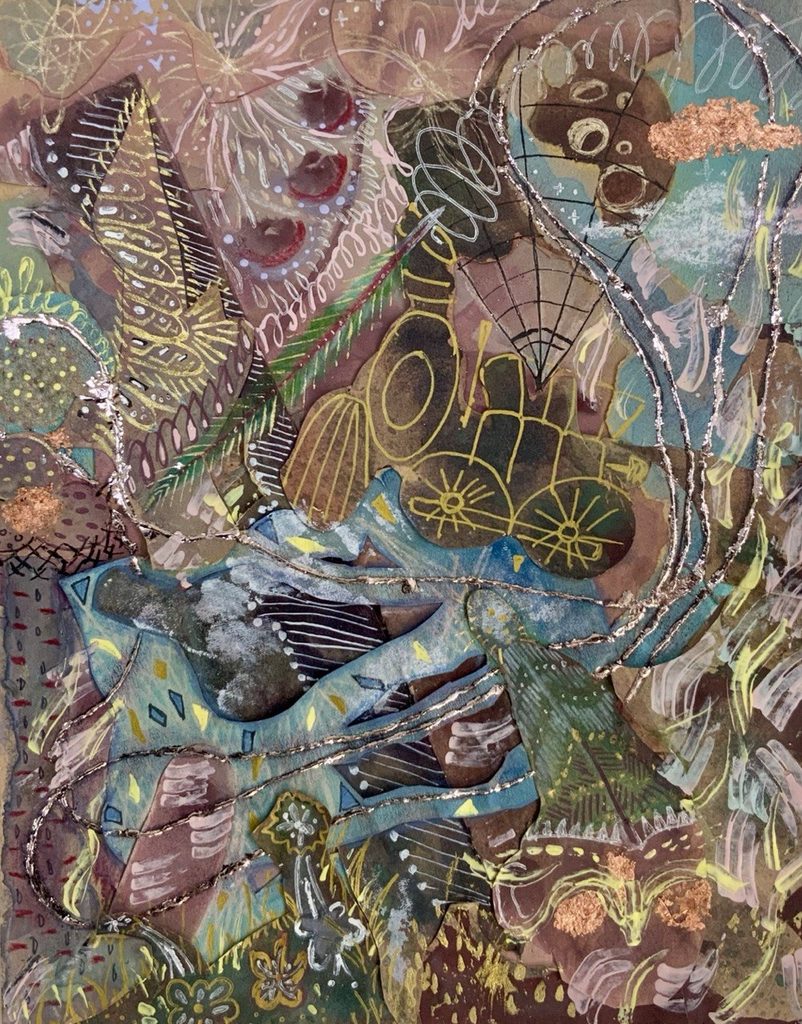
Mixed media on paper
8 3/10 × 5 4/5 in | 21 × 14.8 cm
There is something timely, too, in how she thinks about creativity. As more of the art world races toward the digital, the automated, and the effortlessly generated, Liudmila is going the other way, deeper into physical materials, into sand and soil and natural elements, into the slow and the handmade, into feeling and intuition over logic and speed.
It is a reminder that what gives art its power has never been how quickly or cleanly it can be produced, but the human presence, the emotion, and the lived experience behind it, the very things no shortcut can replicate.
For art lovers and collectors, Liudmila’s work brings depth, warmth, and a sense of quiet energy into a space. Richly layered, saturated paintings that reward long looking and keep revealing new images and meanings over time. People often say they feel both calmed and quietly energised in front of them. To live with one of her pieces is to keep something genuinely alive on your wall, a work that will go on speaking to you, and changing with you, for years to come.
Follow Liudmila L Pakhomova through the links below and see her work for yourself.
Still sitting on your submission? Now’s the time. Artist of the Year 2026 is open, and spots are filling. Get your work in front of our jury and Guest Curator Jennifer Rizzo for the chance to be named Artist of the Year, $500, a trophy, a four-page feature, and a place in the book alongside 100 artists. Don’t wait until it’s too late. Submit today.