
Corry MacDonald’s Abstract-Realist Paintings Hold Both Grit & Grace
At Arts to Hearts Project, we built Issue 13 of our magazine around a single tender question: what are the things we hold onto? Every artist answered differently, some through memory, some through love, some through place. For Corry MacDonald, the answer runs deep. In a world constantly pulling us in every direction, what she holds onto, and helps others hold onto, is their connection to themselves.
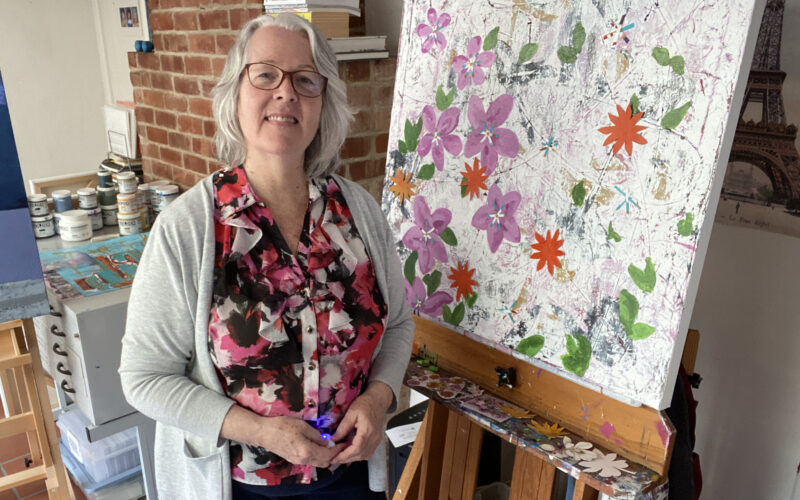
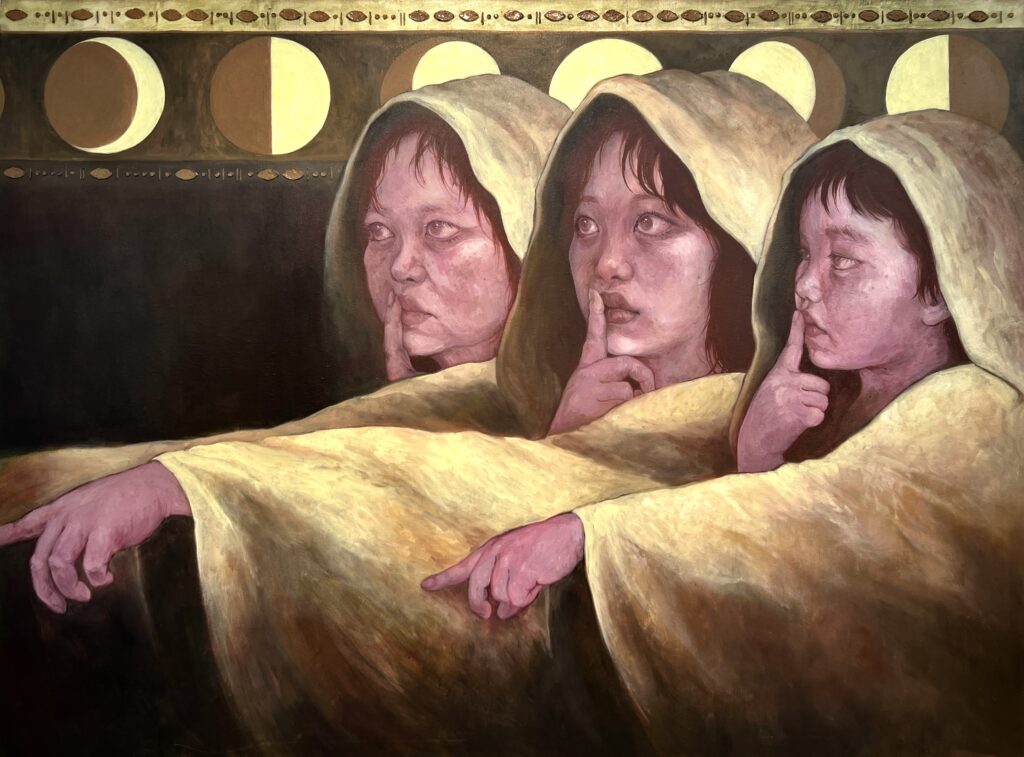
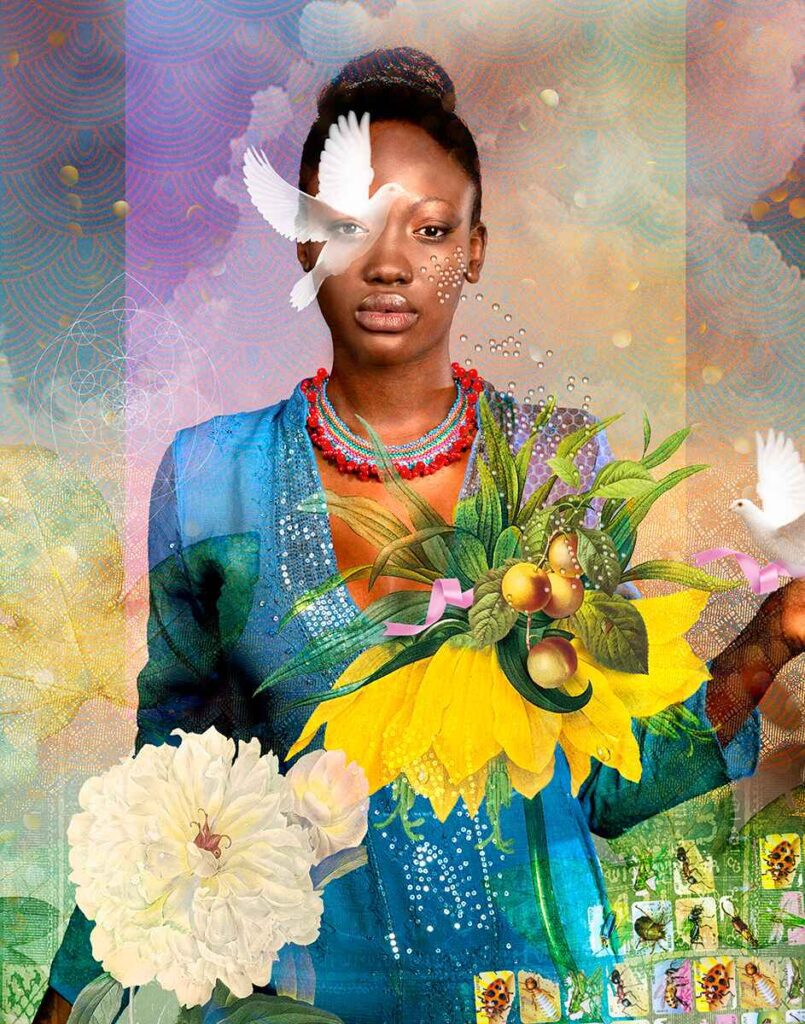
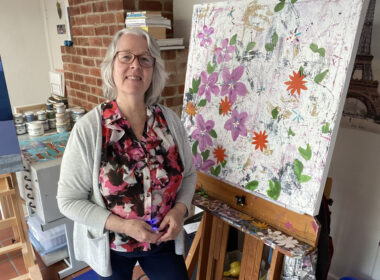
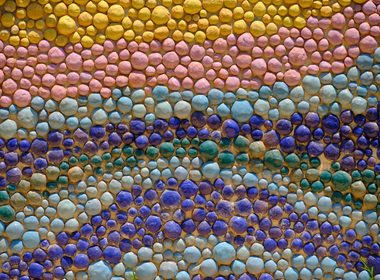
Corry is a mixed-media artist whose work she calls “sensorial expressionistic abstract realism,” a rich blend of oil, texture, and the natural world. Her paintings are layered and tactile, full of grit and depth, and they are made to be felt as much as seen.
She works to unearth, in her own words, the extraordinary hidden within our everyday lives, drawing the viewer into a slower, deeper, more sensory way of looking, where you don’t just observe a painting, but feel your way into it.
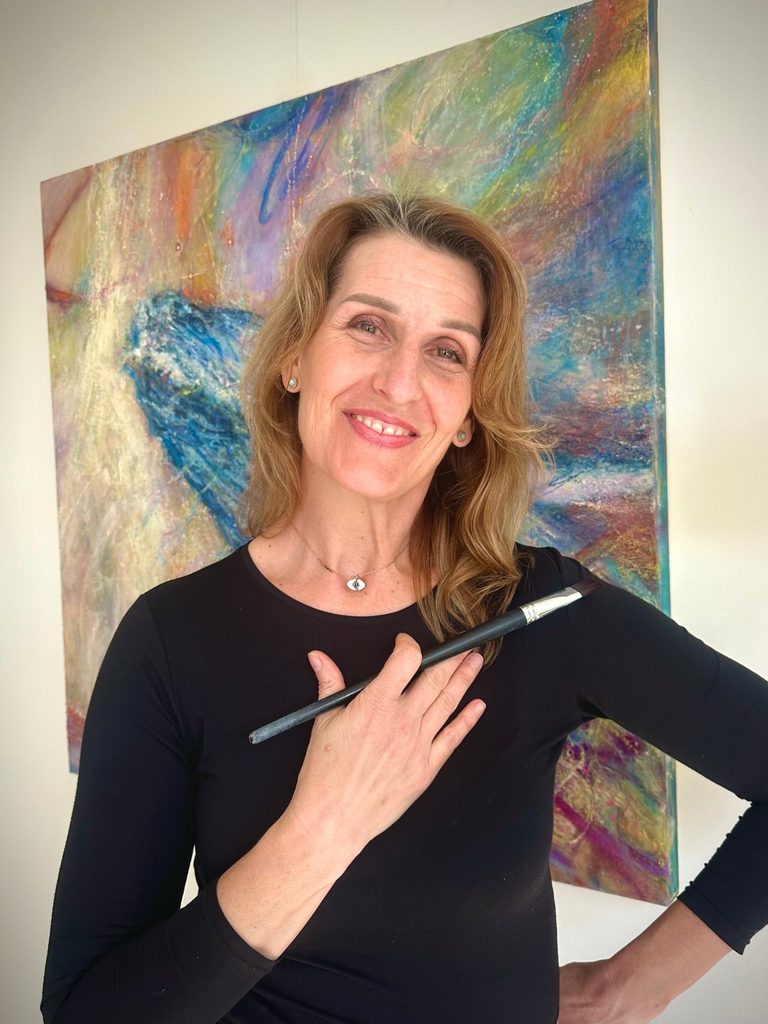
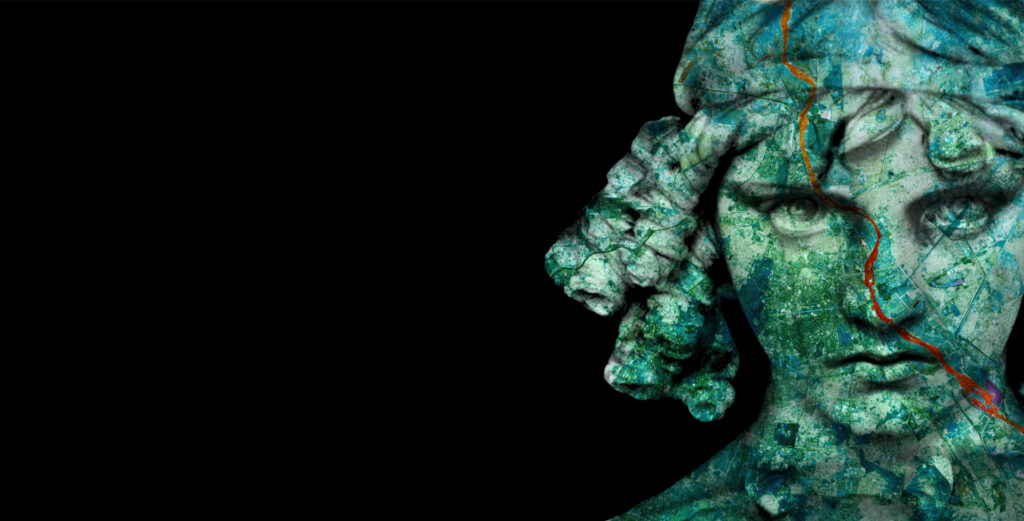
Her process is one of layering, both in material and in meaning. She builds her surfaces from maps, words, botanical imagery, and layer upon layer of texture, weaving them together until a dreamlike world begins to emerge. Maps speak of journeys and the many places that have shaped her.
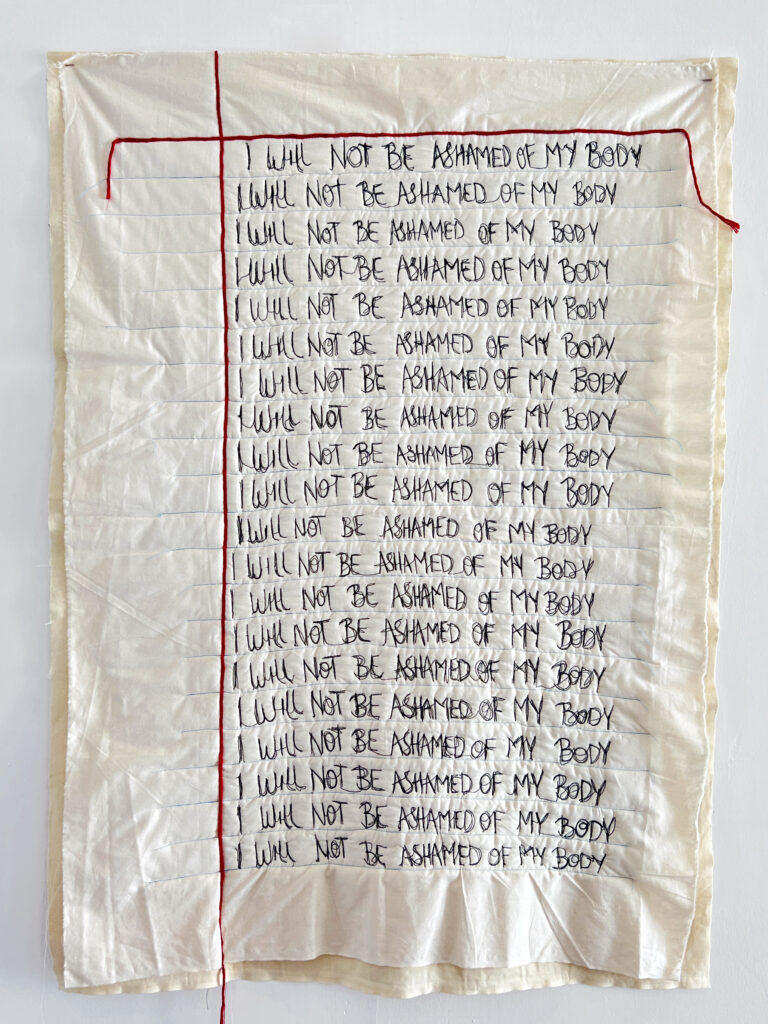
Words carry their own quiet vibration and remind us of all the ways we long to be heard. And the natural world runs through everything, a reminder that we are all part of something larger and alive.
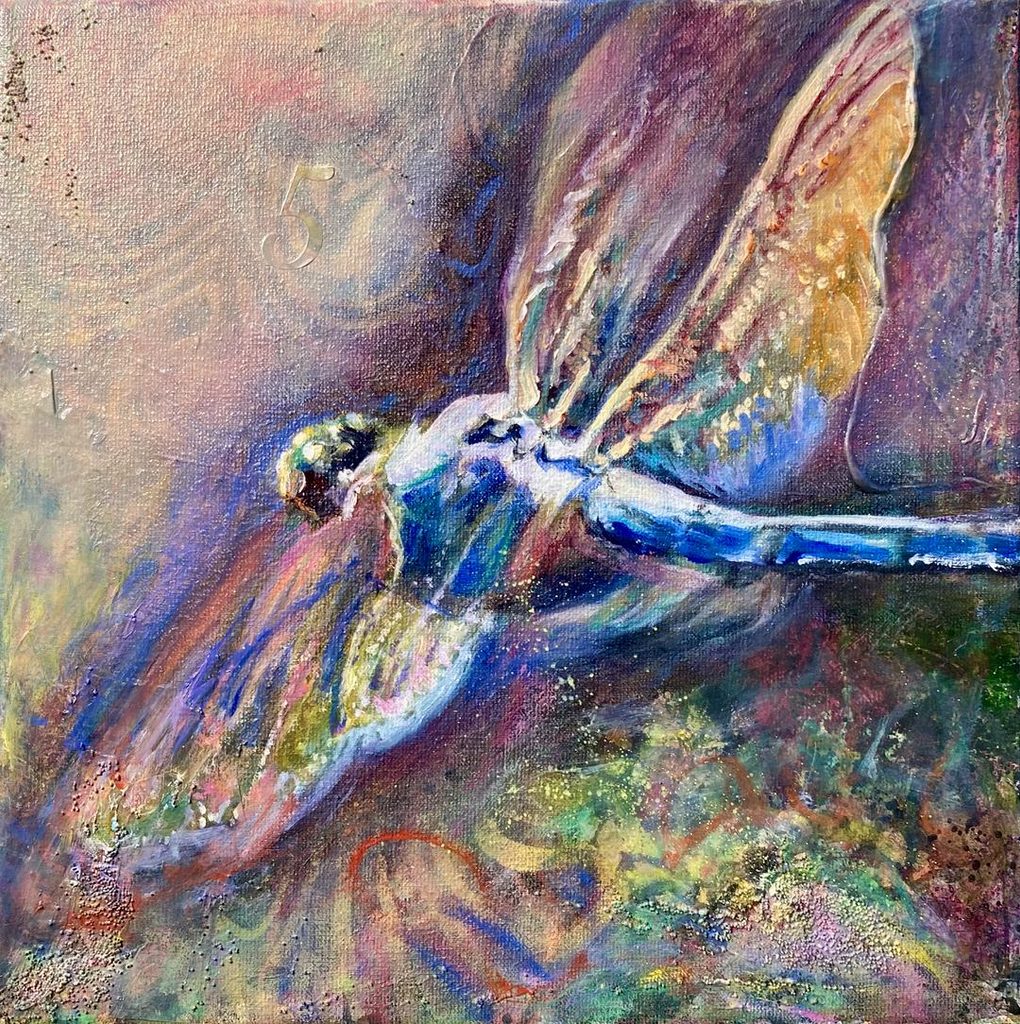
Look closely and her paintings are full of symbols. Birds and feathers, blossoms and organic forms, keys and dragonflies, each one carrying a quiet meaning beneath the surface. Nothing in her work is purely decorative. Every mark, texture, and image is there to deepen the feeling and the story within the piece, inviting the viewer to linger, to wonder, and to find their own meaning in it.
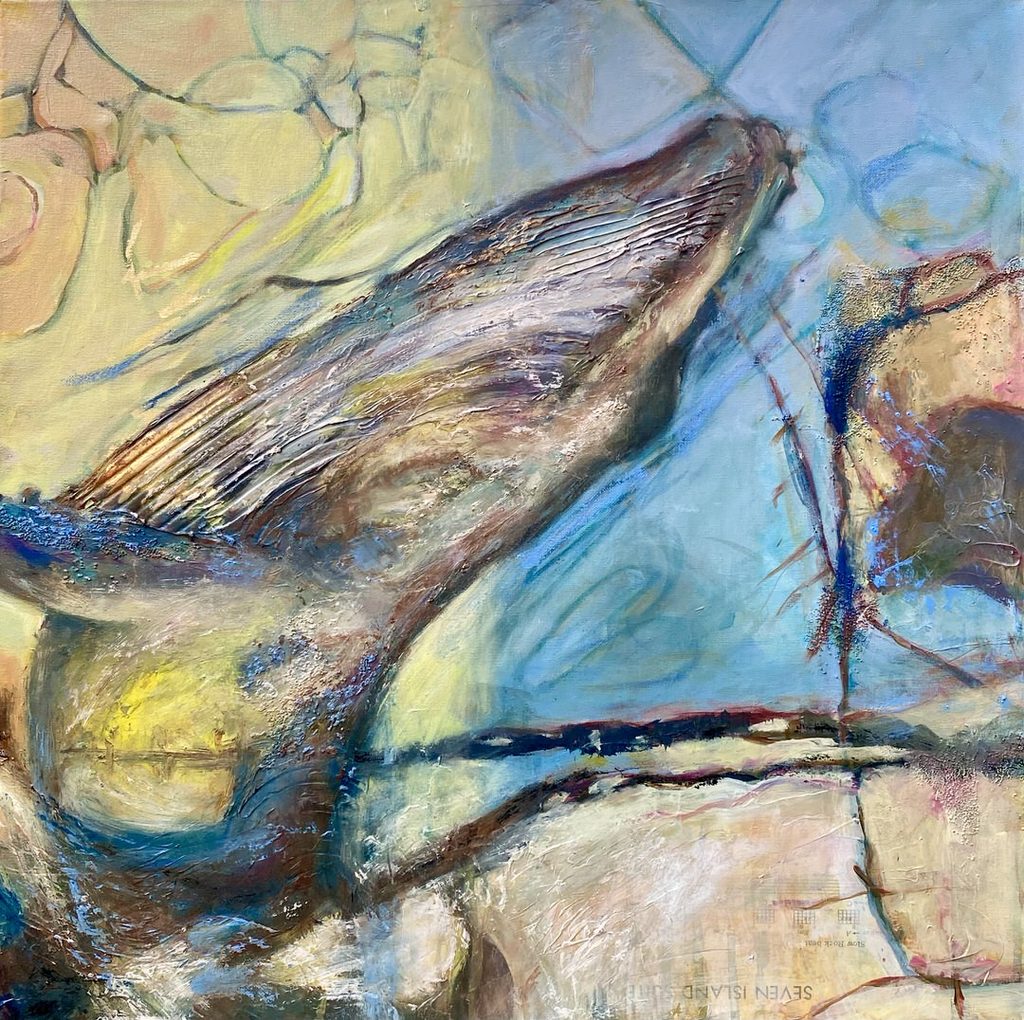
There is a beautiful balance at the heart of her work, between softness and roughness, delicacy and grit, the tender and the raw. Her paintings hold the gentleness of a petal and the weight of lived experience all at once, and that balance is exactly what gives them their atmosphere and their emotional pull.
She often pairs her paintings with her own poetry, too, letting word and image speak together and opening yet another doorway into the work.
For Corry, painting is only one part of a much larger creative life. Alongside her studio practice, she writes, teaches, and works in the healing arts, and she sees all of these as expressions of the same purpose. Her art carries that whole self within it, an artist who has lived across many cultures, moved through many seasons of life, and poured all of it, the beauty and the hardship alike, back into the layers of her canvases.
Now let’s hear from Corry about her layered creative process, the symbols that fill her work, how painting, poetry, and healing come together for her, and what it means to find beauty in both the grit and the grace of life.
Q1. Corry, could you share how your creative journey began and what art meant to you as a child?
For as long as I can remember, I was creating and expressing myself. Whether it was through music, singing, dancing, and always drawing. One of my first memories of making art was drawing on the back of my dad‘s blueprints which were huge maps I could turn over to the white side.
I was happiest with a pile of crayons splayed around me as I lay on my tummy and drew worlds within worlds.
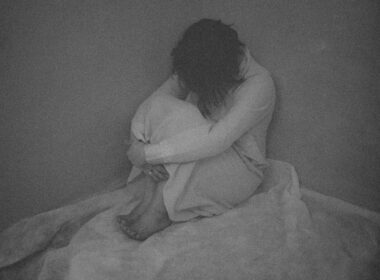
Coming from a home where expression of emotions was quite unsafe and dysregulated, art had a way of allowing me to express myself in safety and solitude.
Q2. You describe yourself as a “sensorial expressionist.” What does this mean, and how does it influence your work?
Yes, I describe myself this way because for me, artwork holds the pure expression of the essence of the creator. The intention behind my creations is always to return home to oneself, or to put it more simply, to come back to our senses. In a world that is constantly vying for our attention and pulling us away from our centre, art has a way allowing us to sense and feel what’s going on inside.
I am always mindful of this as both the artist and viewer. This ‘felt sense’ is also likely why my artwork tends to have so much texture and grit in its many layers. I invite viewers into a deeper sensorial experience that way as well as through the symbols and nature themed subjects that I paint.
Q3. Having lived across different countries and cultures, how has this shaped your view of people and everyday life?
Having such a rich cross cultural experience has made me more sensitive to many different ways that people interact and move through their moments of life. A morning in the Middle East involves an early call to prayer from the mosque while a morning in a French village involves church bells chiming people awake. The colours, textures and smells that I wade through in a busy bustling Bangkok sidewalk differ greatly from those that I would walk through in an urban Tokyo intersection.
All offer up very different sensory experiences, of course. However, living across several cultures has also made me very aware of how many aspects of life we truly share. When I enter into global scenes and start to connect and listen to the people living in them, I realise that most everybody longs for a life that is fulfilling. A life with warm hearted moments with family and friends, stability and meaningful connection. The more places I go with the more I realise how interconnected we all are.
Q4. What did your experience as an expressive art therapist teach you about creativity and human nature?
Working as an art therapist is such a rich experience that taught me more than I could ever list here. Ultimately though, it taught me that every human is highly creative, and yet, the human experience generally convinces people the absolute opposite.
Most people think creativity is something that a few people are born with. This is completely untrue. There’s so many ways to express creativity, from how a person puts themselves together in the morning, to how a person makes a meal or a business or repairs a rupture in a relationship.
The list is endless and goes far beyond painting. The conditioned mind creates so many limitations around creativity and it’s such a joy to open people up to their innate creative nature. That’s the work of an art therapist and it’s also the work of an artist because those who take in another person‘s creative expression often get inspired to uncover their unique creative voice as well.
Q5. Your paintings often incorporate maps, text, botanical imagery, and rich textures. What makes these elements meaningful to you?
Maps, as mentioned in my first response, take me back to some of my first memories of drawing on the back of them. And now living globally for the past three decades, maps are a strong symbol for the adventure-filled journey of a cross-cultural life. Text is important because words hold vibration and their inclusion in a piece adds deeper meaning into the mix. Text also is a reminder of the many ways we can express ourselves and be heard.
Botanical images always resonate with me as we are all fractals of this whole big natural world we share with all sentient beings.
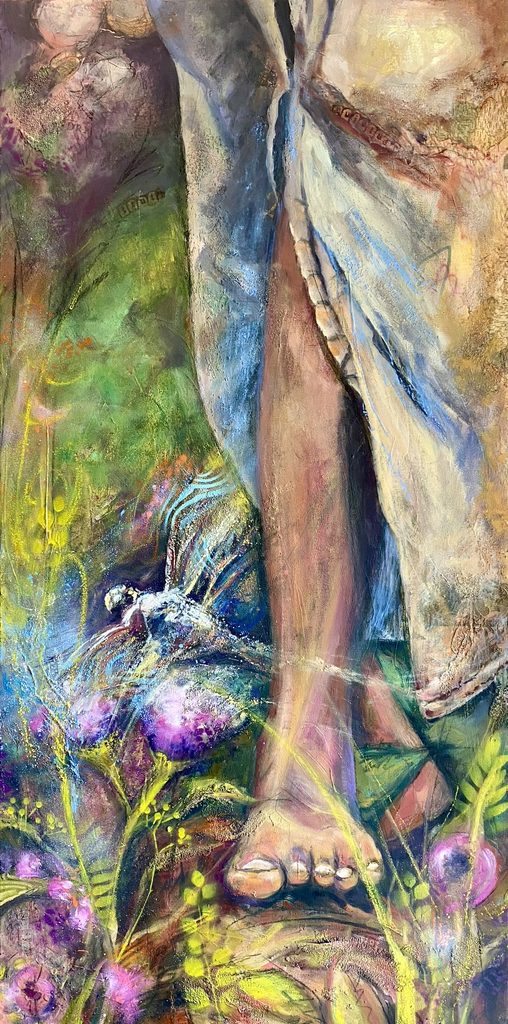
The plant kingdom is essential to our survival and thriving. Including it in my work touches on nature’s aliveness, beauty and richness. The layers of texture remind us that life is multifaceted and multilayered. Sometimes it involves lessons that are very challenging and require us to become resilient and gritty. This is where true life wisdom is earned.
Q6. Your work brings together both roughness and beauty. How do “grit and grace” shape your understanding of life?
I wouldn’t say that balance between “grit and grace” is something I consciously look for, however, in my 5 and 1/2 decades of living I have found that both are part of a full life experience. There are times to put the nose to the grindstone and tap into whatever higher power is available to get through a life challenge.
There are other times when everything aligns with such an ease and flow that the only thing to do is to recognise the grace that is carrying me and to say “thank you”. In my experience, this is what every soul signs up for in this thing we call “my life”. To sense in and experience it all, the highlights, the low lights and everything in between.
Q7. Your book Life in Full Colors explores creativity and transformation. How does painting allow you to express ideas differently from writing?
It depends on the kind of writing that I’m doing that shapes the answer to this question. You may have noticed that next to each painting on my website it’s a poem that poured through me either during or after my painting came through. For me, poetry and painting mostly come from flow state, that trancelike subconscious realm where timelessness is. Writing a book has its moments of flow state too, but then there are times where the more logical linear mind needs to come in.
Such as for breaking down concepts and ideas or organising the structure of a chapter, for example. Of course this can happen within a painting as well like when the linear mind pops up to mix colour or to work on a failed aspect of composition. Somehow, it feels that when I’m in the flow of painting or writing poetry the bulk of the time I’m not in my linear mind and am in a space that words cannot express. An unbounded place that allows for the full flow of my creative expression to come through.
Q8. After years of working in art therapy, what has surprised you most about returning to the art world as a practising artist?
How much deep innerwork and self growth within the subconscious realm benefits an artist’s self compassion, confidence, voice, and wellbeing. Returning to the art world was a reminder – through some artists I have been meeting – of the pain points I experienced in my younger years – confusion, insecurities, depression, anxiety, inner/outer relationship struggles, to name a few.
Artists are typically empaths, and this sensitivity generally forms from less than wonderful childhood homes where caregivers are unable to create safety, so a child develops an acute hypersensitivity to scan for safety in the environment.
Once these childhood wounds are brought from the shadow to the light and tended to, these pain points organically start to lift and hypersensitivity can get healed, integrated, and channelled into bold creativity. This is the place I am at in my life and career now, and I so love meeting fellow artists who have come to this point as well in their journey. Alchemists who can transform pain into pure beauty and powerful wisdom.
Q9. You bring painting, healing, writing, and teaching together in your practice. How do these different pursuits connect?
Oh, I definitely see these aspects as a synthesis of expression with the same creative purpose. All of creation is ever expanding through the cycles of transformation – life’s changeful deaths and rebirths. Painting, healing, writing and teaching are all ways of purposefully expanding.
Actually, at the moment, I am creating a group mentorship program around these 4 aspects for those who are longing to learn how to meet life’s changes with wonder and curiosity to access their expansion rather than collapse into resistance and victimhood. Stay tuned on that!
Q10. You continue to explore colour, texture, nature, and transformation. What would you like to discover next in your artistic practice?
I’m ready to discover or are these themes through a less representative and more abstract approach. Before I returned to art making and the masters program last year I was painting abstractly most of the time. Now that I have upleveled my abilities with realism I would love to revisit abstraction and play with the combination of abstract realism. I look forward to playing in that direction now.
Q11. Looking back, what confirmed that returning to your own art was the right decision?
A few moments come to mind such as the pure joy and timelessness that I experienced when I was deep into a drawing or painting only to come out with a finished piece that surprised me at how much my hard work and skills repetition was evident in the quality of my work. Also, as I became very aware of my strong artistic voice, not only did it thread through all my artwork, it also bridged into key areas of my life. My voice has grown in my sureness – I only give my energy to what lights me up and easily discern what can fall to the side.
Art is a way of knowing ourselves more deeply, and as am entering my second half of life, there is no better decision I could have made for myself.
Q12. What experiences have made you feel that becoming an artist was the right path for you?
Indeed, there are many moments that have made me feel that way. A big one is the connections and impact my art has on my collectors. When they share what drew them to invest in and collect a piece of my art and how the art speaks to them and impacts them in their environment I feel strongly, “This is why I became an artist”.
Q13. What would you say to artists who feel they have stepped away from creativity and wonder whether it is too late to return?
I would tell any artist who is wondering whether it’s too late to return to their creative path that there is no time in the realm of creativity. Life as a human is a highly creative act which naturally downloads into our creations. I spent many years away from artmaking working as a holistic healer before returning. Interestingly, often I hear when people take in my paintings is that they feel very enlivened, peaceful and grounded. I would hear these words from many of my clients after a healing session. That makes sense because at the end of the day it’s all energy and energy doesn’t die, it simply changes form.
So if you’re longing to change your form from whatever you’re doing now into one of a creative, you have everything you need being your unique self. Artistic skills can be learned and repeated over and over for strengthening, but nobody can bring all the life you’ve lived and the experiences you’ve had to pour into your creations. Only you can do that and it’s never too late, if you are alive then you are qualified as a creator. Whenever you choose!
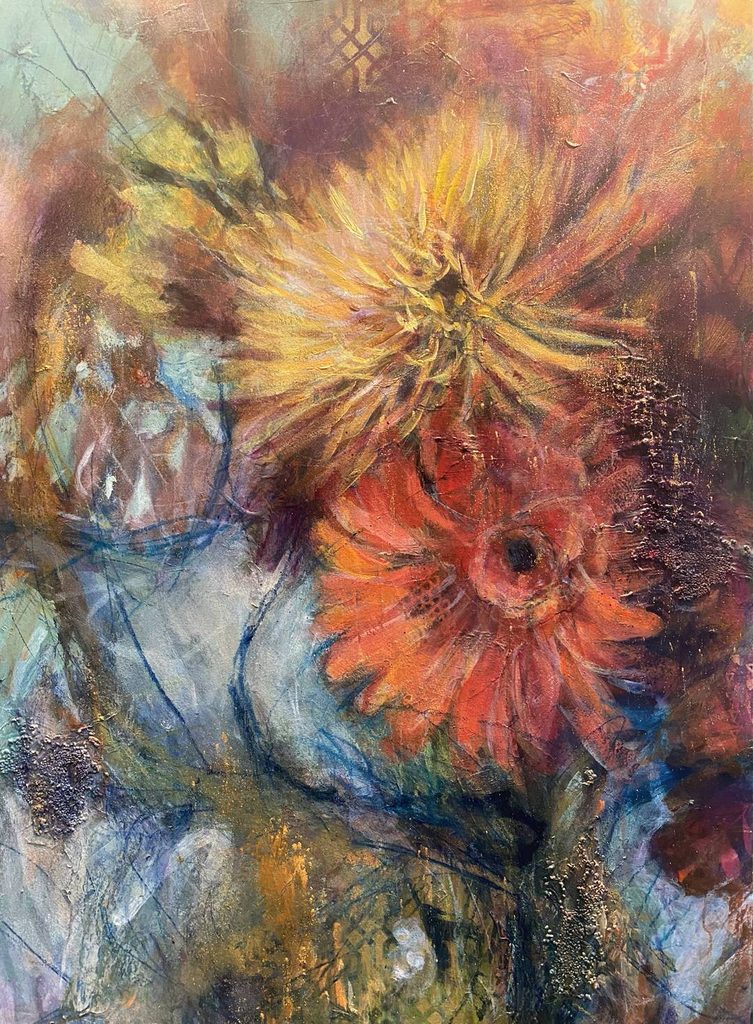
As our conversation with Corry came to an end, we found ourselves thinking about how much of modern life is designed to pull us away from ourselves, and how rare and precious it is to find something that brings us back.
We spend our days pulled in a hundred directions, by screens, by noise, by everything demanding our attention, until we lose touch with what we are actually feeling underneath it all. Corry’s whole practice is a gentle antidote to that. Her textured, layered paintings are made to slow you down, to make you sense and feel again, and to quietly guide you home to yourself.
There is something we all need in that, and something hopeful too. She is a reminder that the beauty, the meaning, and the sense of home we are so often searching for are not somewhere far away. They are already inside us, waiting for us to come back to our senses and notice.
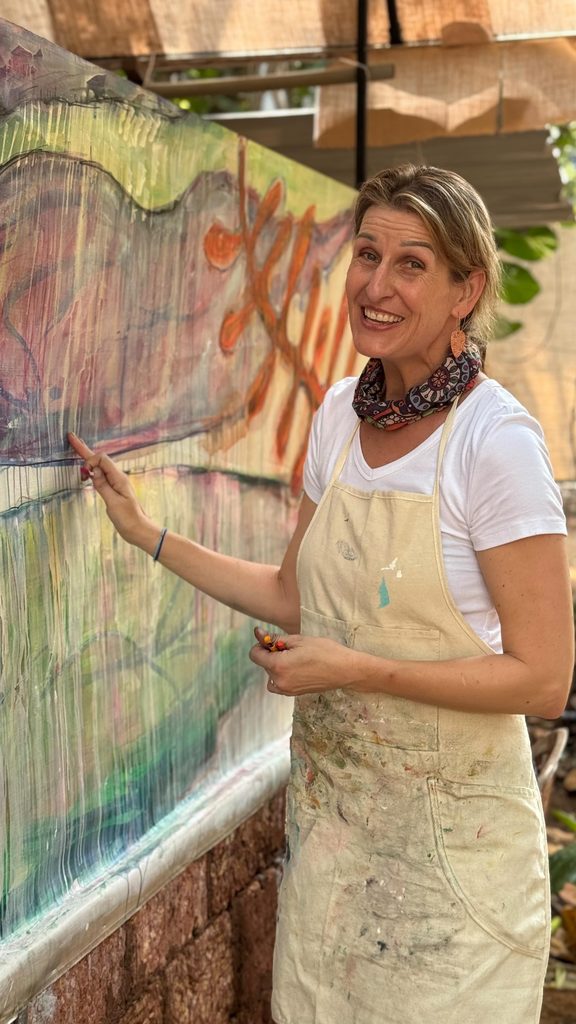
Corry is certain that every one of us is creative, even those who have spent their whole lives convinced otherwise, and that it is never, ever too late to return to that part of ourselves. She came back to her own art later in life, after years on a completely different path, and she is living proof of her own words, that if you are alive, you are qualified to create. In a world that treats creativity as a talent reserved for a chosen few, that is a genuinely liberating thing to hear.
For art lovers and collectors, Corry’s work brings a rare depth and calm into a space. Richly textured, nature-filled paintings, often paired with her own poetry, that reward slow, quiet looking and reveal more of themselves over time. People often say her work leaves them feeling grounded, peaceful, and more alive. To live with one of her pieces is to keep a quiet invitation on your wall, to slow down, to feel, and to come home to yourself.
Follow Corry MacDonald through the links below and see her work for yourself.
The spotlight is on, and this year, it could find you. Artist of the Year 2026 is now open for submissions.
So much remarkable art is seen only in passing, a single work in a show, an artist scrolled past online, a practice admired for a moment and then forgotten. Artist of the Year exists to change that: a beautifully made hardcover collectible book that brings 100 artists together in one place and preserves their work for years to come.
We welcome every kind of artist, across all mediums, subjects, and stages of a career. What matters is the work, and the thinking behind it. This year, we are honoured to have Jennifer Rizzo join us as Guest Curator.
From the 100 selected, one will be named Artist of the Year 2026, receiving a $500 cash prize, a trophy, and a dedicated four-page feature. Every other artist takes their place in the same edition, part of something far bigger than a single award.
So here’s the only question that matters: what if it’s you? Don’t wonder. Submit.