

The Art of Collecting — Part 03: Where Art Is Really Sold
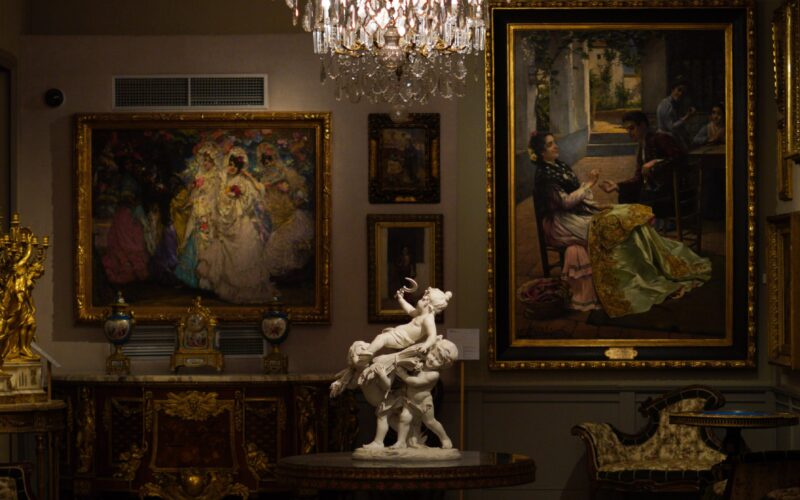
There comes a moment in every new collector’s life when liking art turns into wanting to own it.
You see a painting you cannot stop thinking about. You save the artist’s Instagram page. You look at it again the next morning. Then comes the slightly awkward question: How do I actually buy this?
Because buying art is not quite like buying a chair, a dress, or even an expensive piece of jewellery. There is no single shop where all the art is kept, no universal price tag, and no one place that tells you what everything is “supposed” to cost. A painting might be available directly from the artist, through a gallery, at an art fair, on an online marketplace, at an auction, or sitting quietly in a local exhibition.
And depending on your budget, some of these places make much more sense than others. So, if you are ready to move from looking at art to actually buying art, here is where the art is really sold.
Start With the Artist
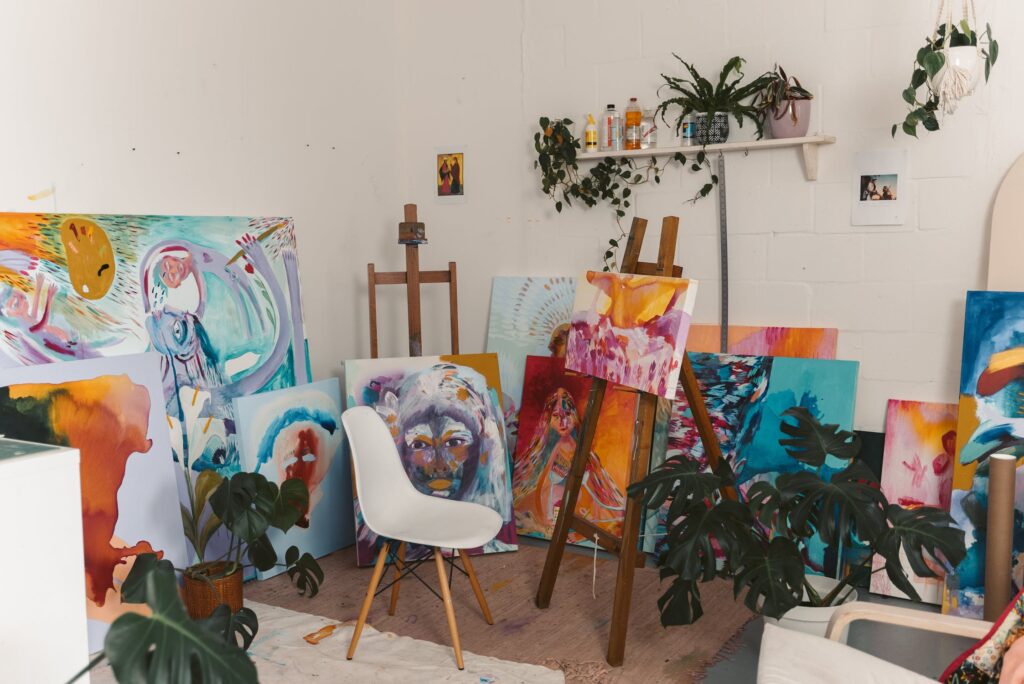
One of the most straightforward ways to buy art is also one of the most overlooked: buy directly from the artist.
Many artists sell through their own websites, Instagram pages, online shops, studio appointments, or exhibitions. If you discover an emerging artist whose work you love, there is a good chance you can contact them directly and ask what is currently available.
This can be particularly useful if your budget is on the lower or middle end of the market.
You might find:
- Original paintings
- Works on paper
- Drawings
- Photography
- Ceramics
- Limited-edition prints
- Small works made specifically for more accessible price points
Buying directly can also make the experience much more personal. You can ask how a piece was made, what inspired it, whether it is framed, how it will be shipped, and whether the artist has other works in a similar style.
The important thing is to treat the transaction seriously. Even if you are buying through Instagram, ask for an invoice or receipt, the artwork’s dimensions and medium, information about the edition if it is a print, and shipping details.
An Instagram DM can start a sale. It should not be the entire paperwork.
If You Have a Smaller Budget, Look Here First
You do not need thousands of dollars to begin collecting.
In fact, emerging artists, prints, editions, photography, small works, and works on paper can be some of the easiest places for a first-time collector to start.
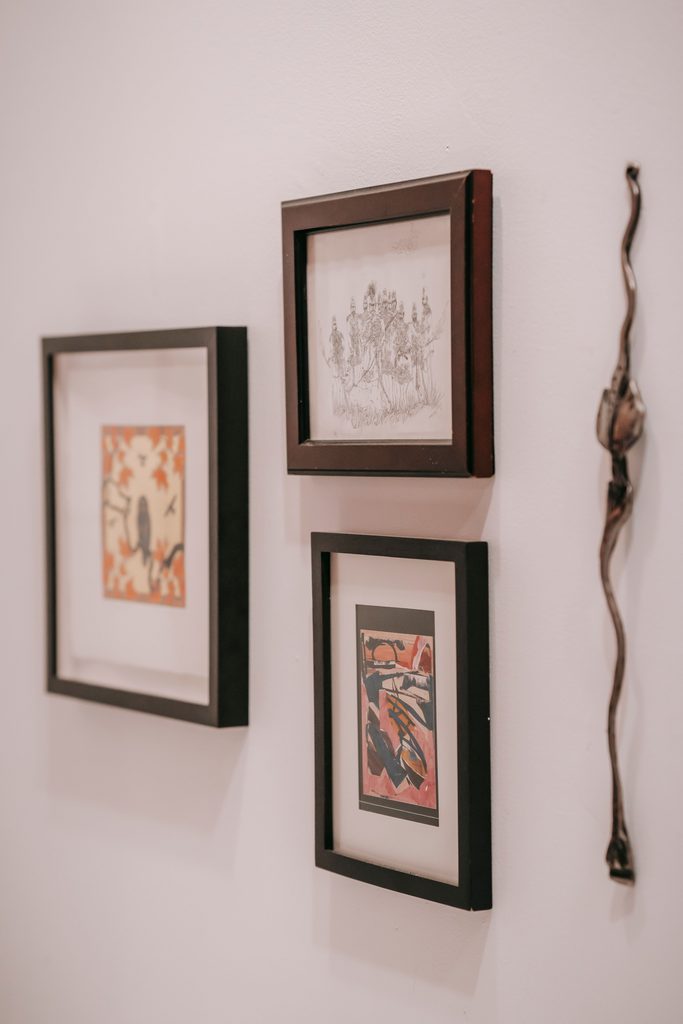
Online marketplaces such as Artsy have dedicated selections for works at different price levels, including art under $500, $1,000, and $5,000. Local artist markets, student exhibitions, open studios, design shops, independent galleries and art fairs can also be surprisingly good places to look.
And there is another option that deserves more attention: prints and editions.
A limited-edition print is not the same thing as owning the original painting, but it can still be a legitimate part of a collection. Because an edition can contain multiple impressions, the price may be considerably more accessible than a one-of-a-kind original. Just make sure you understand what you are buying.
Ask:
Is it an original or a reproduction?
Is it part of a limited edition?
How large is the edition?
Is it signed and numbered?
Who produced it?
The more you know before paying, the better.
The $100–$1,000 Zone
This is where buying art can become particularly fun for a new collector.
Depending on the artist, medium and market, this budget can open up original drawings, small paintings, photography, prints, ceramics and works by emerging artists. You are unlikely to be shopping for the most established names at this level, but that is not really the point.
You are discovering artists earlier in their careers. And you do not have to think of that as “buying cheap art.” You are buying work at a different stage of an artist’s career.
Look at independent artists’ websites. Follow local galleries. Explore online platforms. Visit degree shows and artist-run exhibitions. Check the websites of art schools and cultural organisations in your city. Follow artists whose work you genuinely like rather than searching only for something that might become valuable later.
The latter can turn collecting into a very stressful version of stock picking. You are allowed to simply love the work.
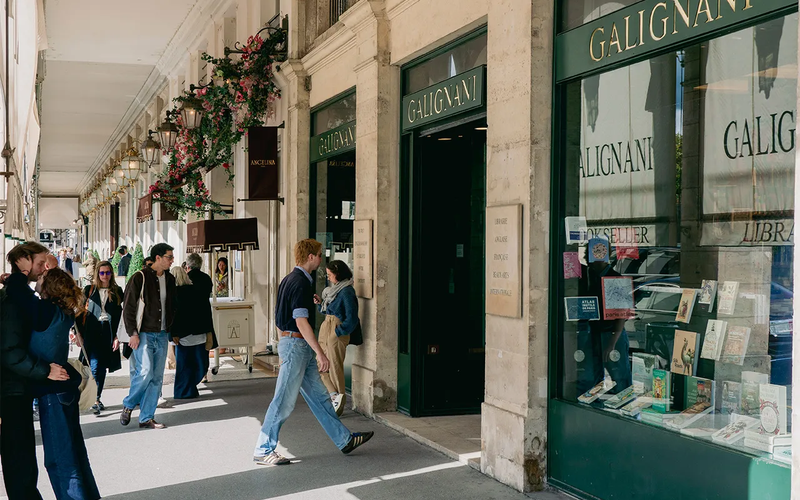
Galleries: Where the Art World Gets More Serious
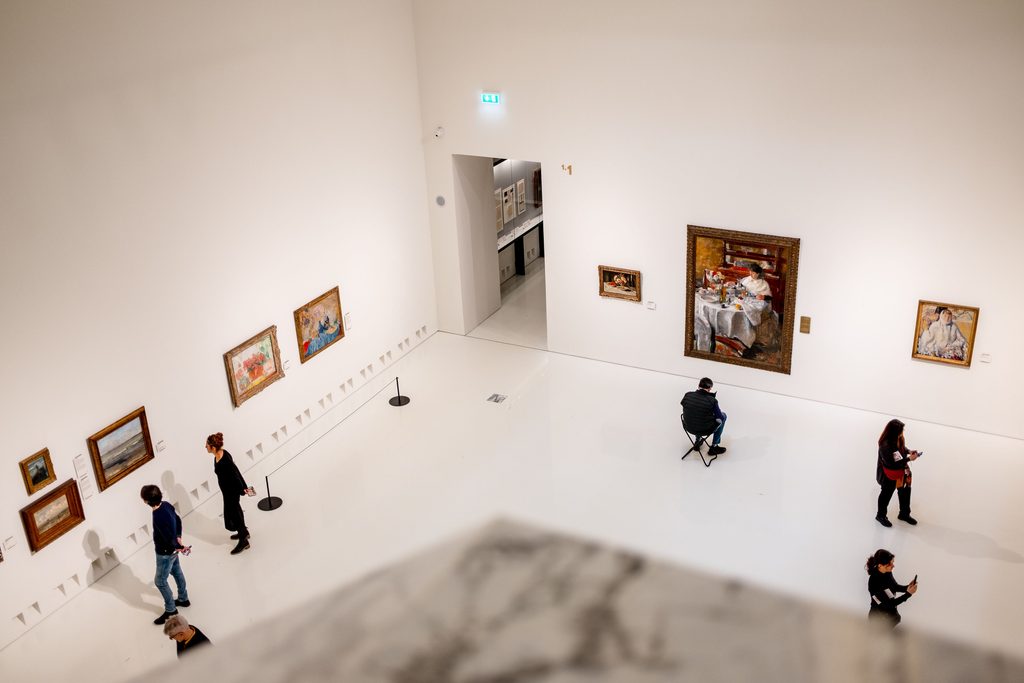
Once you move into higher price points, commercial galleries become increasingly important.
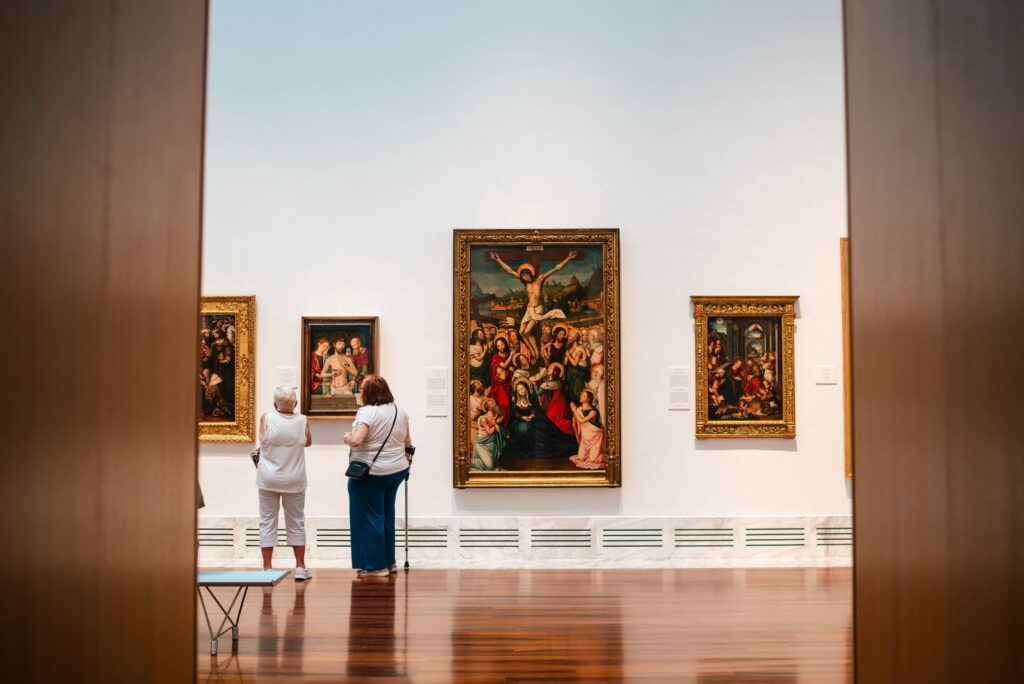
A gallery represents a group of artists and sells their work to collectors, institutions and other buyers. If you visit a gallery exhibition, the pieces on the walls are generally available for purchase unless marked otherwise.
Gallery sales are usually part of what is called the primary market: you are buying a work from the artist’s gallery while the artist is actively producing and selling their work. The gallery also does much of the work around the sale. It may handle the artist’s representation, exhibitions, promotion, collector relationships, paperwork and shipping.
And yes, the gallery takes a commission. That is one reason you should not automatically assume that buying directly from an artist is always “better.” Galleries can provide valuable infrastructure around an artist’s career and help place their work with serious collectors and institutions.
One Thing That Surprises New Collectors
The price may not be on the wall. Some galleries list prices openly. Others will say “price on request.” This can feel intimidating when you are new, but it is perfectly acceptable to ask.
You can simply say:
“Could you tell me the price of this work?”
That is a normal question.
Art pricing can depend on the artist’s reputation, exhibition history, demand, medium, size, provenance and other factors, rather than following a fixed formula.
Read Part 2 of our series The Art of Collecting to find out What Makes One Painting Worth More than Another.
What About Art Fairs?
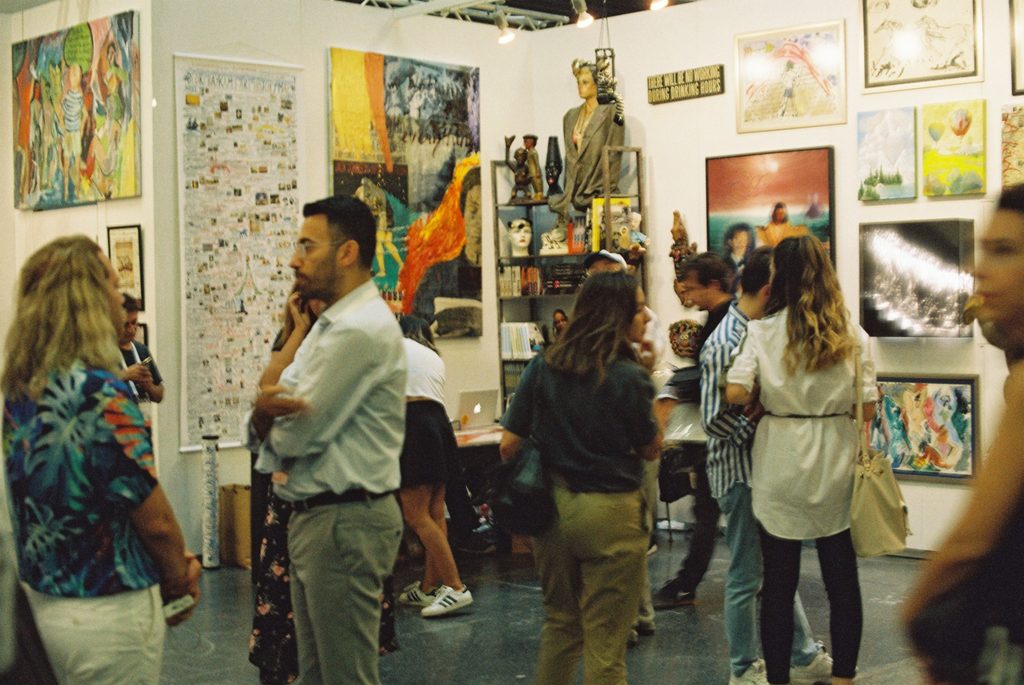
Imagine walking into one enormous building containing dozens, sometimes hundreds, of galleries. That is essentially an art fair.
Instead of travelling around different cities to visit individual galleries, collectors can see many galleries and artists in one place. Major fairs can be enormous, while smaller regional fairs can feel much more approachable. You do not have to arrive at an art fair ready to spend $50,000.
Go to look. Take photographs where permitted. Save artists’ names. Ask questions. Compare prices. Notice which galleries represent which artists. If something genuinely stays with you, then go back and have a conversation.
Art fairs are particularly useful for discovering artists because you can see how different galleries present their work and compare pieces within the same environment. They are also a good reminder that the art market is much larger than the handful of famous artists you may already know.
Online Marketplaces: The Digital Art Gallery
For many new collectors, buying online is probably the least intimidating starting point.
Platforms such as Artsy bring together galleries, artists, collectors and auction houses, allowing buyers to browse works without physically visiting every gallery that represents them. Online buying also gives you something that a crowded art fair cannot always provide: time to think.
You can compare works, research an artist, look at previous exhibitions and return to the same piece several times before making a decision. Online platforms have become particularly useful because collectors cite convenience, access to information and access to artworks they may not otherwise encounter as reasons for buying online.
But do not buy from a website just because the image looks beautiful. Before paying, check:
Who is selling it?
Where is the artwork located?
What is the exact medium and size?
Is it framed?
What is the shipping cost?
Are taxes or import duties involved?
Is there a certificate of authenticity?
What is the return policy?
That last one matters particularly when buying internationally.
When the Price Moves Into the Thousands
This is where you should slow down. If you are spending several thousand dollars on a work, do more than fall in love with the image.
Research the artist. Look at their exhibition history. See which galleries represent them. Find out whether their work has appeared in museums, institutions or established collections. Search for comparable works and previous sales where those records are available.
You are not trying to calculate the “correct” price of the painting because there often isn’t one. You are trying to understand why this particular work costs what it costs.
And if you are buying from a gallery, ask questions.
A good gallery should be able to tell you about the work, the artist and the terms of the sale. Depending on the circumstances, there may also be some room for negotiation, although discounts vary significantly by gallery and artist. One important rule: do not negotiate like you are haggling at a flea market.
If you genuinely want the work, ask politely whether there is flexibility in the price or whether the gallery offers a collector discount.
Then There Are Auctions
Auctions are a completely different experience.
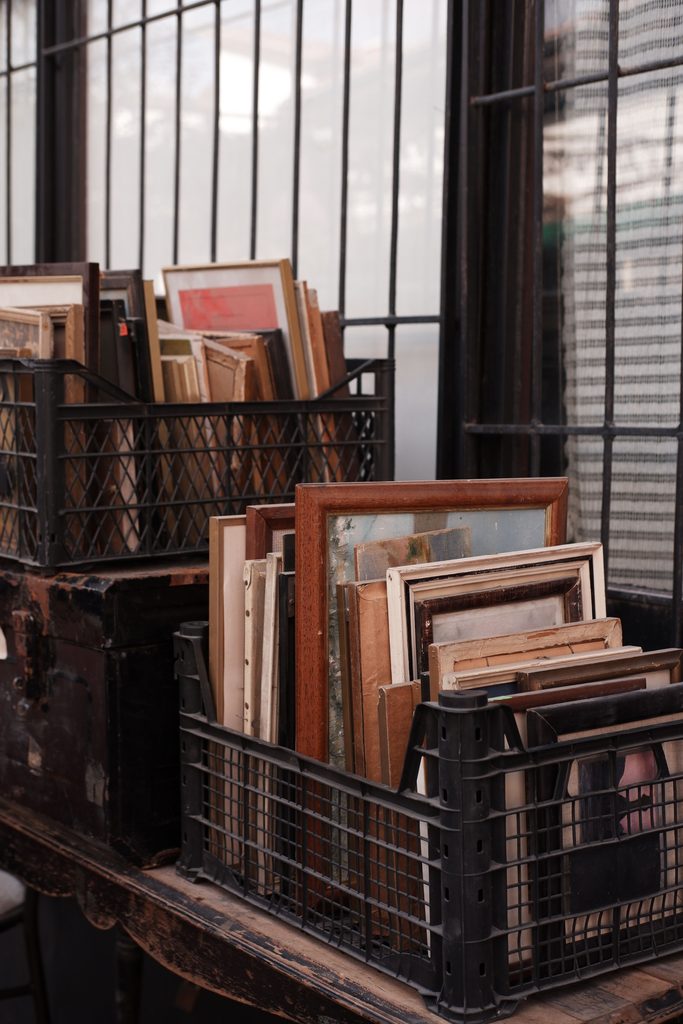
Here, you are generally buying a work from the secondary market rather than directly from the artist or their representing gallery. The basic idea is simple: a work is offered for sale, people bid, and the highest successful bid wins. But the number you see beside the artwork is not necessarily the amount you will ultimately pay.
At auction, the hammer price is the winning bid before additional charges such as the buyer’s premium and applicable taxes. So if your maximum budget is $5,000, do not necessarily bid up to $5,000 without checking the auction’s fees.
Auctions can be live, online or hybrid. Major houses such as Christie’s offer both live and online auctions, while also offering private sales.
For a first-time collector, online auctions of prints, works on paper or contemporary art can be a less intimidating way to understand the process.
Just decide your maximum before the bidding starts. Auction excitement has a funny way of making your original budget disappear.
Before You Pay: Ask These 7 Questions
Whatever the price, never be afraid to ask.
1. Is this an original, print or edition?
2. What exactly is the medium?
3. What are the dimensions?
4. Is it framed?
5. Does the price include shipping, or is that separate?
6. Will I receive an invoice, receipt or certificate of authenticity where appropriate?
7. What is the return or cancellation policy?
If you are buying a higher-value work, also ask about provenance, condition and previous exhibition history where relevant. Auction houses, for example, provide condition information and research provenance as part of their buying process.
These questions are not signs that you do not know enough about art. They are signs that you are buying carefully.
You Don’t Have to Start Big
There is a strange idea that being a “real” collector means buying expensive art. It doesn’t.
Your first piece might be a $100 print you bought from an artist you discovered online. It might be a tiny painting from a local exhibition. It might be a ceramic piece you found at an art fair. It might eventually become a $5,000 painting you spent six months researching before finally bringing home.
The important part is that you started paying attention to where your art comes from and why you are buying it.
The art market can feel complicated because it is complicated. There are galleries, dealers, fairs, online platforms, auctions, artists, collectors and an entire vocabulary that can make the outside world feel like it has been deliberately locked out.
But once you understand the basic routes, it becomes much less mysterious. You do not need to know everyone. You do not need to have a huge budget. And you certainly do not need to pretend you understand a painting you do not understand.
Start with the artists you keep coming back to. Find out where they sell. Ask questions. Compare prices. See the work in person when you can. Read the small print before you pay.
And most importantly, buy something because you want to live with it. That is still, and will always remain, one of the best reasons to collect art.
Editor’s Note:
Last day to submit to our Open Call for 101 Art Book: Faces Edition. The submissions close on September 10, 2026. Head to the application form now and be a part of our new 101 Art Book.