


When Art Gets Spooky: 5 Paintings To Look At This Halloween Season
Halloween has a way of making us look twice at things we might otherwise walk past. Shadows feel a little darker, familiar stories take on a mysterious twist, and suddenly, we find ourselves drawn to anything that feels a little eerie. But long before haunted houses, horror movies, and Halloween decorations became part of the season, artists were already exploring the unsettling side of human imagination.
Some paintings make us uneasy without showing anything frightening at all. Others invite us into strange dream worlds, capture moments of pure terror, or leave us wondering what exactly we are looking at. And perhaps that is what makes spooky art so fascinating. It does not always give us answers. Sometimes, it simply leaves us with a feeling we cannot quite explain.
This Halloween, we are looking beyond the usual ghosts and ghouls to revisit five famous paintings that have fascinated, unsettled, and intrigued viewers for generations. From mysterious figures to nightmarish visions, these artworks remind us that a good scare does not always need to jump out at us. Sometimes, it has been waiting on the canvas all along.
1. The Nightmare By Henry Fuseli (1781)
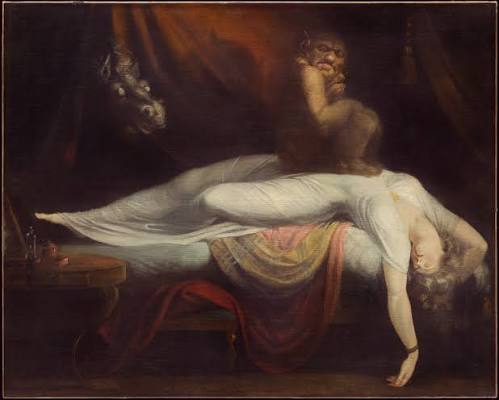
Few paintings capture the strange feeling of a bad dream quite like The Nightmare by Henry Fuseli. At first glance, we see a woman lying across a bed, her head and arms hanging over its edge. A small, grotesque creature sits on her chest, while a horse with pale, almost ghostly eyes emerges from the darkness behind her. The scene feels intimate and deeply unsettling, as though we have walked into someone’s private nightmare without being invited.
Painted in 1781, the work became one of Fuseli’s best-known paintings and helped establish his reputation for exploring the mysterious, emotional, and supernatural sides of human experience. Rather than presenting a traditional ghost story, he gives us something much more familiar: the feeling of being trapped inside a frightening dream.
The painting’s power lies partly in its ambiguity. Is the woman experiencing a nightmare? Is the creature a symbol of something she fears? Why does the horse appear so suddenly from the darkness? Fuseli leaves these questions open, allowing our own imaginations to fill in the gaps.
The title itself adds another layer of intrigue. The word nightmare has historically been associated with the idea of a supernatural presence pressing down on a sleeping person, an association that makes the creature sitting on the woman’s chest particularly unsettling.
For Halloween, The Nightmare is a reminder that sometimes the most frightening monsters are the ones our minds create when the lights go out.
2. The Scream By Edvard Munch (1893)
There are paintings we recognize instantly, even if we have never stood in front of the original. Edvard Munch’s The Scream is one of them.
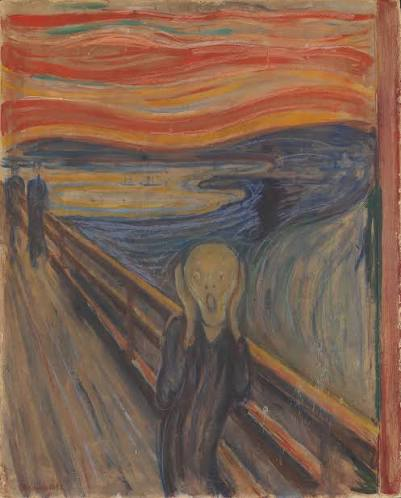
A figure stands on a bridge, clutching its face as its mouth opens in an expression of overwhelming distress. Behind it, two figures walk away, seemingly unaware of what is happening. The sky swirls in intense shades of orange and red, while the landscape seems to ripple around the central figure.
Created in 1893, The Scream is often associated with anxiety, alienation, and the overwhelming intensity of modern life. Munch drew inspiration from a personal experience of feeling a great, infinite scream passing through nature. He transformed that sensation into an image that feels both deeply personal and strangely universal.
What makes the painting so compelling is that the figure’s fear seems to spread into everything around it. The bridge, the sky, and the landscape no longer feel stable. Even the colors seem to vibrate with emotion. Instead of showing us a frightening creature or a supernatural event, Munch makes an ordinary setting feel profoundly disturbing.
And that is exactly why the painting belongs in a Halloween art roundup. Its horror does not come from a monster hiding in the shadows. It comes from a feeling we recognize, even when we cannot quite put it into words.
Whether you see it as a symbol of panic, loneliness, or the overwhelming noise of the world, The Scream reminds us that fear can take many forms. Sometimes, it looks less like a ghost and more like a moment when everything suddenly feels too much.
3. Saturn Devouring His Son By Francisco Goya (c. 1819–1823)
If Halloween had a darker corner reserved for paintings that are genuinely difficult to forget, Francisco Goya’s Saturn Devouring His Son would certainly belong there.
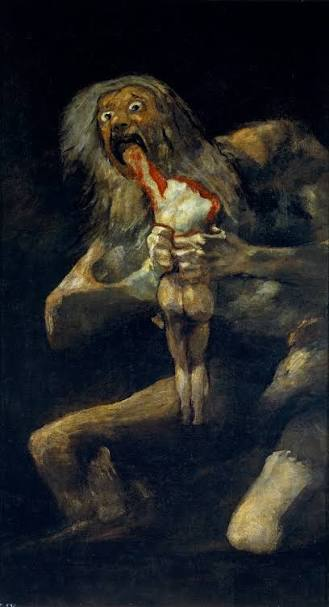
The painting depicts the mythological Titan Saturn devouring one of his children. With wide, staring eyes, an open mouth, and a body emerging from a pitch-black background, Saturn appears almost feral. His hands grip the small, lifeless figure, creating an image that feels raw, violent, and deeply disturbing.
Goya created the work as part of a group of paintings now known as the Black Paintings, which he made directly onto the walls of his home near Madrid. These works were not originally intended for public display. They explored dark, unsettling subjects and were marked by bleak imagery, expressive figures, and a sense of psychological intensity.
The story behind the painting comes from Greek mythology. Saturn, known as Cronus in Greek tradition, learns of a prophecy that one of his children will overthrow him. In an attempt to prevent his own downfall, he devours his children. The myth is already horrifying, but Goya’s interpretation makes it feel immediate and almost unbearable to look at.
Rather than presenting a distant mythological scene with idealized figures, Goya strips away the grandeur. There is no beautiful setting or heroic composition to soften the subject. There is only darkness, fear, and an act of desperate violence.
The painting has inspired countless discussions about power, destruction, and the fear of losing control. Although its precise personal meaning remains debated, its emotional force is unmistakable. It may not be the most cheerful artwork to revisit before a Halloween party, but it is a powerful example of how artists can transform an ancient story into something that feels startlingly human.
4. The Isle Of The Dead By Arnold Böcklin (1880)
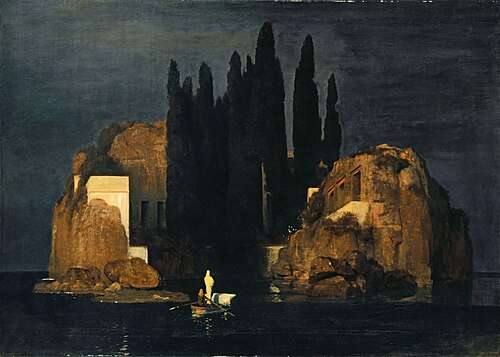
Imagine approaching a small island surrounded by still, dark water. Towering rock formations rise from the shore, tall cypress trees stretch toward the sky, and a tiny boat carries a white, shrouded figure toward an opening in the cliffs. There is no visible sign of life, no welcoming shore, and no clear indication of what lies ahead.
This is the haunting world of The Isle of the Dead by Swiss symbolist painter Arnold Böcklin. First painted in 1880, the work became one of Böcklin’s most celebrated compositions. Interestingly, he created several versions of the painting, each offering a slightly different interpretation of the same mysterious scene.
Unlike the dramatic terror of Goya’s Saturn Devouring His Son, Böcklin’s painting invites us into a quieter kind of unease. Nothing visibly frightening is happening. The water is calm, the trees are still, and the boat moves gently toward its destination. Yet the atmosphere feels heavy with meaning.
The island has often been interpreted as a place associated with death, remembrance, or the passage into another world. The white figure in the boat, accompanied by what appears to be a coffin, strengthens this impression. Still, Böcklin never provided one definitive explanation for the scene, leaving viewers free to bring their own thoughts about mortality and the unknown to the painting.
Its influence also reached beyond the art world. The painting captivated viewers across Europe and inspired numerous artists, writers, and musicians. Its mysterious atmosphere has continued to resonate with audiences who are drawn to images that feel suspended between reality and imagination.
For Halloween, The Isle of the Dead offers a different kind of spooky experience. It does not ask us to scream or look away. Instead, it invites us to sit with the mystery, wonder where the boat is going, and imagine what might be waiting on the other side.
5. The Face Of War By Salvador Dalí (1940)
Surrealism has always had a special relationship with the unsettling. By bringing together familiar objects in unfamiliar ways, surrealist artists often create images that feel like fragments of a dream, or perhaps a nightmare we cannot quite remember.
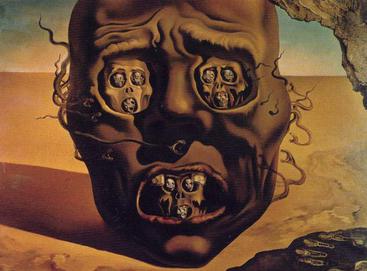
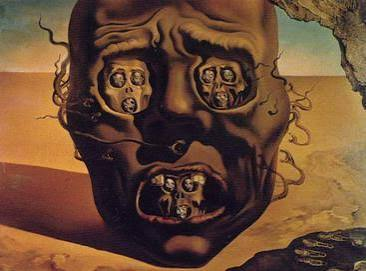
Salvador Dalí’s The Face of War is a striking example. Painted in 1940, the work presents a large, skeletal face against a barren, desert-like landscape. Its expression is frozen in terror, with its mouth and eye sockets filled with smaller, repeating faces. These faces contain yet more faces, creating a disturbing visual pattern that seems to multiply endlessly. Snakes surround the head, adding to the sense of menace.
Dalí created the painting in the aftermath of the Spanish Civil War and during the wider devastation of World War II. Its imagery reflects the suffering, destruction, and psychological horror associated with conflict. Rather than depicting a specific battlefield, he turns war itself into a monstrous presence.
The repeated faces are particularly unsettling. They suggest suffering that does not end with one person or one moment. Every expression of anguish seems to contain another, creating a visual echo that is difficult to escape. The empty landscape surrounding the face makes the image feel even more isolated, as though this horror exists in a world stripped of everything else.
Dalí’s dreamlike approach allows the painting to operate on several levels. It is disturbing as an image, but it also carries a much heavier message about the consequences of human violence. Its horror is not simply imaginary. It points toward suffering that people have inflicted on one another in the real world.
That distinction makes The Face of War a powerful addition to a Halloween art list. While its imagery may feel like something from a supernatural thriller, the emotions behind it are painfully real. Sometimes, the most frightening art is not the art that invents a monster. It is the art that asks us to look at what humanity is capable of becoming.
A Little More Spooky Art For Your Halloween Watchlist
If these five paintings have you in the mood to explore more unsettling corners of art history, there are plenty of other works worth discovering. Here are a few to add to your list:
- The Witches’ Sabbath by Francisco Goya: A mysterious gathering of figures surrounding a large, goat-like creature, filled with the unsettling imagery of witchcraft and superstition.
- The Garden of Earthly Delights by Hieronymus Bosch: A fantastical triptych filled with strange creatures, bizarre punishments, and surreal scenes that become more unsettling the longer you look.
- The Death of Marat by Jacques-Louis David: A striking depiction of a murdered revolutionary that transforms a moment of political violence into an image of haunting stillness.
Each of these works approaches darkness differently, reminding us that spooky art can be mysterious, symbolic, psychological, or even unexpectedly beautiful.
Let Art Give You A Little Halloween Fright
One of the loveliest things about art is how it can change the way we see the world. A painting can make an ordinary room feel unfamiliar, turn a familiar expression into something unsettling, or leave us thinking about a single image long after we have moved on. And during Halloween, when we are already drawn to the mysterious and the macabre, these artworks offer the perfect excuse to explore a different side of art history.
From the nightmare that unfolds in Fuseli’s bedroom to the silent island imagined by Böcklin, each painting reminds us that fear is not always about what we can see. Sometimes, it is about what we suspect, what we imagine, and what we cannot fully explain.
So, this Halloween season, why not trade a few minutes of scrolling through spooky decorations for a closer look at these famous works? Visit them online, explore their stories, and see which one stays with you the longest. Just a little warning: you might find yourself looking at the shadows a little differently afterward.