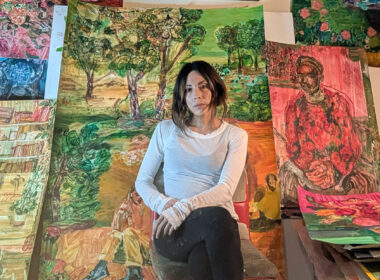

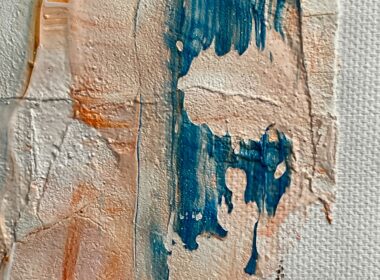

In her bold colour-block paintings, Júlia Martins uses warm colours & abstraction to paint nature

At Arts to Hearts, we are endlessly moved by artists who carry their roots with them wherever they go who live across countries and cultures and still manage to make work that feels like it comes from somewhere deeply, specifically true.
There is a particular warmth that comes from that kind of practice. A sense that everything the artist has absorbed and experienced and lost and found again is present in the work, even when it is not immediately visible.
We built our Best of the Art World editorial around exactly that search and today, we are so genuinely delighted to bring you Júlia Martins Miranda.
Júlia was born in Brazil and has since lived in Milan, New York, and now Sicily and the way she talks about each of those places tells you everything about how deeply she pays attention to where she is and what it does to her.
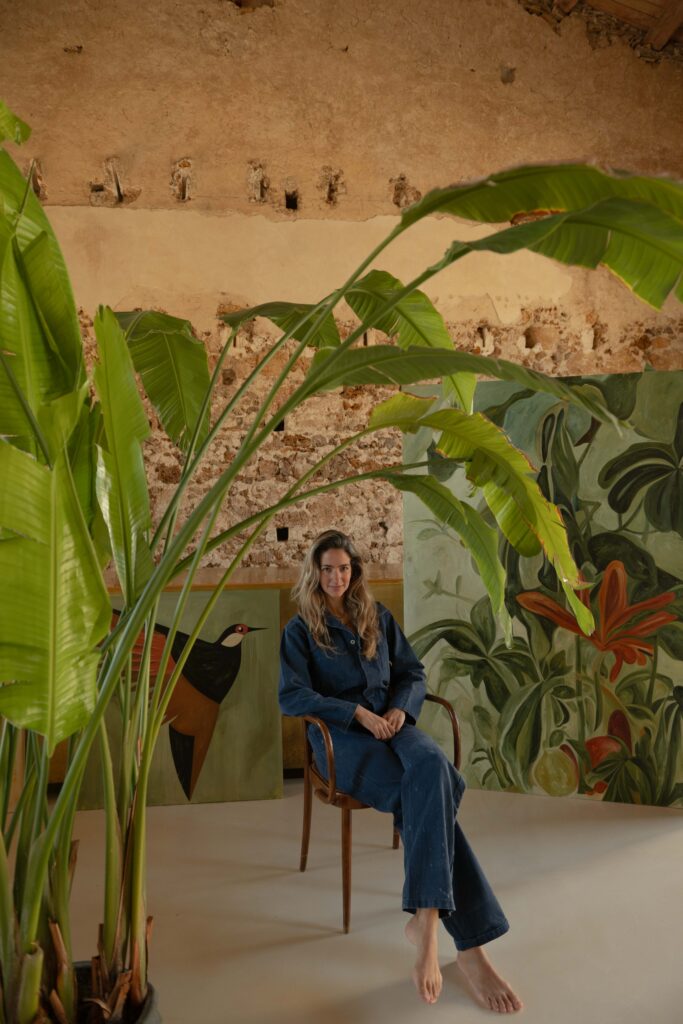
Milan challenged her. New York refined her. And Sicily, with its particular sense of isolation, gave her the space to finally go all the way back to the beginning to her Brazilian roots, to the warmth and exuberance of her childhood, to the original impulse behind everything she has always made.
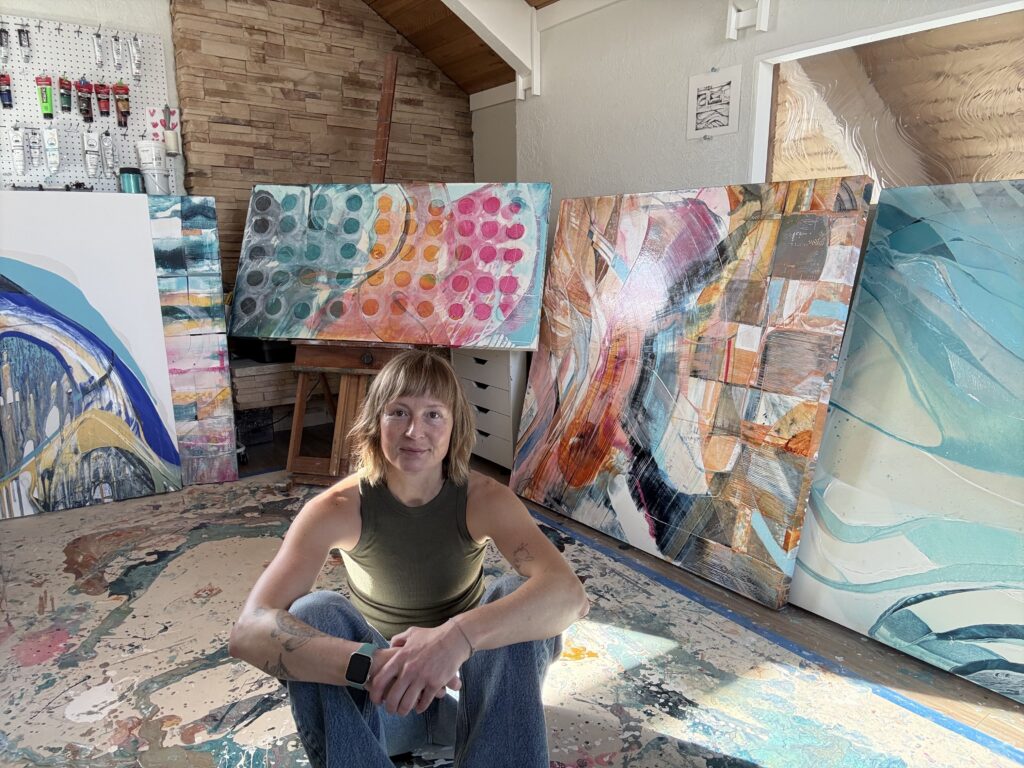
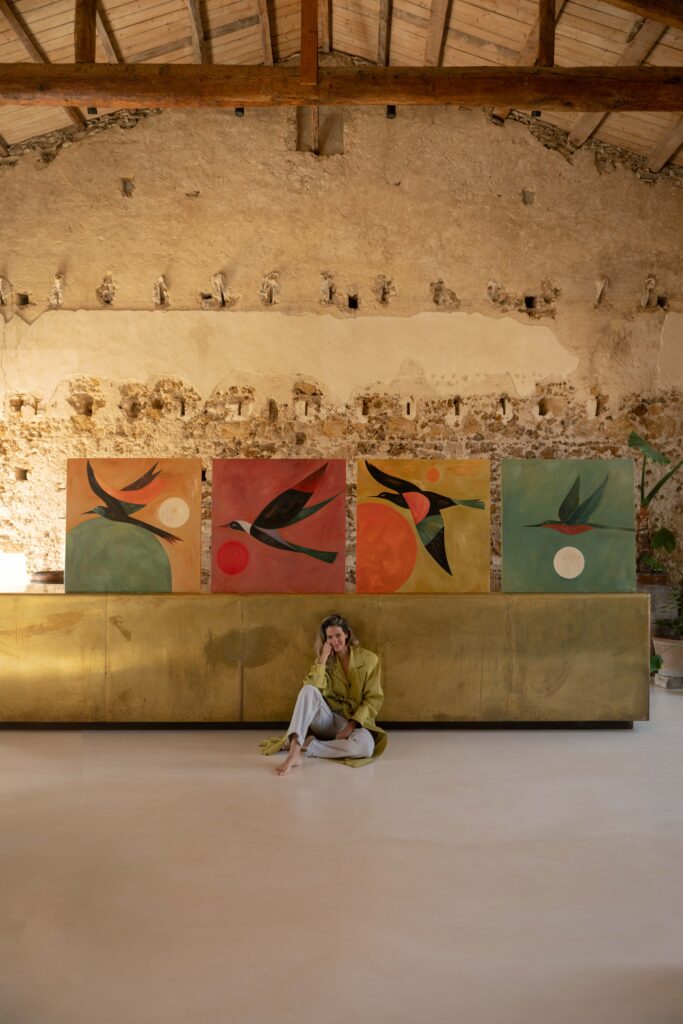
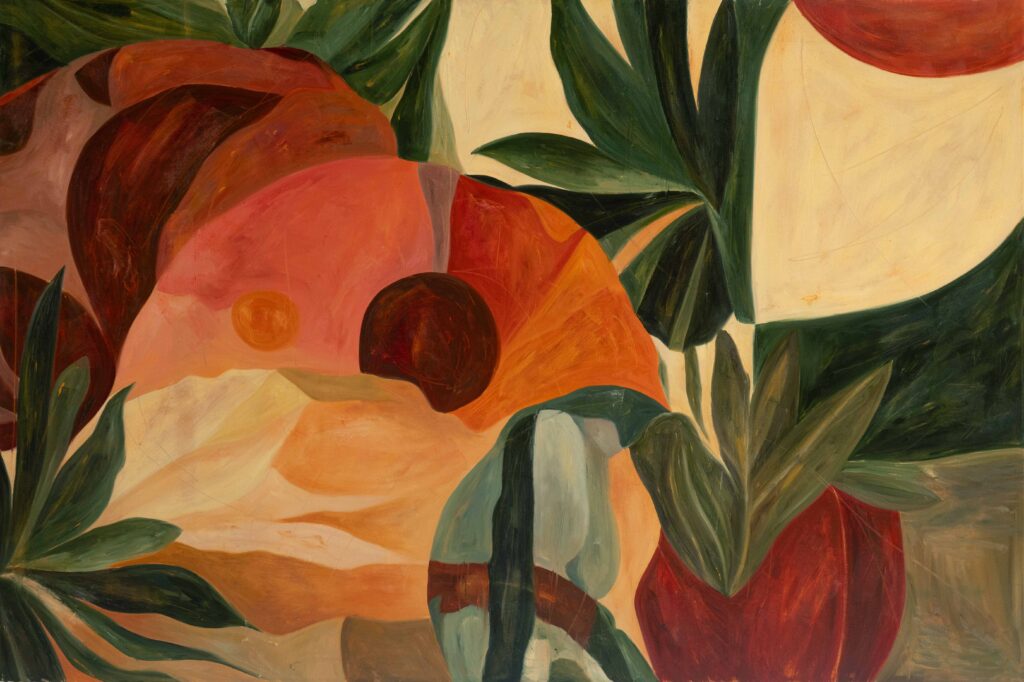
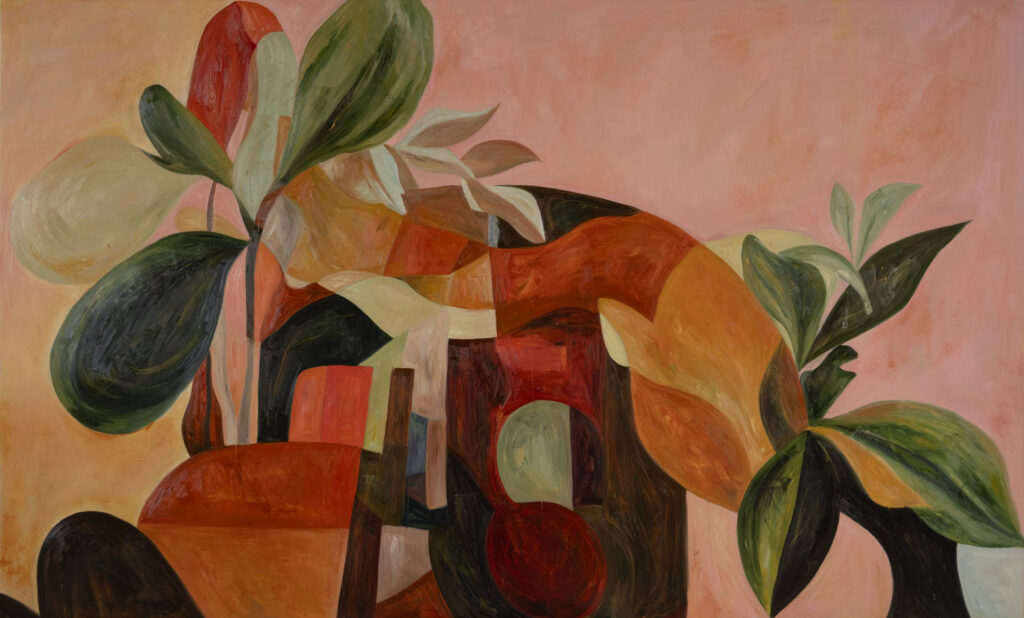
Her paintings carry all of that. Warm oranges, buttercup yellows, apricot tones that feel less like colour choices and more like emotional temperatures. Simplified forms and stylised plants and landscapes that are not trying to reproduce reality but to capture what memory does to it the way it distorts certain things, softens others, and keeps only what feels most essential. .
And painting is just one part of who she is. Júlia is also a photographer, a musician, and a writer and the way she moves between those practices, each one holding a different emotional register, tells you something important about the depth and range of what she is building.
Let’s get to know Júlia through our conversation with her, where she shares the childhood warmth that never left her, the cities that shaped her, and what it really means to carry your roots all the way home.
Q1. Could you share a bit about your background and how living between Brazil, Milan, New York, and Sicily has shaped your artistic identity and visual language?
I’m originally from Brazil, where I grew up surrounded by a large, loving family and a deeply supportive environment. It was there that I first developed a natural connection to art and creativity in its many forms. Living in Milan marked an important turning point for me. It challenged my aesthetic instincts and pushed me to question my creative process more critically.
That experience forced me out of my comfort zone and expanded the way I approached my work. By the time I moved to New York, I had a clearer sense of what I wanted to achieve as an artist. The city’s energy, diversity, and constant exchange between creatives helped me refine my visual language and strengthen my artistic identity. It remains one of the most inspiring places in the world for me.
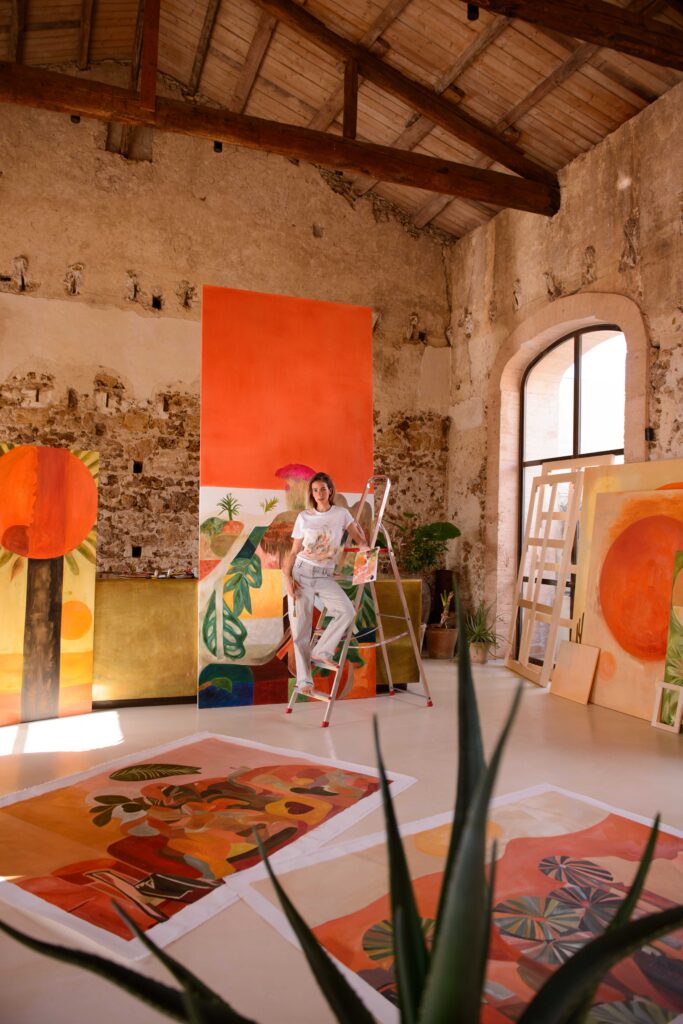
Today, Sicily has become my place of production and reflection. The sense of isolation that comes with living on an island has allowed me to fully immerse myself in my practice while reconnecting deeply with my Brazilian roots. Bringing together everything I’ve experienced and absorbed over the years, Sicily became the ground where my Pindorama series could fully emerge.
Q2. Your work feels deeply tied to memory and atmosphere, when you think back to your childhood in Brazil, what images or feelings stayed with you most strongly?
The warmth of people I was constantly surrounded by, their love and support, the warm days, the constant presence of the sun, the exuberance of nature. I grew up in an environment where individuality was not only accepted, but celebrated, and I think that freedom shaped me deeply. My childhood was a happy one. I feel very nostalgic about those times, and I think it reflects in my work.
Q3. Your paintings use simplified, stylized forms rather than photographic realism, what draws you to simplification as a visual language?
I’m also a photographer, and even in photography, I’m not interested in documenting things exactly as they are. There’s always a veil of interpretation that makes the image feel less real and more subjective. I think that has always been a very natural approach for me.
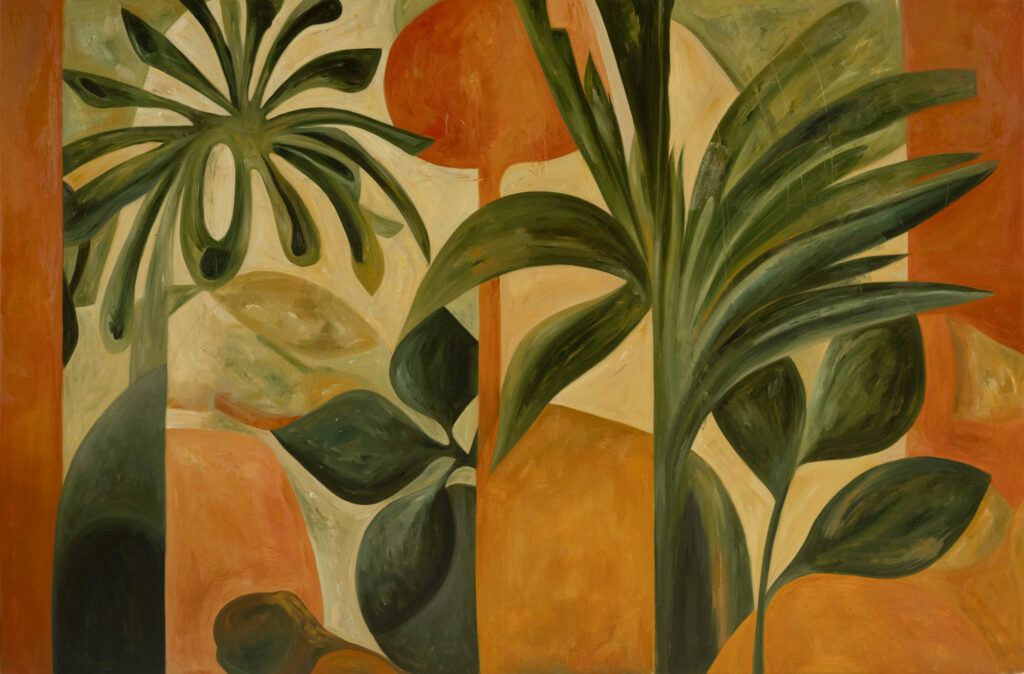
Simplifying and stylizing forms allows me to work through memory and emotion rather than reality itself. I’m not interested in faithfully reproducing a plant, a bird, or a landscape. What interests me is how these elements become transformed through imagination, how memory distorts things, exaggerates certain details, softens others, and reveals what feels most essential.
Q4. You describe your work as being built on “essential shapes” what do those shapes represent for you?
I think what I mean by essential shapes is eliminating what isn’t necessary to convey the feeling of a painting. I believe simplicity leaves space for imagination. It can be bold and direct.
Q5. Your palette feels especially warm and luminous does that choice come intuitively, or is it something you consciously protect from cooler tones?
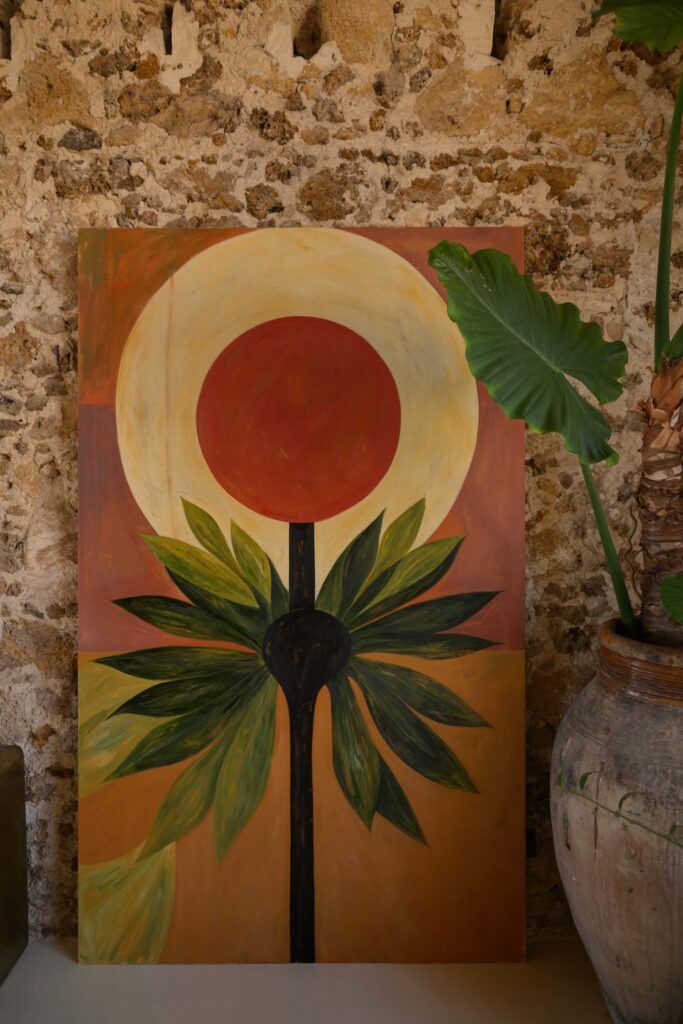
These warm tones live in me very naturally. They appear instinctively in my paintings, and they’re also part of the visual identity of my photography work. Colors like orange, yellow, and apricot feel deeply connected to memory, sunlight, warmth, and the emotional atmosphere I’m trying to create. I think the darker and cooler tones find their space more strongly in my music. As a musician, I tend to lean toward a more melancholic or introspective mood.
My visual work and my music almost balance each other emotionally.
Q6. You work across painting, photography, video, and music. When did you realize you needed multiple mediums to express yourself fully?
I do and I love all of them so much, I never completely lose sight of any of them. Even when I’m more focused on one practice, like painting, for example, I try to carry the others along with me in some way. They also serve as an escape from one another, creatively and emotionally. It wasn’t a conscious realization, it happened naturally.
Everytime I tried something different, like photography or music, I ended up loving it and simply couldn’t let it go. Over time, each medium developed its own emotional language and direction. My photography and video tend to focus on faces and places. My music and writing are usually more intimate and dramatic. Painting, on the other hand, feels like a celebration of life, memory, and my connection to my roots and place of origin.
Q7. Your music feels darker and more intimate, while your paintings feel vibrant and joyful, why do those emotions emerge differently across the two mediums?
I think different mediums naturally activate different emotions in me, probably because of the way they became associated with certain moments, experiences, and references throughout my life. Music, photography, video, and painting each entered my life in different ways, and I was inspired by them for different reasons emotionally. I also think each medium carries its own physical and emotional language.
The skills and sensitivities they require inevitably guide you toward a certain kind of expression. Rather than contradicting each other, I see these mediums as different emotional extensions of the same person.
Q8. In your Pindorama series, what drew you to explore ancestry, origins, and cultural memory through the idea of the “land of the palm trees”?
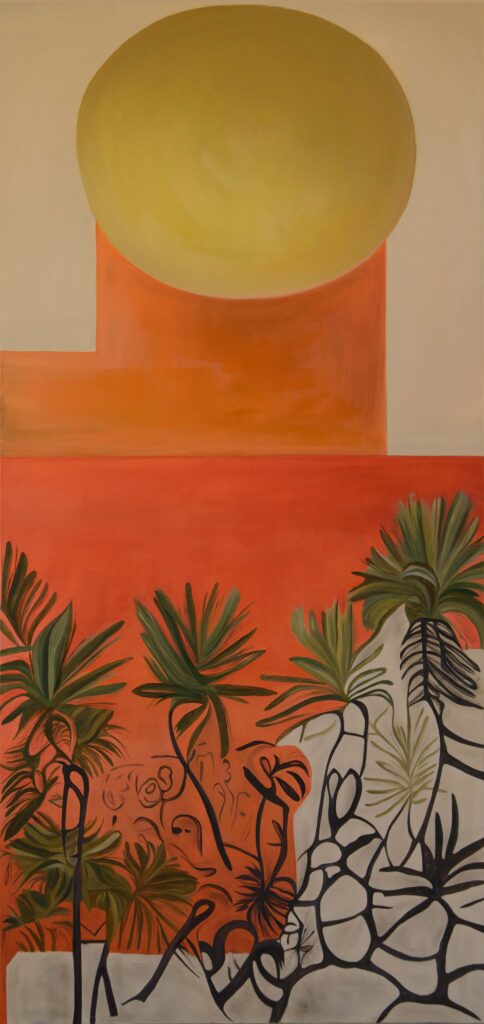
I felt a strong need to return to roots, there’s so much to uncover when going back to the beginning of things and trying to understand what is underneath everything that came after. I also felt drawn to a sense of essentiality and simplicity that I associate with those early populations.
I’ve always been fascinated by the past, and I tend to carry a certain sense of longing and nostalgia in my work. The name Pindorama brought all of these ideas together in a very natural way, because it refers to the original Tupi-Guarani name for what is now Brazil, it felt like an entry point into thinking about origin.
Q9. Your paintings often feel connected to literature and poetry emotionally. Are there Brazilian writers or poets who stay close to your work?
Yes, many. A great part of my inspiration comes from the richness of Brazilian music and poetry, I take their imagery and symbolism into my paintings. Among those writers and musicians are Guimarães Rosa, Adélia Prado, Cora Coralina, Clarice Lispector, Tom Jobim, Toquinho, Vinícius, Caetano Veloso, Marisa Monte, just to name a few.
Q10. Tropical imagery is often romanticized visually, but your work feels deeply personal instead. How do you keep that emotional honesty intact?
I feel a very strong and genuine connection to the themes I’m exploring in the Pindorama series, and I think that’s what makes emotional honesty possible in the first place. It would be very difficult to sustain otherwise. At the same time, it’s not always a completely fluid or passive process.
There are moments of interference, being pulled by other inspirations, or even questioning the work itself and wanting to shift direction entirely. It can become confusing at times. In those moments, what helps is returning to the original impulse behind the work: remembering why I started this journey and reconnecting with the core references and feelings that first set it in motion.
When I do that, things tend to realign and become clearer again, often in a stronger way. What I mean is that it’s not always a passive behaviour, it’s something I actively return to and rebuild when needed.
Q11. Your work could easily be reduced to “tropical aesthetics” or decoration, how do you make sure the deeper emotional and cultural layers still come through?
One of the things I’ve been learning to accept, not only as an artist, but as someone who works as an artist, is the need to let go of control. I tend to be quite obsessive about control, so it’s not something that comes easily, but I’ve come to understand that it’s completely outside of my domain to decide how people will perceive my work.
I’m not entitled to that, that’s in their zone of freedom, and accepting that has been very liberating. My part is to create work that is honest to what I want to express. I try to communicate my own vision and how I perceive it, but everything that happens after that is simply a consequence of putting it out into the world.
Q12. Do you ever feel pressure to remain visible online while also protecting your creative space privately?
Yes, I do. But I try not to let that pressure take on too much importance. I see it more as a practical, small challenge rather than something that defines my practice. Sometimes I feel like I’ve found a good balance but it’s an ongoing adjustment.
Q13. Have there been moments where you felt disconnected from creativity? What helped you return to it?
So many of them. Taking a break or doing something else is obviously helpful, but also, in this specific case, while painting my Pindorama series, I usually listen to music that is inspiring to my work, or pay a visit to my Kindle for some inspiring writings that can later become images.
When I’m feeling lost, I look back at images of my own work so far. Reconnecting with what I’ve already made helps me remember the thread I’m following, and from there, things usually start to open up again.
Q14. Your paintings leave a lot of emotional space for the viewer. How do you feel when people interpret the work very differently from what you intended?
It’s not always a bad thing, sometimes it’s actually great. I like that the work leaves room for interpretation, and that different people can project their own experiences and emotions onto it. That openness feels important to me.
Of course, it can also be frustrating at times. But I think it’s something you simply have to accept. Once the work is out in the world, there’s not much you can do about how it’s received, and that’s part of its life.
As our conversation with Júlia drew to a close, we kept sitting with a thought that felt simple on the surface and quite profound underneath. That going back is not giving up. That returning to your roots, to your original impulse, to the warmth that existed before all the complexity arrived is not a retreat. It is often the most courageous and the most creatively honest thing an artist can do.
Júlia has built her entire practice on that understanding. And it shows. There is a particular quality to work that comes from a place of genuine return a clarity, a warmth, an absence of anything unnecessary that makes everything present feel completely intentional.
Her paintings carry that quality in abundance. The oranges and yellows that feel less like colour choices and more like emotional temperatures. The simplified forms that have been stripped back not for aesthetic reasons but because everything else would have been a distraction from what the painting is actually trying to say.
This is not work made by someone searching for their voice. It is work made by someone who found their way back to it and had the wisdom to stay there.
And in a world that keeps rewarding the restless, the constantly evolving, the always moving forward that kind of stillness is increasingly rare and increasingly valuable. Both as a creative philosophy and as a body of work worth living with.
For those who want their walls to hold something that genuinely means something work that was made from real love, real roots, and a real commitment to honesty Júlia’s paintings are exactly that. The kind that brings warmth into a space and keep it there. The kind you are grateful for every single day.
Follow Júlia Martins Miranda through the links below and let her warmth find you.