

Women Artists Who Were Written Out: 7 Stories Art History Almost Forgot
What if the artists we call “forgotten” were never actually forgotten, just misnamed, overshadowed, or left out of a story other people got to write?
Art history looks like a fixed record: names, movements, dates. Behind it sits another history, one where paintings got attributed to men, careers got reduced to marriages, and women got remembered for what happened to them instead of what they made.
Judith Leyster’s paintings were mistaken for Frans Hals’s. Artemisia Gentileschi’s brilliance is still overshadowed by the violence she survived. Lee Krasner spent decades being introduced as Jackson Pollock’s wife. Hilma af Klint painted radical abstraction years before the men credited with inventing it.
These aren’t isolated cases. They’re a pattern, and the pattern says something uncomfortable: being seen and being remembered are not the same thing.
Here are seven Women artists who make the case for looking again.
1. Judith Leyster — The Painter Whose Name Disappeared
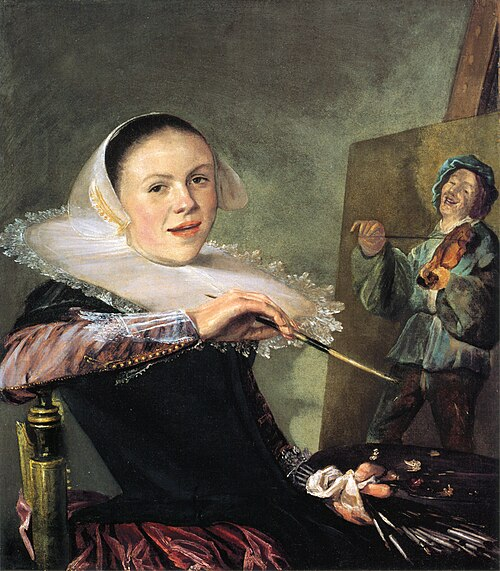
Self-Portrait, c. 1630, National Gallery of Art Washington
Picture admiring a painting by a celebrated Dutch master, only to learn centuries later that the name attached to it was wrong. That’s what happened to Judith Leyster.
Born in Haarlem in 1609, she was admitted to the Haarlem Guild of Saint Luke as an independent master by 1633, at just 24, the first woman admitted whose body of work can actually be documented. She ran her own workshop and took on students. Her lively scenes of musicians and drinkers shared the loose brushwork of Frans Hals, a resemblance that would later work against her.
After she died in 1660, her name faded. Paintings by her hand were reattributed to Hals. By the 19th century, she’d all but vanished from the story.
Then, in 1893, a painting at the Louvre believed to be by Frans Hals, The Carousing Couple (also known as The Happy Couple), turned out to hide something beneath its signature: Leyster’s own monogram, intertwined initials accompanied by a star, a reference to the meaning of her surname, “lodestar.”
She hadn’t vanished. Her name had. Which might be the quietest way an artist can be erased: not by destroying the work, but by changing whose name sits beside it.
2. Artemisia Gentileschi — When the Story Outgrew the Art
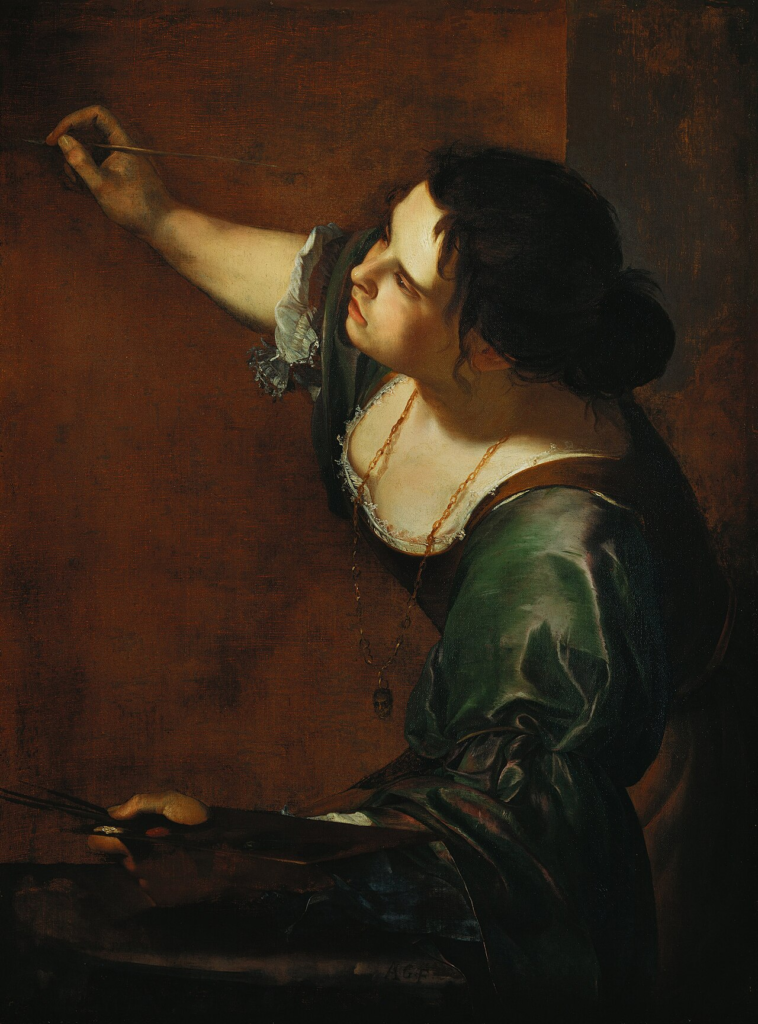
Self-Portrait as the Allegory of Painting, 1638–39
Artemisia Gentileschi’s life holds a story dramatic enough to swallow everything else: a teenage artist, a sexual assault, a public trial. There’s real danger in remembering her only through what happened to her.
Born in Rome in 1593 and trained under her father, Orazio, she painted her first known signed work, Susanna and the Elders, at about 17. A year later, she was raped by the painter Agostino Tassi. The 1612 trial that followed put her through torture during testimony; Tassi was convicted, though his sentence was never enforced.
What came after mattered just as much. Gentileschi moved to Florence and, in 1616, became the first woman admitted to the city’s Academy of the Arts of Drawing. She went on to work in Rome, Venice, Naples, and London, running a successful studio and taking commissions from powerful patrons across Europe.
Yet the National Gallery itself notes that her biography has often overshadowed her achievements, even though she was one of the most sought-after painters of her generation while she was alive. She wasn’t forgotten. She was remembered through the wrong lens. Her paintings deserve to be seen on their own terms.
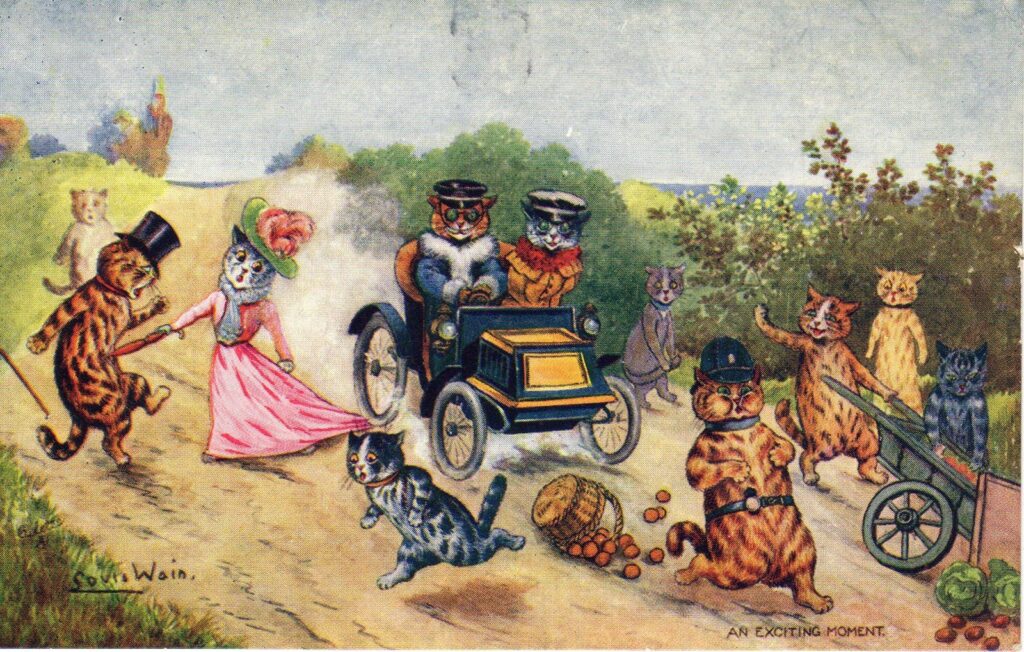
Read more : The Strange Beauty of Cats in Art
3. Clara Peeters — The Woman Who Signed the Details
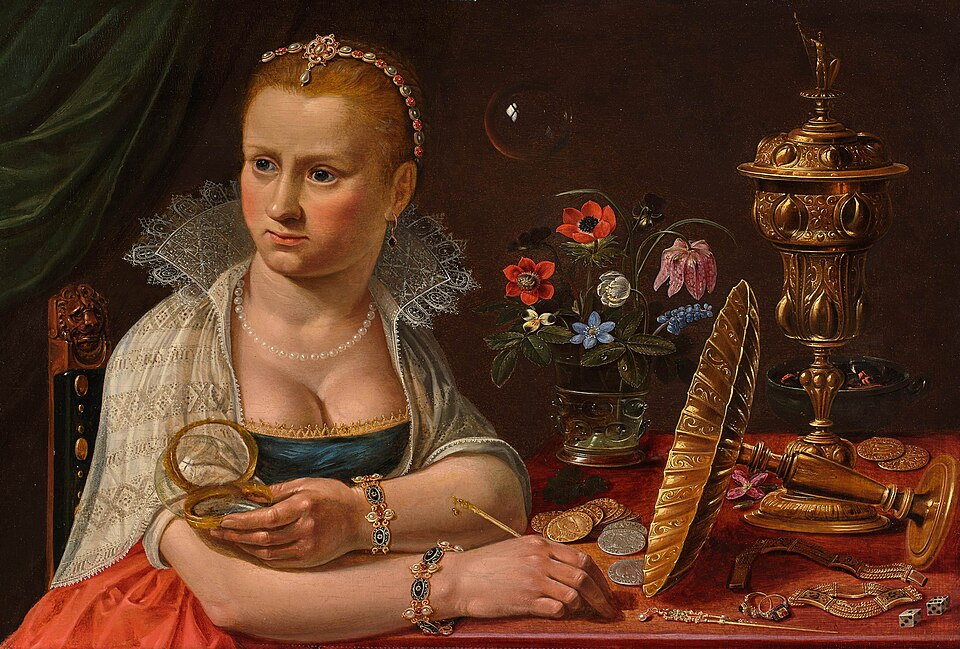
Possible self-portrait of Peeters, in vanitas style, c. 1610
A silver goblet. A wedge of cheese. A knife catching the light. At first glance, Clara Peeters’s still lifes look like quiet studies of ordinary things. Look closer and something unexpected shows up: the artist herself.
Peeters was one of the earliest specialists in still-life painting in Northern Europe, producing remarkably assured work by 1607–08. Almost nothing is known about her life, and even her birth and death dates remain uncertain. What survives most clearly is her work: 39 known paintings today bear Clara Peeters’s signature or an inscription with her name, while a few unsigned works can also be plausibly attributed to her.
But Peeters found a way to make sure she’d be found. In several paintings, she hid tiny self-portraits in the polished surfaces of goblets and vessels, and her signature recurs on a decorated knife that shows up across several works.
Her paintings were collected in the 17th century, including by Spain’s royal collection, yet the woman behind them stayed almost entirely undocumented. Maybe that’s the fascination: when history left almost nothing behind about who she was, she left the clues in the paintings instead.
4. Hilma af Klint — The Abstract Pioneer History Nearly Missed
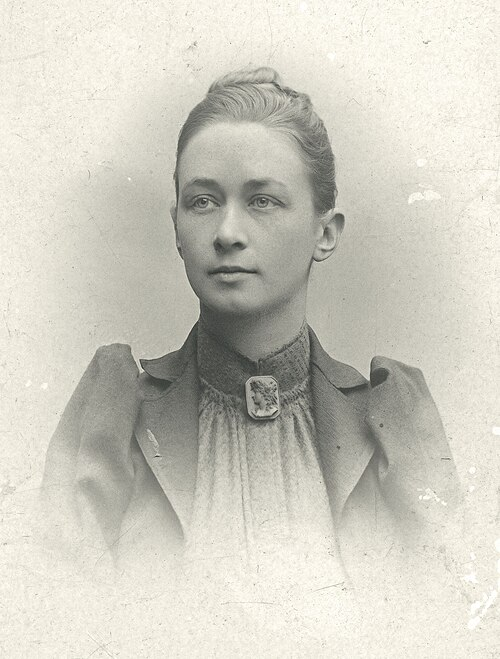
Portrait, c. 1901 or earlier
What if one of the first truly abstract painters was working years before the artists usually credited with inventing abstraction?
Born in Stockholm in 1862, Hilma af Klint trained at the Royal Academy of Fine Arts and built an early career as a conventional portrait and landscape painter. Alongside that, she developed a serious interest in spiritualism and began searching for ways to paint ideas that had no visible form.
By 1906, she’d developed a genuinely abstract visual language – spirals, geometry, blocks of color, and began The Paintings for the Temple, a project that eventually spanned 193 works. Moderna Museet notes this predates Kandinsky, Mondrian, and Malevich, the artists traditionally credited as abstraction’s founders, by several years.
Af Klint didn’t rush to claim the title. Convinced the world wasn’t ready, she stipulated in her will that her abstract work stay hidden for 20 years after her death. She died in 1944, leaving over 1,000 works and 125 notebooks behind. Her paintings only reached wide audiences decades later, gaining major attention with Moderna Museet’s 2013 retrospective and the Guggenheim’s 2018 show.
Sometimes an artist isn’t erased. History just takes an unusually long time to catch up.
5. Lee Krasner — The Artist Introduced as Someone’s Wife
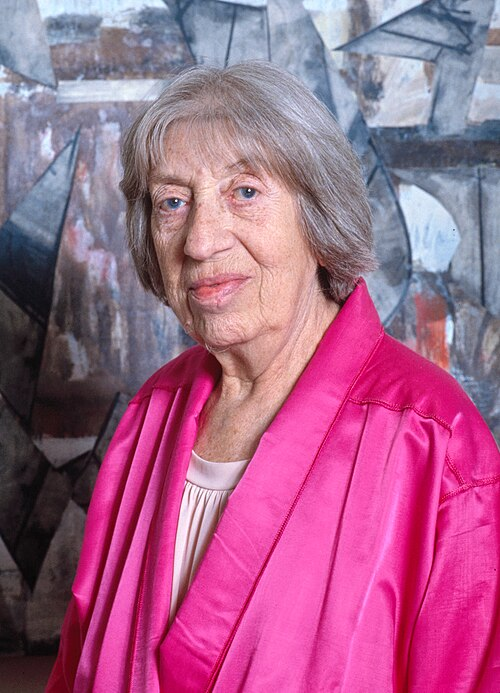
Krasner in 1983
For years, saying “Lee Krasner” was enough to place her in Jackson Pollock’s shadow, despite the fact that she was never a peripheral figure who happened to marry a famous painter. She was one of the few women in the first generation of Abstract Expressionists, developing her own distinct approach to abstraction by the mid-1940s. The Whitney itself notes she was infamously reduced to the label “Mrs. Jackson Pollock.”
Krasner met Pollock in 1941 and married him in 1945; they shared a home and studio in Springs, Long Island, though their work looked nothing alike. After Pollock died in a car accident in 1956, Krasner moved into the larger barn studio he’d used and produced work at a scale she’d never had room for before – including The Seasons, a painting nearly seventeen feet wide, one of her major late-1950s works.
She didn’t step away from painting after his death. She reinvented herself inside it. The problem was never that she lacked a career, it’s that her career kept getting narrated through someone else’s first.
6. Alma Thomas — The Artist Who Found Her Voice Late
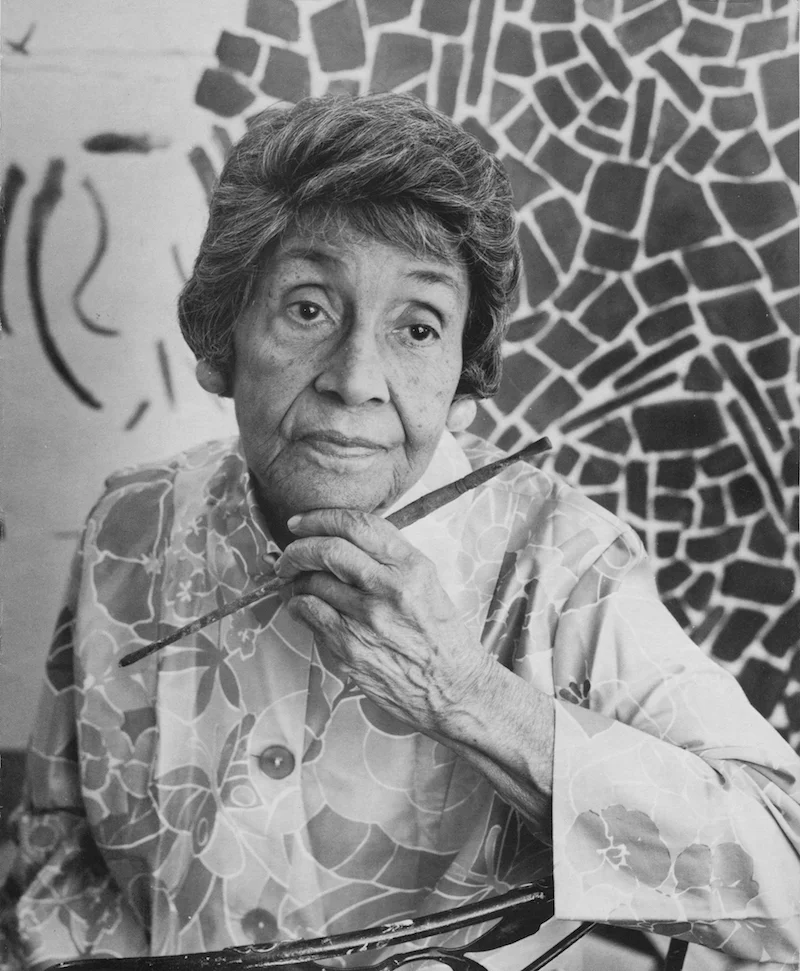
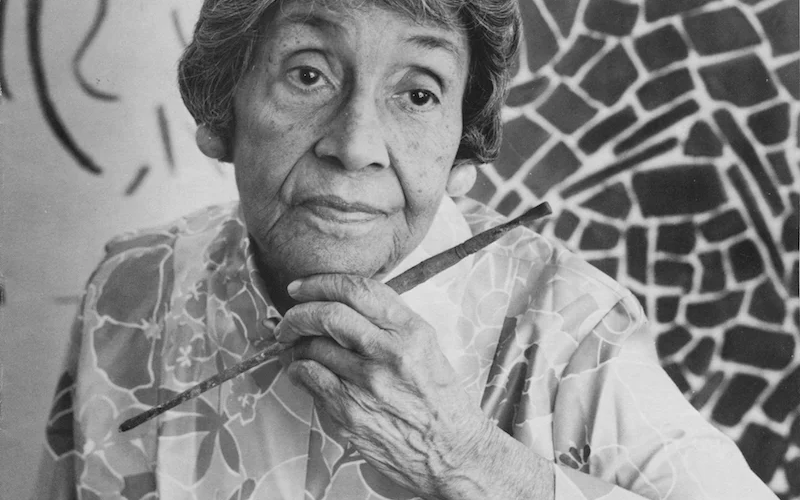
Portrait of Alma Thomas
Alma Thomas was 69 when she finally became a full-time artist.
Born in Georgia in 1891, she moved to Washington, D.C., as a teenager, became the first graduate of Howard University’s art department in 1924, and spent more than three decades teaching art at Shaw Junior High School. Retirement is what changed everything, she finally had time to paint full-time, developing the small, rhythmic strokes of color that would define her later work, drawing on nature, music, and even space exploration.
In 1972, at 80, Thomas became the first Black woman to have a solo exhibition at the Whitney Museum of American Art.
It was extraordinary recognition. It also came remarkably late, after decades spent teaching and painting largely outside New York’s art world, while institutions took their time noticing.
Thomas didn’t begin late. The world simply arrived late to her art.
7. Faith Ringgold — The Artist Who Turned Story Into History
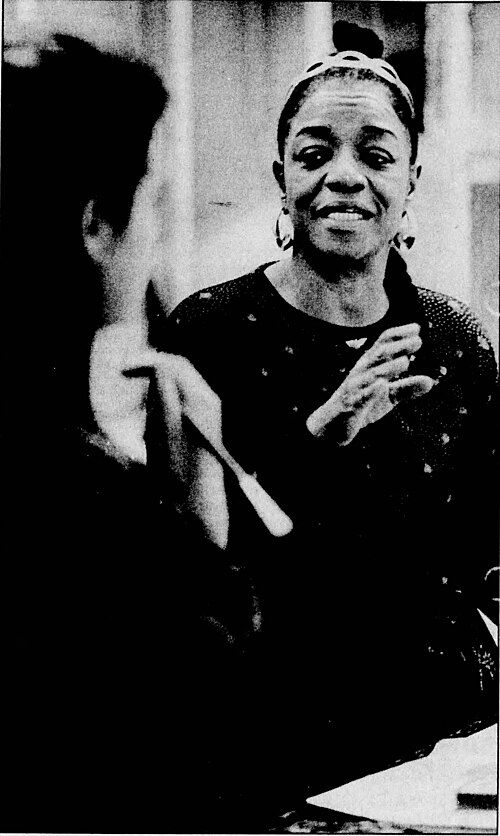
Ringgold in 1988
What happens when the people written out of history decide to write it themselves?
Born in Harlem in 1930, Faith Ringgold began as a painter, but the civil rights and Black Power movements pushed her work toward the explicitly political, her American People series (1963–1967) confronted racial violence directly. She later became an outspoken advocate for greater representation of Black artists and women in museums.
Then she changed her form entirely. In the 1970s, drawing on Tibetan thangkas and African American textile traditions, she began framing unstretched paintings in fabric. In 1980, she made her first quilt with her mother, Willi Posey. Soon after, she began weaving written narratives directly into the quilts, story quilts, as they became known. Works like Who’s Afraid of Aunt Jemima? and Tar Beach put everyday Black life at the center of the frame instead of the margin; Tar Beach, from 1988, later became a children’s book in 1991.
She didn’t wait for someone else to write her into art history. She made the story herself.
Who Gets Remembered Now?
Leyster lost her name. Gentileschi got remembered through her trauma instead of her talent. Krasner spent years introduced through her husband. Thomas made powerful work for decades before institutions caught up. Different stories, same uncomfortable thread: being an artist and being remembered as one are not automatically the same thing.
Art history isn’t simply a record of everything ever made. It’s shaped by what gets collected, exhibited, written about, and passed on, which means visibility today doesn’t guarantee visibility later.
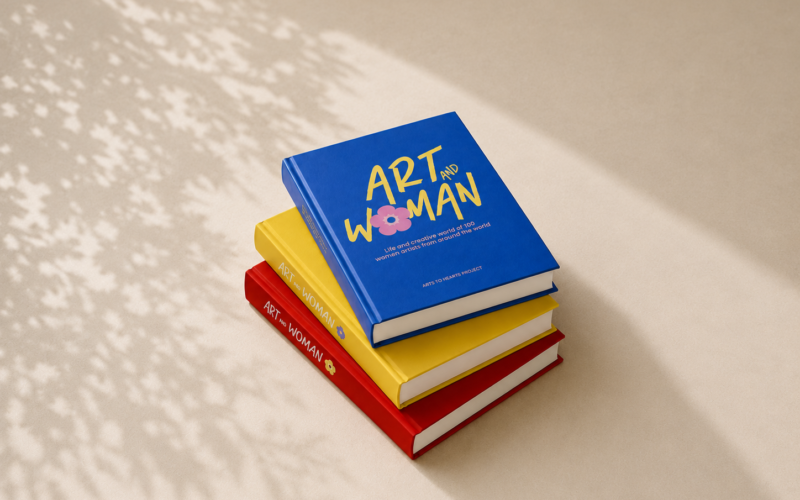
That’s the idea behind Art & Woman, the storytelling-based publishing series from Arts to Hearts Project. Since launching in 2024, it’s featured more than 300 women artists, building an evolving archive of contemporary work and the stories behind it, the kind of record that, ideally, nobody has to rediscover in an auction house a century from now.
Edition Four is open now, juried by art advisor and gallery owner Liz Lidgett, with no fixed theme, just work shaped by identity, memory, culture, resilience, or whatever story an artist is actually carrying. Submissions are open across mediums, from painting to textiles to installation, for women and women artists 18 and up.
Maybe the question was never only who got left out of art history.
It’s also who we choose to document while they’re still here to tell us themselves.
Explore the current open calls and submit your work: apply.artstoheartsproject.com