

White Collar’s Love Letter to Art History

You might start watching White Collar for the cat-and-mouse game between Neal Caffrey and Peter Burke. You might stay for the cons, the suits, the impossible escapes and Neal’s effortless charm. But somewhere along the way, you may find yourself looking up a painting.
That is one of the show’s quietest tricks.
White Collar is, at heart, a crime drama. But it is also a show deeply fascinated by art history, by Old Masters, forgery, provenance, collectors, museums and the strange stories that make an object worth protecting in the first place.
And perhaps that is why the show feels so perfectly tailored to anyone who already loves art. It never treats art as background decoration. A painting can be a clue. A signature can change an entire case. A frame can hide a secret. A museum can become the setting for a heist, a con, or an investigation. Even a seemingly ordinary object can have a history worth chasing.
For a show that ended more than a decade ago, White Collar remains remarkably underrated. It is stylish, clever and genuinely funny, but underneath all those qualities is a surprisingly affectionate relationship with art.
Neal Caffrey Doesn’t Just Know Art. He Loves It.
Neal Caffrey is introduced to us as a master conman, forger and thief. He can lie beautifully, improvise under pressure and talk his way through almost any locked door. But beneath the immaculate suits and carefully constructed aliases is someone who is genuinely obsessed with art.
That distinction matters.
Neal does not simply know enough about paintings to steal them. He notices them. He studies them. He has opinions about them. When he encounters a work he admires, his enthusiasm can almost make you forget that the man standing in front of it is perfectly capable of stealing it.
In one early storyline, Neal immediately recognizes a rare Haustenberg and knows that its scarcity contributes to its value. In another, he discusses Raphael’s Saint George and the Dragon with an eye for composition, brushwork and translucent skin tones.
This is what makes Neal such an enjoyable guide into art history: he never approaches a painting as a list of facts to memorize. He looks at it like a puzzle.
Who made it? What makes it convincing? What does the artist’s hand reveal? What has happened to the work since it left the studio?
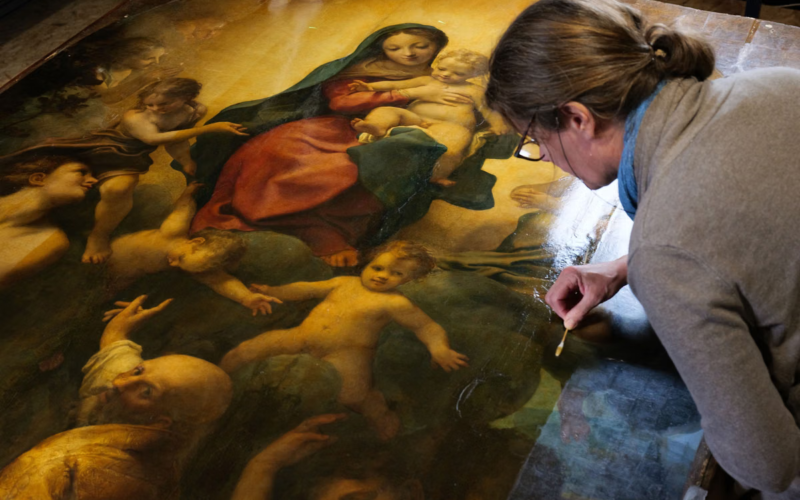
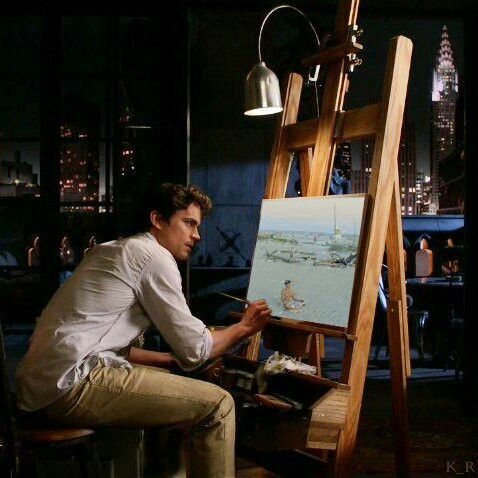
And Neal’s knowledge is not merely theoretical. His forgeries are frighteningly good. In the world of the show, his ability to reproduce works convincingly is part of what makes him invaluable to Peter’s investigations. He can recreate the appearance, materials and tiny visual details that make an object feel authentic. In “The Portrait,” for instance, Neal creates a replacement painting so convincing that the museum can continue displaying it while the original is returned to its rightful owner.
There is something almost romantic about watching him work.
The man who spends his days deceiving people becomes completely sincere when he is making art.
Old Masters That Make White Collar Even More Fun to Watch
One of the most enjoyable things about White Collar is how casually it drops you into the world of Old Masters. These aren’t random name-drops thrown in to make Neal sound clever. The artists and paintings fit naturally into a world where provenance, rarity, technique and authenticity can be worth millions.
And once you start noticing them, the show becomes even more fun.
Raphael
Raphael is one of the artists who immediately shows us just how seriously Neal takes art. When he discusses Saint George and the Dragon, created centuries ago in 1505, he isn’t impressed simply because it is a famous Renaissance painting. He notices the way Raphael handles composition, colour and the almost translucent quality of the figures.
That is very Neal.

He looks beyond the reputation of a masterpiece and pays attention to how it was made. For someone whose own greatest skill is reproducing what other artists have created, understanding the hand behind a painting is everything.
Rembrandt
Rembrandt brings another question into the mix: how much of an artist’s identity lives in their technique?
His portraits are recognizable not simply because of who they depict, but because of the way Rembrandt handled light, texture and human expression. That becomes especially interesting when you remember what Neal does for a living.
A master forger has to understand more than what a painting depicts. He has to understand the decisions behind it. The brushwork. The layering. The imperfections. The choices that make the work feel like it could only have come from that artist.
For Neal, those imperfections are not flaws. They’re clues.
Edgar Degas
Degas becomes part of the Nazi-looted art storyline. In Season 3’s “Countdown,” the FBI deals with a long-lost Degas painting, Entrance of the Masked Dancers, connecting the artwork to a larger story of wartime theft and provenance.
It is a perfect example of how White Collar turns an artwork’s history into part of the mystery.
Claude Monet
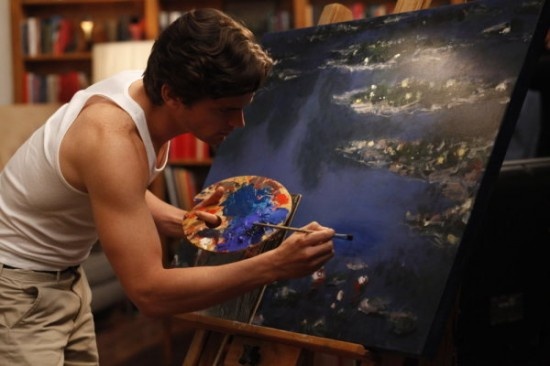
Monet appears through his famous painting in Season 2, Neal is shown painting a reproduction, which feels particularly fitting for a character whose greatest skill is imitation.
It also highlights one of the show’s recurring ideas: a convincing copy requires more than reproducing an image. Neal has to understand the artist’s technique and the choices behind the finished work.
When you see a reproduction of a famous artwork, what exactly are you looking at? The image? The artist’s hand? The history attached to the original? Or the cultural memory that has accumulated around it?
White Collar rarely gives you a lecture about these questions.
Instead, it gives you Neal Caffrey, standing in front of a painting, noticing something the rest of us might miss, and reminding us that sometimes the most fascinating part of an artwork is the story hiding behind the surface.
And if these names mean nothing to you yet, don’t worry. That’s part of the fun. White Collar has a way of making you curious enough to look them up.
When Looking Isn’t Enough
This is where White Collar becomes unexpectedly interesting as an introduction to the history of forgery.
Because if Neal can make something look authentic, what exactly makes an artwork authentic in the first place?
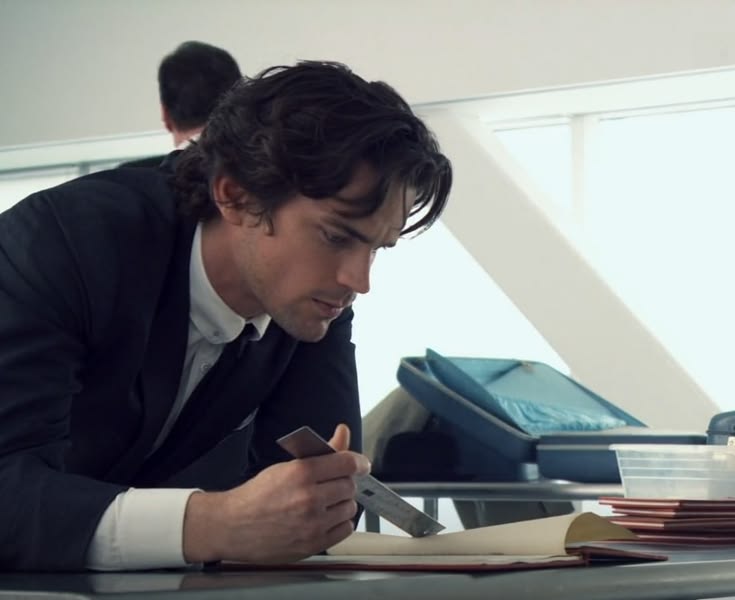
Art history has wrestled with this question for centuries. Experts examine provenance, materials, technique, signatures, historical records and the physical condition of an object. Today, scientific analysis and imaging can add another layer to authentication. But even with all these methods, the question can remain complicated.
White Collar turns that complexity into entertainment.
A fake painting isn’t simply a fake painting. It is a performance of another artist’s hand.
A successful forgery requires the forger to understand how an artist worked: the way they handled paint, constructed a composition, treated light, aged materials and made decisions that might seem invisible to an ordinary viewer. Neal’s talent is compelling precisely because he understands art deeply enough to imitate it.
And that is one of the show’s great little contradictions.
Neal is one of the best conmen in the world because he understands what people expect to see. Yet his relationship with art goes deeper than deception. He can forge a painting because he has looked at it closely enough to understand it.
Sometimes, perhaps, White Collar makes you wonder whether Neal is trying to fool the art world, or simply prove that he understands it better than everyone else.
Museums Become Part of the Story
Museums in White Collar are rarely just places where paintings hang quietly on walls.
They become playgrounds for investigations.
The show takes us through fictional museums and galleries while also using real New York art spaces as its visual world. The Whitney Museum of American Art, for example, served as the fictional Keppler Museum in Season 4, while MoMA PS1 was used for the fictional Hellerman Gallery.
There are also cases involving paintings, rare books and museum collections, including the Mosconi Codex storyline, where Neal is forced to steal a chapter from a mysterious book on display in a museum. The effect is subtle but important: the show makes museums feel alive.
Art History Is Full of Mysteries
Perhaps this is why art and crime make such an unexpectedly perfect pairing. Both ask you to look closer.
A painting has a surface, but it also has a history. It may have changed hands, crossed borders, been restored, misattributed, stolen or rediscovered. Sometimes the most important clue is not even on the front. White Collar understands this instinctively.
The show repeatedly turns details into discoveries. A signature, an inscription, a material, an unusual technique or a seemingly insignificant object can suddenly change everything. And that is essentially what art historians do. They investigate.
They ask questions that begin with something as simple as, Who made this?
Then come the more interesting questions:
When? Why? For whom? Where has it been? How do we know?
The painting becomes more fascinating the more you discover about it.
The Art of Looking Twice
There is another reason White Collar works so well as an accidental art-history lesson: Neal teaches us to look twice.
You may see an old painting and notice the subject first. Neal would probably notice the technique. You may see an expensive object. He notices what makes it valuable. You may see a museum display. He notices the security system. You may see a frame. He wonders what is hidden behind it. That habit of looking twice is perhaps the most valuable thing art can teach us anyway.
Art rewards attention.
It asks us to slow down long enough to notice the strange shape in the background, the hand gesture, the crack in the surface, the colour that seems slightly out of place. It reminds us that objects can carry stories that are invisible at first glance.
Neal Caffrey simply happens to make that process considerably more entertaining.
Why White Collar Deserves Another Look
There are crime shows that use art because it looks glamorous.
White Collar is different. Art is woven into Neal’s character.
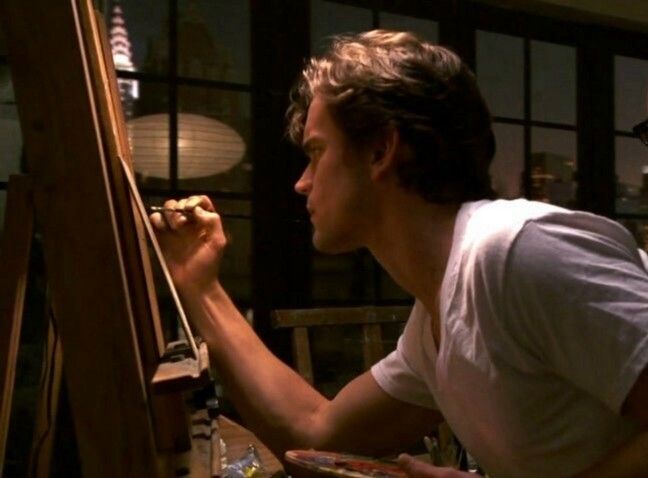
He isn’t just a charming criminal who happens to know which paintings are expensive. His knowledge of art is part of the way he thinks. His eye for detail, his fascination with craftsmanship and his ability to reproduce what he sees all belong to the same mind that makes him such an extraordinary conman.
And the show lets us enjoy that contradiction. We can admire Neal’s knowledge while knowing perfectly well that he might use it to steal something.
We can watch him recreate a work with astonishing precision while remembering that the FBI is supposed to be stopping people like him.
We can laugh at the absurdity of Peter having to ask Neal for help with an art crime, even though Neal may be the person most likely to commit one. That tension is what makes the show so much fun.
It is also why White Collar feels so underrated. It found a formula that sounds almost too perfectly tailored on paper: beautiful New York settings, sophisticated cons, art, history, mystery, fashion, humour, an unlikely friendship and a protagonist who could probably charm his way into a museum after closing time.
And somehow, it worked.
If you already love art history, the show gives you another way to encounter it, through stolen paintings, impossible forgeries, museums and the eyes of someone who genuinely understands what he is looking at.
If you know nothing about art history, even better. You can start with Neal.
Let him point you toward a painting. Let him explain why a detail matters. Let the case unfold. Then, when the episode ends and you find yourself searching for Raphael, wondering how provenance works, or staring at a painting a little longer than you normally would, you’ll understand the show’s most charming trick.
It never asks you to study art history. It simply makes you curious enough to want to.
And maybe that is the most beautiful con Neal Caffrey ever pulled.