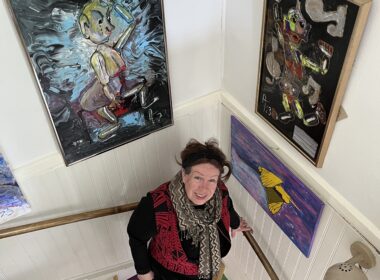

What Makes Ulli Zerzer’s Clay Sculptures Feel Complete Without Glaze

👁 295 Views
Some connections begin so early that we don’t recognise them as beginnings at all. For Ulli Zerzer, art entered her life naturally, without a clear decision or plan.
Growing up in Schwarzach, she spent a lot of time watching her father paint and make nativity figures. What stayed with her most wasn’t just what he made, but the feeling of being in that space, the smell of materials, the warmth of the room, and the quiet focus of someone deeply involved in their work. At first, she simply observed. Then one day, she started working alongside him. That moment stayed with her.
At that time, art wasn’t something formal or distant. It was part of everyday life. Materials were limited, and clay wasn’t always available, so she used whatever was around. Window putty became her first sculptural material. It wasn’t a creative statement; it was a practical solution. Looking back, those early experiences shaped how she works today with patience, care, and respect for material. She learned early that limitations don’t block creativity; they help guide it.
For this week’s Best of the Art World series, we’re honoured to share Ulli Zerzer’s story, a story shaped by time, material awareness, and lived experience.
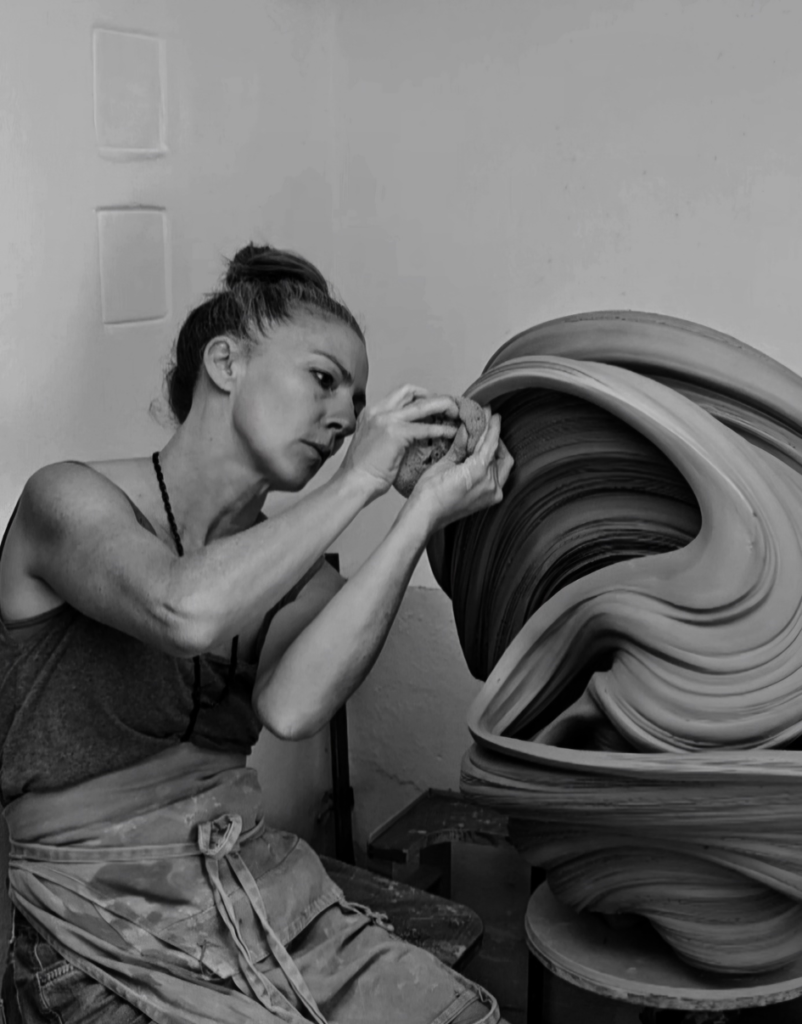
As she moved into formal education and later into professional practice, those early instincts stayed with her. Sculpture felt like a natural path, but her career also included design and functional work. In the beginning, art and utility felt closely connected. Working collaboratively especially with Christoph Brauneis allowed sculpture and design to exist side by side. It was a meaningful and productive period, built on shared interests and craftsmanship.
Over time, however, she began to feel that something was missing. Design was fulfilling in many ways, but sculpture felt more complete and personal. Slowly, she shifted her focus, allowing sculpture to take the lead while design became a quieter part of her practice.
As her focus narrowed, her relationship with clay deepened. Form, texture, light, and shadow became more important than colour or surface finish. She developed a strong understanding of the material its strengths, risks, and limits. Breaks, collapses, and mistakes weren’t failures; they were part of learning. Each piece became a process of response rather than control, shaped by observation as much as by action.
Life shifted again in 2014, when Ulli became a mother. The change didn’t happen all at once, but gradually. Time became more valuable and more limited. Studio hours had to fit around family life. Long, uninterrupted working days were no longer possible, but this brought a new kind of focus. The time she did have become more intentional.
Motherhood didn’t take her away from her work; it changed how she worked. With two sons, balance became essential. Studio time and family time both needed care and respect. Some days, neither feels like enough. But over time, a rhythm formed. That lived balance shows up in her sculptures too in the way calm and tension exist together, in their quiet presence, and in her choice to leave out anything unnecessary.
Her sculptures don’t demand attention. They allow time for the viewer to approach them. They invite touch, movement, and personal interpretation. Whether placed in a gallery or a public space, her work becomes part of everyday experience rather than something separate from it.
Let’s take a closer look at this conversation with Ulli, where she shares the experiences and choices that continue to shape her work and the quiet confidence behind it.
Q1. Could you share about your childhood and upbringing in Schwarzach? What early influences or memories do you feel shaped your aesthetic sensibility?
My father’s passion for painting and for modeling nativity figures led me to art. I often watched him – and one day, I simply joined in. The cozy atmosphere and the smell of paints and materials fascinated me. I still remember that my first small sculptures were made from window putty. In the 1980s, there was no clay available in St. Johann, and window putty was cheap and easy to get. This passion finally brought me to the School of Sculpture in Hallein – to the surprise of my parents. But I stood my ground.
Q2. You create both organic sculptural works and functional projects, including collaborations with Christoph Brauneis. How do these two worlds art and utility, influence each other in your practice?
After my studies in Hallein, I studied at the University of Art and Design. Back then, art and design felt like one big world—at least for Christoph and me, when we opened our first studio together in 2004. Christoph came from a craft background, I from sculpture. Our experiences, our network, and our shared passion simply merged in one direction. They were happy, creative years. But over time, I realized how strongly art and design influence each other and that I wanted to dedicate myself entirely to art. It was a wonderful time, but ultimately only half of what truly fulfilled me. Looking back, I know it was the right path. I still occasionally create functional objects but more as a quiet counterpoint to my sculptural work.
Q3. Could you talk about your relationship with colour, glaze, and surface finishing (or the decision not to glaze)?
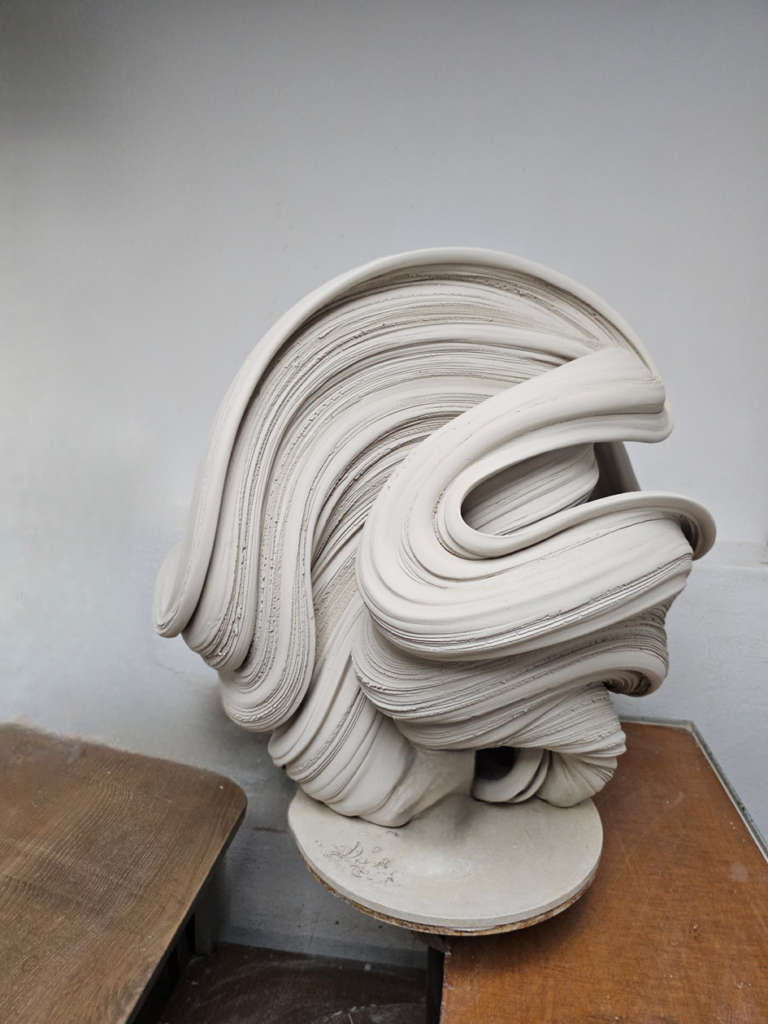
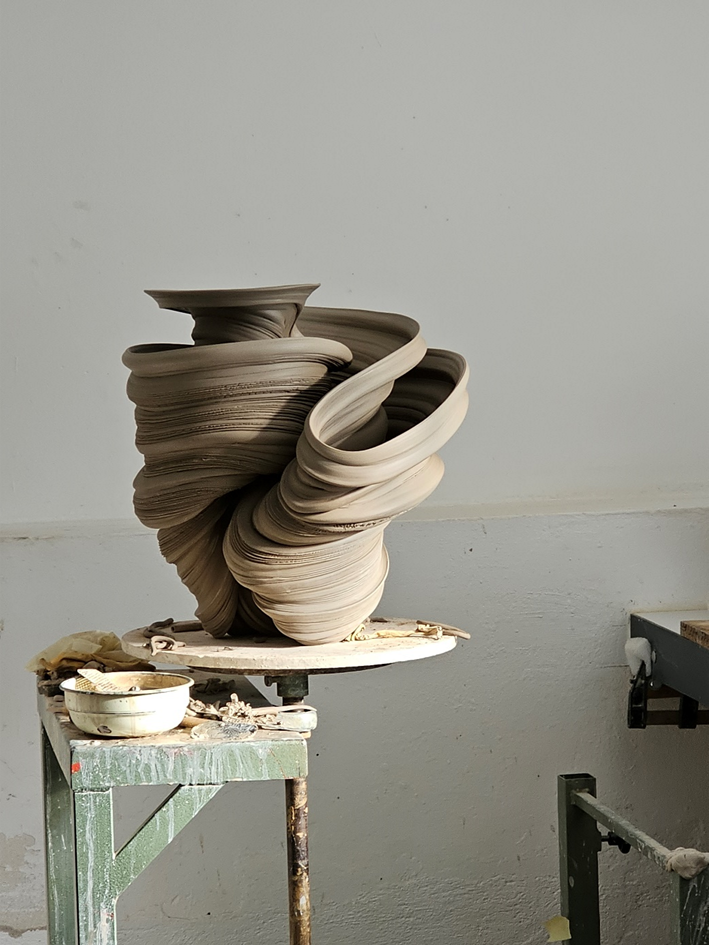
A central part of my work is texture. For me, form and material are the main sources of expression. If I added gloss or extra volume, the fine structure would be lost. It would disturb the play of light and shadow, and the form would lose its presence. My works do not need to shout for attention. They speak through material and form. I prefer a quieter approach – like a good piece of music that builds tension through restraint, gives space to each instrument, and together with lyrics and voice, creates emotion. Or like a truly good film that leaves a soft, content smile at the end. Of course, colour is also a topic, and I have been experimenting with different possibilities for some time. But a sculpture should never lose its strength of expression, and I am very careful about that. It remains an open and exciting process – and I am optimistic.
Q4. As an Austrian artist whose work spans both local galleries and international platforms, how do you negotiate between local roots and global reach?
The world has really become smaller today. Thanks to social media, it’s much easier to showcase your work and connect with people all over the globe. All it takes after that is a reliable gut feeling and a mutual leap of trust and international partnerships can flourish. In the past, I might have worried about how to ship my pieces – now, that’s no problem at all. I’m incredibly happy to have such wonderful partners… or rather, they found me! And that makes me even happier, because I love working in my studio and knocking on doors isn’t really my thing. I’m truly grateful that my artworks have taken on that role for me – they open doors while I get to focus on creating.
Q5. You embraced motherhood in 2014. Has this beautiful change influenced your art, in your studio rhythm, themes of growth and care, or in how you define meaningful work?
And then came 2020! By now, we have two sons. Naturally, this change has influenced my life – and my art. Just as my art influences my children. Everything has changed. Our studio rhythm had to adapt to the rhythm of society. I wish it weren’t that way, but often, you’re simply forced into it. Still, I’ve adjusted – and it actually works quite well.
My studio hours are sacred to me, just as the time with my sons is. One balances the other. In a way, it’s perfect – though sometimes, both sides feel a little too short.
Q6. Clay has limitations: it cracks, collapses, is bound by kiln size and firing constraints. Could you talk about a particular “moment of rupture” in the studio that reshaped either a piece or your outlook?
It’s also this play with boundaries that drives me. My relationship with clay becomes more and more intense. You get to know it, develop a sense of touch. Just like a musician gets better through playing their instrument, I play with clay and I keep learning. But yes, there are, of course, ‘moments of breakage.’ Luckily, they’re quite rare. And sometimes, it’s exactly those breaks that turn a piece into something very special. Once, I misjudged the kiln: my work was too big to fit. At the same time, a part broke off while drying – a part that wasn’t really needed – and without it, the piece became much more exciting. In the end, we had to slightly enlarge the kiln, but everything turned out fine. That piece ended up becoming one of my masterpieces.
Q7. When creating for public spaces instead of galleries, how do you rethink scale, texture, and meaning to suit the environment and the people who interact with it?
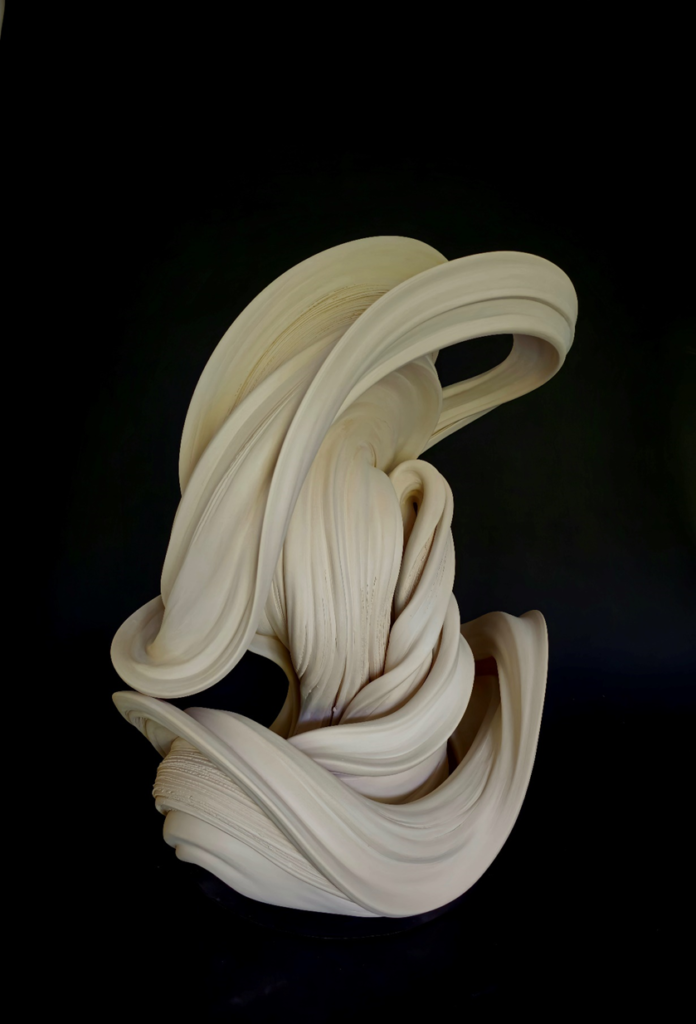
In a public space, a work of art finds a new counterpart: the human being. It no longer exists only in a quiet dialogue with the viewer but becomes part of an everyday rhythm. Then I think less in centimetres and more in encounters. Scale and texture must be chosen so that they do not dominate but invite. I like it when a work reveals itself slowly, when children touch it, people pass by, a shadow moves across it. That is when it begins to live.
Q8. Can you recall a time when a viewer’s response to your work surprised you? How did that experience deepen your understanding of how others connect with your art?
I can’t reduce my work to the reaction of a single viewer. What really surprised me, though, were the responses to some Reels I posted on Instagram. One of them was viewed over 4.2 million times – and the many supportive comments were more than surprising. I definitely didn’t expect that. I find it especially surprising because social media carries a certain anonymity – very different from personal contact. Positive feedback from this kind of anonymity feels effortless and genuine. Perhaps it’s not always the same in face-to-face interactions. Maybe it’s just my perception, because I’m rather introverted and tend to avoid large crowds.”
Q9. In many places your work is described as balancing composition: lightness, asymmetry, proportion. What does balance mean to you, and how do you know when a piece feels complete?
Balance, for me, is when a work becomes so quiet that it begins to breathe. I do not search for perfection – I search for the moment when tension and calm begin to dance together.
When a work then leans back on its own, I know it is complete.
Q10. As your work has evolved, what drives you most now, aesthetics, function, meaning, or process?
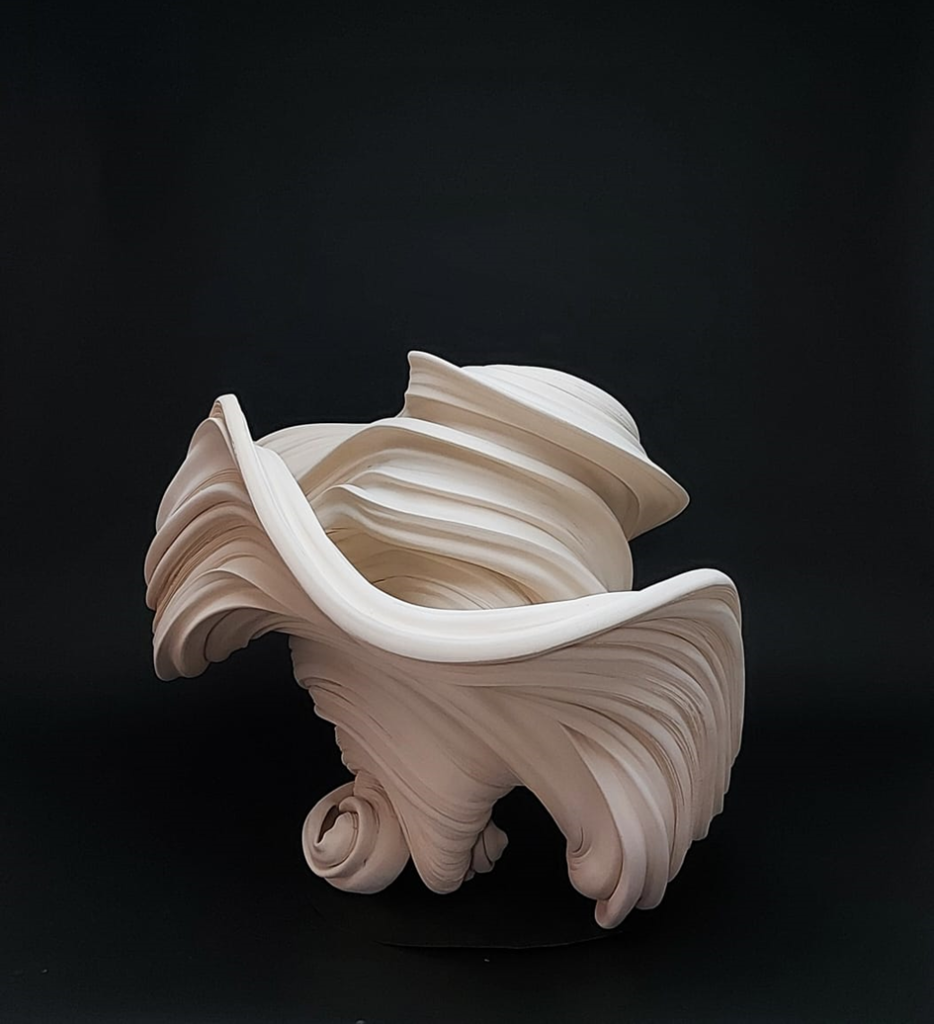
What drives me is the process itself. That moment when a shapeless mass suddenly becomes something of its own – something that breathes, that has a soul. The aesthetics arise almost naturally when I listen to the material. The clay shows me where it wants to go, and I follow. I love that state between control and letting go. Perhaps this is where the meaning of my work lies: in trusting the act of becoming.
Q11. What advice would you share with young or emerging ceramic artists who are drawn toward organic, expressive forms but struggle with technical constraints or self-doubt?
Perseverance and patience – and above all, a true passion for ceramics. In my view, it’s essential to truly understand and master the material. Don’t let yourself be discouraged, accept constructive criticism – but still have the confidence to follow your own path. Critique and different perspectives can help you grow, but they can also unsettle you. That’s why it’s so important to know who you are, what you can do, and what you want. Especially in art, education should mean cultivation, not manipulation. Unfortunately, creativity is often stifled early on instead of being nurtured. How exciting our world could be if that were different!
One of my professors at university was rather skeptical about my work and once said:
‘Maybe you’ll win a prize someday, but it will be difficult.’ I didn’t win a prize but I can make a living from my art, and that was always my goal.
I don’t need to teach or pursue another job. My passion is my profession and that fulfils me every single day.”
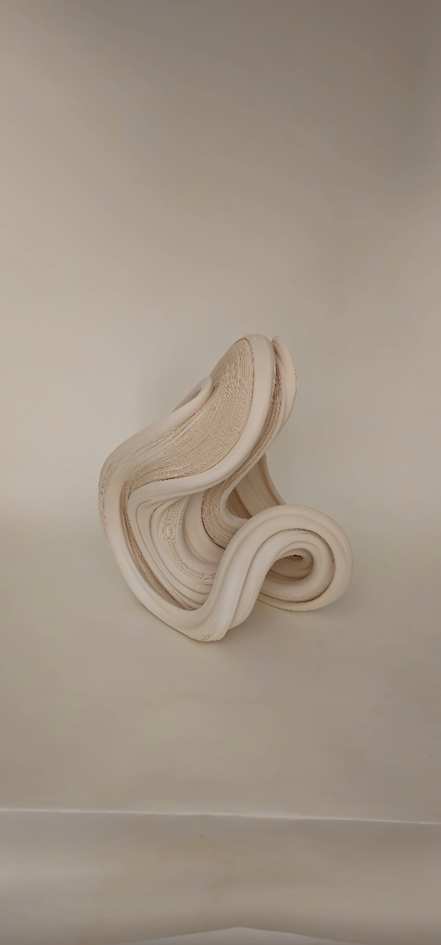
As we come to the close of our conversation with Ulli Zerzer, what stays with us is her deep trust in process and in the quiet strength that comes from listening closely. Her relationship with clay is not about control or mastery, but about understanding. Again and again, she returns to the idea that a work finds its form when attention, patience, and restraint are given the space to do their work. In her world, making is less about arrival and more about becoming.
What Ulli builds, piece by piece, is a practice grounded in balance, between tension and calm, structure and softness, work and life. Motherhood, studio rhythm, and material limits are not treated as obstacles, but as shaping forces. They sharpen her focus and give her work its clarity. Her sculptures carry that lived balance within them, offering presence without demand and space without instruction.
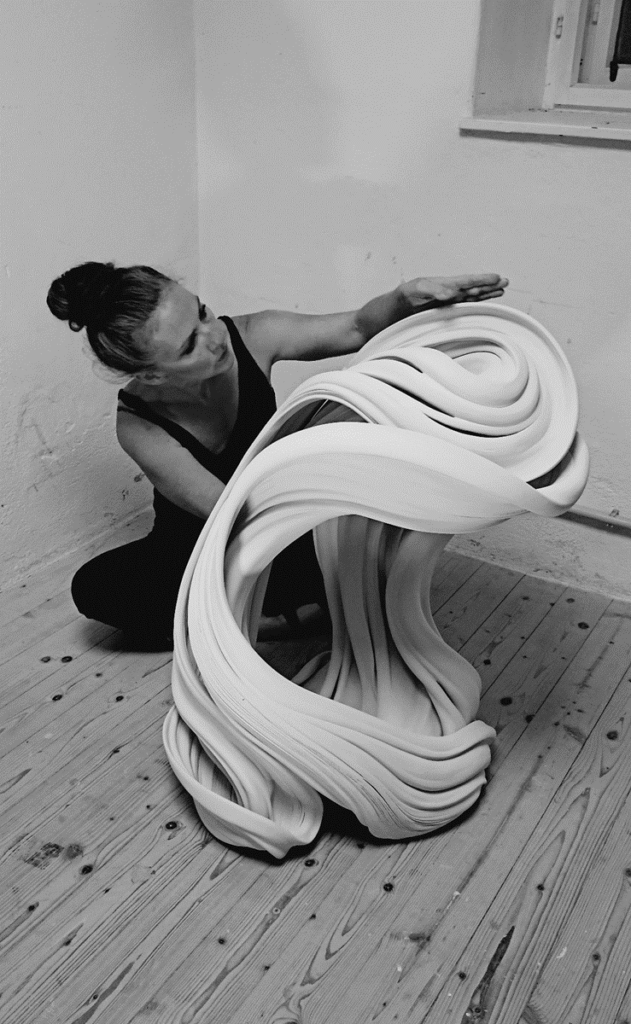
Her approach is quiet, but it is deliberate. She trusts the material, and she trusts the viewer. Whether encountered in a gallery or a public space, her work invites people to slow down, notice texture, light, and form, and engage on their own terms. There is no rush, no insistence only an open invitation to experience.
Her vision may be understated, but it is deeply considered. Ulli reminds us that strength can exist without noise, and that meaning often unfolds gradually. In her practice, completion arrives not through perfection, but through stillness the moment when a work feels settled enough to breathe on its own.
Ulli Zerzer leaves us with a perspective that feels especially relevant today: that patience is not passive, that limits can be generative, and that quiet commitment can shape work of lasting presence.
Follow Ulli Zerzer to experience a sculptural practice guided by balance, attentiveness, and a deep respect for the act of making.